

Consumer Insights
Uncover trends and behaviors shaping consumer choices today
Procurement Insights
Optimize your sourcing strategy with key market data
Industry Stats
Stay ahead with the latest trends and market analysis.
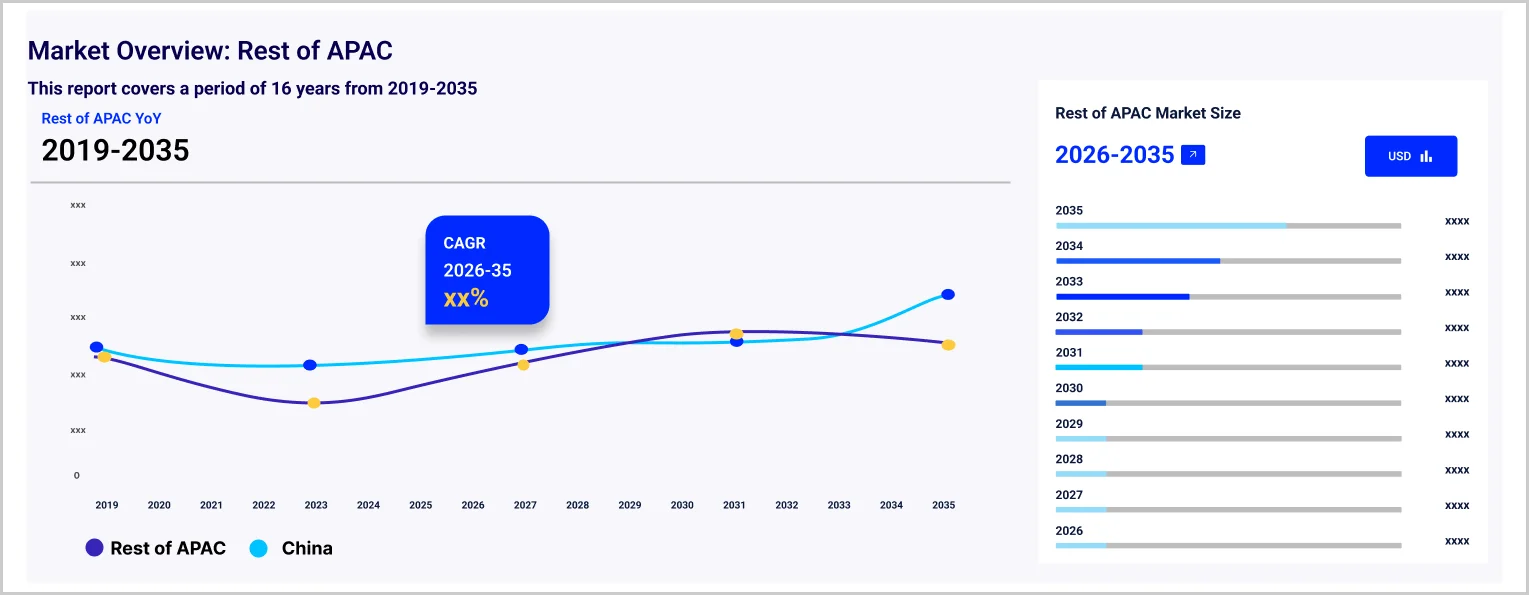
The Asia Pacific IoT market reached around USD 1.82 Billion in 2025. The market is projected to grow at a CAGR of 27.60% between 2026 and 2035 to reach nearly USD 20.82 Billion by 2035.
Compound Annual Growth Rate
27.6%
Value in USD Billion
2026-2035
| Asia Pacific IoT Security Market Report Summary | Description | Value |
| Base Year | USD Billion | 2025 |
| Historical Period | USD Billion | 2019-2025 |
| Forecast Period | USD Billion | 2026-2035 |
| Market Size 2025 | USD Billion | 1.82 |
| Market Size 2035 | USD Billion | 20.82 |
| CAGR 2019-2025 | Percentage | XX% |
| CAGR 2026-2035 | Percentage | 27.60% |
| CAGR 2026-2035 - Market by Country | China | 28.2% |
| CAGR 2026-2035 - Market by Country | Australia | 25.9% |
| CAGR 2026-2035 - Market by Deployment Mode | Cloud | 29.2% |
| CAGR 2026-2035 - Market by Organization Size | Small and Medium Enterprise (SMEs) | 28.1% |
| 2025 Market Share by Country | Australia | 6.7% |
The Asia Pacific is witnessing a significant surge in cyberattacks relative to other regions worldwide. An IBM report indicates that in 2022, the Asia Pacific was the most targeted area, accounting for 31% of global cyberattacks. Furthermore, a survey conducted by Cloudflare in July 2023, which included over 4,000 cybersecurity professionals from countries such as Australia, China, Japan, Malaysia, Singapore, South Korea, Taiwan, Thailand, and Vietnam, among others, revealed that 78% of respondents had encountered at least one cybersecurity incident within the past year.
The proliferation of Internet of things (IoT) devices has transformed the way people interact with technology, leading to increased connectivity and convenience in daily lives. As more devices become interconnected, the potential attack surface for cybercriminals expands, making it easier for them to exploit vulnerabilities in IoT networks.
In the BFSI sector, the security of Internet of Things IoT devices is essential for protecting the expanding network of interconnected devices and safeguarding sensitive financial information and operations. Over 40 of the largest 100 banks globally, ranked by assets, are located in Asia, representing nearly 50% of the market capitalisation of these top banks. Additionally, for the past decade, Asia has maintained its position as the largest regional banking market worldwide. As IoT devices become increasingly integrated into financial processes, including ATMs, mobile payment systems, and contactless payment solutions, the importance of IoT security escalates to defend these transactions against fraud, data breaches, and cyber threats is increasing. Implementing secure encryption, robust authentication, and continuous monitoring is crucial to maintaining the integrity of financial transactions.
India began considering an expansion of its cybersecurity certification framework beyond CCTV cameras to cover a wider range of IoT devices, including smart meters. The initiative responds to concerns around vulnerabilities in connected equipment and the large volume of imported devices used across critical sectors. The proposed framework would establish security requirements before connected products enter wider deployment. Broader certification requirements could create new opportunities for IoT security assessment, vulnerability testing, device certification and secure-by-design solutions in India.
Bridge Alliance and Thales launched a multi-operator enterprise eSIM connectivity network specifically for IoT deployments across Asia Pacific. AIS Thailand, Globe Telecom Philippines, Optus Australia and Singtel Singapore completed testing using the GSMA SGP.32 standard. The platform allows enterprises to centrally manage and switch connectivity across operators and countries, supporting connected vehicles, smart meters, payment terminals and industrial equipment. The development expands the security requirements surrounding cross-border IoT fleets, increasing demand for secure provisioning, device authentication, lifecycle management and centrally controlled connectivity.
Fortinet appointed Luca Simonelli as Senior Vice President for Asia Pacific, with responsibility spanning Japan, North Asia, Southeast Asia, India and SAARC, Australia and New Zealand. The appointment comes as organisations across the region increase cybersecurity investment alongside AI and digital transformation. Fortinet stated that the leadership change would support expansion of its integrated cybersecurity platform and strengthen relationships with customers and partners throughout the region. Greater regional investment and channel development by major cybersecurity vendors can accelerate enterprise adoption of integrated protection for increasingly distributed IoT and connected-device environments, thereby propelling the trends of the Asia Pacific IoT security market.
Singapore’s Cyber Security Agency and Japan’s Ministry of Economy, Trade and Industry signed a Memorandum of Cooperation to mutually recognise Singapore’s Cybersecurity Labelling Scheme (CLS) and Japan’s JC-STAR scheme. The arrangement, effective from June 2026, covers smart-home devices, IoT gateways, hubs and other connected products. It allows manufacturers with certification in one market to streamline certification in the other, reducing duplication in security assessments. The agreement is likely to strengthen demand for IoT security testing, certification and compliance services across Asia Pacific while encouraging manufacturers to build security into devices earlier.
Asia Pacific IoT security is moving towards behavioural detection, where security platforms establish a baseline for normal device activity and identify deviations rather than relying only on known malware signatures.This has been gaining particular importance in light of the connected devices functioning in various industries, such as factories, power utility plants, hospitals, and smart infrastructure. According to Kaspersky, it detected more than 75 million attacks from the Internet in the APAC region between January-June 2026, including 250,000 ransomware attacks, where the attackers are using AI for reconnaissance and malware creation. This is increasing the need for automated detection capable of identifying unusual device communications, credential abuse and lateral movement quickly.
IoT security in Asia Pacific is increasingly influenced by formal product certification and cybersecurity labelling. Singapore's Cybersecurity Labelling Scheme for IoT (CLS(IoT)) already rates smart devices according to their cybersecurity provisions, allowing buyers to distinguish products with stronger security safeguards. In 2026, Singapore enhanced its regional harmonization efforts through cooperation with Japan and South Korea in the mutual recognition of cybersecurity standards for IoT devices. This includes Singapore's CLS and Japan's JC-STAR and South Korea's KISA certification program. This results in a standardized compliance regime when manufacturers offer connected products in multiple Asian markets. It also motivates device manufacturers to implement authentication, patching and vulnerabilities in early phases of design.
The expansion of connected machinery is increasingly bringing IoT security and operational technology protection together. Manufacturing facilities now combine sensors, industrial gateways, programmable controllers and enterprise networks, creating security risks that cannot be addressed solely through conventional IT controls. Nozomi Networks' Q1 2026 APAC manufacturing threat analysis specifically tracks threats affecting OT environments and highlights the growing requirement for dedicated OT and IoT security expertise. It becomes especially important for Asia Pacific considering that the region has a significant manufacturing industry, which includes production of semiconductors, automotive parts, electronics, and chemicals. Thus, organizations use technologies such as asset discovery, network segmentation, behavior analytics and intrusion detection to secure production networks without impacting their operations, and therefore accelerating the Asia Pacific IoT security market growth.
India is emerging as an important market for regulated IoT security as the government considers extending mandatory cybersecurity requirements beyond CCTV equipment. In July 2026, the government was reported to be considering a framework covering a broader range of IoT products, including smart meters, amid concerns about vulnerabilities in connected devices imported into the country. Security requirements would be set before these devices are rolled out extensively. This is important considering that devices such as smart meters, health care devices, industrial devices and smart city infrastructure are increasingly connecting physical devices with digital technology. As a result, security testing can be incorporated into the procurement of IoT devices in India.
The growing deployment of connected products across multiple Asian countries is creating demand for security frameworks that work across national borders. Singapore's May 2026 cooperation with Japan and South Korea is an important example, with the arrangements designed to align cybersecurity labelling schemes and make compliance easier for consumer IoT manufacturers seeking access to multiple markets. This is of considerable significance since the manufacturer had to go through different testing and certification requirements in each jurisdiction. This will allow for less duplication of efforts and also incentivize the adoption of minimum cybersecurity practices. For IoT-security providers, this would mean new opportunities in the field of certification, testing, device evaluation, and compliance management in different Asian Pacific countries.
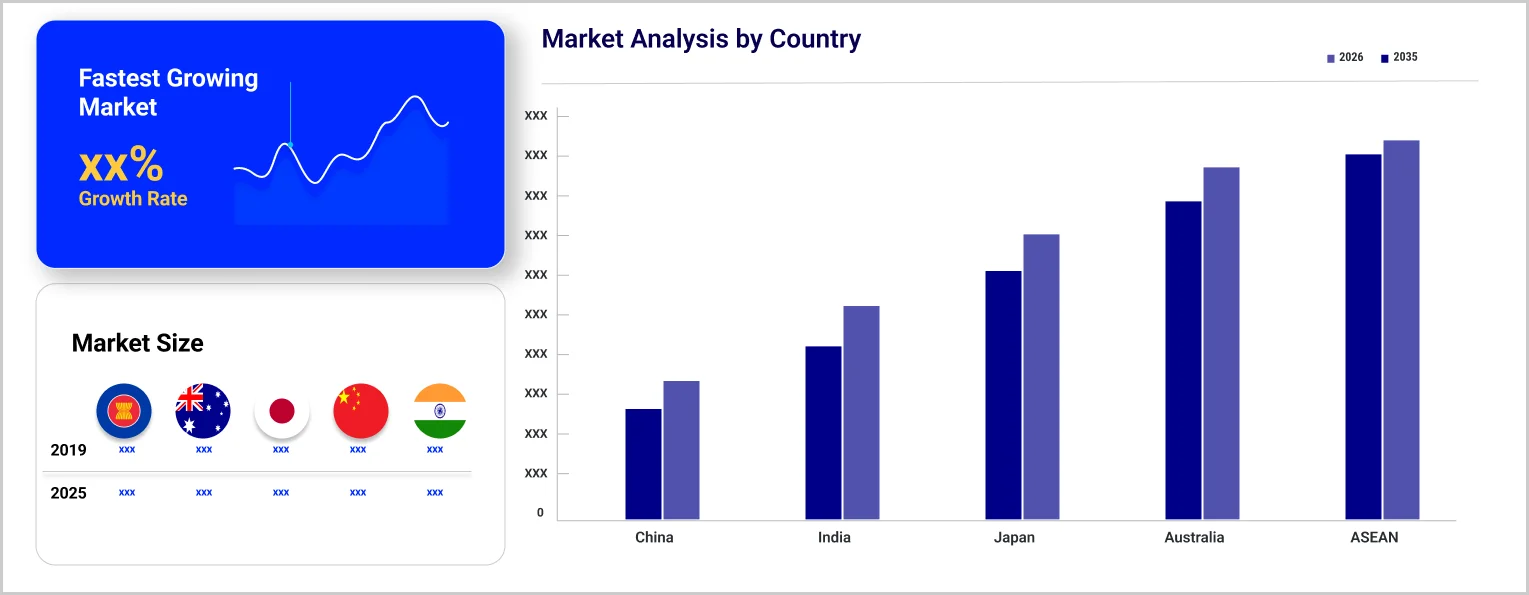
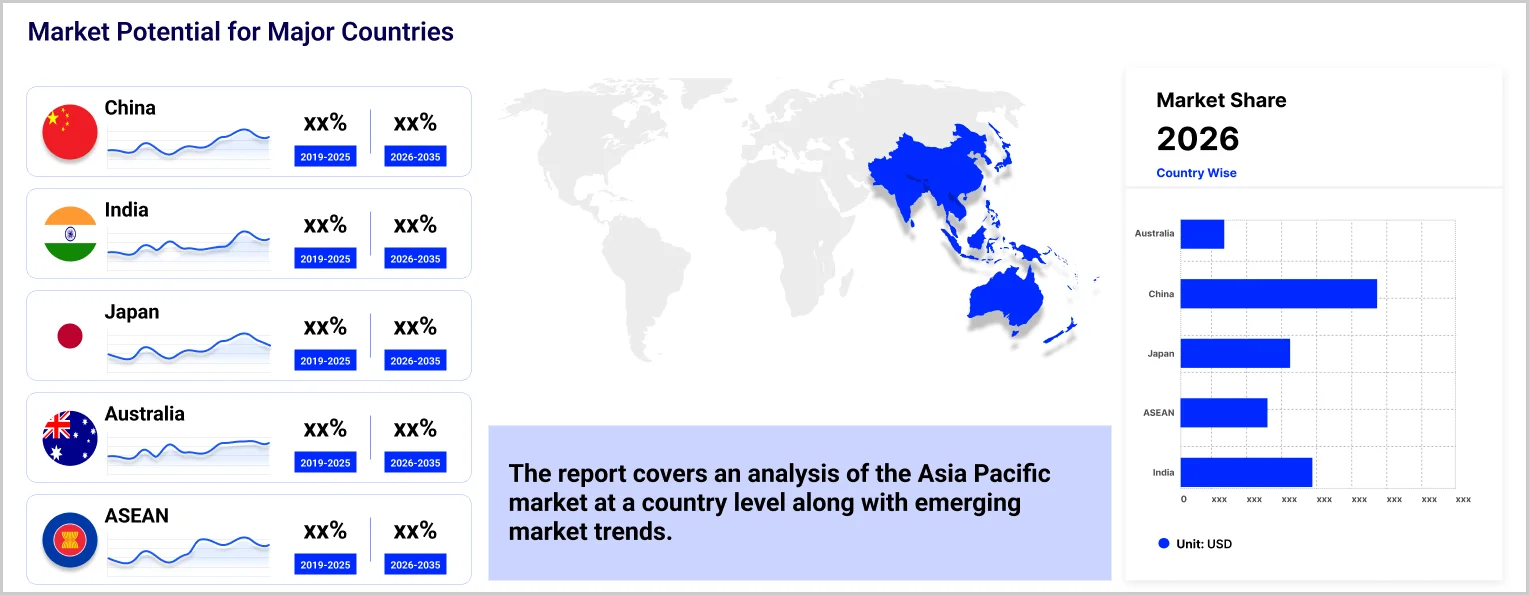
The rapid proliferation of interconnected devices across various sectors, including BFSI, government, manufacturing, healthcare, and transportation, is significantly driving the demand for robust security measures. As these sectors increasingly rely on the Internet of things (IoT) and smart technologies to enhance efficiency, streamline operations, and improve service delivery, the volume of sensitive information being transmitted and processed has surged, consequently driving the demand for IoT security solutions.
Asia Pacific IoT Security Market Report and Forecast 2026-2035 offers a detailed analysis of the market based on the following segments:
Market Breakup by Component
Market Breakup by Deployment Mode
Market Breakup by Organisation Size
Market Breakup by Security
Market Breakup by Industry Vertical
Market Breakup by Country
| CAGR 2026-2035 - Market by | Country |
| China | 28.2% |
| Australia | 25.9% |
| Japan | XX% |
| India | 28.4% |
| ASEAN | XX% |
| Others | XX% |
Based on the deployment mode, the market is segmented into on-premises and cloud. The cloud segment is projected to grow at a CAGR of 29.2% during the forecast period of 2026-2035. Security for cloud IoT encompasses the protection of Internet of things devices and their associated data within cloud environments. As IoT devices become increasingly integrated with cloud computing, it is essential to implement strong security protocols to defend against a range of potential threats and vulnerabilities.
Major players are focusing on the adoption of artificial intelligence and machine learning to gain a competitive edge in the market.
The comprehensive report looks into the macro and micro aspects of the market. The EMR report gives an in-depth insight into the market by providing a SWOT analysis as well as an analysis of Porter’s Five Forces model.


Upto 15% Off
USD
$2499 $2249
$3999 $3599
$4999 $4249
$5999 $5099


*While we strive to always give you current and accurate information, the numbers depicted on the website are indicative and may differ from the actual numbers in the main report. At Expert Market Research, we aim to bring you the latest insights and trends in the market. Using our analyses and forecasts, stakeholders can understand the market dynamics, navigate challenges, and capitalize on opportunities to make data-driven strategic decisions.*
In 2025, the market attained a value of nearly USD 1.82 Billion.
The market is assessed to grow at a CAGR of 27.60% between 2026 and 2035.
The market is estimated to reach around USD 20.82 Billion by 2035.
The market is being driven by the rising adoption of IoT devices and strict regulatory compliance to ensure protection against cyber threats.
The key trends aiding the market expansion include the integration of artificial intelligence and machine learning into IoT security solutions and the rising incidence of cyberattacks.
The major industry verticals in the market are BFSI, government, healthcare and life sciences, energy and power, and manufacturing, among others.
The major countries considered in the market are China, Japan, India, ASEAN, and Australia.
The major players in the market are IBM Corporation, Cisco Systems Inc., Broadcom Inc., Intel Corp., HP Inc., Trend Micro Inc., AT&T Inc., Infineon Technologies AG, Palo Alto Networks Inc., Thales S.A. (Gemalto), and Sophos Ltd., among others.
Explore our key highlights of the report and gain a concise overview of key findings, trends, and actionable insights that will empower your strategic decisions.
| REPORT FEATURES | DETAILS |
| Base Year | 2025 |
| Historical Period | 2019-2025 |
| Forecast Period | 2026-2035 |
| Scope of the Report |
Historical and Forecast Trends, Industry Drivers and Constraints, Historical and Forecast Market Analysis by Segment
|
| Breakup by Offering |
|
| Breakup by Deployment Mode |
|
| Breakup by Organisation Size |
|
| Breakup by Security |
|
| Breakup by Industry Vertical |
|
| Breakup by Region |
|
| Market Dynamics |
|
| Competitive Landscape |
|
| Companies Covered |
|
Datasheet
One User
USD 2,499
USD 2,249
tax inclusive*
Single User License
One User
USD 3,999
USD 3,599
tax inclusive*
Five User License
Five User
USD 4,999
USD 4,249
tax inclusive*
Corporate License
Unlimited Users
USD 5,999
USD 5,099
tax inclusive*
*Please note that the prices mentioned below are starting prices for each bundle type. Kindly contact our team for further details.*
Flash Bundle
Small Business Bundle
Growth Bundle
Enterprise Bundle
*Please note that the prices mentioned below are starting prices for each bundle type. Kindly contact our team for further details.*
Flash Bundle
Number of Reports: 3
20%
tax inclusive*
Small Business Bundle
Number of Reports: 5
25%
tax inclusive*
Growth Bundle
Number of Reports: 8
30%
tax inclusive*
Enterprise Bundle
Number of Reports: 10
35%
tax inclusive*
How To Order

Select License Type
Choose the right license for your needs and access rights.

Click on ‘Buy Now’
Add the report to your cart with one click and proceed to register.

Select Mode of Payment
Choose a payment option for a secure checkout. You will be redirected accordingly.
Strategic Solutions for Informed Decision-Making
Gain insights to stay ahead and seize opportunities.

Get insights & trends for a competitive edge.

Track prices with detailed trend reports.

Analyse trade data for supply chain insights.

Leverage cost reports for smart savings

Enhance supply chain with partnerships.

Connect For More Information
Our expert team of analysts will offer full support and resolve any queries regarding the report, before and after the purchase.
Our expert team of analysts will offer full support and resolve any queries regarding the report, before and after the purchase.
We employ meticulous research methods, blending advanced analytics and expert insights to deliver accurate, actionable industry intelligence, staying ahead of competitors.
Our skilled analysts offer unparalleled competitive advantage with detailed insights on current and emerging markets, ensuring your strategic edge.
We offer an in-depth yet simplified presentation of industry insights and analysis to meet your specific requirements effectively.




