

Consumer Insights
Uncover trends and behaviors shaping consumer choices today
Procurement Insights
Optimize your sourcing strategy with key market data
Industry Stats
Stay ahead with the latest trends and market analysis.
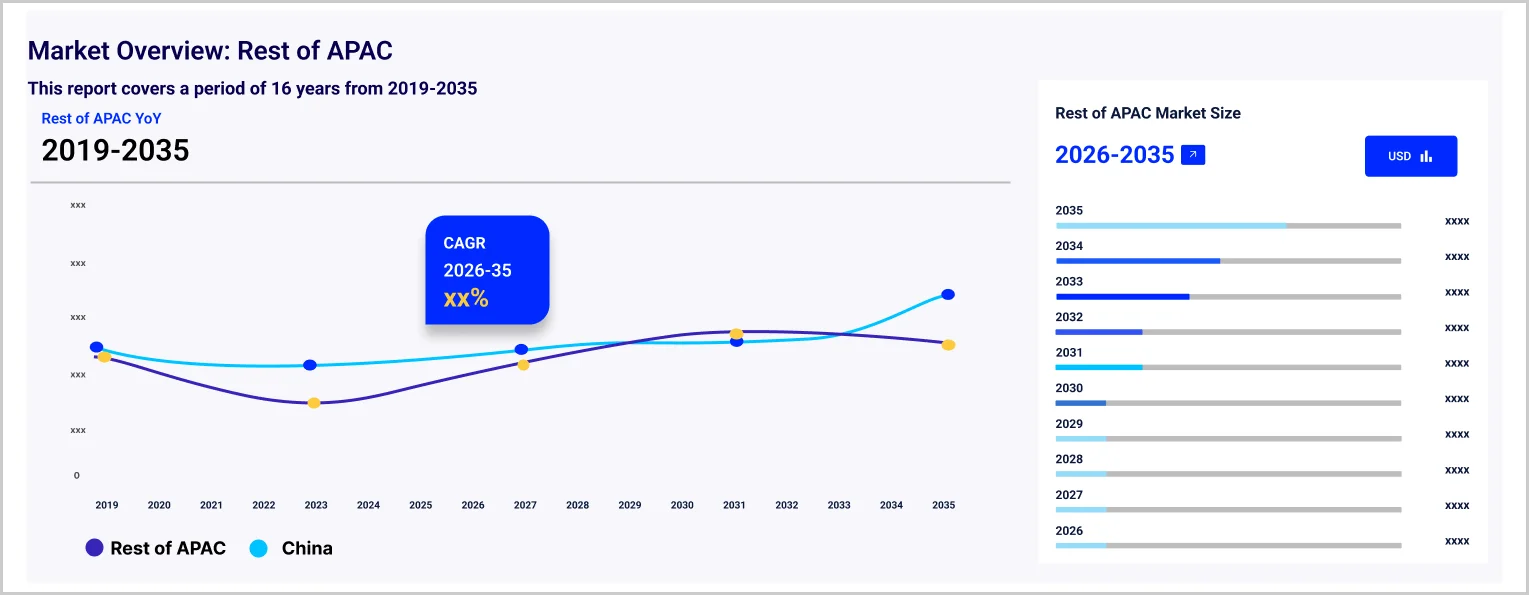
The Asia Pacific printer market attained a value of USD 28.65 Billion in 2025 and is projected to expand at a CAGR of 3.82% through 2035. The market is further expected to achieve USD 41.68 Billion by 2035. The rise of e-commerce fulfilment, localized manufacturing, and customized packaging is driving the demand for barcode printers, label printers, and production printers within the supply chain of regions.
Higher demand for trustworthy business documents is motivating manufacturers in the Asia Pacific printer market to create printers with more pages, fast scanning abilities, and greater security. At the same time, growth in packaging and logistics processes is providing a chance to use special-purpose equipment that would be able to print labels, barcodes, and short-run custom materials. This trend favors vendors who can offer industry-specific solutions, reliable supplies, and services to help business owners ensure continuous operation while keeping costs low.
The Asia Pacific printer market is more influenced by manufacturers who design highly efficient inkjet printers, printers with secure office printing capabilities, and production printers for business clients. In March 2025, Canon launched MAXIFY MegaTank business printers GX7170, GX6170, and GX5170 in South and Southeast Asia. These printers are intended for small and medium-size offices that need to print many color documents. Under test conditions, the maximum print number from one pack of ink is 14,000 pages for the GX7170, which allows minimizing downtimes through a capacity of 600 sheets of paper.
Product differentiation in the Asia Pacific printer market is becoming a priority among the criteria used by manufacturers in their competition for efficiency, resistance of the documents printed, document handling abilities, and maintenance efficiency. The new MegaTank models feature pigment-based ink, automatic double-sided printing, wireless capabilities, and the possibility to print on various media types, including labels and banners. In September 2026, Mimaki launched six new products, expanding its digital printing portfolio with innovative technologies designed to enhance productivity and versatility. Such capabilities give manufacturers a chance to attract accounting firms, educational institutions, logistics providers, and other businesses that use physical documentation and cannot afford the cost of cartridge replacement.
Compound Annual Growth Rate
3.82%
Value in USD Billion
2026-2035
Read more about this report - REQUEST FREE SAMPLE COPY IN PDF
Kyocera Asia Pacific revealed its Electronica India 2026 showcase, which included semiconductor elements, high-end displays, and technologies that help connect industrial applications. Manufacturers may investigate advanced electronic components and displays to build smarter and more connected printers for industrial purposes, broadening the Asia Pacific printer market scope.
Canon introduced four multifunction printer series of the imageFORCE line, including AI maintenance services, enhanced security, recycling plastics, and workflow capabilities. Manufacturers may incorporate AI-powered diagnostics, cybersecurity, and recycled materials in their business printers to appeal to companies and SMEs with sustainable printing needs.
SATO released CL4-SXR and CL6-SXR label printers in Southeast Asia, which have AI-based predictive maintenance, precise printing, and minimize label wastage. Companies in the Asia Pacific printer market can therefore design a fast industrial labeling system with predictive maintenance, precise barcode printing, and reduced wastage in the region.
FUJIFILM Business Innovation introduced two types of refurbished A3 color multifunction printers that utilize up to 82% of components and reduce lifecycle emissions. Manufacturers can enhance their range of refurbished printers, introduce a component reuse program, and provide businesses in Asia Pacific with a cost-effective printing solution.
Manufacturers are enhancing their ink-tank lineups in an effort to tackle issues regarding operating cost concerns in small businesses, schools, and administrative offices, thus boosting demand in the Asia Pacific printer market. For example, in July 2025, Epson opened India's first high-capacity ink tank printer manufacturing facility, strengthening local production and reducing consumable costs and waste. Manufacturers are finding ways to compete using fewer interventions, more paper capacity, and better document handling. Dealers can then reach out to accounting firms, educational institutions, and logistics providers who need assured consumables cost and reliable everyday printing.
Commercial printers need equipment that will accommodate architectural drawings, promotional materials, technical drawings, and customized signs while not relying solely on long production runs. This trend in the Asia Pacific printer market provides opportunities for manufacturers targeting the needs of construction consultants, engineering companies, retailers, and printing service providers. In March 2024, FUJIFILM launched Revoria XMF PressReady, automating digital print workflows, reducing errors, and improving production efficiency for commercial printing businesses.
Growth in the scope of online retail and distribution networks require the creation of readable labels and product traceability in shipment and inventory. Companies can satisfy this requirement through label printing solutions, barcode systems, and warehouse management hardware solutions. In India, this can be supported by a favorable atmosphere created by the Indian government’s National Logistics Policy and increased use of digital solutions in the process of logistics and technology adoption. Thus, Asia Pacific printer market players can create printing solutions for fulfillment centers, factories, and third-party logistics operators. In February 2024, HEIDELBERG announced innovations addressing printing industry challenges, improving productivity, reducing operational costs, and supporting sustainable production through advanced technologies.
Manufacturers are looking at supply chain diversification to mitigate risks related to sourcing components and increasing production flexibility, boosting growth in the Asia Pacific printer market. In August 2026, Bambu Lab launched its A2L large-format desktop 3D printer in India, featuring expanded build capacity for creators and small businesses. These printers have not been identified as separate targets for investment, but this initiative may have a positive impact on the development of the supply chain for electronics equipment in general.
Printer procurement is becoming increasingly focused on connectivity within the work environment rather than printer hardware, reshaping the entire Asia Pacific printer market dynamics. Security, workflow management, and resource management have become key criteria in evaluating printer performance. In June 2025, Ricoh Asia Pacific launched high-volume A3 color multifunction printers, enhancing workplace productivity through faster printing, improved finishing, and operational efficiency. Such criteria provide opportunities for vendors offering multifunctional printing in combination with security of documents, access control, digitizing, and fleet management.
The Expert Market Research's report titled “Asia Pacific Printer Market Report and Forecast 2026-2035” offers a detailed analysis of the market based on the following segments:
Market Breakup by Type
Key Insight: Multifunction printers have an advantage in the business environment that uses one device to manage all its printing tasks, such as document processing, scanning, and copying, whereas stand-alone printers have advantages in situations where there is a need for stand-alone functionality. Residential consumers prefer to use stand-alone printers for documents and photos, whereas businesses use multifunctional printers. Schools utilize both types of printers for administrative purposes, educational purposes, and exams, propelling growth in the Asia Pacific printer market. Government agencies also prefer security in document processing and proper management of the equipment.
Market Breakup by Technology
Key Insight: As per the Asia Pacific printer market report, laser printers are used in offices that demand speedy and uniform printouts of texts whereas inkjet printers cater to the needs of printing in colors, images, and other media uses. The dot matrix printer continues to be relevant in offices where the use of multipart forms and continuous papers is required. The thermal printer finds its niche in printing receipts and shipping labels among others.
Market Breakup by Printer Interface
Key Insight:Wired interfaces continue to be appropriate for fixed stations, office network setups, and production facilities where reliable connectivity is required, stimulating demand growth in the Asia Pacific printer market. Wireless interfaces are appropriate for mobile users, open space offices, homes, and establishments that need flexibility in locating devices. USB interfaces are appropriate for direct connection between printers and computers, whereas Ethernet interfaces can provide shared printer access within managed corporate networks. Wi-Fi allows for printing from various devices, and mobile printing interfaces make it easy to print documents from portable devices such as smartphones and tablets. In April 2025, Ricoh Asia Pacific launched its IM C401F multifunction printer, featuring fast color printing, cloud integration, enhanced security, and sustainability improvements.
Market Breakup by Output Type
Key Insight: Monochrome printing is used for documentation, accounting, contracts, shipping papers, and so on, where clarity and operational costs are the prime considerations. For marketing literature, catalogues, teaching aids, charts, or branded communication materials, where visual discrimination is important, the Asia Pacific printer market observes high demand for color printing. Corporate houses can use monochrome printers for regular documents and color printers for customer-related documents. Schools need both types of printers for their administrative work and teaching materials. The retail and manufacturing sector needs color printing for their marketing and product-related literature, while logistics companies need legible monochrome printing.
Market Breakup by End Use
Key Insight: As per the Asia Pacific printer market report, residential users are looking for an affordable printer, compact sizes to use on personal documents, pictures, applications, and some work from their home office. The commercial organization needs the printer that will print in bulk, handle confidential documents, provide multifunction capabilities, and manage its fleet of equipment. The educational institution requires printers that can be used for exam papers, educational materials, certificates, and administrative papers. The government department requires secure processing of documents, standardized procurement, and performance in all offices. In November 2025, the Hela Education Division introduced a high-speed printer to improve document processing, accelerate service delivery, and enhance operational efficiency.
Market Breakup by Country
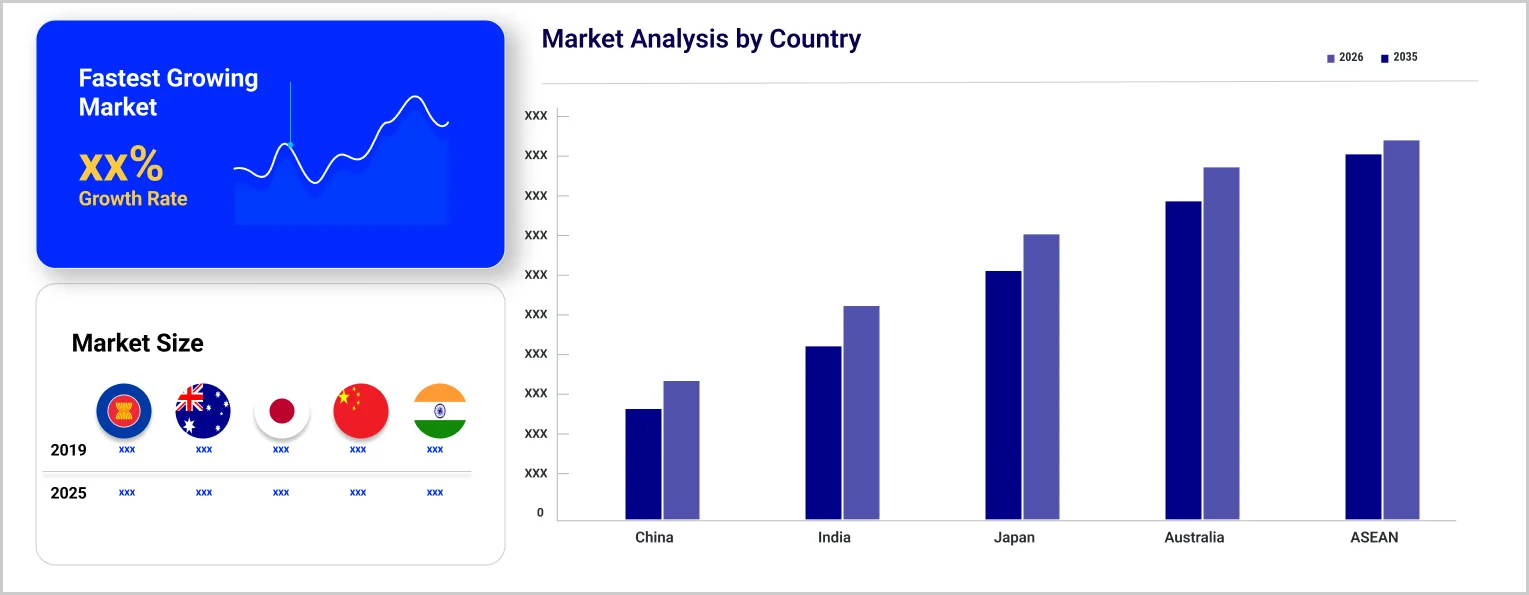
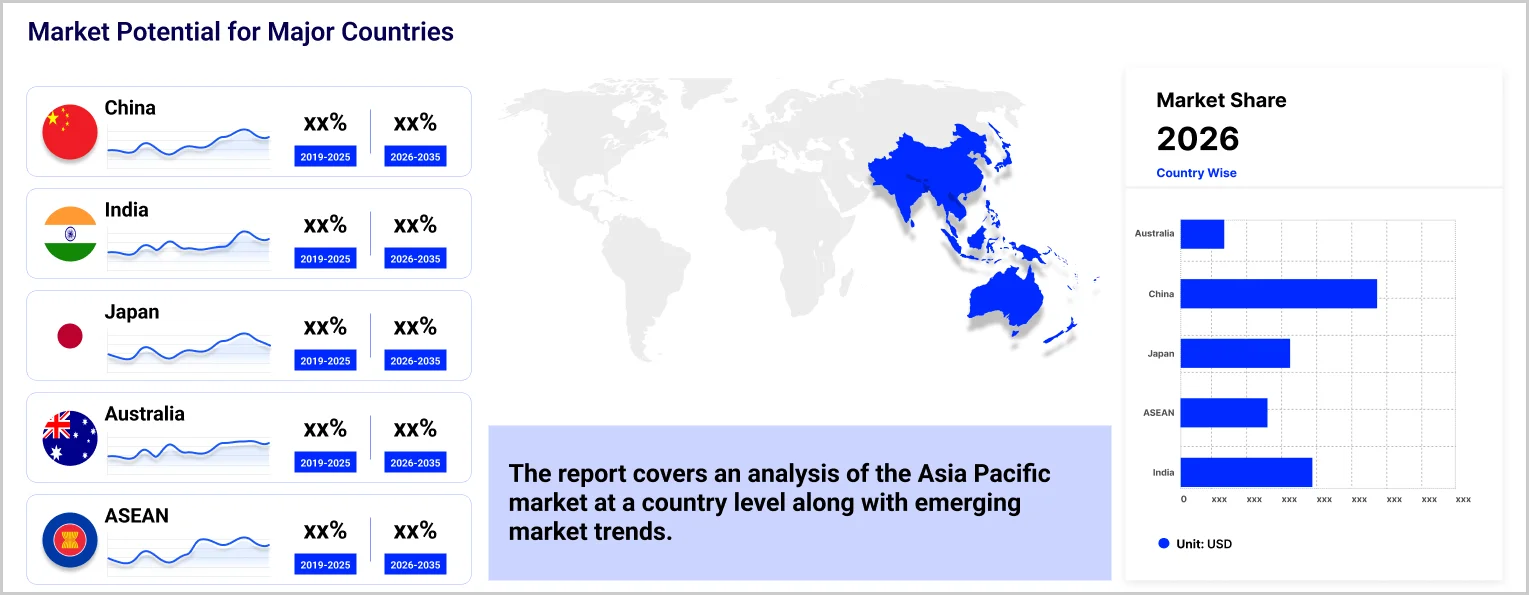
Key Insight: China has strengths due to its ability to manufacture electronics, the existing printer supply chain and high demand in both industrial and commercial sectors. Japan presents opportunities in relation to quality-driven office products, manufacturing processes and specialized needs, accelerating the overall Asia Pacific printer market penetration. India is benefiting due to the growth in business digitization, educational sector as well as logistics activities. ASEAN countries such as Indonesia, Vietnam, Thailand, Malaysia and Philippines offer various opportunities through manufacturing, retail and ecommerce fulfillment processes.
Read more about this report - REQUEST FREE SAMPLE COPY IN PDF
By type, multi-functional printers lead the market through integrated scanning, copying, and document management capabilities
Multi-function printers have a stable place in the Asia Pacific printer market due to the growing preference among companies for integrated printing and scanning equipment capable of distributing documents and other types of content. Manufacturers produce printers that offer such features as automatic document feeder, duplex print, security solutions, and connection to cloud services for large enterprises, small businesses, and educational organizations. For example, in May 2026, OKI Southeast Asia launched its MC554dnw A4 color multifunction printer, featuring fast scanning, wireless connectivity, and energy-efficient operation.
Individual stand-alone printers cater to customers who do not need additional features of multifunctional printers and have their own requirements, generating demand in the Asia Pacific printer market. This includes customers in areas such as retail counters, warehouses, logistics centers, production sites, and personal users who have particular requirements for their printing process. Barcode printers, receipt printers, label printers, and photo printers represent possible niches for specialized solutions.
By technology, laser printers continue to be preferred for high-volume office documents and consistent text quality
The role of laser printers continues to be relevant in business organizations that deal with large amounts of invoices, contracts, reports, and other types of documents, thereby stimulating the overall Asia Pacific printer market penetration. Fast printing of texts, high quality of the printed text, as well as durability make these devices desirable in corporate offices, banks, and government agencies. The competition between the companies producing laser printers includes higher printing speed, ability to use duplex printing, energy efficiency, and network security. For example, in October 2026, RISO launched its ComColor GN Series inkjet printers, delivering speeds up to 180 pages per minute with energy-efficient, heatless technology.
Thermal printers are becoming increasingly relevant in the sphere of e-commerce logistics and retail operations, redefining the Asia Pacific printer market dynamics. Direct thermal printing and thermal transfer printing meet the needs of creating various types of labels from temporary delivery labels to labels that are designed to last long and be used in harsh industrial conditions. Some distinctive features for producers of thermal printers include fast label printing, small size, connectivity, and integration with inventory management systems.
By printer interface, wired interfaces support market growth owing to dependable connections, centralized office deployment, and consistent data transmission
Wired printers continue to be useful in corporate offices, manufacturing units, and government offices where reliable connectivity and controlled access to devices matter, hence accelerating the overall Asia Pacific printer market growth. USB and Ethernet connectivity allows for the use of wired printers with computers, office networks, and existing enterprise systems. Wired printing is preferred by many IT professionals in cases where it becomes necessary to use standardized devices, restrict access to the printer, and ensure consistent performance of the device at fixed workstations. In December 2024, Primera Technology launched its LX4000 color label printer, expanding digital printing solutions for businesses requiring specialized, high-quality label production.
Wireless printers are more attractive to businesses and households that require printing from laptops, smart phones, and tablets without the use of any direct physical connection, securing a major share in the Asia Pacific printer market. Wi-Fi connectivity and mobile printing features are useful for offices, work areas, and mobile teams that need access to shared equipment. Wireless printing, in conjunction with cloud printing, user authentication, and software integration, is increasingly being offered by manufacturers for small businesses and education institutions where sharing of equipment is a necessity.
By output type, monochrome printers lead routine documentation through economical text printing and lower operating costs
Black and white printers continue to be important in corporations where there is a need to print invoices, contracts, financial reports, shipping papers, and administration records. The benefits of using these types of printers include low-cost prints, efficient toner usage, and dependable operation under heavy loads, sustaining demand in the Asia Pacific printer market. Banks, law firms, government agencies, and logistics companies generally value legibility and speed of printing above color capabilities. Differentiation points include higher yield consumables, fast first page out, automatic duplex printing, and secure printing. In October 2025, FUJIFILM Business Innovation launched new printing solutions, enhancing workplace productivity through advanced multifunction capabilities, streamlined workflows, and improved operational efficiency.
Color printers are meant for organizations which rely on visuals in communication, company documents, catalogs, teaching materials, and promotional content, propelling demand in the Asia Pacific printer market. Retailers, marketing teams, design firms, and smaller firms may use color printers to create unique materials without relying on external help for every production process. Manufacturers are addressing the needs by improving ink usage, increased media capability, and ability to print photos, graphs, labels, and presentations.
Commercial users drive demand through recurring documentation and high-volume office printing requirements
Commercial customers continue to contribute to the Asia Pacific printer market value, as many commercial organizations in industries such as finance, retail, manufacturing, professional services, and logistics need reliable printouts. The demands of these customers range from invoices, contracts, reports, product labels, and customer-facing documents. Manufacturers can serve them with multifunction machines, cost-effective consumables, secure printing capabilities, and fleet management solutions to make administration easy in multiple locations. In September 2025, Epson launched next-generation POS printers designed to support high-volume foodservice operations with faster printing and improved reliability.
Educational establishments need printers for examination papers, educational materials, admissions, certificates, research papers, and administrative activities. Schools, colleges, universities, and training institutes can have various printing needs in their different departments. Manufacturers in the Asia Pacific printer market can cater to these clients by providing cost-effective ink tank solutions, multifunction machines to be shared, duplex printing solutions, and managed devices.
China secures the dominant market position through its extensive electronics manufacturing ecosystem and large commercial printing demand
China has a dominant presence in the Asia Pacific printer market because of its advanced manufacturing facilities for electronics components, existing distribution channels, and commercial demand. The domestic and foreign companies manufacture various office printers, multifunction printers, industrial label printers, and special purpose printers required by businesses. The manufacturing capacity of China also facilitates procurement of components and assembling of equipment for the supply chain. E-commerce order fulfillment, retailing, and industrial manufacturing generate demand for barcode printers and label printers. In September 2025, China Print Supplies introduced a 3-in-1 double-sided UV printer, expanding versatile printing capabilities for diverse commercial applications.
India is another emerging printer market in the Asia Pacific that is generating business prospects because of advancements in administration by businesses, expansion of operations at educational institutions, and technology-driven logistics systems. The demand includes budget home printers, multifunction office printers, high-volume ink tanks printers, and specialty printers for retail and distribution. Manufacturers can target small businesses with cheap consumables and smaller printers, and large organizations with secure printing and fleet management. India's initiatives for electronics manufacturing can help the whole supply chain. In October 2026, Domino showcased advanced coding, marking, and digital printing technologies at LOUPE India, supporting packaging traceability and production efficiency.
Competition is gradually shifting towards lowering printing costs, workflow automation, and the production of printers to serve specialized business purposes. Asia Pacific printer market players are focusing on building strong line-ups of ink tanks, small multifunction printers, office printing security, and industrial labels to cater to their different customers' needs. Potential areas are present in e-commerce order fulfillment, warehouse automation, educational printing, and short-run commercial printing, where performance and reliability play a crucial role.
Predictive maintenance, remote fleet monitoring, and cloud-based document management are some of the areas being tapped into by the Asia Pacific printer companies to earn recurring service revenue. Designing sustainable products, ease of repairing, and efficient use of consumables have become key selling points as businesses analyze printers based on their lifecycle performance. On the other hand, local distribution partners and after-sales service are important factors in a geographically diverse market. It is easier for players that offer competitive prices and good service alongside software compatibility and regionally specialized products to win customers.
Established in 1939 and having its corporate offices in Palo Alto, California, United States, HP Inc. provides residential, commercial, and enterprise customers with inkjet printers, laser printers, and multifunction printers. It offers Smart Tank systems, business printers, and software-driven solutions.
Founded in 1937 and with its corporate headquarters in Tokyo, Japan, Canon Inc. provides customers with inkjet printers, laser printers, multifunction printers, and large format printers. Its MAXIFY MegaTank system is designed for organizations requiring high-volume printing and less frequent replacement of consumables, whereas imagePROGRAF printers cater to technical and commercial printing needs.
Seiko Epson Corporation was established in 1942 and is based in Suwa, Nagano, Japan. Seiko Epson is a company that produces inkjet printing products, industrial printing, label printing machines, and point-of-sale products. The company uses the EcoTank system to cater for customers who want affordable printing using refillable ink tanks.
Established in 1875, Toshiba Corporation is based in Kawasaki, Japan. Toshiba Corporation produces office multifunction printers, small office printers, light production systems, label and receipt printers, and document imaging systems.
Other key players in the market include Fujitsu Ltd., Panasonic Holdings Corp., Xerox Holdings Corp., Konica Minolta Inc., FUJIFILM Holdings Corp., and Brother Industries, Ltd., among others.
*Please note that this is only a partial list; the complete list of key players is available in the full report. Additionally, the list of key players can be customized to better suit your needs.*
Unlock the latest insights with our Asia Pacific printer market trends 2026 report. Discover regional growth patterns, consumer preferences, and key industry players. Stay ahead of competition with trusted data and expert analysis. Download your free sample report today and drive informed decisions in the market.


Upto 15% Off
USD
$2499 $2249
$3999 $3599
$4999 $4249
$5999 $5099


*While we strive to always give you current and accurate information, the numbers depicted on the website are indicative and may differ from the actual numbers in the main report. At Expert Market Research, we aim to bring you the latest insights and trends in the market. Using our analyses and forecasts, stakeholders can understand the market dynamics, navigate challenges, and capitalize on opportunities to make data-driven strategic decisions.*
In 2025, the market reached an approximate value of USD 28.65 Billion.
The market is projected to grow at a CAGR of 3.82% between 2026 and 2035.
The revenue generated from the market is expected to reach USD 41.68 Billion in 2035.
Based on type, the Printer market is split between standalone and multi-functional.
The key players in the market include HP Inc., Canon Inc., Seiko Epson Corp., Toshiba Corp., Fujitsu Ltd., Panasonic Holdings Corp., Xerox Holdings Corp., Konica Minolta Inc., FUJIFILM Holdings Corp., and Brother Industries, Ltd., among others.
Based on the technology, the market is split into dot matrix printer, inkjet printer, LED printer, thermal printer, and laser printer.
Based on the country, the market is split into China, Japan, India, ASEAN, Australia, and others.
Companies are facing intense price competition, counterfeit consumables, fluctuating component costs, cybersecurity risks, shrinking routine print volumes, and pressure to improve sustainability while maintaining service quality across diverse regional markets.
Stakeholders are expanding regional service networks, developing application-specific printers, improving consumable efficiency, integrating secure workflow software, and targeting logistics, education, and industrial customers with tailored solutions.
Explore our key highlights of the report and gain a concise overview of key findings, trends, and actionable insights that will empower your strategic decisions.
| REPORT FEATURES | DETAILS |
| Base Year | 2025 |
| Historical Period | 2019-2025 |
| Forecast Period | 2026-2035 |
| Scope of the Report |
Historical and Forecast Trends, Industry Drivers and Constraints, Historical and Forecast Market Analysis by Segment:
|
| Breakup by Type |
|
| Breakup by Technology |
|
| Breakup by Printer Interface |
|
| Breakup by Output Type |
|
| Breakup by End Use |
|
| Breakup by Region |
|
| Market Dynamics |
|
| Competitive Landscape |
|
| Companies Covered |
|
Datasheet
One User
USD 2,499
USD 2,249
tax inclusive*
Single User License
One User
USD 3,999
USD 3,599
tax inclusive*
Five User License
Five User
USD 4,999
USD 4,249
tax inclusive*
Corporate License
Unlimited Users
USD 5,999
USD 5,099
tax inclusive*
*Please note that the prices mentioned below are starting prices for each bundle type. Kindly contact our team for further details.*
Flash Bundle
Small Business Bundle
Growth Bundle
Enterprise Bundle
*Please note that the prices mentioned below are starting prices for each bundle type. Kindly contact our team for further details.*
Flash Bundle
Number of Reports: 3
20%
tax inclusive*
Small Business Bundle
Number of Reports: 5
25%
tax inclusive*
Growth Bundle
Number of Reports: 8
30%
tax inclusive*
Enterprise Bundle
Number of Reports: 10
35%
tax inclusive*
How To Order

Select License Type
Choose the right license for your needs and access rights.

Click on ‘Buy Now’
Add the report to your cart with one click and proceed to register.

Select Mode of Payment
Choose a payment option for a secure checkout. You will be redirected accordingly.
Strategic Solutions for Informed Decision-Making
Gain insights to stay ahead and seize opportunities.

Get insights & trends for a competitive edge.

Track prices with detailed trend reports.

Analyse trade data for supply chain insights.

Leverage cost reports for smart savings

Enhance supply chain with partnerships.

Connect For More Information
Our expert team of analysts will offer full support and resolve any queries regarding the report, before and after the purchase.
Our expert team of analysts will offer full support and resolve any queries regarding the report, before and after the purchase.
We employ meticulous research methods, blending advanced analytics and expert insights to deliver accurate, actionable industry intelligence, staying ahead of competitors.
Our skilled analysts offer unparalleled competitive advantage with detailed insights on current and emerging markets, ensuring your strategic edge.
We offer an in-depth yet simplified presentation of industry insights and analysis to meet your specific requirements effectively.




