

Consumer Insights
Uncover trends and behaviors shaping consumer choices today
Procurement Insights
Optimize your sourcing strategy with key market data
Industry Stats
Stay ahead with the latest trends and market analysis.
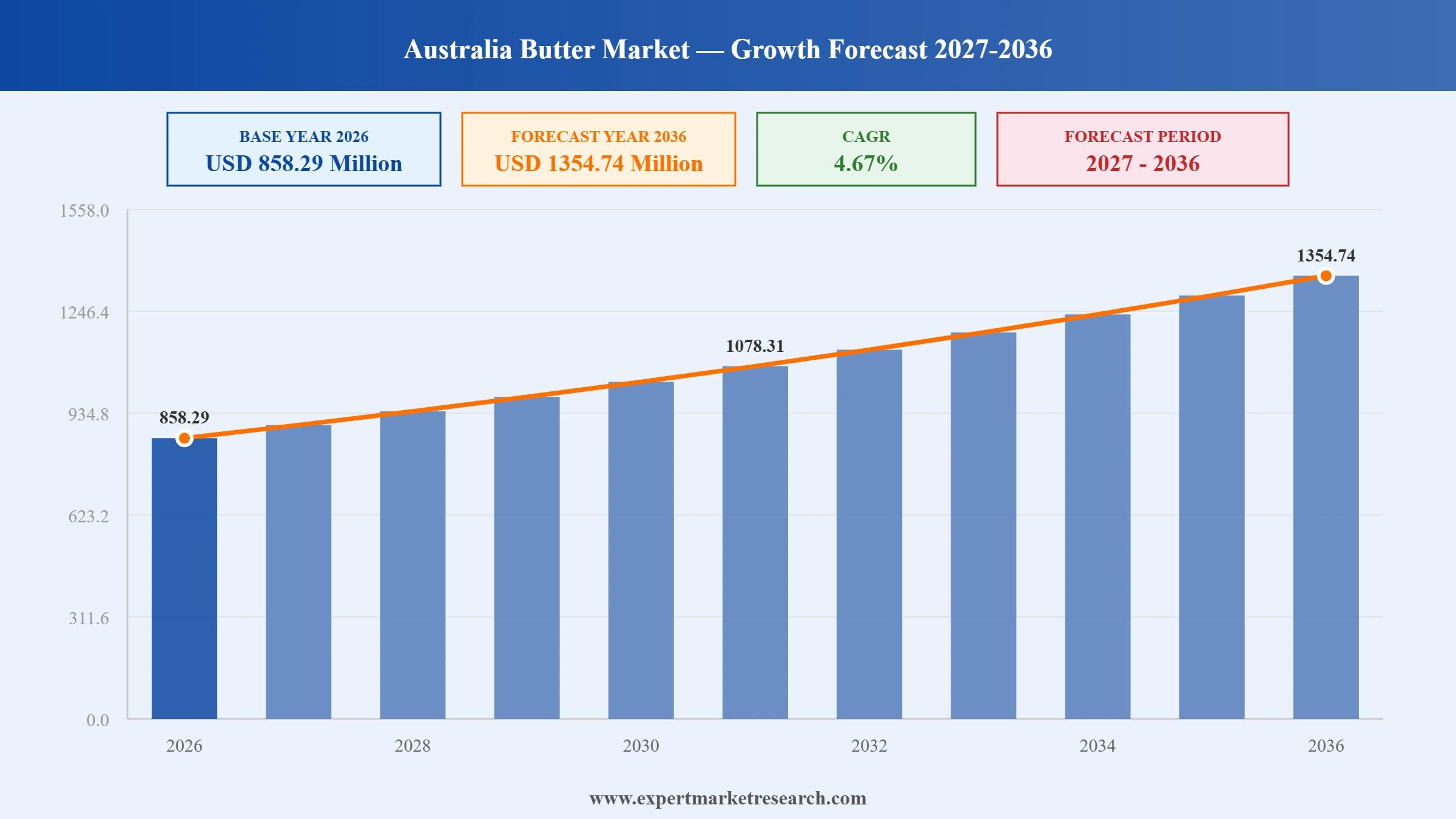
The Australia butter market attained a value of USD 820.00 Million in 2025 and is projected to expand at a CAGR of 4.67% through 2035. The market is further expected to achieve USD 1294.30 Million by 2035. South Premium butter imports are creating opportunities for differentiated formats. Australia imported approximately 40,000 tonnes of butter and anhydrous milkfat in 2024–25, equivalent to around 39% of the domestic butter market by volume. With 86% of imports originating from New Zealand, Australian manufacturers face strong competition in conventional butter while gaining an opportunity to differentiate through cultured, spreadable, flavoured, and bakery-specific formats. This import exposure is encouraging processors to compete beyond volume, particularly through specialised products designed for premium retail, foodservice, and professional bakery applications.
Domestic butter demand is benefiting from the breadth of applications across household cooking, baking, hospitality, food manufacturing, and premium foodservice. In 2024–25, Australian butter and butter-equivalent production recovered to 72,021 tonnes, from 67,319 tonnes in 2023–24, indicating greater availability of locally manufactured products. At the same time, exports of butter and AMF increased to approximately 21,200 tonnes, demonstrating stronger opportunities for processors able to align output with overseas specifications and international price signals, thereby boosting the Australia butter market value.
An innovation in the Australia butter market involves the development of application-specific butter formats for professional baking and foodservice operations. The Pepe Saya company has made investments in special equipment to make 300 × 300 mm, 1-kg butter sheets that are suitable only for use in pastry and laminated bread applications. This format offers bakers more consistency in terms of the portion sizes, thickness of the slices, handling, and mixing into dough when compared to traditional butter blocks. In addition, the company has introduced an 15-gram portion format for use in hospitality, catering, and institutional applications. Such innovations allow Australian butter manufacturers to move beyond standard retail packs and address specific operational requirements of commercial users. By developing formats around bakery, restaurant, airline, and hospitality applications, producers can increase butter utilisation, improve handling efficiency, and create differentiated, higher-value product categories.
Limited domestic milk availability remains a key restraint for Australia’s butter industry because butter production depends heavily on the availability of milkfat and cream. Australian milk production declined 0.7% to 8.315 billion litres in 2024–25, according to Dairy Australia. At the same time, butter and butter-blend production increased to 72,021 tonnes, placing greater emphasis on efficient allocation of available milkfat. Processors must also compete with cheese, milk powders, and other dairy products for the same milk supply. Farm exits, labour shortages, weather variability, and feed availability can further affect milk production. Consequently, periods of tighter milk supply can increase procurement pressure and restrict processors’ ability to expand butter output without compromising the economics of alternative dairy products, thereby restricting the Australia butter market developments.
Read more about this report - REQUEST FREE SAMPLE COPY IN PDF
Fonterra began construction on a $35 million pastry butter sheet expansion at its Edgecumbe site in New Zealand in April 2026. Once completed, the project is expected to double the site’s pastry butter sheet capacity, supporting demand from China, Mexico, and Southeast Asia for laminated bakery products such as croissants and puff pastry. The investment is particularly relevant to the wider Australian butter market because it demonstrates growing manufacturer focus on specialised, application-specific butter formats rather than conventional blocks. The project is expected to deliver first product in 2027 and forms part of Fonterra’s broader investment in higher-value dairy products.
Fonterra began construction on its $75 million Clandeboye butter plant expansion in January 2026. The new butter line is designed to increase the site’s production capacity by up to 50,000 tonnes per year and enable production of a wider range of formats, including Halal and Kosher products. The expansion is intended to serve global ingredients customers and professional kitchens while increasing the value derived from milkfat. Commissioning is planned for early 2027, with first product expected in April 2027. The development highlights continued investment in high-value butter manufacturing and specialised professional applications.
Woolworths attracted attention after introducing Hillview butter made in the United States into its Australian stores. The development is significant because Australia imported around 40,000 tonnes of butter and anhydrous milkfat in 2024-25, with New Zealand supplying 86% of those imports. The Hillview launch illustrates how imported butter is increasingly being used to address domestic supply and price requirements. It also highlights competitive pressure on Australian processors, as imported products can provide retailers with additional sourcing options alongside locally manufactured butter.
Fonterra announced a $75 million investment in butter production at Clandeboye in October 2025, with construction scheduled to begin in December 2025. The new line is designed to add up to 50,000 tonnes per year of butter production capacity and support a broader range of formats for global ingredients customers and professional kitchens. Fonterra also highlighted Halal and Kosher production capabilities as part of the project. The investment demonstrates a strategic shift towards higher-value milkfat products and provides additional processing flexibility to respond to international demand for butter and specialised bakery applications.
Australia’s milk pool is becoming an important supply consideration for butter processors. National milk production declined 0.7% to 8.315 billion litres in 2024-25, while butter and butter-blend production increased to 72,021 tonnes, up from 67,319 tonnes in 2023-24. This divergence indicates that processors are producing more butter despite a smaller national milk pool, increasing the importance of efficient milkfat allocation. Dairy Australia has also highlighted structural pressures affecting the dairy sector, including farm exits and labour availability. Butter manufacturers can respond by strengthening milk procurement relationships, improving cream utilisation, optimising processing schedules, and maintaining flexibility to shift milkfat between butter and other dairy products.
Australian butter exporters supplying the European Union face tighter requirements around animal treatment and supply-chain documentation. From 3 September 2026, EU rules restrict antimicrobial use for growth promotion or yield enhancement in animals supplying products entering the EU market. The Australian Department of Agriculture, Fisheries and Forestry has stated that Australia does not currently operate a segregated production system specifically for EU dairy exports. A new EU health certificate requirement also applies from 30 August 2026, adding an animal-health attestation. These requirements make traceability increasingly important for processors targeting European customers, particularly regarding milk sourcing, supplier records, animal-treatment documentation, and verification of compliance throughout the dairy supply chain.
Butter manufacturers are developing specialised formats to address the requirements of professional foodservice and bakery customers. Pepe Saya commissioned a new 15-gram butter portion machine in Sydney in 2026, following its investment in a dedicated buttersheet line in 2025. Portion-controlled butter can support hotels, restaurants, airlines, catering businesses, and hospitality operators that require consistent serving sizes and simplified food preparation. Meanwhile, butter sheets are suited to pastry and laminated-bakery applications where consistent thickness and handling characteristics are important. Such formats allow Australian processors to target specific professional applications rather than relying exclusively on conventional household blocks, creating opportunities for volume growth through specialised foodservice and bakery supply contracts, thus boosting the Australia butter market dynamics and trends.
Australia’s expanding online grocery channel is creating additional distribution opportunities for butter manufacturers, particularly for premium and specialty products. Australian Bureau of Statistics data show that food online sales reached A$1,449.9 million in June 2025, compared with A$1,402.1 million in April 2025. The figures cover the broader food category rather than butter specifically, but they indicate the increasing scale of digital grocery purchasing. Butter suppliers can use online supermarket platforms and direct-to-consumer channels to market cultured, organic, flavoured, premium, and specialty products that may have limited shelf space in physical stores. Digital distribution also enables targeted promotions, multipack sales, subscription purchases, and wider geographic reach.
Export markets are providing Australian butter processors with an additional avenue for expanding volumes beyond domestic demand. Australian butter and butter-blend exports increased 39% to approximately 21,200 tonnes in 2024-25, according to Australian dairy industry data. Important destinations included Malaysia, Greater China, Taiwan, Thailand, and Singapore, providing processors with access to established Asian dairy markets. Export expansion can help manufacturers utilise processing capacity more effectively and diversify revenue sources across multiple markets. However, international growth remains linked to domestic milk availability, global butter prices, exchange-rate movements, freight costs, and competing returns from products such as cheese and milk powders. Consequently, processors need flexible export strategies aligned with changing international market conditions.
The Expert Market Research’s report titled "Australia Butter Market Report and Forecast 2026-2035” offers a detailed analysis of the market based on the following segments:
Market Breakup by Type
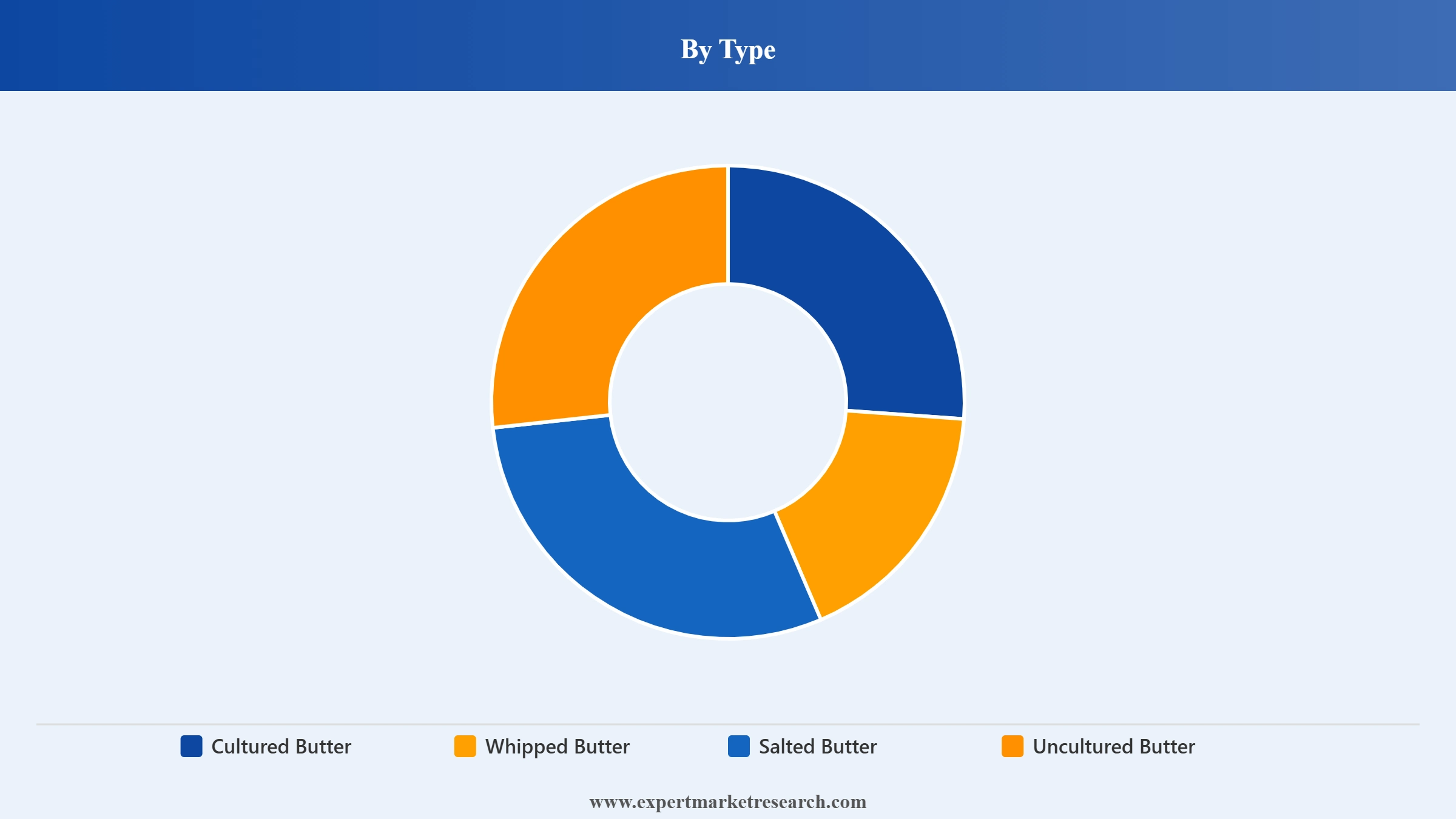
Key Insight: The Australian butter market spans cultured, whipped, salted, uncultured, and specialty products, allowing processors to target both mass-market and premium applications. Salted and unsalted conventional butter remain central to household and culinary procurement, while cultured butter provides opportunities for differentiated flavor and premium positioning. Whipped products can address spreadability and portion-efficiency requirements, whereas specialty formats are increasingly relevant to professional kitchens. The 2026 DIAA competition featured dedicated classes for salted, unsalted, cultured, and consumer-pack butter, confirming active competition across multiple product specifications. For manufacturers, the opportunity lies in balancing high-volume core SKUs with specialized formats that command stronger margins and serve bakery, hospitality, and premium retail customers.
Market Breakup by Nature
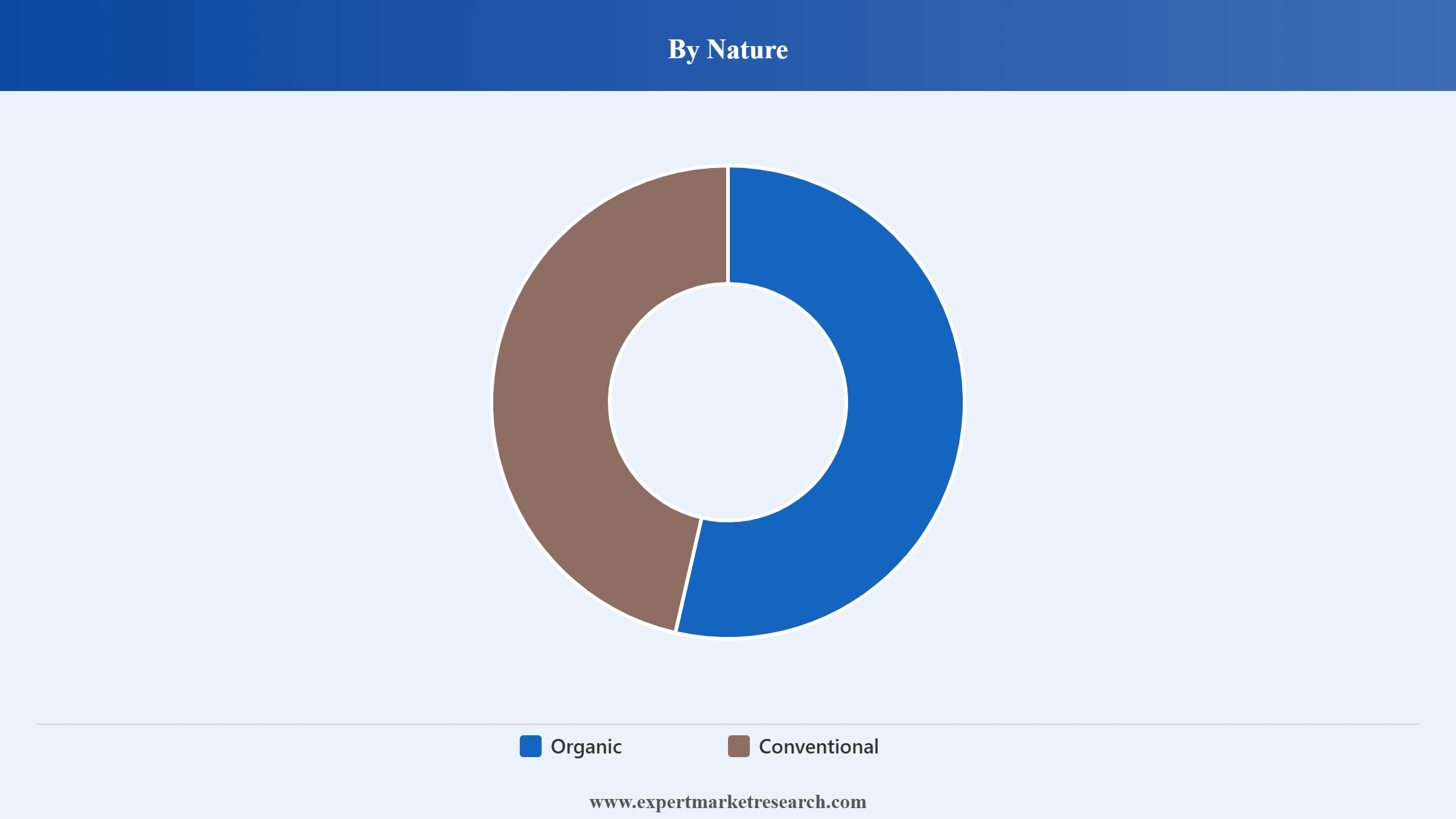
Key Insight: The conventional segment benefits from Australia's extensive dairy-processing infrastructure and broad supermarket penetration, while organic butter occupies a more specialized premium position. Australia's dairy industry operates across thousands of farms and a large processing ecosystem, supporting consistent conventional milk supply for mainstream butter manufacturing. At the premium end, organic certification can support differentiation based on production practices and provenance, particularly through specialty retailers and premium foodservice. For B2B buyers, the distinction is increasingly relevant to private-label development, export specifications, and retailer category architecture. Producers entering organic butter should therefore prioritize certification, farm-level traceability, and reliable cream sourcing rather than simply repositioning conventional butter with premium packaging, thus driving the demand in the Australia butter market.
Market Breakup by Form
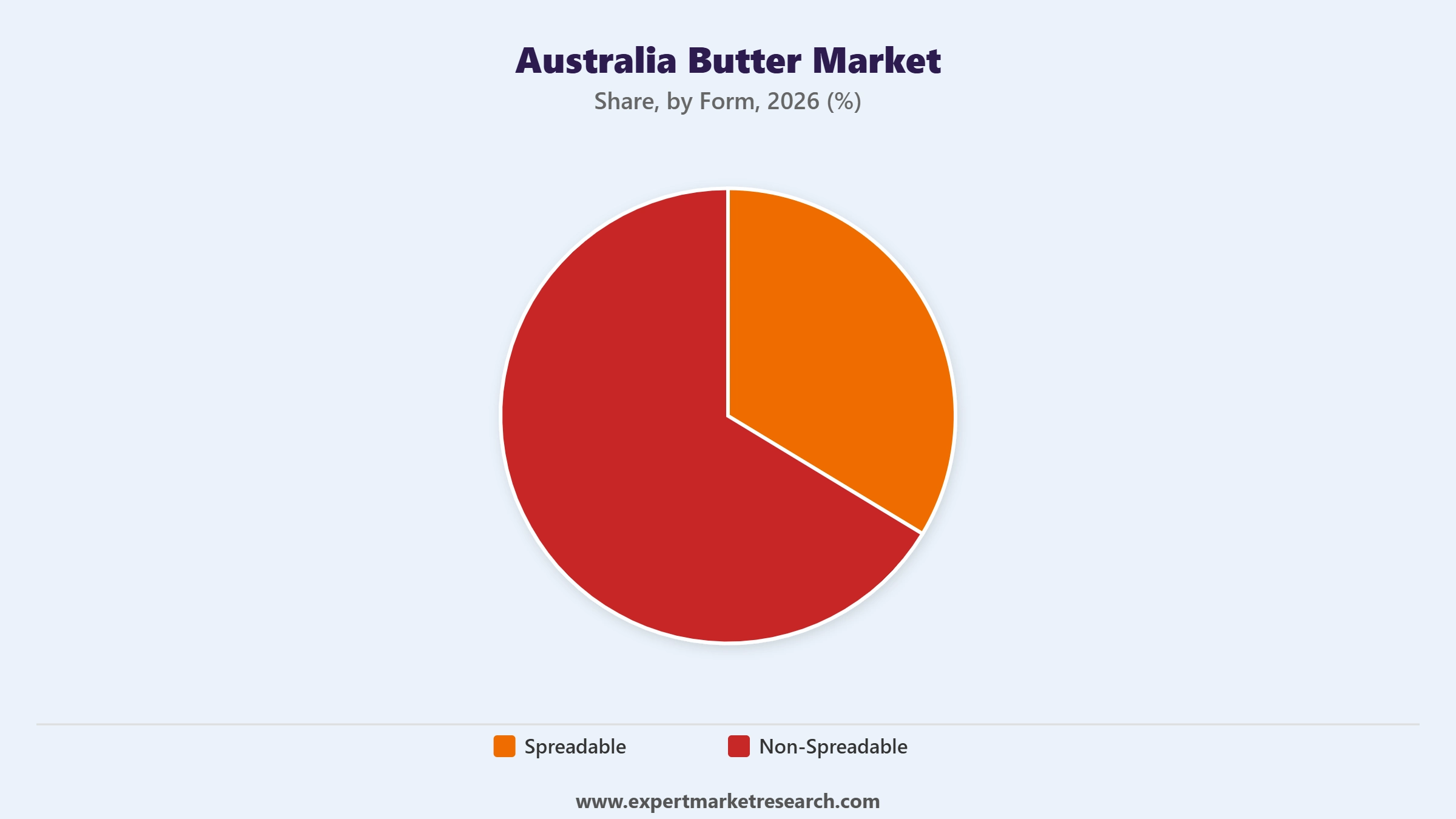
Key Insight: Spreadable and non-spreadable butter serve different purchasing occasions and processing requirements. Spreadable products are particularly relevant to household consumption because they reduce preparation friction, while non-spreadable blocks, pats, sheets, and bulk formats remain important for baking, pastry, food manufacturing, and professional kitchens. The commercial opportunity is therefore not simply a consumer-versus-industrial split: food manufacturers increasingly require butter engineered around temperature behavior, portion control, lamination performance, and handling. Pepe Saya's investment in purpose-built buttersheets illustrates this shift toward application-specific formats. Manufacturers can capture incremental B2B demand by designing products around bakery processes, portioning requirements, and cold-chain handling rather than treating form solely as a retail-pack decision.
Market Breakup by Distribution Channel
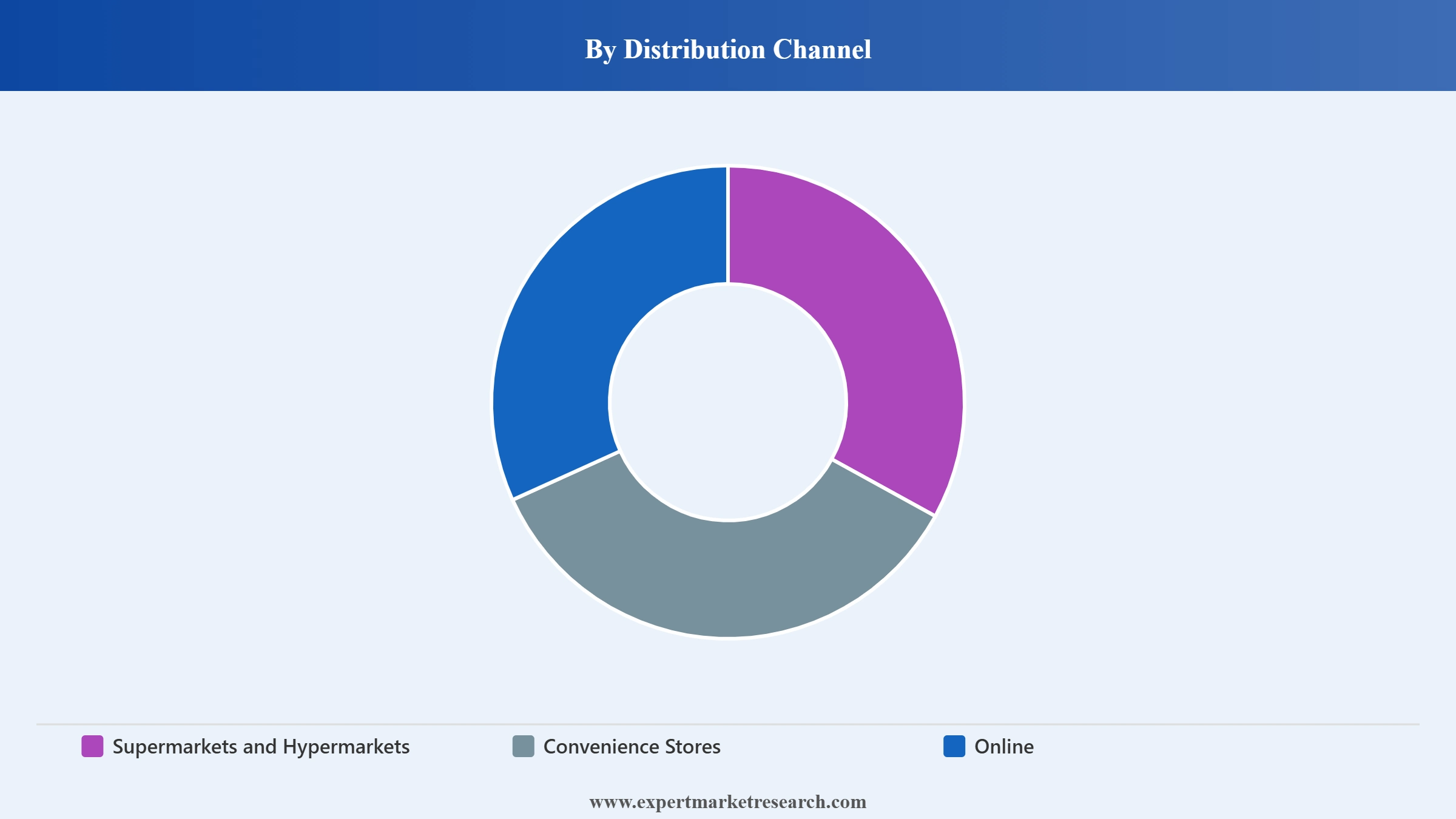
Key Insight: The supermarket and hypermarket continue to be the key channel for domestic consumers, with their share of domestic dairy spread sales totaling around 62% in 2024-25. Convenience stores cater to supplementary purchases, while e-commerce becomes relevant in case of premium, niche, and planned grocery replenishment needs. Food online sales in Australia were $1.4499 billion in June 2025, thus representing a significant digital food channel despite online butter sales not being separately quantified. Therefore, manufacturers are capable of adopting an omnichannel approach, whereby mainstream items will be sold via supermarkets, professional items via distributors, and premium/niche items via online and specialty channels.
Market Breakup by Region
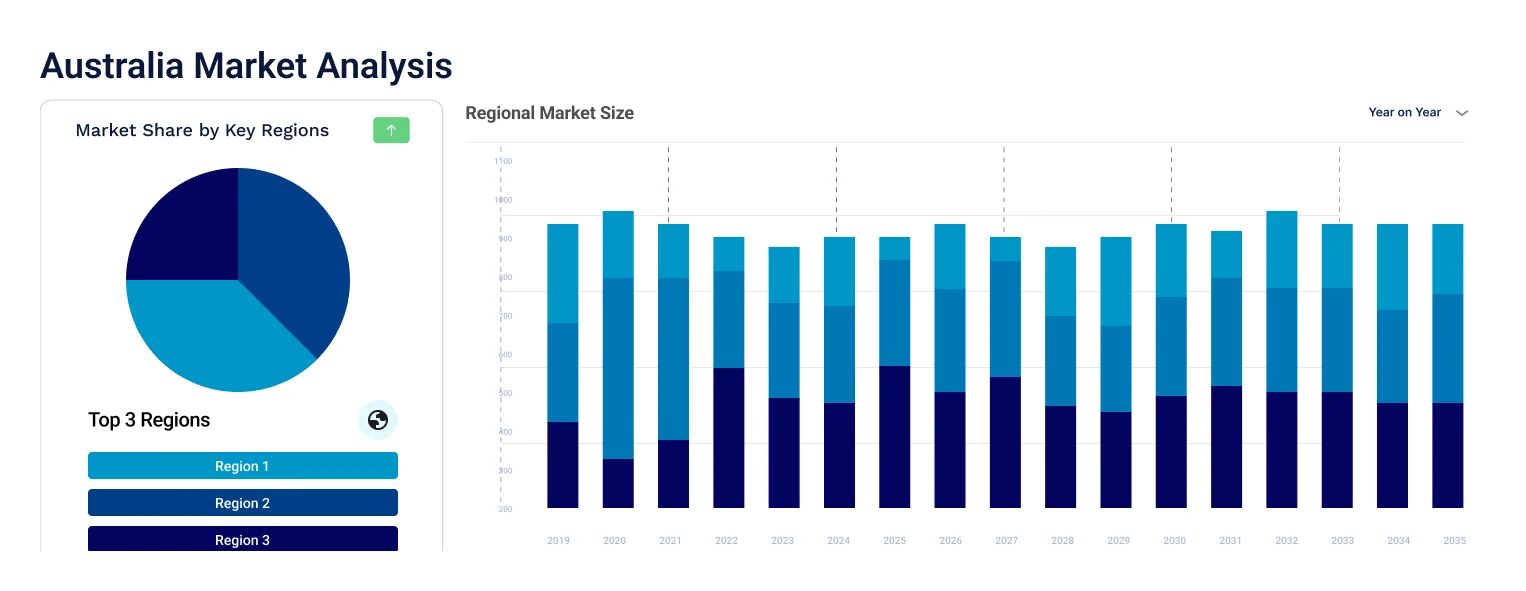
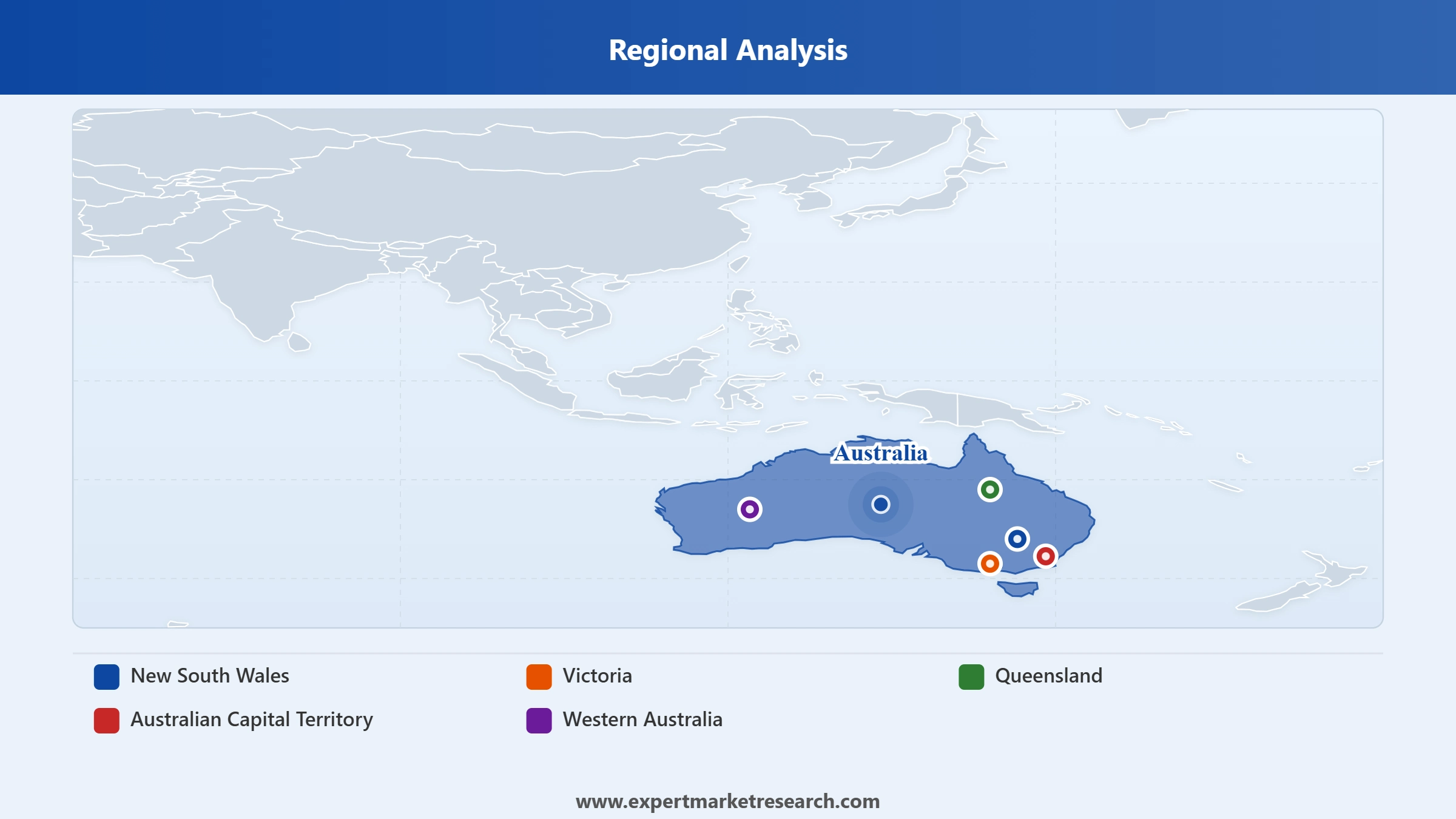
Key Insight: Regional butter demand is closely connected to dairy-processing concentration, population distribution, foodservice activity, and access to milk-producing regions. Victoria is structurally important because it produced 5.266 billion liters of milk in 2024-25, far more than any other Australian state. New South Wales produced 1.071 billion liters, while Tasmania generated 901 million liters. Queensland, Western Australia, and other regions contribute smaller volumes but remain relevant for localized processing and consumption. For manufacturers, regional strategy should therefore distinguish between production-oriented locations and consumption centers. Investment decisions can prioritize proximity to cream supply, processing infrastructure, transport networks, and major retail or foodservice customers rather than relying solely on population-based demand assumptions.

Read more about this report - REQUEST FREE SAMPLE COPY IN PDF
By type, salted butter is anticipated to dominate on broad retail demand
Salted butter is expected to dominate the Australian butter market by type, supported by its broad household and foodservice usage across cooking, baking, spreading, and savory applications. The addition of salt enhances flavor while also contributing to product stability, making the format practical for everyday consumption. Dairy Australia identifies salted butter as one of the common butter types in Australia and notes that salt is added at levels of up to 2%. The category also has strong retail visibility, with Pure Valley Salted Butter receiving the 2025 Australian Grand Dairy Awards Champion Butter recognition. Such developments will thus boost Australia butter market trends in the long run.
Read more about this report - REQUEST FREE SAMPLE COPY IN PDF
Cultured butter is positioned for premiumization because fermentation introduces differentiated flavor and allows manufacturers to compete beyond basic fat content. Pepe Saya has built its proposition around Australian cultured butter, while the 2026 DIAA competition included a dedicated cultured-butter category containing products from Fonterra, Bega, Lactalis Australia, and Gippsland Jersey. This broad participation indicates increasing commercial attention to cultured specifications and premium butter differentiation.
By nature, conventional butter is anticipated to dominate due to established dairy infrastructure
Conventional butter remains the mainstream procurement format because it is supported by Australia's large conventional dairy supply base, established processing infrastructure, and extensive supermarket distribution. Australia's milk pool totaled 8.315 billion liters in 2024-25, providing the foundation for large-scale dairy manufacturing. Conventional butter also fits food manufacturing and foodservice procurement where consistent specifications and dependable supply are central purchasing requirements, thus boosting the Australia butter market revenues.
Read more about this report - REQUEST FREE SAMPLE COPY IN PDF
Organic butter is expected to expand from a smaller base as premium food buyers increasingly use production credentials as a category-selection criterion. For B2B suppliers, growth opportunities are strongest in specialty retail, premium hospitality, natural-food distribution, and private-label programs where certification can justify differentiated pricing. The commercial pathway depends heavily on certified milk supply, documented chain of custody, and reliable year-round availability rather than branding alone.
By form, non-spreadable butter is anticipated to dominate through extensive commercial applications
Non-spreadable butter remains an important product category in the Australia butter market, particularly across commercial baking, food manufacturing, foodservice, culinary preparation, and household cooking. Solid blocks, bulk packs, pats, and sheets provide professional users with greater control over portioning, formulation, and processing. The 2026 Dairy Industry Association of Australia (DIAA) competition included both consumer-pack and professional culinary butter formats, highlighting continued manufacturer attention to butter quality and specifications. Bakeries, pastry manufacturers, restaurants, and food processors also require butter with consistent texture, melting behaviour, and performance during controlled preparation, storage, and refrigeration.
Read more about this report - REQUEST FREE SAMPLE COPY IN PDF
Spreadable butter is expected to gain greater attention as Australian consumers increasingly seek convenience and easier handling without completely moving away from dairy butter. Spreadable formats can simplify application directly from refrigeration, making them suitable for breakfast, sandwiches, cooking, and everyday meal preparation. Fonterra’s Mainland brand has expanded the category through flavoured spreadable butter offerings, demonstrating how manufacturers can broaden butter beyond conventional cooking applications and position it as a ready-to-use breakfast and snacking product. Such innovation can support premiumisation and encourage wider usage occasions in the Australian market.
By distribution channel, supermarkets are anticipated to dominate through broad grocery penetration
Supermarkets and hypermarkets represent the largest established distribution channel in the Australia butter market, supported by extensive store networks, strong household penetration, private-label procurement, promotional campaigns, and broad product availability. Major retailers provide butter manufacturers with access to mass-market consumers while supporting segmentation across conventional, premium, cultured, organic, reduced-salt, spreadable, and specialty products. For Australian butter processors, supermarket agreements can generate relatively stable high-volume orders and strengthen brand visibility. Retailers also enable manufacturers to respond quickly to changing consumer preferences through new pack sizes, seasonal promotions, and differentiated butter offerings.
Read more about this report - REQUEST FREE SAMPLE COPY IN PDF
Online distribution is fast becoming one of the major avenues for the growth of the Australia butter market owing to growing adoption of online grocery purchasing and delivery by consumers. In June 2025, food sales online in Australia were at $1.4499 billion, while in May 2025, food sales online constituted 6.9% of total turnover in food retailing. Butter producers may leverage the online medium to offer premium, specialty, organic, cultured, and even imported varieties to the consumers, apart from the traditional offline stores.
By region, Victoria is anticipated to dominate on milk supply and processing concentration
Victoria remains the structural center of Australia's butter supply chain. The state produced 5.266 billion liters of milk in 2024-25, compared with 1.071 billion liters in New South Wales, 901 million liters in Tasmania, 471 million liters in South Australia, 331 million liters in Western Australia, and 275 million liters in Queensland. Victoria's scale provides manufacturers with a deep supplier base and established dairy-processing infrastructure. However, current operating conditions require closer attention to feed, water, and farm economics. Dairy Australia's 2026 mid-year outlook reported that milk production in Western Victoria was down 1.5% year to date through March compared with 2024-25, while hay prices in July 2025 were more than twice their level a year earlier, thereby directly boosting the Australia butter market regional growth.
Read more about this report - REQUEST FREE SAMPLE COPY IN PDF
New South Wales represents an important expansion area because milk production increased from 1.040 billion liters to 1.071 billion liters between 2023-24 and 2024-25. Tasmania also remains strategically relevant for premium and regionally differentiated dairy products, while Queensland and Western Australia provide more localized supply opportunities. The wider Murray-Darling Basin produced 1.53 billion liters of milk from 912 farms in 2022-23, equivalent to one-fifth of Australia's national milk supply at the time. For butter manufacturers, regional strategy should therefore combine milk availability with processing access, logistics, water security, and proximity to major foodservice and retail customers.
Australia butter market players are primarily aiming to achieve scalability through portfolio expansion, processing efficiency, product differentiation, and broader distribution networks. Manufacturers are increasing their focus on premium, cultured, organic, spreadable, salted, and unsalted butter formats to address varied consumer and foodservice requirements. Companies are also seeking greater production efficiency through investments in modern dairy-processing facilities, automation, cold-chain infrastructure, and improved packaging formats. For business-to-business customers, larger pack sizes, consistent product specifications, and customised butter solutions can help suppliers expand across bakeries, confectionery manufacturers, restaurants, hotels, and food processors.
Scalability is also being pursued through retail penetration, foodservice partnerships, private-label supply, and export opportunities. Established Australia butter companies can leverage existing milk-collection networks, manufacturing capacity, established brands, and distribution relationships to enter additional channels and geographic markets. Sustainability is another strategic consideration, with producers increasingly focusing on responsible sourcing, resource efficiency, and packaging improvements. These strategies allow companies to spread production and distribution costs across higher volumes while responding to changing preferences for premium and convenient dairy products.
Richmond Dairies Pty Ltd. is an Australian dairy processor established in 2004, with its business historically based in Casino, New South Wales, while its current registered main business location is NSW 2000. The company supplies butter for commercial and food-manufacturing applications, including salted butter and unsalted butter in 25-kg formats. Its portfolio also includes cream, cheese, milk concentrates and dairy powders. Richmond Dairies’ butter products are positioned primarily for business and ingredient applications rather than consumer retail.
Arla Foods amba, the owner of the Lurpak brand, traces its origins to 1881 and is headquartered in Viby J, Denmark. In Australia, Lurpak offers premium butter products including Lurpak Slightly Salted Butter, Lurpak Unsalted Butter, Lurpak Spreadable and Lurpak Lighter Spreadable, serving cooking, baking and everyday consumption occasions. Lurpak states that its butter is produced in Denmark using Danish milk. The brand was established in 1901 and remains one of Arla’s internationally recognised dairy brands.
Saputo Dairy Australia Pty Ltd. is the Australian dairy division of Saputo Inc., whose corporate headquarters are in Montréal, Canada, and which was founded in 1954. The Australian entity became active in 2013 and is headquartered operationally at Southbank, Victoria, with its registered address in Allansford. Its Australian portfolio includes butter and butter blends, alongside milk, cream, cheese and dairy ingredients. Key consumer brands include Devondale, which offers butter, spreads and other dairy products.
Ballantyne Foods Pty Ltd. traces its business history to 1929 and is headquartered in South Melbourne, Victoria. The company manufactures packaged butter, dairy blends and margarine for Australian and international markets. Its butter portfolio includes Ballantyne Traditional Salted, Ballantyne Traditional Unsalted Cultured Style, portion-controlled butter products and larger foodservice packs. The company also markets butter under brands including Golden Churn, Red Feather, Wood Dunn, Blue Triangle and Hammer, and identifies canned butter as a major area of its dairy business.
Other key players in the market include Fonterra Brands (Australia) Pty Ltd., Bega Cheese Limited, and Crumble Pty Ltd. (Pepe Saya), among others.
*Please note that this is only a partial list; the complete list of key players is available in the full report. Additionally, the list of key players can be customized to better suit your needs.*
Access the detailed Australia Butter Market Report to understand Australia butter market trends 2026, supply dynamics, competitive developments, regional opportunities, and segment-level prospects. The study provides quantitative and qualitative insights to support procurement planning, product development, channel expansion, investment assessment, and competitive strategy. Download the sample report today to explore the Australia butter market forecast 2026-2035 and evaluate emerging opportunities across Australia's dairy value chain.


Upto 15% Off
USD
$2499 $2249
$3999 $3599
$4999 $4249
$5999 $5099


*While we strive to always give you current and accurate information, the numbers depicted on the website are indicative and may differ from the actual numbers in the main report. At Expert Market Research, we aim to bring you the latest insights and trends in the market. Using our analyses and forecasts, stakeholders can understand the market dynamics, navigate challenges, and capitalize on opportunities to make data-driven strategic decisions.*
In 2025, the market reached an approximate value of USD 820.00 Million.
The market is projected to grow at a CAGR of 4.67% between 2026 and 2035.
The revenue generated from the market is expected to reach USD 1294.30 Million in 2035.
The market is categorised according to type, which includes cultured butter, whipped butter, salted butter, uncultured butter, and others.
Key players in the market are Richmond Dairies Pty Ltd., Arla Foods amba (Lupak), Saputo Dairy Australia Pty Ltd., Ballantyne, Fonterra Brands (Australia) Pty Ltd., Bega Cheese Limited, and Crumble Pty Ltd. (Pepe Saya), among others.
Based on the nature, the market is divided into organic and conventional.
The market is broken down into New South Wales, Victoria, Queensland, Australian Capital Territory, Western Australia, and others.
The Australia butter market faces challenges from fluctuating milk and dairy input costs, supply variability, changing consumer preferences, strong competition, import pressures, and rising production, energy, packaging, and cold-chain costs, which can constrain margins for manufacturers and distributors.
Key strategies include product diversification, premium and organic butter offerings, sustainable sourcing, efficient dairy processing, stronger retail and foodservice partnerships, investment in packaging innovation, digital marketing, export expansion, and development of value-added products targeting health-conscious and convenience-oriented consumers.
Explore our key highlights of the report and gain a concise overview of key findings, trends, and actionable insights that will empower your strategic decisions.
| REPORT FEATURES | DETAILS |
| Base Year | 2025 |
| Historical Period | 2019-2025 |
| Forecast Period | 2026-2035 |
| Scope of the Report |
Historical and Forecast Trends, Industry Drivers and Constraints, Historical and Forecast Market Analysis by Segment:
|
| Breakup by Type |
|
| Breakup by Nature |
|
| Breakup by Form |
|
| Breakup by Distribution Channel |
|
| Breakup by Region |
|
| Market Dynamics |
|
| Competitive Landscape |
|
| Companies Covered |
|
Datasheet
One User
USD 2,499
USD 2,249
tax inclusive*
Single User License
One User
USD 3,999
USD 3,599
tax inclusive*
Five User License
Five User
USD 4,999
USD 4,249
tax inclusive*
Corporate License
Unlimited Users
USD 5,999
USD 5,099
tax inclusive*
*Please note that the prices mentioned below are starting prices for each bundle type. Kindly contact our team for further details.*
Flash Bundle
Small Business Bundle
Growth Bundle
Enterprise Bundle
*Please note that the prices mentioned below are starting prices for each bundle type. Kindly contact our team for further details.*
Flash Bundle
Number of Reports: 3
20%
tax inclusive*
Small Business Bundle
Number of Reports: 5
25%
tax inclusive*
Growth Bundle
Number of Reports: 8
30%
tax inclusive*
Enterprise Bundle
Number of Reports: 10
35%
tax inclusive*
How To Order

Select License Type
Choose the right license for your needs and access rights.

Click on ‘Buy Now’
Add the report to your cart with one click and proceed to register.

Select Mode of Payment
Choose a payment option for a secure checkout. You will be redirected accordingly.
Strategic Solutions for Informed Decision-Making
Gain insights to stay ahead and seize opportunities.

Get insights & trends for a competitive edge.

Track prices with detailed trend reports.

Analyse trade data for supply chain insights.

Leverage cost reports for smart savings

Enhance supply chain with partnerships.

Connect For More Information
Our expert team of analysts will offer full support and resolve any queries regarding the report, before and after the purchase.
Our expert team of analysts will offer full support and resolve any queries regarding the report, before and after the purchase.
We employ meticulous research methods, blending advanced analytics and expert insights to deliver accurate, actionable industry intelligence, staying ahead of competitors.
Our skilled analysts offer unparalleled competitive advantage with detailed insights on current and emerging markets, ensuring your strategic edge.
We offer an in-depth yet simplified presentation of industry insights and analysis to meet your specific requirements effectively.




