

Consumer Insights
Uncover trends and behaviors shaping consumer choices today
Procurement Insights
Optimize your sourcing strategy with key market data
Industry Stats
Stay ahead with the latest trends and market analysis.
The Australia solar energy market attained a volume of 44.80 Gigawatt in 2025 and is projected to expand at a CAGR of 14.60% through 2035. The market is further expected to achieve a volume of 175.03 Gigawatt by 2035. Rooftop installations and greater adoption of battery storage are encouraging the incorporation of storage, advanced control, flexible scheduling, and virtual power plant functionality, thus enabling greater value propositions for solar technology providers.
There are two notable factors that are driving growth in the Australia solar energy market. First, the increased use of copper cells is motivating producers to become less exposed to silver prices. Secondly, the Australian government Solar Sunshot project is currently creating better conditions for investing in the development of solar panels within the country. Both of these factors create greater focus on material and manufacturing efficiency and technology licenses.
Deployment scale in the Australia solar energy market is shifting towards higher efficiency of the cells used, manufacturing and solar plus storage solutions. Among recent trends in Australia is the attempt by SunDrive to commercialize copper metallized solar cells, in January 2025. Under its plans to receive up to AUD 25.3 million from ARENA. In May 2025, SunDrive Solar signed a deal to accelerate the commercialization of copper-based solar technology. The agreement supports scalable manufacturing and deployment of alternatives to conventional silver-based photovoltaic technologies. Such developments replace expensive silver with copper and achieve greater efficiency and savings. It is important for those manufacturers that are concerned about their silver exposure as ARENA reports that solar accounts for one-third of global industrial use of silver which tripled over three years.
The supply-side pipeline in Australia is also getting narrowed. Sunman’s Hunter Valley Solar Foundry project secured up to AUD 151 million in conditional Solar Sunshot funding to build 500 MW-per-year module manufacturing facility. Such a development supports the tendency towards advanced module designs and manufacturing. According to the Australia solar energy market analysis, the country experienced another strong year for renewable energy deployment, adding an estimated 6.8 gigawatts (GW) of renewable capacity during 2025.
Compound Annual Growth Rate
14.6%
Value in Gigawatt
2026-2035
Read more about this report - REQUEST FREE SAMPLE COPY IN PDF
GRS commissioned an Australian 150 MW solar park for Recurrent Energy, increasing utility-scale renewables and assisting in the energy transition process. Businesses could develop utility-scale EPC, equipment supply, O&M, and development projects as the installed capacity of solar increases, accelerating further development in the Australia solar energy market.
FTC Solar commenced shipping of components of the 330 MW Fraser Coast solar project in Queensland, which will have 180 MW of battery storage and is projected to be operational in 2028. Solar firms can supply trackers, batteries, engineering, and many other innovations for Australia’s rising number of hybrid projects.
European Energy installed 200,172 PV modules at its 100 MW Winton North solar plant in Victoria, together with the battery storage facility. Companies may focus on module procurement, installation, construction, storage installation, and maintenance services for large-scale solar facilities, leveraging such trends in the Australia solar energy market.
Fox ESS introduced AirGate, an all-in-one mini solution aimed at simplifying home battery installations and reducing the wiring needed for such installations. The costs of installing residential battery systems are expected to be reduced due to such an approach.
Australia is becoming an innovation hotspot for the development of solar cells, which are based on inexpensive materials. For example, in November 2025, AIKO Solar introduced its first double-glass module, enhancing durability and reliability. The innovation supports higher-performance solar installations, creating opportunities for companies to develop advanced, resilient photovoltaic solutions for the overall Australia solar energy market expansion. In the new approach, silver is substituted by copper while maintaining high-efficiency cells and lower costs of production.
The country is evolving from being an importer of solar technology into establishing domestic manufacturing capacity, redefining the entire Australia solar energy market dynamics. Within the frame of the AUD 1 billion Solar Sunshot program, ARENA promised up to AUD 151 million conditional financing to Sunman's Hunter Valley Solar Foundry in New South Wales, in December 2025. The facility will produce 500 MW of solar modules annually with advanced lightweight solar technology. Opportunities for the local manufacturing and supply chain establishment are arising for module manufacturers, equipment providers and component makers.
Utility-scale companies are integrating their solar generation systems with battery storage. In the Capacity Investment Scheme Tender 7 held in Australia, 19 renewable projects worth 7.8 GW were chosen, out of which hybrid projects accounted for 2.0 GW and 7.9 GWh battery storage capacity. It is noteworthy that the 600 MW Birriwa Solar project by ACEN Australia, launched in August 2024, based in New South Wales, has 2.4 GWh of battery storage. Therefore, the Australia solar energy market observes a higher need for integrated PV, BESS, and energy management technologies.
There is an increased use of rooftop solar as a distributed energy source as an increasing number of organizations are using PV systems with batteries and energy management systems. In September 2026, the Clean Energy Regulator of Australia stated that 4.2 GW of new renewable energy generation capacity had been accredited in Q2 2025, out of which 3.1 GW was attributed to solar power. These figures emphasize the rapid growth in clean energy adoption as well as potential in various solar-related activities, boosting the Australia solar energy market growth. It has become increasingly attractive for installers, inverter suppliers, and energy technology companies to focus on the solar-battery integration system and energy management system.
Government-guaranteed finance and streamlined processes are driving forward the development of small-scale solar and battery projects that will be able to feed into grids nearer to business and community sites. In August 2026, the government committed AUD 100 million via the CEFC for up to 16 hybrid solar/battery storage and battery retrofit projects through its Distribution Connected Accelerator program. This program is mainly focused on small-scale solar/battery projects up to 5 MW in size, with the intention of getting them ready for construction by 2027. Aligning with this trend in the Australia solar energy market, in September 2026, Victoria’s SEC connected a 119MW solar-plus-storage project to the country’s grid, strengthening renewable generation and energy storage capacity.
The Expert Market Research's report titled “Australia Solar Energy Market Report and Forecast 2026-2035” offers a detailed analysis of the market based on the following segments:
Market Breakup by Technology
Key Insight: The solar photovoltaic technology is leading the market due to its modular design enabling its installation on rooftops, for commercial projects, for utilities, and for remote areas, which also allows project sizing flexibility. The CSP is emerging in cases where dispatchability of generation, thermal storage, and industrial heating demands make large-scale project size viable, accelerating growth in the Australia solar energy market. Solar PV continues to benefit from its ability to work with batteries, inverters, tracking systems, and electronic control systems, whereas the CSP technology continues competing in thermal storage and firmness of renewable energy generation. Technology choice is expected to become more dependent on load shape, land area, grid connection, storage period, and form of energy needed.
Market Breakup by Solar Module
Key Insight: Monocrystalline modules are dominant in the Australia solar energy market owing to their high-power densities, matured fabrication processes and application in space-limited commercial and utility-scale projects. Polycrystalline modules maintain significance on account of reduced manufacturing costs and mature installation practices. In August 2026, Quinbrook advanced plans for an Australian polysilicon plant, strengthening domestic solar supply chains and supporting photovoltaic manufacturing. Amorphous silicon cells offer solutions for niche applications owing to their lightweight, flexible design and diffuse sunlight performance. Calcium telluride attracts attention for its use in thin-film solar cells due to its temperature characteristics and ability to cover large surfaces.
Market Breakup by Application
Key Insight: The potential for commercial solar is driven by large roof spaces, regular daytime loads, and the ability to combine PV with battery technology and demand management. Residential installations are boosting growth in the Australia solar energy market due to interest in energy independence and storage-based load shifting. Among the different types of commercial customers, warehouses and factories prefer PV systems that have their size determined by their operating loads, while offices and retail stores seek rooftop installations to manage energy costs.
Market Breakup by Region
Key Insight: Regional dynamics in the Australia solar energy market indicates that New South Wales is powered by a combination of utility-scale projects, commercial rooftop installations, and grid-connected energy storage projects. In Victoria, it is the distributed energy technology adoption and the demand for solar energy systems together with batteries and energy management technology that drives growth. In Queensland, growth is driven by the abundance of solar resources, development sites, industry loads, and increasing hybrid project development. In Western Australia, there are distinct opportunities arising in relation to isolated networks, mining operations, and distributed energy generation, whereby solar can offset dependence on traditional energy generation.
Solar photovoltaic dominates the market due to scalable deployment, efficiency, and battery compatibility across applications
Solar photovoltaic continues to be relevant across the Australia solar energy market scope due to the advantages of using modular construction, decreasing balance-of-system cost, and ease of battery installation for the power plants on utility-scale and commercial applications. PV also fits the current structure of Australian power generation as developers can build installations in various places from urban to regional and remote. Manufacturing companies are also concentrating on developing more efficient cells, lightweight modules and temperature performance improvements in order to harvest energy more efficiently in Australian environment. In July 2026, Sungrow opened an Australian solar battery factory, strengthening local energy-storage manufacturing and supporting the country’s growing renewable energy market.
The most rapidly growing segment of technologies is concentrated solar power as developers are looking into the possibility of dispatchable power generation during times when power generated by conventional PV panels is declining. CSP allows developers in the Australia solar energy market to use thermal storage along with solar concentration thus providing for longer power supply without lithium-ion batteries for applications. It will be of interest for industrial consumers who need both electricity and renewable heat.
By solar modular, monocrystalline accounts for the dominant market share due to high power density, efficiency, and established project integration capabilities
The monocrystalline module forms the leading module category in the Australia solar energy market owing to the higher power density that allows developers to maximize power generation in areas with limited roof space, restricted land use, and limited interconnection capacity. Their efficiency characteristics make the monocrystalline module well-suited for commercial rooftops and utility-scale solar applications in areas where limited footprint generates power output. Module manufacturers are working on optimizing cell structure, wafer configuration, and temperature characteristics while project developers rely on the established manufacturing capabilities and interoperability with inverters and trackers. In February 2026, Cargill launched its first large-scale renewable energy project in Australia, supporting decarbonization and expanding clean-energy adoption.
The calcium telluride module observes significant growth in the Australia solar energy market due to the exploration of thin film technologies by manufacturers and developers, which could provide certain advantages in some applications due to the temperature characteristic and other parameters of material efficiency. Suitability for the use makes the module category attractive for developers looking for alternatives to conventional crystalline silicon modules. Manufacturers are also focusing on increasing efficiency and production scalability of the calcium telluride module.
Commercial applications dominate the market through large rooftops, predictable loads, and stronger solar-storage integration opportunities
The commercial use case is the most significant in the Australia solar energy market, since businesses consider the potential of solar energy to be that of an energy asset, not merely an energy generator. Electricity generation during daylight hours can match the load, thus allowing for better use of the electricity being produced. The commercial developers will pair PVs with batteries, demand management, and energy management to mitigate risks and be more resilient. Having rooftop access at these facilities provides the opportunity for deployment, while financing mechanisms and power purchase agreements allow projects to go through without the need for businesses to invest in a costly way. In October 2025, JinkoSolar launched new high-efficiency solar modules, advancing photovoltaic performance, and supporting growing demand for reliable renewable energy solutions.
Home solar energy usage is rapidly expanding its share in the Australia solar energy market, since homeowners use solar panels on roofs along with batteries, smart inverters, and energy management. The value proposition lies in control and energy resilience within the household. Smaller system sizes and installation processes allow suppliers to serve fragmented demand, while digital monitoring enables installers and aggregators to manage distributed assets remotely.
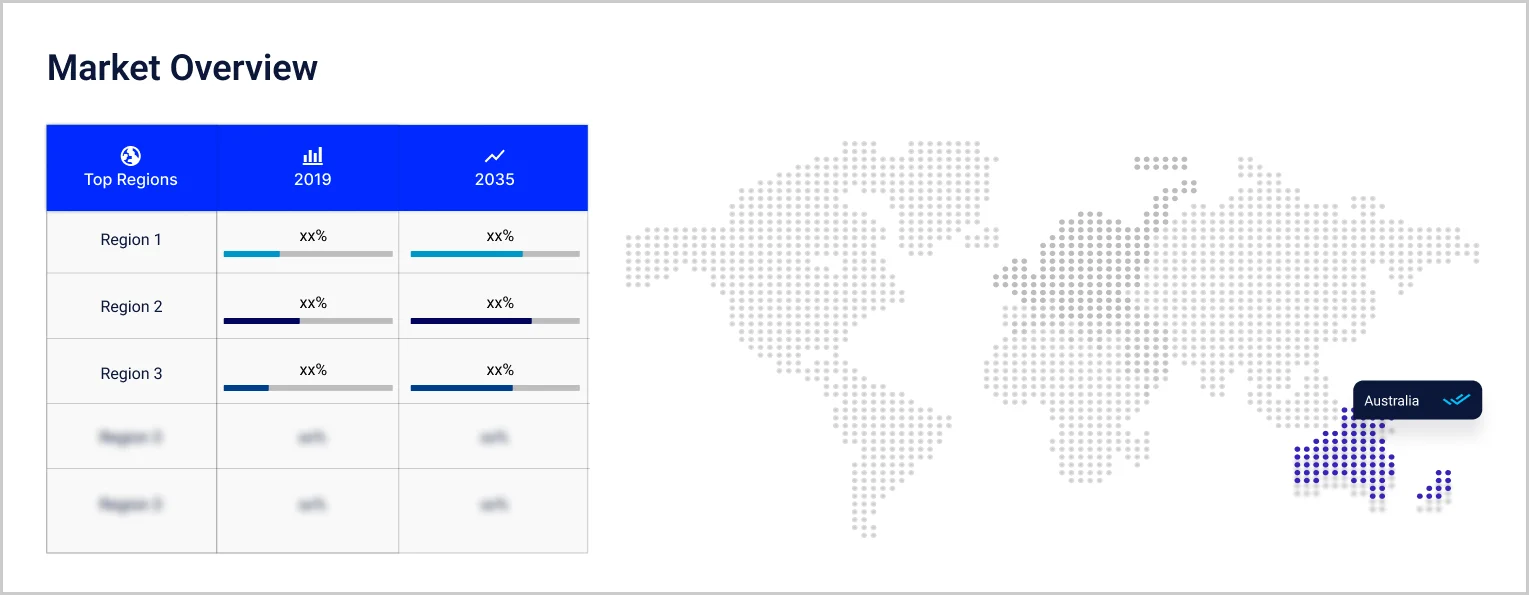
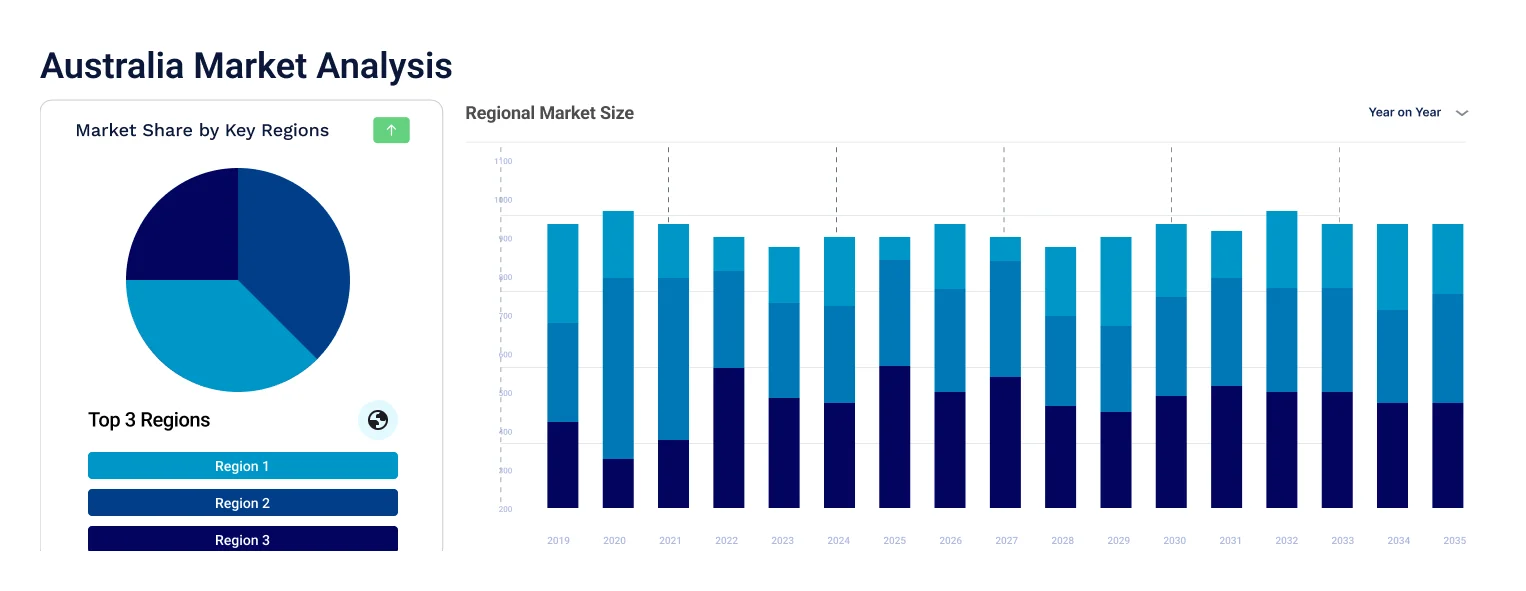
Read more about this report - REQUEST FREE SAMPLE COPY IN PDF
New South Wales clocks in the leading market position through diversified demand, renewable projects, and commercial solar-storage deployment opportunities
New South Wales emerges as the most prominent region for the Australia solar energy market growth due to electricity demand fundamentals, renewable energy projects, and metropolitan and regional load centers for solar power installations. Solar power installations could be located on commercial rooftops, utility-scale generation plants, community-based systems, and solar with battery installations within the region. In September 2026, NSW announced Australia’s largest CBD solar farm at ICC Sydney, expanding urban renewable generation and reducing emissions from operations.
The Queensland region is the most rapidly growing solar energy market in Australia since it offers plentiful solar energy resources and electricity demand fundamentals along with opportunities for utility-scale development projects. Large tracts of lands offer solar energy plant sites, while industrial loads provide options for distributed solar projects.
The competitive environment of the market is changing with a focus on higher efficiency PVs, integration with storage systems, manufacturing within the country, and grid responsiveness. Australia solar energy companies are focusing on technology, reliability, financing, and local service rather than the provision of PV modules. There are business opportunities in copper metallization of cells, solar-battery systems, intelligent inverters, virtual power plants, and light modules.
Companies also find opportunities for localized manufacturing and supply chain resiliency as governments roll out incentives for manufacturing clean energy in the country. Australia solar energy market players in the utility scale segment are looking for dispatchable solar energy by integrating battery systems, while commercial and residential providers are enhancing energy management systems.
Darwin Solar Pty. Ltd. is an Australian solar firm that works with solar installations in the Northern Territory region. It was founded in 2017, and its operations are based in the Darwin region. It is involved in rooftop solar systems, batteries, and electrical works. Due to its localized operations, it can work in areas with high solar resources and remote energy.
CHINT Group was founded in 1984 and is headquartered in China. It operates in various segments, such as smart energy, electrical equipment, and low-carbon solutions. CHINT Australia works in New South Wales region to support Australia with its operations in electrical infrastructure, solar energy, and energy solutions.
Hanwha Q CELLS was founded in 2009 and has global headquarters with Hanwha Q CELLS, whose Australian division is located in North Sydney, Australia. The company provides photovoltaic products and services for residential, commercial, and utility uses via highly-efficient modules, solutions and technical expertise.
Sungrow was established in 2014 and has headquarters in Sydney, New South Wales, Australia. The company produces solar inverters, energy storage systems, and integrated energy systems. The Australian division of the company offers its services to residential, commercial, and utility customers.
Other key players in the market include SMA Solar Technology AG, among others.
*Please note that this is only a partial list; the complete list of key players is available in the full report. Additionally, the list of key players can be customized to better suit your needs.*
Unlock the latest insights with our Australia solar energy market trends 2026 report. Discover regional growth patterns, consumer preferences, and key industry players. Stay ahead of competition with trusted data and expert analysis. Download your free sample report today and drive informed decisions in the market.


Upto 15% Off
USD
$3999 $3599
$2499 $2249
$4999 $4249
$5999 $5099


*While we strive to always give you current and accurate information, the numbers depicted on the website are indicative and may differ from the actual numbers in the main report. At Expert Market Research, we aim to bring you the latest insights and trends in the market. Using our analyses and forecasts, stakeholders can understand the market dynamics, navigate challenges, and capitalize on opportunities to make data-driven strategic decisions.*
The market is projected to grow at a CAGR of 14.60% between 2026 and 2035.
The solar energy market is categorised according to technology, which includes solar photovoltaic (PV) and concentrated solar power (CSP).
The key players are Darwin Solar Pty. Ltd., Chint Group, Hanwha Q Cells Australia Pty Ltd., Sungrow Australia Group Pty Ltd. and SMA Solar Technology AG among others
Based on solar energy applications, the market is divided into commercial and residential.
The market is broken down into New South Wales, Victoria, Queensland, Australian Capital Territory, Western Australia, and others
In 2025, the market reached an approximate volume of 44.80 Gigawatt.
Companies face grid connection constraints, equipment supply risks, intense pricing pressure, transmission bottlenecks, technology integration issues, changing policies, recycling requirements, and difficulty maintaining project economics amid volatile component costs.
Stakeholders are localizing supply chains, developing storage-integrated systems, improving grid-management capabilities, expanding advanced module partnerships, strengthening technical services, and targeting commercial projects requiring flexible, reliable renewable generation.
Explore our key highlights of the report and gain a concise overview of key findings, trends, and actionable insights that will empower your strategic decisions.
| REPORT FEATURES | DETAILS |
| Base Year | 2025 |
| Historical Period | 2019-2025 |
| Forecast Period | 2026-2035 |
| Scope of the Report |
Historical and Forecast Trends, Industry Drivers and Constraints, Historical and Forecast Market Analysis by Segment:
|
| Breakup by Technology |
|
| Breakup by Solar Module |
|
| Breakup by Application |
|
| Breakup by Region |
|
| Market Dynamics |
|
| Competitive Landscape |
|
| Companies Covered |
|
Single User License
One User
USD 3,999
USD 3,599
tax inclusive*
Datasheet
One User
USD 2,499
USD 2,249
tax inclusive*
Five User License
Five User
USD 4,999
USD 4,249
tax inclusive*
Corporate License
Unlimited Users
USD 5,999
USD 5,099
tax inclusive*
*Please note that the prices mentioned below are starting prices for each bundle type. Kindly contact our team for further details.*
Flash Bundle
Small Business Bundle
Growth Bundle
Enterprise Bundle
*Please note that the prices mentioned below are starting prices for each bundle type. Kindly contact our team for further details.*
Flash Bundle
Number of Reports: 3
20%
tax inclusive*
Small Business Bundle
Number of Reports: 5
25%
tax inclusive*
Growth Bundle
Number of Reports: 8
30%
tax inclusive*
Enterprise Bundle
Number of Reports: 10
35%
tax inclusive*
How To Order

Select License Type
Choose the right license for your needs and access rights.

Click on ‘Buy Now’
Add the report to your cart with one click and proceed to register.

Select Mode of Payment
Choose a payment option for a secure checkout. You will be redirected accordingly.
Strategic Solutions for Informed Decision-Making
Gain insights to stay ahead and seize opportunities.

Get insights & trends for a competitive edge.

Track prices with detailed trend reports.

Analyse trade data for supply chain insights.

Leverage cost reports for smart savings

Enhance supply chain with partnerships.

Connect For More Information
Our expert team of analysts will offer full support and resolve any queries regarding the report, before and after the purchase.
Our expert team of analysts will offer full support and resolve any queries regarding the report, before and after the purchase.
We employ meticulous research methods, blending advanced analytics and expert insights to deliver accurate, actionable industry intelligence, staying ahead of competitors.
Our skilled analysts offer unparalleled competitive advantage with detailed insights on current and emerging markets, ensuring your strategic edge.
We offer an in-depth yet simplified presentation of industry insights and analysis to meet your specific requirements effectively.




