Consumer Insights
Uncover trends and behaviors shaping consumer choices today
Procurement Insights
Optimize your sourcing strategy with key market data
Industry Stats
Stay ahead with the latest trends and market analysis.
The automotive belts market was valued at USD 15.10 Billion in 2025. The market is expected to grow at a CAGR of 4.10% during the forecast period of 2026-2035 to reach a value of USD 22.57 Billion by 2035. Rising global vehicle production, an ageing vehicle fleet, steady aftermarket replacement demand, and the spread of hybrid engines are collectively driving the market growth.
The current automotive belts market dynamics reflect steady replacement demand from an ageing vehicle fleet, alongside new engine builds that still depend on belts for accessory drives and valve timing. Workshops and parts retailers are central to this demand: in September 2026, AutoZone reported that domestic commercial sales rose 8.6% in its fourth fiscal quarter and that it opened 374 stores during the year, its highest annual total. Demand from professional installers is especially strong for belts, tensioners, and idler pulleys. This shows how distribution reach turns vehicle age into repeat belt sales, encouraging suppliers to widen catalogs and stock availability, while buyers compare fitment coverage, service life, and noise levels, and manufacturers adopt tighter material specifications and automated inspection to limit warranty returns across vehicle platforms.
The overall automotive belts industry dynamics through 2025 and 2026 are also shaped by volume growth in emerging vehicle markets. In October 2026, Pakistan's automobile manufacturers association reported September car sales of 10,939 units, with the first three months of the fiscal year up 42.8% to 41,872 units. Local assembly growth also supports regional supplier investments in the coming years. This shows how recovering demand adds new engines that need factory fitted belts, encouraging local assemblers to expand supplier networks, while belt makers weigh raw material costs, localization rules, and the gradual shift toward electrified drivetrains. Suppliers with broad fitment coverage are better placed.
Compound Annual Growth Rate
4.1%
Value in USD Billion
2026-2035
Read more about this report - REQUEST FREE SAMPLE COPY IN PDF
|
Automotive Belts Market Report Summary |
Description |
Value |
|
Base Year |
USD Billion |
2025 |
|
Historical Period |
USD Billion |
2019-2025 |
|
Forecast Period |
USD Billion |
2026-2035 |
|
Market Size 2025 |
USD Billion |
15.10 |
|
Market Size 2035 |
USD Billion |
22.57 |
|
CAGR 2019-2025 |
Percentage |
XX% |
|
CAGR 2026-2035 |
Percentage |
4.10% |
|
CAGR 2026-2035 - Market by Region |
Middle East and Africa |
5.8% |
|
CAGR 2026-2035 - Market by Product Type |
Timing Belts |
4.8% |
|
CAGR 2026-2035 - Market by Material |
Polyurethane |
5.6% |
|
2025 Market Share by Region |
Europe |
27.0% |
The market for automotive belts is being shaped by the acquisition of a belts business, aftermarket brand consolidation, headquarters and facility investment by belt makers, and distributor acquisitions that widen replacement reach. Wider parts availability and simpler product ranges are further reshaping the competitive landscape.
Gates completed its acquisition of Timken's belts business, taking over manufacturing assets, including the main belt plant in San Jose Iturbide, Mexico, along with customer relationships in industrial, aftermarket, and powersports channels. The deal, announced earlier in the year, excluded a Missouri manufacturing plant. The acquisition widened Gates' North American power transmission footprint and signaled continued consolidation among belt suppliers.
Schaeffler announced that its FAG, INA, and LuK aftermarket brands would move under one Schaeffler identity, starting with the FAG portfolio. A first look at the new packaging was shown at Automechanika Frankfurt. Part numbers and specifications stayed unchanged, so workshops could keep ordering belt drive components as before. Simpler branding was expected to ease parts selection for repair shops.
Mitsuboshi Belting announced a redevelopment of its Kobe head office and business site, with a new headquarters building as the centerpiece and investment of about JPY 5 billion. The announcement came as belt makers kept investing in facilities to serve car manufacturers and repair buyers. Continued spending by established suppliers pointed to confidence in long term demand for belt products.
Fisher Auto Parts acquired Smyth Auto Parts, adding 25 locations across Ohio, Kentucky, and Tennessee to its distribution network. The deal widened the buyer's reach to professional installers and retail customers in the region, improving parts availability and shortening delivery times for workshops. Consolidation among parts distributors like this was giving replacement belt suppliers broader access to independent repair shops.
Export growth is changing production planning at vehicle plants, especially in the largest manufacturing economies. Higher shipments are keeping assembly lines busy and lifting orders for engine components that go into every new vehicle. In October 2026, the China Association of Automobile Manufacturers reported that exports from January to September reached 8.205 million units, up 65.8%, which is increasing factory fitted belt demand and encouraging belt makers to keep capacity close to export oriented assembly clusters and major shipping ports.
Powertrain mixes are shifting faster in some regions than in others. Hybrid vehicles still use belts for accessory drives and engine timing, while battery electric models need fewer of them, so the product mix is changing steadily. In September 2026, the European Automobile Manufacturers' Association reported that petrol and diesel cars fell to 29% of registrations over the first eight months, from 37.5%, while hybrid-electric models reached 36.6%, which is steering suppliers toward belts built for hybrid and stop-start use.
Parts distribution is becoming more concentrated in mature markets as large chains buy smaller regional dealers. Larger networks stock more belt ranges and are reaching repair shops faster. In October 2026, Genuine Parts Company reported third quarter sales of USD 6.5 billion, up 4.2%, with acquisitions adding 0.9% to growth and North America Automotive sales reaching USD 2.5 billion, which is supporting wider availability of replacement belts across independent workshops and national retail chains, where belts are sold as routine maintenance items.
Trade patterns are changing where vehicles are assembled and which suppliers win new contracts. Plants in Mexico are supplying large volumes of finished vehicles to North American buyers, which keeps local component demand steady. In October 2026, Mexico's national statistics institute reported that light vehicle production reached 2,946,943 units from January to September, with 76.4% of the 2,528,623 exported vehicles going to the United States, which is sustaining original equipment belt orders at nearby supplier plants along border manufacturing corridors.
Freight and logistics fleets need durable belts for long duty cycles, so downtime is costly for operators. Growth in truck and van production is therefore lifting demand for heavy duty drive belts. In October 2026, Turkey's automotive manufacturers' association reported that commercial vehicle output rose 12.4% year on year to 442,793 units from January to September, while passenger car output fell 17.1%, which is shifting belt demand toward heavier, longer life products among suppliers serving European fleets across the region.
The Expert Market Research's report titled "Automotive Belts Market Report and Forecast 2026-2035" offers a detailed analysis of the market based on the following segments:
Market Breakup by Product Type
Key Insight: Serpentine belts dominate the automotive belts market by product type, as one ribbed belt drives most engine accessories. Timing belts are the fastest growing, supported by downsized engines and wet belt designs. V-belts remain in older vehicles, commercial equipment, and some auxiliary drives, while others include flat, CVT, and starter generator belts used in specialized applications. Showing the base of new engines, in October 2026, Germany's KBA data showed September registrations of 256,774 cars, up 9%.
Market Breakup by Material
Key Insight: Rubber dominates the automotive belts market by material, supported by flexibility, heat resistance, and low cost, while polyurethane is the fastest growing on oil resistance, strength, and quiet operation. Others include thermoplastic elastomers, fabric reinforced composites, and specialty blends used where heat or chemical exposure is severe. Showing mature market demand, in October 2026, Japan's JAMA reported September vehicle sales of 433,683 units, up 1.3%, led by passenger cars at 360,743 units.
Market Breakup by Vehicle Type
Key Insight: Passenger cars dominate the automotive belts market by vehicle type, as the car fleet is far larger than any other group and each engine carries several belts. Light commercial vehicles are the fastest growing on delivery and small business demand, while heavy commercial vehicles add steady demand for durable belts on long haul duty cycles. Showing commercial vehicle caution, in October 2026, Brazil's Anfavea forecast that registrations of trucks and buses would fall 6.5% in 2026.
Market Breakup by Sales Channel
Key Insight: OEM dominates the automotive belts market by sales channel, as every new engine ships with factory fitted belts under supply contracts with vehicle makers. Aftermarket is the fastest growing, supported by an ageing fleet, scheduled replacement intervals, and wider online parts access. Showing commercial vehicle weight in new sales, in October 2026, the Philippines' CAMPI and TMA reported that commercial vehicles made up 79.54% of year-to-date sales of 307,060 units.
Market Breakup by Region
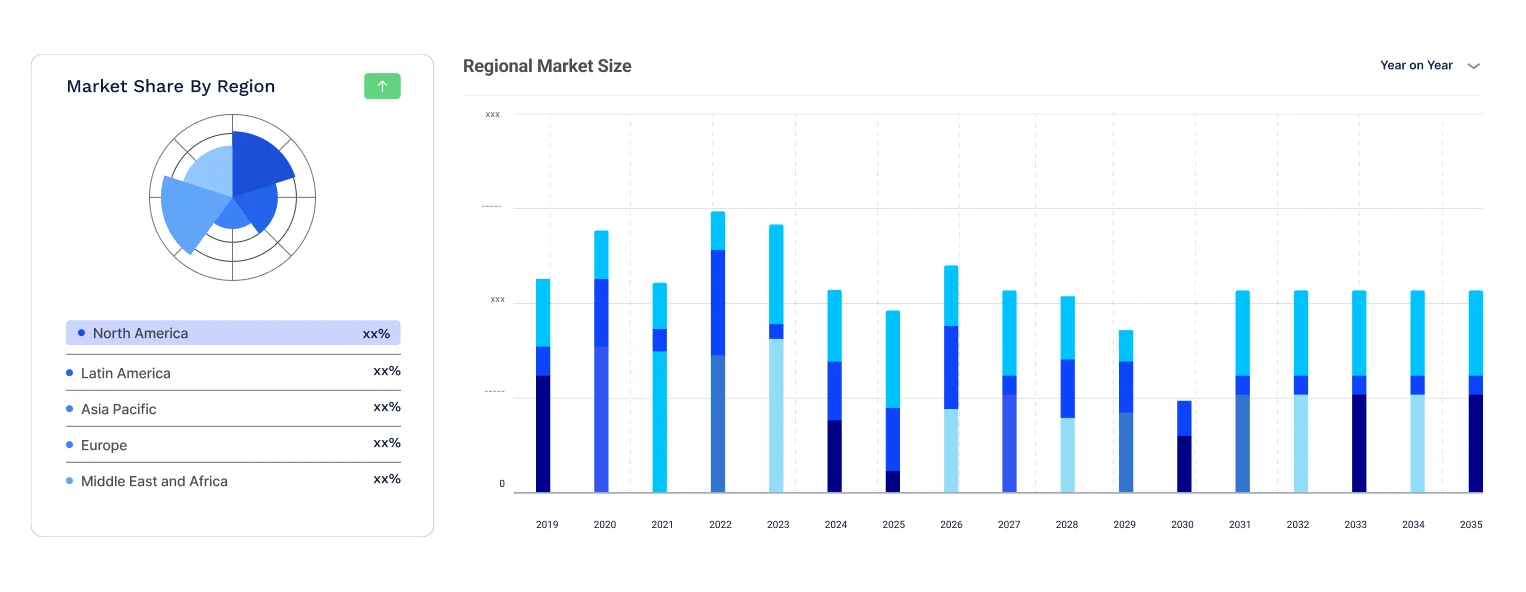
Key Insight: Asia Pacific dominates the automotive belts market on large vehicle production and fleet growth, while the Middle East and Africa are the fastest growing on new assembly capacity. North America grows steadily on a large replacement base, Europe advances on hybrid vehicle content and a strong aftermarket, and Latin America expands from a smaller base. Showing new regional capacity, in May 2026, Toyota Kirloskar Motor announced a Maharashtra plant to produce 100,000 vehicles a year, with about 2,800 initial jobs.
Read more about this report - REQUEST FREE SAMPLE COPY IN PDF
By product type, serpentine belts dominate as modern engines drive most accessories with one ribbed belt
Serpentine belts account for the largest share of the automotive belts market by product type, because one ribbed belt drives the alternator, water pump, power steering, and air conditioning compressor on most current engines. Wide fitment across vehicle platforms also supports steady replacement sales. In October 2026, Indonesia's Gaikindo reported that wholesales from January to September reached 679,020 units, up 21%, adding to the pool of new engines using serpentine drives, which later feeds replacement demand through workshops and retailers.
Timing belts are the fastest-growing product type as downsized, turbocharged engines need precise valve timing, and makers are adopting wet belt designs that run-in engine oil. Fixed replacement intervals also support steady aftermarket demand. In October 2026, the United Kingdom's SMMT reported September registrations of 350,518 units, up 12.1%, a growing base of new vehicles that depend on belt driven timing systems. V-belts and other types decline gradually as older designs retire from the active vehicle fleet over time.
By material, rubber leads on proven performance, heat resistance, and low production cost
Rubber accounts for the largest share of the automotive belts market by material, supported by its flexibility, heat resistance, and low cost, with EPDM compounds replacing older chloroprene types in many serpentine belts. Established supply chains also keep rubber ahead of alternatives. In July 2026, Kumho Petrochemical said its EPDM capacity had reached 310,000 tons after a 70,000-ton expansion, securing synthetic rubber supply for belt makers across Asia and supporting stable regional input availability for rubber-based belt production.
Polyurethane is the fastest-growing material as makers seek belts that resist oil, abrasion, and stretching, while quiet running matters more in electrified cars. Thin, strong profiles also suit compact engine layouts. In October 2026, Australia's new vehicle sales reached 102,924 units in September, with battery electric cars at a 24.2% share, a market where low noise and low maintenance drives are gaining attention. Rubber remains the much larger base, since polyurethane belts cost more and fit specialized or premium applications.
By vehicle type, passenger cars dominate on sheer fleet size and engine count
Passenger cars account for the largest share of the automotive belts market by vehicle type, as the global car fleet is far larger than the truck fleet and every engine carries several belts that wear out and need replacing. In September 2026, Cox Automotive raised its full year forecast for United States new vehicle sales to 16.1 million units from 15.8 million, which supports factory fitted belts and a base of cars that will need replacement belts in later years.
Light commercial vehicles are the fastest-growing vehicle type, supported by e-commerce deliveries, small business fleets, and urban logistics, which push vans and pickups through long daily duty cycles and shorter belt replacement intervals. In October 2026, South Africa's naamsa reported September light commercial vehicle sales of 14,361 units, up 9.6%. Heavy commercial vehicles remain steady on freight demand and long-haul operations, while passenger cars hold the larger base, and operators prefer durable belts that limit unplanned downtime and repairs.
By sales channel, OEM leads as every new engine ship with factory fitted belts
OEM accounts for the largest share of the automotive belts market by sales channel, because every new engine is fitted at the factory with belts specified by the vehicle maker, usually under multiyear contracts. In October 2026, Argentina's ADEFA reported September vehicle production of 39,747 units, with about 71% exported, showing how output keeps original equipment orders moving at supplier plants in the region, since supply contracts are tied to the number of vehicles each plant builds each month.
Aftermarket is the fastest-growing sales channel as the global vehicle fleet ages and belts need scheduled replacement at set mileage, lifting repair shop and retailer sales. Online ordering is also making parts easier to find. In July 2026, O'Reilly Automotive reported second quarter comparable store sales up 6%, with professional sales rising about 10%, reflecting strong demand from repair shops and owners who keep older vehicles on the road longer. OEM supply remains larger while new vehicle output stays high.
Asia Pacific dominates the market due to large vehicle production and a growing vehicle fleet
Asia Pacific dominates the automotive belts market, as China, Japan, India, and ASEAN host the world's largest vehicle assembly base and a rapidly growing fleet, while local belt production is also concentrated in the region. In September 2026, Thailand's car production for August rose 10.93% to 124,646 units, showing healthy output across ASEAN and steady belt demand from vehicle makers and the replacement market, while large export programs and local sourcing rules keep regional belt manufacturers busy through the year.
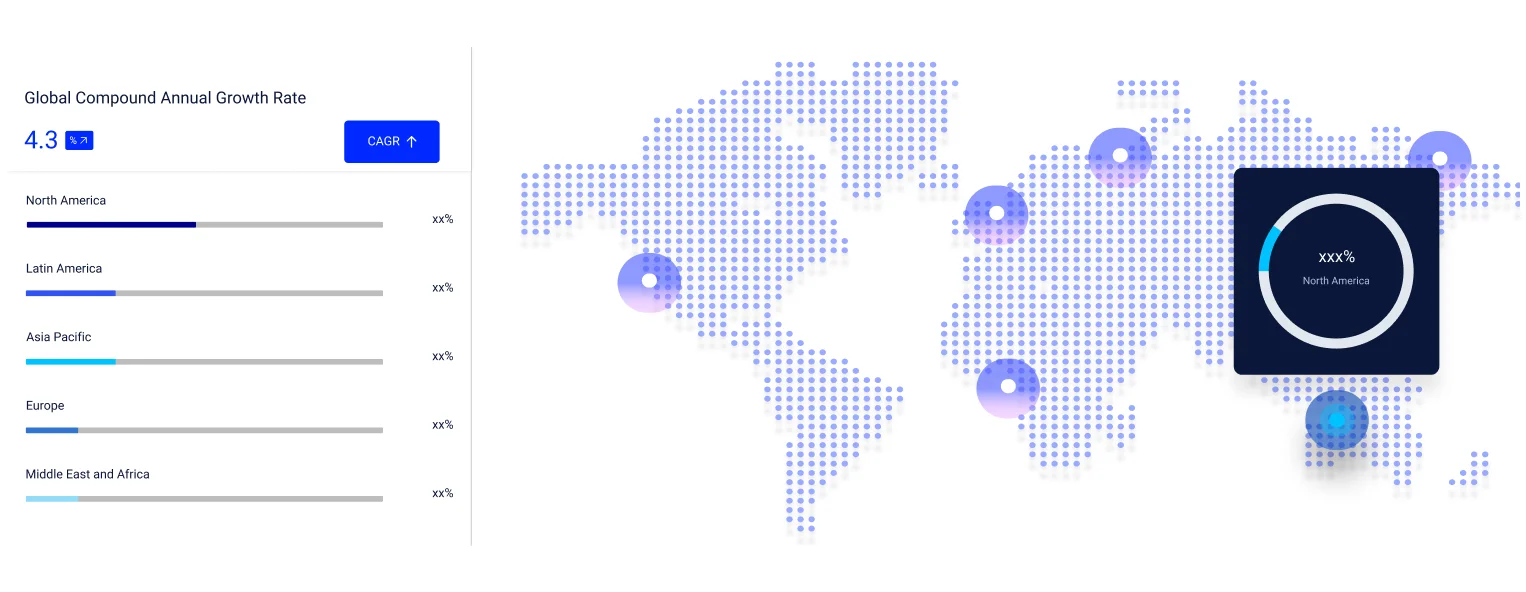
The Middle East and Africa are the fastest-growing region as new assembly plants, rising vehicle imports, and fleet expansion lift demand from a small base. In January 2026, Lucid said it would start full scale vehicle manufacturing in Saudi Arabia, targeting 150,000 vehicles a year by 2029. Europe and North America grow slowly on mature fleets, while Latin America grows from a smaller base, and rising fleets in the Gulf, North Africa, and sub-Saharan markets keep replacement demand moving higher.
|
CAGR 2026-2035 - Market by |
Region |
|
North America |
3.2% |
|
Europe |
3.0% |
|
Asia Pacific |
5.0% |
|
Latin America |
4.4% |
|
Middle East and Africa |
5.8% |
The global automotive belts market players are moderately consolidated, and automotive belts market players compete on product quality, fitment coverage, OEM relationships, and aftermarket distribution, from multinational power transmission specialists to regional rubber product makers. Companies like Gates Corporation, Continental AG, Bando Chemical Industries, Ltd., and Mitsuboshi Belting Ltd. lead through broad portfolios and long supply relationships, while Dayco LLC, Optibelt GmbH, Hutchinson SA, Robert Bosch GmbH, and Carlisle Companies Incorporated strengthen positions through engineering depth and regional reach.
Leading automotive belts companies are focusing on material innovation, wet belt and hybrid ready designs, capacity localization, and wider aftermarket catalogs to strengthen their competitive position and meet vehicle maker requirements. Increasing emphasis on durability, noise reduction, and lower friction is also enabling companies to broaden product portfolios, deepen customer relationships, and support sustained long term market growth across several regions.
Gates Corporation, headquartered in Denver, Colorado, was founded in 1911. The company manufactures power transmission belts and fluid power products, supplying vehicle makers and aftermarket channels with synchronous, V, and multi-rib belts, and its shares are listed on the New York Stock Exchange.
Continental AG, headquartered in Hanover, Germany, was founded in 1871. The technology company develops tires, industrial rubber products, and automotive components, and its ContiTech business supplies drive belts and hoses to vehicle makers and replacement customers in many countries from plants across several continents.
Bando Chemical Industries, Ltd., headquartered in Kobe, Japan, was founded in 1906. The company produces power transmission belts and other rubber-based products, supplying automotive, industrial, and agricultural customers across Asia, North America, and Europe through its overseas subsidiaries and sales offices.
Mitsuboshi Belting Ltd., headquartered in Kobe, Japan, was founded in 1919. The company makes power transmission belts, conveyor belts, and polymer products, and supplies automotive belts to vehicle makers and replacement markets through production sites in Asia, the Americas, and Europe.
Other key players in the market report include Dayco LLC, Optibelt GmbH, Hutchinson SA, Robert Bosch GmbH, and Carlisle Companies Incorporated, among others.
*Please note that this is only a partial list; the complete list of key players is available in the full report. Additionally, the list of key players can be customized to better suit your needs.*
Explore the latest trends shaping the automotive belts market 2026-2035 with our in-depth report. Gain strategic insights, future forecasts, and key market developments that can help you stay competitive. Download a free sample report or contact our team for customized consultation on the market trends 2026.


Upto 15% Off
USD
$2499 $2249
$3999 $3599
$4999 $4249
$5999 $5099


*While we strive to always give you current and accurate information, the numbers depicted on the website are indicative and may differ from the actual numbers in the main report. At Expert Market Research, we aim to bring you the latest insights and trends in the market. Using our analyses and forecasts, stakeholders can understand the market dynamics, navigate challenges, and capitalize on opportunities to make data-driven strategic decisions.*
In 2025, the automotive belts market reached an approximate value of USD 15.10 Billion.
The market is projected to grow at a CAGR of 4.10% between 2026 and 2035.
The key players in the market include Gates Corporation, Continental AG, Bando Chemical Industries, Ltd., Mitsuboshi Belting Ltd., Dayco LLC, Optibelt GmbH, Hutchinson SA, Robert Bosch GmbH, and Carlisle Companies Incorporated, among others.
Leading companies are developing longer life materials, localizing production near vehicle plants, widening aftermarket catalogs, and signing multiyear supply agreements with vehicle makers.
Key challenges include the shift toward battery electric vehicles, raw material price swings, intense price competition, counterfeit parts, and longer replacement intervals on newer belt designs.
Explore our key highlights of the report and gain a concise overview of key findings, trends, and actionable insights that will empower your strategic decisions.
|
Report Features |
Details |
|
Base Year |
2025 |
|
Historical Period |
2019-2025 |
|
Forecast Period |
2026-2035 |
|
Scope of the Report |
Historical and Forecast Trends, Industry Drivers and Constraints, Historical and Forecast Market Analysis by Segment:
|
|
Breakup by Product Type |
|
|
Breakup by Material |
|
|
Breakup by Vehicle Type |
|
|
Breakup by Sales Channel |
|
|
Breakup by Region |
|
|
Market Dynamics |
|
|
Competitive Landscape |
|
|
Companies Covered |
|
Datasheet
One User
USD 2,499
USD 2,249
tax inclusive*
Single User License
One User
USD 3,999
USD 3,599
tax inclusive*
Five User License
Five User
USD 4,999
USD 4,249
tax inclusive*
Corporate License
Unlimited Users
USD 5,999
USD 5,099
tax inclusive*
*Please note that the prices mentioned below are starting prices for each bundle type. Kindly contact our team for further details.*
Flash Bundle
Small Business Bundle
Growth Bundle
Enterprise Bundle
*Please note that the prices mentioned below are starting prices for each bundle type. Kindly contact our team for further details.*
Flash Bundle
Number of Reports: 3
20%
tax inclusive*
Small Business Bundle
Number of Reports: 5
25%
tax inclusive*
Growth Bundle
Number of Reports: 8
30%
tax inclusive*
Enterprise Bundle
Number of Reports: 10
35%
tax inclusive*
How To Order

Select License Type
Choose the right license for your needs and access rights.

Click on ‘Buy Now’
Add the report to your cart with one click and proceed to register.

Select Mode of Payment
Choose a payment option for a secure checkout. You will be redirected accordingly.
Strategic Solutions for Informed Decision-Making
Gain insights to stay ahead and seize opportunities.
Get insights & trends for a competitive edge.
Track prices with detailed trend reports.
Analyse trade data for supply chain insights.
Leverage cost reports for smart savings
Enhance supply chain with partnerships.
Connect For More Information
Our expert team of analysts will offer full support and resolve any queries regarding the report, before and after the purchase.
Our expert team of analysts will offer full support and resolve any queries regarding the report, before and after the purchase.
We employ meticulous research methods, blending advanced analytics and expert insights to deliver accurate, actionable industry intelligence, staying ahead of competitors.
Our skilled analysts offer unparalleled competitive advantage with detailed insights on current and emerging markets, ensuring your strategic edge.
We offer an in-depth yet simplified presentation of industry insights and analysis to meet your specific requirements effectively.