Consumer Insights
Uncover trends and behaviors shaping consumer choices today
Procurement Insights
Optimize your sourcing strategy with key market data
Industry Stats
Stay ahead with the latest trends and market analysis.
The automotive e-compressor market was valued at USD 7.60 Billion in 2025. The market is expected to grow at a CAGR of 8.90% during the forecast period of 2026-2035 to reach a value of USD 17.83 Billion by 2035. Rising electric vehicle production, tighter emission rules, and demand for efficient heat pump thermal systems are collectively driving the market growth.
The current automotive e-compressor market dynamics reflect emission rules, battery electric adoption, and the shift toward heat pump systems that raise the electric content of each vehicle. Policy is central to this shift: in October 2026, the EPP, S&D, and Renew groups in the European Parliament reached a political agreement on an 87.5% cut in new car tailpipe carbon dioxide emissions by 2035, against a Commission proposal of 90%, with committee votes pending and a plenary vote possible in December. Such rules keep electrified models central to European product plans and support steady compressor demand.
The overall automotive e-compressor market value is also shaped by electric vehicle volumes. The International Energy Agency's Global EV Outlook 2026 estimated that global electric car sales rose 20% in 2025 to over 20 million, about a quarter of new cars, with China close to 55% of the total. Such volumes give suppliers scale, while buyers weigh cost, efficiency, and noise, and makers add heat pump functions to extend range. Companies with strong thermal expertise are better placed.
Compound Annual Growth Rate
8.9%
Value in USD Billion
2026-2035
Read more about this report - REQUEST FREE SAMPLE COPY IN PDF
|
Automotive E-Compressor Market Report Summary |
Description |
Value |
|
Base Year |
USD Billion |
2025 |
|
Historical Period |
USD Billion |
2019-2025 |
|
Forecast Period |
USD Billion |
2026-2035 |
|
Market Size 2025 |
USD Billion |
7.60 |
|
Market Size 2035 |
USD Billion |
17.83 |
|
CAGR 2019-2025 |
Percentage |
XX% |
|
CAGR 2026-2035 |
Percentage |
8.90% |
|
CAGR 2026-2035 - Market by Region |
Latin America |
11.5% |
|
CAGR 2026-2035 - Market by Compressor Type |
Others |
12.5% |
|
CAGR 2026-2035 - Market by Vehicle Type |
Heavy Commercial Vehicles |
11.4% |
|
2025 Market Share by Region |
Asia Pacific |
56.0% |
The market for automotive e-compressors is being shaped by Hanon Systems' Ontario plant, the Toyota Industries tender offer, Webasto's roof mounted air conditioning for light commercial vehicles, and Garrett's oil free compressor award in China. Capacity additions, ownership changes, and new designs are further reshaping the competitive landscape for suppliers and vehicle makers.
Hanon Systems is building a plant in Vaughan, Ontario for vapor injected electric compressors, with Canada's Strategic Response Fund giving CAD 10 million. Hanon invests CAD 155 million of CAD 198.75 million, with capacity of up to 1.5 million units a year by 2034. Suppliers across the automotive e-compressor market can leverage this by pairing plants with public funding to serve North American EV makers.
Toyota Fudosan completed a tender offer for Toyota Industries, a Japanese maker of automotive compressors, at 20,600 yen per share, valuing the deal at about 5.9 trillion yen. The offer succeeded on 24 March 2026 after investor Elliott agreed to sell. Compressor suppliers across the automotive e-compressor market can leverage this by aligning product plans with a parent that offers capital and stable group demand.
Webasto unveiled a roof mounted air conditioning system with a variable speed compressor for light commercial electric vehicles such as vans and ambulances. It gives up to 12 kW of cooling, runs on 250 to 460 V DC, and uses prefilled R1234yf. Thermal suppliers across the automotive e-compressor market can leverage this by offering ready to fit units that upfitters install without redesigning vehicles.
Garrett Motion's oil free centrifugal E-Cooling compressor for electric buses and trucks won its first serial award from Chinese HVAC specialist Cling, with production from 2027. It works with 400V to 800V heat pump systems and is claimed to be up to 50% smaller than comparable scroll units. Suppliers can leverage this by offering lighter, quieter designs for commercial vehicles.
Indian vehicle makers across the automotive e-compressor market want electric compressors made locally, so suppliers are signing technology deals with Japanese compressor specialists. For example, in January 2026, Subros won about 1,280 crore rupees of electric compressor business from Maruti Suzuki India for upcoming electric and hybrid models, running about seven years from the start of production. In August 2026, Subros signed a technical assistance agreement with DENSO and Toyota Industries, with a 265-crore rupee expansion at Karsanpura, Gujarat, targeting 400,000 units a year.
Cabin heating draws power from the battery, so thermal suppliers are adding heat recovery to cut energy use and protect range. For example, in February 2026, MAHLE introduced HeatX Range+, a cabin heat recovery system that uses the air conditioning evaporator. In a midsize battery electric vehicle test at minus 7 degrees Celsius outside and 20 inside, MAHLE says it cuts heating energy by about 20%, worth about 10 kilometres of extra range per charge, and is tuned for R1234yf.
Proposed European restrictions on PFAS chemicals could affect the refrigerant used in most car air conditioning systems, so suppliers are testing alternatives. For example, in September 2026, industry submissions asked for a transition of at least 13 years for light duty electric vehicles and 20 years for other vehicles, saying R1234yf has no drop-in replacement and that R290 and R744 are the only non PFAS options under evaluation, with R290 facing flammability barriers, leaving designers planning for several options.
As electric vehicle fleets age, suppliers across the automotive e-compressor market are adding replacement channels beyond original equipment supply. For example, in October 2026, Hanon Systems began selling compressors and condensers through T-Station, the service network of Hankook Tire. The program started in early 2026, supply chain changes begin in October 2026, and Hanon received Ford certification in June, showing how original equipment makers want a share of repair demand as vehicles leave warranty.
Vehicle makers are bringing thermal management in house to control cost and integration. For example, in March 2026, Leapmotor, a Chinese electric carmaker, set up Zhejiang Linghao Thermal Control Co., Ltd. with registered capital of 72 million yuan, wholly owned by its subsidiary Zhejiang Lingxiao Energy Technology. The new company covers thermal control and battery components, a move that could shift part of the demand for air conditioning and heat pump parts from outside suppliers to captive units over time.
The Expert Market Research's report titled "Automotive E-Compressor Market Report and Forecast 2026-2035" offers a detailed analysis of the market based on the following segments:
Market Breakup by Compressor Type
Key Insight: Scroll dominates the automotive e-compressor market by compressor type, as it offers smooth variable speed operation and a compact body for heat pump systems, while others are the fastest growing on oil free centrifugal and carbon dioxide designs. Rotary vane and reciprocating units serve cost sensitive uses. Showing carbon dioxide scale, in September 2025, Hanon passed 1 million R744 electric compressors made in Palmela, Portugal, for Volkswagen's MEB platform, about 18 months after reaching 500,000.
Market Breakup by Vehicle Type
Key Insight: Passenger cars dominate the automotive e-compressor market by vehicle type, as most electric and hybrid vehicles sold are cars, while heavy commercial vehicles are the fastest growing on electric buses and trucks. Light commercial vehicles add delivery fleet demand. Showing bus supply, in October 2025, Valeo announced its EDC-120 electric compressor with an integrated inverter for electric buses, with production planned in China in 2026.
Market Breakup by Propulsion Type
Key Insight: Battery electric vehicles dominate the automotive e-compressor market by propulsion type, as every unit needs an electric compressor, while plug-in hybrids are the fastest growing on models that pair an engine with a plug. Hybrid vehicles remain a large base, and others include fuel cell vehicles. Showing European volumes, in July 2026, ACEA reported first half 2026 registrations of 1,220,890 battery electric cars, a 20.7% share against 15.6% a year earlier, and 577,735 plug-in hybrids, a 9.8% share.
Market Breakup by Voltage Rating
Key Insight: The 400V segment dominates the automotive e-compressor market by voltage rating, as most platforms on the road use that range, while 800V and above are the fastest growing on faster charging needs. Low voltage units serve mild hybrids and small vehicles. Showing supplier voltage range, in April 2025, Aotecar's 2024 annual report described an electric compressor project spanning 260V to 800V, with electric compressor sales up 74% in 2024.
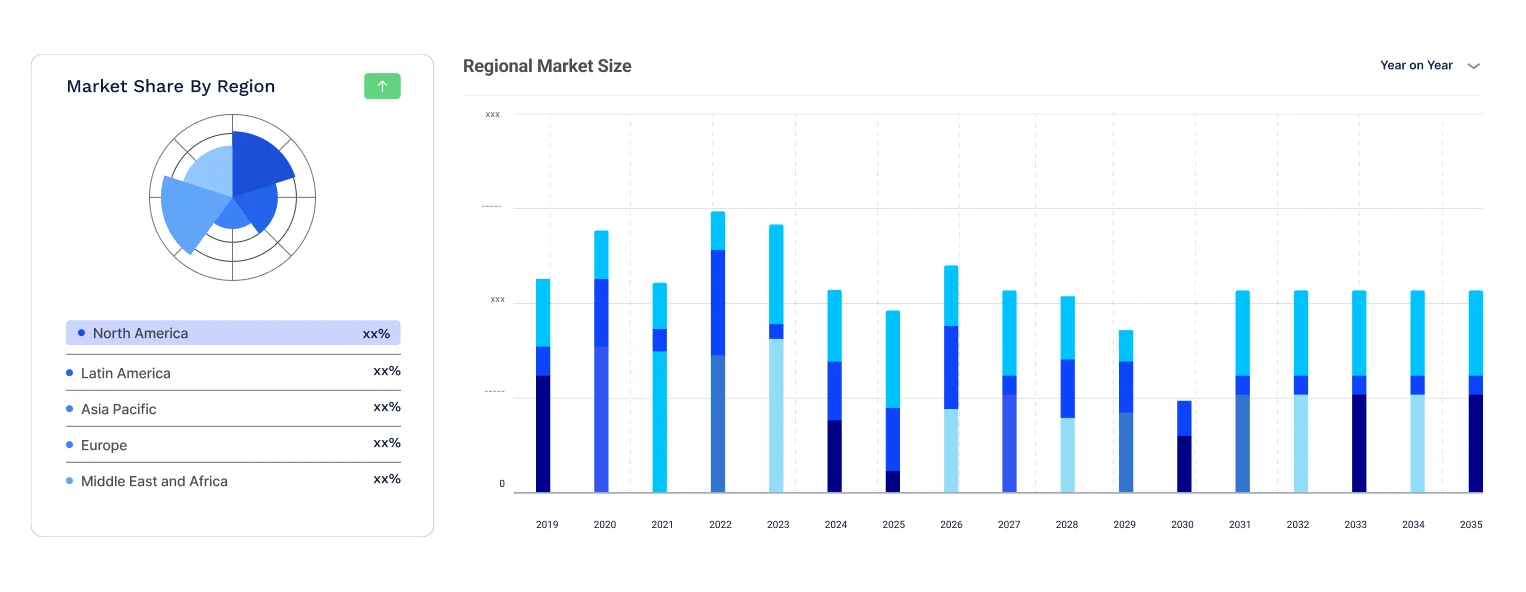
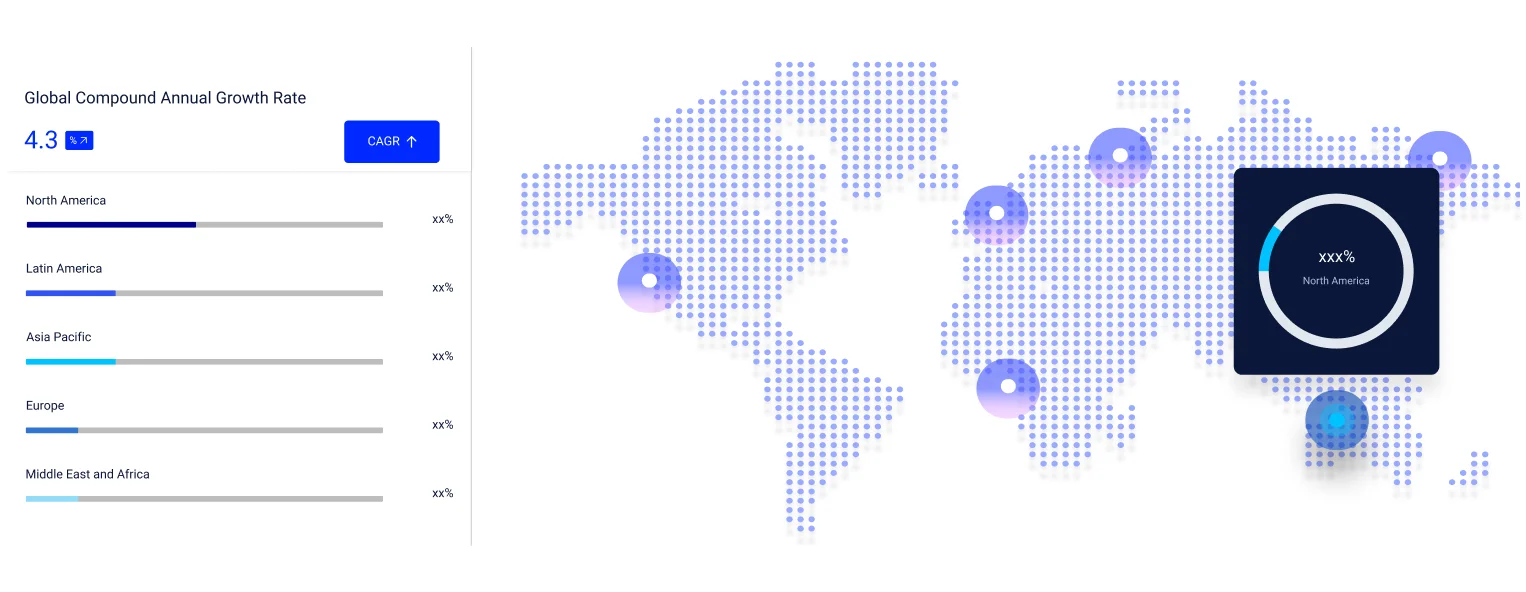
Market Breakup by Region
Key Insight: Asia Pacific dominates the automotive e-compressor market on China's electric vehicle volumes, while Latin America is the fastest growing from a small base. Europe grows on emission rules, North America on local plants, and the Middle East and Africa on early electric vehicle adoption. Showing public support in Asia, in April 2026, India extended its PM E-DRIVE scheme to March 2028 with an outlay of 10,900 crore rupees, keeping electric buses, trucks, three wheelers, and ambulances eligible.
Read more about this report - REQUEST FREE SAMPLE COPY IN PDF
By compressor type, scroll dominates on efficiency, compact size, and suitability for heat pump systems
Scroll compressors account for the largest share of the automotive e-compressor market by compressor type, because they run smoothly at variable speeds, pack high capacity into a small body, and suit the heat pump systems that electric vehicles use for cooling and cabin heating. Most major suppliers build scroll units for passenger cars, and their steady noise and efficiency performance help makers meet range targets without adding weight or complexity to the thermal system in passenger and light commercial applications.
Others, including oil free centrifugal and carbon dioxide designs, are the fastest growing compressor group as new refrigerants and commercial vehicle needs open space for new technology. Rotary vane and reciprocating units serve cost sensitive applications. In November 2025, Highly introduced scroll heat pump compressors of 28, 34, and 45 cc, about 10% smaller than typical units with a 5% gain in coefficient of performance, working from minus 30 to 55 degrees Celsius, showing how scroll designs keep steadily improving.
By vehicle type, passenger cars dominate on large battery electric and hybrid production volumes
Passenger cars account for the largest share of the automotive e-compressor market by vehicle type, because most electric and hybrid vehicles sold worldwide are cars, and each one needs an electric compressor for cabin and battery cooling. High production volumes in China and Europe give suppliers scale, and compact vehicle platforms allow shared compressor designs across several models, which helps lower unit cost and shortens the time needed to launch new variants and reduces validation work for each new program.
Heavy commercial vehicles are the fastest growing vehicle group as electric buses and trucks need larger, higher voltage compressors, while light commercial vehicles follow on delivery fleet demand. In March 2025, Ford Pro made a vapour injected heat pump standard on the E-Transit, E-Transit Custom, and E-Tourneo Custom, working at minus 10 degrees Celsius outside air and adding 7% to 10% range on the large battery E-Transit compared with no heat pump, a gain that matters most for delivery fleets.
By propulsion type, battery electric vehicles dominate as they rely entirely on electric compressors
Battery electric vehicles account for the largest share of the automotive e-compressor market by propulsion type, because they have no engine belt drive, so every unit needs an electric compressor, and the compressor often serves battery cooling and heat pump functions too. Rising battery electric sales in China and Europe lift volumes directly, while larger batteries and faster charging raise cooling demand and push makers toward higher capacity compressors with better efficiency and lower power draw during everyday city driving.
Plug-in hybrid vehicles are the fastest growing propulsion type as buyers who want electric driving without range worries choose models with both an engine and a plug, while hybrid vehicles remain a large volume base. In July 2026, Cox Automotive data showed that United States electric vehicle sales were 247,226 in the second quarter, up 14.2% on the quarter but down 20.5% on the year, which shows how policy changes can shift demand quickly between propulsion types and vehicle segments.
By voltage rating, 400V systems dominate as the installed base of electric vehicle platforms uses them
The 400V segment accounts for the largest share of the automotive e-compressor market by voltage rating, because most electric vehicle platforms on the road today use battery packs in that range, and suppliers have mature, proven compressor designs for them. Low voltage units serve mild hybrids and some small vehicles, while buyers value the lower cost of 400V components and the wide availability of inverters and wiring harnesses across several manufacturers and keeps qualification time short for new vehicle programs.
The 800V and above segment is the fastest growing as vehicle makers adopt higher voltage platforms for faster charging and lighter cabling. In August 2025, MAHLE added a new e-compressor line in Morristown, Tennessee, adding about 50 jobs, for a high voltage compressor with up to 57 cc of displacement and 18 kW peak power that suits vehicles from passenger cars to heavy trucks, giving North American vehicle customers local supply for high voltage platforms and shorter delivery lead times.
Asia Pacific dominates the market due to China's electric vehicle volumes and local supply chains
Asia Pacific dominates the automotive e-compressor market, as China produces and sells more electric vehicles than any other country, and its supplier base builds compressors close to vehicle plants. In July 2026, the China Association of Automobile Manufacturers reported that new energy vehicle sales were 7.446 million in the first half of 2026, with pure electric models at 67%. From 1 January 2026, China halved its new energy vehicle purchase tax exemption, capping the benefit at 15,000 yuan per vehicle.
Latin America is the fastest growing region in the automotive e-compressor market, as electrified vehicle sales rise from a small base and importers bring in new models. In October 2026, the Brazilian electric vehicle association ABVE reported 381,609 light electrified vehicle sales from January to September 2026, and projected about 508,000 for the full year, against 223,912 in 2025. Europe and North America grow steadily, while Africa more than doubled sales to over 30,000 in the first half of 2026.
|
CAGR 2026-2035 - Market by |
Region |
|
North America |
7.0% |
|
Europe |
8.2% |
|
Asia Pacific |
9.2% |
|
Latin America |
11.5% |
|
Middle East and Africa |
10.4% |
The global automotive e-compressor market is competitive, as automotive e-compressor market players include long established thermal suppliers from Japan, South Korea, Germany, France, and China, and each competes on efficiency, voltage range, refrigerant options, and cost. Companies like Hanon Systems, MAHLE GmbH, Sanden Corporation, and Valeo SE lead through scale and platform wins, while Denso Corporation, Robert Bosch GmbH, Toyota Industries Corporation, Aotecar New Energy Technology Co., Ltd., and Highly Marelli Holdings Co., Ltd. add depth in specific regions.
Leading automotive e-compressor companies are differentiating through higher voltage designs, natural refrigerant options, lighter and quieter units, and local production near vehicle plants. Several are also adding aftermarket channels, technology partnerships, and commercial vehicle products to widen demand. Growing focus on range, charging speed, and refrigerant rules is helping companies broaden portfolios, reach new vehicle makers, and support sustained long term growth across several regions.
Hanon Systems, headquartered in Daejeon, South Korea, was founded in 1986 as Halla Climate Control and became a subsidiary of Hankook & Company in January 2025. The company offers R1234yf, R290, and R744 electric compressors, including a vapor injection design. It reported 2025 revenue of 10.88 trillion won and has more than 20,000 employees and 50 plants across 21 countries.
MAHLE GmbH, headquartered in Stuttgart, Germany, was founded in 1920. The company makes thermal management products, including high voltage electric compressors for passenger cars and trucks. It reported 2025 sales of 11.257 billion euros with 64,242 employees and said in November 2022 that its e-compressor order volume had grown to about 1.4 billion euros.
Sanden Corporation, headquartered in Isesaki, Gunma, Japan, was founded in 1943 as Sankyo Electric Co., Ltd. and has been majority owned by Hisense since 2021. The company makes electric compressors, with production in Japan, China, Europe, and North America, including Wylie, Texas, which began electric compressor output in December 2023. Its 2025 net sales were 190.9 billion yen.
Valeo SE, headquartered in Paris, France, was founded in 1923 as Societe Anonyme Francaise du Ferodo. The company lists 400V electrical compressors of 34 cc and 45 cc, an 800V 45 cc unit, and an R744 compressor line in its thermal catalogue. It reported 2025 sales of 20.9 billion euros.
Other key players in the market report include Denso Corporation, Robert Bosch GmbH, Toyota Industries Corporation, Aotecar New Energy Technology Co., Ltd., and Highly Marelli Holdings Co., Ltd., among others.
*Please note that this is only a partial list; the complete list of key players is available in the full report. Additionally, the list of key players can be customized to better suit your needs.*
Discover the key trends shaping the automotive e-compressor market 2026-2035 through our in-depth report. Access strategic insights, forward looking forecasts, and major market developments that help you stay ahead of competitors. Request a free sample report or speak with our team for tailored guidance on the automotive e-compressor market trends 2026.


Upto 15% Off
USD
$2499 $2249
$3999 $3599
$4999 $4249
$5999 $5099


*While we strive to always give you current and accurate information, the numbers depicted on the website are indicative and may differ from the actual numbers in the main report. At Expert Market Research, we aim to bring you the latest insights and trends in the market. Using our analyses and forecasts, stakeholders can understand the market dynamics, navigate challenges, and capitalize on opportunities to make data-driven strategic decisions.*
In 2025, the automotive e-compressor market reached an approximate value of USD 7.60 Billion.
The market is projected to grow at a CAGR of 8.90% between 2026 and 2035.
The key players in the market include Denso Corporation, Sanden Corporation, Valeo SE, Hanon Systems, MAHLE GmbH, Robert Bosch GmbH, Toyota Industries Corporation, Aotecar New Energy Technology Co., Ltd., and Highly Marelli Holdings Co., Ltd., among others.
Leading companies are developing 800V and natural refrigerant compressors, adding local plants near vehicle makers, widening commercial vehicle and aftermarket offers, and forming technology partnerships.
Key challenges include refrigerant rule changes, incentive changes that slow electric vehicle sales, intense price competition, high development costs for new voltage platforms, and vehicle makers bringing thermal work in house.
Explore our key highlights of the report and gain a concise overview of key findings, trends, and actionable insights that will empower your strategic decisions.
|
Report Features |
Details |
|
Base Year |
2025 |
|
Historical Period |
2019-2025 |
|
Forecast Period |
2026-2035 |
|
Scope of the Report |
Historical and Forecast Trends, Industry Drivers and Constraints, Historical and Forecast Market Analysis by Segment:
|
|
Breakup by Compressor Type |
|
|
Breakup by Vehicle Type |
|
|
Breakup by Propulsion Type |
|
|
Breakup by Voltage Rating |
|
|
Breakup by Region |
|
|
Market Dynamics |
|
|
Competitive Landscape |
|
|
Companies Covered |
|
Datasheet
One User
USD 2,499
USD 2,249
tax inclusive*
Single User License
One User
USD 3,999
USD 3,599
tax inclusive*
Five User License
Five User
USD 4,999
USD 4,249
tax inclusive*
Corporate License
Unlimited Users
USD 5,999
USD 5,099
tax inclusive*
*Please note that the prices mentioned below are starting prices for each bundle type. Kindly contact our team for further details.*
Flash Bundle
Small Business Bundle
Growth Bundle
Enterprise Bundle
*Please note that the prices mentioned below are starting prices for each bundle type. Kindly contact our team for further details.*
Flash Bundle
Number of Reports: 3
20%
tax inclusive*
Small Business Bundle
Number of Reports: 5
25%
tax inclusive*
Growth Bundle
Number of Reports: 8
30%
tax inclusive*
Enterprise Bundle
Number of Reports: 10
35%
tax inclusive*
How To Order

Select License Type
Choose the right license for your needs and access rights.

Click on ‘Buy Now’
Add the report to your cart with one click and proceed to register.

Select Mode of Payment
Choose a payment option for a secure checkout. You will be redirected accordingly.
Strategic Solutions for Informed Decision-Making
Gain insights to stay ahead and seize opportunities.
Get insights & trends for a competitive edge.
Track prices with detailed trend reports.

Analyse trade data for supply chain insights.
Leverage cost reports for smart savings

Enhance supply chain with partnerships.
Connect For More Information
Our expert team of analysts will offer full support and resolve any queries regarding the report, before and after the purchase.
Our expert team of analysts will offer full support and resolve any queries regarding the report, before and after the purchase.
We employ meticulous research methods, blending advanced analytics and expert insights to deliver accurate, actionable industry intelligence, staying ahead of competitors.
Our skilled analysts offer unparalleled competitive advantage with detailed insights on current and emerging markets, ensuring your strategic edge.
We offer an in-depth yet simplified presentation of industry insights and analysis to meet your specific requirements effectively.