Consumer Insights
Uncover trends and behaviors shaping consumer choices today
Procurement Insights
Optimize your sourcing strategy with key market data
Industry Stats
Stay ahead with the latest trends and market analysis.
The bus axle market was valued at USD 5.48 Billion in 2025. The market is expected to grow at a CAGR of 5.40% during the forecast period of 2026-2035 to reach a value of USD 9.27 Billion by 2035. Rising electric bus deliveries, public fleet renewal programmes, and growing demand for electric drive axles across city and school buses are collectively driving the market growth.
The current bus axle market dynamics reflect fleet renewal programmes that replace ageing diesel buses with electric models, which need heavier rated and increasingly electrified axle systems. Public funding is central to this shift: in February 2026, the United States Environmental Protection Agency announced a restructuring of its USD 5 billion Clean School Bus programme, noting that about USD 2.7 billion had been awarded since 2021 and roughly 90% of it went to electric school buses. This shows how grants steer purchase decisions, encouraging axle suppliers to offer drive axles with integrated motors, while the plan to seek comment on non-electric fuels may widen the propulsion mix at school bus makers and keep buyers comparing duty cycles and ownership costs.
The overall bus axle market value is also shaped by the order books of vehicle makers, since axles are fitted at the factory on every new bus. In August 2026, NFI Group reported second quarter deliveries of 1,232 equivalent units, with transit bus deliveries up 22%, and a backlog of 14,483 equivalent units valued at about USD 12.5 billion. Long order books give axle suppliers visibility for capacity planning, while buyers weigh load ratings, corrosion protection, and service intervals, and bus builders adopt common platforms to limit part variety. Suppliers with electric ready axle ranges are better placed.
Compound Annual Growth Rate
5.4%
Value in USD Billion
2026-2035
Read more about this report - REQUEST FREE SAMPLE COPY IN PDF
|
Bus Axle Market Report Summary |
Description |
Value |
|
Base Year |
USD Billion |
2025 |
|
Historical Period |
USD Billion |
2019-2025 |
|
Forecast Period |
USD Billion |
2026-2035 |
|
Market Size 2025 |
USD Billion |
5.48 |
|
Market Size 2035 |
USD Billion |
9.27 |
|
CAGR 2019-2025 |
Percentage |
XX% |
|
CAGR 2026-2035 |
Percentage |
5.40% |
|
CAGR 2026-2035 - Market by Region |
Middle East and Africa |
6.5% |
|
CAGR 2026-2035 - Market by Axle Type |
Tag Axle |
6.6% |
|
CAGR 2026-2035 - Market by Propulsion Type |
Electric |
11.0% |
|
2025 Market Share by Region |
Asia Pacific |
47.0% |
The market for bus axles is being shaped by a three-axle intercity bus launch, new assembly capacity at a European bus builder, the acquisition of an electric bus repower specialist, and an electric drivetrain supply deal for buses in South America. Longer vehicle formats, repowering, and integrated electric drivetrains are further reshaping the competitive landscape for axle suppliers.
Irizar announced a three axle, 15 metre variants of its i3 Electric Normal Floor intercity bus, for FIAA 2026 in Madrid. The model extends the battery electric i3 range introduced at Busworld Europe 2025 and adds a third axle for longer vehicles. Bus axle suppliers can leverage this by offering load rated tag and drive axle packages early in design.
Solaris opened a new final assembly hall of more than 7,000 square metres in Środa Wielkopolska, Poland, adding capacity for about 500 vehicles a year. The company targets 2,000 vehicles a year and plans a second intercity bus plant there from 2029. Axle makers can leverage this by securing long term supply contracts and local delivery capacity near the site.
Palmer Energy Technology bought the business and assets of Kleandrive, a UK specialist that converts diesel buses to battery electric drivetrains, in a going concern sale after Kleandrive entered administration at the end of May. Bus axle suppliers can leverage this by offering retrofit ready axles and wear parts through repower specialists for buses that stay in service across Britain.
Equipmake secured a GBP 2.4 million supply agreement with Brazilian bus maker Agrale for electric drivetrain systems covering 23 buses, following an earlier order for 50 buses. The integrated drivetrain combines motor, inverter, controls, and battery pack for South American deployment. Bus axle companies can leverage this by partnering with drivetrain integrators to supply compatible electric ready axles for buses.
India's bus makers are steadily lifting output as state undertakings, private operators, and export buyers place orders, which keeps bus axle supply tied to domestic platforms and local sourcing. In October 2026, Ashok Leyland reported September medium and heavy bus sales of 2,022 units, up 24%, while VECV reported light and medium duty bus sales of 1,107 units, up 38.2%, and heavy-duty bus sales of 130 units, up 36.8%, supporting steady orders for local axle suppliers across the country.
Chinese bus makers are shipping more vehicles abroad every year, and each export platform brings its own axle specifications and spare parts and service demand into new markets. In August 2026, Yutong reported that China's large and medium bus exports passed 30,000 units in the first half, with Yutong shipping 6,642 units and electric exports up 54.1% to 1,654 units, signalling larger export programmes that raise demand for bus axles and aftermarket support in overseas fleets over the coming years.
Electric models need drive axles with integrated motors or motor mounts, so every shift in the registration mix changes axle content per bus. Europe is leading this shift as urban bus emission rules tighten over the decade. In July 2026, the European Automobile Manufacturers' Association reported that EU bus registrations reached 22,590 units in the first half, up 22.7%, with electrically chargeable buses up 56.8% to a 27.7% share, which supports bus axle market growth for electric ready axle designs.
Large urban corridor systems favour articulated and bi articulated buses, which carry more passengers and use more axles than rigid city buses. In July 2026, Bogota's TransMilenio awarded a contract for 269 new electric buses, 157 articulated and 112 bi articulated, valued at USD 435.9 million, an order type that raises axle count per vehicle and supports demand for heavy duty drive axle and tag axle assemblies across Latin American cities and bus rapid transit networks over the coming years.
Coach operators are increasingly bundling maintenance with vehicle purchases to protect uptime, which keeps genuine axle and wear parts flowing through manufacturer networks. In May 2026, Vy ordered 25 new Volvo B13R coaches for its Flygbussarna airport bus services in Sweden, with a Volvo Gold Contract service agreement included, showing how long-term service plans tie operators closely to original equipment parts and extend the aftermarket revenue that bus axle suppliers earn from each delivered bus across its working life.
The Expert Market Research's report titled "Bus Axle Market Report and Forecast 2026-2035" offers a detailed analysis of the market based on the following segments:
Market Breakup by Axle Type
Key Insight: Rear axles dominate the bus axle market by axle type, as they carry the drive load, house the differential or electric drive unit, and hold the highest content value per bus. Tag axles are the fastest growing, supported by longer three axle and articulated buses. Front axles remain essential for steering and low floor layouts, while others include lift axles and dead axles used in specialised applications. Supporting articulated demand, in October 2026, Tuvisa in Vitoria-Gasteiz ordered five more ie tram battery electric buses, three of them 18 metres articulated, taking its fleet of that model to 33 vehicles.
Market Breakup by Bus Type
Key Insight: City and transit buses dominate the bus axle market by bus type, as urban fleets are the largest and are being renewed with electric models, while school buses are the fastest growing on grant backed electrification. Coaches and intercity buses depend on tourism and express services, and minibuses serve feeder and shuttle routes. Others include airport, rental, and special purpose buses. Showing minibus momentum, in August 2026, Marcopolo reported second quarter micro bus production up 120.4%, including 1,246 units delivered to Brazil's Ministry of Health.
Market Breakup by Propulsion Type
Key Insight: Diesel dominates the bus axle market by propulsion type, because most buses in service and on order still use conventional drivelines, while electric is the fastest growing as operators buy battery models and drive axles with integrated motors. Hybrid buses sit between the two, and others include compressed natural gas, hydrogen fuel cell, and trolley buses. Showing the pace of change, in August 2026, industry registration data showed that Europe registered 8,141 battery electric buses in the first half, up 49% year on year.
Market Breakup by Sales Channel
Key Insight: OEM dominates the bus axle market by sales channel, as axles are specified and fitted at the factory under multiyear contracts with bus builders, while aftermarket is the fastest growing as ageing fleets need replacement axles, hubs, and wear parts. Others include remanufactured units and direct fleet supply. Showing fleet renewal, in March 2026, Greater Richmond Transit Company staff recommended buying 17 Gillig replacement buses at USD 867,370 each, with 68% of the funding from the state.
Market Breakup by Region
Key Insight: Asia Pacific dominates the bus axle market on large bus production and public transport fleets, while the Middle East and Africa is the fastest growing on new public bus programmes. North America grows steadily on school and transit renewal, Europe advances on electric bus registrations, and Latin America expands from a smaller base. Showing Gulf demand, in August 2026, Saudi Arabia's Transport General Authority reported that public buses carried 26.34 million passengers in the second quarter, up 23.2% year on year.
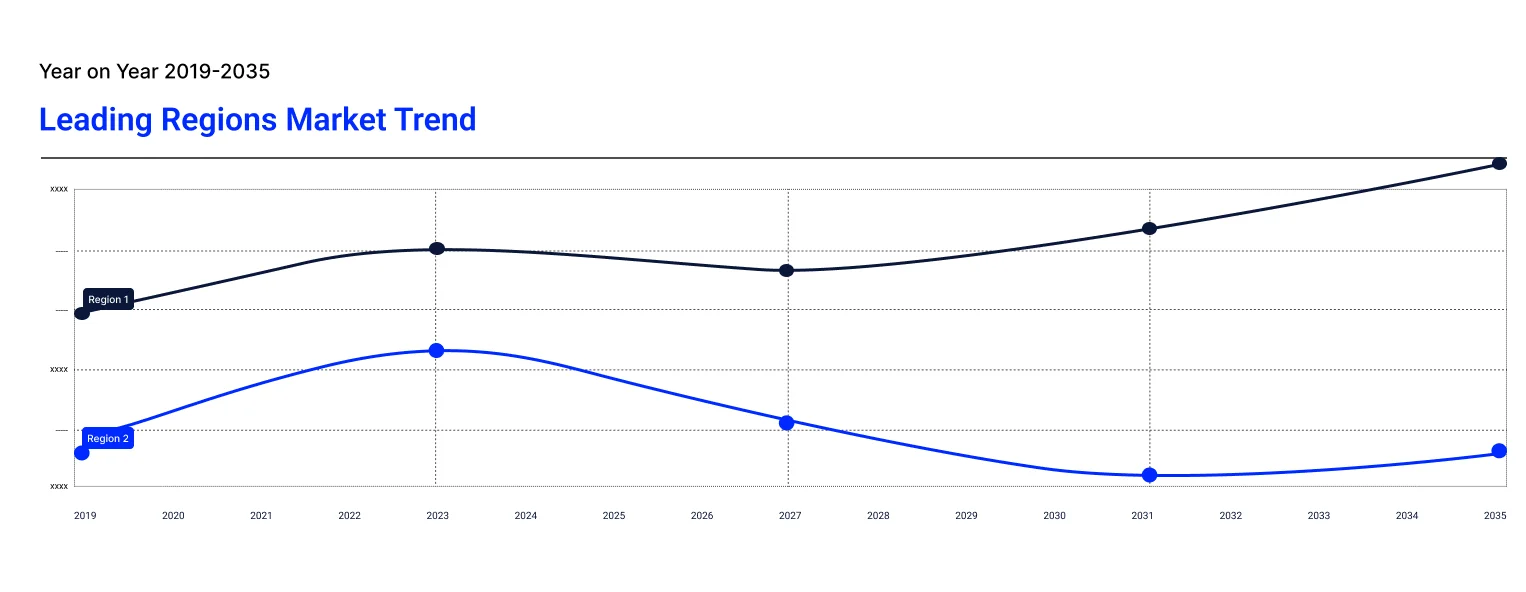
Read more about this report - REQUEST FREE SAMPLE COPY IN PDF
By axle type, rear axles dominate as they carry drive loads and the highest content per bus
Rear axles account for the largest share of the bus axle market by axle type, because the drive axle carries the vehicle load, transmits torque, and houses the differential or electric drive unit, making it the costliest axle on every new bus. Transit builders specify heavy rated single reduction and portal designs for low floor layouts, and electric models add motors, gears, and cooling to the rear axle assembly, lifting content value per vehicle across city, school, and coach platforms.
Tag axles are the fastest growing axle type as bus makers add third axles to carry heavier battery packs and more passengers on longer vehicles. Front axles hold broadly steady on steering and low floor packaging demand. In July 2026, Italy registered 3,241 buses above eight tonnes in the first half, up 66%, with Iveco Bus delivering 1,325 of them, adding new axle sets while articulated and three axle formats widen tag axle use across European city and coach operators.
By bus type, city and transit buses dominate on large urban fleets and steady renewal
City and transit buses account for the largest share of the bus axle market by bus type, because urban operators run the biggest fleets, accumulate high daily mileage, and replace vehicles on regular cycles. Low floor layouts require specialised front and rear axles, and electric transit orders add motor driven axle content. In May 2026, Hamburg's Hochbahn said it plans to buy up to 240 additional electric buses by 2031, on top of 350 eCitaro buses due by December 2030.
School buses are the fastest growing bus type as grant programmes and district budgets push electrification of yellow school bus fleets. In August 2026, Blue Bird reported that it delivered 355 electric buses in its fiscal third quarter and held an electric backlog above 770 buses, a pipeline that increases demand for rugged drive axles built for stop and go routes. Coaches and minibuses advance steadily on tourism, airport services, and feeder routes, supporting the wider bus axle market outlook.
By propulsion type, diesel dominates as most buses in service still run conventional drivelines
Diesel accounts for the largest share of the bus axle market by propulsion type, because the global bus fleet is still mostly conventional and many buyers in cost sensitive markets continue to choose diesel for range and fuelling convenience. Standard drive axles are produced at large scale for these conventional platforms, which keeps unit costs very low. In September 2026, Queensland chose 630 new diesel buses, while Victoria opened a tender in October 2026 for around 800 zero emission buses.
Electric is the fastest growing propulsion type as operators buy battery buses and axles with integrated motors, which carry higher content value than conventional drive axles. In February 2026, German registration data showed a record 1,458 electric buses above eight tonnes registered in 2025, up from 635 in 2024. Hybrid buses advance more slowly, while compressed natural gas and hydrogen models form a small but growing group in others, giving suppliers room to tailor axle ratios to each fuel type.
By sales channel, OEM leads as axles are fitted at the factory under supply contracts
OEM accounts for the largest share of the bus axle market by sales channel, because every new bus leaves the factory with front and rear axles specified by the vehicle builder under multiyear supply contracts. Platform standardisation lets builders buy large volumes from a few suppliers, which supports predictable production planning. Manufacturers also integrate axles with suspension, brakes, and steering, so supplier choices are made early in vehicle design, and switching later is costly for buyers, which protects incumbents.
Aftermarket is the fastest growing sales channel as ageing fleets need replacement axles, hubs, bearings, and brake components to stay in service. In September 2026, a presentation to the MTA Board described plans for nearly 1,000 new buses to replace an ageing fleet, with about 70% United States made parts and up to 30% foreign sourced components, showing how fleet age and parts sourcing shape both new and replacement axle demand, and why service networks matter to bus axle suppliers.
Asia Pacific dominates the market due to large bus production and extensive public transport fleets
Asia Pacific dominates the bus axle market, as China, India, Japan, and ASEAN host the largest bus assembly base and fast expanding urban transport fleets, while many axle suppliers produce close to the bus builders they serve. In May 2026, BYD placed its 500th electric bus on Japanese roads, and in April 2026 a report said India planned a new tender for more than 3,000 electric buses, keeping regional demand for drive axles and replacement parts strong across the region.
The Middle East and Africa is the fastest growing region as governments renew public bus fleets from a small base. In January 2026, Dubai's Roads and Transport Authority received the first 250 buses of a 735-bus Euro 6 contract, including 40 electrics, and in September 2026 Nigeria's Presidential CNG and EV initiative handed 20 high-capacity CNG buses to Lagos's transport authority. Europe and North America grow slowly on mature fleets, while Latin America grows from a smaller base.
|
CAGR 2026-2035 - Market by |
Region |
|
North America |
4.6% |
|
Europe |
4.3% |
|
Asia Pacific |
5.9% |
|
Latin America |
5.5% |
|
Middle East and Africa |
6.5% |
The global bus axle market is moderately consolidated, and bus axle market players compete on load ratings, durability, electric drive capability, and service reach, from multinational drivetrain specialists to regional makers. Companies like Dana Incorporated, ZF Friedrichshafen AG, Hendrickson USA, L.L.C., and Meritor, Inc. lead through broad portfolios, while American Axle & Manufacturing Holdings, Inc., BPW Bergische Achsen KG, SAF-Holland SE, Shaanxi Hande Axle Co., Ltd., and Hyundai Wia Corporation add engineering depth and regional reach.
Leading bus axle market companies are focusing on electric drive axles, lighter designs, regional assembly, and wider service networks to strengthen their competitive position and meet bus builder requirements. Increasing emphasis on efficiency, low floor packaging, and long service intervals is also enabling companies to broaden product portfolios, deepen customer relationships, and support sustained long term market growth across several regions.
Dana Incorporated, headquartered in Maumee, Ohio, was founded in 1904. The company manufactures axles, driveshafts, and electric propulsion systems, including e-Axles, for commercial and off highway vehicle makers. It employs nearly 28,000 people across 33 countries, and its shares are listed on the New York Stock Exchange.
ZF Friedrichshafen AG, headquartered in Friedrichshafen, Germany, was founded in 1915. The company develops driveline and chassis technology, and its bus range includes the AV 132 portal axle and the AVE 130 electric portal axle, which places motors in the hub units for hybrid and battery electric city buses.
Hendrickson USA, L.L.C., headquartered in Woodridge, Illinois, was founded in 1913. The company supplies suspensions, axle and brake systems, and auxiliary lift axles for commercial vehicles, with bus lines covering air suspensions, electric drive axles, and steer axles. It operates facilities in 17 countries, and The Boler Company is its parent.
Meritor, Inc., headquartered in Troy, Michigan, was founded in 1997 and has been part of Cummins Inc. since 2022. The company supplies front non drive and rear drive axles, including the 79000 single reduction drive axle for transit buses of 35 to 60 feet, and has supplied axles and brakes for Alstom's all electric Aptis urban bus.
Other key players in the market report include American Axle & Manufacturing Holdings, Inc., BPW Bergische Achsen KG, SAF-Holland SE, Shaanxi Hande Axle Co., Ltd., and Hyundai Wia Corporation, among others.
*Please note that this is only a partial list; the complete list of key players is available in the full report. Additionally, the list of key players can be customized to better suit your needs.*
Discover the key trends shaping the bus axle market 2026-2035 through our in-depth report. Access strategic insights, forward looking forecasts, and major market developments that help you stay ahead of competitors. Request a free sample report or speak with our team for tailored guidance on the bus axle market trends 2026.


Upto 15% Off
USD
$2499 $2249
$3999 $3599
$4999 $4249
$5999 $5099


*While we strive to always give you current and accurate information, the numbers depicted on the website are indicative and may differ from the actual numbers in the main report. At Expert Market Research, we aim to bring you the latest insights and trends in the market. Using our analyses and forecasts, stakeholders can understand the market dynamics, navigate challenges, and capitalize on opportunities to make data-driven strategic decisions.*
In 2025, the bus axle market reached an approximate value of USD 5.48 Billion.
The market is projected to grow at a CAGR of 5.40% between 2026 and 2035.
The key players in the market include Dana Incorporated, ZF Friedrichshafen AG, Meritor, Inc., American Axle & Manufacturing Holdings, Inc., Hendrickson USA, L.L.C., BPW Bergische Achsen KG, SAF-Holland SE, Shaanxi Hande Axle Co., Ltd., and Hyundai Wia Corporation, among others.
Leading companies are launching electric drive axles, lightening axle designs, setting up regional assembly near bus builders, and strengthening spare parts and service networks for fleet operators.
Key challenges include slow electric bus adoption in price sensitive markets, steel and component cost swings, long replacement cycles, grant dependence, and intense price competition.
Explore our key highlights of the report and gain a concise overview of key findings, trends, and actionable insights that will empower your strategic decisions.
|
Report Features |
Details |
|
Base Year |
2025 |
|
Historical Period |
2019-2025 |
|
Forecast Period |
2026-2035 |
|
Scope of the Report |
Historical and Forecast Trends, Industry Drivers and Constraints, Historical and Forecast Market Analysis by Segment:
|
|
Breakup by Axle Type |
|
|
Breakup by Bus Type |
|
|
Breakup by Propulsion Type |
|
|
Breakup by Sales Channel |
|
|
Breakup by Region |
|
|
Market Dynamics |
|
|
Competitive Landscape |
|
|
Companies Covered |
|
Datasheet
One User
USD 2,499
USD 2,249
tax inclusive*
Single User License
One User
USD 3,999
USD 3,599
tax inclusive*
Five User License
Five User
USD 4,999
USD 4,249
tax inclusive*
Corporate License
Unlimited Users
USD 5,999
USD 5,099
tax inclusive*
*Please note that the prices mentioned below are starting prices for each bundle type. Kindly contact our team for further details.*
Flash Bundle
Small Business Bundle
Growth Bundle
Enterprise Bundle
*Please note that the prices mentioned below are starting prices for each bundle type. Kindly contact our team for further details.*
Flash Bundle
Number of Reports: 3
20%
tax inclusive*
Small Business Bundle
Number of Reports: 5
25%
tax inclusive*
Growth Bundle
Number of Reports: 8
30%
tax inclusive*
Enterprise Bundle
Number of Reports: 10
35%
tax inclusive*
How To Order

Select License Type
Choose the right license for your needs and access rights.

Click on ‘Buy Now’
Add the report to your cart with one click and proceed to register.

Select Mode of Payment
Choose a payment option for a secure checkout. You will be redirected accordingly.
Strategic Solutions for Informed Decision-Making
Gain insights to stay ahead and seize opportunities.
Get insights & trends for a competitive edge.
Track prices with detailed trend reports.

Analyse trade data for supply chain insights.
Leverage cost reports for smart savings
Enhance supply chain with partnerships.
Connect For More Information
Our expert team of analysts will offer full support and resolve any queries regarding the report, before and after the purchase.
Our expert team of analysts will offer full support and resolve any queries regarding the report, before and after the purchase.
We employ meticulous research methods, blending advanced analytics and expert insights to deliver accurate, actionable industry intelligence, staying ahead of competitors.
Our skilled analysts offer unparalleled competitive advantage with detailed insights on current and emerging markets, ensuring your strategic edge.
We offer an in-depth yet simplified presentation of industry insights and analysis to meet your specific requirements effectively.