

Consumer Insights
Uncover trends and behaviors shaping consumer choices today
Procurement Insights
Optimize your sourcing strategy with key market data
Industry Stats
Stay ahead with the latest trends and market analysis.
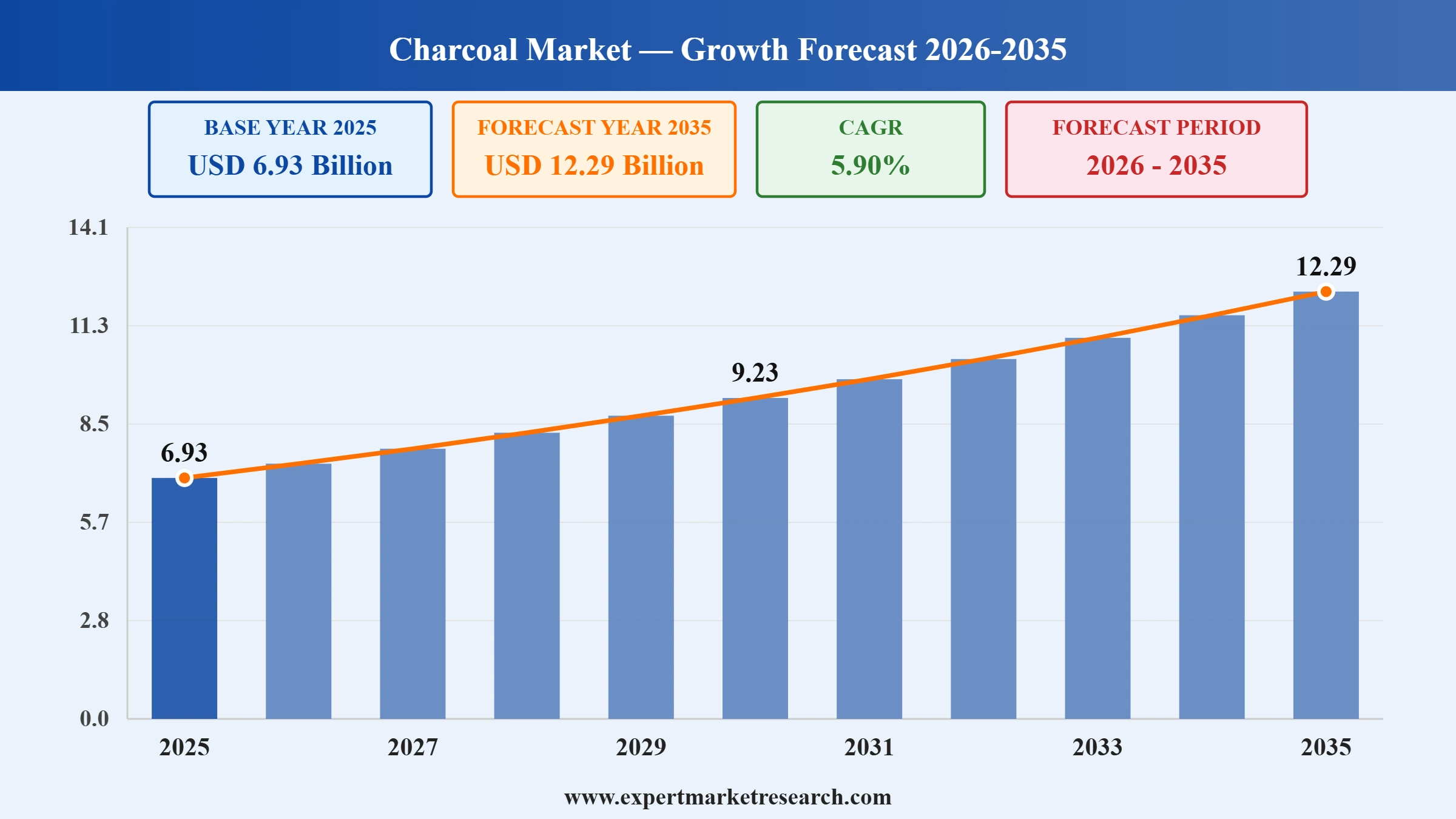
The global charcoal market attained a value of USD 6.93 Billion in 2025 and is projected to expand at a CAGR of 5.90% through 2035. The market is further expected to achieve USD 12.29 Billion by 2035. The rising use of charcoal that has low ash content is promoting investments in modern carbonization systems, export-quality biomass, and automation in kilns within manufacturing hubs.
The White House issued a Section 232 metals tariff proclamation on April 2 that affects industrial fuel imports, including activated charcoal used in metallurgical and water treatment applications. According to the White House, downstream buyers face higher landed costs, prompting domestic charcoal producers to expand kiln capacity and pursue forward supply contracts to secure margins through 2026.
The European Union's deforestation regulation came under closer enforcement in March, requiring importers of wood charcoal to submit geolocation data proving non-deforested origin. The European Commission stated that non-compliant shipments face rejection at customs, pushing charcoal exporters from Africa, Latin America, and Southeast Asia toward certified sustainable forestry partnerships and verified traceability systems.
The charcoal market is undergoing a series of modifications as corporate consumers look for more efficient combustion systems, transparent sourcing processes, and reduced carbon emissions within their metallurgy, filtration, and food manufacturing industries. For example, in April 2026, Adsorbi launched cellulose-based Arbomax filters, reducing replacements, maintenance, downtime, and carbon emissions in air purification systems. Such developments are triggered by growing consumption rates within the hospitality industry, especially within North America and Southeast Asia due to rapid recovery of restaurants after lockdowns, according to the Food and Agriculture Organization. According to industry reports, the global production of wood charcoal is estimated at 70.5 million tonnes in 2025, approximately 50% higher than previous values.
Industrial procurement trends are also shifting as charcoal companies position their products for steel production, activated carbon processing, and high-end barbecues. Manufacturers within Africa, Latin America, and Southeast Asia charcoal markets are increasingly opting for certified forest sources of charcoal production to ensure long-term exports to Europe. This is because industrial customers are searching for more efficient use of their blast furnaces and silicon production units through high fixed-carbon charcoal with low ash content. Additionally, several suppliers are additionally integrating AI-based temperature monitoring within kiln infrastructure to optimize burn cycles and reduce raw material losses. In February 2026, LiDAR mapping identified 630000 historic charcoal kiln sites across Poland, tracing centuries of forest industry and land use.
The growth in the charcoal market is also accelerated due to the need for high-end activated charcoal filter media and restaurant-grade fuel products. Water treatment plants require more activated charcoal since more stringent guidelines require them to replace old water purification systems. At the same time, hospitality networks and cloud kitchens are looking for charcoal varieties that burn slowly and produce less smoke. These demands are met through the development of hexagon-compressed briquettes, coconut shell charcoal, and automated carbonization processes. Exporters from countries like Indonesia, Namibia, and Paraguay are investing in port-linked carbonization equipment in response to global industrial and culinary demands.
Read more about this report - REQUEST FREE SAMPLE COPY IN PDF
Sun Chemical released bio-based pigments and sustainable ingredients for use in coatings, cosmetics, and specialty materials. This development showcases the growing business opportunity in carbon-based sustainability, thus providing incentives for charcoal market players to expand their businesses by focusing on sustainable ingredients and pigment products.
Eco-charcoal products made out of coconut waste were created by farmers in Motiong to help reduce the burning of unsustainable fuel sources and provide alternative uses for agricultural waste. This type of development is helpful for charcoal businesses as it opens up potential investments into biomass collection.
Springwel Mattresses developed the country’s first bamboo charcoal mattress, focusing on odor management, breathability, and innovative wellness sleep products. Such advancements point to potential avenues for producers to venture into consumer wellness, household furniture, and functional lifestyle products, thereby boosting the charcoal market growth.
Leocorno Enterprises diversified into activated charcoal filters to address the rising demand for water purification solutions across India. Advancements such as these motivate charcoal producers to explore filtration and purification technology with rising environmental concerns.
Innovative carbonization technology is revolutionizing the industrial production of charcoal through advanced combustion control, increased carbon efficiency, and enhanced energy utilization. The utilization of automated retorts and carbonization kilns that integrate advanced temperature and exhaust management technology is being encouraged by industries to eliminate wastage and reduce emissions during production. In May 2026, Weiwa Machinery shipped advanced horizontal carbonization furnaces to Ghana, supporting biomass recycling and sustainable, high-efficiency charcoal production expansion. The use of cleaner kilns to facilitate more efficient conversion of raw biomass into charcoal is also being promoted in African production centers, accelerating growth in the charcoal market revenue.
Coconut shell charcoal is attracting significant business interest because of its high heat content, reduced ash production, and improved emission performance. Export-oriented producers from Indonesia and the Philippines are making substantial investments to expand their capacity of producing charcoal, responding to increasing demand from importers from the shisha bars and upscale restaurants as well as industrial customers. For example, in September 2024, Jacobi Group invested in CleanTech coconut shell charcoal technology, improving sustainable activated carbon production and supply chain efficiency, reshaping the charcoal market dynamics.
Many steel mills and ferroalloys manufacturers are using charcoal reduction methods as an option to reduce their dependency on coke and regular coal feedstocks. For example, in May 2025, JSW Steel launched GreenEdge low-emission steel brand, supporting decarbonization goals through verified carbon reduction certification solutions. High fixed carbon charcoal is increasingly being used by enterprises producing silicon alloy due to the need to reduce emissions during industrial processes. Brazilian integrated steel plants are establishing renewable eucalyptus charcoal plantations in order to ensure adequate industrial supply. Decarbonization goals of European and Latin American governments are further spurring the use of substitute reduction agents, accelerating the charcoal market expansion.
Rapid growth in water filtration technology is increasing the shift towards activated charcoal products. Several developments in the charcoal market are focused on enhancing the ability of charcoal products to absorb toxic industrial chemicals and heavy metals across water and air purification applications. For example, in May 2025, Echo launched Echo Pure whole-home filtration system, combining contaminant removal, UV purification, and water softening technologies for residential wellness. Asian and Middle Eastern governments are enforcing stricter discharge controls on wastewater management leading to steady consumption of wood and coconut shell activated charcoal products.
Foodservice professionals require food-charcoal products that produce sustained heat with low smoke emissions, boosting growth in the charcoal market. Compressed briquette charcoal, charcoal that limits smoke emissions, and high-quality hardwood charcoal for grills are being made by various manufacturers. For example, in January 2026, Weber expanded smart grilling portfolio with connected grills, probes, and app-controlled ecosystem enabling seamless outdoor cooking experiences. The reason for such a trend is that hospitality organizations want to use premium charcoal that improves consistency during cooking.
The Expert Market Research's report titled “Global Charcoal Market Report and Forecast 2026-2035” offers a detailed analysis of the market based on the following segments:
Market Breakup by End Use
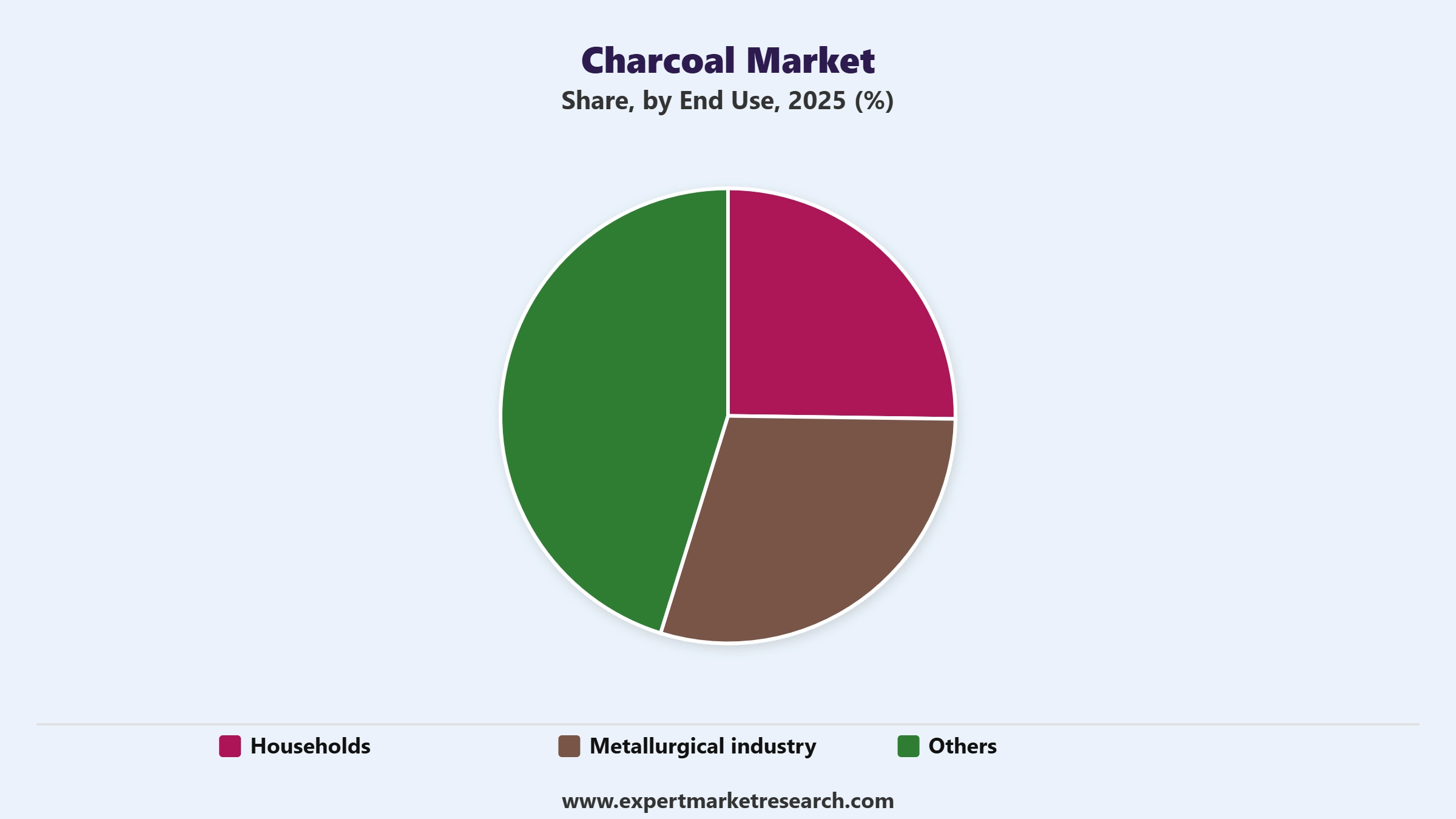
Key Insight: The charcoal market exhibits diverse consumption trends among residential consumers, metalworking firms, and other business operations. The metalworking industry favors charcoals with a higher proportion of fixed carbon, which enhances clean burning and operational efficiencies in factories. The residential consumers are boosting the demand for smokeless briquettes, high-quality barbeque fuel, and packed charcoal that facilitates efficient grilling activities. In December 2025, Duraflame launched Char°Logs grilling products, offering convenient charcoal lighting solutions for enhanced outdoor cooking experiences.
Market Breakup by Region
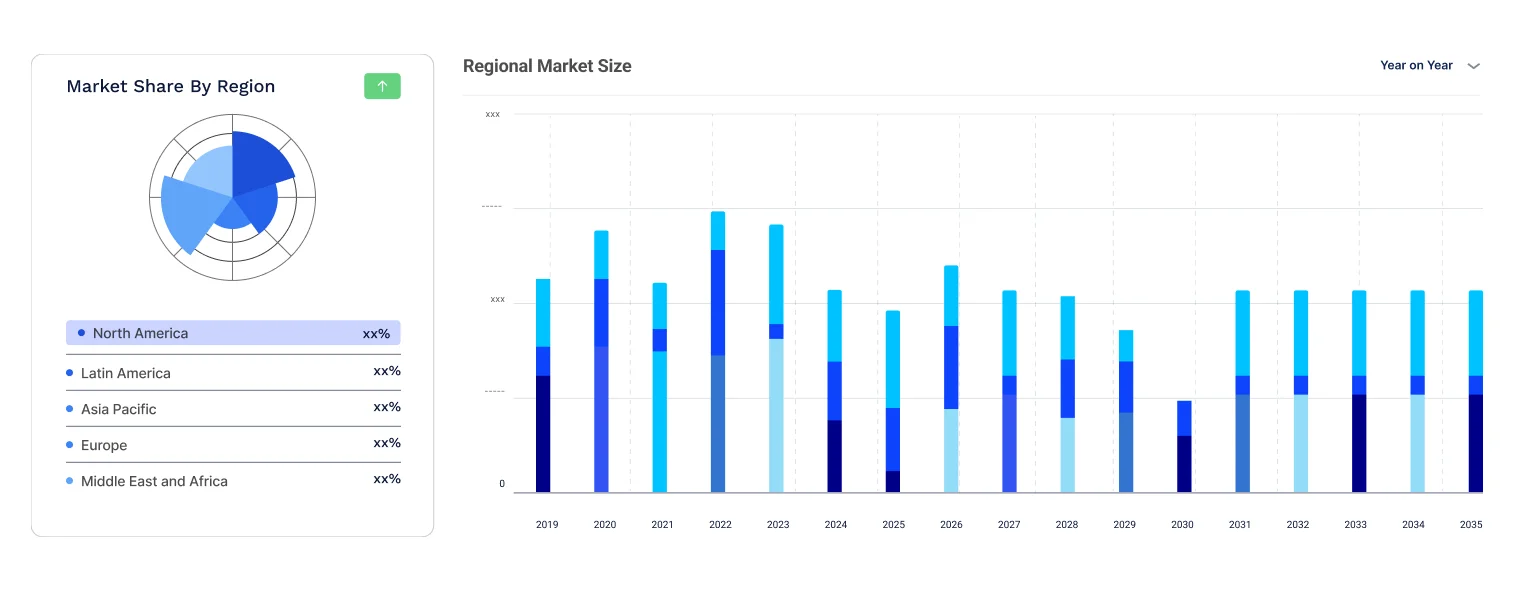
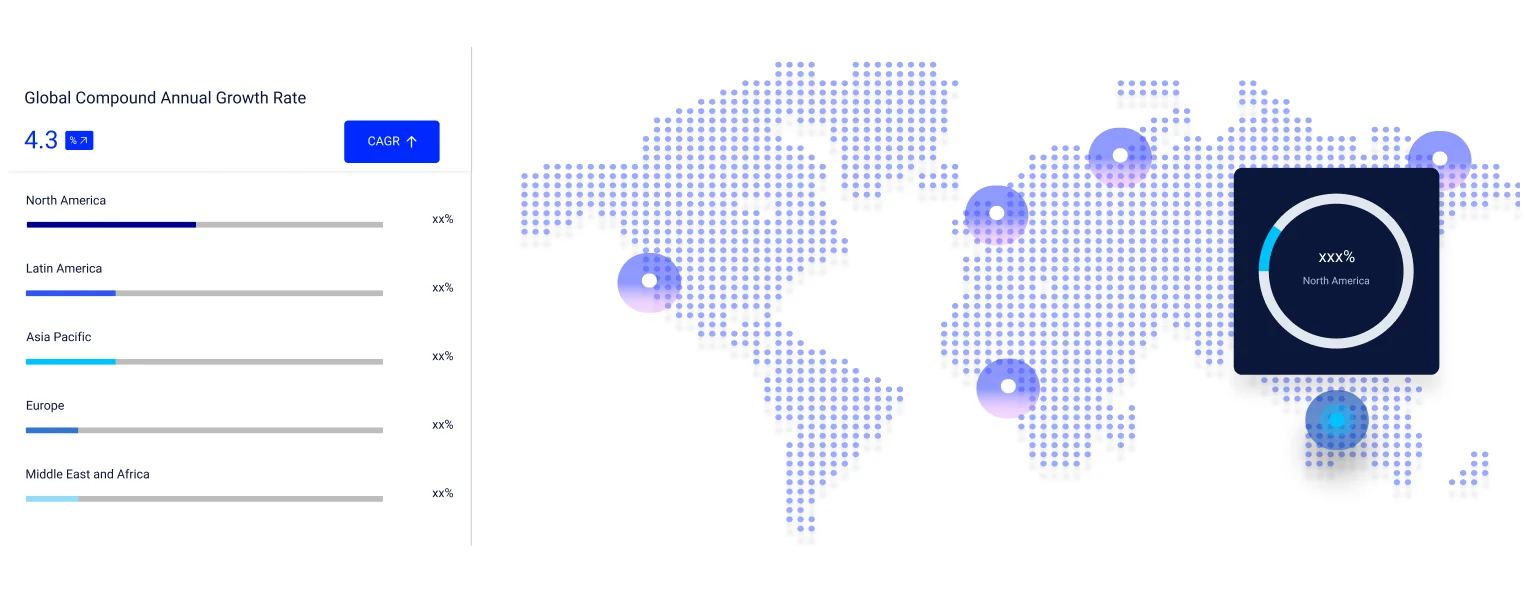
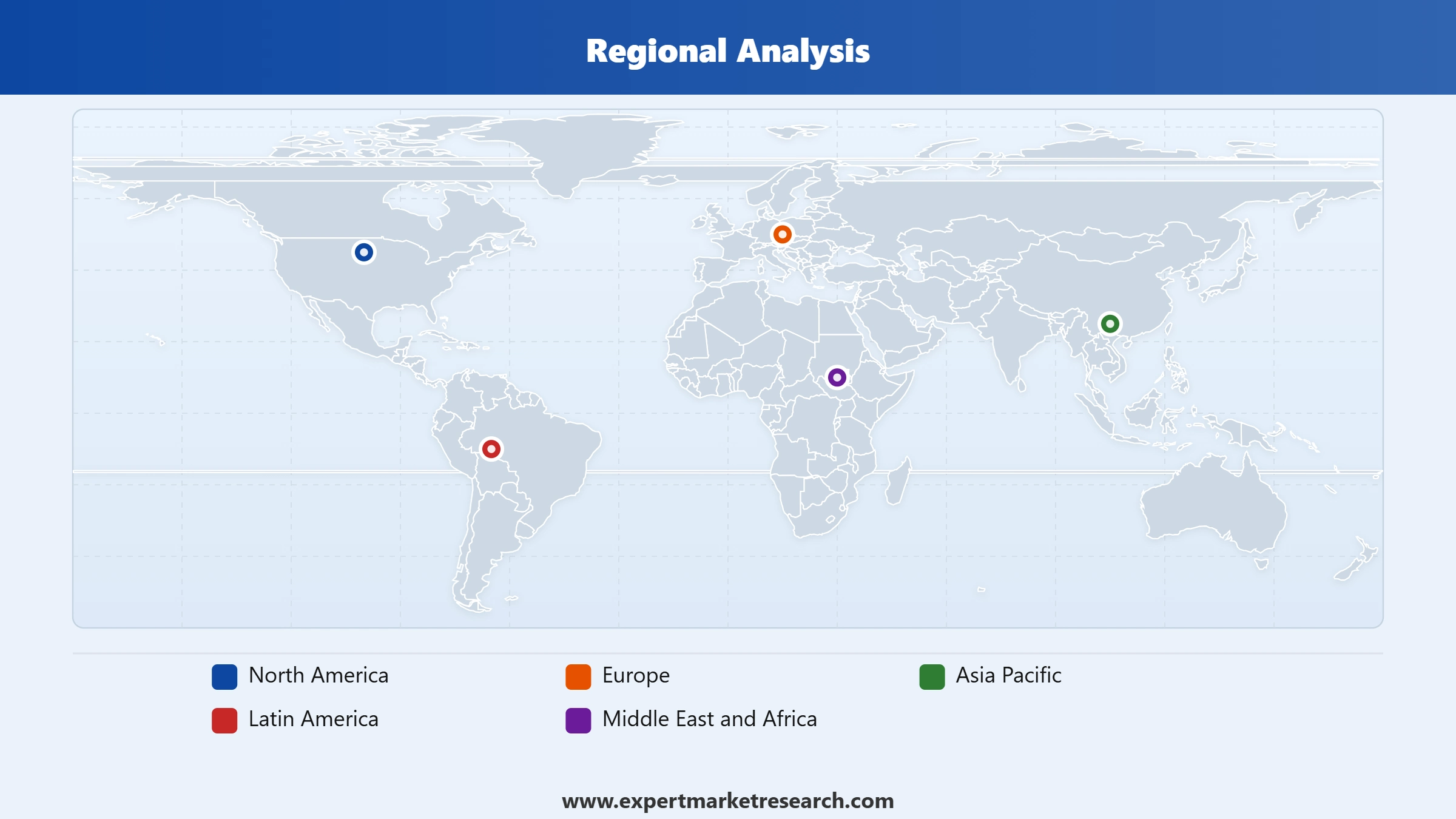
Key Insight: The current trends in the charcoal market reveal significant differences in regional dynamics depending on the level of industrialization, export potential, growth in hospitality sector, and sustainability efforts. The Asia Pacific region dominates the market owing to advanced charcoal manufacturing chains, rich reserves of biomass, and effective export logistics geared towards applications in industries and foodservices. In North America and Europe, charcoal is associated with high-quality barbecue varieties, more efficient combustion methods, and sustainability-focused procurement practices. Latin America stands out owing to increasing demand for metallurgical charcoal used in green steel production. The Middle East and Africa are seeing accelerated market growth owing to increased consumption within the hospitality industry and demand for shisha charcoal.
Read more about this report - REQUEST FREE SAMPLE COPY IN PDF
By end use, the metallurgical sector dominates the market owing to cleaner industrial fuel transition initiatives
Metallurgical industry remains the leading sector utilizing charcoal owing to the rising need for ash-free reduction agents for manufacturing pig iron and ferroalloys. Industrial buyers are favoring high-grade charcoal types that contain a uniform amount of fixed carbon to promote efficient furnace operation and minimize slag formation. Brazilian steel companies are intensifying their efforts to obtain sustainable eucalyptus charcoal to comply with decarbonization policies and international trading standards. Charcoal producers are also deploying automated carbonization facilities that guarantee consistency in the quality of their products for commercial sales. Aligning with this trend in the charcoal market, in May 2026, Forge Resources planned coal sample exports for United States metallurgical testing, supporting strategic industrial and steelmaking material evaluation initiatives.
Read more about this report - REQUEST FREE SAMPLE COPY IN PDF
Charcoal demand is growing rapidly across households due to the increasing need for high-end barbecuing services, outdoor kitchens, and smoke-free grills among urban consumers. Companies are developing compacted briquettes, coconut shell-based charcoal, and rapid ignition types for domestic clients looking for convenience and enhanced indoor/outdoor cooking efficacy. Online retailing is also facilitating the availability of packaged charcoal products in developing nations.
Asia Pacific clocks in the leading share of the market due to large-scale production and export capabilities
The Asia Pacific region dominates the global charcoal industry due to the presence of large amounts of biomass resources, export-focused manufacturing facilities, and substantial demand from industries and households. The key producers of coconut shell charcoal include Indonesia, Vietnam, and Philippines, which provide their products for food service and filtration industries around the globe. At the same time, regional companies are improving their capabilities in producing briquettes and ensuring sustainable supply chains in order to increase their export competitiveness. Rising industrialization in developing countries in Asia boosts demand for charcoal in metallurgy and intensive manufacturing processes. In April 2026, Chinese scientists developed zero-emission coal fuel cells, directly converting coal into electricity through advanced electrochemical oxidation technology.
Read more about this report - REQUEST FREE SAMPLE COPY IN PDF
The growing demand in the charcoal market in the Middle East and Africa is led by the development of shisha, and high-end grilling segments in the hospitality industry. Importers tend to choose coconut shell and hardwood charcoal since they produce higher burning times and less smoke. Meanwhile, producers in Africa improve their capabilities in export-focused production, owing to technological advancements in kilns and forest conservation measures.
Leading charcoal market players are exploring greener burning technologies, environmentally friendly feedstock sources, and superior product design. These firms are working on automation, coconut-shell charcoal, and advanced compression technology to increase efficiency and sign export-focused agreements. In the industrial segment, metal producers are being supplied with fixed-carbon charcoal that is suitable for steel manufacturing.
Moreover, charcoal companies catering to the foodservice sector are developing charcoal with better odor control. Some of the key opportunities can also be found in the manufacturing of activated charcoal meant for water filtration and wastewater treatment sectors. Firms are collaborating with forestry, logistics, and certification companies to develop better supply chain practices and global positioning. In addition, some companies are also using artificial intelligence for kiln monitoring, as well as recyclable packing materials.
Namchar (Pty) Ltd., which was established in 1996 in South Africa, is engaged in the manufacture of hardwood lump charcoal meant for export to various parts of Europe and the Middle East. Namchar mainly concentrates on sustainable biomass from encroacher bush and uses efficient carbonization processes for its products' efficient combustion.
Mesjaya Abadi Sdn Bhd was set up in 2002 and is based in Malaysia. It produces coconut-shell charcoal and briquettes that are intended for use by the food service industry participants. The main features of Mesjaya include low smoke emission and dense charcoal briquettes using automated production methods.
Royal Oak Enterprises, LLC was founded in 1953 and has its head office in Georgia, United States. It offers products such as hardwood lump charcoal and high-grade grill fuels. Royal Oak Enterprises, LLC emphasizes restaurant-grade performance, natural hardwood sourcing, and quick-lighting capabilities across its charcoal product portfolio.
Kingsford Products Company was established in 1951 and its headquarters are in California, United States. The company continues to be one of the prominent manufacturers of charcoal briquettes and grill fuels. The company emphasizes research on environmentally friendly products, smell reduction, and sustainable forest management. Kingsford Products Company mainly targets consumers from food service and retail industries by offering diversified products.
Other key players in the market include The Saint Louis Charcoal Company, LLC, and Gryfskand sp. z o.o., among others.
*Please note that this is only a partial list; the complete list of key players is available in the full report. Additionally, the list of key players can be customized to better suit your needs.*
Unlock the latest insights with our charcoal market trends 2026 report. Discover regional growth patterns, consumer preferences, and key industry players. Stay ahead of competition with trusted data and expert analysis. Download your free sample report today and drive informed decisions in the market.


Upto 15% Off
USD
$2499 $2249
$3999 $3599
$4999 $4249
$5999 $5099


*While we strive to always give you current and accurate information, the numbers depicted on the website are indicative and may differ from the actual numbers in the main report. At Expert Market Research, we aim to bring you the latest insights and trends in the market. Using our analyses and forecasts, stakeholders can understand the market dynamics, navigate challenges, and capitalize on opportunities to make data-driven strategic decisions.*
The global charcoal market is projected to grow at a CAGR of 5.90% between 2026 and 2035.
The major drivers expected to aid market are the growing demand for industrial wastewater treatment, extensive use of activated carbon in various applications, and the increased popularity and consumption of barbecue cooked food.
The key trends guiding the growth of the charcoal market include the increased initiatives by various governments towards industrial wastewater treatment and rapid technological advancements coupled with the growing use of activated carbon in the cosmetics industry.
The major regions in the market are North America, Latin America, the Middle East and Africa, Europe, and the Asia Pacific.
The significant end uses in the market include households and metallurgical industry, among others.
The major players in the market are Namchar (Pty) Ltd., Mesjaya Abadi Sdn Bhd, Royal Oak Enterprises, LLC, Kingsford Products Company, The Saint Louis Charcoal Company, LLC, and Gryfskand sp. Z o.o., among others.
Explore our key highlights of the report and gain a concise overview of key findings, trends, and actionable insights that will empower your strategic decisions.
| REPORT FEATURES | DETAILS |
| Base Year | 2025 |
| Historical Period | 2019-2025 |
| Forecast Period | 2026-2035 |
| Scope of the Report |
Historical and Forecast Trends, Industry Drivers and Constraints, Historical and Forecast Market Analysis by Segment:
|
| Breakup by End Use |
|
| Breakup by Region |
|
| Market Dynamics |
|
| Competitive Landscape |
|
| Companies Covered |
|
| Report Price and Purchase Option | Explore our purchase options that are best suited to your resources and industry needs. |
| Delivery Format | Delivered as an attached PDF and Excel through email, with an option of receiving an editable PPT, according to the purchase option. |
Datasheet
One User
USD 2,499
USD 2,249
tax inclusive*
Single User License
One User
USD 3,999
USD 3,599
tax inclusive*
Five User License
Five User
USD 4,999
USD 4,249
tax inclusive*
Corporate License
Unlimited Users
USD 5,999
USD 5,099
tax inclusive*
*Please note that the prices mentioned below are starting prices for each bundle type. Kindly contact our team for further details.*
Flash Bundle
Small Business Bundle
Growth Bundle
Enterprise Bundle
*Please note that the prices mentioned below are starting prices for each bundle type. Kindly contact our team for further details.*
Flash Bundle
Number of Reports: 3
20%
tax inclusive*
Small Business Bundle
Number of Reports: 5
25%
tax inclusive*
Growth Bundle
Number of Reports: 8
30%
tax inclusive*
Enterprise Bundle
Number of Reports: 10
35%
tax inclusive*
How To Order

Select License Type
Choose the right license for your needs and access rights.

Click on ‘Buy Now’
Add the report to your cart with one click and proceed to register.

Select Mode of Payment
Choose a payment option for a secure checkout. You will be redirected accordingly.
Strategic Solutions for Informed Decision-Making
Gain insights to stay ahead and seize opportunities.

Get insights & trends for a competitive edge.

Track prices with detailed trend reports.

Analyse trade data for supply chain insights.

Leverage cost reports for smart savings

Enhance supply chain with partnerships.

Connect For More Information
Our expert team of analysts will offer full support and resolve any queries regarding the report, before and after the purchase.
Our expert team of analysts will offer full support and resolve any queries regarding the report, before and after the purchase.
We employ meticulous research methods, blending advanced analytics and expert insights to deliver accurate, actionable industry intelligence, staying ahead of competitors.
Our skilled analysts offer unparalleled competitive advantage with detailed insights on current and emerging markets, ensuring your strategic edge.
We offer an in-depth yet simplified presentation of industry insights and analysis to meet your specific requirements effectively.




