

Consumer Insights
Uncover trends and behaviors shaping consumer choices today
Procurement Insights
Optimize your sourcing strategy with key market data
Industry Stats
Stay ahead with the latest trends and market analysis.
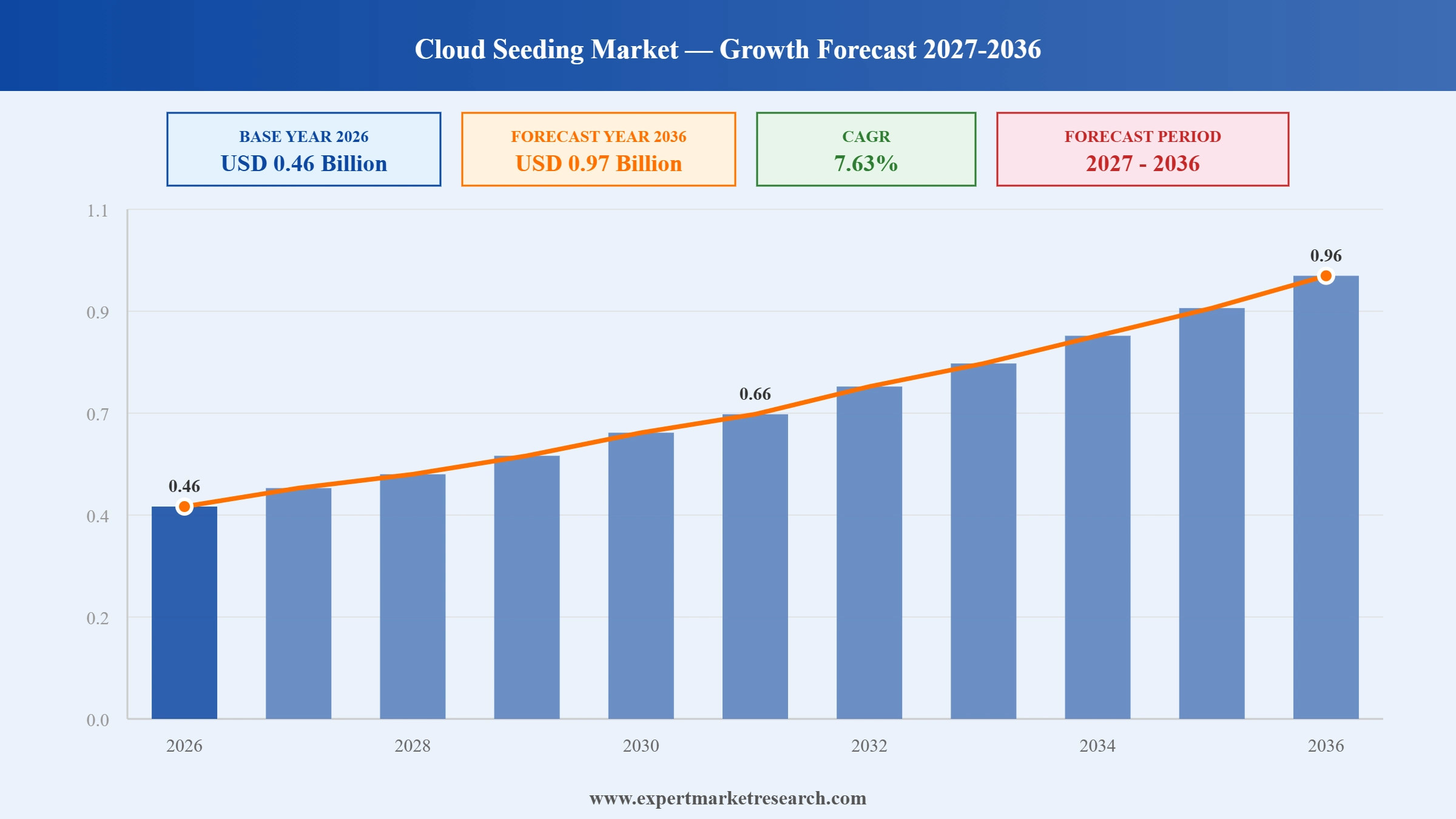
The cloud seeding market was valued at USD 0.43 Billion in 2025. The market is expected to grow at a CAGR of 7.63% during the forecast period of 2026-2035 to reach a value of USD 0.90 Billion by 2035. Rising global water scarcity, growing government investment in weather modification programs, and advancements in AI-powered atmospheric modeling and precision delivery systems are collectively driving market growth.
The cloud seeding market is shaped by escalating global water scarcity and growing government investment in weather modification programs as a supplementary tool for water resource management. Asia Pacific dominated the market with a share of approximately 78% in 2025, supported by large-scale, government-backed programs across China and India. Ground-based systems account for the largest share by type, reflecting their lower operating cost and simpler deployment relative to aerial seeding platforms.
Established weather modification providers are reinforcing their market presence through continued technology partnerships, government program participation, and precision delivery system upgrades rather than relying on a single growth lever. This multi-pronged approach is helping leading providers improve seeding precision and program outcomes even as government scrutiny of long-running programs' cost-effectiveness continues to shape the competitive landscape.
The competitive landscape remains fragmented, with supply spread across specialized weather modification firms and equipment manufacturers such as Weather Modification, Inc., North American Weather Consultants, and Ice Crystal Engineering that maintain long-standing government relationships and combined expertise across aerial and ground-based seeding operations. In October 2025, for example, the Delhi government partnered with IIT Kanpur to conduct the city's first cloud seeding trials in nearly 50 years, aiming to curb severe air pollution; the trials produced no measurable rainfall due to low atmospheric moisture but showed a 6-10% reduction in PM2.5 and PM10 levels, illustrating both the technical entry barriers and the public scrutiny facing new participants in the field. Participation requires sustained investment in specialized aircraft, ground generator equipment, and atmospheric research capabilities, creating moderate entry barriers while public cost-benefit scrutiny of some long-running programs continues to shape the industry's outlook.
Read more about this report - REQUEST FREE SAMPLE COPY IN PDF
|
Cloud Seeding Market Report Summary |
Description |
Value |
|
Base Year |
USD Billion |
2025 |
|
Historical Period |
USD Billion |
2019-2025 |
|
Forecast Period |
USD Billion |
2026-2035 |
|
Market Size 2025 |
USD Billion |
0.43 |
|
Market Size 2035 |
USD Billion |
0.90 |
|
CAGR 2019-2025 |
Percentage |
XX% |
|
CAGR 2026-2035 |
Percentage |
7.63% |
|
CAGR 2026-2035 - Market by Region |
Middle East and Africa |
11.5% |
|
CAGR 2026-2035 - Market by Type |
Aerial Based |
8.5% |
|
CAGR 2026-2035 - Market by Technique |
Hygroscopic |
8.0% |
|
2025 Market Share by Region |
Asia Pacific |
78% |
The cloud seeding market is being reshaped by government-backed technology upgrades, expanding nanotechnology-based seeding materials, and growing AI and drone-enabled precision delivery systems. Increasing public scrutiny of long-running programs' cost-effectiveness is further reshaping the competitive landscape.
The China Meteorological Administration launched a cloud seeding campaign aimed at boosting rainfall and snowfall across northern regions to support spring farming and improve ecological conditions. The campaign reinforced China's position as the world's largest operator of weather modification programs. Other organizations can time seasonal seeding campaigns around critical agricultural windows to maximize the benefit to farming communities.
Rainmaker Technology Corporation became the first private company to unambiguously measure and validate that its cloud seeding operations caused precipitation, using advanced radar to identify 82 distinct seeding signatures across its 2026 Oregon and Utah operations. The validated operations generated more than 143 million gallons of freshwater, roughly the annual usage of 1,750 American households. Other companies can pursue similar radar-based validation methods to strengthen the scientific credibility of their seeding claims.
The UAE's National Centre of Meteorology reported 172 cloud seeding flights conducted since the start of 2025, using specialized aircraft, seeding agents based on natural salts and innovative nanomaterials, and charge emitters, with the program expanding to test modern materials combined with electric charging. The disclosure reinforced the UAE's leadership position in weather modification technology. Other organizations can pursue similar nanomaterial research to improve seeding efficiency and set new operational benchmarks.
Weather Modification, Inc. acquired SPEC Incorporated, a Boulder, Colorado-based firm recognized for its airborne cloud physics instrumentation and cloud particle probes used in NASA airborne science programs. The acquisition expanded Weather Modification's atmospheric research and instrumentation capabilities. Other companies can pursue similar instrumentation acquisitions to strengthen in-house research capability alongside core seeding operations.
Water-scarce Gulf Cooperation Council countries are increasingly deploying cloud seeding programs to boost rainfall and supplement limited groundwater resources. This is drawing neighboring nations into closer research and operational cooperation on rainfall enhancement. For example, Bahrain, Kuwait, Oman, Qatar, Saudi Arabia, and the UAE have each expanded cloud seeding activity, with the UAE offering a $1.5 million grant for cloud seeding research to encourage regional collaboration.
Rising operating costs are prompting some cloud seeding program operators to reassess the value of continuing long-running operations relative to their measurable benefits. This is introducing a countervailing dynamic to the market's broader growth narrative. In 2025, for example, Snowy Hydro Limited announced it was permanently ceasing its cloud seeding program, a decision following a comprehensive review that found the program's escalating costs outweighed its benefits.
National meteorological agencies are increasingly investing in dedicated aircraft and equipment fleets to reduce reliance on ad hoc seeding arrangements and support sustained, large-scale operations. This is expanding the addressable market for aircraft suppliers and equipment manufacturers serving government programs. Saudi Arabia's National Center for Meteorology, for instance, has expanded its dedicated seeding aircraft fleet as part of its Regional Cloud Seeding Program, launched to combat desertification and improve water security.
Cloud seeding operations in one region can affect precipitation patterns in neighboring areas, raising questions about regulatory oversight and international coordination as more countries adopt the technology. This is prompting early discussion of cross-border protocols among meteorological authorities. China's program, which aims to extend weather modification capability to more than half the country's territory, has drawn particular attention from neighboring countries regarding potential downwind effects.
Research institutions and government meteorological agencies are increasingly collaborating on the development of more effective and environmentally sustainable seeding materials. This is broadening the pipeline of next-generation compounds beyond traditional silver iodide and salt-based agents. Thailand's Royal Rainmaking Technology Research and Development Division, for example, has focused on eco-friendly, ice-forming substances packaged in specially designed flares for cold cloud seeding applications.
The Expert Market Research's report titled "Cloud Seeding Market Report and Forecast 2026-2035" offers a detailed analysis of the market based on the following segments:
Market Breakup by Type
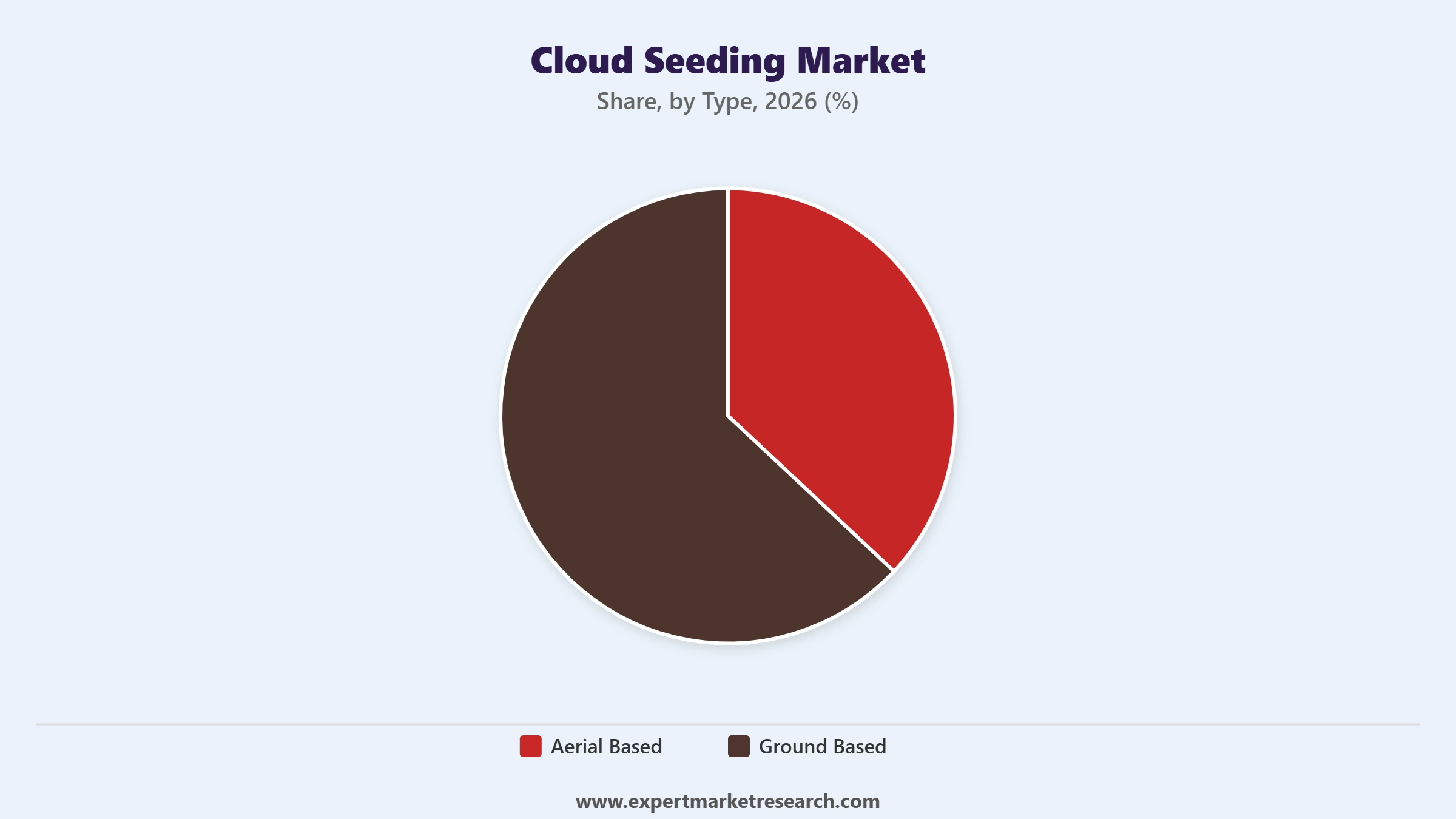
Key Insight: Ground-based systems account for the largest share of the market by type, reflecting their lower operating cost, simpler deployment, and suitability for continuous operation compared to aerial platforms. Aerial-based systems continue to see strong adoption for their flexibility and ability to precisely target specific cloud formations over large areas using aircraft or drones. Others, including satellite-based and hybrid delivery methods, remain in earlier stages of development but offer promise for enhanced monitoring precision.
Market Breakup by Technique
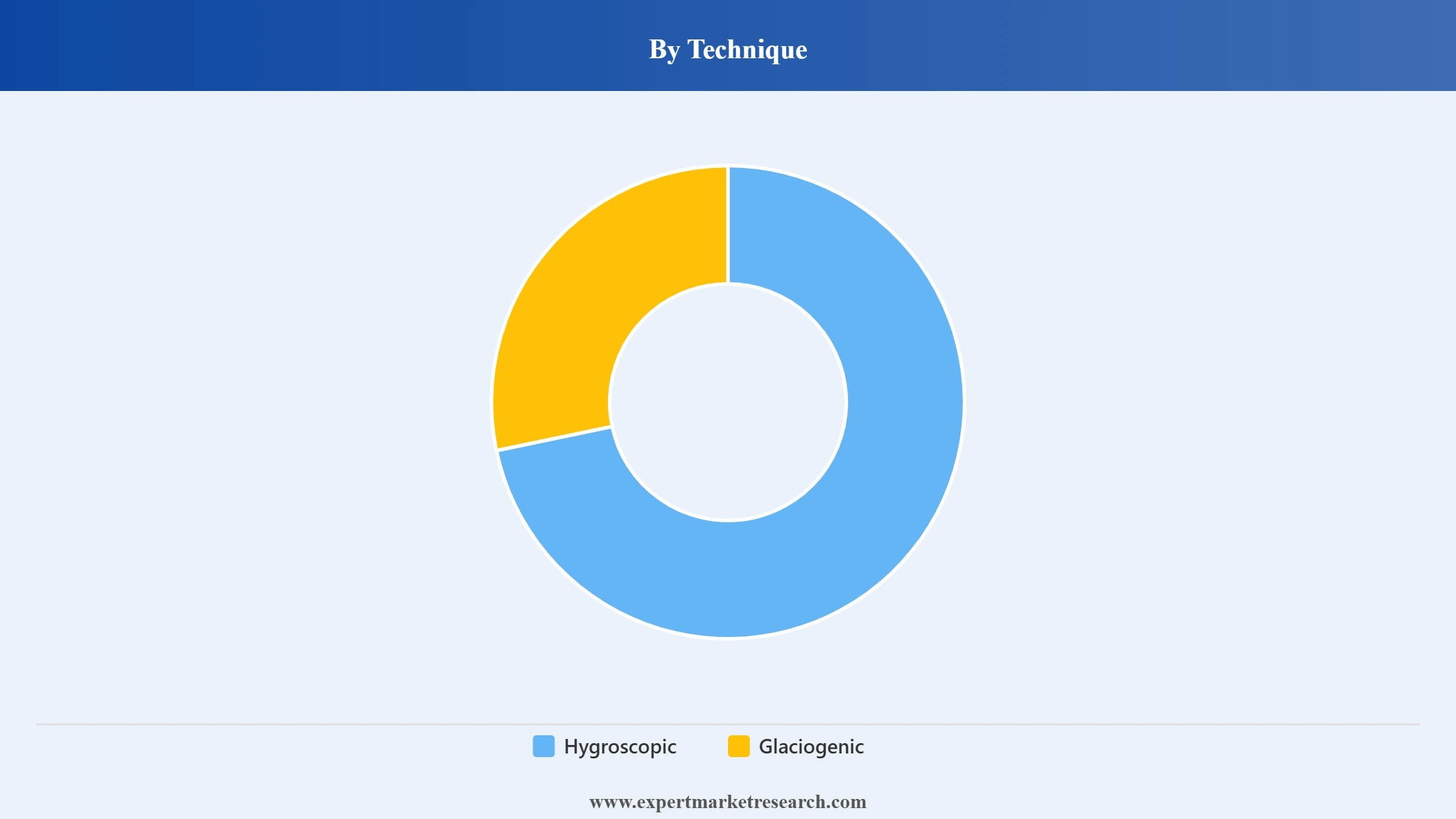
Key Insight: Glaciogenic remains the dominant technique within the cloud seeding market, valued for its effectiveness in enhancing precipitation from cold cloud systems, particularly in drought-prone and orographic regions. Hygroscopic seeding continues to see strong adoption for its ability to target specific warm cloud types independent of changing atmospheric conditions, offering versatility across a wider range of climates. Others, including emerging nanotechnology-based and satellite-guided seeding methods, represent a smaller but growing share as research institutions and government programs invest in next-generation materials; in July 2026, for example, the UAE Research Programme for Rain Enhancement Science highlighted its use of AI to design and test new ice-forming materials, part of a broader push toward machine-learning-assisted seeding research.
Market Breakup by Application
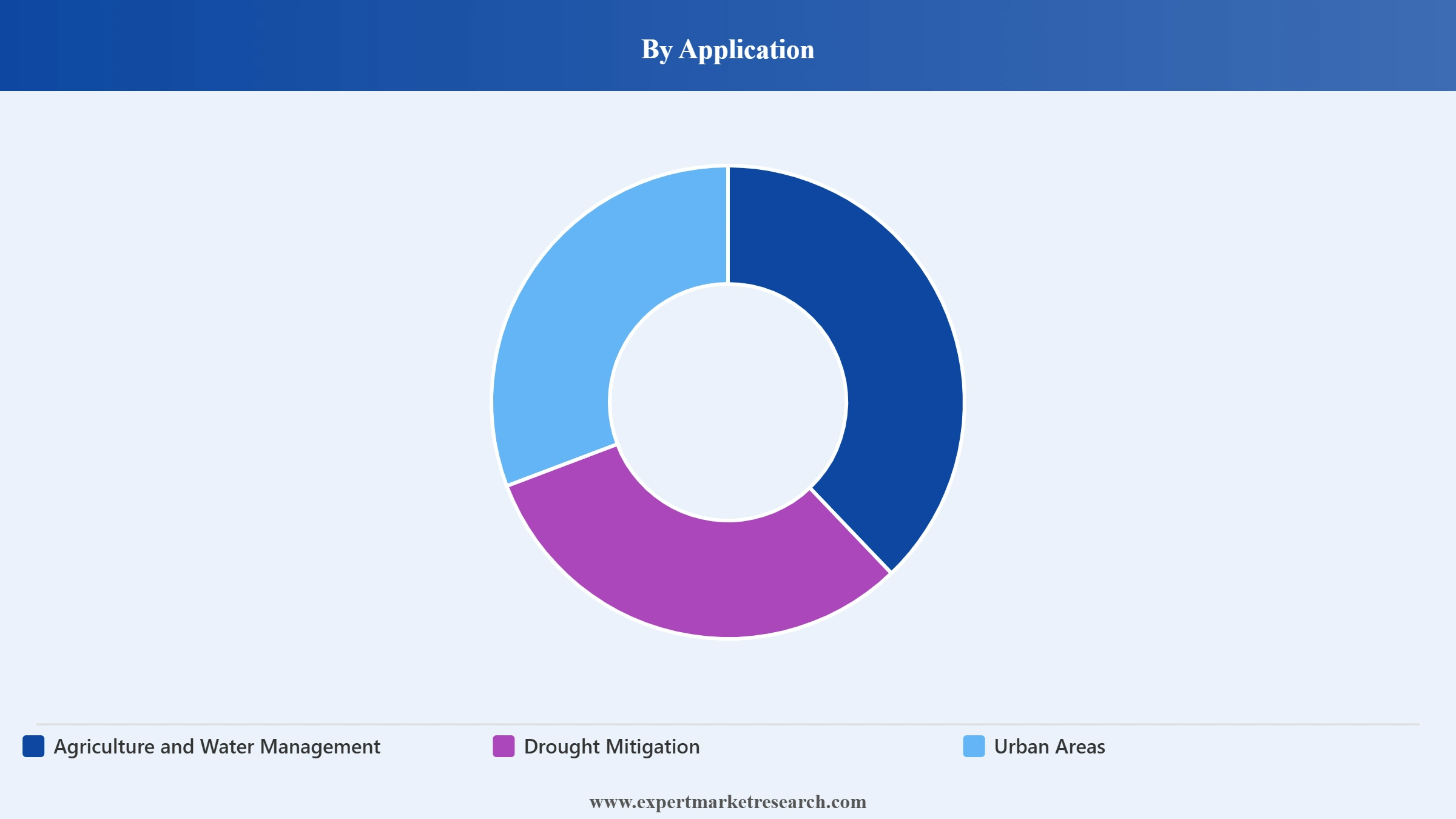
Key Insight: Agriculture and water management represents the largest application area within the cloud seeding market, reflecting its direct role in supporting irrigation-dependent crop production and replenishing water supplies for municipal and agricultural use. Drought mitigation continues to see strong adoption as governments in water-scarce regions invest in proactive rainfall enhancement strategies to combat prolonged dry conditions. Urban areas represent a smaller but growing application, with some programs using seeding to disperse fog at airports or reduce hail damage. In August 2025, for example, Saudi Arabia's Regional Cloud Seeding Program reported completing 444 flights across six regions, deploying 8,753 rain-seeding flares and generating an estimated 5 billion cubic millimeters of additional rainfall, illustrating the program's role in national water security and desertification management.
Market Breakup by Region
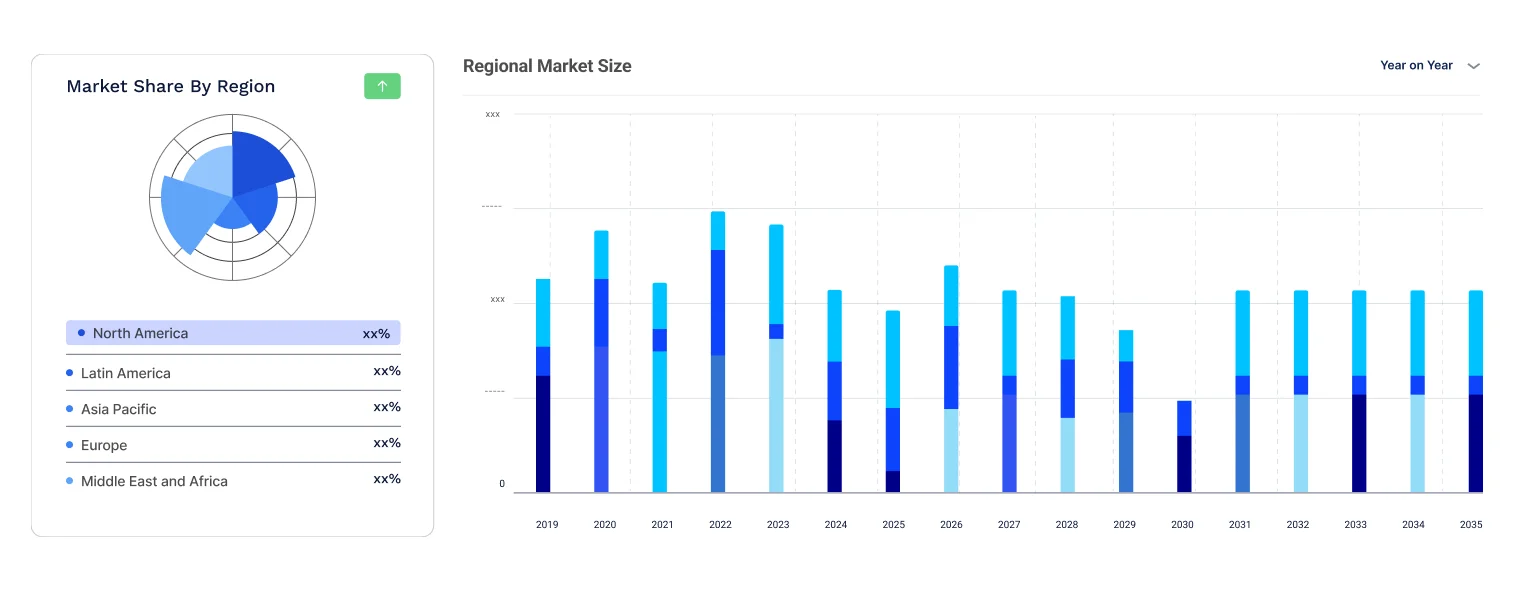
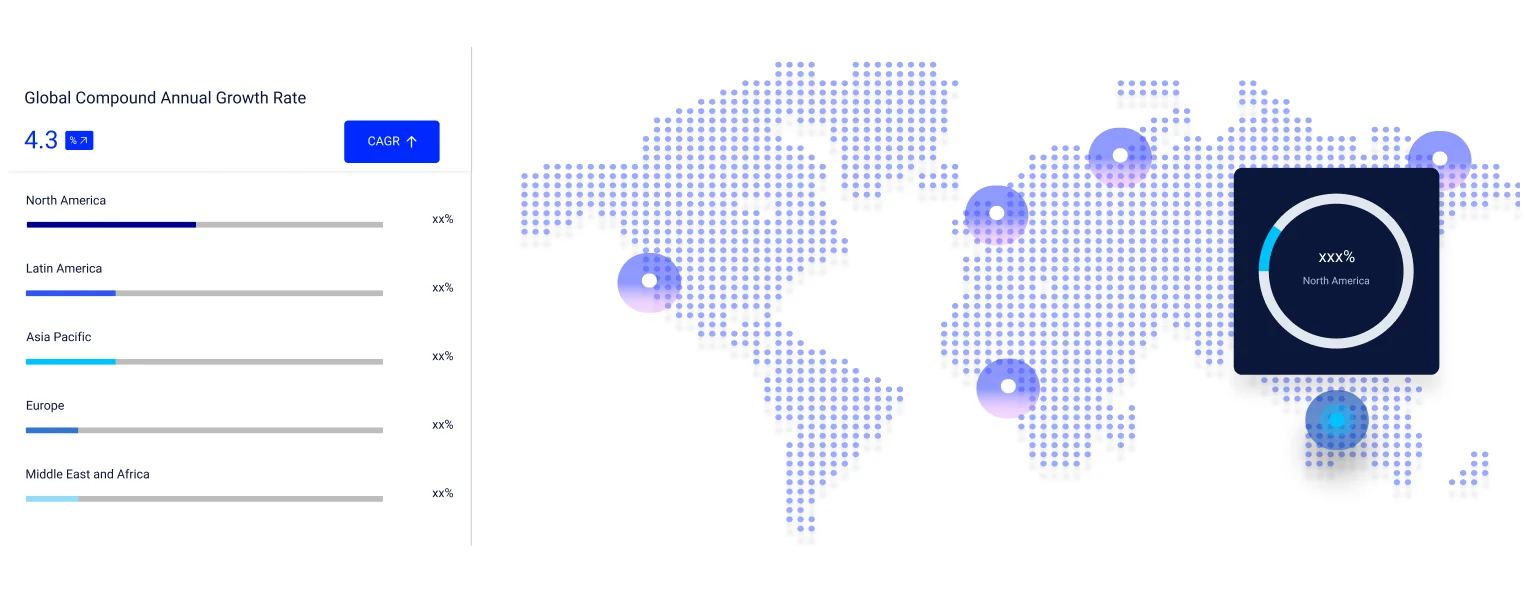
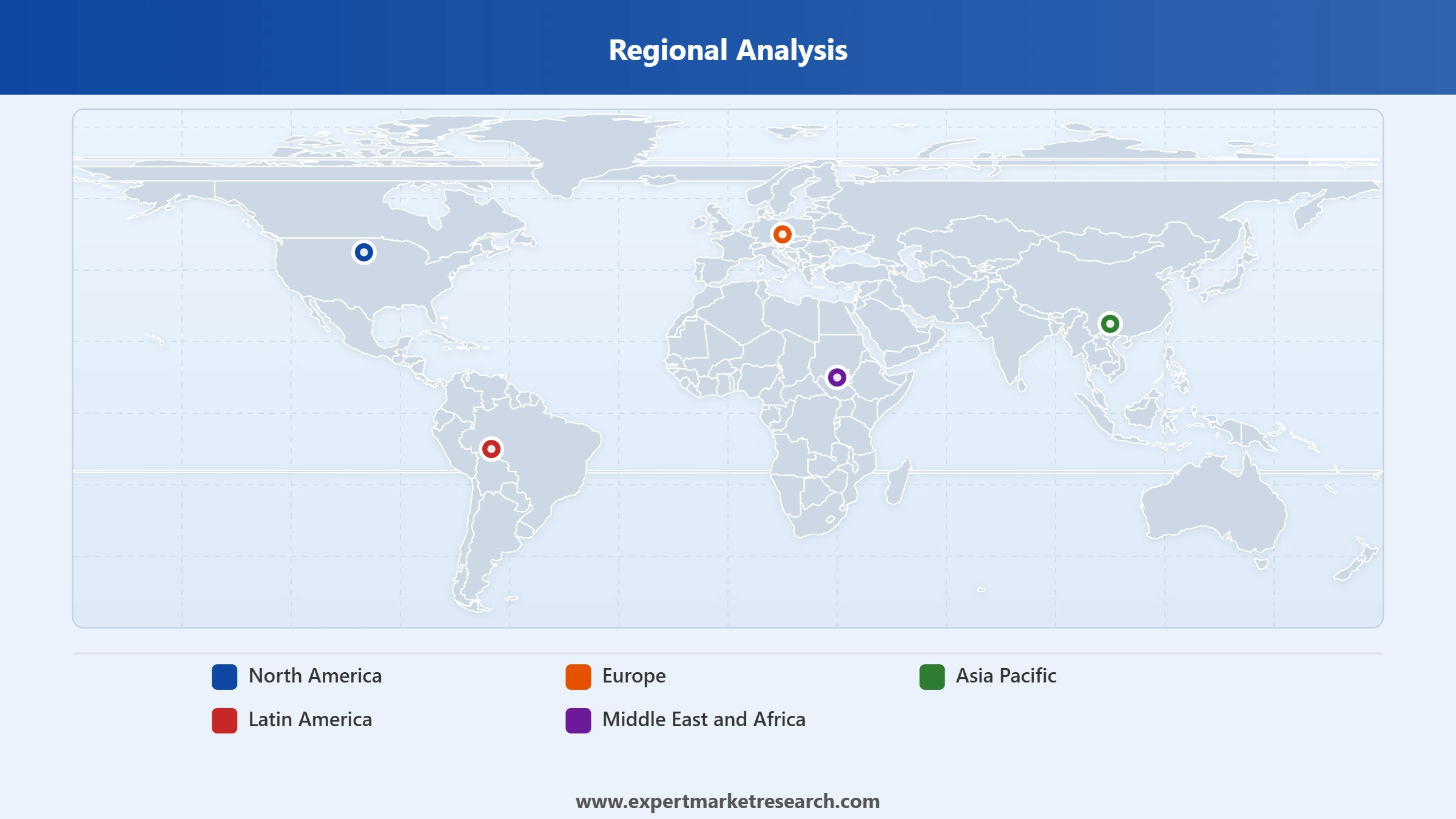
Key Insight: Asia Pacific dominates the cloud seeding market, holding a share of approximately 78% in 2025, supported by large-scale, government-backed weather modification programs across China and India. Middle East and Africa is the fastest-growing region as Gulf Cooperation Council countries expand rainfall enhancement programs to address acute water scarcity. North America remains a significant and mature market anchored by established government and research institution programs, while Europe and Latin America continue to see steadier growth tied to expanding drought mitigation and agricultural water management initiatives. The UAE's National Centre of Meteorology reported completing 110 cloud seeding missions in 2026 alone, underscoring the intensity of ongoing regional investment in rainfall enhancement to support long-term water security.
Read more about this report - REQUEST FREE SAMPLE COPY IN PDF
By type, ground-based systems dominate the market due to lower operating cost and simpler deployment
Ground-based systems account for the largest share of the market by type, reflecting their lower operating cost and simpler deployment relative to aerial platforms. In 2026, for example, Utah's ground-based cloud seeding program became fully remote, creating the largest remotely operated generator network of its kind in the United States and covering mountain ranges across the entire state.
Read more about this report - REQUEST FREE SAMPLE COPY IN PDF
Aerial-based systems are a fast-growing type category as programs increasingly value the flexibility and precision targeting that aircraft and drone-based delivery provide over large or remote areas. Utah is exploring drone-based cloud seeding as a replacement for the manned aircraft it tested between 2022 and 2025, aiming for more precise, direct-cloud targeting of seeding material.
By technique, glaciogenic seeding leads the market due to its effectiveness in cold cloud precipitation enhancement
Glaciogenic seeding accounts for the largest share of the market by technique, reflecting its effectiveness in enhancing precipitation from cold cloud systems, particularly in mountainous and orographic regions where snowpack augmentation supports water storage. Utah's Division of Water Resources launched the SNOWSCAPE 2026 research program, in partnership with the National Center for Atmospheric Research and Utah's two largest public universities, to physically measure glaciogenic seeding's impact on snowpack using mobile radar and calibrated forecast models.
Read more about this report - REQUEST FREE SAMPLE COPY IN PDF
Hygroscopic seeding is a fast-growing technique as programs in warmer climates increasingly value its ability to target specific warm cloud types independent of changing atmospheric conditions. In August 2025, however, Texas temporarily suspended all statewide cloud seeding operations, which rely primarily on hygroscopic flares, following public concern after deadly Hill Country floods, before a state investigation found the program had not contributed to the disaster.
By application, agriculture and water management leads the market due to its direct role in supporting crop production and reservoirs
Agriculture and water management represents the largest application area within the market, reflecting cloud seeding's direct role in supporting irrigation-dependent crop production and replenishing reservoirs, rivers, and groundwater supplies. In 2026, for example, Rain Enhancement Technologies reported that its ion-based ground stations near Utah's La Sal Mountains boosted precipitation by more than 8,000 acre-feet during the 2025-2026 winter season, supporting Colorado River Basin water districts.
Read more about this report - REQUEST FREE SAMPLE COPY IN PDF
Drought mitigation is the fastest-growing application as governments in water-scarce regions increasingly invest in proactive rainfall enhancement strategies to combat prolonged dry conditions linked to climate change. Rainmaker, a drone-powered cloud seeding company, has been expanding operations across Utah since 2026 in response to the deepening water crisis facing the broader American West.
Asia Pacific dominates the market due to large-scale, government-backed weather modification programs across China and India
Asia Pacific dominates the cloud seeding market, holding a share of approximately 78% in 2025, supported by large-scale, government-backed weather modification programs across China and India. China's program alone aims to extend weather modification capability to more than half of the country's territory, reflecting the scale of state investment underpinning the region's leading position.
Read more about this report - REQUEST FREE SAMPLE COPY IN PDF
Middle East and Africa is the fastest-growing region as Gulf Cooperation Council countries expand rainfall enhancement programs to address acute water scarcity and limited groundwater resources. Adoption across the wider region remains uneven, however; in April 2026, Kenya's meteorological authority acknowledged that decades of research into cloud seeding, including hail suppression and snowpack enhancement ambitions, had not progressed into an operational program due to limited local technical expertise and funding, illustrating the barriers some African nations still face in scaling the technology even as Gulf programs accelerate.
|
CAGR 2026-2035 - Market by |
Region |
|
North America |
6.5% |
|
Europe |
6.0% |
|
Asia Pacific |
7.4% |
|
Latin America |
8.5% |
|
Middle East and Africa |
11.5% |
The global market features a fragmented competitive structure led by specialized weather modification service providers and materials manufacturers with long-standing government relationships. cloud seeding companies like Weather Modification, American Elements, and North American Weather Consultants are competing primarily through operational track record and research partnerships, while Ice Crystal Engineering and other manufacturers focus on seeding material innovation.
Leading cloud seeding market players are focusing on precision delivery technology, nanotechnology-based seeding materials, and government program partnerships to strengthen their competitive position. Increasing emphasis on AI-driven atmospheric modeling and demonstrable cost-effectiveness is also shaping how manufacturers differentiate their offerings amid growing public scrutiny of program outcomes.
Weather Modification, headquartered in Fargo, North Dakota, and founded in 1961, is one of the world's largest private aerial cloud seeding companies, providing weather radar systems, seeding aircraft, and atmospheric research services. The company has conducted weather modification programs across more than 35 countries spanning North America, South America, Europe, Asia, the Middle East, and Africa.
American Elements, headquartered in Los Angeles, California, and founded in 1997, is a global manufacturer and distributor of advanced materials, including silver iodide and other seeding agents used in cloud seeding operations. The company develops and commercializes specialty materials in partnership with research institutions, government agencies, and industrial customers worldwide.
Ice Crystal Engineering, headquartered in Kindred, founded in 1998, North Dakota, is a manufacturer of specialized seeding materials and flares used in cloud seeding operations. The company was established as an affiliate of Weather Modification, Inc., allowing the combined group to manufacture its own seeding materials and aircraft services in-house.
North American Weather Consultants, headquartered in Sandy, Utah, and founded in 1950, is one of the longest-standing private meteorological consulting firms in the United States, providing weather modification, air quality, and applied meteorological services. The company has conducted cloud seeding operations across California, Utah, and Colorado since 1952.
Other key players in the market report include Cloud Technologies GmbH, ModClima S.r.l., RHS Consulting Ltd., Northwest Mettech Corp., and Snowy Hydro Limited, among others.
*Please note that this is only a partial list; the complete list of key players is available in the full report. Additionally, the list of key players can be customized to better suit your needs.*
Explore the latest trends shaping the cloud seeding market 2026-2035 with our in-depth report. Gain strategic insights, future forecasts, and key market developments that can help you stay competitive. Download a free sample report or contact our team for customized consultation on the market trends 2026.


Upto 15% Off
USD
$2499 $2249
$3999 $3599
$4999 $4249
$5999 $5099


*While we strive to always give you current and accurate information, the numbers depicted on the website are indicative and may differ from the actual numbers in the main report. At Expert Market Research, we aim to bring you the latest insights and trends in the market. Using our analyses and forecasts, stakeholders can understand the market dynamics, navigate challenges, and capitalize on opportunities to make data-driven strategic decisions.*
In 2025, the cloud seeding market reached an approximate value of USD 0.43 Billion.
The market is projected to grow at a CAGR of 7.63% between 2026 and 2035.
The key players in the market include Weather Modification, Inc., American Elements Inc., Ice Crystal Engineering LLC, North American Weather Consultants, Inc., Cloud Technologies GmbH, ModClima S.r.l., RHS Consulting Ltd., Northwest Mettech Corp., and Snowy Hydro Limited, among others.
Leading providers are pursuing precision delivery technology upgrades, nanotechnology-based seeding materials, and government program partnerships to strengthen market position.
Key challenges include public scrutiny of program cost-effectiveness, limited scientific consensus on measurable impact, and regulatory uncertainty around transboundary effects.
Explore our key highlights of the report and gain a concise overview of key findings, trends, and actionable insights that will empower your strategic decisions.
|
Report Features |
Details |
|
Base Year |
2025 |
|
Historical Period |
2019-2025 |
|
Forecast Period |
2026-2035 |
|
Scope of the Report |
Historical and Forecast Trends, Industry Drivers and Constraints, Historical and Forecast Market Analysis by Segment:
|
|
Breakup by Type |
|
|
Breakup by Technique |
|
|
Breakup by Application |
|
|
Breakup by Region |
|
|
Market Dynamics |
|
|
Competitive Landscape |
|
|
Companies Covered |
|
Datasheet
One User
USD 2,499
USD 2,249
tax inclusive*
Single User License
One User
USD 3,999
USD 3,599
tax inclusive*
Five User License
Five User
USD 4,999
USD 4,249
tax inclusive*
Corporate License
Unlimited Users
USD 5,999
USD 5,099
tax inclusive*
*Please note that the prices mentioned below are starting prices for each bundle type. Kindly contact our team for further details.*
Flash Bundle
Small Business Bundle
Growth Bundle
Enterprise Bundle
*Please note that the prices mentioned below are starting prices for each bundle type. Kindly contact our team for further details.*
Flash Bundle
Number of Reports: 3
20%
tax inclusive*
Small Business Bundle
Number of Reports: 5
25%
tax inclusive*
Growth Bundle
Number of Reports: 8
30%
tax inclusive*
Enterprise Bundle
Number of Reports: 10
35%
tax inclusive*
How To Order

Select License Type
Choose the right license for your needs and access rights.

Click on ‘Buy Now’
Add the report to your cart with one click and proceed to register.

Select Mode of Payment
Choose a payment option for a secure checkout. You will be redirected accordingly.
Strategic Solutions for Informed Decision-Making
Gain insights to stay ahead and seize opportunities.

Get insights & trends for a competitive edge.

Track prices with detailed trend reports.

Analyse trade data for supply chain insights.

Leverage cost reports for smart savings

Enhance supply chain with partnerships.

Connect For More Information
Our expert team of analysts will offer full support and resolve any queries regarding the report, before and after the purchase.
Our expert team of analysts will offer full support and resolve any queries regarding the report, before and after the purchase.
We employ meticulous research methods, blending advanced analytics and expert insights to deliver accurate, actionable industry intelligence, staying ahead of competitors.
Our skilled analysts offer unparalleled competitive advantage with detailed insights on current and emerging markets, ensuring your strategic edge.
We offer an in-depth yet simplified presentation of industry insights and analysis to meet your specific requirements effectively.




