

Consumer Insights
Uncover trends and behaviors shaping consumer choices today
Procurement Insights
Optimize your sourcing strategy with key market data
Industry Stats
Stay ahead with the latest trends and market analysis.
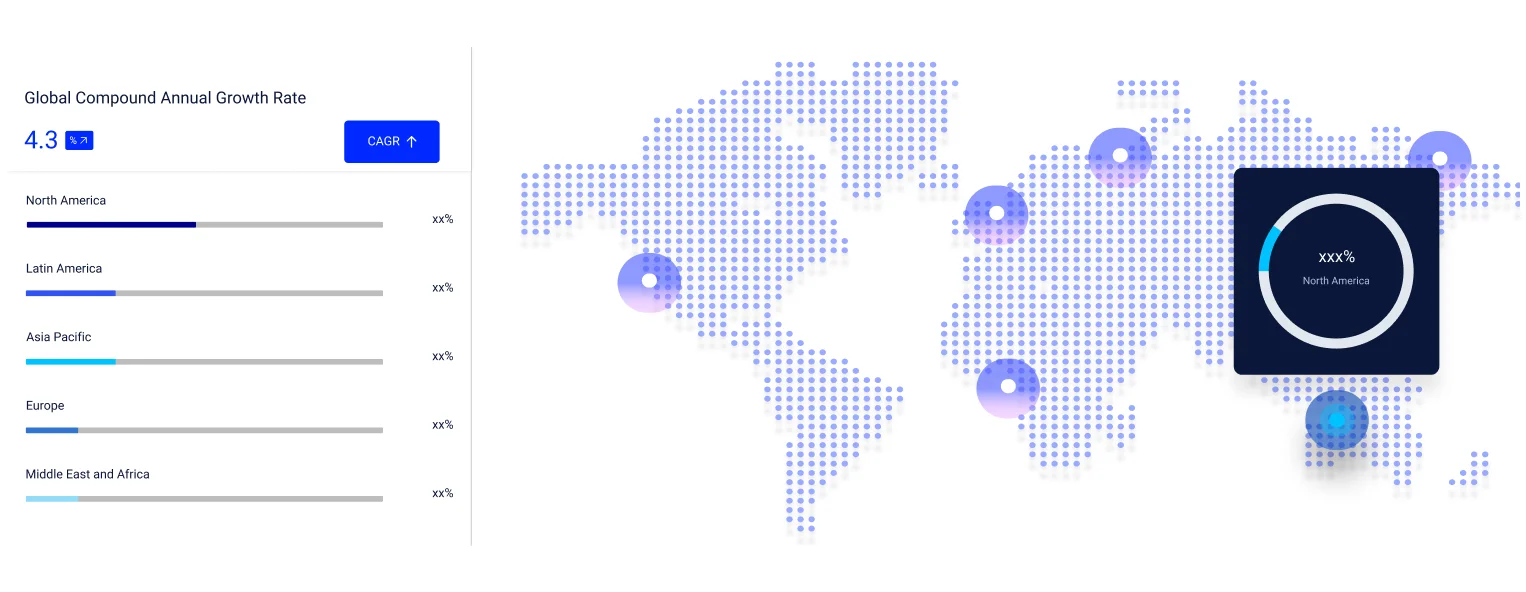
The global encryption software market attained a value of USD 14.89 Billion in 2025 and is projected to expand at a CAGR of 16.30% through 2035. The market is further expected to achieve USD 67.40 Billion by 2035, driven by the rising cost of data breaches, stricter data protection and privacy rules, wider use of cloud services and connected devices, and the growing need to protect sensitive data against future quantum-capable attackers.
Breach economics keep encryption on the boardroom agenda. IBM's 2026 Cost of a Data Breach Report, covered in July 2026, put the global average breach cost at USD 4.99 million, up 12%, and found that 53% of breached organizations said sensitive data was not encrypted at rest or in transit when the incident occurred. Gaps of that kind turn encryption from an optional control into a baseline purchase, pushing buyers toward software that covers disks, files, databases and cloud workloads under one key management policy with audit evidence for regulators.
Credential theft widens the exposure that encryption must cover. Sophos published research in May 2026 showing that 71% of organizations suffered at least one identity breach in the past twelve months. When attackers log in with valid credentials, perimeter controls matter less, and data protected only by access rules is readable once an account is taken over. That reality pushes enterprises toward encryption that keeps files and databases unreadable without separate keys, bringing demand for key management, rotation and monitoring services alongside the core software.
Connected devices extend the market beyond data centres. At a roundtable held at MWC Shanghai in June 2026, the GSMA estimated that only about 7 to 8% of active connected IoT devices are quantum-safe, and its Post-Quantum Telco Network Task Force is running four workstreams, including a Crypto Bill of Materials and crypto agility guidelines. Devices that stay in service for a decade or more need encryption that can be updated, which favours software and services that support algorithm replacement without hardware swaps in the field.
Compound Annual Growth Rate
16.3%
Value in USD Billion
2026-2035
Read more about this report - Request a Free Sample
The UK National Cyber Security Centre published updated TLS guidance in October 2026 recommending hybrid and pure post-quantum cipher choices, stating that TLS 1.3 is the only version that supports post-quantum cryptography and that high-priority migration activities should be completed by 2031. The guidance suits general use and protecting OFFICIAL government information. Companies can leverage crypto-agile encryption software to meet migration milestones.
Google Cloud made quantum-safe digital signatures and post-quantum key encapsulation generally available in Cloud Key Management Service in July 2026, adding ML-DSA-44, ML-DSA-65, ML-DSA-87 and SLH-DSA-SHA2-128s alongside ML-KEM through the existing Cloud KMS API. Google tied the release to updated US government timelines and NSA CNSA 2.0 requirements. Companies can adopt managed key services to test post-quantum algorithms without new infrastructure.
NTT DOCOMO Business announced in June 2026 that construction had started on a network of about 600 km linking Tokyo, Nagoya and Osaka, using quantum cryptography communications. The project shows telecom carriers moving from trials to physical infrastructure for protecting data in transit between major business centres. Companies can combine carrier-grade secure links with software encryption to protect high-value traffic between data centres and offices.
Orange Business said in February 2026 that its WAN services secured with post-quantum cryptography were available, and it set managed Cisco SD-WAN services as the next commercial step, targeted for later in 2026. The move gives multinational customers a managed route to quantum-resistant links between sites without redesigning their networks. Companies can pair managed network encryption with endpoint and data-at-rest encryption for layered protection.
IBM announced in May 2026 an expanded collaboration with Singapore operator StarHub to build a crypto-agile foundation on Red Hat Enterprise Linux. IBM will use Guardium Cryptography Manager and Quantum Safe Explorer to find cryptographic dependencies, assess vulnerabilities and prepare StarHub for post-quantum standards, addressing harvest now, decrypt later risk. Companies can leverage cryptographic inventory tools to rank which systems to migrate first.
Trend Micro reported in August 2026, for the quarter ended June 2026, net sales of JPY 74,739 million, up 13%, with TrendAI Vision One annual recurring revenue up 49% and making up 45% of enterprise recurring revenue. It lowered its full-year operating income outlook to JPY 44,400 million because cloud costs, including AI token costs, rose more than expected. Companies can leverage platform subscriptions to grow recurring revenue while budgeting for cloud costs.
Sophos announced in March 2026 a partnership with Spektrum Labs on an insurability program built on Sophos Managed Detection and Response. The program issues verifiable cryptographic tokens through Sophos Central that insurers can use when underwriting cyber cover, and it was offered first to select customers and partners. Insurers increasingly ask for proof of controls. Companies can leverage managed security services and documented controls to support cyber insurance underwriting and renewals.
Broadcom introduced Symantec CBX in March 2026, a cloud-based extended detection and response platform that combines Symantec prevention, Adaptive Protection and Data Security features with Carbon Black endpoint detection technology. It targets organizations with limited security staff, adds AI-guided investigation, and is due later in 2026 through the Catalyst Partner Program. Companies can leverage unified platforms to bring data security controls to lean teams.
This Expert Market Research Report titled "Global Encryption Software Market Report and Forecast 2026-2035" offers a detailed analysis of the market based on the following segments:
Market Breakup by Component
Key Insight: Software covers licensed encryption products and agents, and Canada's Treasury Board has required since April 2026 that new federal contracts with a digital component include post-quantum cryptography procurement clauses; Services covers the human and managed effort around deployment and key management; Professional Services covers advisory, integration and assessment work, and Sophos acquired Arco Cyber in February 2026 to add CISO-level advisory expertise driven by agentic AI; and Managed Services covers outsourced monitoring and key operations, where AT&T Business announced Quantum Resilient SD-WAN in May 2026, built on Cisco 8000 Series Secure Routers.
Market Breakup by Application
Key Insight: Disk Encryption protects lost or stolen devices, and VeraCrypt 1.26.29, released in June 2026, added Argon2id as an alternative key derivation function and patched a flaw affecting hidden volumes; File/Folder Encryption protects individual documents, and AxCrypt AB shipped Windows and macOS updates in August 2026 and a Linux update in September 2026; Database Encryption protects stored records, and AWS announced in September 2026 that Amazon RDS for PostgreSQL 18 and higher supports post-quantum TLS key exchange for data moving between clients and databases; Communication Encryption secures data in transit, and Deutsche Telekom and Qunnect ran a quantum teleportation trial over a 30 km commercial fibre loop in Berlin in January 2026, carrying conventional traffic on the same fibre; and Cloud Encryption is expected to hold a significant share, and Google Cloud published a roadmap in August 2026 to reach full post-quantum readiness by 2029.
Market Breakup by Deployment Mode
Key Insight: On-Premise keeps keys and workloads inside the customer's own facilities for tightly regulated data, and Thales Trusted Cyber Technologies announced in July 2026 that its Luna T-Series hardware security modules gained FIPS 140-3 Level 3 validation for post-quantum algorithms; and Cloud delivers encryption and key management as a service across cloud workloads, where Microsoft announced general availability of external key management for Azure Key Vault Managed HSM in October 2026, letting customers keep key-encryption keys in a hardware security module they operate outside Microsoft infrastructure.
Market Breakup by Enterprise Size
Key Insight: Small and Medium-Sized Enterprises face rising exposure, and the UK government's Cyber Security Breaches Survey, summarised in May 2026, found that 14% of businesses held personal data not protected by anonymisation or encryption; and Large Enterprises carry the biggest compliance burden, and Citibank selected QuantumGenie in July 2026 for enterprise cryptographic discovery after a pilot assessment covering 100 devices at Citibank India.
Market Breakup by Industry
Key Insight: Banking, Financial Services, and Insurance is expected to lead, and Europol and its partners published a report in January 2026 telling financial institutions to inventory public key cryptography use cases and score each for quantum risk and migration time; Aerospace and Defence is moving under the Department of War post-quantum cryptography strategy published in July 2026, which requires high-impact national security systems to support quantum-resistant algorithms by the end of 2030; Government and Public Utilities face mandated migration planning, and OMB memorandum M-26-15, issued in June 2026, requires each US federal agency to submit a post-quantum migration plan within 120 days; IT and Telecommunication is investing in quantum-safe networks, and SK Telecom announced a Horizon Europe research project on quantum key distribution control and key management in June 2026; Healthcare must meet HIPAA duties, and a September 2026 analysis of US Department of Health and Human Services data found that 397 breaches of 500 or more records were reported in the six months ended June 2026, affecting 33.77 million people; Retail handles payment and customer records, and Lidl told online shop customers in Germany, Belgium and the Netherlands in July 2026 that a breach at an IT service provider exposed names, email addresses, phone numbers and dates of birth; and Others covers education, energy, manufacturing and other sectors, where Zscaler reported in October 2026 that data stolen by ransomware groups rose 275.8% year over year to 896.2 TB, with data theft rather than encryption driving extortion.
Market Breakup by Region
Key Insight: North America holds the leading position, and the Government of Canada announced in June 2026 that Bill C-8 received Royal Assent, adding telecommunications security powers and a Critical Cyber Systems Protection Act for finance, telecommunications, energy and transportation; Europe is shaped by data protection rules, and Germany's digital ministry, interior ministry and Federal Office for Information Security issued joint post-quantum migration guidelines in October 2026 that set readiness steps for the end of 2026 and mandatory migration of high-risk systems by 2030; Asia Pacific is anticipated to grow significantly, and a survey of large Australian organisations published in May 2026 found that only 11% were confident they can meet post-quantum readiness deadlines; Latin America is expanding with digital services, and the Sophos State of Ransomware in Brazil 2026 report, published in July 2026, found that 56% of attacks resulted in encrypted data and that the median ransom demand rose to USD 640,000; and the Middle East and Africa is led by Saudi Arabia and its peers, where the National Cybersecurity Authority ran a consultation in June 2026 on classifying cybersecurity violations and penalties.
Read more about this report - Request a Free Sample
By Component, Software leads the market while Services grows steadily because licensed encryption products form the technical core, while advisory, integration and managed services help organizations run keys and policies
Software leads because licensed products sit directly on endpoints, servers and databases, where buyers want proven algorithms and simple key handling. Sophos reported in March 2026 that only 5% of organizations have full trust in their cybersecurity vendors, which pushes software suppliers to show how keys are generated, stored and rotated. That scrutiny rewards vendors with transparent cryptography, independent validation and clear upgrade paths, and it favours products that can switch algorithms across large fleets without redeploying every single agent.
Services grows steadily as organizations lack the staff to design, run and audit encryption programs. Sophos published its Active Adversary Report 2026 in February 2026, finding that identity attacks dominate while threat groups multiply, which raises demand for monitoring and response that sits beside encryption controls. Professional services cover assessment and integration, while managed services handle key operations and alerting, so buyers increasingly sign multi-year contracts that bundle software, support and expert oversight across regulated business units and critical systems.
By Application, Cloud Encryption captures a significant share of the market while Disk Encryption grows considerably because cloud adoption spreads across industries, while lost or stolen devices and bring-your-own-device policies raise the need for encrypted disks
Cloud Encryption holds a significant share as healthcare, retail and other industries consolidate business processes in the cloud. Cloudflare said in April 2026 that more than 65% of human traffic on its network already used post-quantum encryption, and it brought its target for full post-quantum security forward to 2029. Protection enabled by default across cloud paths means much more data is encrypted in transit, which pulls encrypted storage, key management and tokenisation services along as buyers standardise on cloud-native controls.
Disk Encryption grows as organizations protect laptops, phones and servers that can be lost or stolen. Microsoft listed a known issue in its April 2026 security update, KB5082063, where some managed devices ask for a BitLocker recovery key at first restart, which shows how closely full-disk encryption is tied to boot and firmware settings. Administrators were told to review TPM validation policies before deploying, and the safeguard supports bring-your-own-device policies in hybrid workplaces where staff roam between offices and homes.
By Deployment Mode, Cloud leads the market while On-Premise remains important because organizations are moving data and key management services off site, while regulated users keep sensitive keys inside their own facilities
Cloud leads as managed key services and encrypted storage become default parts of cloud platforms. AWS announced in April 2026 that Secrets Manager clients support hybrid post-quantum key exchange using ML-KEM for TLS connections, enabled automatically in its agent, Lambda extensions and configuration provider, and in software development kits for six languages. Protection that switches on without code changes lowers the cost of adoption, so cloud users gain post-quantum safeguards earlier than organizations that run their own infrastructure on site.
On-Premise remains important for regulators, defence buyers and banks that keep keys in hardware they control. Telefonica presented its Quantum Telco proposal at MWC in March 2026, highlighting CPD Interconnection that protects links between data centres and corporate sites with the new post-quantum standards. Private links of this kind show that buyers who run their own facilities want protection for traffic between them, and they pair it with hardware key storage and an internal migration timetable set by risk teams.
By Enterprise Size, Large Enterprises lead the market while Small and Medium-Sized Enterprises grow quickly because compliance duties and data volumes are greatest at scale, while smaller firms are adopting encryption in larger numbers
Large Enterprises lead because regulators, auditors and customers hold them to the strictest data protection standards. IBM signed a letter of intent with the US Department of Commerce in July 2026 to build Anderon, a quantum foundry backed by USD 1 billion in chip incentives and a USD 1 billion IBM cash contribution, as part of more than USD 10 billion of quantum investment over five years. Quantum progress of this scale pushes large organizations to plan cryptographic migration early.
Small and Medium-Sized Enterprises grow quickly as ransomware and credential theft reach smaller targets. The 2026 Verizon Data Breach Investigations Report, summarised in June 2026, found that small organizations account for 96% of ransomware victims and that 69% of small and medium-sized businesses refused to pay because they had reliable backups. Those findings show why smaller firms are adding encryption beside backups, since stolen data carries leak risk even when systems can be restored, and cloud-delivered tools make adoption affordable.
By Industry, Banking, Financial Services, and Insurance leads the market while Healthcare grows steadily because rising breach cases and digital payments raise demand for protection, while patient privacy rules mandate safeguards for health records
Banking, Financial Services, and Insurance leads because confidential data must stay unreadable to unauthorised users and payment flows need protection. QuSecure said in March 2026 that a four-month deployment with Banco Sabadell and a services partner used network-layer encryption within existing infrastructure, without replacing whole systems, and a proposed framework cites it as a benchmark. Retrofitting encryption on live systems shows banks how to add post-quantum protection while services stay online and customers keep making payments and transfers without interruption.
Healthcare grows steadily as providers share records across organizations and face HIPAA obligations. Paubox reported in June 2026 that TriZetto Provider Solutions filed a breach affecting 3,433,965 people in February 2026, the largest listed for the year to date, and that seven of the ten largest breaches involved a business associate or vendor system. Vendor-linked incidents push providers to require encryption from partners as well as in their own systems, because shared platforms hold records for many hospitals and clinics.
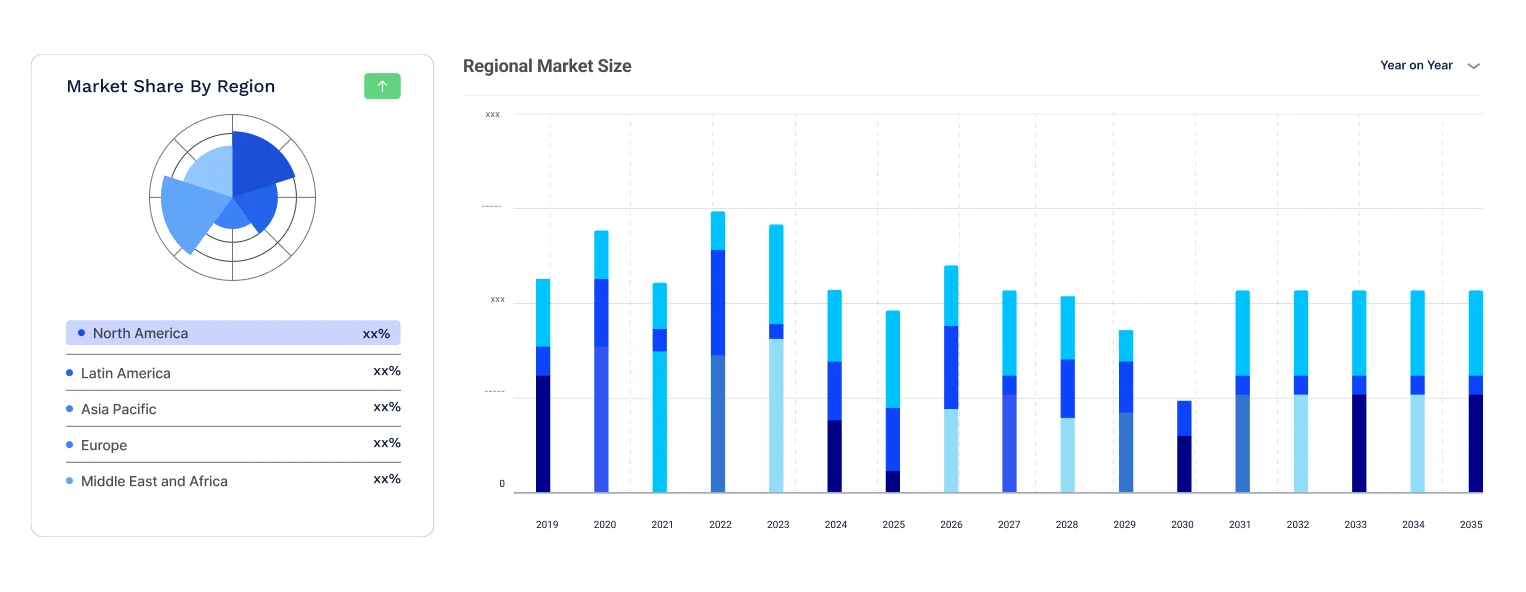
North America commands the largest share of the market, shaped by a concentration of encryption vendors, cloud providers and regulated enterprises across the United States and Canada, while Asia Pacific is expanding fastest as cyberattacks and cloud adoption rise
This is supported by the scale of regulated data held in the region. Paubox reported in June 2026 that NYC Health + Hospitals disclosed a breach affecting 1.8 million people, and that Senate HELP Committee Chair Bill Cassidy wrote to the system in June 2026 asking for details. Disclosures of that size keep US providers, insurers and public bodies buying encryption for records at rest and in transit, and they keep regulators focused on how vendors protect stored data.
Asia Pacific grows fastest as governments set standards and industry builds capacity. Wang Xiaoyun of Tsinghua University said in March 2026 that China is likely to have national post-quantum standards within about three years and that domestic industry could expand rapidly over the next three to five years, while China's new five-year plan designates quantum technology a core strategic industry. North America, Europe, Latin America plus Middle East and Africa grow through regulation, cloud adoption and digital payments.
The global encryption software market is moderately fragmented, with diversified technology groups and security platform vendors competing alongside open-source projects, specialist file and disk encryption providers and cloud platforms that bundle key management into their services.
Competitive dynamics are increasingly shaped by the move to post-quantum algorithms, cryptographic inventory and agility tooling, integration of encryption with identity and data loss prevention controls, pressure to prove vendor trustworthiness, and the shift of key management into cloud and managed service models.
Founded in 1911 and headquartered in New York, United States, IBM Corporation sells software, consulting and infrastructure, including cybersecurity and data products. In July 2026 it reported that software revenue rose 5% to USD 7.8 billion and data revenue rose 19% for the quarter ended June 2026, with free cash flow of USD 4.8 billion for the six months ended June 2026.
Founded in 1975 and headquartered in Washington, United States, Microsoft Corporation makes operating systems, productivity software, gaming products and devices. In June 2026 Azure chief technology officer Mark Russinovich set out a faster Quantum Safe Program under the Secure Future Initiative, aiming to move critical products and services to post-quantum cryptography by 2029. Work areas include network cryptography, stored data and code signing.
Broadcom Inc. markets semiconductors and infrastructure software, including the Symantec and Carbon Black security brands. In September 2026 it reported revenue of USD 29.6 billion for the quarter ended August 2026, up 86%, with infrastructure software revenue of USD 8.75 billion, up 29% and equal to 30% of the total. It also pays a quarterly dividend of USD 0.65 per share.
Founded in 1988 and headquartered in Tokyo, Japan, Trend Micro Inc. offers cybersecurity products and services including cloud security and network defence. In May 2026 it reported net sales of JPY 73,856 million for the quarter ended March 2026, up 9%, with its Vision One platform growing 50% on a recurring basis and enterprise recurring revenue above USD 1.3 billion.
Other key players in the encryption software market include NortonLifeLock Inc., Micro Focus International Plc, Sophos Group, VeraCrypt, AxCrypt AB, and Nord Security Inc., among others.
*Please note that this is only a partial list; the complete list of key players is available in the full report. Additionally, the list of key players can be customized to better suit your needs.*
For a detailed assessment of opportunities across the encryption software market's component, application, deployment mode, enterprise size, industry, and regional segments through 2026 and beyond, connect with Expert Market Research for a customized consultation.


Upto 15% Off
USD
$2499 $2249
$3999 $3599
$4999 $4249
$5999 $5099


*While we strive to always give you current and accurate information, the numbers depicted on the website are indicative and may differ from the actual numbers in the main report. At Expert Market Research, we aim to bring you the latest insights and trends in the market. Using our analyses and forecasts, stakeholders can understand the market dynamics, navigate challenges, and capitalize on opportunities to make data-driven strategic decisions.*
The global encryption software market attained a value of USD 14.89 Billion in 2025.
The encryption software market is projected to grow at a CAGR of 16.30% from 2026 to 2035.
The market is estimated to witness a healthy growth in the forecast period of 2026-2035 to reach USD 67.40 Billion by 2035.
Key strategies include adding post-quantum and hybrid algorithms, offering cryptographic inventory and crypto-agility tooling, bundling encryption with data loss prevention and identity controls, expanding managed key services, and forming partnerships with cloud, network and insurance providers.
Key trends aiding market expansion include rising adoption of IoT and heightened deployment of cloud-based digital solutions.
Major regions in the market are North America, Latin America, the Middle East and Africa, Europe, and the Asia Pacific.
The various industries in the market for encryption software are banking, financial services, and insurance, aerospace and defence, government and public utilities, IT and telecommunication, healthcare, and retail, among others.
Small and medium-sized enterprises and large enterprises are considered in the market.
The significant deployment modes in the market include on-premise and cloud.
The major applications in the market are disk encryption, file/folder encryption, database encryption, communication encryption, and cloud encryption.
Key players in the encryption software market include IBM Corporation, Microsoft Corporation, NortonLifeLock Inc., Trend Micro Inc., Micro Focus International Plc, Sophos Group, Broadcom Inc., VeraCrypt, AxCrypt AB, and Nord Security Inc..
Key challenges include key management complexity across hybrid and multi-cloud estates, performance overhead on older devices, the cost and effort of migrating to post-quantum algorithms, shortages of skilled security staff, and uneven regulatory requirements across regions.
Explore our key highlights of the report and gain a concise overview of key findings, trends, and actionable insights that will empower your strategic decisions.
| REPORT FEATURES | DETAILS |
| Base Year | 2025 |
| Historical Period | 2019-2025 |
| Forecast Period | 2026-2035 |
| Scope of the Report |
Historical and Forecast Trends, Industry Drivers and Constraints, Historical and Forecast Market Analysis by Segment:
|
| Breakup by Component |
|
| Breakup by Application |
|
| Breakup by Deployment Mode |
|
| Breakup by Enterprise Size |
|
| Breakup by Industry |
|
| Breakup by Region |
|
| Market Dynamics |
|
| Competitive Landscape |
|
| Companies Covered |
|
Datasheet
One User
USD 2,499
USD 2,249
tax inclusive*
Single User License
One User
USD 3,999
USD 3,599
tax inclusive*
Five User License
Five User
USD 4,999
USD 4,249
tax inclusive*
Corporate License
Unlimited Users
USD 5,999
USD 5,099
tax inclusive*
*Please note that the prices mentioned below are starting prices for each bundle type. Kindly contact our team for further details.*
Flash Bundle
Small Business Bundle
Growth Bundle
Enterprise Bundle
*Please note that the prices mentioned below are starting prices for each bundle type. Kindly contact our team for further details.*
Flash Bundle
Number of Reports: 3
20%
tax inclusive*
Small Business Bundle
Number of Reports: 5
25%
tax inclusive*
Growth Bundle
Number of Reports: 8
30%
tax inclusive*
Enterprise Bundle
Number of Reports: 10
35%
tax inclusive*
How To Order

Select License Type
Choose the right license for your needs and access rights.

Click on ‘Buy Now’
Add the report to your cart with one click and proceed to register.

Select Mode of Payment
Choose a payment option for a secure checkout. You will be redirected accordingly.
Strategic Solutions for Informed Decision-Making
Gain insights to stay ahead and seize opportunities.

Get insights & trends for a competitive edge.

Track prices with detailed trend reports.

Analyse trade data for supply chain insights.

Leverage cost reports for smart savings

Enhance supply chain with partnerships.

Connect For More Information
Our expert team of analysts will offer full support and resolve any queries regarding the report, before and after the purchase.
Our expert team of analysts will offer full support and resolve any queries regarding the report, before and after the purchase.
We employ meticulous research methods, blending advanced analytics and expert insights to deliver accurate, actionable industry intelligence, staying ahead of competitors.
Our skilled analysts offer unparalleled competitive advantage with detailed insights on current and emerging markets, ensuring your strategic edge.
We offer an in-depth yet simplified presentation of industry insights and analysis to meet your specific requirements effectively.




