

Consumer Insights
Uncover trends and behaviors shaping consumer choices today
Procurement Insights
Optimize your sourcing strategy with key market data
Industry Stats
Stay ahead with the latest trends and market analysis.
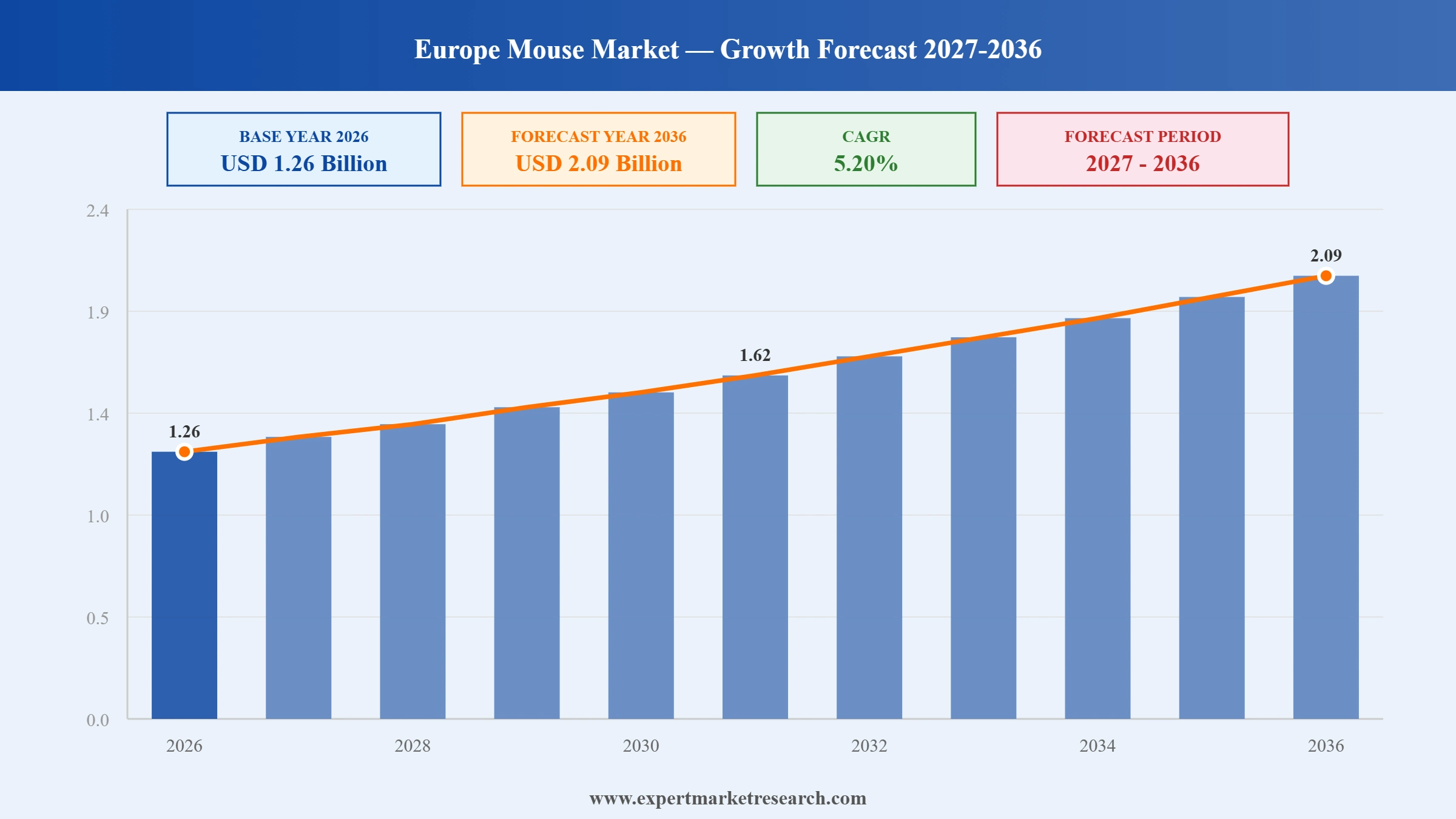
The Europe mouse market attained a value of USD 1.20 Billion in 2025and is projected to expand at a CAGR of 5.20% through 2035. The market is further expected to achieve USD 1.99 Billion by 2035. Europe's mouse demand is increasingly shaped by digital work intensity. Almost 52.7% of EU enterprises used paid cloud services in 2025, while office software accounted for 71.7% of enterprise cloud usage, creating a deeper requirement for precise, comfortable, and multi-device input peripherals across extended digital workflows.
Europe's wider digitalization agenda provides a supportive operating environment. The European Commission's Digital Decade framework targets 80% of adults possessing at least basic digital skills by 2030, while its 2025 assessment reported that only 55.6% of Europeans had reached a basic level. Meanwhile, Eurostat reported that 20% of EU enterprises used AI technologies in 2025, up from 13.5% in 2024, increasing the importance of efficient computer-based workflows across professional environments. For manufacturers, distributors, and enterprise procurement teams, the opportunity increasingly lies in differentiating mice according to workflow rather than simply connectivity. Ergonomics, device switching, secure wireless management, low-noise operation, battery efficiency, sustainability, and software customization are becoming commercially relevant specifications, thereby boosting the Europe mouse market value.
The concept of software-based customization is another innovation that is evolving in the Europe mouse market as manufacturers start configuring physical controls to suit different workflows. The example of this innovation is Logitech's MX Creative Console, which combines custom-configurable controls with its software ecosystem for creative applications. Customization of controls based on software enables users to program their applications according to specific functions, automate repetitive commands and change the profiles of controls depending on the workflow. This innovation enables mice to go beyond their traditional use of just moving the cursor and expand their functions to include customization and productivity. For B2B buyers, configurable peripherals can support standardised workstation deployments while allowing employees to tailor controls for design, video editing, programming, data analysis, and other specialised tasks. The approach also gives manufacturers opportunities to differentiate hardware through software capabilities, rather than relying exclusively on physical design, sensor specifications, or connectivity features.
Short product replacement cycles can restrain value growth in the Europe mouse market by increasing pressure on manufacturers to continually introduce updated models while managing inventory and development costs. Rapid changes in wireless standards, sensors, switches, ergonomics, and software compatibility can also make existing products less attractive to buyers. For businesses, frequent peripheral upgrades may be difficult to justify when standard mice already meet basic workplace requirements, particularly in cost-sensitive procurement environments, thereby restricting the Europe mouse market developments.
Read more about this report - REQUEST FREE SAMPLE COPY IN PDF
ASUS Republic of Gamers introduced the ROG Gladius IV Ace at Gamescom 2026 as part of its latest esports hardware portfolio. The ergonomic mouse incorporates sports-science-based testing and a customizable weight configuration, allowing users to adjust the device according to their preferences. ASUS also announced esports partnerships with GamerLegion and iiTzTimmy alongside the hardware launch. The development strengthens ASUS's focus on premium gaming peripherals, combining personalization, ergonomic engineering, professional testing, and esports partnerships to differentiate its mouse offerings.
CHERRY XTRFY introduced the M42V2 at Gamescom 2026, expanding its portfolio of lightweight gaming peripherals. Weighing 45 grams, the mouse features a modular back-shell system that allows users to select between two shell sizes according to their preferred hand positioning and grip. The company positioned the model as an accessible high-performance gaming option. The launch highlights CHERRY XTRFY's focus on combining lightweight construction with modular ergonomics, potentially supporting broader adoption among competitive and enthusiast gamers seeking customizable hardware.
CORSAIR announced the availability of the NIGHTSWORD V2 WIRELESS SD in August 2026, adding software-oriented functionality to its gaming mouse portfolio. The device features a dedicated Stream Deck launch button, enabling users to access a customizable on-screen Stream Deck interface directly from the mouse. This connects physical mouse controls with gaming, application, and content-creation workflows. The development demonstrates CORSAIR's broader approach to integrating peripherals with software ecosystems, enabling users to consolidate shortcuts, commands, and application controls within a single connected setup.
Razer launched the Viper V4 Pro in March 2026 as part of a new wireless esports-focused portfolio comprising a gaming mouse and gaming mat. The company highlighted the mouse's emphasis on reduced weight, fast wireless performance, and precision tracking for competitive gaming applications. The launch reflects Razer's continued product development around high-performance wireless peripherals, where lightweight construction, responsive connectivity, advanced sensing technology, and specialized gaming hardware are increasingly integrated into premium esports-focused mouse designs.
Enterprise mouse demand is increasingly linked to workplaces where employees move between several connected systems. Eurostat reported that 52.7% of EU enterprises used paid cloud services in 2025, while 71.7% used cloud-based office software and 71.5% used cloud file storage. This creates a specific opportunity for mice designed around multi-device workflows rather than basic desktop navigation. Suppliers may use features such as two or three device switching, connectivity via Bluetooth and USB receivers, programmable keys, and centralized configuration to distinguish themselves. These characteristics will be of great importance for employees using both company provided laptops/desktops along with another device. For IT procurement teams, compatibility, deployment simplicity, and reliable switching can therefore become important purchasing considerations alongside price and ergonomics.
The use of AI is developing into a more specialized need for inputs in the workplace. In 2025, 20% of the EU companies with 10 or more employees were using AI technologies, an increase from 13.5% in 2024, with the figure rising to 55% for big companies. The analysis of written text was the most popular use of AI, with 11.8% of EU companies using the technology for this purpose, followed by image, video, and audio generation at 9.5%. Vendors can target users working with AI-assisted writing, coding, analytics, design, and content-production platforms where repetitive navigation makes configurable controls particularly relevant.
Ergonomics has evolved from simple comfort statements into specific features of products including hand placement, scrolling capabilities, connection types, power supply methods, and material usage. HP's January 2026 range presents an example in this respect. The company's Tilt Ergonomic Mouse 720M utilizes a semi-tilted construction, double wireless connections, and a supercapacitor capable of one month of operation after charging for only three minutes. HP mentions that the mouse also consists of 60 percent post-consumer recycled materials. Its Ultra-Fast Scroll Wireless Mouse 780M comes with six programmable keys and double metal scroll wheels. These developments give European B2B suppliers scope to position ergonomic mice within workstation standardisation, hybrid-work equipment, and employee productivity programmes, thus boosting the Europe mouse market dynamics and trends.
E-commerce is proving highly significant for mouse manufacturers as it provides them with the opportunity to get their specialty products to businesses without relying totally on their traditional retail network. Eurostat stated that in 2025, 24% of EU businesses had e-sales, which rose to 48% for large companies but was only 23% for SMEs. Also, e-sales comprised 19% of EU business turnover in 2025. This will help the mouse manufacturers segment their online range into ergonomic, productivity, gaming, travel, and multi-device mice. Manufacturers can use detailed product specifications, software demonstrations, compatibility information, and comparison tools to sell specialised mice directly to professional users and corporate procurement teams.
European gaming-mouse development is increasingly centred on weight reduction, sensor precision, wireless responsiveness, and physical customisation. Razer's March 2026 Viper V4 Pro launch positioned the mouse around lighter construction, faster response, and greater precision for competitive gaming. ASUS subsequently introduced the ROG Gladius IV Ace at Gamescom 2026, combining a 56-gram starting weight, adjustable weights, a 65,000-dpi sensor, and 8,000Hz wireless polling. CHERRY XTRFY also launched the 45-gram M42V2 in August 2026, using a modular shell. These launches indicate opportunities for suppliers of lightweight housings, precision sensors, optical switches, wireless components, and modular mechanical systems.
The Expert Market Research’s report titled "Europe Mouse Market Report and Forecast 2026-2035” offers a detailed analysis of the market based on the following segments:
Market Breakup by Type
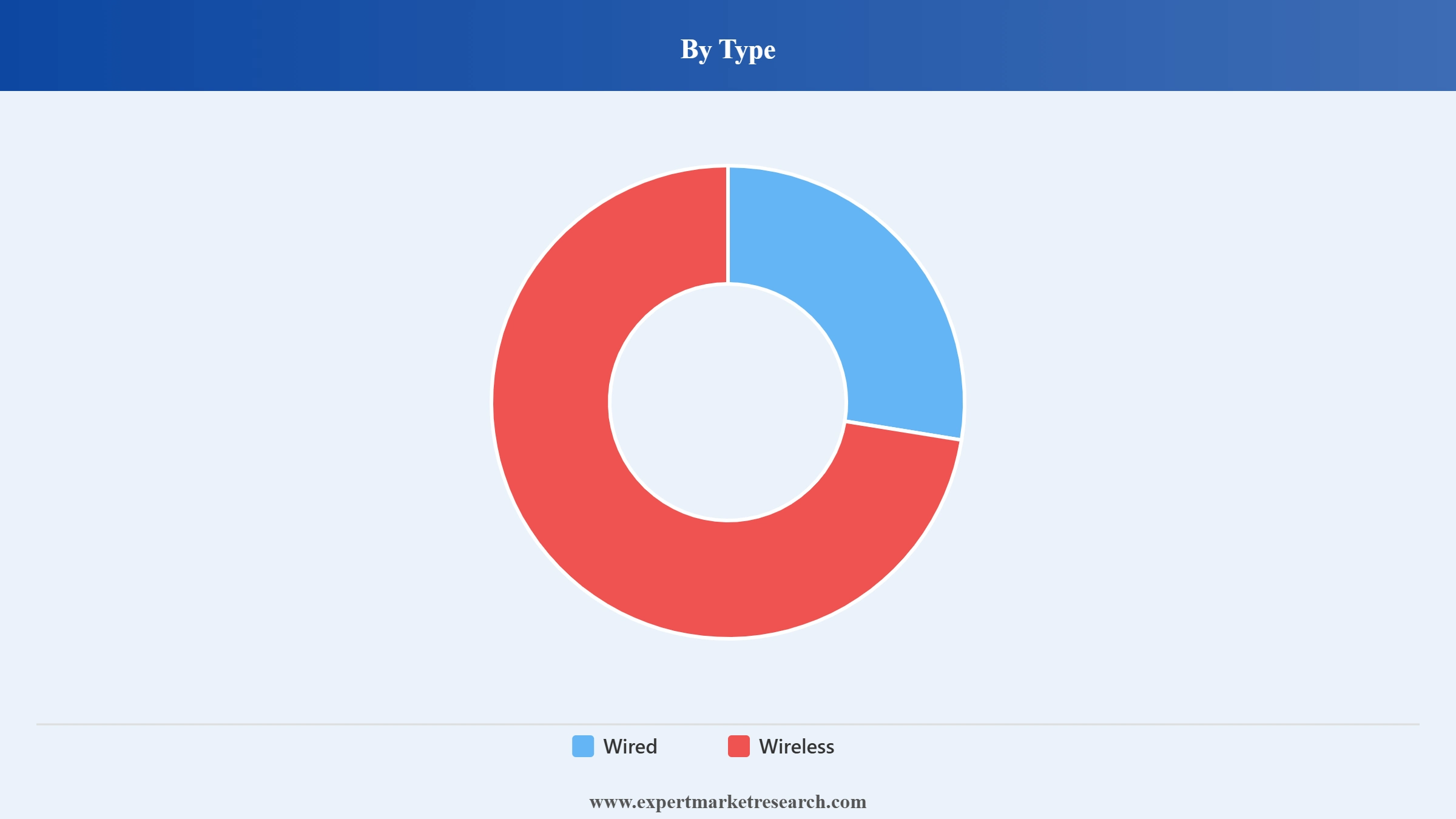
Key Insight: Wireless mice are gaining strategic importance as European workplaces become more mobile and multi-device oriented, while wired products retain relevance where uninterrupted connectivity, low acquisition cost, and standardized desktop deployment matter. Logitech's European portfolio currently spans both wired and wireless products, including gaming and productivity models, illustrating how manufacturers are maintaining both architectures while increasing the range of wireless offerings. The broader enterprise environment supports this transition as 69% of EU businesses provided remote access to company documents in 2024, highlighting the distributed nature of digital work. For suppliers, the commercial opportunity is to differentiate wireless products around security, battery management, device switching, and IT manageability while retaining wired SKUs for fixed workstation contracts.
Market Breakup by Application
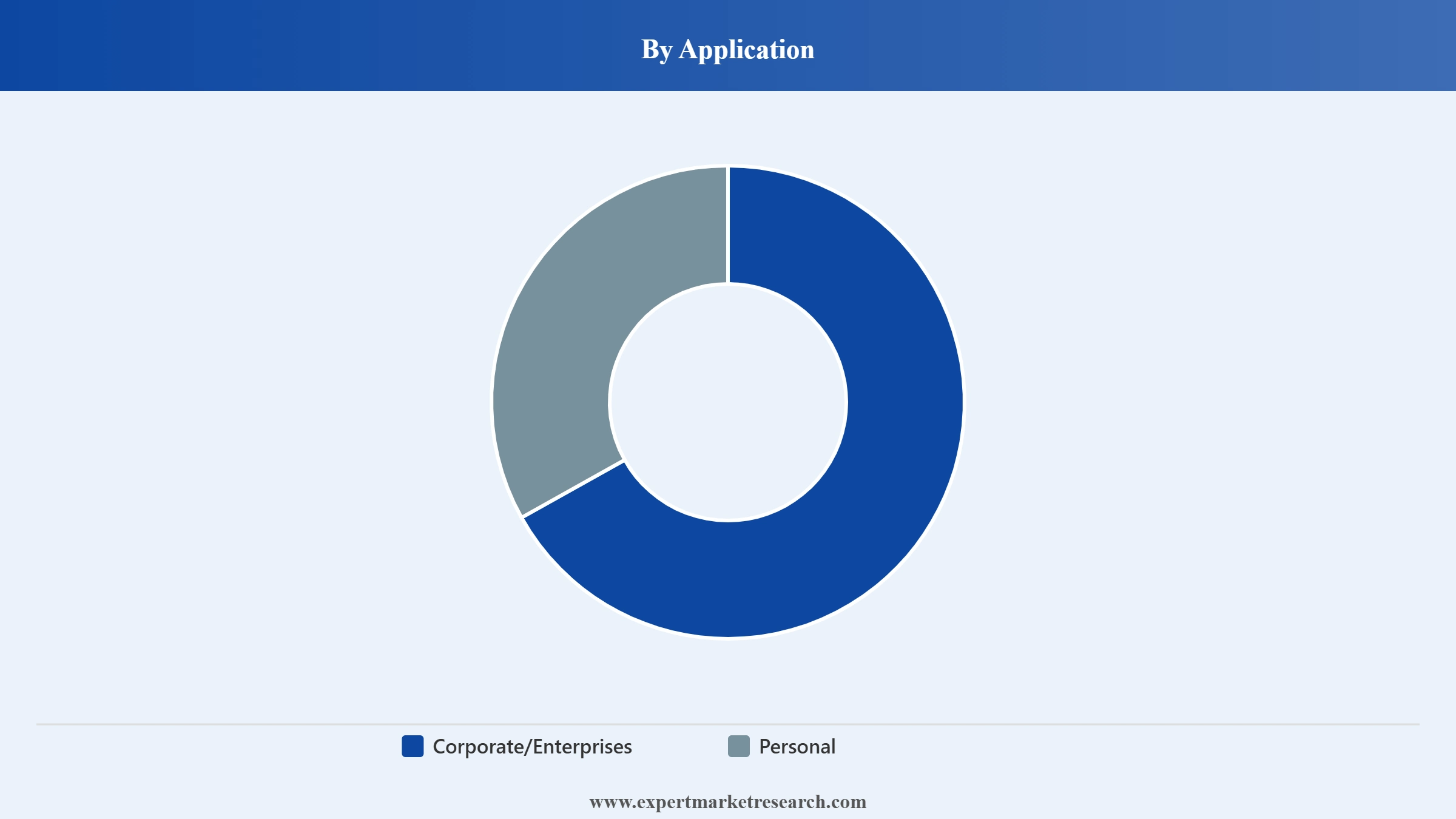
Key Insight: Corporate and enterprise demand has a distinct procurement profile because mice are frequently purchased as part of workstation deployments rather than as isolated consumer accessories. Germany's 2025 ICT data show that 86% of enterprises with at least 250 employees purchased IT services through cloud computing, compared with 51% of firms employing 10–49 people. Larger digital workplaces therefore require peripherals compatible with increasingly sophisticated IT environments. Personal applications remain important, particularly across home offices, gaming, education, and creative work. Suppliers can capture both segments by separating enterprise models with security, deployment, and warranty features from consumer models emphasizing aesthetics, gaming performance, portability, and personalization, thus driving the demand in the Europe mouse market.
Market Breakup by Distribution Channel
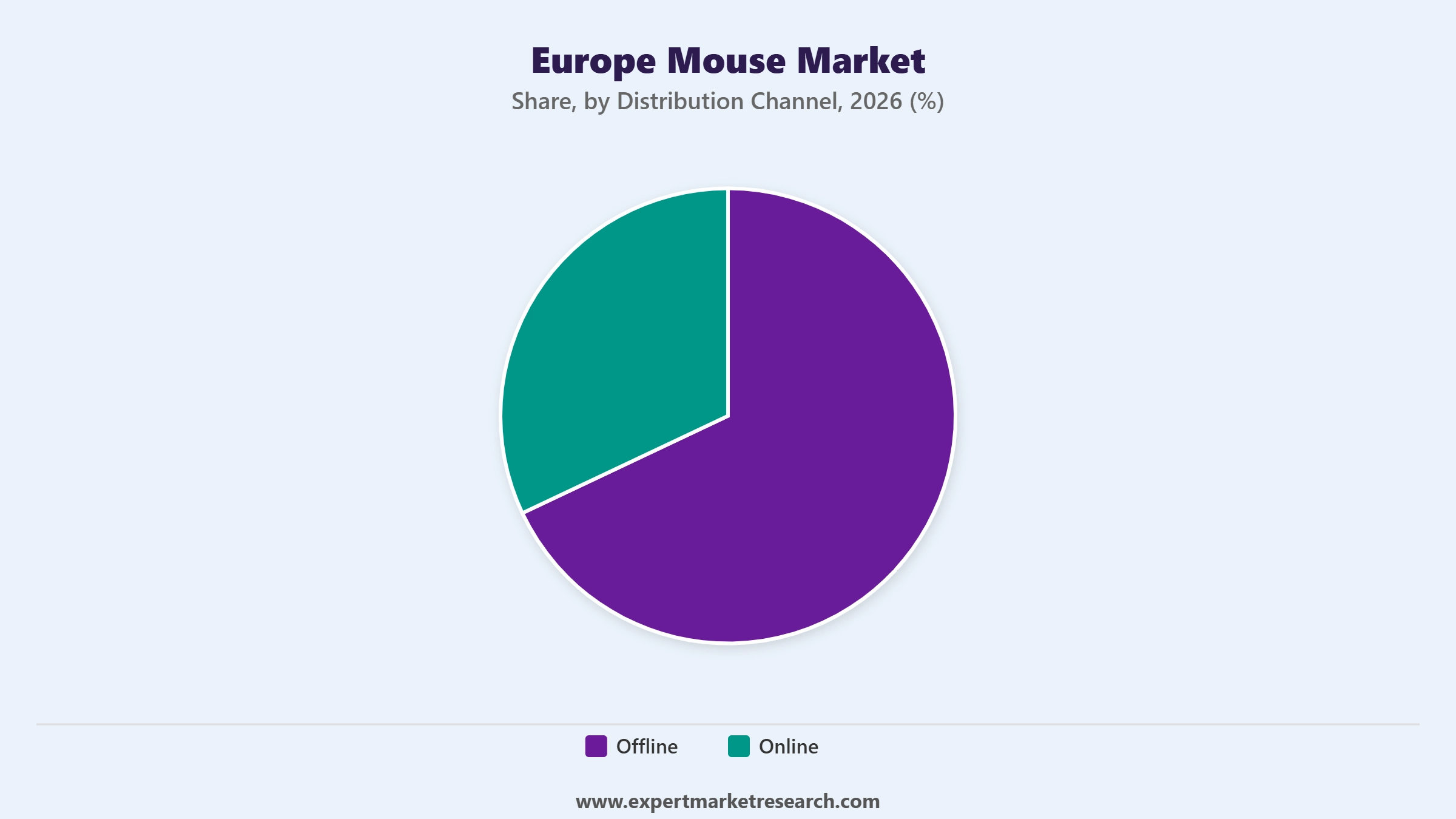
Key Insight: Offline distribution remains relevant for mice because buyers can physically test grip, button resistance, scroll behavior, weight, and ergonomics before purchase. However, online distribution is expanding its strategic importance. In 2025, 78% of EU residents reported buying goods or services online, compared with 62% in 2015. Moreover, 24% of EU businesses conducted e-sales in 2025, with large enterprises reaching 48%. This creates a two-channel opportunity for manufacturers: physical stores can support experiential purchasing of premium and ergonomic products, while online channels can provide deeper SKU selection, subscription-linked software, business bundles, and direct procurement programs.
Market Breakup by Country
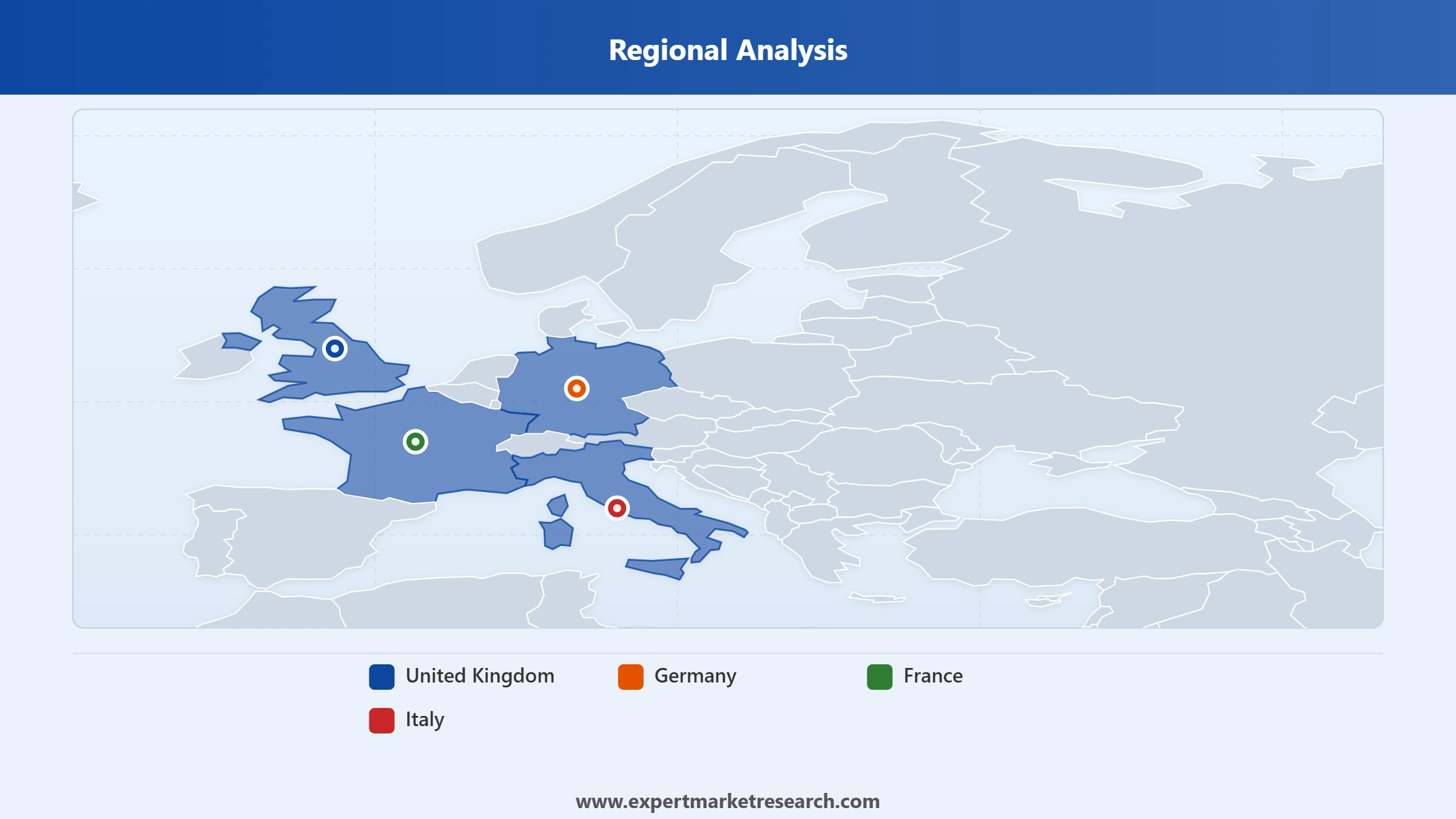
Key Insight: Germany, the United Kingdom, France, and Italy represent important national demand centers, while other European markets provide opportunities through digital retail penetration and specialized technology adoption. Germany has a particularly developed enterprise technology base: 54% of German enterprises with at least 10 employees used paid cloud services in 2025, rising to 86% among companies with at least 250 employees. France recorded 18% enterprise AI adoption in 2025, increasing eight percentage points from 2024, while Italy's enterprise AI adoption doubled from 8.2% to 16.4%. These differences create country-specific opportunities for productivity, enterprise, and advanced-performance peripherals, thus boosting the demand of the Europe mouse market.
Read more about this report - REQUEST FREE SAMPLE COPY IN PDF
By type, wireless mice are anticipated to dominate as mobility and multi-device workflows expand
Wireless is positioned as the dominant type because European users increasingly operate across laptops, tablets, home-office equipment, and flexible workstations. Logitech's current European portfolio prominently features wireless products across productivity and gaming categories, including multi-device models and Bluetooth-enabled products. The commercial rationale is reinforced by distributed work patterns and remote access to enterprise resources. For manufacturers, wireless products also provide greater scope for premiumization through multi-device pairing, secure receivers, programmable functions, longer battery life, and software customization. Such developments will thus boost Europe mouse market trends in the long run.
Read more about this report - REQUEST FREE SAMPLE COPY IN PDF
Wireless is also positioned for faster expansion as manufacturers continue moving higher-value functions into cordless designs. Logitech's Mobi Fold, introduced in June 2026, connects with up to three devices through Bluetooth and is designed specifically around mobile productivity. The development demonstrates how wireless demand is extending beyond conventional desktop replacement into travel and hybrid-work use cases.
By application, corporate/enterprise mice dominate as digital workstations expand across European businesses
Corporate and enterprise apps make up the most prevalent application category as the purchase of computers in large numbers necessitates reliability, ergonomic considerations, consistency of deployment, and software compatibility for business purposes. The EMR report identifies corporate/enterprise use as the leading application segment. Official ICT data further demonstrate the depth of enterprise digitalization- 95% of EU businesses had broadband access in 2025, while 99% of large businesses were connected to broadband. This creates a substantial installed base of digital workstations requiring pointing devices, thus boosting the Europe mouse market revenues.
Read more about this report - REQUEST FREE SAMPLE COPY IN PDF
Enterprise demand continues to broaden as businesses increase AI and cloud adoption across their operations. In France, AI use reached 58% among companies with 250 or more employees in 2025, compared with 18% across businesses overall. Such technology-intensive workplaces require employees to interact with multiple systems, applications, and devices throughout the working day. This can support demand for programmable, ergonomic, multi-device, wireless, and IT-manageable mice, particularly across offices, technology firms, professional services, and other digitally intensive enterprise environments.
By distribution channel, offline retail retains scale while online channels expand rapidly through digital purchasing
Offline remains an important distribution route because computer peripherals have tactile attributes that can influence procurement, particularly for ergonomic and premium models. Physical retailers allow customers and corporate buyers to assess dimensions, grip, button placement, scroll mechanisms, and perceived build quality. The linked EMR report also identifies offline retail as an established route within the category. Its relevance is complemented by Europe's extensive electronics-retail infrastructure, where mice can be bundled with PCs, monitors, keyboards, and gaming equipment.
Read more about this report - REQUEST FREE SAMPLE COPY IN PDF
Online distribution has substantial expansion potential as digital purchasing becomes mainstream. 78% of EU residents purchased goods or services online in 2025, while 24% of EU businesses reported e-sales. Online marketplaces also allow vendors to maintain broader product assortments than physical stores. Manufacturers can therefore use online channels to launch niche SKUs, limited editions, professional configurations, and direct-to-business packages.
By country, Germany leads through enterprise technology intensity and a substantial business-computing ecosystem
Germany forms a major demand center within the Europe mouse market, supported by a sizeable enterprise technology ecosystem and strong adoption of digital business infrastructure. Destatis reported that 54% of German enterprises with at least 10 employees used paid cloud services in 2025, with adoption reaching 86% among large companies. This environment supports enterprise demand for standardized peripherals, multi-device products, and accessories integrated into managed workstation deployments. The United Kingdom also represents an important market because of its mature technology and e-commerce infrastructure, while France's enterprise digitalization is accelerating: Insee reported that 18% of French businesses used AI technologies in 2025, compared with 10% in 2024, thereby directly boosting the Europe mouse market regional growth.
Read more about this report - REQUEST FREE SAMPLE COPY IN PDF
Italy presents a particularly relevant expansion market as businesses accelerate their transition toward AI, cloud services, and data-intensive workflows. Istat reported that 68.1% of Italian enterprises purchased intermediate or advanced cloud services in 2025, while internal or external data-analysis activity increased from 26.6% to 42.7% over the preceding two-year period. Across the broader European market, digital commerce also supports peripheral accessibility, for example, 78% of EU residents purchased goods or services online in 2025. This creates opportunities for online-first peripheral portfolios and country-specific digital merchandising strategies, particularly in markets where specialist gaming, professional computing, and hybrid-work demand overlap.
Europe mouse market players are increasingly aiming to differentiate through ergonomics, multi-device connectivity, customisation, and productivity-focused features rather than relying solely on basic pointing functions. Companies are developing mice with improved sensors, programmable buttons, gesture controls, silent operation, rechargeable batteries, and connectivity across multiple computers. There is also greater emphasis on products designed for specific user groups, including professionals, creators, gamers, and hybrid workers. Ergonomic designs, including vertical and trackball formats, are being developed to improve long-duration comfort.
Europe mouse companies are also targeting greater sustainability and smarter user experiences. Manufacturers are incorporating recycled materials, rechargeable power systems, and longer product lifecycles while reducing packaging. At the premium end, companies are exploring higher-precision sensors, AI-assisted workflows, advanced customisation, and seamless switching between devices. Gaming-focused brands are pursuing lighter construction, faster wireless response, higher polling rates, and improved tracking accuracy. Meanwhile, companies are strengthening e-commerce and direct-to-consumer channels to reach European customers across diverse markets.
Established in 1976, Apple Inc. is headquartered in Cupertino, California, USA. In the European mouse market, Apple offers the Magic Mouse, a wireless and rechargeable pointing device designed primarily for Mac users. Its Multi-Touch surface supports gestures such as swiping between webpages and scrolling through documents, while Bluetooth provides wireless connectivity. The current Magic Mouse also incorporates a rechargeable battery and is available through Apple’s European distribution network, supporting Apple’s integrated hardware ecosystem.
Established in 1939, HP Inc. is headquartered in Palo Alto, California, USA. In Europe, HP provides a broad mouse portfolio spanning wireless, Bluetooth, rechargeable, ergonomic, programmable, and multi-device models. Its offerings include the HP 690 Rechargeable Wireless Mouse, HP 685 Comfort Dual-Mode Mouse, HP 635 Multi-Device Wireless Mouse, HP 425 Programmable Bluetooth Mouse, HP 510 Ultra-Fast Rechargeable Wireless Mouse, and HP 285 Silent Wireless Mouse. The HP 690 supports up to three devices, six programmable buttons, and Qi or USB-C charging.
Established in 1981, Logitech International S.A. is headquartered in Lausanne, Switzerland. Its European mouse portfolio covers productivity, ergonomic, portable, multi-device, trackball, and gaming applications. Key offerings include the MX Master 4, MX Master 3S, MX Anywhere 3S, MX Ergo S, MX Vertical, Lift, Signature M650, Pebble Mouse 2 M350s, M720 Triathlon, and ERGO M575S. Through Logitech G, the company also offers gaming models such as the PRO X SUPERLIGHT 2, G502 X LIGHTSPEED, G305 LIGHTSPEED, and G203.
Established in 1984, Lenovo Group Ltd. operates with dual headquarters in Beijing, China, and Morrisville, North Carolina, USA. In Europe, Lenovo offers mouse solutions across business, home, gaming, and mobile applications, including wireless and ergonomic models. Its European portfolio is positioned alongside Lenovo’s broader PC and accessories ecosystem, with mice designed for productivity, portability, and gaming use. Lenovo’s European accessories catalogue therefore supports multiple user segments, from office users requiring wireless connectivity to consumers seeking compact and ergonomic pointing devices.
Other key players in the market include Air Liquide S.A., Saudi Arabian Oil Co., and Uniper SE, among others.
*Please note that this is only a partial list; the complete list of key players is available in the full report. Additionally, the list of key players can be customized to better suit your needs.*
Explore the Europe Mouse Market forecast 2026-2035 to understand market size, emerging Europe mouse market trends 2026, segment dynamics, country-level opportunities, and competitive developments. Download the sample report to access detailed analysis of the Europe mouse market size, wireless and wired demand, enterprise applications, distribution channels, and major European markets, helping manufacturers, distributors, technology companies, and investors identify actionable growth opportunities.


Upto 15% Off
USD
$2499 $2249
$3999 $3599
$4999 $4249
$5999 $5099


*While we strive to always give you current and accurate information, the numbers depicted on the website are indicative and may differ from the actual numbers in the main report. At Expert Market Research, we aim to bring you the latest insights and trends in the market. Using our analyses and forecasts, stakeholders can understand the market dynamics, navigate challenges, and capitalize on opportunities to make data-driven strategic decisions.*
The market is projected to grow at a CAGR of 5.20% between 2026 and 2035.
Based on application, the mouse market is divided between corporate/enterprises and personal.
Key players in the market are Apple, Inc., HP Inc., Logitech International S.A., Lenovo Group Ltd., ASUSTEK Computer Inc., Dell Inc., Razer Inc., Turtle Beach Corporation, Acer Inc., Cherry SE, Corsair Memory Inc., and Cooler Master Co. Ltd. among others.
Based on the distribution channel, the market is divided between offline and online.
Based on country, the market is divided between Germany, the United Kingdom, France, Italy, and others.
In 2025, the market reached an approximate value of USD 1.20 Billion.
The market is estimated to witness a healthy growth in the forecast period of 2026-2035 to reach about USD 1.99 Billion by 2035.
Key challenges in the Europe mouse market include intense competition, pricing pressure, rapid technological changes, short product lifecycles, supply chain disruptions, sustainability requirements, and changing consumer preferences. Manufacturers also face challenges in balancing advanced features, ergonomic design, connectivity, durability, and affordability across diverse European markets.
Key strategies driving the Europe mouse market include product innovation, ergonomic design, wireless and Bluetooth connectivity, customisable gaming features, sustainable materials, competitive pricing, e-commerce expansion, strategic partnerships, product diversification, and investment in advanced sensor and precision technologies to address evolving consumer and professional requirements.
Explore our key highlights of the report and gain a concise overview of key findings, trends, and actionable insights that will empower your strategic decisions.
| REPORT FEATURES | DETAILS |
| Base Year | 2025 |
| Historical Period | 2019-2025 |
| Forecast Period | 2026-2035 |
| Scope of the Report |
Historical and Forecast Trends, Industry Drivers and Constraints, Historical and Forecast Market Analysis by Segment:
|
| Breakup by Type |
|
| Breakup by Application |
|
| Breakup by Distribution Channel |
|
| Breakup by Region |
|
| Market Dynamics |
|
| Competitive Landscape |
|
| Companies Covered |
|
Datasheet
One User
USD 2,499
USD 2,249
tax inclusive*
Single User License
One User
USD 3,999
USD 3,599
tax inclusive*
Five User License
Five User
USD 4,999
USD 4,249
tax inclusive*
Corporate License
Unlimited Users
USD 5,999
USD 5,099
tax inclusive*
*Please note that the prices mentioned below are starting prices for each bundle type. Kindly contact our team for further details.*
Flash Bundle
Small Business Bundle
Growth Bundle
Enterprise Bundle
*Please note that the prices mentioned below are starting prices for each bundle type. Kindly contact our team for further details.*
Flash Bundle
Number of Reports: 3
20%
tax inclusive*
Small Business Bundle
Number of Reports: 5
25%
tax inclusive*
Growth Bundle
Number of Reports: 8
30%
tax inclusive*
Enterprise Bundle
Number of Reports: 10
35%
tax inclusive*
How To Order

Select License Type
Choose the right license for your needs and access rights.

Click on ‘Buy Now’
Add the report to your cart with one click and proceed to register.

Select Mode of Payment
Choose a payment option for a secure checkout. You will be redirected accordingly.
Strategic Solutions for Informed Decision-Making
Gain insights to stay ahead and seize opportunities.

Get insights & trends for a competitive edge.

Track prices with detailed trend reports.

Analyse trade data for supply chain insights.

Leverage cost reports for smart savings

Enhance supply chain with partnerships.

Connect For More Information
Our expert team of analysts will offer full support and resolve any queries regarding the report, before and after the purchase.
Our expert team of analysts will offer full support and resolve any queries regarding the report, before and after the purchase.
We employ meticulous research methods, blending advanced analytics and expert insights to deliver accurate, actionable industry intelligence, staying ahead of competitors.
Our skilled analysts offer unparalleled competitive advantage with detailed insights on current and emerging markets, ensuring your strategic edge.
We offer an in-depth yet simplified presentation of industry insights and analysis to meet your specific requirements effectively.




