

Consumer Insights
Uncover trends and behaviors shaping consumer choices today
Procurement Insights
Optimize your sourcing strategy with key market data
Industry Stats
Stay ahead with the latest trends and market analysis.
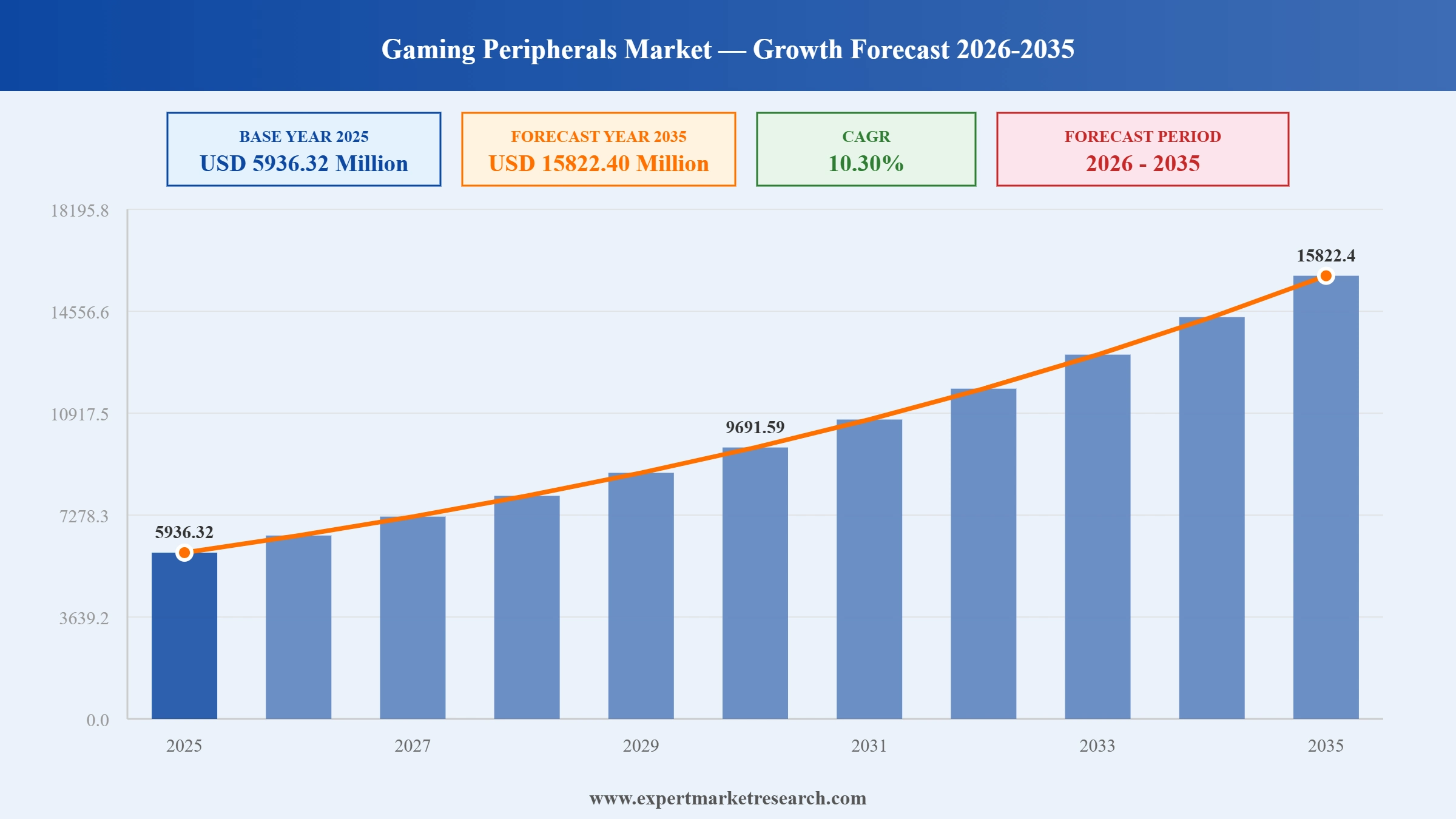
The global gaming peripheral market reached a value of USD 5936.32 Million in 2025 and is projected to grow at a compound annual growth rate CAGR of 10.30% during the forecast period of 2026-2035, reaching USD 15822.40 Million by 2035. Gaming peripherals are external devices that connect to a computer, laptop, gaming console, or mobile device to enhance the gaming experience, providing input, output, and communication functionality beyond what is built into the core gaming system. The market encompasses a broad range of products including headsets, keyboards, mice, gamepads, joysticks, controllers, gaming monitors, and emerging categories such as haptic feedback devices and wearable gaming accessories. This growth is fuelled by rapid technological advancements, rising demand for high-performance and personalised devices, and the increasing integration of gaming into mainstream media and lifestyle globally.
The global gaming population has grown to exceed 3.32 billion players, including 1.5 billion gamers in Asia, representing an unprecedented scale of addressable demand for gaming peripheral products across all price points and performance tiers. In the United States, the esports industry supports over 3,000 active professional players the highest concentration globally generating sustained demand for high-performance peripherals including precision mice, mechanical keyboards, immersive headsets, and professional-grade controllers. The massive popularity of titles including PUBG, Minecraft, Fortnite, and League of Legends has created cultural communities around specific hardware preferences, driving both initial purchase and upgrade cycles across the gaming peripheral market.
North America is the largest regional market for gaming peripherals, supported by a large and affluent gaming population, well-developed esports infrastructure, high PC and console gaming penetration, and the presence of leading gaming peripheral brands including Logitech, Razer, and Corsair. Asia Pacific is the fastest-growing regional market, driven by a massive and rapidly expanding gaming population across China, India, Japan, South Korea, and Southeast Asia, the rapid growth of mobile and PC gaming in emerging economies, and the deep cultural integration of esports and competitive gaming across the region.
Read more about this report - REQUEST FREE SAMPLE COPY IN PDF
The gaming peripheral market encompasses all external hardware devices designed to enhance, input to, or output from a gaming system, spanning both PC and console gaming platforms. Gaming peripherals are distinct from standard computer peripherals in their focus on performance optimisation offering higher polling rates, lower response times, precision sensors, tactile mechanical switches, directional audio, programmable macros, and customisable RGB lighting that differentiate gaming-grade products from standard consumer electronics.
The market spans both the premium performance segment encompassing professional and enthusiast gaming gear from brands including Razer, Corsair, SteelSeries, and ASUS ROG and a large mid-market and value segment where brands including Redragon, HyperX, and Havit offer gaming peripheral functionality at accessible price points. The gaming peripheral market is closely linked to the gaming console market, the PC gaming market, and the esports industry, with major product launches, esports sponsorships, and game title releases creating recurring demand cycles and upgrade behaviour across the global gaming consumer base.
The global gaming population exceeding 3.32 billion players represents the foundational demand driver for the gaming peripheral market. The formalisation of esports as a recognised competitive sport culminating in the announcement of the Olympic Esports Games for 2027 is elevating the cultural legitimacy of competitive gaming and stimulating demand for performance-grade peripherals among aspiring professional and semi-professional gamers. The global esports audience is projected to continue growing, with increasing investment from traditional sports organisations, media companies, and consumer brands creating a virtuous cycle of exposure, aspiration, and peripheral adoption.
Continuous technological innovation across gaming peripheral product categories is the most powerful driver of upgrade cycles and average selling price growth in the market. Advancements in wireless transmission technology particularly the proliferation of low-latency 2.4GHz wireless protocols and the emerging shift toward direct-to-Wi-Fi connectivity have virtually eliminated the performance gap between wired and wireless gaming peripherals, accelerating wireless adoption among competitive gamers who previously required wired devices. AI-powered customisation features, adaptive response systems, and machine learning-based input prediction are creating a new generation of intelligent gaming peripherals that represent a meaningful performance differentiation from legacy products.
The parallel growth of both PC gaming and console gaming ecosystems creates dual demand vectors for gaming peripheral manufacturers. PC gaming's strength among competitive, enthusiast, and content creator communities drives sustained demand for precision mice, mechanical keyboards, and high-refresh-rate monitors, while the console gaming ecosystem led by PlayStation, Xbox, and Nintendo creates large-scale demand for controllers, headsets, and console-compatible gaming accessories. The increasing convergence of PC and console gaming through cross-platform titles and cloud gaming services is expanding the use case for high-performance peripherals across both platform ecosystems.
Read more about this report - REQUEST FREE SAMPLE COPY IN PDF
The rapid growth of live game streaming and video content creation has created an entirely new consumer segment for gaming peripheral products the gaming content creator who demands professional-grade microphones, webcams, capture cards, lighting equipment, and studio headsets that combine gaming performance with broadcast-quality audio-visual output. Platforms including Twitch and YouTube Gaming have millions of active content creators, and the aspirational influence of popular streamers on their audiences creates powerful demand pull for the gaming peripheral brands and specific product models endorsed and demonstrated by influential gaming content creators.
The rapid growth of gaming in emerging markets across India, Southeast Asia, Latin America, and Africa driven by expanding internet connectivity, falling smartphone and PC prices, and the massive popularity of free-to-play multiplayer titles is creating a large and price-sensitive new consumer base for entry-level and mid-range gaming peripherals. Brands including Redragon, Havit, and regional manufacturers are addressing this demand with feature-rich gaming peripherals at price points accessible to consumers in developing economies, progressively expanding the global addressable market for gaming peripheral products beyond the established premium segments of North America, Europe, and Japan.
The transition from wired to wireless gaming peripherals is the most significant technology trend reshaping the market. Proprietary low-latency 2.4GHz wireless protocols led by Logitech LIGHTSPEED, Razer HyperSpeed, and Corsair SLIPSTREAM have reduced wireless latency to levels indistinguishable from wired connections in competitive gaming scenarios, removing the last meaningful technical barrier to wireless adoption among professional and enthusiast gamers. The emerging shift toward direct-to-Wi-Fi connectivity in console controllers signalled by Microsoft's Xbox controller roadmap will further eliminate Bluetooth latency concerns and position wireless as the default connectivity standard across both PC and console peripheral ecosystems.
Read more about this report - REQUEST FREE SAMPLE COPY IN PDF
Artificial intelligence is being integrated into gaming peripheral hardware and software to deliver adaptive performance optimisation, intelligent macro recording, personalised sensitivity curves, and predictive input assistance. AI-powered aim assistance features operating within fair play boundaries for single-player and co-operative gaming are enabling gaming mice to adapt sensor parameters to individual player movement profiles. Software ecosystems from Razer Synapse, Logitech G Hub, and Corsair iCUE are incorporating machine learning to analyse gaming session data and recommend optimal peripheral configuration adjustments for different game genres and individual play styles.
The esports industry's influence on gaming peripheral product development and consumer purchasing behaviour continues to intensify, with professional player endorsements, tournament hardware certification programs, and esports organisation sponsorships shaping consumer perceptions of performance and brand preference. The standardisation of tournament legal peripheral specifications covering sensor accuracy, polling rate, and switch type has established a performance baseline that enthusiast consumers aspire to replicate in their own gaming setups. Limited-edition esports collaboration products, including team-branded peripherals and player signature models, command premium pricing and drive brand loyalty among the competitive gaming community.
Console gaming peripheral innovation is accelerating across controllers, headsets, and specialised input devices as major platform holders and accessory manufacturers compete for share of the console peripheral market. Sony's DualSense controller introduced haptic feedback and adaptive trigger technology that has become a reference standard for immersive console input, driving demand for compatible headsets, charging accessories, and controller add-ons. Microsoft's Elite Controller Series has established a premium tier for console controllers commanding significant price premiums over standard equivalents, demonstrating that console gamers will pay for performance-oriented peripheral features comparable to PC gaming standards.
Wearable gaming accessories represent the frontier of gaming peripheral innovation, encompassing VR headsets, mixed reality devices, haptic feedback suits, eye-tracking peripherals, and gesture control systems that extend gaming immersion beyond traditional screen, speaker, and input device paradigms. The Meta Quest platform, PlayStation VR2, and Valve Index represent the current commercial vanguard of consumer VR gaming, with the wearable gaming accessory market growing rapidly from a small base as hardware prices decline and software libraries expand. The integration of AI-powered gesture recognition, eye-tracking, and biometric sensing into gaming wearables represents a long-term growth vector that will progressively expand the gaming peripheral addressable market into entirely new product categories.
The global gaming peripheral market faces operational challenges rooted in supply chain concentration, price sensitivity in emerging markets, and rapidly shortening product lifecycle expectations among technology-forward gaming consumers. Component supply constraints particularly for high-performance optical sensors, low-latency wireless chipsets, and Hall Effect magnetic switches have created periodic availability challenges for premium gaming peripheral manufacturers, while the geographic concentration of manufacturing in Asia creates logistics complexity and cost volatility. The high product velocity in the gaming peripheral market with major brands launching updated product lines annually or biennially creates significant inventory management complexity and risk of product obsolescence across retail distribution channels.
Market restraints moderate the pace of expansion in key segments and geographies. The high price points of premium gaming peripherals with flagship mice, keyboards, and headsets from Razer, Corsair, and Logitech regularly priced above USD 100-200 create adoption barriers in price-sensitive emerging markets where gaming peripheral penetration is growing but consumer spending capacity limits addressable demand for premium tier products. Counterfeit and grey market gaming peripherals, particularly in Southeast Asian and Latin American markets, represent a structural restraint on legitimate brand revenue and market intelligence accuracy. The growing competition from integrated gaming experiences on smartphones which require minimal peripheral investment is creating a competing consumption pathway for gaming time and expenditure in mobile-first gaming markets across Asia and Africa.
Read more about this report - REQUEST FREE SAMPLE COPY IN PDF
Despite these challenges, the gaming peripheral market presents compelling and diversifying growth opportunities. The formalisation of esports through Olympic recognition and the maturation of professional gaming leagues globally is creating a durable institutional demand layer for professional-grade peripherals beyond the existing consumer enthusiast market. The gaming content creation economy with millions of active streaming and video creators globally represents a large and growing demand segment for studio-quality gaming accessories with broadcast-grade audio and visual performance. Asia Pacific, and specifically India, represents the most significant near-term market expansion opportunity, with a massive and growing gaming population, rapidly improving internet infrastructure, and increasing per-capita disposable income creating favourable conditions for sustained gaming peripheral market development. The full Expert Market Research Gaming Peripheral Market Report and Forecast 2026-2035 provides granular analysis across product type, gaming device type, technology, distribution channel, and region to equip manufacturers, investors, and distributors with the strategic intelligence to capitalise on the most valuable growth opportunities in this dynamic global market.
The Expert Market Research report titled “Global Gaming Peripherals Market Report and Forecast 2026-2035” offers a detailed analysis of the market based on the following segments:
Market Breakup by Product Type
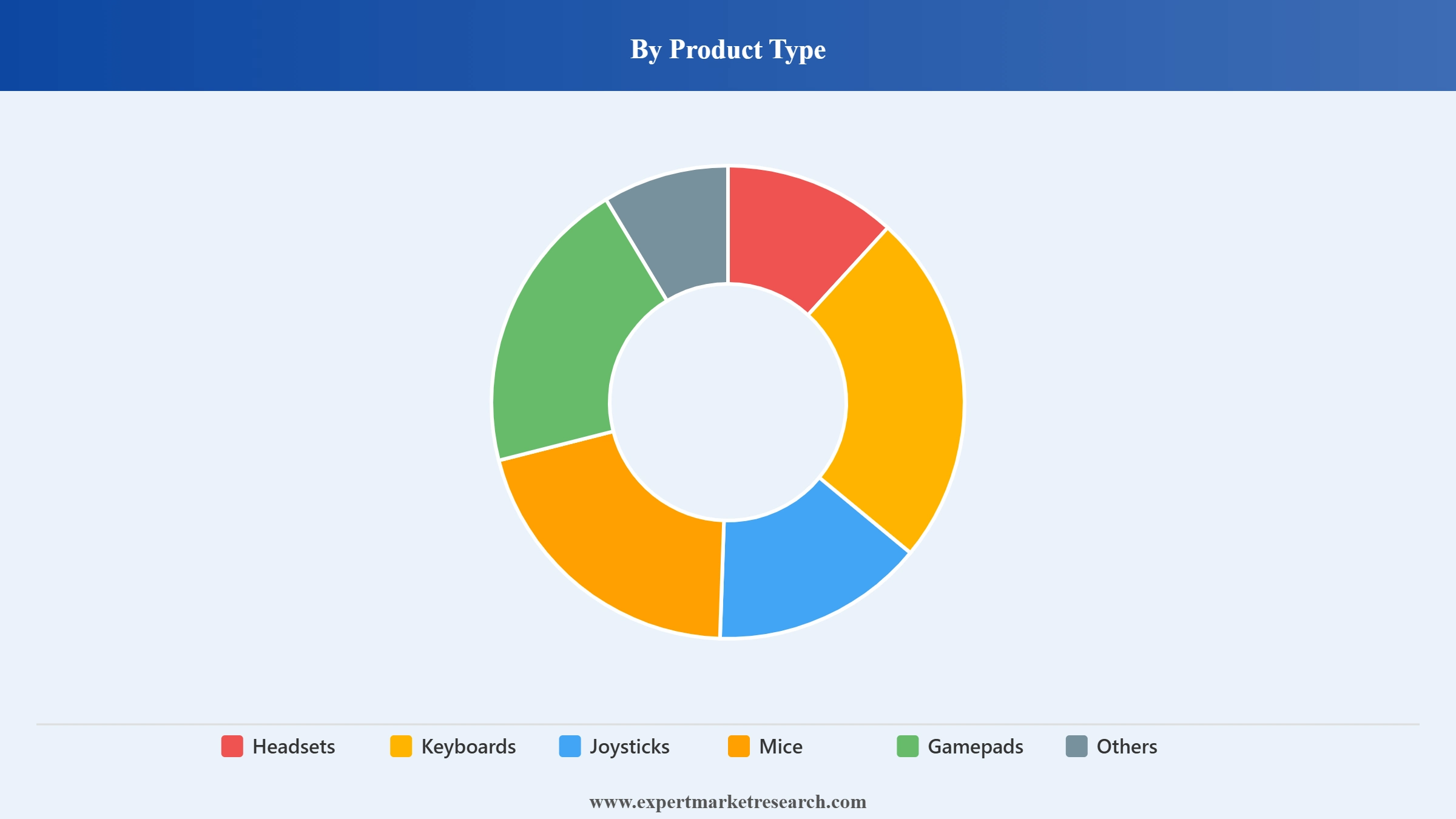
Key Insights: Headsets represent the largest category in the gaming peripherals market, driven by the surge in online multiplayer gaming and esports. Gamers increasingly invest in high-quality headsets featuring surround sound, noise cancellation, and ergonomic designs, making them essential for both casual and professional gamers. The fastest-growing product type is controllers/gamepads, fueled by the rise of console and mobile gaming, as well as cloud gaming platforms. Demand for versatile, customizable controllers is increasing as gamers seek cross-platform compatibility and improved ergonomics for enhanced gameplay.
Market Breakup by Gaming Device Type
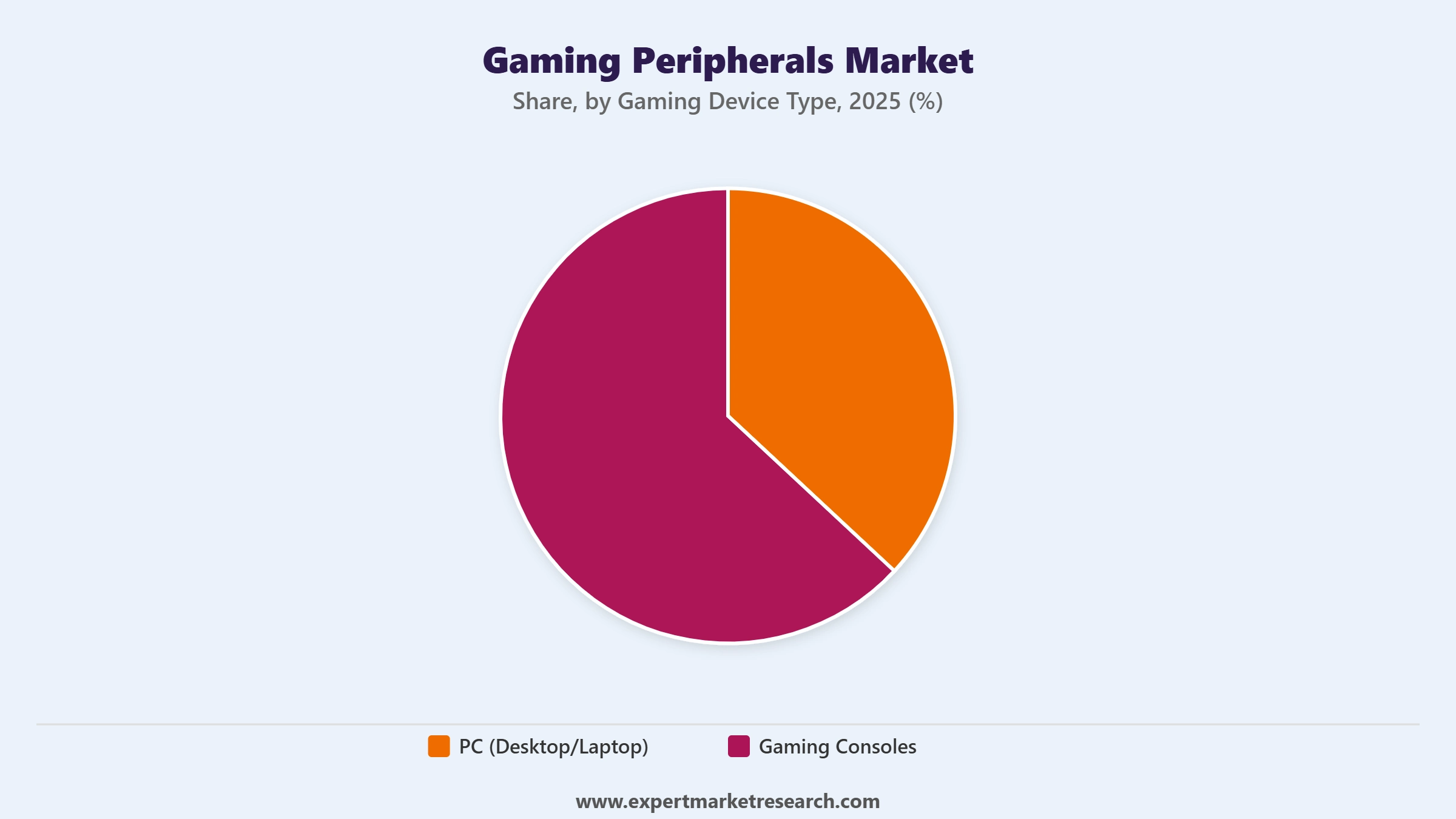
Key Insights: Gaming consoles represent the largest gaming device type, driven by the popularity of consoles like PlayStation, Xbox, and Nintendo Switch, the rise of esports, and the continuous launch of high-performance models. Console gamers increasingly seek specialized peripherals, such as advanced controllers and immersive headsets, fueling robust demand. PC gaming peripherals also maintain a significant market share, driven by a large global community and demand for high-performance, customizable accessories for competitive play and streaming.
Market Breakup by Technology
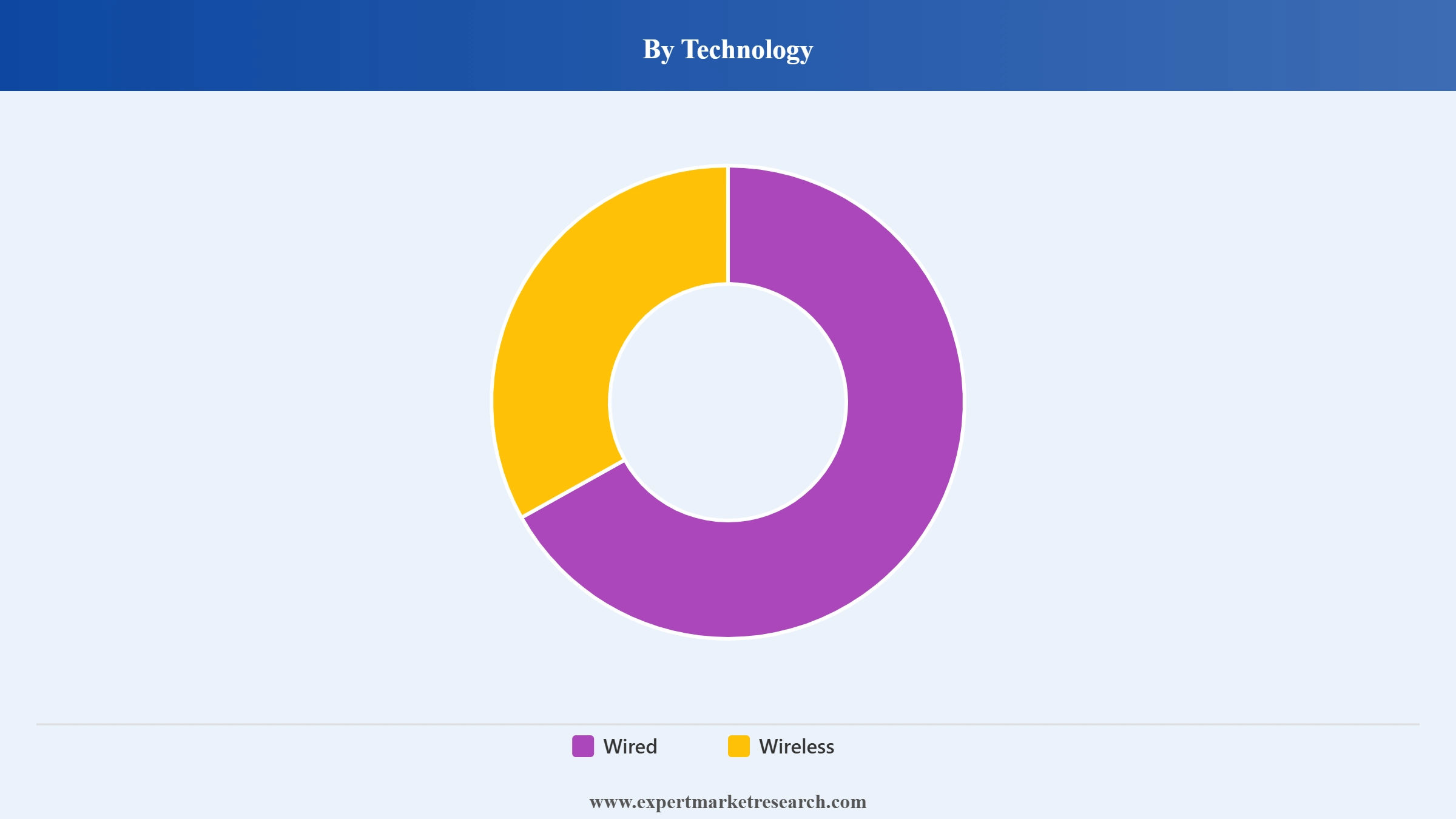
Key Insights: Wired peripherals are widely preferred by competitive and professional gamers for their minimal latency, reliable connections, and cost-effectiveness. However, wireless peripherals are projected to register the highest CAGR over the forecast period. Advancements in wireless technology have nearly eliminated latency concerns, while gamers increasingly value the freedom of movement, cleaner setups, and cross-platform compatibility wireless devices offer, propelling the demand in the gaming peripherals market.
Market Breakup by Distribution Channel
Key Insight: Offline channels, such as specialty gaming stores and electronics retailers, hold the largest market share, driven by consumers’ preference for hands-on product trials, immediate purchases, and personalized recommendations from knowledgeable staff. In-store experiences, product demonstrations, and after-sales support are especially valued for high-investment peripherals. However, the online channels are growing with the rapid expansion of e-commerce platforms, home delivery convenience, broader product selection, competitive pricing, and easy comparison of features and reviews.
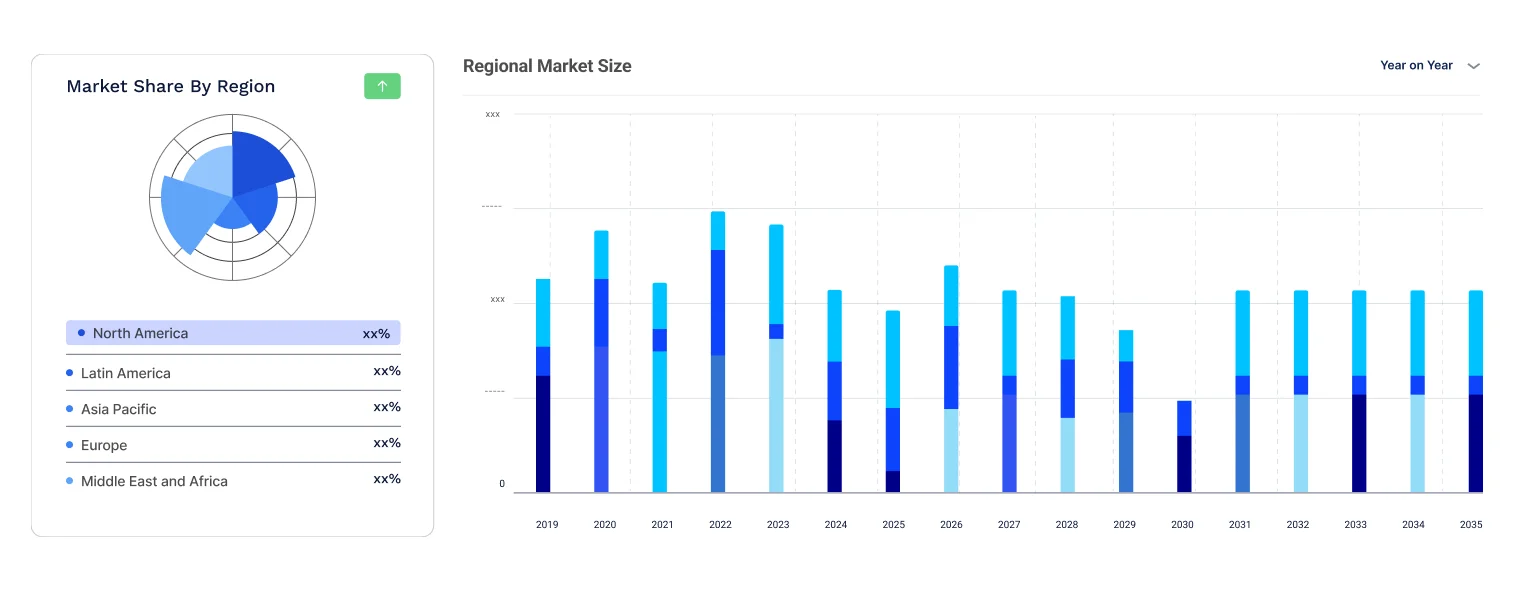
Market Breakup by Region
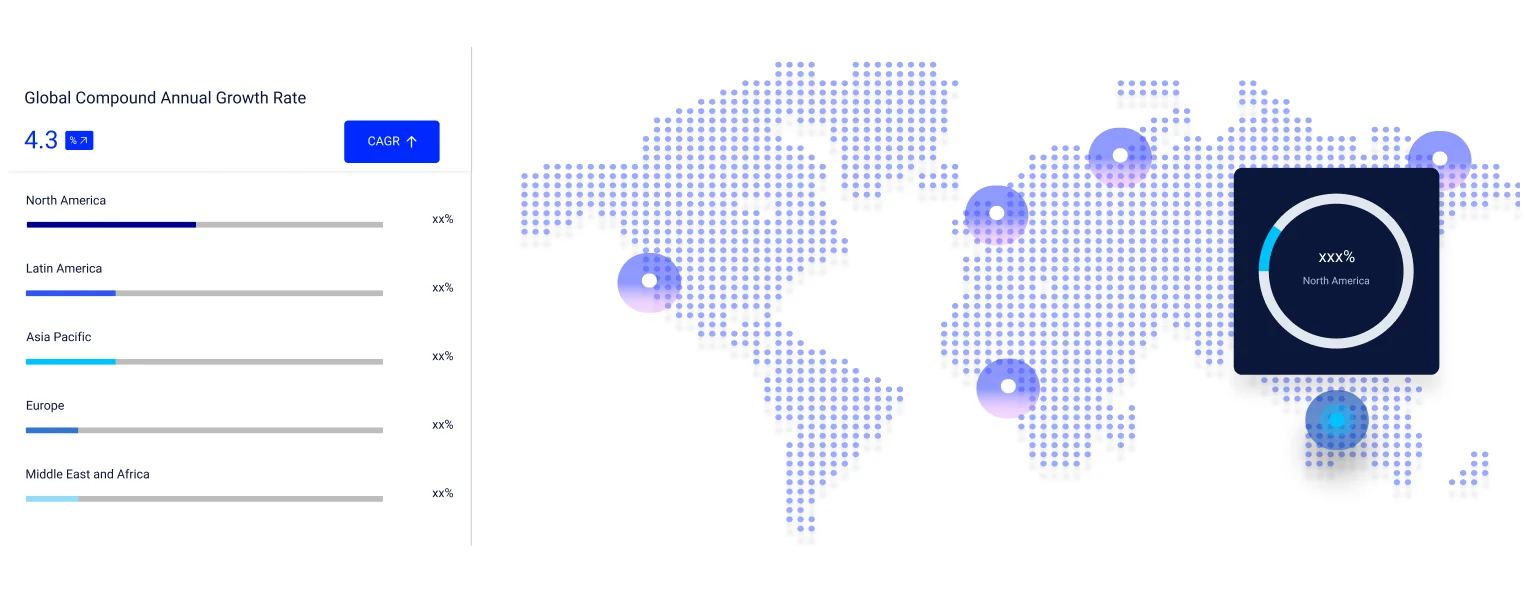
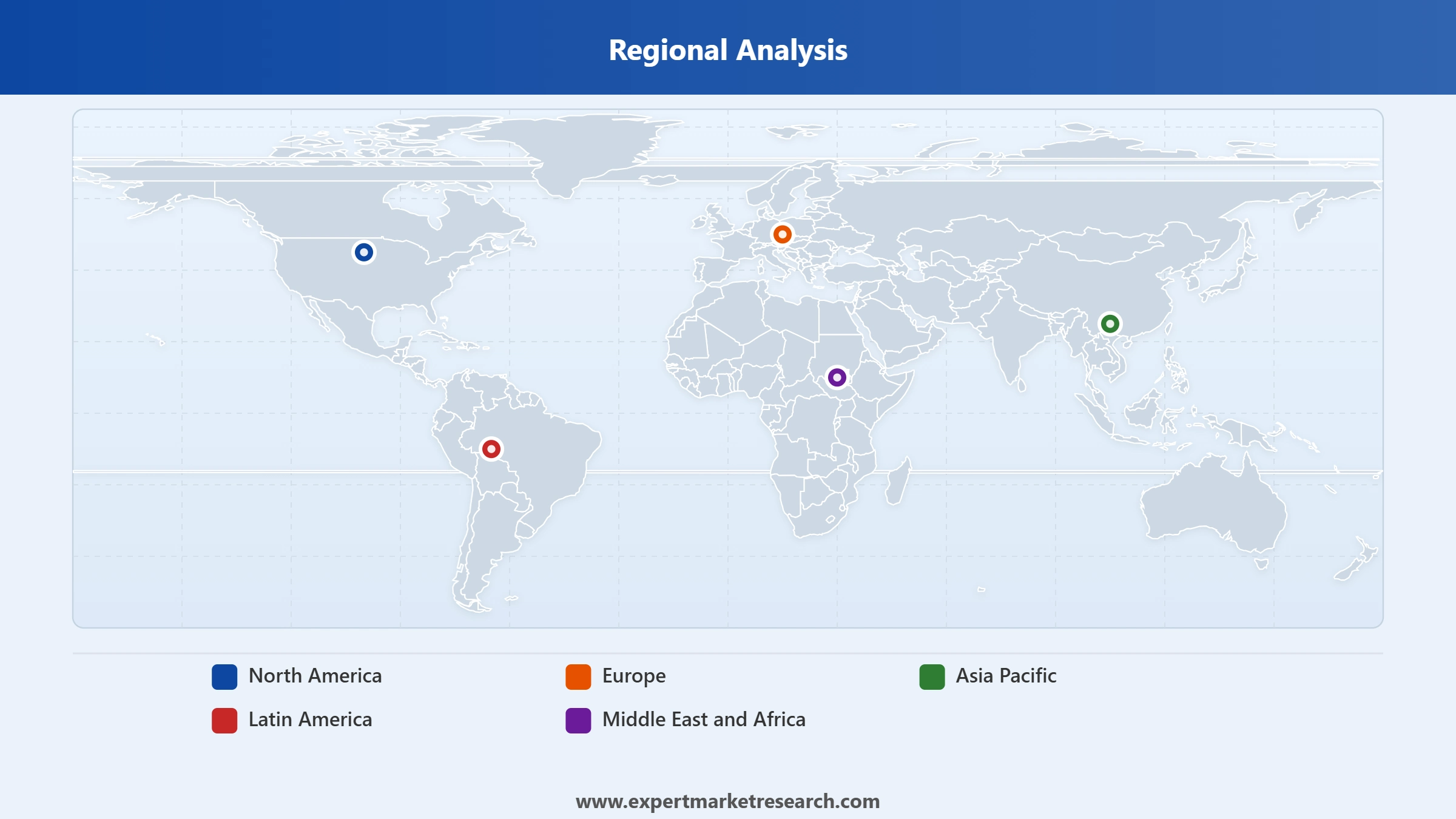
Key Insight: Asia Pacific is projected to grow at the fastest CAGR, driven by the booming online gaming industry, vibrant esports ecosystems, and large gaming communities in China, South Korea, and Japan. The region’s increasing disposable income and demand for budget-friendly, feature-rich peripherals further boost sales. North America gaming peripherals industry revenue is supported by a technology-oriented population and high disposable income. Europe follows closely, with strong demand driven by esports, premium product preferences, and sustainability trends. Latin America and the Middle East & Africa are emerging markets, experiencing steady growth as internet connectivity and gaming adoption continue to rise.
Read more about this report - REQUEST FREE SAMPLE COPY IN PDF
North America is the largest regional market for gaming peripherals, with the United States accounting for the dominant share of regional revenue. The United States benefits from the highest concentration of active professional esports players globally, generating sustained demand for performance-grade peripherals. Gaming controllers with smart TV support, gaming headsets for console and PC, and high-performance mice and keyboards for esports represent the largest product categories within the US market. Canada is the second-largest national market in North America, sharing similar gaming culture, brand preferences, and distribution infrastructure with the United States.
Europe is the second-largest regional market for gaming peripherals, with strong and growing demand driven by the PC gaming and esports communities in Germany, the United Kingdom, France, the Nordics, and Benelux markets. The European gaming peripheral market is characterised by high consumer willingness to invest in quality gaming hardware, active esports competition scenes at both amateur and professional levels, and well-developed online retail infrastructure enabling direct-to-consumer brand sales across the region.
Read more about this report - REQUEST FREE SAMPLE COPY IN PDF
Asia Pacific is the fastest-growing regional market for gaming peripherals, home to a significant share of the world's gamers and characterised by extraordinary diversity across gaming platform preferences, spending power, and cultural gaming engagement styles. Japan is a global gaming culture leader, home to major peripheral and console manufacturers including Sony, Nintendo, and ASUS, with a sophisticated and brand-conscious gaming consumer base. South Korea has one of the world's most developed esports ecosystems, creating powerful aspirational demand for professional-grade peripheral products. India is the fastest-growing major national market in Asia Pacific, with a rapidly expanding gaming population and increasing availability of affordable gaming peripherals driving strong volume growth.
Latin America is an emerging and growing gaming peripheral market, with Brazil and Mexico as the dominant national markets. Brazil has one of the largest gaming populations in the Americas, with strong PC and console gaming communities and growing esports engagement. The Latin American market is primarily served by international brands through online distribution channels, with price sensitivity requiring affordable product positioning.
The Middle East is an emerging and high-potential gaming peripheral market, with the GCC countries particularly Saudi Arabia and UAE representing the most developed sub-regional market, supported by high disposable incomes, a young and gaming-engaged population, and significant government investment in esports and gaming infrastructure. The announcement of the Olympic Esports Games in Riyadh is expected to accelerate gaming peripheral market development across the GCC. Africa represents a longer-term opportunity, with growing mobile gaming populations and improving internet connectivity progressively expanding the addressable market.
The global gaming peripherals market players are increasingly focusing on advanced technologies, user-centric designs, and performance enhancement. Key growth strategies include the integration of AI, wireless connectivity, ergonomic design improvements, and platform compatibility to meet the evolving demands of both casual and professional gamers.
Market growth is further supported by rising global e-sports participation, increasing content creation, and the expansion of mobile and cloud gaming ecosystems. Strategic collaborations, product differentiation, and aggressive marketing campaigns continue to shape competition, with gaming peripherals companies investing significantly in R&D and user experience optimization to strengthen their global market position.
Founded in 1981 and headquartered in Lausanne, Switzerland, Logitech International S.A. is a global leader in computer and gaming peripherals. Known for innovation in gaming mice, keyboards, and headsets, the company integrates design, performance, and sustainability to serve casual gamers, esports professionals, and technology enthusiasts worldwide.
Established in 1989 and headquartered in Canada, Mad Catz Global Limited specializes in gaming accessories including controllers, headsets, keyboards, and mice. Recognized for bold design and competitive performance, the company caters to console and PC gamers, with a strong legacy in arcade-style peripherals and niche gaming markets.
Founded in 1994 and headquartered in Fremont, California, United States, Corsair Gaming, Inc. is a prominent provider of high-performance gaming peripherals and PC components. Its portfolio includes gaming keyboards, mice, headsets, and streaming gear, widely adopted by esports professionals and enthusiasts for reliability, customization, and cutting-edge technology integration.
Established in 1975 and headquartered in White Plains, New York, United States, Turtle Beach Corporation is a leading innovator in gaming audio solutions. Best known for its high-performance headsets, the company serves console and PC gamers globally, expanding into simulation hardware while maintaining a strong presence in esports and casual gaming.
The global gaming peripherals market features a competitive landscape of multinational technology companies and specialist gaming peripheral manufacturers. Kingston Technology Company, Inc. serves the gaming segment through its HyperX brand, offering performance-oriented peripherals at accessible price points. Eastern Times Technology Co., Ltd and Gamdias Technology Co., Ltd are prominent Asian manufacturers supplying gaming keyboards, mice, and headsets across global markets. Shenzhen Sades Digital Technology Co., Ltd specialises in gaming headsets targeting mid-range consumers, while Razer Inc. is a leading gaming-first brand renowned for its precision peripherals and Synapse software ecosystem. HP Inc. offers gaming peripherals through its broad retail and online distribution network, and Zowie, a division of BenQ Corporation, focuses exclusively on professional and esports-grade gaming mice and monitors preferred by competitive players worldwide.
*Please note that this is only a partial list; the complete list of key players is available in the full report. Additionally, the list of key players can be customized to better suit your needs.*
Explore the latest trends shaping the global gaming peripherals market 2026-2035 with our in-depth report. Gain strategic insights, future forecasts, and key market developments that can help you stay competitive. Download a free sample report or contact our team for customized consultation on gaming peripherals market trends 2026.


Upto 15% Off
USD
$2499 $2249
$3999 $3599
$4999 $4249
$5999 $5099


*While we strive to always give you current and accurate information, the numbers depicted on the website are indicative and may differ from the actual numbers in the main report. At Expert Market Research, we aim to bring you the latest insights and trends in the market. Using our analyses and forecasts, stakeholders can understand the market dynamics, navigate challenges, and capitalize on opportunities to make data-driven strategic decisions.*
In 2025, the gaming peripherals market reached an approximate value of USD 5936.32 Million.
The market is projected to grow at a CAGR of 10.30% between 2026 and 2035.
The market is estimated to witness healthy growth in the forecast period of 2026-2035 to reach a value of around USD 15822.40 Million by 2035.
Key strategies driving the market include continuous innovation in ergonomic and high-performance designs, integration of wireless and cloud-based technologies and expanding product portfolios to cater to both professional gamers and casual players across global retail and online channels.
The massive popularity of games, including PUBG, Minecraft, Fortnite, and League of Legends, is expected to be a key trend guiding the growth of the market.
North America, Europe, the Asia Pacific, Latin America, and the Middle East and Africa are the leading regions in the market.
Keyboards are the dominant product type of gaming peripherals in the market.
PCs are the leading gaming device type of the product in the market.
The wired technology accounts for the largest market share, among other technology segments in the market.
The major distribution channels in the market can be divided into online and offline.
The key players in the market include Logitech International S.A., Mad Catz Global Limited, Corsair Gaming, Inc., Turtle Beach Corporation, Kingston Technology Company, Inc., Eastern Times Technology Co., Ltd, Gamdias Technology Co., Ltd, Shenzhen Sades Digital Technology Co., Ltd, Razer Inc., HP Inc., and Zowie (BenQ Corporation), among others.
The key challenges are intense price competition from low-cost manufacturers, rapid technology obsolescence, supply chain disruptions affecting component availability, and the need to balance affordability with premium features.
Explore our key highlights of the report and gain a concise overview of key findings, trends, and actionable insights that will empower your strategic decisions.
| REPORT FEATURES | DETAILS |
| Base Year | 2025 |
| Historical Period | 2019-2025 |
| Forecast Period | 2026-2035 |
| Scope of the Report |
Historical and Forecast Trends, Industry Drivers and Constraints, Historical and Forecast Market Analysis by Segment:
|
| Breakup by Product Type |
|
| Breakup by Gaming Device Type |
|
| Breakup by Technology |
|
| Breakup by Distribution Channel |
|
| Breakup by Region |
|
| Market Dynamics |
|
| Competitive Landscape |
|
| Companies Covered |
|
| Report Price and Purchase Option | Explore our purchase options that are best suited to your resources and industry needs. |
| Delivery Format | Delivered as an attached PDF and Excel through email, with an option of receiving an editable PPT, according to the purchase option. |
Datasheet
One User
USD 2,499
USD 2,249
tax inclusive*
Single User License
One User
USD 3,999
USD 3,599
tax inclusive*
Five User License
Five User
USD 4,999
USD 4,249
tax inclusive*
Corporate License
Unlimited Users
USD 5,999
USD 5,099
tax inclusive*
*Please note that the prices mentioned below are starting prices for each bundle type. Kindly contact our team for further details.*
Flash Bundle
Small Business Bundle
Growth Bundle
Enterprise Bundle
*Please note that the prices mentioned below are starting prices for each bundle type. Kindly contact our team for further details.*
Flash Bundle
Number of Reports: 3
20%
tax inclusive*
Small Business Bundle
Number of Reports: 5
25%
tax inclusive*
Growth Bundle
Number of Reports: 8
30%
tax inclusive*
Enterprise Bundle
Number of Reports: 10
35%
tax inclusive*
How To Order

Select License Type
Choose the right license for your needs and access rights.

Click on ‘Buy Now’
Add the report to your cart with one click and proceed to register.

Select Mode of Payment
Choose a payment option for a secure checkout. You will be redirected accordingly.
Strategic Solutions for Informed Decision-Making
Gain insights to stay ahead and seize opportunities.

Get insights & trends for a competitive edge.

Track prices with detailed trend reports.

Analyse trade data for supply chain insights.

Leverage cost reports for smart savings

Enhance supply chain with partnerships.

Connect For More Information
Our expert team of analysts will offer full support and resolve any queries regarding the report, before and after the purchase.
Our expert team of analysts will offer full support and resolve any queries regarding the report, before and after the purchase.
We employ meticulous research methods, blending advanced analytics and expert insights to deliver accurate, actionable industry intelligence, staying ahead of competitors.
Our skilled analysts offer unparalleled competitive advantage with detailed insights on current and emerging markets, ensuring your strategic edge.
We offer an in-depth yet simplified presentation of industry insights and analysis to meet your specific requirements effectively.




