Consumer Insights
Uncover trends and behaviors shaping consumer choices today
Procurement Insights
Optimize your sourcing strategy with key market data
Industry Stats
Stay ahead with the latest trends and market analysis.
The global fresh berries market attained a value of USD 27.47 Billion in 2025 and is projected to expand at a CAGR of 4.00% through 2035. The market is further expected to achieve USD 40.66 Billion by 2035. Proprietary breeding programs are boosting growth of the market by providing berries with enhanced taste, firmness, disease tolerance, and uniformity to enable growers to increase productivity and for retailers to gain differentiated and repeat purchase premium branded products.
There are two primary factors that are driving retailers and suppliers in the fresh berries market to strengthen cold chain logistics capabilities and improve product safety performance to reduce shrink, support premium positioning, and provide customers with greater assurance regarding product specifications, promotional volumes, and reliable deliveries. The growing need for dependable year-round berry programs is encouraging suppliers to integrate production across North and South America while strategically planning seasonal sourcing.
The fresh berries market is becoming more influenced by product platforms that expand berries beyond the classic clamshell. In January 2026, Naturipe Farms released SnackBites, which is a refrigerated protein bar made of actual fruits combined with dried blueberries and probiotics, and each 3-count pack provides 12 grams of protein. The move reveals that suppliers are seeking opportunities to innovate in functional snacking and premium consumption occasions.
Proprietary genetics is also becoming more prevalent among the competitive moves of suppliers in the fresh berries market. In July 2026, Naturipe and Hortifrut extended their global berry genetics platform by partnering with Mountain Blue Orchards. Additionally, Naturipe noted its highest volumes of premium blueberry lines, which was facilitated by breeding efforts. Driscoll’s examines thousands of possible plants each year and picks only the top 1% for cultivation, basing the programs on flavor, firmness, plant performance, and consistency. Such developments allow suppliers to establish themselves in terms of intellectual property, increase productivity for growers, and decrease retailer reliance on unbranded seasonal fruit.
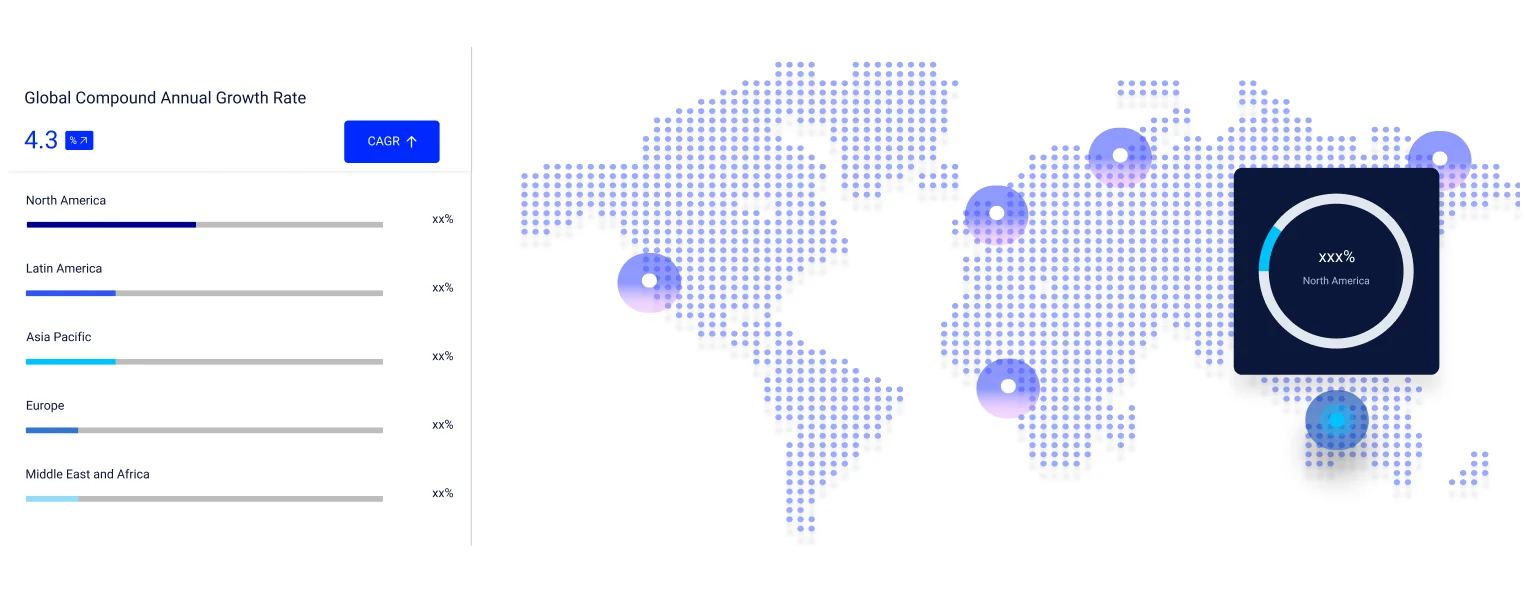
Compound Annual Growth Rate
4%
Value in USD Billion
2026-2035
Read more about this report - REQUEST FREE SAMPLE COPY IN PDF
Berry Fresh expanded Oregon production through new farming facility, which helped them enhance their year-round supply chain of high-quality proprietary blueberries. Other organizations can also develop proprietary genetics as well as grow berries in different regions to ensure year-round availability and quality of their berries.
Crunch Pak and Alpine Fresh introduced a new brand of blueberries called “Bluey” using special packaging that appeals to families. Other companies can engage in licensing deals and innovative packaging for their produce, boosting growth in the fresh berries market.
Global Plant Genetics released four varieties of blueberries across the world, providing climate adaptation capabilities, intensive cultivation capabilities, firmness, yields, and premium fresh market varieties. Companies in the fresh berries market can use licensed climate-adapted varieties to increase their yields, broaden their cultivation areas, and aim for premium fresh fruit markets.
Berry Brothers opened its seventh store at Palladium Ahmedabad, India, adding to its premium fresh drinks in a strategic mall-based retail format. Fresh berries companies can diversify into premium retail and foodservice formats, providing new avenues of value-added berry drinks.
Proprietary genetics are becoming a primary driving factor of the global fresh berries market growth as companies develop new berry varieties with enhanced taste, firmness, shelf life, and robustness of production. Driscoll’s and other global suppliers are making major investments in genetics to give unique value to their berries, which are not merely commodities, while growers are provided with varieties tailored to specific climatic conditions and harvest seasons. To facilitate this trend, USDA Agricultural Research Service is initiating a project of 2025-2030 to develop climate-smart technologies for profitable small-fruit production. On the other hand, in August 2026, Berry Fresh invested in premium genetics, Oregon acreage, and new consumer occasions to strengthen year-round berry supply and category growth.
Shrink reduction compels suppliers to focus on more advanced packaging, edible coatings, biological control systems, and precise postharvest management, accelerating the fresh berries market development. Such an approach is useful due to high perishability of fresh berries and increasing retail demands regarding longer shelf-life of products while maintaining optimal texture and taste characteristics. In February 2024, USDA Agricultural Research Service started a research project that lasts until 2029 and is aimed at development of smart packaging, natural edible coatings, controlled storage and biological control agents for blueberries, blackberries, and raspberries. Further, in June 2026, ASIA FRUIT LOGISTICA launched FRESHTech, creating a dedicated platform connecting fresh produce businesses with technologies improving efficiency, sustainability, and digitalization.
Berry producers are moving towards geographically integrated production to ensure a round-the-year availability and eliminate seasonal gaps in supplies from domestic growing regions. Mexico continues to be strategic for North American buyers. According to the USDA, Mexico’s total berry exports were forecast to reach 752,000 metric tons in 2025, with the country expected to remain the leading supplier of fresh berries to the United States. The agency partially attributes the increase in production of blackberries, raspberries, and strawberries to the development of new varieties and advancement of agricultural techniques. These factors motivate investments into protective cultivation, irrigation, and cross-border sourcing models with stable supplies for retailers. Following such trends in the fresh berries market, in August 2025, Agroberries Group launched BerryWorld Asia, expanding regional distribution, local expertise, branded berry offerings, and year-round premium supply.
In January 2025, the FDA issued a plan for prevention of norovirus and hepatitis A contamination in fresh and frozen berries, emphasizing the importance of constant sanitary measures both domestically and internationally. In February 2026, the FDA published Produce Regulatory Program Standards to improve coordinated regulation of produce safety. In addition, exercises for traceability tested the capability of industry players to deliver relevant electronic information within 24 hours. These factors in the fresh berries market motivate investments into food safety and traceability through technologies, worker hygiene, and sanitation measures. In April 2026, Superplum launched InstaTrace, using QR codes to provide consumers with farm origin, testing, handling, and supply-chain information.
Industry-sponsored research and promotion programs are enhancing efforts to invest in innovation and development within the fresh berries market. In August 2026, the USDA announced that 58% of the eligible United States highbush blueberry growers and importers who voted on whether to continue the Blueberry Promotion, Research and Information Order voted in favor, constituting 84% of the vote. This ensures that there will be a system in place to finance research and promotional efforts. In addition, USDA provided USD 72.9 million in funding to 586 projects under the Specialty Crop Block Grant Program in September 2025.

Read more about this report - REQUEST FREE SAMPLE COPY IN PDF
The Expert Market Research's report titled “Fresh Berries Market Report and Forecast 2026-2035” offers a detailed analysis of the market based on the following segments:
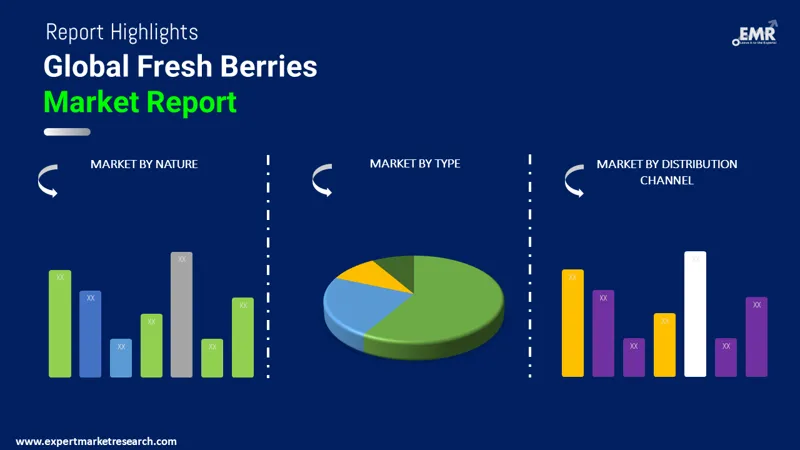
Market Breakup by Nature
Key Insight: Both forms of berries, conventional and organic, are targeted for different commercial needs in the fresh berries market. The conventional berries account for the largest segment owing to the efficiencies associated with mass production, wide availability, competitive prices, and reliable promotional quantities. The fastest growing segment of berries is the organic type because it uses a premium product range approach, need for certification, traceable sources, and investment in biological crop production methods. While conventional manufacturers aim at efficient operations and standardized specifications, organic berry producers concentrate on distinctive production credentials and added value.
Market Breakup by Type
Key Insight: Strawberries, based on their nature, stand out owing to their large-scale cultivation, great versatility in use, and supermarket familiarity. Blueberries are gaining much attention due to their ease of use as a snack, while cranberries depend on distinctive taste and seasonal merchandising opportunities. Raspberries stand out in the fresh berries market owing to their good positioning in terms of premium taste and innovation in protected cultivation. The "others" category of fruits, which includes blackberries and exotic berries, stands out due to their distinctive genetics and assortment. Companies are designing specific breeding, packaging, and sourcing programs depending on the commercial nature of each fruit.
Market Breakup by Distribution Channel
Key Insight: Offline sales dominate by the nature of the distribution channel as it is easier to physically inspect goods at supermarkets, hypermarkets, and specialty shops owing to the high perishability of berries. Online distribution channels are becoming the fastest-growing segment due to the development of refrigerated logistics and digital shopping, which allows for improved home delivery, accelerating the overall fresh berries market penetration. The focus of offline retailing lies in good display, promotion, and shelf availability, whereas the online business model concentrates on quality fulfillment, packaging, and personal shopping experience. Suppliers are using the dual-channel approach through the management of their inventory and packaging in order to retain their retail size while accessing digitally driven demand.
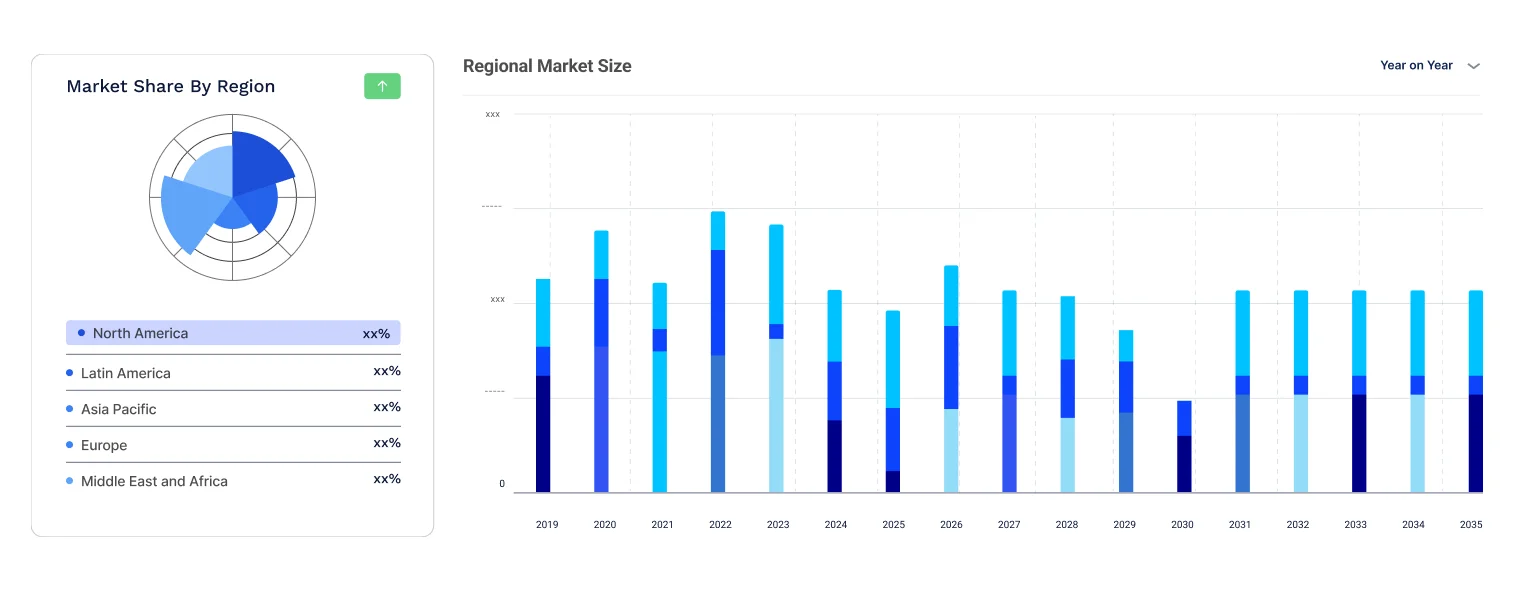
Market Breakup by Region
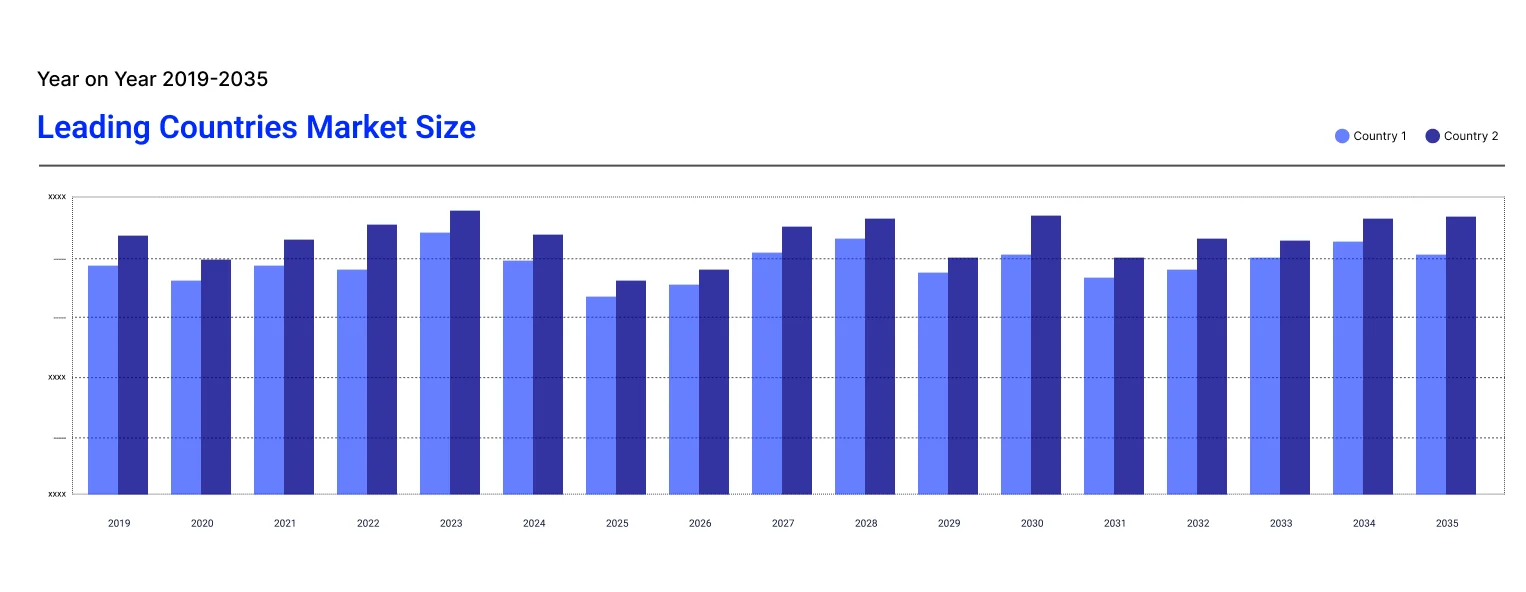
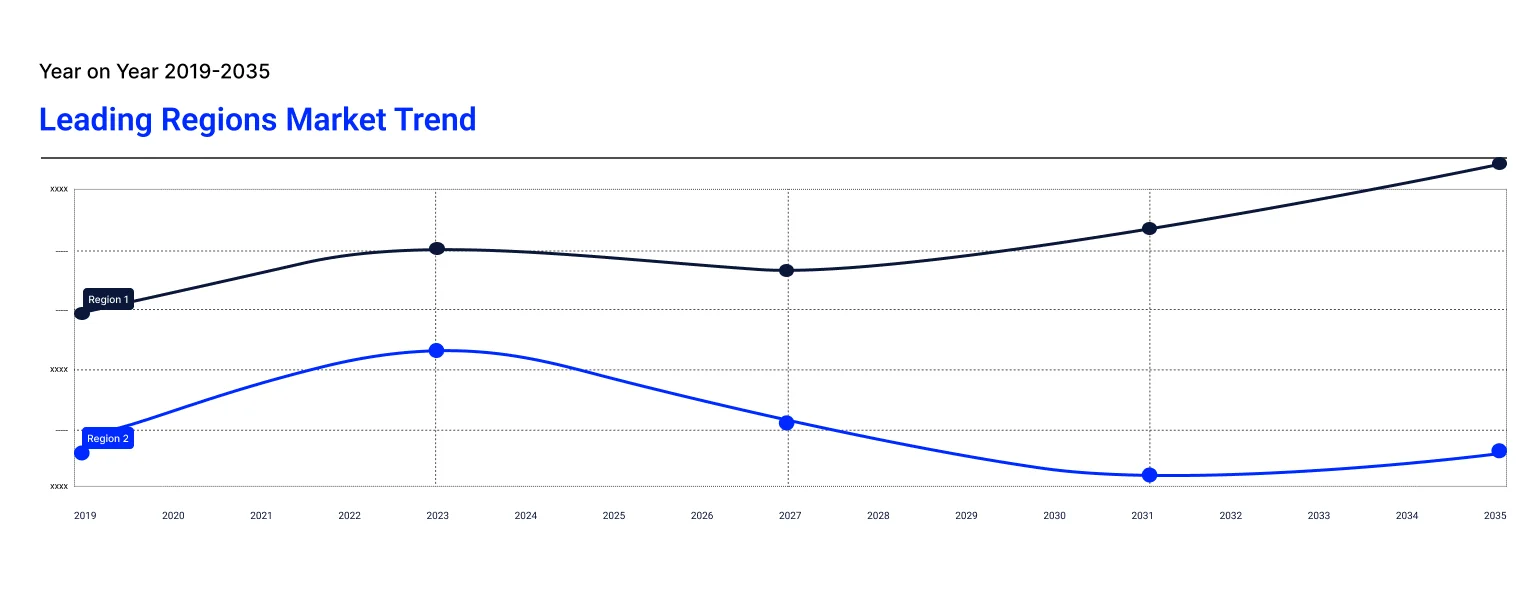
Key Insight: Regional dynamics in the fresh berries market indicate that North America dominates owing to the use of sophisticated cultivation methods, selective breeding, organized retail outlets, and well-organized sourcing networks. Europe is significant due to the fact that high-quality needs, organic produce demands, and sophisticated produce standards make berry programs specialized. Asia Pacific posts the fastest growth rate owing to the presence of sophisticated retail outlets, urban consumption, protected cultivation, and growing cold chain facilities. Latin America has the advantage of a favorable production environment and export-oriented supply chain for Northern Hemisphere consumers. On the other hand, the Middle East and Africa offer opportunities owing to premium produce imports, development of supermarkets, and controlled environment agriculture.

Read more about this report - REQUEST FREE SAMPLE COPY IN PDF
Conventional fresh berries account for the largest share of the market due to established cultivation and competitive pricing
Conventionally grown fresh berries capture the largest share of the fresh berries market because of growers’ ability to yield high volumes of product, maintain year-round availability, and satisfy the requirements of retailers’ volume contracts at reasonable prices. Conventional breeding programs assist commercial farming by developing more resistant, firmer, and even cultivars. Integrated pest management and precise irrigation help producers to preserve the quality of their products on large acreages. For foodservice operations and retailers, conventional berries ensure flexibility in sourcing and promotion, which is why it is an especially valuable part of the segment. In August 2026, Oppy extended its Happy Berry brand into premium blueberries, expanding branded offerings, and targeting higher-value fresh produce consumers.
The growing organic fresh berries segment is driven by the expansion of certified assortments in retail and efforts of suppliers to differentiate themselves with premium products produced in traceable systems. This segment of the fresh berries market enjoys high demand for residue-free fruit, cultivation methods that correspond with environmental principles, and transparency in sourcing. Growers make significant efforts to cultivate their berries according to organic standards without affecting the quality of their product. Organic programs are valuable for berry companies to expand their branded portfolio and develop relationships with premium retailers. In May 2024, Almaverde Bio launched Elodì, an organic strawberry offering intense aroma, balanced sweetness, acidity, freshness, and sustainable cultivation practices.
Strawberries capture a substantial share of the market due to extensive production and consumption versatility
Strawberries command the largest share of the fresh berries market value due to their consumer familiarity that supports large-scale sales of the product across supermarkets, convenience stores, foodservice and specialty retail channels. Manufacturers are enhancing the category by developing proprietary varieties that offer enhanced flavor, firmness, appearance, and extended shelf life. The ability of strawberries to be used in snacking, desserts, breakfast items, and foodservice is another strength point that supports the demand. Suppliers are increasingly implementing regional production to expand seasonality, while premium branded varieties allow to differentiate assortment in the market and reduce dependency on commodity-type products during the entire season of merchandising. In January 2026, Bayer introduced Baya Solara, a productive, disease-resistant strawberry variety delivering uniform fruit, extended shelf life, and premium quality.
The fastest growing segment of the category is represented by blueberries, which due to the fact that they are ready-to-eat product that can be conveniently consumed align well with the idea of snackable fresh products. The investments of fresh berries market companies in proprietary genetics of blueberries result in the development of larger berries, enhanced sweetness, increased firmness, and consistency across different regions where blueberries are grown. Increased networks of cultivation sites are improving the availability of blueberries outside of the traditional harvesting period. Retailers have an advantage of flexible packaging formats, such as single-serving and bulk household sizes.
Offline channels account for the largest share of the market due to immediate quality inspection and merchandising
Offline channels largely contribute to the fresh berries market revenue due to the perishability and the need for continuous replenishing of fresh berries. Moreover, the physical channels allow for temperature-controlled storage of products and visual merchandising, which makes it possible for consumers to evaluate their quality on the spot. Supermarkets and hypermarkets continue to play a key role in the management of berry categories due to the usage of promotions, special premium displays, and cross-merchandising, which helps to increase the number of items in the basket. In November 2024, Fresh From Farm launched branded fruits in Delhi-NCR, targeting Rs 100 crore ARR through premium positioning and expanded distribution.
The growth of the online distribution channels across the fresh berries market scope takes place due to the improvement of the refrigerated fulfillment by grocery platforms and the tendency of consumers to order fresh produce along with other groceries online. The berry suppliers adapt by developing durable packaging, specifying their freshness characteristics, and developing packs designed specifically for home delivery. Additionally, the online channels provide an opportunity to test new premium assortments, perform promotions, and get quick visibility for organic or proprietary berries.
Read more about this report - REQUEST FREE SAMPLE COPY IN PDF
North America accounts for the largest share of the market due to advanced berry production networks
Dominance of the North America fresh berries market is evident, as the region holds robust cultivation infrastructure, an advanced retail distribution system, and significant investments in proprietary genetics. The region houses large-scale cultivation of strawberries, blueberries, raspberries, and blackberries, and cross-border procurement aids suppliers in gaining extended seasonality. Companies are improving varieties of berries, developing controlled-environment cultivation, using automation and post-harvest technologies to ensure consistency in quality. Furthermore, organized retailers are promoting branded programs and traceability investments. In August 2024, Naturipe Farms launched Berry Buddies, offering portable, fresh-fruit snack combinations designed for children, parents, and convenient on-the-go consumption.
The fastest growing regional fresh berries market is Asia Pacific, as the region witnesses the growth of modern grocery retail stores, cold chain infrastructure, and consumer preference for premium fresh produce in urban centers. Domestic as well as international suppliers are investing in cultivation under protection, improvement in varieties, and localized distribution owing to climatic variations and maintenance of product quality. Increased preference for convenience, visual appeal, and premium fruit among consumers is helping retailers include a greater number of berry varieties in their offerings.
The market is becoming more innovation driven with major fresh berry companies concentrating on their own genetics, 365 sourcing capabilities, postharvest technologies, and premium formats of products. Berry varieties with high levels of sweetness, firmness, longevity, and ability to withstand different weather conditions are being developed by producers to distinguish themselves from competitors among retailers. There are also possibilities to engage in protected cultivation and thus mitigate weather risks and extend the growing season. Players are also offering convenient snacking solutions such as portion-controlled packaging, mixed berries, and functional products.
Technologies of cold chain, sorting, and traceability systems help producers reduce wastage and deliver products that satisfy the requirements of retailers. There are opportunities associated with organic and sustainable berries. In the future, fresh berries market players that are able to develop their breeding programs, integrate global production facilities and consumer programs are expected to gain advantages, and cooperation with growers contributes to quicker implementation of innovations.
Founded in 1904 and based in California, United States, Driscoll's serves the market by using breeding and its brand berries including strawberries, blueberries, raspberries, and blackberries. The firm has been working on the development of berries with enhanced flavor, texture, appearance, and shelf performance. Grower relationships and global production facilities enable year-round availability. It is also moving toward variety-driven innovation, helping retailers provide different premium berry programs than regular seasonal fruits.
Neufeld Farms, established in the year 1973, and based in the United States, provides services to fresh berries market with its experience in farming and production of premium berries in British Columbia. Neufeld Farms specializes in cultivation quality, effective farm management and reliable supply of products to customers.
Naturipe Berry Growers, founded in 1917, and based in the United States, provides its service via a diversified portfolio of fresh and value-added berries using the services of grower partnerships and global sourcing. Naturipe is focusing on its investment in proprietary varieties as well as innovative consumer forms which include snacking formats based on berries.
Founded in 1970 and headquartered in Belgium, Ardo provides catering to the berry industry through frozen fruit processing technologies which constitute a significant addition to the berry supply chain after the season when fresh products can be delivered. Ardo is concentrating on the quality of its products and reliable supply as well as berry usage in ingredients, smoothies, desserts, and convenient frozen food products.
Other key players in the market include Welch’s Inc., Hortifrut S.A., Red Fruit & Co., Taylor Farms Retail Group, Coop Cooperative, and EDEKA Minden-Hannover Foundation & Co. KG, among others.
*Please note that this is only a partial list; the complete list of key players is available in the full report. Additionally, the list of key players can be customized to better suit your needs.*
Unlock the latest insights with our fresh berries market trends 2026 report. Discover regional growth patterns, consumer preferences, and key industry players. Stay ahead of competition with trusted data and expert analysis. Download your free sample report today and drive informed decisions in the market.
*While we strive to always give you current and accurate information, the numbers depicted on the website are indicative and may differ from the actual numbers in the main report. At Expert Market Research, we aim to bring you the latest insights and trends in the market. Using our analyses and forecasts, stakeholders can understand the market dynamics, navigate challenges, and capitalize on opportunities to make data-driven strategic decisions.*
The market is expected to grow at a CAGR of 4.00% between 2026 and 2035.
Stakeholders are investing in proprietary breeding, strengthening cold chains, expanding regional grower partnerships, adopting traceability systems, developing premium snack formats, and diversifying sourcing to reduce climate and supply risks.
The key trends of the market are increasing demand for organic fresh berries, rising popularity of recipes with fresh berries, sophisticated and sustainable packaging, and growing demand from personal care industries.
The primary natures of fresh berries in the market are organic and conventional.
The various types of fresh berries in the market include blueberry, cranberry, strawberry, and raspberry, among others.
The major regions in the market are North America, Europe, Asia Pacific, Latin America, and the Middle East and Africa.
The significant distribution channels for fresh berries are online and offline.
The key players in the fresh berries market, according to the report, are Driscoll’s, Inc., Neufeld Farms, Naturipe Berry Growers, Inc., Ardo NV, Welch’s Inc., Hortifrut S.A., Red Fruit & Co., Taylor Farms Retail Group, Coop Cooperative, and EDEKA Minden-Hannover Foundation & Co. KG, among others.
In 2025, the fresh berries market reached an approximate value of USD 27.47 Billion.
The market is anticipated to witness steady growth and attain approximately USD 40.66 Billion by 2035.
Companies face climate volatility, short shelf life, labor shortages, disease pressure, rising logistics costs, and strict food-safety requirements while maintaining consistent quality, reliable volumes, and year-round availability across markets.
Explore our key highlights of the report and gain a concise overview of key findings, trends, and actionable insights that will empower your strategic decisions.
| REPORT FEATURES | DETAILS |
| Base Year | 2025 |
| Historical Period | 2019-2025 |
| Forecast Period | 2026-2035 |
| Scope of the Report |
Historical and Forecast Trends, Industry Drivers and Constraints, Historical and Forecast Market Analysis by Segment:
|
| Breakup by Nature |
|
| Breakup by Type |
|
| Breakup by Distribution Channel |
|
| Breakup by Region |
|
| Market Dynamics |
|
| Competitive Landscape |
|
| Companies Covered |
|
Datasheet
One User
USD 2,499
USD 2,249
tax inclusive*
Single User License
One User
USD 3,999
USD 3,599
tax inclusive*
Five User License
Five User
USD 4,999
USD 4,249
tax inclusive*
Corporate License
Unlimited Users
USD 5,999
USD 5,099
tax inclusive*
*Please note that the prices mentioned below are starting prices for each bundle type. Kindly contact our team for further details.*
Flash Bundle
Small Business Bundle
Growth Bundle
Enterprise Bundle
*Please note that the prices mentioned below are starting prices for each bundle type. Kindly contact our team for further details.*
Flash Bundle
Number of Reports: 3
20%
tax inclusive*
Small Business Bundle
Number of Reports: 5
25%
tax inclusive*
Growth Bundle
Number of Reports: 8
30%
tax inclusive*
Enterprise Bundle
Number of Reports: 10
35%
tax inclusive*
How To Order
Select License Type
Choose the right license for your needs and access rights.
Click on ‘Buy Now’
Add the report to your cart with one click and proceed to register.
Select Mode of Payment
Choose a payment option for a secure checkout. You will be redirected accordingly.
Strategic Solutions for Informed Decision-Making
Gain insights to stay ahead and seize opportunities.

Get insights & trends for a competitive edge.

Track prices with detailed trend reports.

Analyse trade data for supply chain insights.

Leverage cost reports for smart savings

Enhance supply chain with partnerships.

Connect For More Information
Our expert team of analysts will offer full support and resolve any queries regarding the report, before and after the purchase.
We employ meticulous research methods, blending advanced analytics and expert insights to deliver accurate, actionable industry intelligence, staying ahead of competitors.
Our skilled analysts offer unparalleled competitive advantage with detailed insights on current and emerging markets, ensuring your strategic edge.
We offer an in-depth yet simplified presentation of industry insights and analysis to meet your specific requirements effectively.