

Consumer Insights
Uncover trends and behaviors shaping consumer choices today
Procurement Insights
Optimize your sourcing strategy with key market data
Industry Stats
Stay ahead with the latest trends and market analysis.
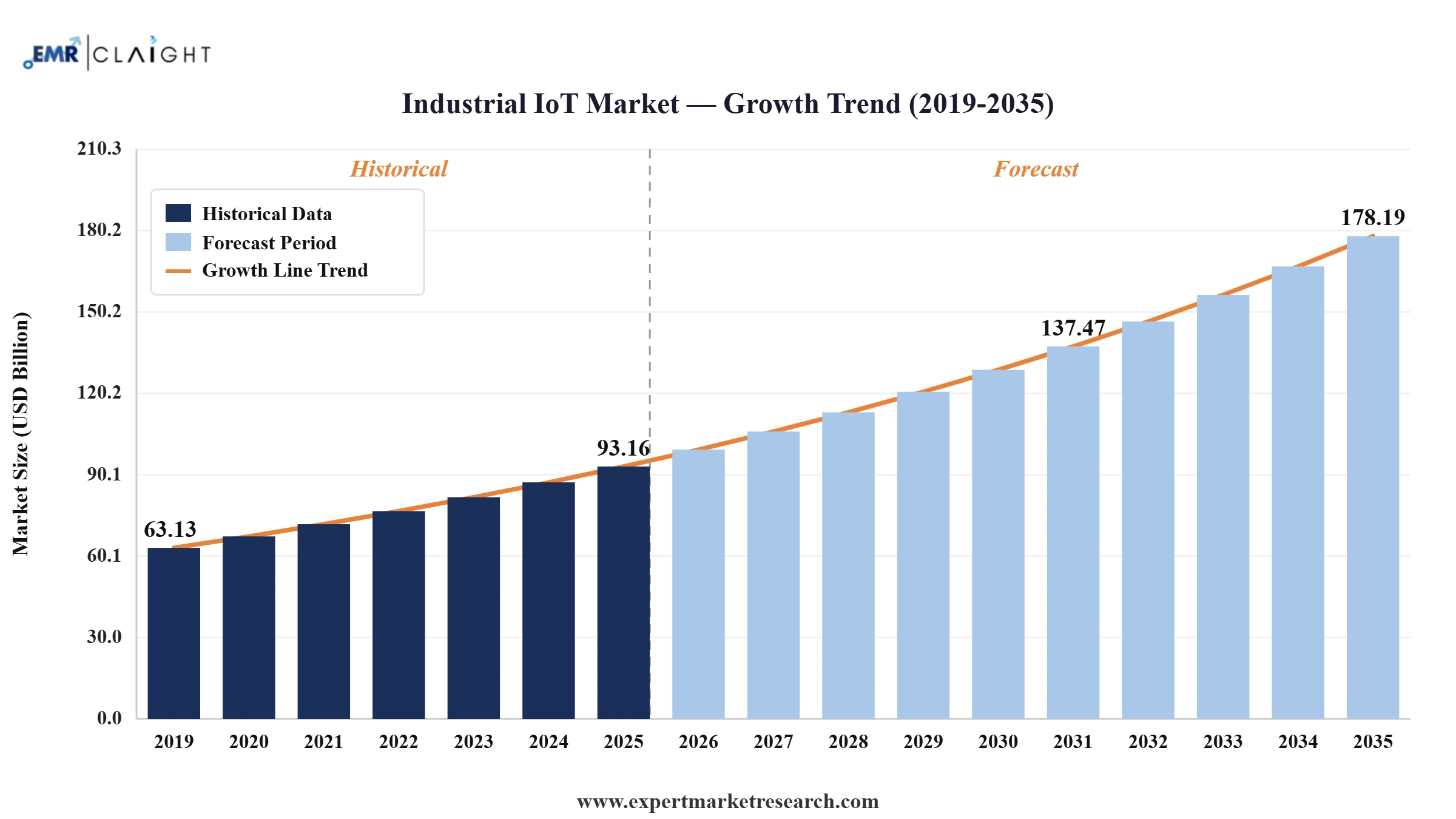
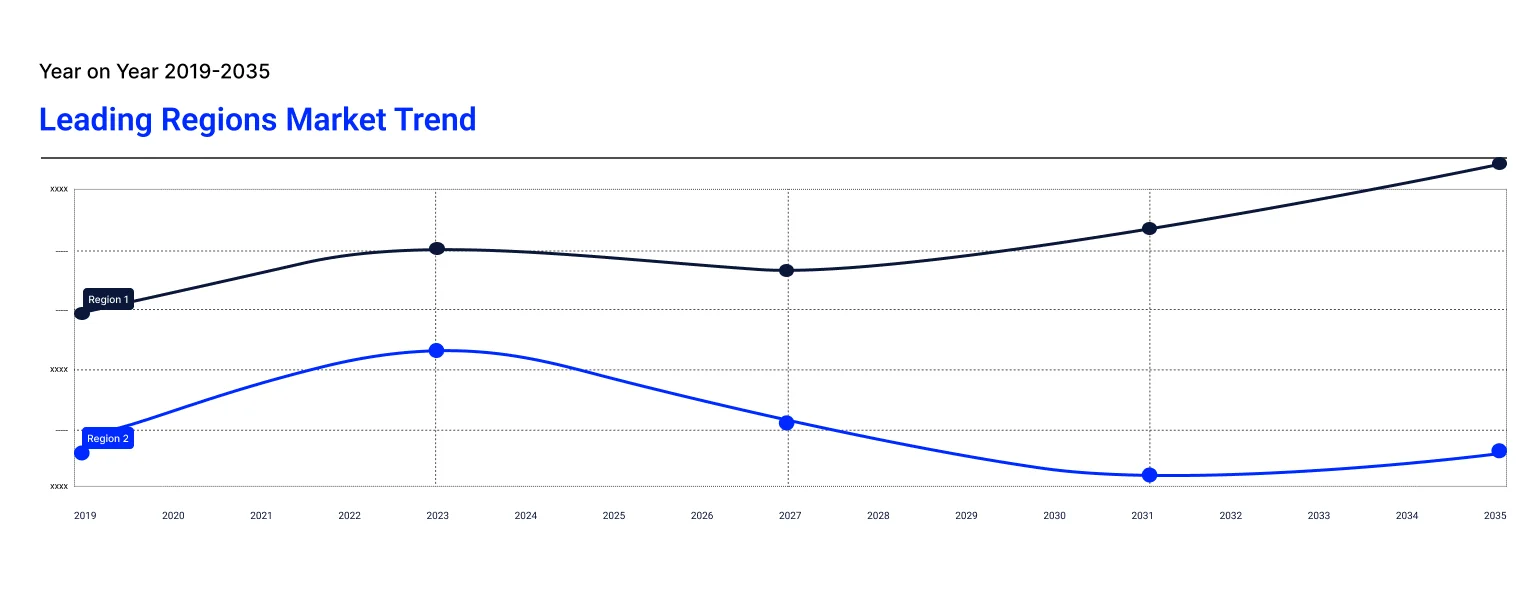
The industrial IoT market size USD 93.16 Billion in 2025. The market is further expected to grow in the forecast period of 2026-2035 at a CAGR of 6.70% to reach USD 178.19 Billion by 2035.
The industrial IoT market covers networks of sensors, controllers and connected instruments deployed across manufacturing plants, energy infrastructure, transport fleets and healthcare facilities, linked to computing systems that collect operational data and convert it into monitoring, predictive maintenance, quality control and automated process intervention. It spans the hardware that measures physical conditions, the connectivity that moves data, the edge and cloud platforms that process it, and the services that integrate all three into environments running equipment installed decades before networking existed.
What separates industrial IoT from consumer connected technology is the consequence of failure and the lifespan of the assets involved. A production line controller may remain in service for fifteen years, must operate continuously, and cannot be taken offline for updates at convenient intervals. That combination makes security, reliability and backwards compatibility harder problems than in commercial technology, and it is why regulation is now attaching lifecycle obligations to products with digital elements rather than treating security as a point-of-sale characteristic.
Read more about this report - REQUEST FREE SAMPLE COPY IN PDF
| Industrial IOT Market Report Summary | Description | Value |
| Base Year | USD Billion | 2025 |
| Historical Period | USD Billion | 2019-2025 |
| Forecast Period | USD Billion | 2026-2035 |
| Market Size 2025 | USD Billion | 93.16 |
| Market Size 2035 | USD Billion | 178.19 |
| CAGR 2019-2025 | Percentage | XX% |
| CAGR 2026-2035 | Percentage | 6.70% |
| CAGR 2026-2035 - Market by Region | Asia Pacific | 7.7% |
| CAGR 2026-2035 - Market by Country | India | 8.9% |
| CAGR 2026-2035 - Market by Country | China | 7.4% |
| CAGR 2026-2035 - Market by Component | Connectivity | 7.6% |
| CAGR 2026-2035 - Market by End User | Healthcare | 7.8% |
| Market Share by Country 2025 | India | 3.7% |
Affordable Sensors and Outcome-Based Models to Drive Market Growth
The expansion of the market for industrial internet of things (IIoT) is anticipated to be fuelled by technological developments and the growing number of reasonably priced processors and sensors that can offer real-time information access. The IoT industry market size is also expanding as a result of extensive collaborations amongst the main players and the increasing requirements to enhance operational proficiency. Also, the industrial IoT market map is expected to witness growth due to the major benefits facilitated by the industrial internet of things, including automated quality assurance monitoring, large profit margins from increased power efficiency, productivity growth, and manufacturing industry efficiency.
Moreover, IIoT has the capability and potential to assist industries in lowering operating costs, guaranteeing employee safety, and boosting throughput. Companies are increasingly creating new product and service hybrids to reinforce their positions and create new revenue streams by providing quantifiable outcomes in addition to selling solutions. In turn, it's projected that this will increase the IoT market share during the forecast period.
Value Shifting From Measurement to Decision Automation
Sensors and connectivity became inexpensive enough that collecting data ceased to be the constraint; interpreting it and acting on it became the constraint instead. This has moved investment towards edge computing, analytics and the platforms that convert measurement into intervention. Product development during 2026 reflected the shift, with industrial artificial intelligence suites reaching general availability for deploying and managing models across multiple sites rather than at individual machines.
Artificial Intelligence Entering Engineering Workflow
Application has moved upstream from monitoring deployed equipment to designing the systems themselves. Demonstrations at Hannover Messe in April 2026 combined autonomous agents with closed-loop digital twin validation, allowing engineers to move from a validated factory model to a fully tested controller project before any hardware is deployed, using natural language interaction. This targets engineering labour, historically the largest cost in automation projects.
Regulation Converting Security Into a Market Access Requirement
The EU Cyber Resilience Act brings vulnerability reporting obligations into force from 11 September 2026 and applies fully from 11 December 2027, requiring security measures across design, development, maintenance and update phases with CE marking indicating conformity. Because industrial buyers' own compliance obligations flow through their supply chains, certification is becoming a condition of tender participation rather than a differentiator.
The industrial internet of things (IoT) refers to interconnected sensors and instruments, among others, networked together with computers to carry out various industrial applications, including manufacturing and energy management. The deployment of IIoT solutions allows for the steady automation and optimisation of industrial operations, which helps enhance the productivity and supply chain efficiency. In addition, these devices send an alert to the staff a week prior if there is requirement for replacement of any machine part, thus, helping save time.
Market Breakup by Component
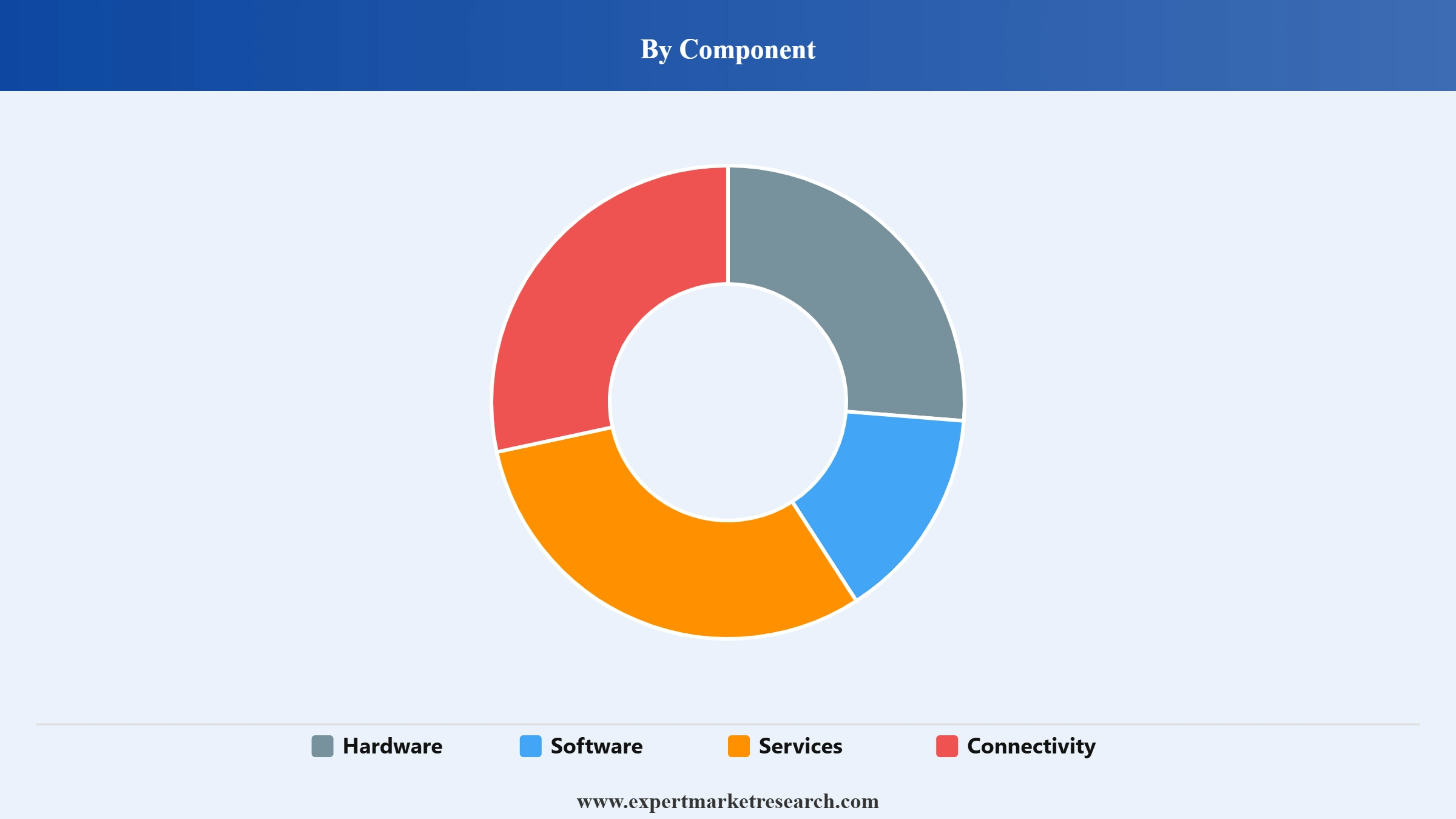
Key Insight: Software holds the leading position in the component segment of the global industrial IoT market, since the value of connected industrial equipment lies in interpretation rather than measurement, and since the 2026 product developments concentrated on artificial intelligence suites, edge management platforms and engineering environments rather than on sensing devices. Connectivity is the fastest-growing component at a 7.6% CAGR through 2035, reflecting the network infrastructure that bidirectional data synchronisation between edge and enterprise systems requires. Hardware retains a substantial position through sensors, gateways, controllers and the rugged edge computing that harsh industrial environments demand, and it now carries cybersecurity obligations under the Cyber Resilience Act. Services cover integration, commissioning and the security compliance work that regulation is expanding materially.
Market Breakup by End User
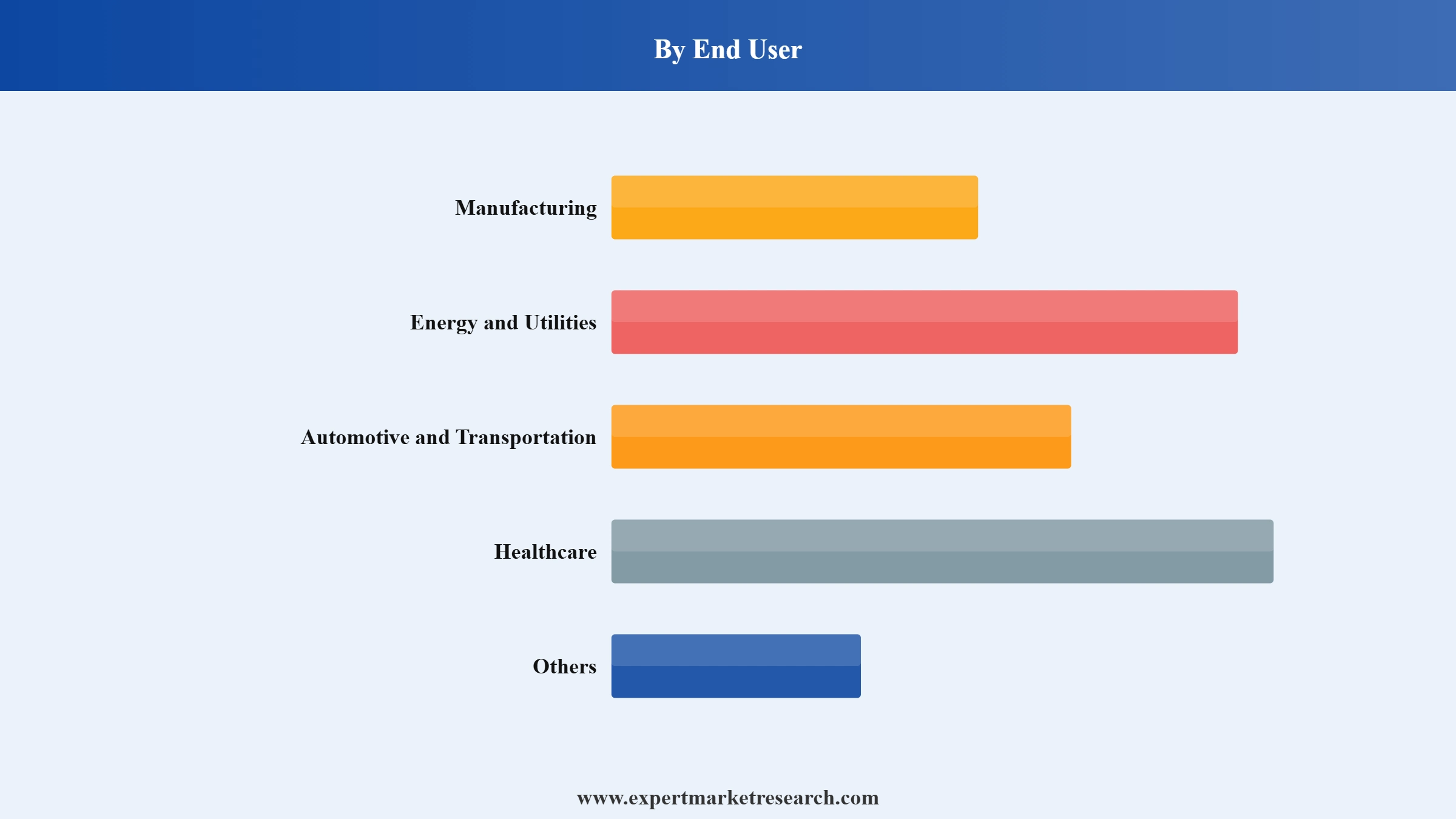
Key Insight: Manufacturing dominates the end user segment of the global industrial IoT market, since production environments combine dense asset populations, measurable output metrics and the downtime costs that justify predictive maintenance investment, and since the artificial intelligence engineering workflows demonstrated during 2026 target the plant design and commissioning activity concentrated in this sector. Healthcare is the fastest-growing end user at a 7.8% CAGR through 2035, applying connected monitoring to medical equipment uptime, remote patient observation and clinical asset tracking. Energy and utilities deploy industrial IoT across generation, transmission and distribution assets where geographic dispersion makes remote monitoring essential, while automotive and transportation apply it to production line automation, fleet telematics and component traceability across supply chains.
Market Breakup by Region
Read more about this report - REQUEST FREE SAMPLE COPY IN PDF
By component, software leads the market as value concentrates in interpretation and orchestration
Software commands the largest share of the global industrial IoT market because sensing and connectivity have become inexpensive relative to the difficulty of acting on what they report. Product development during 2026 reflected this directly, with artificial intelligence suites reaching general availability for deploying and managing models across sites, edge management platforms redesigned for fleet-scale operation, and engineering environments in which autonomous agents generate and validate controller projects. Each of these addresses the interpretation and orchestration layer rather than the measurement layer where earlier investment concentrated.
Connectivity is the fastest-growing component of the global industrial IoT market at a 7.6% CAGR through 2035, driven by architectural change rather than device count alone. Bidirectional synchronisation between edge devices and central information technology systems imposes network requirements that one-directional data collection did not, and edge processing shifts traffic patterns towards continuous exchange with enterprise platforms. Hardware retains a substantial position through sensors, controllers, gateways and rugged edge computing, while services expand around integration and the security compliance work that the Cyber Resilience Act is creating.
Read more about this report - REQUEST FREE SAMPLE COPY IN PDF
By end user, manufacturing dominates the market while healthcare grows fastest
Manufacturing accounts for the largest end user share of the global industrial IoT market because it combines the conditions under which connected instrumentation pays for itself: dense populations of monitored assets, output measurable in units and quality rates, and unplanned downtime costs that make predictive maintenance economically compelling. The sector is also the target of the engineering automation demonstrated during 2026, where autonomous agents and digital twin validation compress the design and commissioning cycle that determines how quickly a plant can be reconfigured for new products.
Healthcare is the fastest-expanding end user in the global industrial IoT market at a 7.8% CAGR through 2035, applying connected monitoring to medical equipment availability, remote patient observation and clinical asset location, where the value case rests on avoided device downtime and clinical outcome rather than production throughput. Energy and utilities depend on remote monitoring across geographically dispersed generation, transmission and distribution assets that cannot be inspected manually at reasonable cost, while automotive and transportation apply industrial IoT to line automation, fleet telematics and the component traceability that recall management requires.
Read more about this report - REQUEST FREE SAMPLE COPY IN PDF
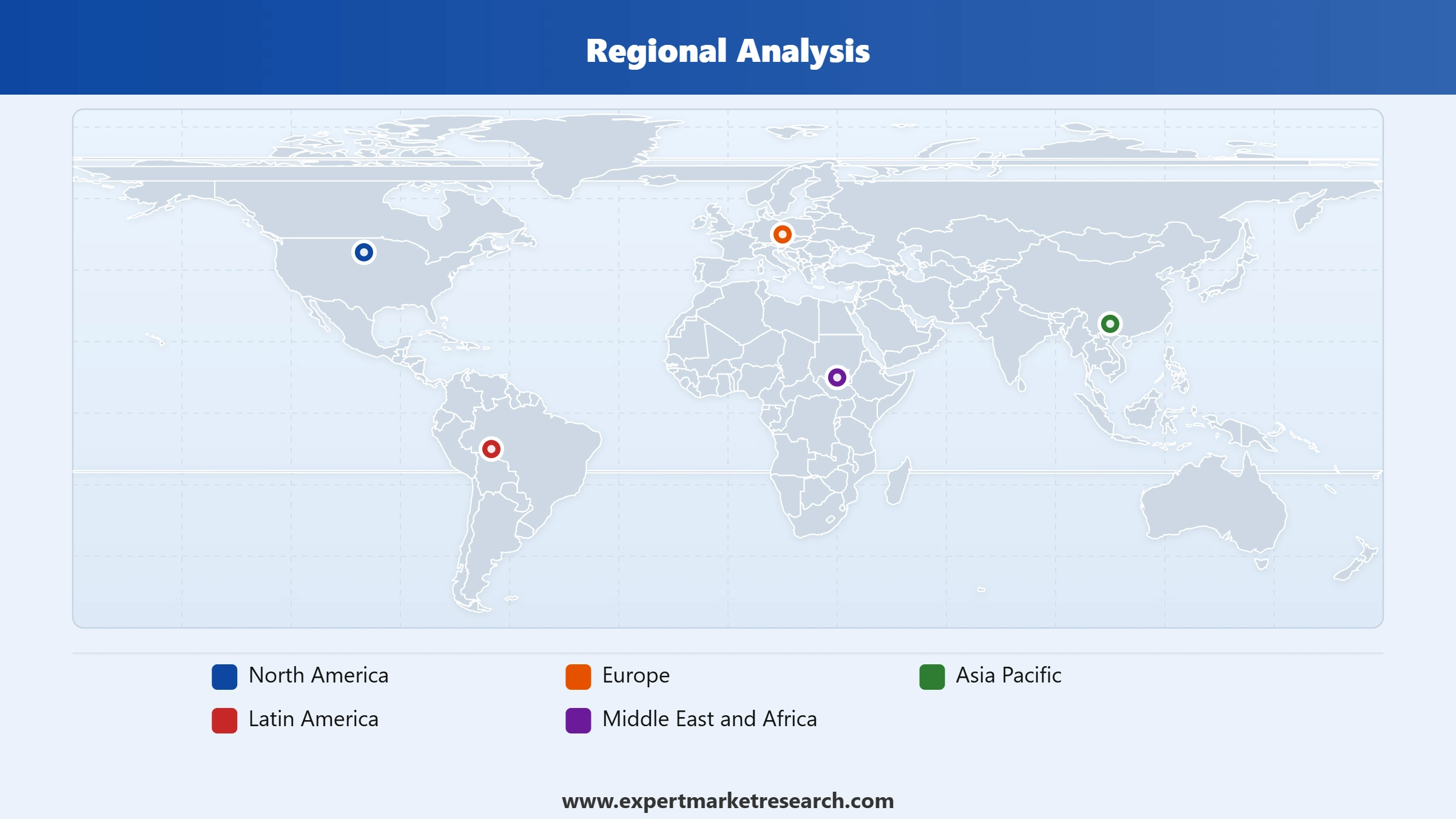
North America accounts for a leading market share through vendor concentration and early enterprise adoption
The global industrial IoT market is led in value by North America, which hosts the platform vendors, cloud infrastructure providers and industrial technology companies through which capability is delivered, alongside the manufacturing and energy operators that adopted connected instrumentation earliest. The United States is forecast at a 5.9% CAGR through 2035, supported by industrial modernisation investment and by the concentration of artificial intelligence capability that the 2026 shift towards engineering automation depends upon. Growth is moderate relative to emerging markets because the installed base is already substantial, making expansion incremental rather than foundational.
The Asia Pacific industrial IoT market is witnessing the fastest growth at a 7.7% CAGR through 2035, led by India at 8.9% and China at 7.4%, driven by manufacturing capacity expansion, national industrial modernisation programmes and government support for domestic automation capability, with India holding 3.7% of the global market in 2025. Europe carries the most consequential regulatory framework through the Cyber Resilience Act, with reporting obligations from 11 September 2026 and full application from 11 December 2027, and hosts the industrial automation vendors whose product announcements set technical direction, with France forecast at 5.3%, Italy at 4.7% and Japan at 4.6%.
Read more about this report - REQUEST FREE SAMPLE COPY IN PDF
The report presents a detailed analysis of the following key players in the global industrial IoT market, looking into their capacity, market shares, and latest developments like capacity expansions, plant turnarounds, and mergers and acquisitions:
The comprehensive report looks into the macro and micro aspects of the market. The Expert Market Research report gives an in-depth insight into the market by providing a SWOT analysis as well as an analysis of Porter’s Five Forces model.
The industrial IoT sector faces a compliance challenge scaled to the longevity of its own products. Cyber Resilience Act obligations extend across the full lifecycle of products with digital elements, and industrial equipment routinely remains in service for a decade or more, so manufacturers must maintain vulnerability disclosure and update infrastructure for far longer than consumer technology requires. Participants must also contend with a legacy installed base running protocols designed before networked operation, where retrofitting connectivity introduces exactly the attack surface the regulation is intended to close.
Several restraints temper growth. Integration cost frequently exceeds device expenditure, since connecting equipment to systems that were never designed to receive its data absorbs engineering effort that buyers underestimate at procurement. Organisational division between operational and information technology functions slows deployment, as the two hold different priorities on uptime versus security. Shortages of industrial data engineering skills also limit how quickly manufacturers absorb capability they have already purchased.
Opportunities remain substantial. Bidirectional synchronisation between edge and enterprise systems enables closed-loop optimisation rather than reporting, resolving a longstanding constraint on industrial data value. Engineering workflow automation addresses a cost centre no previous wave of industrial technology reached. Asia Pacific offers the fastest growth at a 7.7% CAGR through 2035, on capacity expansion rather than replacement.


Upto 15% Off
USD
$2499 $2249
$3999 $3599
$4999 $4249
$5999 $5099


*While we strive to always give you current and accurate information, the numbers depicted on the website are indicative and may differ from the actual numbers in the main report. At Expert Market Research, we aim to bring you the latest insights and trends in the market. Using our analyses and forecasts, stakeholders can understand the market dynamics, navigate challenges, and capitalize on opportunities to make data-driven strategic decisions.*
In 2025, the global industrial IoT market attained a value of USD 93.16 Billion.
The market is projected to grow at a CAGR of 6.70% between 2026 and 2035.
The market is estimated to witness a healthy growth in the forecast period of 2026-2035 to reach USD 178.19 Billion by 2035.
The major drivers of the market, such as the heightened demand in the healthcare sector, increased demand in the automotive sector, increased demand for wearables, benefits of time and cost saving, rising investments by the leading market players in the research and development of IoT technology, and rapid technological advancements, are expected to aid the market growth.
The key trends guiding the market growth include the rapid digitalisation and the increased deployment of industrial IoT solutions across industry verticals.
The major regions in the market are North America, Latin America, the Middle East and Africa, Europe, and the Asia Pacific.
The significant components of industrial IoT include hardware, software, services, and connectivity.
The different end users include manufacturing, energy and utilities, automotive and transportation, and healthcare, among others.
The major players in the market are Honeywell International Inc., ABB Limited., Cisco Systems Inc., IBM Corporation, Siemens AG, General Electric Company, Intel Corporation, Microsoft Corporation, Amazon Web Services, Inc., and Rockwell Automation, Inc., among others.
Explore our key highlights of the report and gain a concise overview of key findings, trends, and actionable insights that will empower your strategic decisions.
| REPORT FEATURES | DETAILS |
| Base Year | 2025 |
| Historical Period | 2019-2025 |
| Forecast Period | 2026-2035 |
| Scope of the Report |
Historical and Forecast Trends, Industry Drivers and Constraints, Historical and Forecast Market Analysis by Segment:
|
| Breakup by Component |
|
| Breakup by End User |
|
| Breakup by Region |
|
| Market Dynamics |
|
| Competitive Landscape |
|
| Companies Covered |
|
| Report Price and Purchase Option | Explore our purchase options that are best suited to your resources and industry needs. |
| Delivery Format | Delivered as an attached PDF and Excel through email, with an option of receiving an editable PPT, according to the purchase option. |
Datasheet
One User
USD 2,499
USD 2,249
tax inclusive*
Single User License
One User
USD 3,999
USD 3,599
tax inclusive*
Five User License
Five User
USD 4,999
USD 4,249
tax inclusive*
Corporate License
Unlimited Users
USD 5,999
USD 5,099
tax inclusive*
*Please note that the prices mentioned below are starting prices for each bundle type. Kindly contact our team for further details.*
Flash Bundle
Small Business Bundle
Growth Bundle
Enterprise Bundle
*Please note that the prices mentioned below are starting prices for each bundle type. Kindly contact our team for further details.*
Flash Bundle
Number of Reports: 3
20%
tax inclusive*
Small Business Bundle
Number of Reports: 5
25%
tax inclusive*
Growth Bundle
Number of Reports: 8
30%
tax inclusive*
Enterprise Bundle
Number of Reports: 10
35%
tax inclusive*
How To Order

Select License Type
Choose the right license for your needs and access rights.

Click on ‘Buy Now’
Add the report to your cart with one click and proceed to register.

Select Mode of Payment
Choose a payment option for a secure checkout. You will be redirected accordingly.
Strategic Solutions for Informed Decision-Making
Gain insights to stay ahead and seize opportunities.

Get insights & trends for a competitive edge.

Track prices with detailed trend reports.

Analyse trade data for supply chain insights.

Leverage cost reports for smart savings

Enhance supply chain with partnerships.

Connect For More Information
Our expert team of analysts will offer full support and resolve any queries regarding the report, before and after the purchase.
Our expert team of analysts will offer full support and resolve any queries regarding the report, before and after the purchase.
We employ meticulous research methods, blending advanced analytics and expert insights to deliver accurate, actionable industry intelligence, staying ahead of competitors.
Our skilled analysts offer unparalleled competitive advantage with detailed insights on current and emerging markets, ensuring your strategic edge.
We offer an in-depth yet simplified presentation of industry insights and analysis to meet your specific requirements effectively.




