

Consumer Insights
Uncover trends and behaviors shaping consumer choices today
Procurement Insights
Optimize your sourcing strategy with key market data
Industry Stats
Stay ahead with the latest trends and market analysis.
The global level transmitter market attained a value of USD 7.45 Billion in 2025 and is projected to expand at a CAGR of 6.60% through 2035. The market is further expected to reach USD 14.12 Billion by 2035. Rising industrial automation, growing requirements for hazardous environment measurement, and increasing adoption of non-contact radar and ultrasonic technologies are pushing process industries toward higher precision level measurement across oil and gas, chemicals, water and pharmaceutical applications worldwide.
A level transmitter is a precision instrument used to measure and monitor the level of liquids, solids or slurries inside industrial tanks, vessels and pipelines, converting physical measurements into electrical signals for process control systems. The market spans contact and non-contact types, employing technologies ranging from capacitive and ultrasonic to radar, differential pressure and magnetostrictive measurement. Rising industrial automation, growing requirements for hazardous environment measurement, and increasing adoption of non-contact technologies continue to widen the buyer base for the global level transmitter market.
Demand is concentrating around manufacturers able to combine broad instrumentation portfolios with a strong regional service presence, particularly as process industries increasingly value local technical support alongside the equipment purchase itself. In December 2025, Aster Chemicals and Energy announced a significant investment programme at its Bukom petroleum refinery in Singapore, including a USD 75 million revitalisation of the site's condensate splitter unit to increase crude processing capacity beyond 300,000 barrels per day. Expansions of this kind are converting the industry's growing emphasis on regional presence directly into stronger customer relationships across the global level transmitter market.
Manufacturers are converging on a common development direction, widening from standalone measurement instruments toward connected platforms that combine level data with artificial intelligence driven diagnostics and predictive maintenance. Manufacturers are also increasingly extending radar technology beyond its traditional liquid measurement role into solids and interface measurement, positioning this versatility as a core product capability rather than a specialised niche offering. Portfolios across the market are being rebuilt around measurement accuracy in harsh, complex process conditions rather than a single flagship technology.
Compound Annual Growth Rate
6.6%
Value in USD Billion
2026-2035
Read more about this report - REQUEST FREE SAMPLE COPY IN PDF
In July 2026, KROHNE launched PipePatrol NEO, an AI powered pipeline monitoring platform combining AI with hydraulic models to detect leaks and equipment failure across oil, gas and hydrogen networks. Other manufacturers across the level transmitter market can draw a lesson from this by pairing physical measurement models with newer AI layers, since customers trust a system built on proven foundations more than one replacing them entirely.
In June 2026, Endress+Hauser opened two new facilities in Greenwood, Indiana and Edgmont, Pennsylvania, expanding its US presence and strengthening collaboration with regional sales partners. This expansion offers a template other manufacturer across the level transmitter market can follow, since a visible local footprint close to major process industry customers shortens response times more effectively than serving a region purely through exports.
In January 2026, VEGA launched VEGAMag 82, a redundant level measurement solution combining a magnetic level indicator with its VEGAFlex guided wave radar transmitter in one instrument. Manufacturers can apply the same logic by combining two proven measurement principles into one device, since built-in redundancy reassures safety conscious customers more than two separate instruments installed side by side.
In March 2025, Endress+Hauser and SICK formed a joint venture in which each company holds an equal stake, bringing SICK's gas analysis technology into Endress+Hauser's portfolio and transferring 800 staff. Manufacturers across the level transmitter market expanding their range can take a similar route, forming a joint venture with a specialist rather than acquiring the business outright or replicating its expertise internally.
Municipal water utilities across the level transmitter market are increasingly committing to treatment plant expansions structured as authorised phases spanning several years, rather than approving the full project scope in one vote. This reshapes how instrumentation suppliers plan bids, since each phase typically requires a separate procurement process rather than one contract covering the entire facility. In March 2026, Austin City Council approved additional construction authorisation for the Walnut Creek Wastewater Treatment Plant expansion, part of a project with cumulative authorisations exceeding USD 1 billion.
Contract manufacturers across the level transmitter market serving pharmaceutical customers are increasingly committing capital to entirely new production sites, rather than expanding existing facilities to meet rising injectable drug manufacturing demand. This reshapes site selection decisions, favouring locations offering both regional government support and room for future expansion over simply adding a line to an existing plant. In January 2026, confirmed plans to build a new commercial production site in Saarlouis, Germany, with approximately EUR 480 million allocated for the first construction phase.
Industrial gas suppliers across the level transmitter market are increasingly building dedicated production facilities tied to a specific semiconductor customer’s expansion plan, rather than supplying new fab capacity from existing regional gas networks. This reshapes how these suppliers’ structure long-term contracts, tying new capacity investment directly to a named customer's construction timeline rather than general demand forecasts. In July 2026, Air Liquide announced an investment of over USD 160 million to build a new Arizona facility supplying ultra-high-purity gases to a major semiconductor fab expansion.
Mining companies expanding processing capacity are increasingly awarding a single, large engineering, procurement and construction contract to one contractor, rather than splitting the project across several smaller contracts. This gives the mining company one accountable party for the entire plant build, reducing the coordination burden across a complex expansion. In June 2026, Ora Banda Mining awarded a USD 233 million EPC contract for its Davyhurst expansion process plant, part of a strategy to double gold production over three years.
Radar level transmitter manufacturers across the level transmitter market are increasingly extending their technology beyond its traditional liquid measurement role into solids measurement, as cement and building materials producers expand grinding and storage capacity requiring reliable silo monitoring. This reshapes product development priorities, favouring a single radar platform configurable across both liquid and solids measurement over separate, narrowly specialised instruments. In February 2026, Holcim UK targeted spring completion of the steelwork phase at its Tilbury cement grinding plant, a facility requiring continuous solids level monitoring across its storage silos.
The Expert Market Research’s report titled "Global Level Transmitter Market Report and Forecast 2026-2035" offers a detailed analysis of the market based on the following segments:
Market Breakup by Type
Key Insight: Non-contact type transmitters hold the leading share of the level transmitter market, reflecting their ability to measure level without touching the process medium, a significant advantage in hazardous, corrosive or hygienic applications. Contact type transmitters retain a meaningful share where direct medium contact poses no operational concern and a simpler, often lower-cost measurement approach is sufficient. In June 2026, Sasol announced a EUR 60 million investment to expand advanced alumina production at its Brunsbüttel, Germany site, a specialty chemicals process requiring precise, contact-based level instrumentation throughout its catalyst support manufacturing. Providers increasingly position non-contact technology as the default choice for new installations, reserving contact types for retrofit and specialised process situations.
Market Breakup by Technology
Key Insight: Radar holds the leading technology share of the level transmitter market, supported by its resilience to environmental interference such as dust, vapour and foam and its suitability for challenging process conditions. Ultrasonic technology forms the fastest-growing category as it offers a lower-cost non-contact alternative suited to less demanding applications than radar typically serves. Differential pressure and hydrostatic technologies remain important for established installations, while capacitive, magnetostrictive and radiometric technologies serve applications requiring their specific measurement characteristics, and the others category spans emerging and hybrid measurement approaches.
Market Breakup by Industry
Key Insight: Oil and gas accounts for the leading industry share of the level transmitter market, reflecting the sector's reliance on precise level measurement across upstream storage, refining and pipeline operations. Water and wastewater form the fastest-growing industry as ageing municipal infrastructure and tightening environmental monitoring requirements expand demand for continuous level measurement. In August 2026, fairlife opened a new dairy processing plant in Webster, New York, expanding its production capacity for high-protein dairy products in the food and beverages industry and requiring precise level instrumentation across its processing and storage tanks. Chemicals and pharmaceuticals require instrumentation suited to hygienic and hazardous environments respectively, power and metals and mining apply level measurement within their own specific process requirements, and the others category spans smaller industrial and specialised applications outside these core industries.
Market Breakup by Region
Key Insight: Regional dynamics in the level transmitter market continue to shape manufacturer strategies. North America leads on an established base of oil and gas, chemical and water infrastructure requiring continuous instrumentation upgrades and replacement. Europe combines steady industrial demand with strict process safety and environmental monitoring regulation. Asia Pacific grows fastest as expanding chemical, water treatment and power generation infrastructure across the region's largest economies lifts equipment orders, while Latin America and the Middle East and Africa build on expanding oil and gas and water infrastructure investment.
By type, the non-contact segment dominates the market owing to its suitability for hazardous, corrosive and hygienic measurement environments
Non-contact transmitters hold the largest type of share of the level transmitter market because measuring level without touching the process medium avoids the contamination and maintenance concerns direct contact instruments face in hazardous applications. In July 2026, Energia Costa Azul shipped its first LNG cargo from Phase 1 of its Mexican export terminal, a facility relying on non-contact measurement to safely monitor cryogenic storage tanks. Manufacturers continue to prioritise non-contact development, since new LNG and hazardous installations increasingly specify it as default.
Contact type transmitters remain a meaningful share of the market as simpler, direct measurement continues to suit applications where medium contact poses no operational concern, and a lower upfront cost is prioritised over the added flexibility non-contact technology offers. Manufacturers serving this segment are increasingly positioning contact instruments specifically for retrofit situations, since replacing existing infrastructure with a fundamentally different measurement principle often costs considerably more than continuing with a proven, already familiar contact-based approach that plant operators already understand well.
By technology, radar dominates the market owing to its resilience in dusty, foamy and chemically demanding process conditions
Radar holds the largest technology share of the level transmitter market because its resilience to dust, vapour, foam and changing dielectric properties makes it the preferred choice for the challenging process conditions common across oil and gas and chemical processing plants. Manufacturers serving this category continue to prioritise radar product development accordingly, since this technology's broad applicability across difficult measurement environments generates demand spanning nearly every major process industry simultaneously, from refining to power generation and beyond into general manufacturing.
Ultrasonic technology is the fastest-growing technology as it offers a lower-cost non-contact alternative suited to less demanding measurement environments than the harsh conditions radar is typically specified for. In June 2026, Romanian water utility Compania de Apa Arad published a contract notice for infrastructure digitisation centred on ultrasonic smart metering systems. Manufacturers are responding by expanding dedicated ultrasonic product lines targeted at water and wastewater applications, since these environments rarely require radar's full measurement capability at that added cost.
By industry, oil and gas dominates the market owing to extensive reliance on precise level measurement across storage, refining and pipeline operations
Oil and gas accounts for the largest industry share of the level transmitter market because upstream storage and refining operations depend on precise, continuous level measurement across a vast installed asset base. In March 2026, KBR was awarded a ten-year catalyst supply contract by Indorama, covering six ammonia plants across Nigeria, Georgia, Uzbekistan and India, extending its role into long-term operational support. Manufacturers continue to prioritise ruggedised instrumentation designs, since measurement failure in these processes carries consequences that make reliability a priority.
Water and wastewater are the fastest-growing industry as ageing municipal infrastructure and tightening environmental monitoring requirements expand demand for continuous, reliable level measurement across treatment and distribution networks worldwide. Manufacturers serving this industry are increasingly developing lower-cost instrumentation variants specifically suited to municipal budget constraints, since water utilities typically operate under considerably tighter capital spending limits than oil and gas or chemical processing customers do year after year, without exception, across every budget cycle.
Read more about this report - REQUEST FREE SAMPLE COPY IN PDF
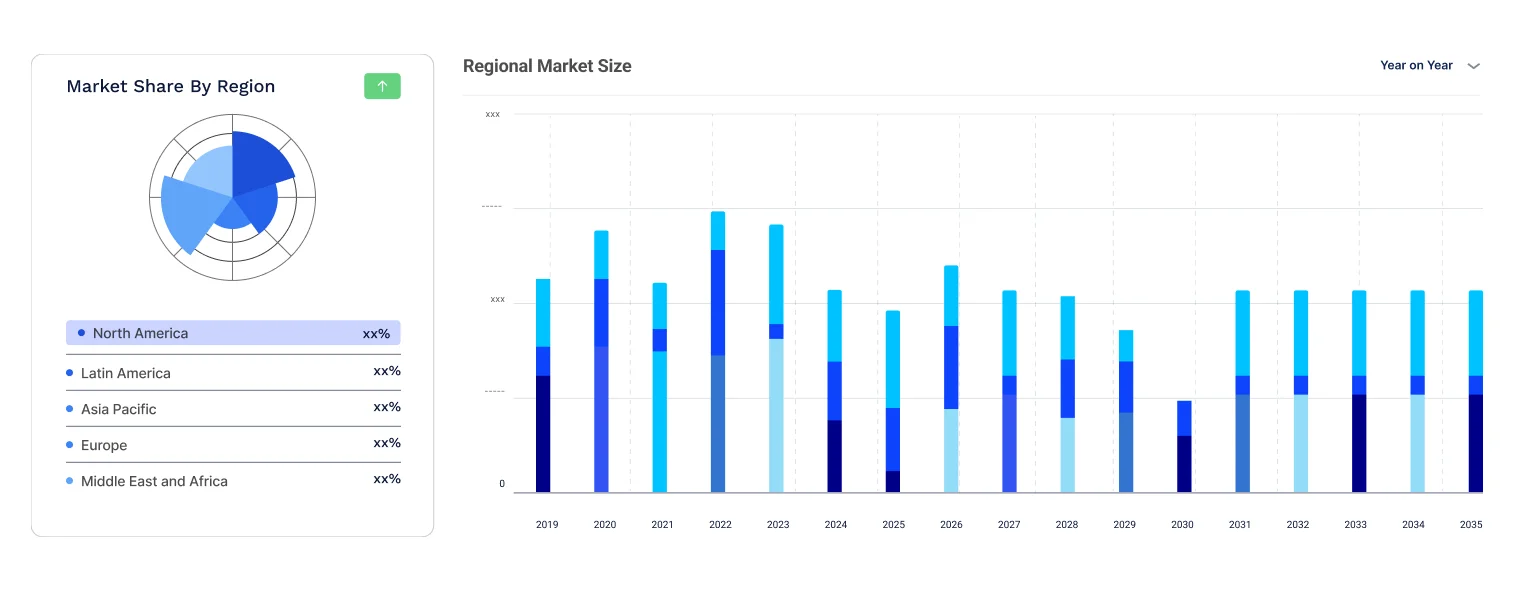
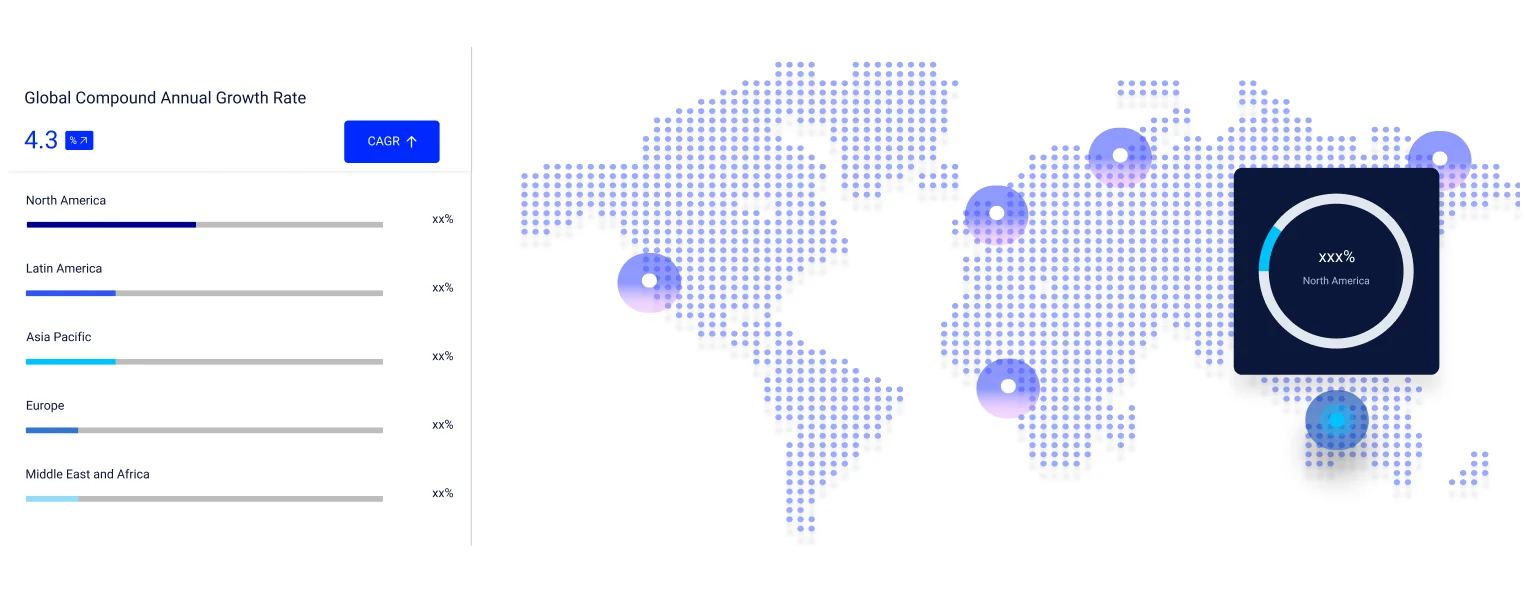
North America leads the market through established process industry infrastructure while Asia Pacific grows fastest on expanding industrial capacity
North America commands the largest share of the level transmitter market, supported by an established base of oil and gas, chemical and water infrastructure requiring continuous instrumentation upgrades and replacement across its long operating life. Manufacturers serving this region continue to benefit from deep, long-standing customer relationships built through decades of equipment supply and technical support, alongside a mature network of local calibration and service providers already familiar with the specific requirements of regional plants and their operators.
Asia Pacific is the fastest-growing regional level transmitter market as expanding chemical, water treatment and power generation infrastructure across the region's largest economies lifts equipment orders faster than in more mature markets. In January 2026, Hengyi Petrochemical announced the full launch of its Phase 2 expansion in Brunei, backed by a USD 13.6 billion investment package increasing total refining capacity to 20 million tonnes per year. Manufacturers entering the region are increasingly building local technical support rather than relying solely on instrumentation exported from established hubs.
The global industry is consolidating around broad instrumentation portfolios as leading level transmitter market companies invest in radar technology, regional service capability and AI driven diagnostics to defend accounts across oil and gas, chemicals and water infrastructure. Providers are prioritising measurement accuracy, regional support and product versatility to differentiate offerings in a segment where the underlying measurement principles are broadly comparable across suppliers. Deep, long-standing customer relationships remain a decisive advantage, since a multi-year instrumentation contract typically renews with the incumbent provider rather than being rebid to a competitor.
Major level transmitter market players are also competing on technology breadth, since a manufacturer's ability to offer radar, ultrasonic and differential pressure options from a single portfolio increasingly determines which supplier wins a customer requiring instrumentation across multiple process conditions. Opportunities are emerging in solids and interface measurement applications, in AI integrated diagnostic platforms, and in expanding local service capability across fast-growing Asia Pacific markets. Providers combining broad technology portfolios with defensible regional service networks are positioned to strengthen their standing as customers continue prioritising reliability and support over price alone.
Founded in 1890 and headquartered in St. Louis, Missouri, United States, the company supplies level, pressure and flow transmitters through its Rosemount brand within its automation solutions business, serving process industries worldwide. Its level measurement portfolio draws on decades of process instrumentation expertise, positioning Emerson among the largest established suppliers to the market.
Founded in 1847 and headquartered in Munich, Germany, the company supplies capacitive, radar and ultrasonic level transmitters under its SITRANS brand through its process instrumentation portfolio, serving oil and gas, chemical and water industry customers globally. Its level measurement offering draws on the company's broader industrial automation expertise, positioning Siemens among the largest established suppliers to the market.
Founded in 1988 and headquartered in Zurich, Switzerland, the company supplies level, pressure and flow instrumentation through its process automation business, serving process industries across more than 100 countries. Its level measurement offering draws on the company's broader electrification and automation expertise, positioning ABB among the largest established suppliers to the market.
Founded in 1915 and headquartered in Tokyo, Japan, the company supplies pressure, level and flow transmitters through its industrial automation business, serving process industries across more than 60 countries worldwide. Its instrumentation portfolio draws on more than a century of measurement and control engineering expertise, positioning Yokogawa among the established suppliers to the market.
Other key players in the market include Honeywell International Inc. and AMETEK Inc., among others.
*Please note that this is only a partial list; the complete list of key players is available in the full report. Additionally, the list of key players can be customized to better suit your needs.*
Unlock the latest insights with our level transmitter market trends 2026 report. Discover regional growth patterns, technology economics, and key industry players. Stay ahead of competition with trusted data and expert analysis. Download your free sample report today and drive informed decisions in the market.


Upto 15% Off
USD
$2499 $2249
$3999 $3599
$4999 $4249
$5999 $5099


*While we strive to always give you current and accurate information, the numbers depicted on the website are indicative and may differ from the actual numbers in the main report. At Expert Market Research, we aim to bring you the latest insights and trends in the market. Using our analyses and forecasts, stakeholders can understand the market dynamics, navigate challenges, and capitalize on opportunities to make data-driven strategic decisions.*
In 2025, the market reached an approximate value of USD 7.45 Billion.
The market is projected to grow at a CAGR of 6.60% between 2026 and 2035.
The market is estimated to witness a healthy growth in the forecast period of 2026-2035 to reach a value of USD 14.12 Billion by 2035.
The key drivers of the market are the rapid growth of the oil and gas sector, rising adoption of non-contact level transmitters, and rising technological advancements such as the use of IoT.
The key regional markets for level transmitter are North America, Europe, the Asia Pacific, Latin America, and the Middle East and Africa.
The market uses capacitive, ultrasonic, radar, differential pressure/hydrostatic, magnetostrictive, radiometric, and others.
The different types of level transmitters are contact, and non-contact.
The key players in the market include Emerson Electric Co., Siemens AG, ABB Ltd., Honeywell International Inc., Yokogawa Electric Corporation, and AMETEK Inc., among others.
Manufacturers face rising costs of developing AI integrated diagnostic capability, growing price competition from regional suppliers, the technical complexity of measurement in tanks with floating roofs, and lengthy qualification cycles for hazardous environment applications.
Expanding radar technology into solids and interface measurement, forming joint ventures to access complementary measurement technologies, embedding AI driven diagnostics into instrumentation platforms, and localising service and support capability across fast-growing regions.
Explore our key highlights of the report and gain a concise overview of key findings, trends, and actionable insights that will empower your strategic decisions.
| REPORT FEATURES | DETAILS |
| Base Year | 2025 |
| Historical Period | 2019-2025 |
| Forecast Period | 2026-2035 |
| Scope of the Report |
Historical and Forecast Trends, Industry Drivers and Constraints, Historical and Forecast Market Analysis by Segment:
|
| Breakup by Type |
|
| Breakup by Technology |
|
| Breakup by Industry |
|
| Breakup by Region |
|
| Market Dynamics |
|
| Competitive Landscape |
|
| Companies Covered |
|
Datasheet
One User
USD 2,499
USD 2,249
tax inclusive*
Single User License
One User
USD 3,999
USD 3,599
tax inclusive*
Five User License
Five User
USD 4,999
USD 4,249
tax inclusive*
Corporate License
Unlimited Users
USD 5,999
USD 5,099
tax inclusive*
*Please note that the prices mentioned below are starting prices for each bundle type. Kindly contact our team for further details.*
Flash Bundle
Small Business Bundle
Growth Bundle
Enterprise Bundle
*Please note that the prices mentioned below are starting prices for each bundle type. Kindly contact our team for further details.*
Flash Bundle
Number of Reports: 3
20%
tax inclusive*
Small Business Bundle
Number of Reports: 5
25%
tax inclusive*
Growth Bundle
Number of Reports: 8
30%
tax inclusive*
Enterprise Bundle
Number of Reports: 10
35%
tax inclusive*
How To Order

Select License Type
Choose the right license for your needs and access rights.

Click on ‘Buy Now’
Add the report to your cart with one click and proceed to register.

Select Mode of Payment
Choose a payment option for a secure checkout. You will be redirected accordingly.
Strategic Solutions for Informed Decision-Making
Gain insights to stay ahead and seize opportunities.

Get insights & trends for a competitive edge.

Track prices with detailed trend reports.

Analyse trade data for supply chain insights.

Leverage cost reports for smart savings

Enhance supply chain with partnerships.

Connect For More Information
Our expert team of analysts will offer full support and resolve any queries regarding the report, before and after the purchase.
Our expert team of analysts will offer full support and resolve any queries regarding the report, before and after the purchase.
We employ meticulous research methods, blending advanced analytics and expert insights to deliver accurate, actionable industry intelligence, staying ahead of competitors.
Our skilled analysts offer unparalleled competitive advantage with detailed insights on current and emerging markets, ensuring your strategic edge.
We offer an in-depth yet simplified presentation of industry insights and analysis to meet your specific requirements effectively.




