

Consumer Insights
Uncover trends and behaviors shaping consumer choices today
Procurement Insights
Optimize your sourcing strategy with key market data
Industry Stats
Stay ahead with the latest trends and market analysis.
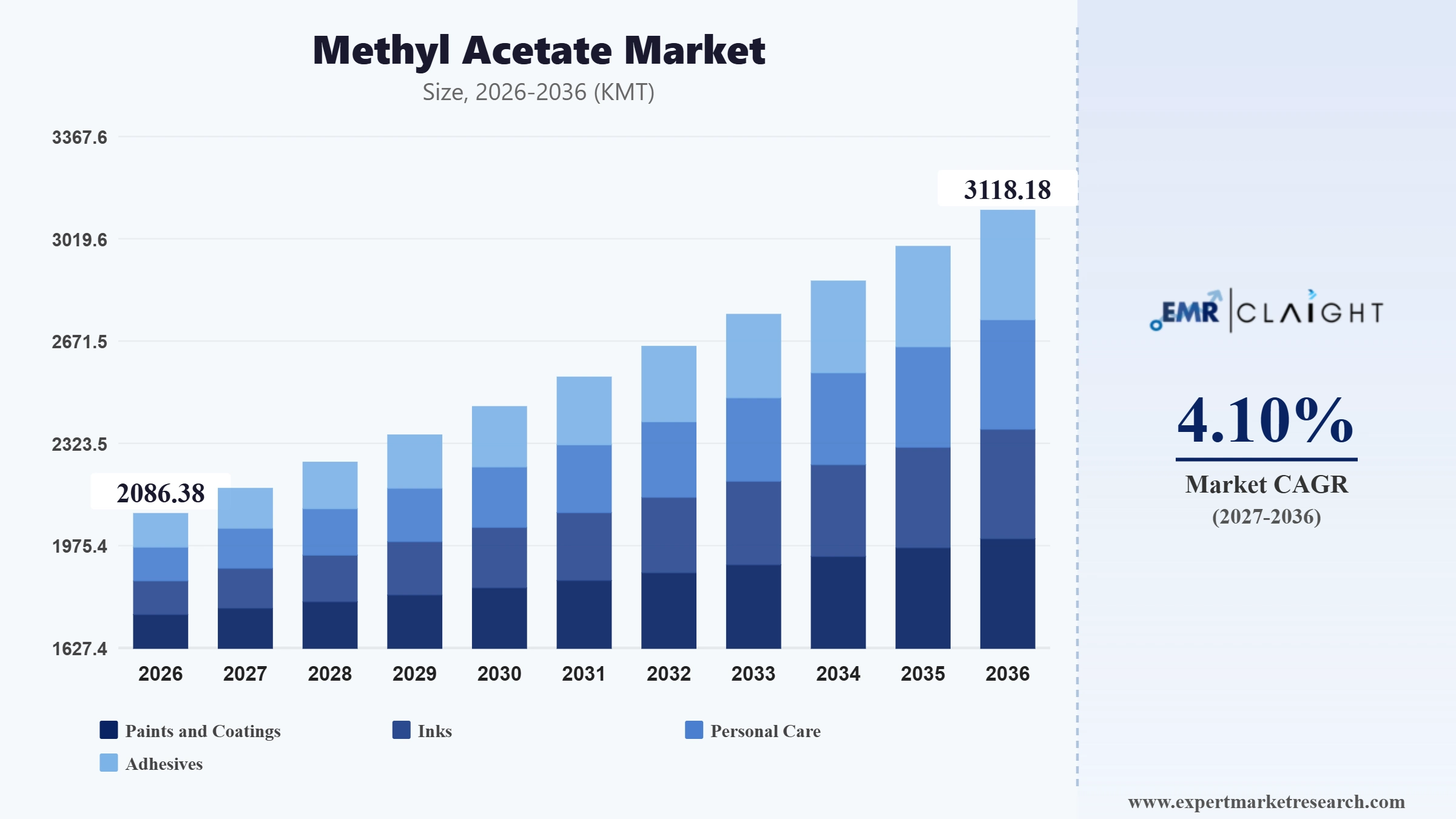
The global methyl acetate market attained a volume of 2004.21 KMT in 2025 and is projected to expand at a CAGR of 4.10% through 2035. The market is further expected to achieve 2995.37 KMT by 2035, driven by demand for low-toxicity, VOC-exempt solvents in paints and coatings, inks, personal care products and adhesives, alongside growth in packaging and flexographic printing.
Solvent pricing is a useful gauge of the ester and acetyl chain to which methyl acetate belongs. Eastman announced in April 2026 an off-list increase of USD 0.20 per pound on Eastman Isopropyl Acetate and Eastman 2-Ethylhexyl Acetate, effective in April 2026 or as contracts allow. Increases of this kind show suppliers passing higher input costs through to coatings, ink and adhesive formulators, and they push buyers to compare solvent options on total formulation cost, including regulatory treatment, odor, drying speed and handling requirements in every region where they sell.
Polymer suppliers are also adjusting prices. WACKER announced a significant price increase for polymer dispersions, resins and dispersible polymer powders, effective April 2026, citing higher costs for oil, natural gas, raw materials and logistics after the conflict in the Middle East, with the increase applying mainly to products made at its sites in Europe and Asia. These materials go into paints, coatings and adhesives, so cost pressure on binders reaches the same customers that buy solvents, and it sharpens their focus on formulation efficiency and supply security.
Consolidation is reshaping the coatings customer base. AkzoNobel's July 2026 interim report said the U.S. Securities and Exchange Commission declared the registration statement for its all-stock combination with Axalta effective in June 2026, with Axalta shareholders set to receive 0.6539 AkzoNobel shares per share, pro forma ownership of about 55% and 45%, and closing expected around the end of 2026 or soon after, and a termination fee of EUR 150 million applying if either party withdraws. Larger coatings groups concentrate solvent purchasing, which raises the importance of consistent quality, regional supply and compliant, low-emission products.
Get a sample of the market report in PDF – REQUEST A FREE SAMPLE
| Indicator | Value |
| Market Volume (2025) | 2004.21 KMT |
| Projected Volume (2035) | 2995.37 KMT |
| CAGR (2026-2035) | 4.10% |
| Base Year | 2025 |
| Historical Period | 2019-2025 |
| Forecast Period | 2026-2035 |
| Dominant End-Use Segment | Paints and Coatings |
| Dominant Region (Production) | Asia Pacific |
Celanese Corporation reported in August 2026 net sales of USD 2,752 million for the quarter ended June 2026, with Acetyl Chain sales of USD 1,329 million, up 28% from the prior quarter on 6% higher volume and 22% higher pricing. It reported progress toward closing its acetate tow facility in Lanaken, Belgium. Companies can leverage pricing and margin capture across the acetyl chain to protect earnings when feedstock costs move.
BASF SE raised its 2026 outlook in July 2026, expecting EBITDA before special items of EUR 6.9 billion to EUR 7.7 billion, after sales of EUR 17.2 billion in the quarter ended June 2026, with prices up 11.5% and volumes up 7.3%. Its Chemicals and Materials segments reported significantly higher earnings. Companies can leverage price recovery and disciplined contribution margins to lift earnings while some customer industries remain uneven.
Arkema reported in July 2026 EBITDA of EUR 391 million for the quarter ended June 2026, up 7.4%, and credited its Adhesive Solutions segment, helped by growth in industrial applications, for much of the improvement despite Middle East disruption and rising raw material prices. It expects further year-on-year growth in Adhesive Solutions for the rest of 2026. Companies can leverage industrial adhesive demand to offset softness in other applications.
H.B. Fuller reported in June 2026 net revenue of USD 950.3 million for the quarter ended May 2026, up 5.8%, with organic revenue up 2.6% and adjusted EBITDA of USD 181.0 million, a margin of 19.1%. Building Adhesive Solutions grew organically by 6.2%, while Engineering Adhesives declined 1.0%. Companies can leverage building and consumable adhesive demand to offset softer engineering applications and keep margins rising.
Celanese Corporation reported in May 2026 Acetyl Chain net sales of USD 1,036 million for the quarter ended March 2026, up 10% from the prior quarter on 8% higher volume, with late-quarter pricing and volume gains mainly in China. Higher feedstock costs and softness in acetate tow partly offset the gains, and the company restarted its Frankfurt vinyl acetate monomer unit ahead of schedule. Companies can leverage regional pricing actions to recover feedstock costs.
Eastman announced in April 2026 price increases of USD 0.06 per pound on Eastman Acetic Anhydride and USD 0.05 per pound on Eastman Glacial Acetic Acid in North America and Latin America, effective May 2026 or as contracts allow. Acetic acid is a core input for acetate solvents, so a rise in its price signals firmer costs along the chain. Companies can leverage early price notices to plan procurement and contract terms.
Wacker Chemie AG reported in July 2026 Polymers division sales of EUR 406 million for the quarter ended June 2026, up 12% from EUR 363 million, with division EBITDA of EUR 69 million, up 74%, helped by its PACE cost-savings program and partly higher prices. The company said demand from customer industries such as automotive and construction remained weak. Companies can leverage cost programs to protect earnings while construction-linked demand stays subdued.
IOL Chemicals and Pharmaceuticals Limited reported in August 2026 revenue from operations of INR 756.3 crore for the quarter ended June 2026, up 37.1%, with profit after tax of INR 64.5 crore, up 89.9%. Non-ibuprofen APIs made up 43% of pharma revenue against 36% a year earlier, and exports were 28.5% of total revenue. Companies can leverage a broader product mix to reduce dependence on any single molecule.
This Expert Market Research Report titled "Global Methyl Acetate Market Report and Forecast 2026-2035" offers a detailed analysis of the market based on the following segments:
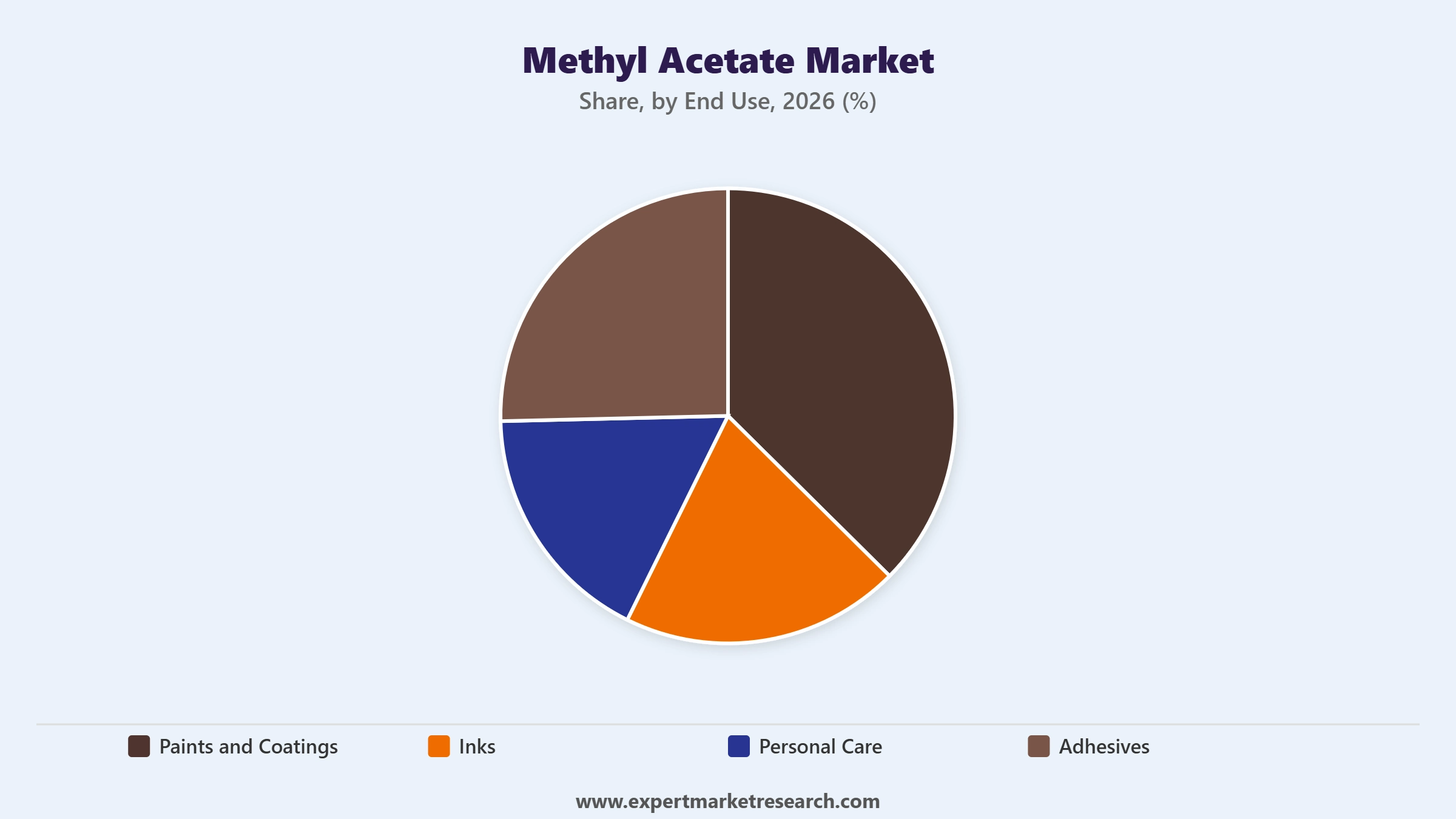
Market Breakup by End Use
Key Insight: Paints and Coatings is the largest end use, with Sherwin-Williams reporting in July 2026 net sales of USD 6,789.3 million for the quarter ended June 2026, up 7.5%, and announcing an 8% price increase for its Paint Stores Group effective September 2026; Inks is tied to packaging printing, where Celanese and Siegwerk announced in July 2026 a collaboration on printing inks using ethyl acetate with 50% bio-based content; Personal Care benefits from skin care ingredient capacity, with BASF inaugurating in July 2026 a new plant in Düsseldorf, Germany, for specialty emollients based on renewable raw materials, mainly for skin care and sun protection products; Adhesives is supported by industrial and packaging demand, with Henkel reporting in August 2026 organic sales growth of 4.5% in Adhesive Technologies for the six months ended June 2026; and Others covers pharmaceutical and general chemical processing, where IOL Chemicals and Pharmaceuticals Limited said in May 2026 that it plans capacity enhancements in ethyl acetate and acetic anhydride, after revenue from operations of INR 2,319.1 crore for the year ended March 2026.
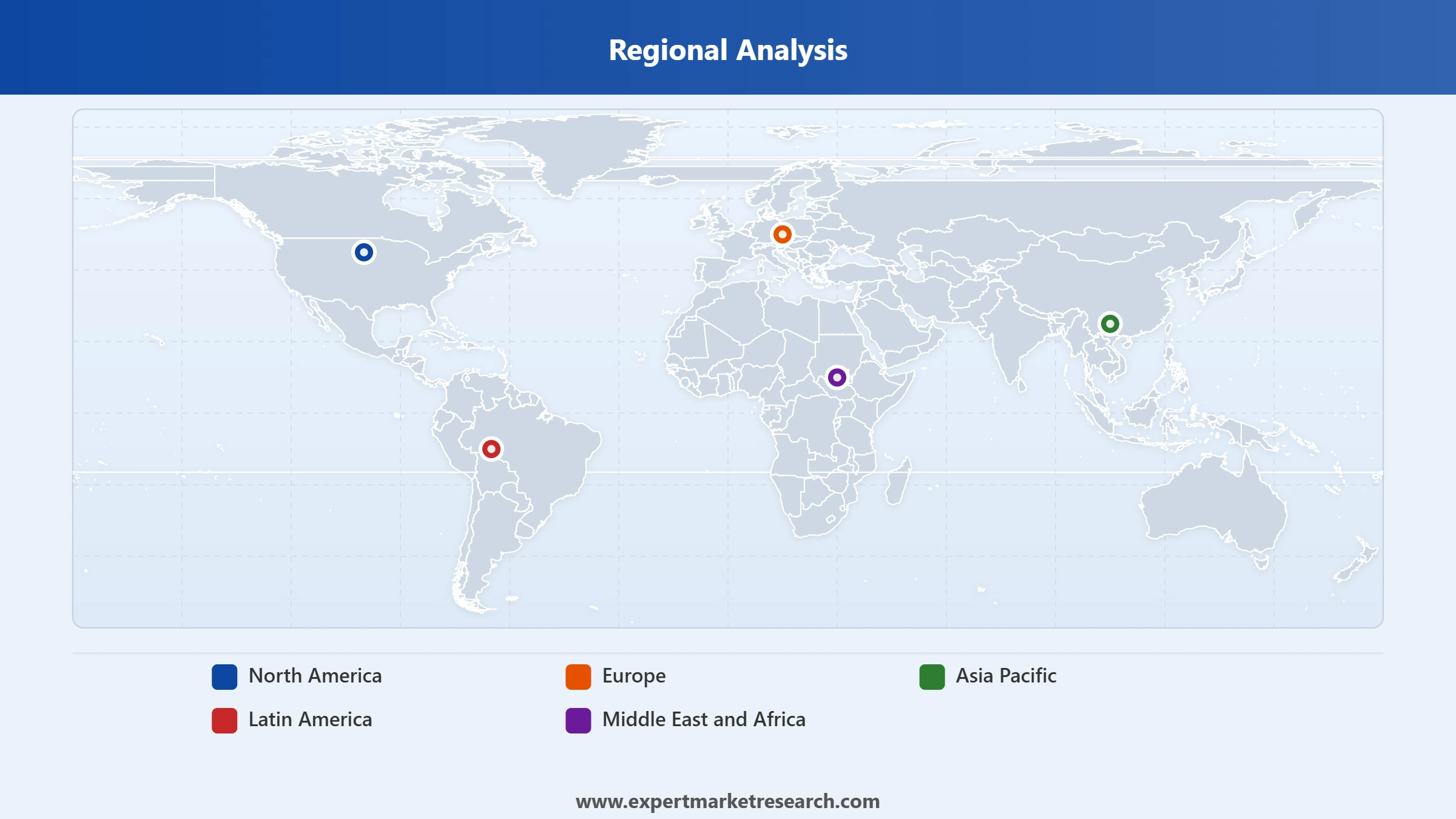
Market Breakup by Region
Key Insight: North America is anchored by solvent and coatings demand, with Eastman announcing in September 2026 increases of USD 0.04 per pound on urethane-grade ethyl acetate and on glacial acetic acid for North America and Latin America, effective October 2026 or as contracts allow; Europe is softer, with AkzoNobel reporting in July 2026 that Decorative Paints EMEA organic sales fell 3% in the quarter ended June 2026 as volumes dropped, mainly in DIY Western Europe; Asia Pacific is the fastest-growing region, with Berger Paints of India reporting in August 2026 revenue growth of 12% to INR 3,584 crore for the quarter ended June 2026; Latin America is firm, with PPG reporting in July 2026 mid-single-digit organic growth in architectural coatings across Latin America and Asia Pacific, driven by Latin American volume growth and strong Mexico retail; and the Middle East and Africa is adding feedstock capacity, with the Ministry of Energy approving in September 2026 the feedstock allocation for a 1.8 million tonne per year methanol plant in Jubail, Saudi Arabia, planned by SABIC subsidiary Saudi Methanol Company (AR-RAZI), with the final investment decision still pending; methanol is a core feedstock for the acetyl chain.
Get a sample of the market report in PDF – REQUEST A FREE SAMPLE
By End Use, Paints and Coatings leads the market while Personal Care gains momentum because paints and coatings use methyl acetate as a VOC-exempt solvent at scale, while personal care demand is accelerating on rising disposable incomes
Paints and Coatings leads because formulators in decorative, protective and industrial finishes use methyl acetate as a low-toxicity, VOC-exempt solvent in volume. Jotun announced in February 2026 an AED 450 million paint production facility in the KEZAD Musaffah area of Abu Dhabi, replacing its existing 22,000 square meter site with a larger one of about 83,000 square meters and creating about 200 jobs. Capacity of this kind keeps regional coatings producers supplied and supports steady, repeat solvent orders for suppliers.
Get a sample of the market report in PDF – REQUEST A FREE SAMPLE
Personal Care gains momentum as consumers shift toward dermatological and everyday care. BASF and NEO Corporate, a Thai consumer goods company, announced in August 2026 a strategic partnership to jointly develop personal care formulations, ingredient technologies and trend-driven product concepts, with BASF contributing ingredient and formulation science and NEO Corporate its knowledge of consumer preferences. Partnerships of this kind keep demand for cosmetic ingredients and compatible solvents moving and give suppliers earlier sight of changing formulation trends across many regions.
Asia Pacific is the largest and fastest-growing regional market for methyl acetate, accounting for roughly 55% of global output, shaped by dense paints, coatings, ink and adhesive manufacturing and rising personal care demand
This is supported by Eastman, which announced in February 2026 an increase of USD 0.02 per pound on isobutyl acetate for Asia Pacific, effective March 2026 or as contracts allow. Notices of this kind show how solvent costs reach coatings, ink and adhesive makers in the region, where dense downstream manufacturing keeps buyers sensitive to ester pricing and dependent on steady supply from both regional and imported producers, which also shapes how local formulators plan inventory and supply contracts.
Get a sample of the market report in PDF – REQUEST A FREE SAMPLE
Asia Pacific is also the main source of growth elsewhere in the chain, as Arkema said in May 2026 that Asia drove growth in the quarter ended March 2026, with Adhesive Solutions volumes up 0.4% on strong Asian growth, while demand in Europe and the United States remained soft. Latin America is an emerging consumption market led by Brazil and Mexico, and the Middle East and Africa has emerging demand with limited indigenous production, which keeps both regions reliant on outside supply.
The global methyl acetate market is fragmented, with a handful of integrated acetyl and solvent producers operating alongside many regional chemical makers and traders, particularly in Asia Pacific.
Competition is shaped by access to methanol and acetic acid feedstock, the regulatory treatment of methyl acetate as a VOC-exempt solvent, production close to coatings, ink and adhesive customers, and the ability to pass raw material cost swings through to buyers.
Celanese Corporation is a global specialty materials and chemical company with 2025 net sales of USD 9.5 billion and about 11,000 employees worldwide. In June 2026 it announced the closure of its Engineered Materials compounding facility in Ulsan, South Korea, moving production to plants in Nanjing and Shenzhen in China and Silvassa in India to lower costs and bring supply closer to growing Asian demand.
Eastman Chemical Co. reports through four segments: Advanced Materials, Additives & Functional Products, Fibers and Chemical Intermediates. In July 2026 it reported sales revenue of USD 2,513 million for the quarter ended June 2026, up 10%, with Chemical Intermediates sales up 39% on olefins and derivatives amid supply disruptions, while Fibers sales fell 11% on acetate tow destocking and weak textiles demand.
Wacker Chemie AG operates a Polymers division, which in April 2026 reported sales of EUR 333 million for the quarter ended March 2026, down 8% on weak construction activity in China and Europe. Division EBITDA rose 33% to EUR 50 million on lower operating costs and customer orders pulled forward, and management said demand in many customer industries remained weak.
BASF SE completed the sale of its Coatings business to Carlyle in June 2026 at an enterprise value of EUR 7.7 billion, receiving a pre-tax cash inflow of about EUR 5.8 billion at closing and keeping a 40% stake in the new company, Surventis. The business covered automotive OEM coatings, automotive refinish coatings and surface technology.
Other key players in the methyl acetate market include Haihang Industry Co., Ltd, Kishida Chemical Co. Ltd, Chang Chun Group, Vizag Chemical, Henan GP Chemicals Co.,Ltd, and IOL Chemicals and Pharmaceuticals Limited, among others.
*Please note that this is only a partial list; the complete list of key players is available in the full report. Additionally, the list of key players can be customized to better suit your needs.*
For a detailed assessment of opportunities across the methyl acetate market's end use and regional segments through 2026 and beyond, connect with Expert Market Research for a customized consultation.


Upto 15% Off
USD
$2499 $2249
$3999 $3599
$4999 $4249
$5999 $5099


*While we strive to always give you current and accurate information, the numbers depicted on the website are indicative and may differ from the actual numbers in the main report. At Expert Market Research, we aim to bring you the latest insights and trends in the market. Using our analyses and forecasts, stakeholders can understand the market dynamics, navigate challenges, and capitalize on opportunities to make data-driven strategic decisions.*
The global methyl acetate market attained a volume of 2004.21 KMT in 2025.
The methyl acetate market is projected to grow at a CAGR of 4.10% from 2026 to 2035.
Methyl acetate is primarily used in paints and coatings, inks (particularly flexographic printing inks), personal care products, adhesives and sealants, and as a chemical intermediate. It also finds application in pharmaceutical processing and electronic cleaning.
Methyl acetate is classified as VOC-exempt by the U.S. EPA due to its negligible photochemical reactivity. It is also a non-HAP (non-Hazardous Air Pollutant) and non-ODS (non-Ozone Depleting Substance) solvent, and it is readily biodegradable. These characteristics make it an environmentally friendly alternative to traditional industrial solvents.
Asia Pacific dominates the global methyl acetate market, accounting for approximately global production and consumption. China is the primary production hub, followed by significant demand contributions from India, Japan, and ASEAN economies.
Key strategies include pass-through pricing on acetyl and ester products, regional footprint changes that bring supply closer to customers, bio-based and lower-emission solvent offerings, and portfolio moves that focus capital on higher-growth businesses.
Key players in the methyl acetate market include Celanese Corporation, Eastman Chemical Co., Wacker Chemie AG, Haihang Industry Co., Ltd, BASF SE, Kishida Chemical Co. Ltd, Chang Chun Group, Vizag Chemical, Henan GP Chemicals Co.,Ltd, and IOL Chemicals and Pharmaceuticals Limited.
The Expert Market Research report covers a forecast period of 2026 and 2035, with historical data from 2019 to 2035, where 2025 is considered the base year.
Methyl acetate enhances coating performance through its fast evaporation rate, low moisture-attraction tendency, and excellent film-formation properties. It extends coating shelf life, minimises product waste, and reduces the possibility of visual imperfections and defects in coatings applied under humid conditions.
Regulatory compliance is a significant demand driver. The U.S. EPA’s VOC-exempt designation under the Clean Air Act, ECHA’s REACH framework in Europe, and tightening air quality standards across Asia Pacific have incentivised manufacturers to adopt methyl acetate as a compliant solvent alternative, particularly in paints, coatings, adhesives, and cleaning product formulations.
Key challenges include volatility in methanol and acetic acid feedstock costs, competition from other solvents in coatings, ink and adhesive formulations, uneven construction and consumer demand across regions, and the need to maintain consistent quality and reliable supply to formulators.
Explore our key highlights of the report and gain a concise overview of key findings, trends, and actionable insights that will empower your strategic decisions.
| REPORT FEATURES | DETAILS |
| Base Year | 2025 |
| Historical Period | 2019-2025 |
| Forecast Period | 2026-2035 |
| Scope of the Report |
Historical and Forecast Trends, Industry Drivers and Constraints, Historical and Forecast Market Analysis by Segment:
|
| Breakup by End Use |
|
| Breakup by Region |
|
| Market Dynamics |
|
| Competitive Landscape |
|
| Companies Covered |
|
| Report Price and Purchase Option | Explore our purchase options that are best suited to your resources and industry needs. |
| Delivery Format | Delivered as an attached PDF and Excel through email, with an option of receiving an editable PPT, according to the purchase option. |
Datasheet
One User
USD 2,499
USD 2,249
tax inclusive*
Single User License
One User
USD 3,999
USD 3,599
tax inclusive*
Five User License
Five User
USD 4,999
USD 4,249
tax inclusive*
Corporate License
Unlimited Users
USD 5,999
USD 5,099
tax inclusive*
*Please note that the prices mentioned below are starting prices for each bundle type. Kindly contact our team for further details.*
Flash Bundle
Small Business Bundle
Growth Bundle
Enterprise Bundle
*Please note that the prices mentioned below are starting prices for each bundle type. Kindly contact our team for further details.*
Flash Bundle
Number of Reports: 3
20%
tax inclusive*
Small Business Bundle
Number of Reports: 5
25%
tax inclusive*
Growth Bundle
Number of Reports: 8
30%
tax inclusive*
Enterprise Bundle
Number of Reports: 10
35%
tax inclusive*
How To Order

Select License Type
Choose the right license for your needs and access rights.

Click on ‘Buy Now’
Add the report to your cart with one click and proceed to register.

Select Mode of Payment
Choose a payment option for a secure checkout. You will be redirected accordingly.
Strategic Solutions for Informed Decision-Making
Gain insights to stay ahead and seize opportunities.

Get insights & trends for a competitive edge.

Track prices with detailed trend reports.

Analyse trade data for supply chain insights.

Leverage cost reports for smart savings

Enhance supply chain with partnerships.

Connect For More Information
Our expert team of analysts will offer full support and resolve any queries regarding the report, before and after the purchase.
Our expert team of analysts will offer full support and resolve any queries regarding the report, before and after the purchase.
We employ meticulous research methods, blending advanced analytics and expert insights to deliver accurate, actionable industry intelligence, staying ahead of competitors.
Our skilled analysts offer unparalleled competitive advantage with detailed insights on current and emerging markets, ensuring your strategic edge.
We offer an in-depth yet simplified presentation of industry insights and analysis to meet your specific requirements effectively.




