

Consumer Insights
Uncover trends and behaviors shaping consumer choices today
Procurement Insights
Optimize your sourcing strategy with key market data
Industry Stats
Stay ahead with the latest trends and market analysis.
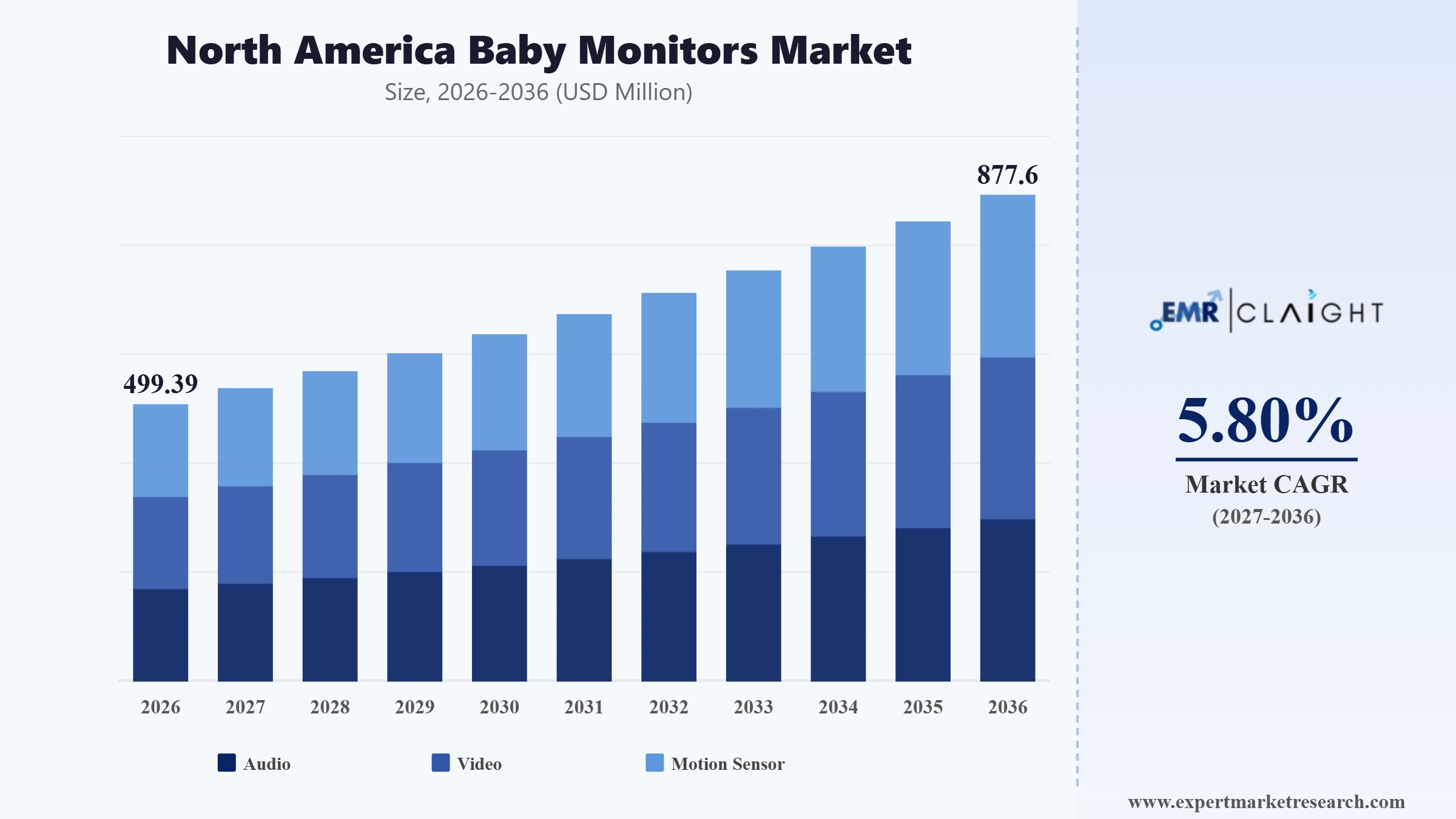
The North America baby monitors market attained a value of USD 472.01 Million in 2025 and is projected to expand at a CAGR of 5.80% through 2035. The market is further expected to achieve USD 829.48 Million by 2035. AI-powered infant monitoring is emerging as a significant innovation in the North America baby monitors market, with manufacturers adding computer vision, sleep analytics, and contextual detection to connected cameras. Owlet reported more than 110,000 paying subscribers for its Owlet360 platform and US$3.2 million in subscription revenue in Q2 2026, up from US$0.9 million in Q2 2025. The company is also developing AI and computer vision capabilities for its camera products.
The migration from passive observation toward actionable monitoring is a prominent factor boosting the market growth. Parents and caregivers increasingly expect devices to interpret crying, movement, sleep, temperature, and breathing rather than simply transmit sound or video. This is encouraging manufacturers to integrate AI-enabled detection and software analytics into premium product lines.
The professionalization of privacy and cybersecurity is another factor propelling the demand. NIST’s April 2026 revision of IoT manufacturer guidance explicitly expands cybersecurity considerations across the product lifecycle, while Canadian consumer guidance recommends strong passwords, security updates, controlled information sharing, and consideration of offline functionality for connected devices. These requirements create commercial differentiation opportunities for vendors that can demonstrate secure architecture, encrypted communications, transparent data policies, and dependable offline functionality rather than competing solely on camera resolution or price, thereby boosting the North America baby monitors market value.
Contactless vital sign measurement is becoming a separate innovation for baby monitoring in North America. In May 2026, Momcozy introduced its BM08 for $249.99, making use of mmWave radar for measuring breathing and heartbeat parameters of the baby in a contactless manner without the use of any wearables, sensor pads, or physical touch. It is capable of identifying small movements of the baby’s chest and abdomen even when the baby is out of the view of the camera.
Privacy issues and cybersecurity threats pose a major constraint on the North America baby monitors market due to the transmission of highly sensitive nursery audio and video via wireless networking and cloud computing. This exposes users to risks of being subject to unauthorised access and interception of their data or account hacking. In this regard, vendors have the task of ensuring robust encryption, authentication, firmware security, and privacy measures, thereby restricting the North America baby monitors market developments.
Read more about this report - Request a Free Sample
Momcozy launched the BM08 Smart Baby Monitor with millimetre-wave radar technology for contact-free monitoring of infant breathing and heart dynamics. The device was introduced at a US$249.99 price point and removes the need for wearable sensors or sensor pads. The launch represents a move toward non-contact physiological monitoring and gives manufacturers a new product architecture beyond conventional camera-based monitoring.
VTech announced the rollout of a new AI-enabled baby monitor in May 2026, initially introduced in Australia, with plans for global market availability during the calendar year. The development forms part of VTech’s broader product innovation programme and demonstrates the company’s move toward AI-supported monitoring rather than conventional audio-video transmission alone. VTech also maintained its No. 1 baby-monitor brand position in the United States and Canada during FY2026.
Nanit released its first Nanit Lab Sleep Index, analysing infant sleep patterns across U.S. states using data from more than 100,000 users with babies up to eight months old. The initiative demonstrates how baby-monitor platforms are extending beyond real-time viewing into population-level sleep analytics. The development strengthens the role of monitoring data as a value-added feature within connected nursery products and services, thus boosting the trends of the North America baby monitors market.
The National Advertising Division (NAD) reviewed advertising claims made by Nanit following a challenge from Owlet and recommended that Nanit discontinue its “#1 smart baby monitor” and “#1 baby monitor” claims. The February 2026 decision highlights the increasingly competitive positioning of smart-monitor brands in North America, where product differentiation increasingly depends on measurable technology capabilities and substantiated performance claims.
Baby-monitor manufacturers are increasingly combining camera-based nursery observation with wearable infant sensors, creating a more comprehensive monitoring proposition. Rather than relying solely on visual information, these systems can incorporate data from a wearable placed on the infant and present it alongside camera footage. The Dream Sock and camera offerings of Owlet’s product line are examples of such convergence, while the company’s Q2 2026 earnings report revealed that it has more than 110,000 subscribers to its Owlet360 monitoring system. This development is especially important in relation to premium products since it makes the monitor a part of an infant monitoring system rather than just a nursery camera.
Privacy is becoming a feature that is used to differentiate products because manufacturers are looking for ways to avoid the constant uploading of nursery videos into an off-site cloud environment. The new architectures of monitoring systems are putting more stress on video storage on the local device, encryption, security, and the processing done locally rather than remotely. This positioning makes sense especially in North America where parents buy connected cameras need to consider both accessibility and privacy. Rather than treating cybersecurity solely as a compliance requirement, manufacturers can use local processing and privacy-focused architecture as product differentiators, particularly for parents who want advanced monitoring functionality without extensive dependence on third-party cloud storage.
One of the emerging trends in product development is the transition from one camera nursery monitor to multi-camera monitors for families who have more than one child. The manufacturers are producing systems that enable the connection of extra cameras to one parent monitor or mobile app instead of having a complete monitoring system purchased separately. This is especially important as children are transitioning from their nurseries into rooms where they share bedrooms or have different sleeping spaces. The trend also encourages manufacturers to sell additional camera units as accessories, extending the revenue opportunity after the initial monitor purchase while allowing the same monitoring platform to remain in use as household requirements change.
Greater emphasis is being placed on portable monitoring hardware that can move between bedrooms, travel locations, and temporary sleeping arrangements. Battery-powered parent units, rechargeable cameras, flexible mounting systems, and compact designs are increasingly relevant to North American families travelling with infants or using monitors across multiple rooms. This is creating differentiation around practical installation rather than simply adding more digital features. Products designed for portability can also address situations where Wi-Fi infrastructure is unavailable or unreliable, particularly during travel. Manufacturers are therefore increasingly treating battery endurance, mounting flexibility, lightweight hardware, and rapid setup as meaningful elements of baby-monitor product development.
Baby monitors are now integrating the ability to sense the environment within the nursery room, especially through the incorporation of temperature and humidity sensing capabilities in the monitor itself or in its peripheral devices. Parents are no longer required to purchase separate nursery environmental sensors since they can check on the environmental conditions together with the video streaming of the baby. The trend is also encouraging manufacturers to develop complementary accessories such as dedicated environmental sensors and smart nursery devices. Consequently, environmental monitoring is becoming a mechanism for extending the functionality of baby-monitor platforms beyond observation of the infant and toward continuous management of the broader sleeping environment.
The Expert Market Research’s report titled "North America Baby Monitors Market Report and Forecast 2026-2035” offers a detailed analysis of the market based on the following segments:
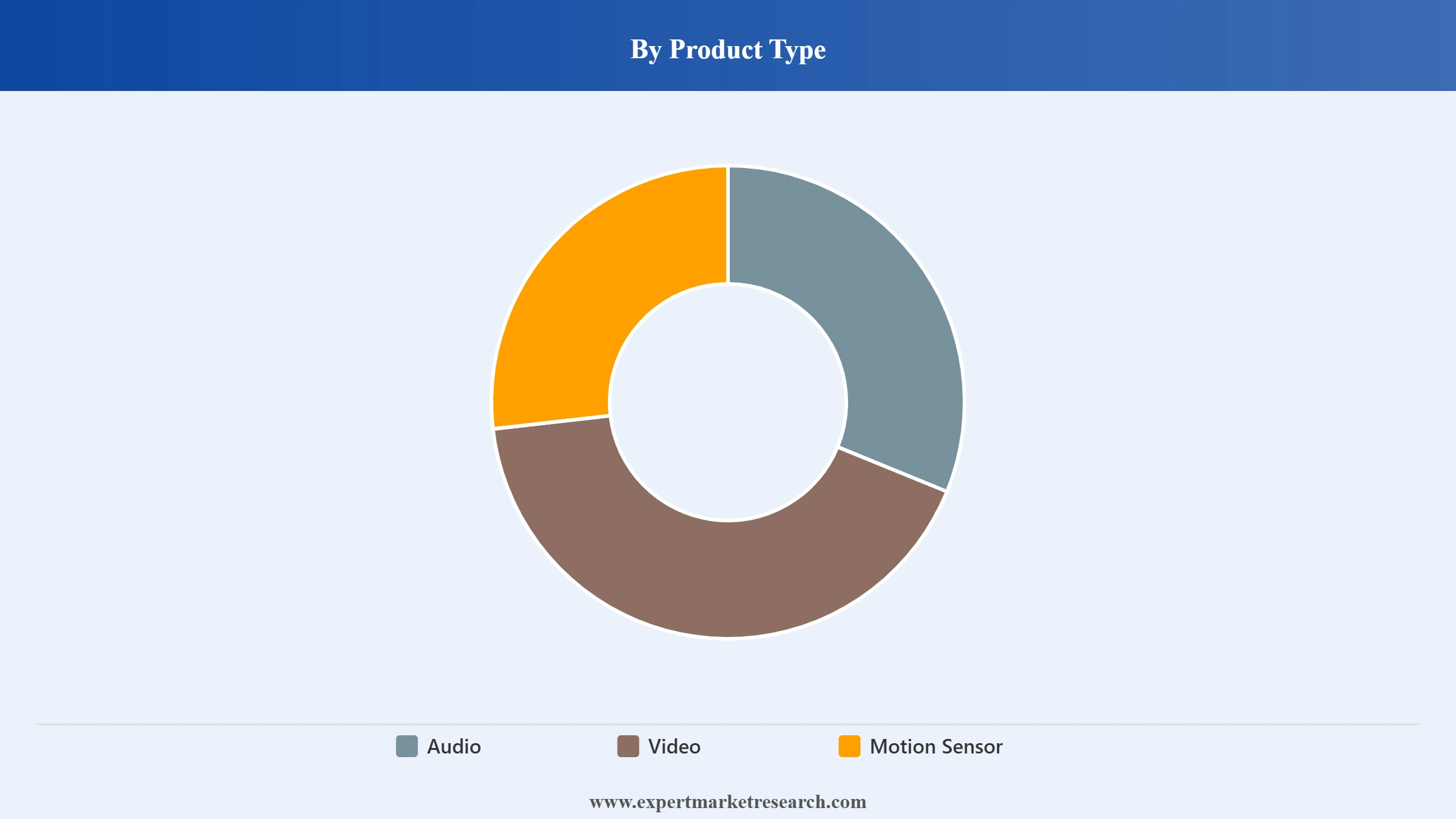
Market Breakup by Product Type
Key Insight: Product development is increasingly creating hybrid architectures rather than strictly isolated product categories. The audio technology is still very useful in cases where customers seek something simple to use, with minimal power consumption, and reliable communication. However, video technology is gradually being adopted as the standard technology that helps in visual identification, remote access, night vision, and interaction among several caregivers. Motion sensing is another kind of intelligence technology, especially when there is a combination of movement sensing with sleep analysis or breath analysis. Miku, for example, markets contact-free monitoring that analyzes breathing and sleep patterns without requiring a wearable device. For B2B suppliers, the opportunity lies in bundling video, audio, environmental sensing, and motion analytics into tiered product portfolios, thus boosting the North America baby monitors market growth.
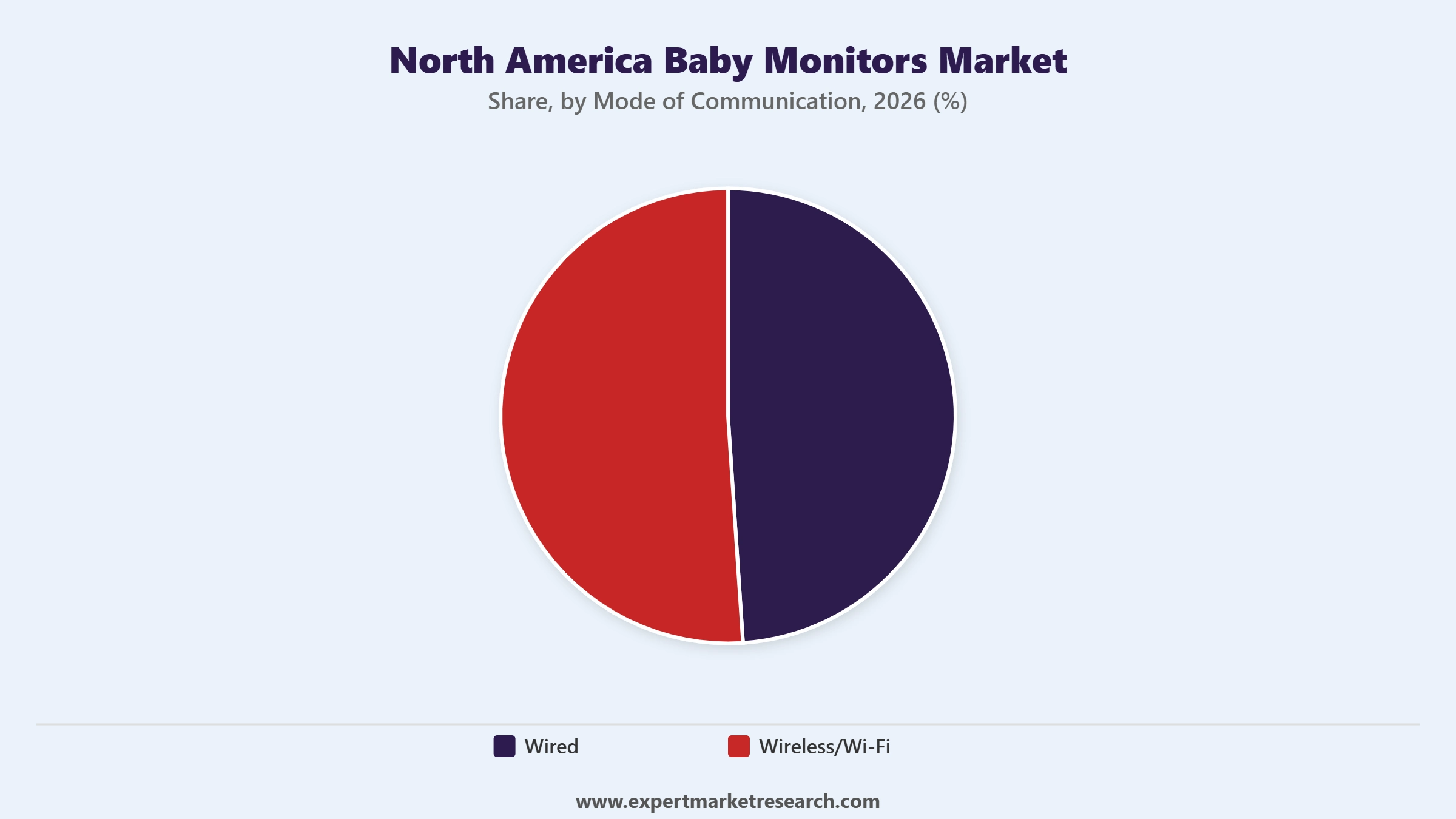
Market Breakup by Mode of Communication
Key Insight: Wi-Fi communication is becoming popular as it allows smartphone connections, remote monitoring, software upgrades, caregiver sharing, and integration with other connected home devices. However, the importance of wired or direct-signal system cannot be underestimated because it minimizes the reliance on broadband Internet and cloud services. For instance, Infant Optics promotes their no-Wi-Fi approach based on direct signal transmission. The commercial implication is a two-track market: connected products can command higher value through software and remote services, while local-signal systems can compete through privacy, reliability, and simplicity. Manufacturers can address both segments through differentiated hardware platforms rather than forcing one connectivity model across all customers.
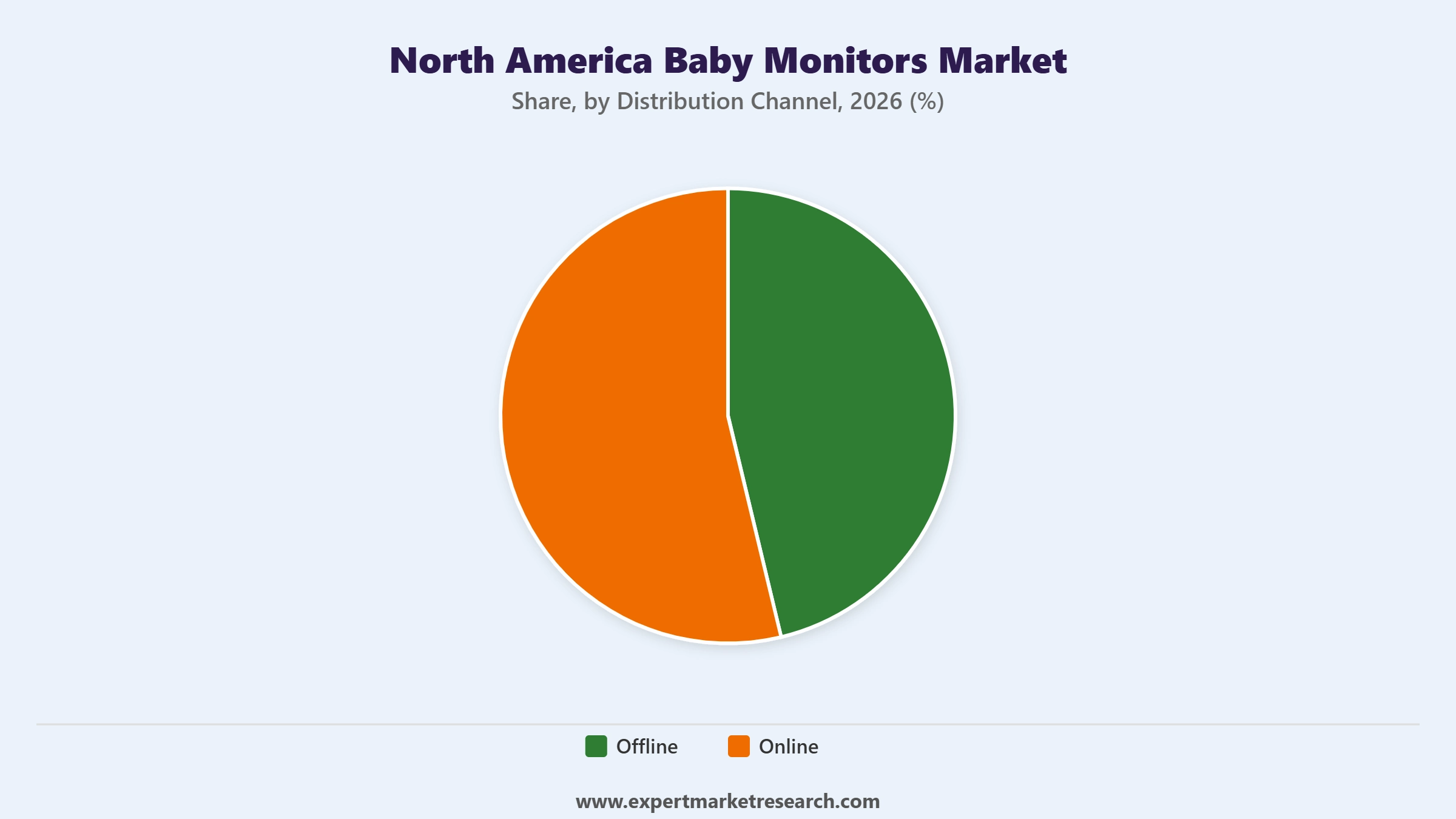
Market Breakup by Distribution Channel
Key Insight: Online distribution is gaining strategic importance because baby monitors are specification-heavy products that benefit from side-by-side comparison, customer reviews, video demonstrations, subscription explanations, and detailed technical documentation. U.S. e-commerce represented 17.1% of total retail sales in Q2 2026, while Canadian e-commerce sales reached $5.025 billion in May 2026. Offline channels nevertheless remain important for products where buyers want physical demonstrations, immediate purchase, installation assistance, or retailer reassurance. B2B suppliers can combine both channels by using physical stores for product education and online platforms for replenishment, accessory sales, software subscriptions, and replacement purchases.
Market Breakup by Country
Key Insight: The United States represents the core revenue market for baby monitors in North America, supported by a larger addressable infant population, widespread adoption of connected-home devices, and mature e-commerce and specialty retail channels. Demand is increasingly concentrated around Wi-Fi video monitors, app-enabled remote viewing, night vision, two-way communication, sleep tracking, and AI-assisted alerts. Canada, although smaller in volume, offers opportunities for connected monitors positioned around privacy, secure data handling, bilingual customer support, and integration with smart-home ecosystems. Manufacturers can therefore prioritise feature-rich, subscription-supported products and broad omnichannel distribution in the United States, while adapting product communication, privacy positioning, and retail partnerships for Canadian consumers.
By product type, video is anticipated to dominate through comprehensive visual and connected monitoring capabilities
Video is positioned as the dominant product category because it combines visual verification with functions increasingly expected in connected monitoring. Philips Avent’s Premium Connected Baby Monitor, for example, integrates camera monitoring with SenseIQ sleep and breathing tracking and cry-related functionality, demonstrating how video is becoming the platform for multiple monitoring layers rather than a standalone camera. Public sources do not provide a reliable 2026 percentage share for video baby monitors specifically; therefore, no unsupported market-share percentage is assigned. Such developments will thus boost North America baby monitors market trends in the long run.
Read more about this report - Request a Free Sample
There is high growth potential for motion sensing as it transforms passively collected information into alert-based systems. The current Pro system used by Miku utilizes SensorFusion technology that monitors breathing, sleeping patterns, sounds, and wellbeing without direct contact with the body. This demonstrates the role of motion and sensor intelligence in a larger sleep monitoring platform. There is a high growth opportunity for providers who can integrate motion sensing with a low level of false alerts and privacy protection.
By mode of communication, wireless/Wi-Fi is positioned for leadership as remote monitoring and software services expand
Wireless/Wi-Fi monitors lead since they support features that cannot be delivered through traditional dedicated-frequency systems, including remote smartphone viewing, cloud video access, multiple-caregiver sharing, firmware updates, and subscription-linked monitoring services. The commercial opportunity is increasingly extending beyond hardware, for example, Owlet reported US$3.2 million in subscription revenue in Q2 2026, up from US$0.9 million a year earlier, indicating the growing role of recurring digital services within smart infant monitoring. This creates a distinct advantage for Wi-Fi products in households where parents want to check the nursery while at work, travelling, or away from home rather than relying solely on a dedicated parent unit, thereby bolstering the North America baby monitors demand.
Read more about this report - Request a Free Sample
Digital/smart hybrid monitors are gaining traction as parents seek systems that combine dedicated parent-unit reliability with smartphone-based remote access. These products address a key limitation of fully cloud-dependent monitors by allowing local monitoring within the home while providing app connectivity when caregivers are away. Growth is supported by the increasing integration of AI-based crying detection, sleep insights, temperature and humidity alerts, activity notifications, and multi-caregiver access. The shift is particularly relevant in North America, where manufacturers are moving beyond basic video transmission toward software-enabled infant-care ecosystems. This segment therefore captures demand from consumers seeking connected functionality without relying exclusively on continuous internet-based monitoring.
By distribution channel, offline remains important while online is expanding rapidly through digital product discovery
Offline distribution remains important for baby monitors because purchasing decisions frequently depend on hands-on evaluation of camera positioning, parent-unit screen size, pan-and-tilt controls, night vision, mounting options and local-range performance. This is particularly relevant for dedicated non-Wi-Fi monitors, where consumers compare the physical parent unit and camera system rather than evaluating an app ecosystem. VTech's FY2026 results confirm the strength of established category players. The company maintained its number-one baby-monitor brand position in both the United States and Canada, based on Circana retail tracking for the relevant period. However, VTech also reported that baby-monitor sales declined in FY2026 amid increasing competition, indicating that physical retail presence alone does not eliminate competitive pressure.
Read more about this report - Request a Free Sample
The online channel is growing due to the growing trend of comparing features when purchasing a baby monitor in addition to just buying the simple camera. Parents can compare the category-specific specifications like night vision, camera quality, remote pan and tilt, cry detection, temperature and humidity readings, sleep analysis, whether cloud storage is offered or not, whether subscriptions are needed, etc. before purchase through product listings. Online channels give brands greater control over replacement cameras, mounting tools, cloud-storage service and monitoring services sales. Premium brands will find online channels more relevant for products whose purchase decision process includes an app.
Read more about this report - Request a Free Sample
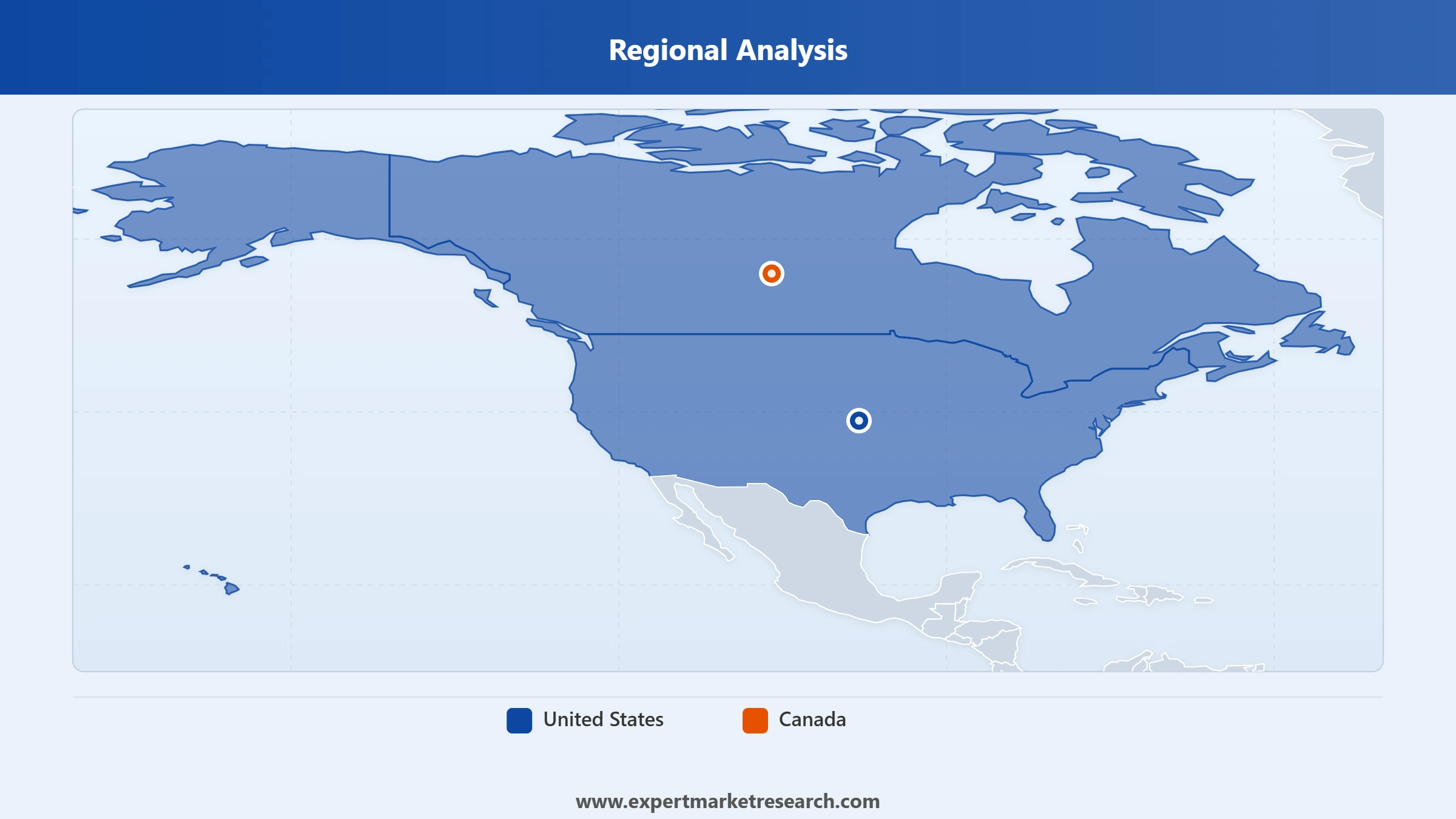
By region, the United States leads on scale, while Canada offers targeted expansion opportunities
The United States represents the core commercial market for North America baby monitors because of its large annual birth cohort, mature consumer-electronics infrastructure, established online retail ecosystem, and concentration of technology-driven baby-care companies. The country recorded 3,606,400 births in 2025, although births declined 1% from 2024, reinforcing the need for manufacturers to generate value through premiumization and recurring services rather than relying solely on demographic expansion. The U.S. market is consequently shifting toward AI-assisted monitoring, connected applications, subscription analytics, health-oriented features, and privacy-enhanced local processing. The Q2 2026 U.S. e-commerce market reached $340.2 billion and represented 17.1% of total retail sales, creating a strong infrastructure for direct-to-consumer baby-monitor distribution, thereby directly boosting the North America baby monitors market regional growth.
Read more about this report - Request a Free Sample
Canada represents a smaller but strategically significant market. Statistics Canada recorded 365,737 live births in 2024, 3.7% above the previous year, providing a favorable demographic signal for infant-care categories. The country's labor-market structure also supports demand for remote-monitoring products: 10 million women were employed in February 2026, accounting for 47.3% of total employment, while the employment rate for women aged 25–54 reached 80.1%. Canadian buyers are also operating in an environment where government guidance emphasizes IoT privacy, security updates, strong passwords, and careful data sharing. This creates opportunities for manufacturers offering transparent security architecture and privacy-oriented product positioning.
Competition in the North America baby monitors market is increasingly centered on the ability to combine hardware reliability with differentiated software. Established North America baby monitors companies are expanding camera quality, connectivity, AI functionality, environmental sensing, and application capabilities, while specialist brands are differentiating through privacy, non-Wi-Fi transmission, health monitoring, or subscription services. VTech's FY2026 disclosures indicate that the baby-monitor category faced increasing competition even as the company maintained its number-one position in the United States and Canada. This competitive environment is pushing manufacturers to shorten innovation cycles and increase functionality without compromising ease of installation.
Scalability is also being pursued through alternative revenue and distribution models. Owlet is expanding beyond direct consumer sales through employer benefits and durable medical equipment partnerships, while its AI strategy seeks to increase the value of proprietary infant wellness data. Other North America baby monitors market players are strengthening local-signal products to serve privacy-sensitive customers. The result is a market divided between connected, software-rich platforms and simpler, privacy-focused monitoring systems, with hybrid portfolios likely to remain commercially important.
Founded in 1891 in Eindhoven, the Netherlands, Philips is headquartered in Amsterdam and operates primarily as a health-technology company. Its mother-and-child portfolio includes Philips Avent products, while its Premium Connected Baby Monitor combines video monitoring with SenseIQ sleep and breathing tracking and cry-related technology. Its positioning provides access to the premium connected-parenting segment, where health-oriented insights and established healthcare credibility can support product differentiation.
Panasonic traces its foundation to 1918 and is headquartered in Kadoma, Osaka, Japan. The group develops consumer electronics, household technologies, business solutions, and related devices. Its relevance to the baby-monitor category stems from its established consumer-electronics engineering capabilities and experience in imaging, connectivity, home devices, and audiovisual technologies. Panasonic can leverage this broader technology ecosystem to compete where reliability, display performance, device integration, and brand familiarity influence procurement decisions.
Established in 1969, Samsung Electronics is headquartered in Suwon, Gyeonggi-do, South Korea. The company operates across consumer electronics, mobile technologies, displays, networks, semiconductors, and health-related equipment. Samsung's broader AI and connected-device ecosystem provides a potential technology base for smart-home monitoring applications. Its CES 2026 strategy emphasized AI as a foundation connecting product development, operations, and user experience, reinforcing the wider industry shift toward intelligent connected environments.
Established in 1962, Dorel operates from Westmount, Quebec, Canada, and has a major presence in juvenile products. Its juvenile portfolio includes brands such as Maxi-Cosi, Quinny, Tiny Love, Safety 1st, Bébé Confort, Cosco, and Infanti. Although its portfolio extends beyond monitoring electronics, its strength in juvenile safety, mobility, comfort, and family products gives it strategic relevance to connected-nursery ecosystems and cross-category distribution.
Other key players in the market include VTech Holdings Ltd., EZVIZ Inc., Angelcare Holding Inc., Innovative Health Monitoring, LLC (Miku), Bonoch, and Infant Optics among others.
*Please note that this is only a partial list; the complete list of key players is available in the full report. Additionally, the list of key players can be customized to better suit your needs.*
Explore the North America Baby Monitors Market forecast 2026-2035 to understand emerging product architectures, connectivity preferences, distribution opportunities, regional dynamics, and competitive strategies shaping the industry. The report provides actionable insights for manufacturers, technology providers, distributors, retailers, investors, and new market entrants seeking to evaluate North America baby monitors Market trends 2026 and identify opportunities across AI-enabled, video, motion-sensing, wireless, and privacy-focused monitoring solutions. Request a free sample to review the scope, segmentation, and strategic insights.


Upto 15% Off
USD
$2499 $2249
$3999 $3599
$4999 $4249
$5999 $5099


*While we strive to always give you current and accurate information, the numbers depicted on the website are indicative and may differ from the actual numbers in the main report. At Expert Market Research, we aim to bring you the latest insights and trends in the market. Using our analyses and forecasts, stakeholders can understand the market dynamics, navigate challenges, and capitalize on opportunities to make data-driven strategic decisions.*
In 2025, the market reached an approximate value of USD 472.01 Million.
The market is projected to grow at a CAGR of 5.80% between 2026 and 2035.
The revenue generated from the baby monitors market is expected to reach USD 829.48 Million in 2035.
The baby monitors market is categorised according to product type, which includes audio, video, and motion sensors.
The major players in the market are Koninklijke Philips N.V., Panasonic Holdings Corp., Samsung Electronics Co. Ltd., Dorel Industries Inc., VTech Holdings Ltd., EZVIZ Inc., Angelcare Holding Inc., Innovative Health Monitoring, LLC (Miku), Bonoch, and Infant Optics, among others.
Based on the distribution channel, the market is divided into online and offline.
The market is broken down into the United States and Canada.
Key challenges in the North America baby monitors market include privacy and cybersecurity concerns, data protection risks, high product costs, connectivity issues, false alerts, regulatory compliance, and intense competition. Rapid technological changes also require manufacturers to continuously improve features and product reliability.
Key strategies driving the North America baby monitors market include product innovation, integration of AI and smart-home technologies, enhanced cybersecurity, improved video and audio quality, subscription-based services, strategic partnerships, omnichannel distribution, and expansion of connected monitoring solutions with advanced health and safety features.
Explore our key highlights of the report and gain a concise overview of key findings, trends, and actionable insights that will empower your strategic decisions.
| REPORT FEATURES | DETAILS |
| Base Year | 2025 |
| Historical Period | 2019-2025 |
| Forecast Period | 2026-2035 |
| Scope of the Report |
Historical and Forecast Trends, Industry Drivers and Constraints, Historical and Forecast Market Analysis by Segment:
|
| Breakup by Product Type |
|
| Breakup by Mode of Communication |
|
| Breakup by Distribution Channel |
|
| Breakup by Region |
|
| Market Dynamics |
|
| Competitive Landscape |
|
| Companies Covered |
|
Datasheet
One User
USD 2,499
USD 2,249
tax inclusive*
Single User License
One User
USD 3,999
USD 3,599
tax inclusive*
Five User License
Five User
USD 4,999
USD 4,249
tax inclusive*
Corporate License
Unlimited Users
USD 5,999
USD 5,099
tax inclusive*
*Please note that the prices mentioned below are starting prices for each bundle type. Kindly contact our team for further details.*
Flash Bundle
Small Business Bundle
Growth Bundle
Enterprise Bundle
*Please note that the prices mentioned below are starting prices for each bundle type. Kindly contact our team for further details.*
Flash Bundle
Number of Reports: 3
20%
tax inclusive*
Small Business Bundle
Number of Reports: 5
25%
tax inclusive*
Growth Bundle
Number of Reports: 8
30%
tax inclusive*
Enterprise Bundle
Number of Reports: 10
35%
tax inclusive*
How To Order

Select License Type
Choose the right license for your needs and access rights.

Click on ‘Buy Now’
Add the report to your cart with one click and proceed to register.

Select Mode of Payment
Choose a payment option for a secure checkout. You will be redirected accordingly.
Strategic Solutions for Informed Decision-Making
Gain insights to stay ahead and seize opportunities.

Get insights & trends for a competitive edge.

Track prices with detailed trend reports.

Analyse trade data for supply chain insights.

Leverage cost reports for smart savings

Enhance supply chain with partnerships.

Connect For More Information
Our expert team of analysts will offer full support and resolve any queries regarding the report, before and after the purchase.
Our expert team of analysts will offer full support and resolve any queries regarding the report, before and after the purchase.
We employ meticulous research methods, blending advanced analytics and expert insights to deliver accurate, actionable industry intelligence, staying ahead of competitors.
Our skilled analysts offer unparalleled competitive advantage with detailed insights on current and emerging markets, ensuring your strategic edge.
We offer an in-depth yet simplified presentation of industry insights and analysis to meet your specific requirements effectively.




