Consumer Insights
Uncover trends and behaviors shaping consumer choices today
Procurement Insights
Optimize your sourcing strategy with key market data
Industry Stats
Stay ahead with the latest trends and market analysis.
The optical communication systems and networking market was valued at USD 28.50 Billion in 2025. The market is expected to grow at a CAGR of 9.40% during the forecast period of 2026-2035 to reach a value of USD 69.99 Billion by 2035. Rising AI data center traffic, fiber network upgrades, and demand for 800G and faster optical links are collectively driving the market growth.
The current optical communication systems and networking market dynamics reflect AI data center buildouts, carrier network upgrades, and public fiber funding. Policy is central to this shift: on 3 September 2026, the US National Telecommunications and Information Administration issued the BEAD Supplemental Deployment Policy Notice, opening a second round of funding for unserved locations from about USD 21 billion in program savings. Such programs keep fiber builds active and support steady demand for optical equipment. Carriers, cable operators, and utilities are also upgrading backhaul and metro rings to carry growing video, cloud, and mobile traffic, which lifts demand for coherent transceivers, amplifiers, and wavelength division multiplexing systems on both urban and rural routes.
The overall optical communication systems and networking market value is also shaped by cloud spending. In its third quarter 2026 results on 28 October 2026, Alphabet reported capital expenditures of USD 51.355 billion, up 114.4% year on year, and kept its 2026 guidance at USD 195 billion to USD 205 billion. Such spending drives orders for transceivers, switches, and fiber, while buyers weigh power, cost, and speed. Suppliers with high-speed portfolios are better placed. Hyperscalers are also widening links between campuses and regions, so long haul and data center interconnect routes need more capacity, and operators are moving toward 800G and beyond to keep cost per bit and energy use under control.
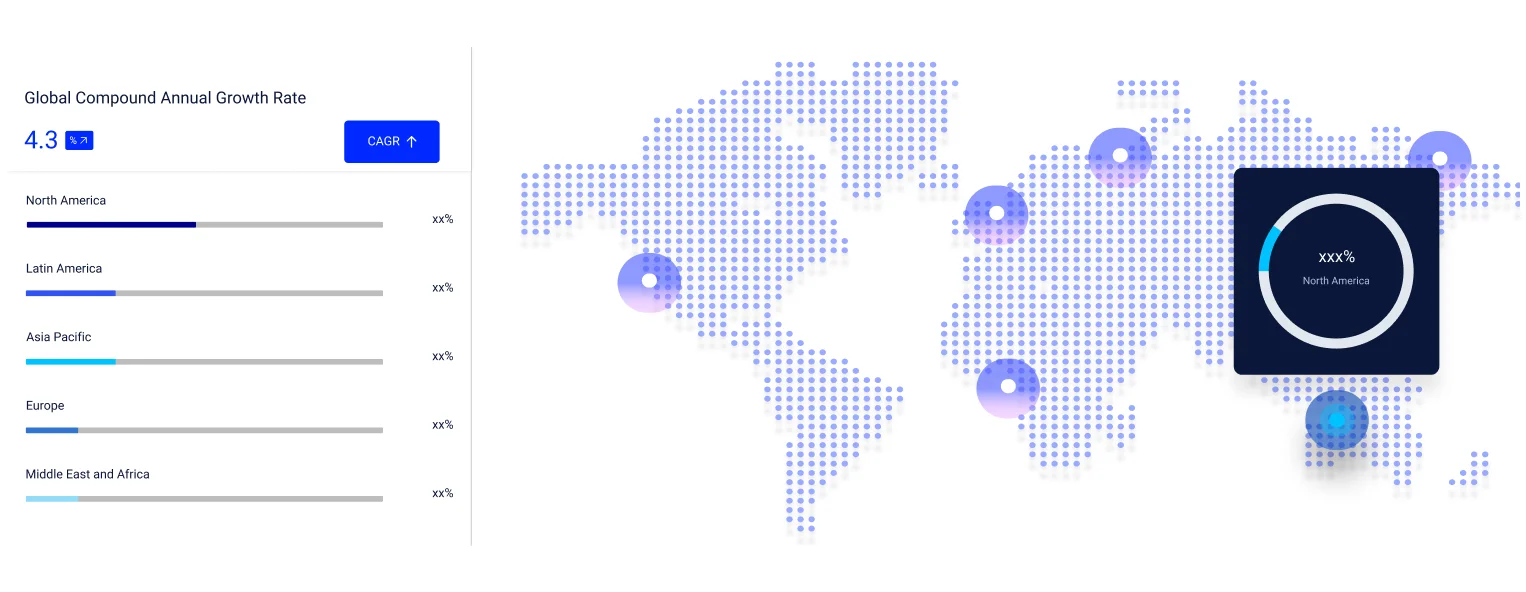
Compound Annual Growth Rate
9.4%
Value in USD Billion
2026-2035
Read more about this report - REQUEST FREE SAMPLE COPY IN PDF
|
Optical Communication Systems and Networking Market Report Summary |
Description |
Value |
|
Base Year |
USD Billion |
2025 |
|
Historical Period |
USD Billion |
2019-2025 |
|
Forecast Period |
USD Billion |
2026-2035 |
|
Market Size 2025 |
USD Billion |
28.50 |
|
Market Size 2035 |
USD Billion |
69.99 |
|
CAGR 2019-2025 |
Percentage |
XX% |
|
CAGR 2026-2035 |
Percentage |
9.40% |
|
CAGR 2026-2035 - Market by Region |
Middle East and Africa |
11.8% |
|
CAGR 2026-2035 - Market by Component |
Optical Switches and Multiplexers |
11.6% |
|
CAGR 2026-2035 - Market by Technology |
Others |
12.5% |
|
2025 Market Share by Region |
North America |
27.0% |
The optical communication systems and networking market is being shaped by Credo's agreement to buy DustPhotonics, Lumentum's new laser plant, Nokia's AI era optical portfolio, and 1Finity's open 800G line system. Acquisitions, capacity additions, and faster modules are further reshaping the competitive landscape for equipment makers and network operators.
Credo signed a definitive agreement to acquire DustPhotonics, a silicon photonics chip maker, for USD 750 million in cash plus about 0.92 million Credo shares, with up to 3.21 million more shares tied to milestones. DustPhotonics supplies chips for 400G, 800G, and 1.6T transceivers and co-packaged optics. Suppliers across the optical communication systems and networking market can leverage this by buying photonics capability to offer complete optical connectivity.
Lumentum announced a new 240,000 square foot facility in Greensboro, North Carolina, to make indium phosphide lasers for AI data centers on 6-inch wafers. It planned to spend hundreds of millions of USD over years, with production ramp expected in mid-2028 and over 400 US jobs. Component makers across the optical communication systems and networking market can leverage this by securing laser supply close to customers.
Nokia launched an optical portfolio for AI era networks, including 1.6T and 2.4T coherent pluggables, a 3.2T coherent lite module, and a multi rail in line amplifier supporting up to 160 fiber pairs in one rack. Nokia claimed up to 70% lower total cost of ownership. Network operators across the optical communication systems and networking market can leverage this by consolidating line systems to cut space and power.
Fujitsu company 1Finity launched the Ultra Optical System L1000 and L2000, an open line system for AI networks with 800G and higher wavelengths with multi rail transmission and continuous C and L band operation. It scales from 1 to 16 ROADM degrees for data center interconnect, metro, and long-haul links. Operators can leverage this by building open, flexible networks.
Cloud and AI companies across the optical communication systems and networking market need dependable international capacity, so they are funding subsea cables and landing stations that connect data center regions. For example, in February 2026, Google announced the America-India Connect initiative, with USD 15 billion over five years, including a subsea gateway at Vizag, three new subsea paths linking India to Singapore, South Africa, and Australia, and four fiber optic routes, creating long term demand for repeaters, amplifiers, and line systems, as traffic between AI regions keeps rising.
Operators and cloud firms across the optical communication systems and networking market want lower latency and loss on key routes, so hollow core fiber is moving from trials toward production, which could reshape route design. For example, in April 2026, the Fiber Broadband Association reported that Microsoft was scaling up production with industrial partners, after planning to deploy 15,000 km of hollow core fiber across Azure, with attenuation below 0.1 dB/km against 0.14 dB/km for conventional fiber, and the report cited 47% higher speed with 33% lower latency.
Governments are funding fiber to rural areas, which lifts demand for cable, transmission, and access equipment, and brings unserved villages onto modern networks. For example, in August 2026, India's Digital Bharat Nidhi approved financial support of 3,942 crore rupees for amended BharatNet in Chhattisgarh state, covering 11,682 Gram Panchayats, upgrading 4,048 from linear to ring topology, and giving 8,328 villages on demand fiber connectivity, with more than 300,000 new rural home fiber connections expected, showing how public funding supports suppliers.
Operators across the optical communication systems and networking market are adding intercity fiber and capacity as AI traffic grows between data center regions, and cloud buyers are signing long term contracts. For example, in February 2026, Lumen said it had 17 million intercity fiber miles at the end of 2025 and targeted 47 million by the end of 2028, supported by nearly USD 13 billions of Private Connectivity Fabric deals, with about USD 2.5 billion signed recently, which raises demand for long haul transmission and optical networking equipment.
AI clusters across the optical communication systems and networking market are moving to faster optical links, so suppliers are shipping the processors that power 1.6T modules, which sit inside pluggable transceivers and set power and cost. For example, in March 2026, Marvell said its Ara 1.6T optical DSP was shipping in mass volume, while Ara X, Ara T, Petra, and Aquila M began sampling in the first quarter of 2026, covering 200G per lane designs, gearboxes, and coherent lite links for data center networks, giving makers ready silicon.
The Expert Market Research's report titled "Optical Communication Systems and Networking Market Report and Forecast 2026-2035" offers a detailed analysis of the market based on the following segments:
Market Breakup by Component
Key Insight: Optical transceivers dominate the optical communication systems and networking market by component, as every link needs modules, while optical switches and multiplexers are the fastest growing on lower power AI networks. Amplifiers, fiber, and cables support long distance and metro links. Showing transceiver demand, in the first half of 2026, Zhongji InnoLight reported optical transceiver revenue of RMB 41.36 billion, up 99%, with 800G and 1.6T shipments growing rapidly for cloud customers.
Market Breakup by Technology
Key Insight: DWDM dominates the optical communication systems and networking market by technology, as it carries many wavelengths over one fiber pair, while others are the fastest growing on coherent pluggables and optical switching. CWDM serves short links, and SONET and SDH decline as carriers migrate. Showing DWDM deployment, in July 2026, PT Jala Lintas Media of Indonesia chose Ribbon's Apollo 9608 platform with a data center interconnect solution for a new DWDM link between Indonesia and Singapore.
Market Breakup by Data Rate
Key Insight: The 100G segment dominates the optical communication systems and networking market by data rate, as metro and enterprise links still rely on it, while 800G and above are the fastest growing on AI cluster demand. Up to 40G declines as networks upgrade, and 400G grows steadily. Showing 400G rollouts, in January 2026, FiberCop in Italy chose Adtran's FSP 3000 ROADMs and 100ZR pluggables for a metro network with 100G and 400G DWDM.
Market Breakup by End Use
Key Insight: Telecommunications dominate the optical communication systems and networking market by end use, as carriers run the largest fiber networks, while data centers are the fastest growing on AI workloads. Enterprises, government and defense, and others add steady demand each year. Showing data center fiber supply, in January 2026, Corning and Meta announced a multiyear agreement worth up to USD 6 billion, with Corning expanding optical cable capacity in Hickory, North Carolina.
Market Breakup by Region
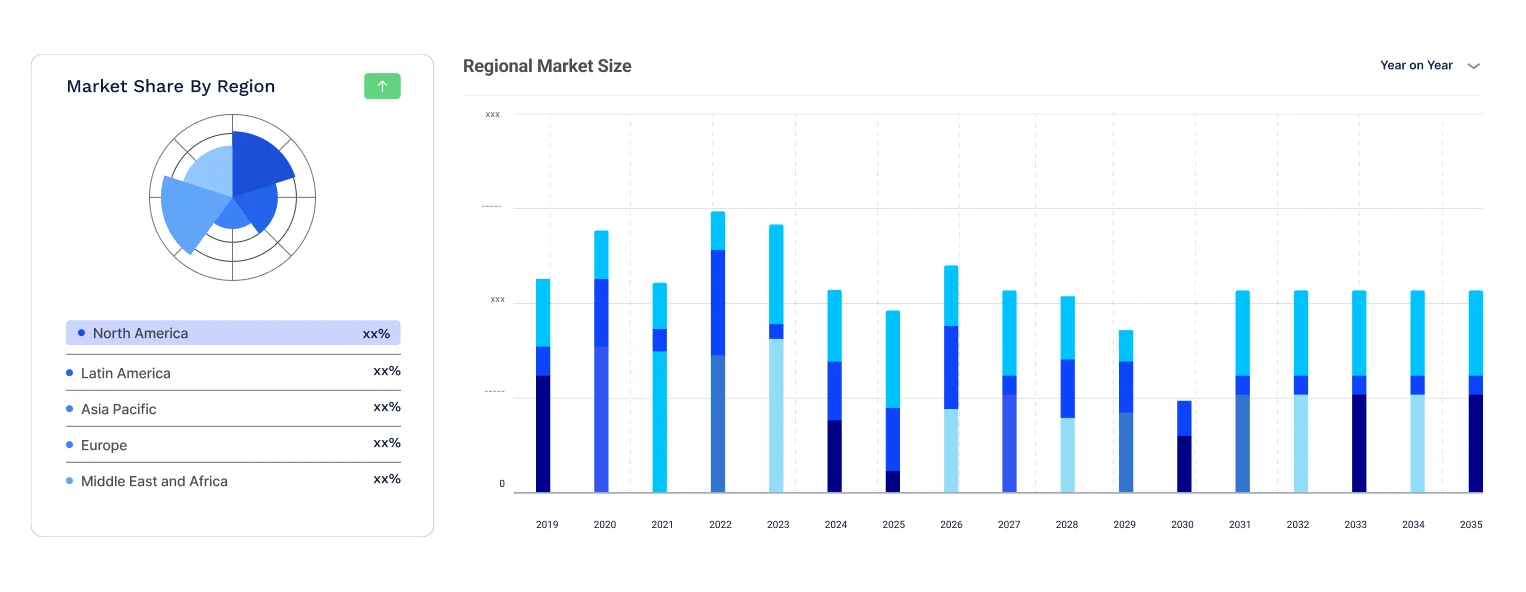
Key Insight: Asia Pacific dominates the optical communication systems and networking market on China's fiber and 5G scale, while the Middle East and Africa are the fastest growing from a small base. North America grows on hyperscale demand, Europe on fiber programs, and Latin America on new routes. Showing African connectivity, in February 2026, e& Carrier and Wholesale activated the 2Africa subsea cable landing at its UAE SmartHub data center, on a cable of about 45,000 km.
Read more about this report - REQUEST FREE SAMPLE COPY IN PDF
By component, optical transceivers dominate on high volume demand from data centers and carriers
Optical transceivers account for the largest share of the optical communication systems and networking market by component, because every optical link need module at each end, and data centers and carriers buy them in large volumes. Speeds are moving from 400G to 800G and 1.6T, which raises the value of each module. Demand from cloud operators and the growth of coherent pluggables keep transceivers ahead of other components. Suppliers also compete on lower power, higher density, and faster delivery times.
Optical switches and multiplexers are the fastest growing component as AI clusters seek lower power switching and more flexible wavelength routing. In March 2026, Salience Labs introduced an all-optical circuit switch with 32 ports, tested at up to 200G, with 64 and 128 port versions planned and up to 8 times power saving claimed versus optical electrical optical switching, showing early commercial interest in optical switching for data centers, which suits dense AI facilities that have tight power limits.
By technology, DWDM dominates on its fiber capacity and long-distance reach
Dense wavelength division multiplexing accounts for the largest share of the optical communication systems and networking market by technology, because it carries many wavelengths over one fiber pair, which lowers the cost per bit on metro, long haul, and data center links. Carriers and cloud operators rely on it to add capacity without laying new fiber, and coherent modems extend its reach and speed in every region. Cloud operators and carriers use it to link data centers over existing routes.
Others, including coherent pluggable and switching technologies, are the fastest growing as operators seek simpler, lower power designs, while OTN grows on service multiplexing. In July 2026, Proximus signed a 10-year framework with Ekinops for a Belgian network across 600 plus sites, using ROADMs for backbone and metro, 800G optical capacity, and chassis ready for 1.6T, showing how operators build future ready capacity. OTN also helps carriers carry mixed services over shared wavelengths. Coherent pluggables reduce rack space needs.
By data rate, 100G dominates on its wide use across metro, regional, and enterprise links
The 100G segment accounts for the largest share of the optical communication systems and networking market by data rate, because it is the established workhorse across metro, regional, and enterprise networks, with a mature supply base and low module prices. Many operators still add 100G links for access and aggregation, while data centers are shifting new builds toward 400G and 800G, which narrows its lead over time. Suppliers offer lower cost modules and tested interoperability to win these upgrade projects.
The 800G and above segment is the fastest growing as AI clusters need faster links between servers and switches. In August 2026, Applied Optoelectronics reported that 800G volume more than doubled from the prior quarter, with total capacity approaching 200,000 units a month and a target of 650,000 800G and 1.6T units a month by year end, showing how suppliers are scaling production to meet demand. Rising orders for optical engines, lasers, and transceivers support this ramp across several customers.
By end use, telecommunications dominate on network upgrades and fiber rollouts
Telecommunications accounts for the largest share of the optical communication systems and networking market by end use, because carriers run the largest fiber networks and keep upgrading backbone, metro, and access links for mobile and fixed broadband traffic. National fiber programs, 5G backhaul, and subsea cable landings add steady orders, and operators prefer proven suppliers for long network life cycles in every major region. Equipment demand rises with 5G fronthaul, backhaul, and cable access upgrades, which keep optical content growing.
Data centers are the fastest growing end use as AI workloads need dense, fast links inside and between facilities. In January 2026, SUBCO set milestones for its SMAP hypercable in Australia, with 16 fiber pairs, over 400 Tb of capacity, and 10 pairs already sold, linking east and west coasts through Perth, Adelaide, Melbourne, and Sydney, a sign of how cloud demand is driving new long-haul builds. Hyperscalers and colocation firms order optical gear for campus and metro links.
Asia Pacific dominates the market due to China's large fiber and 5G networks and strong carrier investment
Asia Pacific dominates the optical communication systems and networking market, as China runs the world's largest fiber and 5G networks and regional carriers keep adding capacity. In July 2026, China's industry ministry data showed 32.86 million 10G PON ports at the end of June 2026, 258 million gigabit broadband users, 76.12 million km of optical cable, and 5.102 million 5G base stations. India and Japan add steady investment in rural fiber and data centers. Regional governments also back fiber rollouts.
Middle East and Africa are the fastest growing region in the optical communication systems and networking market, as AI data center plans drive new subsea and terrestrial routes. In 2026, Ooredoo's Fibre in the Gulf subsea cable, costing over USD 500 million across almost 2,000 km, was designed for up to 720 Tbps, with completion planned for late 2027. North America and Europe grow steadily on hyperscale demand and fiber programs, while Latin America grows from a much smaller base.
|
CAGR 2026-2035 - Market by |
Region |
|
North America |
9.0% |
|
Europe |
8.0% |
|
Asia Pacific |
9.6% |
|
Latin America |
10.2% |
|
Middle East and Africa |
11.8% |
The global optical communication systems and networking market is competitive, as optical communication systems and networking market players include system vendors, component makers, and network suppliers from North America, Europe, and Asia, each competing on speed, power use, and reach. Companies like Ciena Corporation, Nokia Corporation, Coherent Corp., and Lumentum Holdings Inc. lead through scale and technology, while Huawei Technologies Co., Ltd., Cisco Systems, Inc., Fujitsu Limited, ZTE Corporation, and NEC Corporation add depth in specific regions.
Leading optical communication systems and networking market companies are differentiating through 800G and 1.6T modules, coherent technology, optical switching, and open line systems for AI networks. Several are also acquiring photonics firms, adding laser and fiber capacity, and forming partnerships to widen demand. Growing focus on power efficiency, bandwidth, and AI data center links is helping companies broaden portfolios, reach new customers, and support sustained long term growth across several regions.
Ciena Corporation, headquartered in Hanover, Maryland, was founded in 1992. The company supplies WaveLogic coherent modems, the 6500-packet optical platform, and coherent routing products. It reported revenue of USD 4,769.5 million for fiscal 2025, up 18.8%, and had 9,080 employees at the fiscal year end.
Nokia Corporation, headquartered in Espoo, Finland, was founded in 1865. The company offers optical networking products, including the 1830 Photonic Service Switch and coherent transponders. It reported 2025 net sales of 19,889 million euros and completed its 2.5-billion-euro acquisition of Infinera on 28 February 2025.
Coherent Corp., headquartered in Saxonburg, Pennsylvania, was founded in 1971 as II-VI Incorporated. The company makes 800G and 1.6T transceivers, co-packaged optics, and optical circuit switches. It reported fiscal 2026 revenue of USD 7,118.2 million, up 22.5%, and had about 51,000 employees on 30 June 2026.
Lumentum Holdings Inc., headquartered in San Jose, California, was founded in 2015 as an independent company after separating from JDS Uniphase. The company makes ROADMs, optical amplifiers, transceivers, optical circuit switches, and lasers. It reported fiscal 2026 revenue of USD 3,014.0 million and had about 13,757 full-time employees.
Other key players in the market report include Huawei Technologies Co., Ltd., Cisco Systems, Inc., Fujitsu Limited, ZTE Corporation, and NEC Corporation, among others.
*Please note that this is only a partial list; the complete list of key players is available in the full report. Additionally, the list of key players can be customized to better suit your needs.*
Discover the key trends shaping the optical communication systems and networking market 2026-2035 through our in-depth report. Access strategic insights, forward looking forecasts, and major market developments that help you stay ahead of competitors. Request a free sample report or speak with our team for tailored guidance on the optical communication systems and networking market trends 2026.


Upto 15% Off
USD
$2499 $2249
$3999 $3599
$4999 $4249
$5999 $5099


*While we strive to always give you current and accurate information, the numbers depicted on the website are indicative and may differ from the actual numbers in the main report. At Expert Market Research, we aim to bring you the latest insights and trends in the market. Using our analyses and forecasts, stakeholders can understand the market dynamics, navigate challenges, and capitalize on opportunities to make data-driven strategic decisions.*
In 2025, the optical communication systems and networking market reached an approximate value of USD 28.50 Billion.
The market is projected to grow at a CAGR of 9.40% between 2026 and 2035.
The key players in the market include Ciena Corporation, Huawei Technologies Co., Ltd., Nokia Corporation, Cisco Systems, Inc., Fujitsu Limited, ZTE Corporation, Coherent Corp., Lumentum Holdings Inc., and NEC Corporation, among others.
Leading companies are developing 800G and 1.6T modules, acquiring photonics firms, expanding laser and fiber capacity, and building open line systems for AI networks and data center interconnect.
Key challenges include the power use of high-speed optics, supply limits for lasers and indium phosphide, price competition, long carrier buying cycles, and trade and export restrictions.
Explore our key highlights of the report and gain a concise overview of key findings, trends, and actionable insights that will empower your strategic decisions.
|
Report Features |
Details |
|
Base Year |
2025 |
|
Historical Period |
2019-2025 |
|
Forecast Period |
2026-2035 |
|
Scope of the Report |
Historical and Forecast Trends, Industry Drivers and Constraints, Historical and Forecast Market Analysis by Segment:
|
|
Breakup by Component |
|
|
Breakup by Technology |
|
|
Breakup by Data Rate |
|
|
Breakup by End Use |
|
|
Breakup by Region |
|
|
Market Dynamics |
|
|
Competitive Landscape |
|
|
Companies Covered |
|
Datasheet
One User
USD 2,499
USD 2,249
tax inclusive*
Single User License
One User
USD 3,999
USD 3,599
tax inclusive*
Five User License
Five User
USD 4,999
USD 4,249
tax inclusive*
Corporate License
Unlimited Users
USD 5,999
USD 5,099
tax inclusive*
*Please note that the prices mentioned below are starting prices for each bundle type. Kindly contact our team for further details.*
Flash Bundle
Small Business Bundle
Growth Bundle
Enterprise Bundle
*Please note that the prices mentioned below are starting prices for each bundle type. Kindly contact our team for further details.*
Flash Bundle
Number of Reports: 3
20%
tax inclusive*
Small Business Bundle
Number of Reports: 5
25%
tax inclusive*
Growth Bundle
Number of Reports: 8
30%
tax inclusive*
Enterprise Bundle
Number of Reports: 10
35%
tax inclusive*
How To Order

Select License Type
Choose the right license for your needs and access rights.

Click on ‘Buy Now’
Add the report to your cart with one click and proceed to register.

Select Mode of Payment
Choose a payment option for a secure checkout. You will be redirected accordingly.
Strategic Solutions for Informed Decision-Making
Gain insights to stay ahead and seize opportunities.
Get insights & trends for a competitive edge.
Track prices with detailed trend reports.
Analyse trade data for supply chain insights.
Leverage cost reports for smart savings
Enhance supply chain with partnerships.
Connect For More Information
Our expert team of analysts will offer full support and resolve any queries regarding the report, before and after the purchase.
Our expert team of analysts will offer full support and resolve any queries regarding the report, before and after the purchase.
We employ meticulous research methods, blending advanced analytics and expert insights to deliver accurate, actionable industry intelligence, staying ahead of competitors.
Our skilled analysts offer unparalleled competitive advantage with detailed insights on current and emerging markets, ensuring your strategic edge.
We offer an in-depth yet simplified presentation of industry insights and analysis to meet your specific requirements effectively.