How Digital Booking Trends Are Transforming Travel Planning?
The digital era has seen a radical change in travel planning. Where travel planning once relied on visits to agencies and printed brochures, it has now shifted to online platforms and mobile applications. Currently, the traveler has a wide selection of choices to make, as he/she is able to research a destination, compare prices, and book within minutes. This change to online reservation is not only increasing convenience but also changing the decision-making process and interaction of travelers with travel providers.
This increased use of digital equipment has made the traveler more knowledgeable and empowered. Having access to real-time information, reviews, and recommendations, one can plan trips that would be close to the individual’s preferences and budgets. Consequently, the trends of digital bookings are taking an increasingly important role in influencing new trends in travel behavior and industry relations.
The Rise of Online Travel Platforms
Travel websites have taken up the center stage in the planning process. Such sites offer a single solution when it comes to flight bookings, accommodation, and activity bookings. Before making choices, the travelers are able to compare several options, read the detailed description, and compare the prices. Such transparency has added credibility and diminished doubt in the case of planning travel.
Moreover, online websites usually have package deals that include transportation and accommodation, making the booking process easier. Providers are also including dynamic pricing and personalized recommendations to improve the user experience. Online travel sites are simplifying the process of planning and implementing the trip by incorporating different services into one trip.
The travel market scope has also been widened by the presence of easy accessibility to these platforms. People who might have been using intermediaries previously are now able to plan their trips seamlessly. The change has enhanced the competition between the service providers, resulting in more companies willing to improve their services and pricing policies.
Influence of Mobile Technology on Travel Decisions
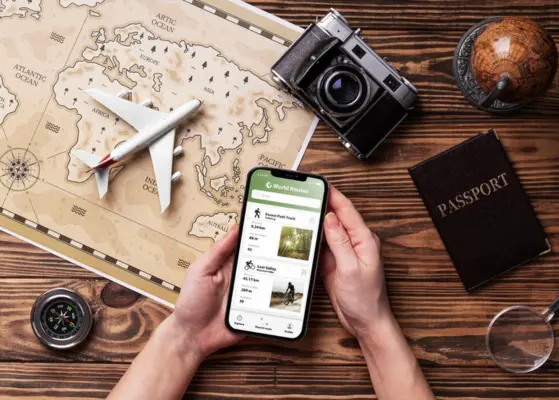
Mobile technology has further accelerated the shift toward digital booking, enabling travelers to plan and manage their trips anytime, anywhere through smartphones. Mobile apps are becoming incredibly convenient and flexible in terms of searching for destinations as well as last-minute booking.
Travel apps have the capability of providing real-time notifications and digital boarding passes, as well as location-based recommendations. These applications are useful in keeping the travelers updated and in check during the process. Secure transaction systems and mobile payments are also playing a part in a smooth booking process.
Role of Online Reviews and Social Proof
Internet reviews have become increasingly important in influencing travelers. Potential travelers tend to use the commentary of other users to determine the quality of services before they book a reservation. Reviews enable them to get a reflection about customers' experiences and allow people to make well-informed decisions.
Building trust is achieved through ratings, testimonials, and user-generated content. Good feedback has the potential to attract a lot of bookings, and bad comments may scare off prospective clients. This dynamic encourages service providers to maintain high standards while remaining responsive to evolving customer needs and concerns.
Social proof is not limited to reviews; it can also encompass social media material. Travelers are interested in the suggestions provided by influencers, bloggers, and peers. Real-life experiences presented in a visual format is credible and they often influence others to consider the same. This systematic digital ecosystem is therefore, influencing travel preferences and expectations.
Personalization Through Data and Analytics
The level of personalization in travel planning is reaching a new level due to data analytics. Online platforms gather data about user preferences, their behavior and previous bookings to provide personalized recommendations. This individualized method makes search results more relevant and increases the user experience.
For example, passengers can be offered recommendations on where to visit, where to stay, or what activities to participate in, depending on their preferences. These recommendations are further enforced with email campaigns and targeted advertisements. Customization not only leads to customer satisfaction but also high rates of conversion for travel providers.
Explore booking behavior, online platforms, and travel trends in the Leisure Travel Market Report.
Redefining the Way People Plan Travel
The trends in digital booking are making the process of travel planning a smooth and highly individualized process. The use of online platforms, mobile technology, and data is enabling travelers to make decisions easily. Simultaneously, service providers are adjusting their strategies in response to increasing demands for convenience and customization.
The use of digital tools in travel planning will continue to grow in influence as technology evolves. Travel platforms are becoming more intuitive and personalized, while the booking process is increasingly transparent. This ongoing transformation highlights the critical role of digital innovation in shaping the future of global travel experiences.











Share