Advancements in Salicylic Acid Production and Manufacturing Processes
The production side of the salicylic acid market is undergoing an important shift. As the demand continues to grow in the skincare and pharmaceutical industry, the need for increased efficiency and purity, along with a sense of sustainability, is compelling companies to look for innovative ways for production.
Moreover, the balance between cost competitiveness and regulatory compliance is becoming a major driving factor. Manufacturers are not only increasing their production capacities, but they are also making the process more precise. The need for a shift from a volume-driven approach to a value-driven approach is quite evident.
Revisiting the Kolbe-Schmitt Process for Efficiency Gains
The Kolbe-Schmitt reaction continues to be the dominant procedure used to manufacture salicylic acid on a large scale. However, companies are continuing to fine-tune the procedure to increase yields and limit the amount of by-products.
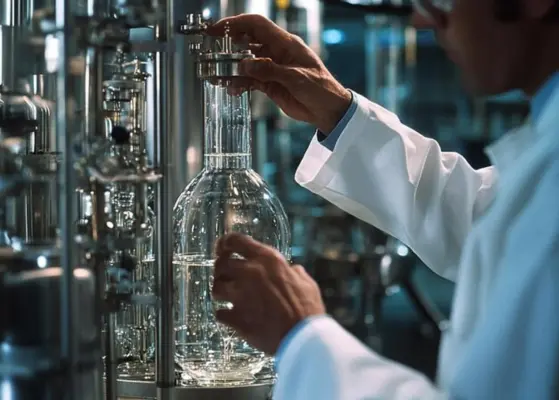
The latest salicylic acid production plants are being designed to include sophisticated temperature and pressure control systems to increase the efficiency of the reaction. This not only reduces costs but also ensures that the quality of the salicylic acid is consistent.
Some manufacturers have even managed to increase yields to a considerable extent. This is significant, especially when it comes to a chemical like salicylic acid, where every percentage point can have a major impact on the bottom line.
Raw Material Sourcing and Cost Dynamics
The major raw material used to manufacture salicylic acid remains phenol, and hence the availability and price of phenol become a major issue to be considered. The prices of phenol generally fluctuate according to the trends followed by crude oil.
To overcome the problem of fluctuating prices, many manufacturers are opting for backward integration to secure the availability of phenol, thereby ensuring a fixed price for the raw material used to manufacture salicylic acid. This trend is being followed by many major chemical manufacturers in the Asia-Pacific region.
On the other hand, small-scale manufacturers are trying to maintain their competitiveness in the market through better efficiency in the production process. They may not be able to control the prices of raw materials, but they are opting for better technology to increase efficiency in the production process, thus balancing the equation to a certain extent.
Shift Toward Sustainable and Green Chemistry Practices
Environmental factors are becoming a major concern in manufacturing strategies. Conventional methods of manufacturing salicylic acid involve waste generation and high energy costs, which are now a major concern in global environmental policies.
Manufacturers are now opting for more environmentally friendly methods of manufacturing. These methods include using green chemistry for manufacturing and incorporating a closed-loop system that recycles by-products. Some manufacturers are also opting for water treatment systems to minimize environmental impacts.
Hence, green chemistry is no longer a regulatory issue; rather, it has become a major market growth factor for companies. Consumers in Europe and North America are showing a preference for companies that can provide a lower environmental footprint in manufacturing processes. This has made companies rethink the entire manufacturing process.
Automation and Digitalization in Manufacturing Facilities
Another trend that affects the production of salicylic acid is the integration of technology into the process. Smart manufacturing systems are being adopted to enable real-time process monitoring, allowing improved control over critical process variables and overall efficiency. Automation has also been integrated into the process to reduce errors and ensure the quality of the product. This is particularly important in the production of pharmaceutical-grade salicylic acid.
Data analytics is also affecting the production process. This is achieved by analyzing the data generated during the production process and thus identifying the areas of improvement to enable better resource utilization. This was not possible in the traditional manufacturing process and is thus giving the adopters a competitive advantage.
Regional Manufacturing Expansion and Capacity Investments
Asia Pacific continues to be the largest hub for the production of salicylic acid, with countries like China and India at the forefront in terms of capacity additions. Factors like lower production costs, availability of raw materials, and government policies are responsible for increasing production capacities in the region.
There are many companies in the Asia Pacific region that have announced new production capacities and expansions in recent times. These new capacities are to cater to both local and export markets. In contrast, companies in Europe and America are more focused on the production of specialty grades rather than bulk production. This is creating a new trend in the trade of the chemical, with the Asia Pacific region providing bulk quantities and the West acting as hubs for specialty grades. For example, the launch of Obagi Blue Radiance Peel in India, in January 2026, introduced a medical-grade salicylic acid solution targeting acne, pores, and skin texture improvement.
Explore production trends, capacity expansion, and competition in the Salicylic Acid Market Report.
Competitive Positioning Through Process Innovation
The competition in the salicylic acid industry is shifting to process innovation. The companies that are able to produce salicylic acid at a lower cost, ensuring quality and environmental standards, are getting a competitive edge.
Some manufacturers are also working on developing new proprietary technologies to increase the efficiency of the reaction or to reduce waste generation during the process. Another trend being followed in the industry is the collaboration of manufacturers with research organizations to develop new technologies, ensuring that they stay ahead of evolving regulatory changes.








Share