

Consumer Insights
Uncover trends and behaviors shaping consumer choices today
Procurement Insights
Optimize your sourcing strategy with key market data
Industry Stats
Stay ahead with the latest trends and market analysis.
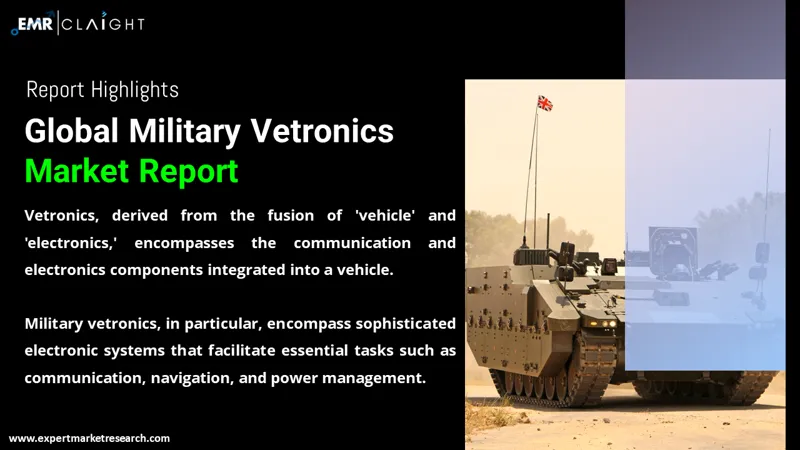
The global military vetronics market attained a value of USD 4.94 Billion in 2025 and is projected to grow at a CAGR of 4.50% through 2035. The market is further expected to reach USD 7.67 Billion by 2035. Rising defence expenditure, military modernisation programmes across established and emerging nations, and growing demand for network-centric, C4ISR enabled combat vehicles are helping suppliers broaden their product portfolios across ground combat, unmanned, and specialty vehicle platforms.
The military vetronics market spans communication and navigation, power, display, and C4 systems integrated across main battle tanks, light protected vehicles, special purpose vehicles, amphibious vehicles, and a growing fleet of unmanned ground vehicles. Vetronics, a combination of vehicle and electronics, refers to the digital nervous system of a modern combat vehicle, coordinating computer resources, data distribution, crew controls and displays, and power management through a network of line replaceable units. Rising defence budgets across North America, Europe, and the Middle East, combined with an intensifying focus on network-centric warfare and situational awareness, continue to widen the addressable base for both new vehicle production and vetronics upgrade programmes on existing fleets.
Manufacturers are responding to this demand by redesigning core vehicle platforms around modular, upgradeable electronics architectures rather than fixed legacy systems. In its fiscal year 2025 annual report, General Dynamics disclosed the first prototype of the M1E3 Abrams, a next-generation tank featuring a significantly lighter design, a hybrid-electric engine to reduce fuel consumption, and a modular open-systems architecture for its onboard electronics. This kind of ground-up vetronics redesign is helping prime contractors position next-generation combat vehicles for multi-decade service lives, reinforcing demand for scalable, software-upgradeable vetronics systems across the ground combat vehicle segment.
Leading defence contractors are increasingly winning large, multi-domain contracts that bundle vetronics upgrades with broader combat vehicle protection and networking capabilities rather than supplying individual components alone. In August 2025, Elbit Systems was awarded a contract valued at approximately 1.635 billion dollars by a European country to deliver combat vehicle upgrades, electro-optical and night-vision equipment, and an integrated military digitalisation and Network Combat Solution built around its C4ISR suite of command-and-control applications. This kind of bundled, digitalisation focused contract signals where the market is heading, with buyers increasingly procuring vetronics as part of an integrated combat system rather than as a standalone vehicle upgrade.
Compound Annual Growth Rate
4.5%
Value in USD Billion
2026-2035
Read more about this report - REQUEST FREE SAMPLE COPY IN PDF
Curtiss-Wright was awarded contracts worth approximately 40 million dollars by Leidos to supply actuation technology and rugged mission computers for the US Army's Indirect Fire Protection Capability programme. The award built on the company's position as a supplier of precision actuators and defence computing hardware. Suppliers across the military vetronics market can leverage this trend by pairing actuation hardware with mission computing to win integrated subsystem contracts.
Thales received an order from Germany's Federal Office of Bundeswehr Equipment for 60 GO12 short-range battlefield radars, with 2026 deliveries supported by expanded capacity at its Ditzingen facility. The compact, portable radar detects drones and vehicles across a 360-degree field. Suppliers across the military vetronics market can leverage this trend by investing in capacity ahead of confirmed orders to shorten delivery timelines.
The US Army awarded contracts worth 15.5 million dollars to three companies to develop autonomous driving kits for the Infantry Squad Vehicle, with prototypes due for evaluation by May 2026. The programme followed the Army's decision to pause its earlier Robotic Combat Vehicle initiative in favour of retrofitting existing platforms. Suppliers can leverage this trend by developing retrofit autonomy kits rather than awaiting new platform cycles.
Saab received an order worth approximately SEK 880 million from BAE Systems Hagglunds for its sight and fire control system for the Combat Vehicle 90, booked in the first quarter of 2025. The contract extended a modular fire control platform already in service across NATO forces. Suppliers across the military vetronics market can leverage this trend by qualifying modular fire control systems across multiple vehicle variants and export customers.
Investment firms across the military vetronics market are increasingly acquiring specialised defence electronics suppliers rather than leaving the fragmented supplier base to consolidate organically, seeking exposure to sticky, government-backed revenue streams across the sector. This is reshaping the overall competitive landscape toward fewer, better capitalised, more consolidated vetronics component suppliers. In March 2026, Chimney Rock Equity Partners formally acquired United Electronics Company, a specialised manufacturer of circuit boards, power systems, and avionics components for aerospace and defence applications, from seller Albion River, based in Prague.
Armed forces across the military vetronics market are increasingly mandating common vetronics interoperability standards across allied vehicle fleets rather than allowing each national programme to specify proprietary electronics architectures. This is easing joint operations and shared logistics support across multinational vehicle fleets. At the July 2026 NATO Defence Industry Forum in Ankara, allies launched the Command-and-Control Capability for Surface Based Air and Missile Defence initiative, aimed at reducing the number of disparate systems in use and increasing interoperability across allied vehicle mounted defence platforms.
Vetronics suppliers across the military vetronics market are increasingly developing standardised retrofit kits designed for rapid installation on ageing vehicle fleets rather than requiring bespoke integration engineering for each individual vehicle type. This is helping defence ministries extend the operational service life of existing vehicles significantly without requiring full platform replacement across national fleets. In a deal reported in January 2026, Rosoboronexport confirmed a 248-million-dollar agreement with India that included high-power engine retrofits for older T-72 tanks aimed at boosting fleet combat readiness.
Rugged computing suppliers across the military vetronics market are increasingly expanding small form factor mission computer product lines designed for space, weight, and power constrained vehicle platforms rather than adapting larger legacy computing systems. This is enabling vetronics integration on smaller vehicle classes previously unable to accommodate full sized computing hardware. In June 2026, Systel introduced Hawk-Strike AI at the Eurosatory defence exhibition in Paris, describing it as the world's first MIL-SPEC rugged embedded edge AI compute platform powered by the NVIDIA Jetson AGX Thor.
Unmanned ground vehicle deployment is accelerating fastest in active conflict zones, where combat experience is directly shaping vetronics design priorities rather than laboratory testing alone. This is compressing the development cycle between battlefield feedback and fielded system upgrades across the wider defence industry. In September 2025, industry tracking of the ongoing conflict's autonomous systems usage reported that Ukraine had deployed more than 15,000 unmanned ground vehicles that year, including low-cost platforms costing as little as 26,000 dollars per unit each.
Read more about this report - REQUEST FREE SAMPLE COPY IN PDF
The Expert Market Research's report titled “Global Military Vetronics Market Report and Forecast 2026-2035” offers a detailed analysis of the market based on the following segments:
Market Breakup by Product
Key Insight: Communication and navigation systems account for the largest product share of the military vetronics market given their essential role in every fielded combat vehicle, from basic radio interoperability to satellite guided navigation; C4 systems are growing fastest as armed forces prioritise network-centric command, control, communications, and computing capabilities across their vehicle fleets; power systems support the electrical demands of increasingly electronics dense vehicles; display systems provide crew situational awareness and fire control interfaces; and the others category spans specialty sensors and auxiliary electronic modules.
Market Breakup by Platform
Key Insight: Main battle tanks and other armoured vehicles account for the largest platform share of the market, reflecting their central role in ground combat operations and the scale of ongoing national modernisation budgets; unmanned ground vehicles are growing fastest as armed forces expand autonomous and remotely operated platforms for reconnaissance, logistics, and casualty evacuation roles; light protected vehicles serve rapid deployment and patrol roles; special purpose vehicles support engineering and bridging missions; amphibious vehicles support littoral and riverine operations; and the others category spans support and auxiliary vehicle platforms.
Market Breakup by Application
Key Insight: OEM applications account for the largest distribution share of the military vetronics market as new vehicle production programmes increasingly specify vetronics systems at the design stage rather than adding them afterward; and the aftermarket segment is growing fastest as armed forces prioritise retrofitting existing vehicle fleets with upgraded electronics and autonomy kits rather than procuring entirely new platforms.
Market Breakup by End-Use
Key Insight: Defence applications account for the largest end-use share of the military vetronics market given the scale of national armed forces vehicle fleets and sustained defence modernisation budgets; and homeland security applications are growing fastest as border security, counter-terrorism, and domestic security agencies increasingly adopt vetronics equipped vehicles for surveillance and rapid response roles, illustrated by US Customs and Border Protection's December 2025 requirement for an Enhanced Mobile Surveillance Capability to improve field agent situational awareness.
Market Breakup by Region
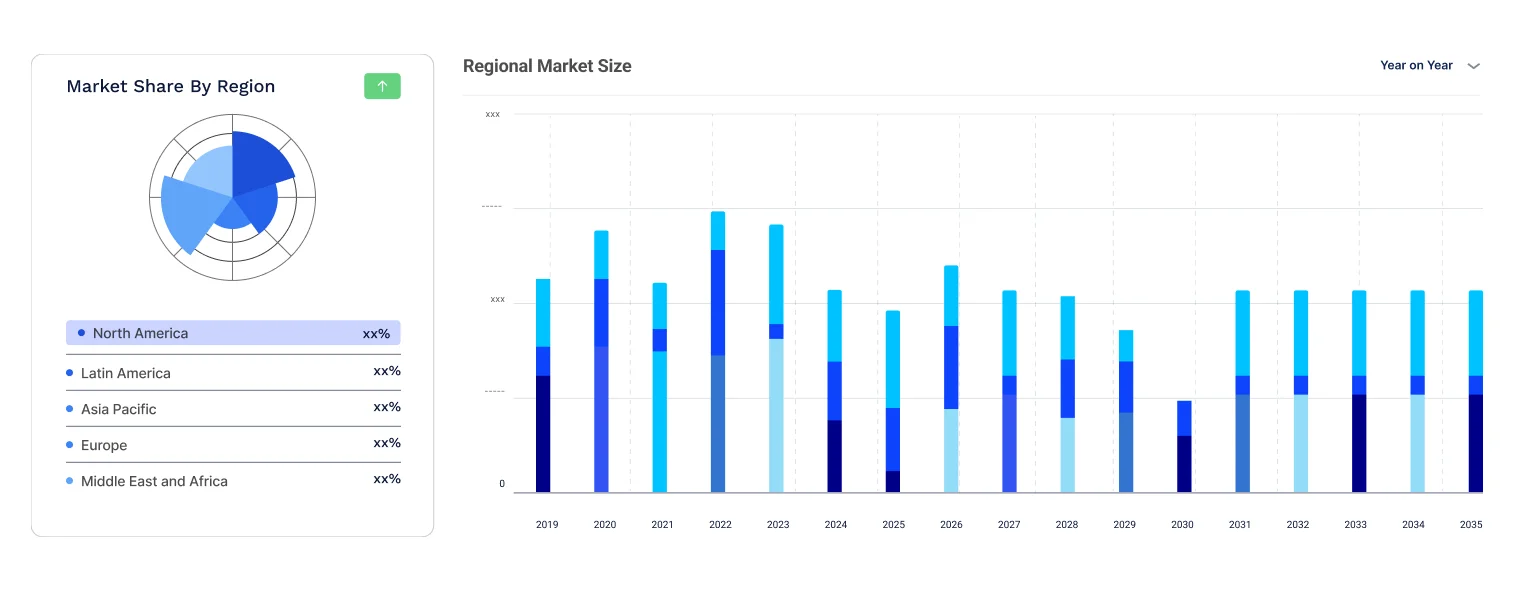
Key Insight: North America represents the largest regional military vetronics market, anchored by sustained US defence spending and major ground combat vehicle modernisation programmes; Europe maintains a substantial market supported by NATO interoperability requirements and vehicle programmes such as the SCORPION armoured vehicle family; Asia Pacific is expanding steadily amid rising regional security tensions and vehicle modernisation efforts; Latin America is gradually scaling alongside modest defence procurement growth; and the Middle East and Africa are growing fastest as nations including Saudi Arabia, Turkey, and Israel increase defence expenditure and vehicle fleet modernisation.
By product, the communication and navigation system segment dominates the market owing to its essential presence across every fielded combat vehicle
Communication and navigation systems hold the largest product share of the military vetronics market, reflecting their essential role in every fielded combat vehicle, from basic radio interoperability to satellite guided navigation and blue force tracking. In August 2026, the US Army added Cubic as an additional provider under its Global Tactical Advanced Communications Systems II contract vehicle, covering satellite communications terminals, mobile satellite services, and secure tactical networking. This foundational role continues to anchor communication and navigation systems as the largest and most consistently funded vetronics product category worldwide.
C4 systems are registering the fastest growth in the military vetronics market as armed forces prioritise network-centric command, control, communications, and computing capabilities across their vehicle fleets. In February 2025, Leonardo DRS was awarded a contract worth more than 7 million dollars to integrate ruggedised C4I Battle Management System hardware and software into new Royal Thailand Army Stryker vehicles. Continued investment in networked battlefield management systems is expected to sustain above average growth for C4 systems through the forecast period.
By platform, the main battle tanks and other armoured vehicles segment dominates the market given the scale of ongoing ground combat vehicle modernisation programmes
Main battle tanks and other armoured vehicles account for the largest platform share of the military vetronics market, reflecting their central role in ground combat operations and the scale of national modernisation programmes. In January 2025, Sweden awarded KNDS Germany a contract to modify and deliver new Leopard 2 main battle tanks for the Swedish Armed Forces, reinforcing NATO aligned armoured capability. This anchors main battle tanks as the largest vetronics demand driver.
Unmanned ground vehicles are growing fastest within the military vetronics market as armed forces expand autonomous and remotely operated platforms for reconnaissance, logistics, and casualty evacuation roles. In April 2026, Textron Systems unveiled its RIPSAW M1 uncrewed ground vehicle at the Modern-Day Marine Exposition, built on a Modular Open Systems Approach architecture designed to scale across future variants. Continued combat proven demand is expected to sustain above average growth.
By application, the OEM segment dominates the market as new vehicle production programmes increasingly specify vetronics at the design stage
OEM applications account for the largest distribution share of the military vetronics market, as new vehicle production programmes increasingly specify vetronics systems during original design rather than adding them afterward. In December 2025, the US Army Contracting Command awarded BAE Systems Land and Armaments a 198.4-million-dollar modification supporting continued Armored Multi-Purpose Vehicle production at its York, Pennsylvania facility. This design stage integration continues to anchor OEM channels as the primary route to market for vetronics suppliers.
The aftermarket segment is growing fastest within the military vetronics market as armed forces prioritise retrofitting existing vehicle fleets with upgraded electronics and autonomy kits rather than procuring entirely new platforms. Defence ministries are increasingly directing sustainment budgets toward electronics refresh programmes on existing vehicles rather than committing solely to new platform procurement. Continued fleet modernisation budgets are expected to sustain above average aftermarket growth through the forecast period.
By end-use, the defence segment dominates the market given the scale of national armed forces vehicle fleets
Defence applications account for the largest end-use share of the military vetronics market, reflecting the scale of national armed forces vehicle fleets and sustained multi-year defence modernisation budgets. In August 2025, Israel's Defence Minister presented a plan valued at approximately 1.5 billion dollars to accelerate domestic armoured vehicle production capacity over five years, adding dozens of tanks and armoured personnel carriers to national inventories. This scale of national defence procurement continues to anchor defence as the dominant end-use category worldwide.
Homeland security applications are growing fastest within the military vetronics market as border security, counterterrorism, and domestic security agencies increasingly adopt vetronics equipped vehicles for surveillance and rapid response roles. In October 2025, the Las Vegas Metropolitan Police Department unveiled The Rook, an armoured vehicle built to breach barriers and boost officer safety for its SWAT unit. Continued homeland security budget growth is expected to sustain above average growth for this end-use category through the forecast period.

Read more about this report - REQUEST FREE SAMPLE COPY IN PDF
North America leads the market through sustained defence spending while the Middle East and Africa grow fastest on rising regional defence expenditure
North America holds the largest share of the military vetronics market, anchored by sustained US defence spending and major ground combat vehicle modernisation programmes. The United States remains the single largest national defence market globally, supporting a dense industrial base of prime contractors and specialised vetronics suppliers serving both domestic and allied procurement. Established defence industrial relationships continue to anchor North America's position as the most mature market globally.
The Middle East and Africa region is the fastest-growing market for military vetronics, propelled by rising defence expenditure and vehicle fleet modernisation across nations including Saudi Arabia, Turkey, and Israel. In January 2026, the US State Department approved a possible Foreign Military Sale of Joint Light Tactical Vehicles and related equipment to Israel valued at approximately 1.98 billion dollars, reflecting the scale of vehicle fleet modernisation underway across the region. Continued regional defence spending growth is expected to sustain above average demand for military vetronics through the forecast period.
The competitive landscape features a mix of large multinational military vetronics companies and specialised defence electronics suppliers competing on system integration capability, ruggedisation, and open architecture compliance. Leading military vetronics companies are investing in modular open systems architectures, C4ISR integration, and autonomy retrofit kits to meet armed forces demand for both new vehicle production and existing fleet modernisation. Competition is also intensifying around bundled contracts, as buyers increasingly procure vetronics as part of integrated combat vehicle and digitalisation solutions rather than standalone component purchases.
Several military vetronics market players are prioritising expanded production capacity to meet sustained defence demand across allied nations, investing in dedicated manufacturing lines to shorten delivery timelines for time sensitive procurement programmes. Other market players are pursuing autonomy retrofit kit development and modular electronics architectures to capture aftermarket fleet modernisation contracts rather than competing solely on new vehicle production, extending the service life of existing platforms without requiring full vehicle replacement.
Founded in 1937 and headquartered in Stockholm, Sweden, Saab AB designs, manufactures, and sells products, services, and solutions for military defence, commercial aviation, and civil security worldwide, including vetronics systems such as sight and fire control platforms for armoured vehicles. The company's Universal Tank and Anti-Aircraft System serves the Combat Vehicle 90 platform in service across multiple NATO armed forces. Saab continues to secure export orders for its modular fire control and vehicle electronics systems across allied defence markets.
Founded in 1929 and headquartered in Davidson, North Carolina, United States, Curtiss-Wright Corporation provides rugged embedded computing, actuation, and electronic systems for aerospace, defence, and industrial customers, including vetronics solutions for ground combat and tactical vehicle platforms. The company's mission computers and modular open systems architecture-based solutions serve avionics and vetronics applications across multiple defence programmes. Curtiss-Wright continues to secure production contracts pairing actuation hardware with rugged mission computing for mobile defence systems.
Founded in 2000 and headquartered in Paris, France, Thales Group designs, develops, and manufactures aerospace, defence, and security electronics, including vehicle radar sensors, ground surveillance systems, and vetronics for armoured vehicle platforms. The company's Ground Observer 12 radar and broader ground surveillance radar portfolio serve armed forces across more than 20 countries. Thales continues to expand production capacity to meet rising allied demand for battlefield radar and vehicle electronics systems.
Founded in 1966 and headquartered in Haifa, Israel, Elbit Systems Ltd. is an international defense contractor providing land, air, and naval defence electronics, including combat vehicle upgrades, electro-optical systems, and C4ISR command-and-control solutions for armed forces worldwide. The company's Network Combat Solution integrates military digitalisation capabilities across vehicle fleets for allied and export customers. Elbit Systems continues to secure large, bundled contracts combining vehicle upgrades with integrated digitalisation solutions.
Other key players in the market include General Dynamics Corporation, among others.
*Please note that this is only a partial list; the complete list of key players is available in the full report. Additionally, the list of key players can be customized to better suit your needs.*
Unlock the latest insights with our military vetronics market trends 2026 report. Discover regional growth patterns, platform modernisation trends, and key industry players. Stay ahead of competition with trusted data and expert analysis. Download your free sample report today and drive informed decisions in the market.


Upto 15% Off
USD
$2499 $2249
$3999 $3599
$4999 $4249
$5999 $5099


*While we strive to always give you current and accurate information, the numbers depicted on the website are indicative and may differ from the actual numbers in the main report. At Expert Market Research, we aim to bring you the latest insights and trends in the market. Using our analyses and forecasts, stakeholders can understand the market dynamics, navigate challenges, and capitalize on opportunities to make data-driven strategic decisions.*
In 2025, the global market for military vetronics attained a value of approximately USD 4.94 Billion.
The market is projected to grow at a CAGR of 4.50% between 2026 and 2035.
The market is estimated to witness a healthy growth in the forecast period of 2026-2035, reaching USD 7.67 Billion by 2035.
The major drivers of the market include the increase in defence expenditure, military modernisation efforts of various nations, and availability of cost-effective military vetronics systems.
Rising demand for specialised military vetronics systems, increasing prevalence of asymmetric and network-centric warfare, and growing need for increased situational awareness, are the key trends propelling the growth of the market.
The major regions in the market are North America, Europe, Asia Pacific, Latin America, and the Middle East and Africa.
The major products in the market for military vetronics are communication and navigation system, power system, display system, and C4 system, among others.
The major players in the military vetronics market,according to the report, are Saab AB, Curtiss-Wright Corporation, Thales Group, Elbit Systems Ltd., and General Dynamics Corporation, among others.
Manufacturers face lengthy procurement and qualification cycles, budget constraints and shifting modernisation priorities among defence ministries, cybersecurity requirements for networked vehicle systems, and the technical complexity of retrofitting legacy vehicle fleets.
Adopting modular open systems architectures, expanding C4ISR and network combat integration, developing autonomy retrofit kits for existing vehicle fleets, and pursuing bundled contracts combining vehicle upgrades with digitalisation solutions.
Explore our key highlights of the report and gain a concise overview of key findings, trends, and actionable insights that will empower your strategic decisions.
| REPORT FEATURES | DETAILS |
| Base Year | 2025 |
| Historical Period | 2019-2025 |
| Forecast Period | 2026-2035 |
| Scope of the Report |
Historical and Forecast Trends, Industry Drivers and Constraints, Historical and Forecast Market Analysis by Segment:
|
| Breakup by Product |
|
| Breakup by Platform |
|
| Breakup by Application |
|
| Breakup by End-Use |
|
| Breakup by Region |
|
| Market Dynamics |
|
| Competitive Landscape |
|
| Companies Covered |
|
Datasheet
One User
USD 2,499
USD 2,249
tax inclusive*
Single User License
One User
USD 3,999
USD 3,599
tax inclusive*
Five User License
Five User
USD 4,999
USD 4,249
tax inclusive*
Corporate License
Unlimited Users
USD 5,999
USD 5,099
tax inclusive*
*Please note that the prices mentioned below are starting prices for each bundle type. Kindly contact our team for further details.*
Flash Bundle
Small Business Bundle
Growth Bundle
Enterprise Bundle
*Please note that the prices mentioned below are starting prices for each bundle type. Kindly contact our team for further details.*
Flash Bundle
Number of Reports: 3
20%
tax inclusive*
Small Business Bundle
Number of Reports: 5
25%
tax inclusive*
Growth Bundle
Number of Reports: 8
30%
tax inclusive*
Enterprise Bundle
Number of Reports: 10
35%
tax inclusive*
How To Order

Select License Type
Choose the right license for your needs and access rights.

Click on ‘Buy Now’
Add the report to your cart with one click and proceed to register.

Select Mode of Payment
Choose a payment option for a secure checkout. You will be redirected accordingly.
Strategic Solutions for Informed Decision-Making
Gain insights to stay ahead and seize opportunities.

Get insights & trends for a competitive edge.

Track prices with detailed trend reports.

Analyse trade data for supply chain insights.

Leverage cost reports for smart savings

Enhance supply chain with partnerships.

Connect For More Information
Our expert team of analysts will offer full support and resolve any queries regarding the report, before and after the purchase.
Our expert team of analysts will offer full support and resolve any queries regarding the report, before and after the purchase.
We employ meticulous research methods, blending advanced analytics and expert insights to deliver accurate, actionable industry intelligence, staying ahead of competitors.
Our skilled analysts offer unparalleled competitive advantage with detailed insights on current and emerging markets, ensuring your strategic edge.
We offer an in-depth yet simplified presentation of industry insights and analysis to meet your specific requirements effectively.




