

Consumer Insights
Uncover trends and behaviors shaping consumer choices today
Procurement Insights
Optimize your sourcing strategy with key market data
Industry Stats
Stay ahead with the latest trends and market analysis.

The global open-source intelligence market attained a value of USD 15.13 Billion in 2025 and is projected to expand at a CAGR of 24.70% through 2035. The market is further expected to be valued at USD 137.56 Billion by 2035. The rapid expansion of cross-border digital ecosystems is pushing enterprises to deploy OSINT platforms that centralize multilingual threat discovery, enabling faster responses to cyber, political, and operational risks.
The global open-source intelligence (OSINT) industry is entering a new growth phase as enterprises lean heavily on real-time, AI-driven threat discovery. For instance, Dataminr offers AI-native multimodal fusion engine, enabling security teams to process with improved contextual accuracy. This enhancement is especially relevant as global cyber incidents surged considerably, compelling large enterprises and government agencies to invest in systems that can detect early-stage risks from open-source feeds before they escalate. The open-source intelligence market’s reliance on platforms that blend neural search, geospatial mapping, and cross-language analytics is becoming a critical priority for B2B buyers with distributed operations.
Open-source intelligence adoption is accelerating across defense, financial services, telecom, and critical infrastructure sectors, as organizations modernize their security stacks. Vendors are diversifying product roadmaps toward deep web coverage, AI-assisted narrative detection, and automated influence-operation monitoring, technologies that were once limited to government intelligence programs. For example, Cyware announced the launch of a new Cyware Quarterback AI solution delivering an AI Fabric to address security use cases. In November 2025, Companies like Recorded Future and Fivecast are advancing multilingual data-fusion capabilities, with some platforms now scanning content in 100+ languages while automatically categorizing emerging geopolitical, cyber, and physical threats. This reflects a broader open-source intelligence market trend where end users want not just data collection, but actionable intelligence pipelines that integrate cleanly into SIEM, SOC, and national security workflows.
Base Year
Historical Period
Forecast Period
Compound Annual Growth Rate
24.7%
Value in USD Billion
2026-2035
*this image is indicative*
| Global Open-Source Intelligence Market Report Summary | Description | Value |
| Base Year | USD Billion | 2025 |
| Historical Period | USD Billion | 2019-2025 |
| Forecast Period | USD Billion | 2026-2035 |
| Market Size 2025 | USD Billion | 15.13 |
| Market Size 2035 | USD Billion | 137.56 |
| CAGR 2019-2025 | Percentage | XX% |
| CAGR 2026-2035 | Percentage | 24.70% |
| CAGR 2026-2035 - Market by Region | Asia Pacific | 28.5% |
| CAGR 2026-2035 - Market by Country | India | 27.6% |
| CAGR 2026-2035 - Market by Country | China | 25.1% |
| CAGR 2026-2035 - Market by Source | Internet | 28.2% |
| CAGR 2026-2035 - Market by End use | Government Intelligence Agencies | 30.1% |
| Market Share by Country 2025 | France | 3.1% |
Vendors are moving beyond keyword scraping to AI-native fusion, combining neural search, entity resolution and multimodal enrichment. Firms like Recorded Future and Dataminr are embedding transformer-based classifiers that tag events, actors and sentiment automatically, reducing analyst time. In August 2025, Google released Gemini CLI GitHub Actions, an open-source AI agent built to automate routine development tasks within repositories. This dynamic trend in the open-source intelligence market is enabling enterprise SOCs and corporate risk teams to buy “intelligence pipelines” that push prescriptive alerts into SIEM and case-management systems.
Modern buyers are prioritizing forensic modules that can rapidly establish provenance, tamper history and likelihood of manipulation. Innovative players are offering embedded media-forensics classifiers and cryptographic provenance checks, while some start-ups are introducing blockchain anchoring for critical evidence chains. Amped Authenticate, for instance, introduced a new Perspective filter designed to detect deepfakes and manipulated images in September 2025. This trend is propelled by regulatory and national security concerns, several Western governments are funding research into deepfake detection and authenticity frameworks, prompting corporate security and compliance teams to insist on verified sources, reshaping the entire open-source intelligence market dynamics.
OSINT vendors are expanding capabilities to cover low-resource languages and dialects, using transfer learning and local-partner data. This development is crucial where threats emerge in local forums, messaging apps or offline communities that have historically been invisible to English-centric tools. Companies are partnering with regional NLP teams to bulk-annotate languages and build custom classifiers for slang and codewords used in finance fraud, supply-chain manipulations, and political influence. Meta, for example, launched Omnilingual ASR, a powerful speech recognition system that can understand and transcribe over 1600 languages across the world in November 2025, catering to the surging demand in the open-source intelligence market.
Enterprises are buying OSINT as standalone dashboards and also as integrated data services embedded into SOAR, SIEM and case management workflows. Vendors are shipping APIs, normalized schema connectors that directly feed incident response playbooks or executive dashboards. In October 2025, Google Cloud launched new Gemini Enterprise AI platforms for business owners to automate workflow for low-cost subscription plans. Such an open-source intelligence market trend is supported by procurement units in critical infrastructure and financial services that prefer modular, auditable intelligence feeds.
Regulators and procurement bodies are setting higher transparency and auditability standards for risk intelligence. Public sector OSINT pilots and interagency guidance, plus private sector compliance demands around fraud, sanctions and supply-chain due diligence, are pushing buyers to require tamper-evident logs, documented collection methodologies, and third-party validation, accelerating the open-source intelligence market growth. For example, Sysdig announced substantial upgrades to its open-source threat investigation suite in November 2025. Vendors are responding with QA pipelines, documented taxonomy, and independent audits to win government and enterprise contracts.
Read more about this report - REQUEST FREE SAMPLE COPY IN PDF
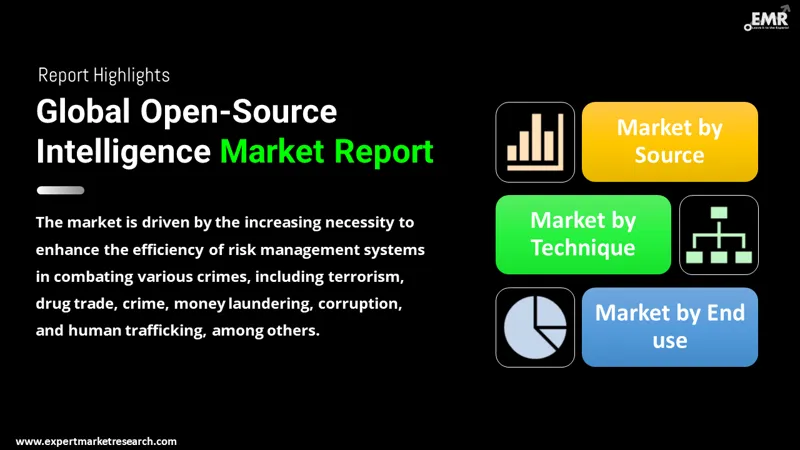
The EMR’s report titled “Global Open-Source Intelligence Market Report and Forecast 2026-2035” offers a detailed analysis of the market based on the following segments:
Market Breakup by Source
Key Insight: Sources include media, internet forums, public/government datasets, academic and professional publications, commercial feeds and niche repositories. Media provides timely, editorialized signals. Internet sources surface grassroots or fringe indicators boosting the overall open-source intelligence demand. Public datasets supply high-value structured truth and academic publications lend methodical validation and novel indicators. Buyers assemble layered source stacks, trusted media plus public records plus targeted commercial feeds, to achieve both breadth and defensible, auditable intelligence outputs suitable for enterprise and governmental use.
Market Breakup by Technique
Key Insight: Techniques as considered in the open-source intelligence market report include text, video, social, geospatial, security analytics and others. Text analytics provides core structured outputs, social analytics discovers emergent sentiment and networked campaigns, geospatial analytics fuses imagery, satellite and location metadata for physical-world verification, video analytics extracts high-value visual evidence, security analytics aligns OSINT with cyber telemetry and threat intelligence.
Market Breakup by End Use
Key Insight: End use categories span across government intelligence, defense, cyber security, law enforcement, finance, private specialized businesses and others. Governments demand high-assurance, auditable pipelines, whereas military customers need tactical fusion and geospatial clarity. Cyber teams use OSINT for threat enrichment and rapid attribution. Law enforcement applies this software for investigations and forensics while financial firms consume OSINT for fraud, sanctions and supply-chain risk. Each buyer group pushes vendors toward different product attributes, audibility for regulators, speed and automation for cyber, and localized language coverage for law enforcement, shaping the open-source intelligence market dynamics.
Market Breakup by Region
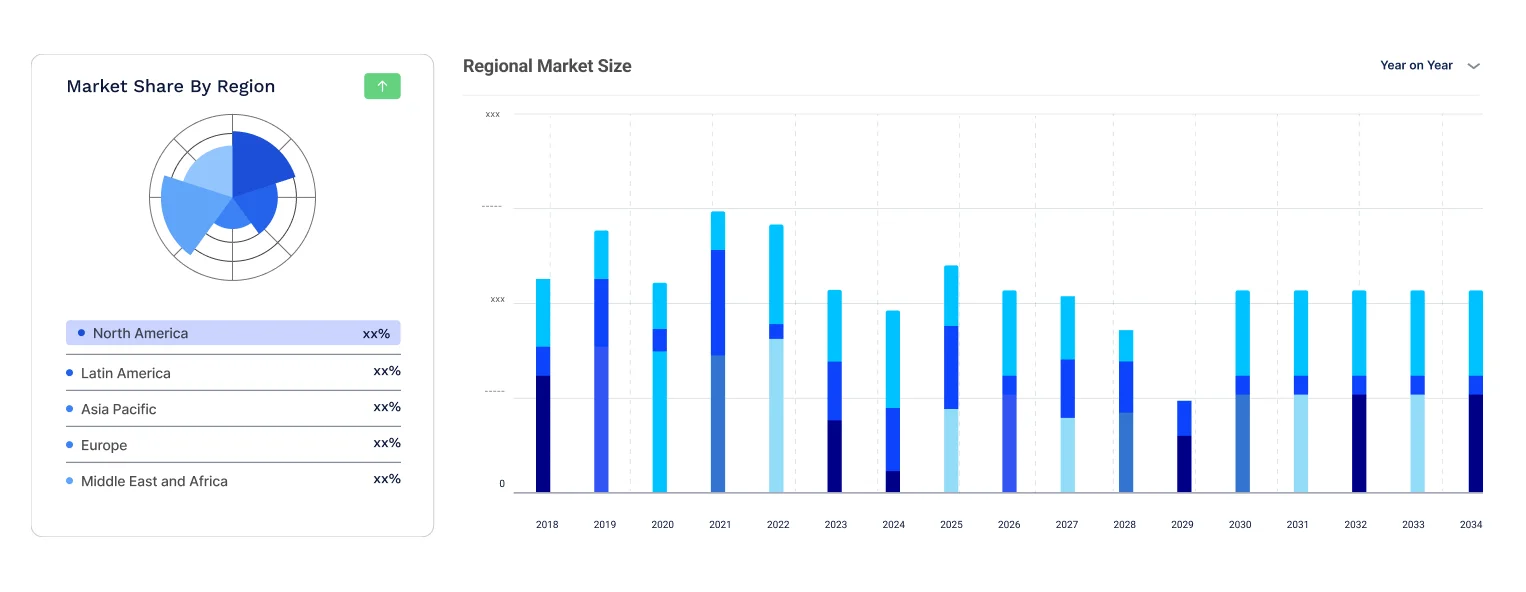
Key Insight: North America leads the market. This region’s dominance is sustained by vendor presence, capital and government demand. Europe emphasizes data protection, auditability and certification for procurement. Asia Pacific is rapidly scaling with language coverage and e-commerce risk. Latin America shows rising demand for financial crime and political monitoring. Middle East & Africa are niche growth markets driven by security and infrastructure monitoring.
Read more about this report - REQUEST FREE SAMPLE COPY IN PDF
By source, media dominates because timeliness and verified outlets drive actionable insights
Media sources such as newswire feeds, trade press, local outlets and NGO reports play a key role in accelerating the market value because they provide timelier, editorially-filtered signals that are easier to triage into actionable leads. Professional media often carry attribution and structured reporting standards, lowering verification burden. In May 2025, Penlink launched VIA, a GenAI-powered platform that transforms visual data into actionable intelligence for public safety and security. Vendors are building curated media layers that score outlet reliability, track editorial lineages and map citation networks, which helps analysts prioritize sources.
Public and government datasets are currently the fastest-growing source, propelling the open-source intelligence market revenue growth because agencies and municipalities are publishing structured open data such as sanctions lists, corporate registries, procurement records, land titles that materially improves signal precision. OSINT vendors are surfacing these datasets, normalizing them and linking entities to create enriched corporate graphs for compliance and supply-chain risk.
By technique, text analytics leads the market thanks to broad applicability and mature NLP tools.
Text analytics remains dominant because most open-source signals are text-based including news, filings, forums, social posts, and mature NLP pipelines can handle large volumes with acceptable precision. Modern solutions use named entity recognition, relationship extraction and event detection tuned to domain lexicons (fraud, sanctions, cyber). Text pipelines are also easier to explain and audit, making them attractive to compliance and legal teams. In November 2023, HENSOLDT Analytics announced the latest innovative changes to their multi-source intelligence platform. Market innovators are now layering transformer embeddings with knowledge graphs to map actor networks and correlate events across languages, boosting the open-source intelligence market opportunities.
Video analytics is the fastest-growing technique as platforms and bandwidth enable larger volumes of user-generated video and surveillance feeds. Providers are building scalable pipelines for OCR, face and object recognition, geolocation from frames, and audio-to-text extraction to create actionable clips. Video evidence often holds strong probative value for corporate security, insurance claims and incident reconstruction.
By end use, government intelligence agencies lead the market due their vast, mission-critical OSINT budgets
Government intelligence agencies are the dominant end users, driving growth in the open-source intelligence market. They fund advanced OSINT capabilities and set standards for collection, provenance and legal compliance. These agencies purchase high-assurance pipelines that fuse signals across media, telecom metadata (where lawful), and human-sourced reporting. Their requirements drive vendor investments in veracity scoring, chain-of-custody logging and multilingual coverage.
Cybersecurity organizations are the fastest-growing commercial adopters, using OSINT to enrich threat intelligence, track leak sites, and monitor criminal forums for zero-day chatter. Security teams are integrating OSINT with internal telemetry to identify compromised credentials, infrastructure abuse, and emerging malware campaigns. Tools like SpiderFoot HX, Maltego, Shodan, Recon-ng, and GHunt help cybersecurity professionals gather publicly available data to map digital footprints.
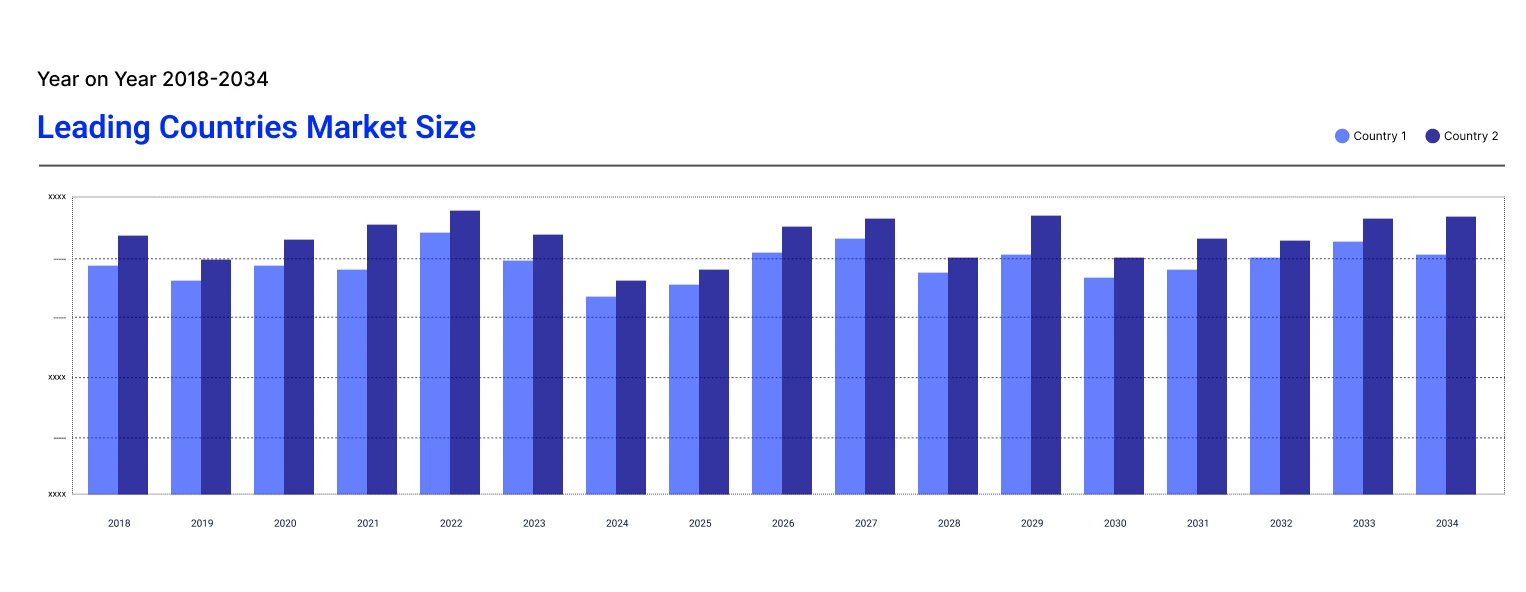
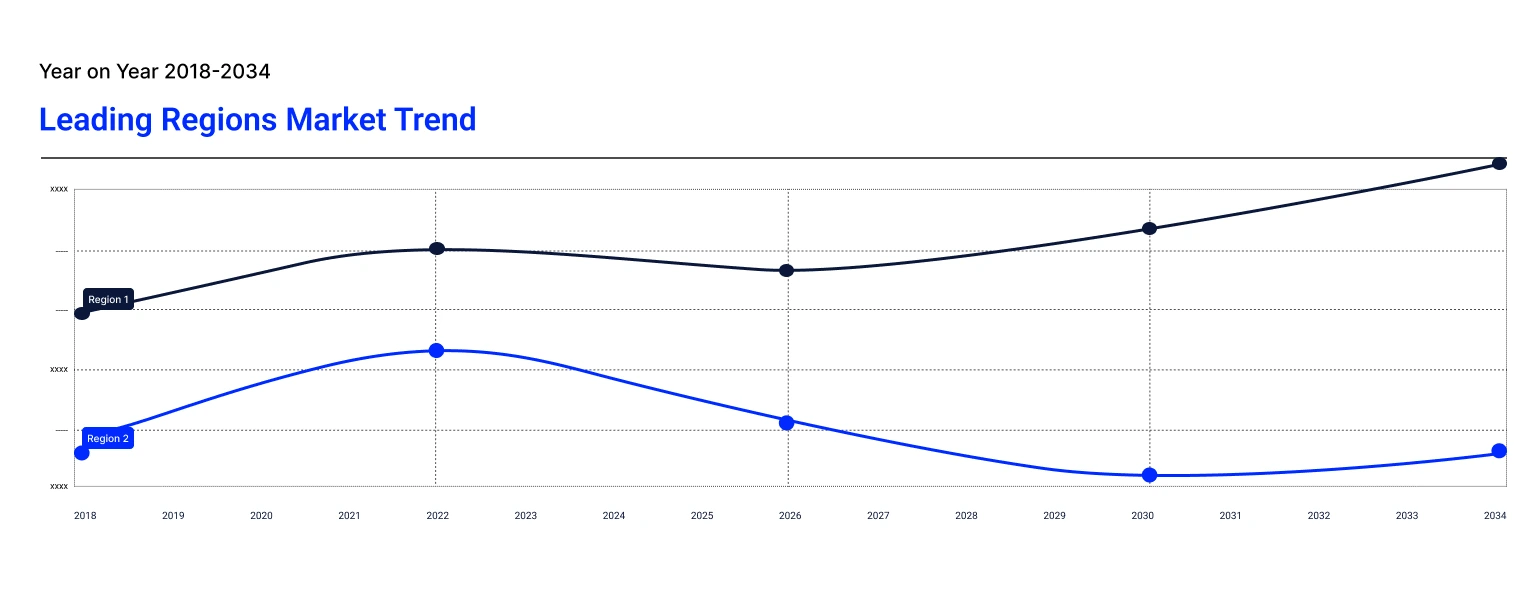
North America register the largest market share due to concentrated buyers, advanced vendors, and funding
North America leads because it hosts major OSINT vendors, deep capital markets and early government adopters that create demand signals. United States federal, state and municipal programs have accelerated enterprise procurement for OSINT, and many vendors originate here, driving product innovation and investment. The region’s advanced cybersecurity posture, strong private security market and integration needs (SIEM/SOAR ecosystems) create a mature commercial landscape.
The Asia Pacific open-source intelligence market’s growth is propelled by rapid digital adoption, expanded e-commerce, and complex geopolitical activity that raises demand for regional monitoring. Enterprises across APAC, from finance to telecoms, are adopting OSINT for fraud detection, content moderation and geopolitical risk. Vendors are localizing language models for Chinese, Hindi, Malay and other regional languages and partnering with local integrators to handle regulatory constraints.
| CAGR 2026-2035 - Market by | Country |
| India | 27.6% |
| China | 25.1% |
| Japan | 22.7% |
| UK | 22.6% |
| USA | 22.0% |
| Canada | XX% |
| Germany | 20.3% |
| France | XX% |
| Italy | XX% |
| Australia | XX% |
| Saudi Arabia | XX% |
| Brazil | XX% |
| Mexico | XX% |
Global industry is maturing from siloed scraping tools into integrated intelligence platforms where scale, trust and automation matter most. Most of the open-source intelligence market players are competing provenance and media-forensics to fight synthetic content, multimodal fusion that links text, imagery and signals, and enterprise integration with SIEM/SOAR and case management.
Niche open-source intelligence companies are differentiating through verified data marketplaces and auditable collection pipelines, while larger cloud and security vendors are bundling OSINT into broader security stacks. Opportunities are abundant in verticalized products, finance-grade KYC modules, telecom fraud detection, and supply-chain transparency suites, where buyers will pay premium for defensible, auditable intelligence.
Alfresco Software Inc. was established in 2005 and is headquartered in the United States. Traditionally an open-source enterprise content and records-management vendor, Alfresco is extending into OSINT adjacent use cases by enabling secure content pipelines and governance for collected public records.
Digital Clues GmbH was established in 2010 and is headquartered in Zurich, Switzerland. Known for its rapid open-source investigative tooling, Digital Clues built omnichannel collection and triage capabilities for law enforcement and corporate investigators.
Google LLC was established in 1998 and is headquartered in Mountain View, California. The firm is accelerating AI-assisted enrichment and entity linking, and delivering high-throughput signal processing that maps indicators across web, DNS and executable artifacts, helping SOCs and enterprise risk teams shift from raw alerts to contextualized threat stories that integrate with existing SecOps tooling.
Maltego Technologies GmbH was established in 2017 and is headquartered in Munich, Germany. Maltego is focused on link-analysis, visual graphs and rapid entity correlation for OSINT and cyber investigations. Its platform is innovating with integrated evidence capture, real-time monitor modules and certified export formats for legal admissibility.
*Please note that this is only a partial list; the complete list of key players is available in the full report. Additionally, the list of key players can be customized to better suit your needs.*
Another key player in the open-source intelligence market report includes Expert.ai and others.
Unlock the latest insights with our open-source intelligence market trends 2026 report. Discover regional growth patterns, consumer preferences, and key industry players. Stay ahead of competition with trusted data and expert analysis. Download your free sample report today and drive informed decisions in the market.
Artificial Intelligence Market
Europe Open Source Intelligence Market
North America Open Source Intelligence Market
Europe Operational Intelligence Market
Operational Intelligence Market


Upto 30% Off
USD


*While we strive to always give you current and accurate information, the numbers depicted on the website are indicative and may differ from the actual numbers in the main report. At Expert Market Research, we aim to bring you the latest insights and trends in the market. Using our analyses and forecasts, stakeholders can understand the market dynamics, navigate challenges, and capitalize on opportunities to make data-driven strategic decisions.*
Get in touch with us for a customized solution tailored to your unique requirements and save upto 35%!
In 2025, the market reached an approximate value of USD 15.13 Billion.
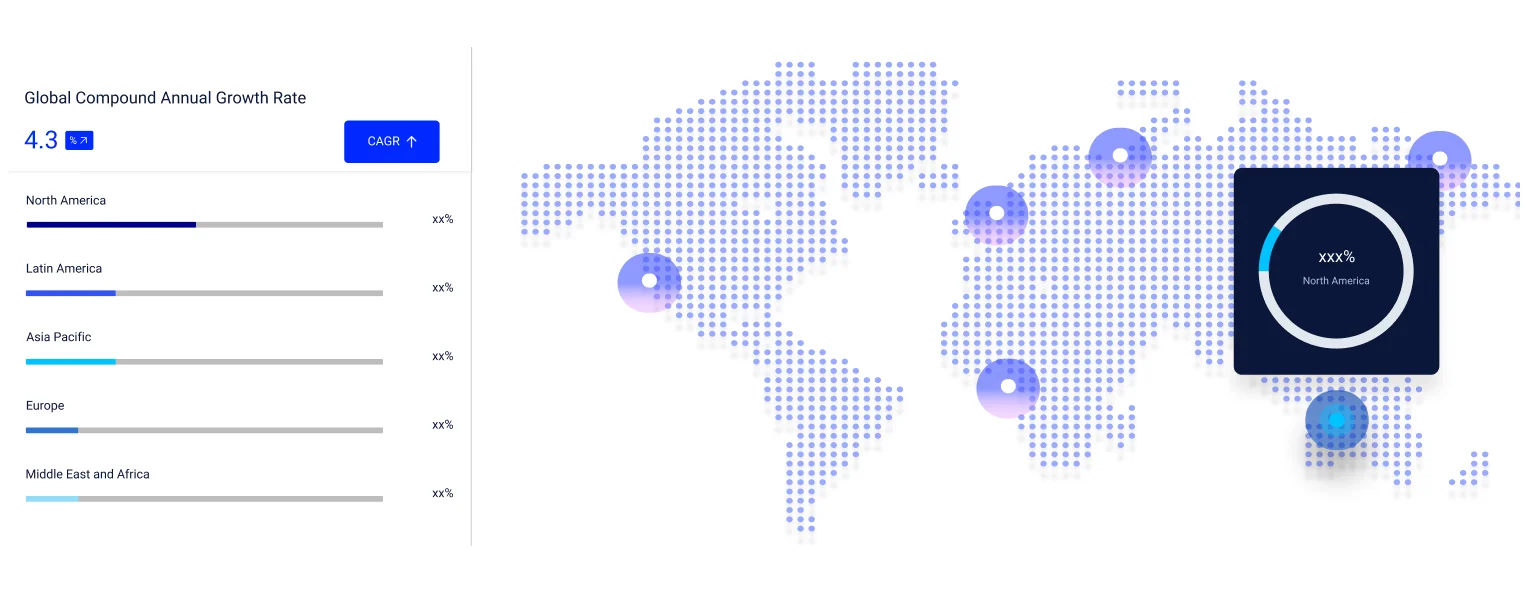
The market is projected to grow at a CAGR of 24.70% between 2026 and 2035.
The market is estimated to witness a healthy growth in the forecast period of 2026-2035 to reach over USD 137.56 Billion by 2035.
Building modular API connectors, adopting veracity scoring, partnering with national data custodians, offering verticalized intelligence modules, and embedding provenance logging to win audited enterprise contracts are what leading firms are doing.
The increasing penetration of social media, owing to the technological advancements in the IT sector is expected to augment the adoption of social media analytics in the coming years.
The major regions in the industry are North America, Latin America, the Middle East and Africa, Europe, and the Asia Pacific.
The market segmentation based on the sources of open-source intelligence are media, internet, public and government data, professional and academic publications, and commercial, among others.
The different techniques of open-source intelligence include text analytics, video analytics, social media analytics, geospatial analytics, and security analytics, among others.
The major end uses of open-source intelligence are government intelligence agencies, military and defence intelligence agencies, cyber security organisations, law enforcement agencies, financial services, and private specialised business, among others.
The key players in the market include Alfresco Software Inc., Digital Clues GmbH, Google LLC, Maltego Technologies GmbH, and Expert.ai, among others.
Procuring verifiable, high-quality datasets, managing privacy and legal risk, scaling multimodal processing, and monetizing auditable OSINT under tightening regulation are the sector’s primary operational and commercial hurdles.
Explore our key highlights of the report and gain a concise overview of key findings, trends, and actionable insights that will empower your strategic decisions.
| REPORT FEATURES | DETAILS |
| Base Year | 2025 |
| Historical Period | 2019-2025 |
| Forecast Period | 2026-2035 |
| Scope of the Report |
Historical and Forecast Trends, Industry Drivers and Constraints, Historical and Forecast Market Analysis by Segment:
|
| Breakup by Source |
|
| Breakup by Technique |
|
| Breakup by End Use |
|
| Breakup by Region |
|
| Market Dynamics |
|
| Competitive Landscape |
|
| Companies Covered |
|
| Report Price and Purchase Option | Explore our purchase options that are best suited to your resources and industry needs. |
| Delivery Format | Delivered as an attached PDF and Excel through email, with an option of receiving an editable PPT, according to the purchase option. |
Datasheet
One User
USD 2,499
USD 2,249
tax inclusive*
Single User License
One User
USD 3,999
USD 3,599
tax inclusive*
Five User License
Five User
USD 4,999
USD 4,249
tax inclusive*
Corporate License
Unlimited Users
USD 5,999
USD 5,099
tax inclusive*
*Please note that the prices mentioned below are starting prices for each bundle type. Kindly contact our team for further details.*
Flash Bundle
Small Business Bundle
Growth Bundle
Enterprise Bundle
*Please note that the prices mentioned below are starting prices for each bundle type. Kindly contact our team for further details.*
Flash Bundle
Number of Reports: 3
20%
tax inclusive*
Small Business Bundle
Number of Reports: 5
25%
tax inclusive*
Growth Bundle
Number of Reports: 8
30%
tax inclusive*
Enterprise Bundle
Number of Reports: 10
35%
tax inclusive*
How To Order

Select License Type
Choose the right license for your needs and access rights.

Click on ‘Buy Now’
Add the report to your cart with one click and proceed to register.

Select Mode of Payment
Choose a payment option for a secure checkout. You will be redirected accordingly.
Gain insights to stay ahead and seize opportunities.

Get insights & trends for a competitive edge.

Track prices with detailed trend reports.

Analyse trade data for supply chain insights.

Leverage cost reports for smart savings

Enhance supply chain with partnerships.

Connect For More Information
Our expert team of analysts will offer full support and resolve any queries regarding the report, before and after the purchase.
Our expert team of analysts will offer full support and resolve any queries regarding the report, before and after the purchase.
We employ meticulous research methods, blending advanced analytics and expert insights to deliver accurate, actionable industry intelligence, staying ahead of competitors.
Our skilled analysts offer unparalleled competitive advantage with detailed insights on current and emerging markets, ensuring your strategic edge.
We offer an in-depth yet simplified presentation of industry insights and analysis to meet your specific requirements effectively.





Share