

Consumer Insights
Uncover trends and behaviors shaping consumer choices today
Procurement Insights
Optimize your sourcing strategy with key market data
Industry Stats
Stay ahead with the latest trends and market analysis.
The rotorcraft blade system market attained a value of USD 9.96 Billion in 2025 and is projected to expand at a CAGR of 5.20% through 2035. The market is further expected to achieve USD 16.54 Billion by 2035. The drive towards military fleet modernization is prompting suppliers to develop lighter and stronger rotor blades to increase load capacity, survivability, endurance, and maintainability during various operations without increasing the cost of ownership over the blade’s life cycle.
Use of composite materials and additive manufacturing technology is opening up new opportunities in the rotorcraft blade system market for reducing weight and manufacturing of rotor blades in an easier way, with research working on flax fiber composite blades and 3D printed blades’ core. Another important reason behind this market’s growth is the increasing need for quiet and fast rotors, which is pushing firms to work on active-twist blades and improved aerodynamics.
Airbus Helicopters is striving towards increasing automation in rotorcraft blade manufacturing, signing a Letter of Intent with Airborne to implement Automated Ply Placement and Kit by Light at its Le Bourget plant, in November 2025. This plant manufactures blades and hubs made from composites for all Airbus helicopters and productivity increase is important as production increases. This trend indicates that blade suppliers should be able to provide a repeatable composite quality, shortened industrialization cycles and scalability of production, thereby boosting the rotorcraft blade system market growth.
Moreover, the product development is evolving from the passive blade technology to active, quieter and digital solutions as well. In January 2026, JAXA conducted tests of active twist rotor in wind tunnel with DLR and other foreign partners using a four-meter rotor to study vibration and noise reduction, propelling growth in the rotorcraft blade system market. It is increasing the number of technologies available to blade-systems suppliers due to the demands of high-speed compound rotorcraft, autonomous aircraft and advanced military aircraft to have better control over their aeroelasticity, acoustic characteristics and weight.
Compound Annual Growth Rate
5.2%
Value in USD Billion
2026-2035
Read more about this report - REQUEST FREE SAMPLE COPY IN PDF
NASA’s Dragonfly mission announced to employ an autonomous rotorcraft on Titan, thereby pushing demands on rotor technology towards reliability, efficiency, and endurance. Suppliers in the rotorcraft blade system market can manufacture lightweight and highly durable blades and components for autonomous aerial vehicles that operate for a long time in difficult conditions.
UAVOS released composite rotor blades for unmanned helicopters in order to improve their aerodynamics, durability, and efficiency. Manufacturers can engage in the development of new composite materials and aerodynamic designs of blades to cater to the growing unmanned rotorcraft market segment.
Airbus presented next-generation rotorcraft designs for NATO research on future capabilities, advanced rotorcraft design features, and performance capabilities. Suppliers of rotor blades can manufacture next-generation lightweight blades that can be used to build faster and more efficient military rotorcraft.
Leonardo presented its rotorcraft modernization and expansion program in Malaysia covering 28 helicopters and enhanced capabilities. Companies in the rotorcraft blade system market therefore have an opportunity to offer their products and services within the replacement and upgrade programs.
Advances in composite material are becoming another development trend in rotorcraft blade technology, as OEMs are trying to make blades lighter without compromising their fatigue resistance, stiffness, and aerodynamic efficiency. Carbon-fiber and glass-fiber reinforced structures allow manufacturers to achieve optimum blade design while minimizing weight and maintenance needs of such products, boosting growth in the rotorcraft blade system market. For example, in July 2026, Sora and HIP partnered on composite technologies, advancing lightweight rotorcraft structures and supporting next-generation aviation development and manufacturing. Government funding is currently used for the development of new aerospace material innovations through advanced manufacturing and sustainable materials initiatives.
Active rotor technology is becoming an interesting approach to simultaneous problems of noise reduction, vibration suppression, passenger comfort, and improved aerodynamic efficiency, redefining the rotorcraft blade system market dynamics. In May 2026, NASA advanced next-generation Mars helicopter rotor blades beyond Mach 1, demonstrating high-speed performance for future planetary flight missions. International cooperation between JAXA and Germany DLR and other research agencies is exhibiting growing interest in development of adaptive rotor technology. Active blades can change their aerodynamic properties during the rotor spinning process.
Rotor blade production is moving towards more automated processes as the OEMs strive for higher output, repeatability, and quality control. Airbus Helicopters intends to use Automated Ply Placement and Kit by Light technologies at its Le Bourget plant, specifically aimed at production of composite rotor blades and hubs. This trend in the rotorcraft blade system market is in line with general trends in aerospace manufacturing in which automated material deposition, digital work instructions, and process control replace labor-intensive production steps. Aerospace programs run by governments also aim to promote advanced manufacturing in their countries and digitalize their supply chains. Blade producers may take advantage by incorporating robotics, machine vision, digital twin technology, and automated inspection into production lines. In March 2026, TIGHITCO introduced patent-pending automated blade balancing technology, improving rotorcraft manufacturing efficiency, precision, and performance through automated processes.
The sustainability of rotorcraft blades is gaining increasing attention as part of a product development strategy in the industry as aerospace companies consider low-carbon materials, recyclable composites, and more sustainable manufacturing methods. The Clean Aviation Joint Undertaking of the European Union is promoting research on technologies which can make aviation cleaner, among which lightweight structures and advanced materials stand out. For instance, in October 2025, Uplift360 and Leonardo partnered to repurpose end-of-life composite rotor blades into prototype drone arms, supporting the rotorcraft blade system market value. Moreover, at the level of individual components, research focuses on bio-reinforcements and different composite architecture for rotor blades. Such trends create opportunities for providers of materials with reduced environmental footprint but maintaining high strength and fatigue resistance and ability to be certified.
Predictive maintenance is becoming increasingly relevant for rotorcraft blade systems, as unforeseen blade failure could lead to considerable aircraft downtime and expenses, broadening the rotorcraft blade system market scope. In response, manufacturers are creating sensors and inspection tools, which would allow them to detect fatigue, erosion, delamination, and blade degradation prior to failures. Airbus Helicopters is working on enhancing predictive maintenance in its aircraft family, whereas military users are also embracing condition-based maintenance solutions in their operations. In August 2026, GE Aerospace used AI to reduce aircraft engine turnaround times by five days, improving maintenance efficiency and operational availability.
Read more about this report - REQUEST FREE SAMPLE COPY IN PDF
The Expert Market Research's report titled “Rotorcraft Blade System Market Report and Forecast 2026-2035” offers a detailed analysis of the market based on the following segments:
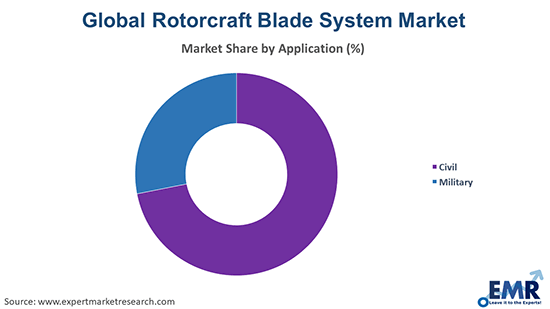
Market Breakup by Application
Key Insight: As per the rotorcraft blade system market report, the military rotor blades systems benefit from modernization of the defense fleets, complex mission demands, survival needs, and extended readiness periods. Civilian rotor blades systems are served by the use of helicopters for offshore transport, emergency medical services, firefighting, utilities, and passenger transport. In either case, manufacturers are focusing on building their products using light-weight composites, aerodynamic designs, erosion protection, and increased service life periods. While the military tends to emphasize durability, maintainability, and compatibility with new platforms, the civil market is more concerned with efficiency, noise performance, comfort of the passengers, and economics of maintenance.
Market Breakup by Region
Key Insight: The North American market enjoys well-developed defense procurement, helicopter fleets, aerospace production and MRO services. The European market is spurred by strict environmental requirements, rotorcraft R&D, and the need for quiet, lightweight, efficient rotor blades. The Asia Pacific rotorcraft blade system market is characterized by the presence of indigenous aerospace programs, growing defense fleets, demands for disaster relief activities and increased regional production capabilities. The Latin American market is focused on the use of helicopters in the energy sector, agriculture, utilities, security and in remote areas where there is a need for durable and easy-to-maintain blades. The Middle East and Africa markets offer opportunities associated with military modernization, offshore energy, infrastructure developments, and operations in dusty environments. Suppliers are increasingly concerned with lifecycle support, maintenance capabilities, supply chain management, certification and component technologies.
By application, military rotorcraft blade systems register the largest share of the market due to fleet modernization and mission-readiness requirements
The military application is currently generating maximum demand in the rotorcraft blade system market due to rotorcraft requirements for higher availability, survivability, payload capacity, and longer mission endurance. Manufacturers are currently concentrating on the use of light composite materials, high ballistic protection, erosion resistance, and blade systems suitable for tough operational cycles. Modernization of fleets of attack, transport, reconnaissance, and multi-role helicopters might also bring replacement opportunities in blades and blade systems. In March 2026, MD Helicopters launched a six-bladed 564 helicopter, enhancing performance, efficiency, and operational capabilities for demanding missions.
The civil application segment is becoming the most promising one owing to an expansion of helicopter fleets for various utilities, emergency services, offshore flights, tourism, and urban air transportation. The blade system manufacturers target the quieter aerodynamics of blades, low vibration, improved fuel consumption rates, and longer inspection intervals in order to cater to customer needs and ensure operator economics and passengers' comfort. It is important to note that offshore energy and search-and-rescue helicopters operate in the most intensive service cycles under difficult environmental conditions.
Read more about this report - REQUEST FREE SAMPLE COPY IN PDF
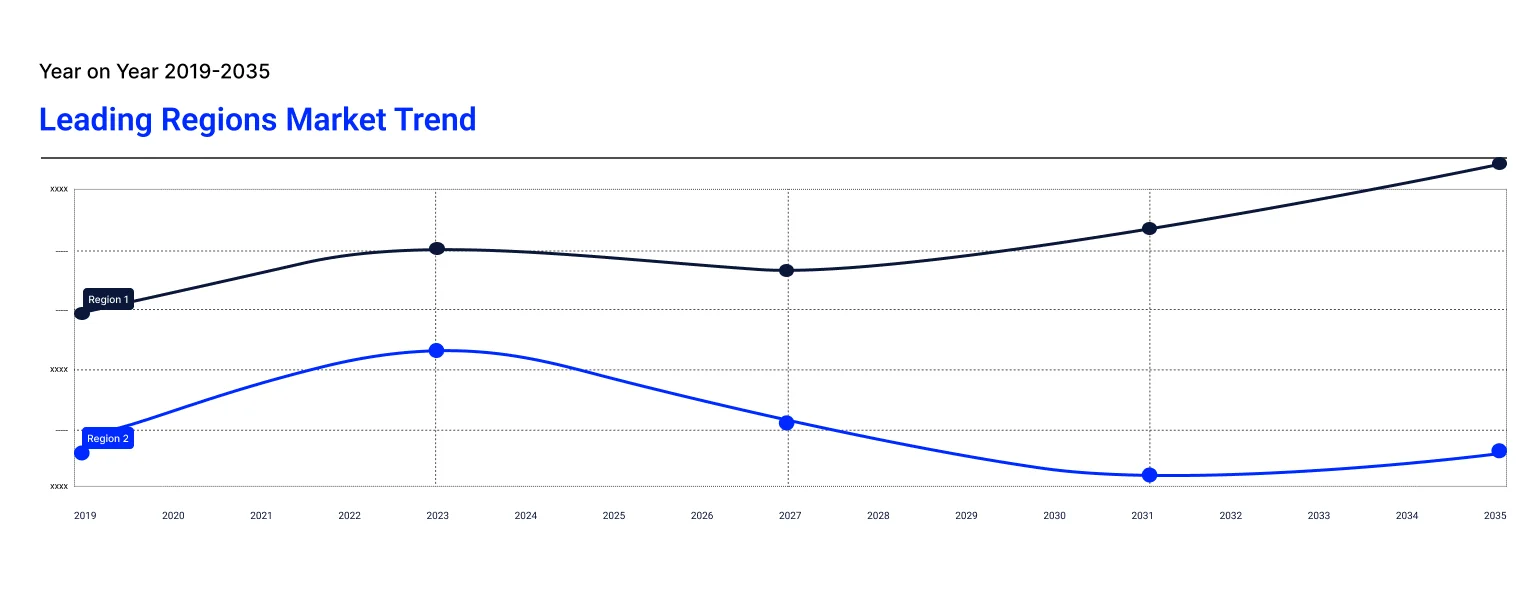
North America registers a substantial share of the market due to extensive defense fleets and advanced aerospace manufacturing capabilities
The North American region can be considered as the leading rotorcraft blade system market due to the significant number of military helicopters, the presence of aerospace companies, and developed MRO system. The United States continues to remain important as the defense projects need constant blade replacement and upgrading of the systems for various types of helicopters. Suppliers are able to offer advanced materials, digital testing of blades, erosion-resistant solutions, and automation of the manufacturing process. In August 2026, the United States Navy awarded a USD 107 million contract for new Marine One rotor blades, supporting fleet modernization, reliability, and operational readiness.
The fastest-growing rotorcraft blade system market is represented by Asia Pacific where the helicopter capabilities are being enhanced to serve the military and other purposes such as disaster management, infrastructure development, offshore operations, and civilian transportation. Various countries of this region including India, China, Japan, South Korea, and Australia are trying to develop the capabilities of their aerospace industries and increasing the share of local manufacturing. It creates opportunities for blade suppliers to manufacture products locally and participate in composite manufacturing and repair processes. In March 2026, LifeFlight and Leonardo unveiled an Asia Pacific helicopter training program, enhancing pilot skills, safety standards, and advanced rotorcraft operational readiness.
The market is highly competitive, with rotorcraft blade system companies as well as specialist parts suppliers focused on the use of composites, aerodynamic performance, automation of production process, durability, and life cycle management. Airbus Helicopters, Kaman, Collins Aerospace, and others aim to create new blade systems with advanced architecture and manufacturing techniques that would allow them to boost the aircraft performance, keeping its maintenance needs within reasonable limits. One way to gain competitive advantage is to develop light weight blades that would possess enough structural integrity and fatigue resistance to improve payload and fuel efficiency.
Leading rotorcraft blade system market players may be able to distinguish themselves through special coatings that increase resistance to erosion, built-in monitoring sensors, digital inspections, and predictive maintenance techniques. The rise of high-speed rotorcraft and urban air mobility platforms provides opportunities for the development of adaptive and low-noise blades. Blade companies with strong certification track record, flexible manufacturing capacities, reliable MRO operations, and OEM connections have potential to secure replacement and platform-specific orders.
Founded in 1988, Advanced Technologies, Inc. is based in the United States. The firm provides solutions for the development of composite rotor blades and aerospace structures for both military and commercial rotorcraft. Services offered by the firm include design, manufacture, repair, and engineering of blades, giving customers an opportunity to purchase specialized blades for their aircraft programs.
Founded in 1945, Kaman Corporation is based in Bloomfield, Connecticut, United States. The firm develops and manufactures composite rotor blades and aerodynamic structures along with other aerospace components. The company is concentrating on developing advanced blade materials, protection systems, and lifecycle management services for military and commercial helicopters programs.
Founded in 1916, The Boeing Company has its headquarters in Washington, United States. Boeing conducts research into the development of rotorcraft as part of its defense, space, and security division, which includes the development of military helicopters and autonomous vehicles. In terms of rotorcraft, Boeing focuses more on aerodynamic performance, digital design, autonomous flight, and next generation blade system technology.
Founded in 1972, Airbus SE has its headquarters in Leiden, Netherlands. The company’s subsidiary, Airbus Helicopters, is responsible for rotorcraft development and blade technology development for commercial and military use. The company is looking to advance into the field of automated composites, low noise aerodynamics, and increased efficiency in blade manufacturing and maintenance.
*Please note that this is only a partial list; the complete list of key players is available in the full report. Additionally, the list of key players can be customized to better suit your needs.*
Unlock the latest insights with our rotorcraft blade system market trends 2026 report. Discover regional growth patterns, consumer preferences, and key industry players. Stay ahead of competition with trusted data and expert analysis. Download your free sample report today and drive informed decisions in the market.


Upto 15% Off
USD
$2499 $2249
$3999 $3599
$4999 $4249
$5999 $5099


*While we strive to always give you current and accurate information, the numbers depicted on the website are indicative and may differ from the actual numbers in the main report. At Expert Market Research, we aim to bring you the latest insights and trends in the market. Using our analyses and forecasts, stakeholders can understand the market dynamics, navigate challenges, and capitalize on opportunities to make data-driven strategic decisions.*
The global rotorcraft blade system market is estimated to grow at a CAGR of approximately 5.20% in the forecast period of 2026-2035.
Stakeholders are developing lightweight composites, expanding automated manufacturing, integrating embedded sensors, strengthening MRO partnerships, improving erosion protection, and targeting adaptive blade technologies for next-generation rotorcraft platforms.
The technological advancements and the rising demand for new generation helicopters are the key trends guiding the growth of the industry.
The major regions in the industry are North America, Latin America, the Middle East and Africa, Europe, and the Asia Pacific.
Civil and military are the major applications of the product in the market.
The major players in the industry are Advanced Technologies, Inc., Kaman Corporation, The Boeing Company, and Airbus SE, among others.
In 2025, the market attained a value of nearly USD 9.96 Billion.
The market is estimated to witness a healthy growth in the forecast period of 2026-2035 to reach about USD 16.54 Billion by 2035.
Rotorcraft blade companies face strict certification requirements, high composite manufacturing costs, lengthy development cycles, material supply risks, complex repair processes, demanding fatigue testing, and pressure to deliver lighter components without compromising safety.
Explore our key highlights of the report and gain a concise overview of key findings, trends, and actionable insights that will empower your strategic decisions.
| REPORT FEATURES | DETAILS |
| Base Year | 2025 |
| Historical Period | 2019-2025 |
| Forecast Period | 2026-2035 |
| Scope of the Report |
Historical and Forecast Trends, Industry Drivers and Constraints, Historical and Forecast Market Analysis by Segment:
|
| Breakup by Application |
|
| Breakup by Region |
|
| Market Dynamics |
|
| Competitive Landscape |
|
| Companies Covered |
|
| Report Price and Purchase Option | Explore our purchase options that are best suited to your resources and industry needs. |
| Delivery Format | Delivered as an attached PDF and Excel through email, with an option of receiving an editable PPT, according to the purchase option. |
Datasheet
One User
USD 2,499
USD 2,249
tax inclusive*
Single User License
One User
USD 3,999
USD 3,599
tax inclusive*
Five User License
Five User
USD 4,999
USD 4,249
tax inclusive*
Corporate License
Unlimited Users
USD 5,999
USD 5,099
tax inclusive*
*Please note that the prices mentioned below are starting prices for each bundle type. Kindly contact our team for further details.*
Flash Bundle
Small Business Bundle
Growth Bundle
Enterprise Bundle
*Please note that the prices mentioned below are starting prices for each bundle type. Kindly contact our team for further details.*
Flash Bundle
Number of Reports: 3
20%
tax inclusive*
Small Business Bundle
Number of Reports: 5
25%
tax inclusive*
Growth Bundle
Number of Reports: 8
30%
tax inclusive*
Enterprise Bundle
Number of Reports: 10
35%
tax inclusive*
How To Order

Select License Type
Choose the right license for your needs and access rights.

Click on ‘Buy Now’
Add the report to your cart with one click and proceed to register.

Select Mode of Payment
Choose a payment option for a secure checkout. You will be redirected accordingly.
Strategic Solutions for Informed Decision-Making
Gain insights to stay ahead and seize opportunities.

Get insights & trends for a competitive edge.

Track prices with detailed trend reports.

Analyse trade data for supply chain insights.

Leverage cost reports for smart savings

Enhance supply chain with partnerships.

Connect For More Information
Our expert team of analysts will offer full support and resolve any queries regarding the report, before and after the purchase.
Our expert team of analysts will offer full support and resolve any queries regarding the report, before and after the purchase.
We employ meticulous research methods, blending advanced analytics and expert insights to deliver accurate, actionable industry intelligence, staying ahead of competitors.
Our skilled analysts offer unparalleled competitive advantage with detailed insights on current and emerging markets, ensuring your strategic edge.
We offer an in-depth yet simplified presentation of industry insights and analysis to meet your specific requirements effectively.




