

Consumer Insights
Uncover trends and behaviors shaping consumer choices today
Procurement Insights
Optimize your sourcing strategy with key market data
Industry Stats
Stay ahead with the latest trends and market analysis.
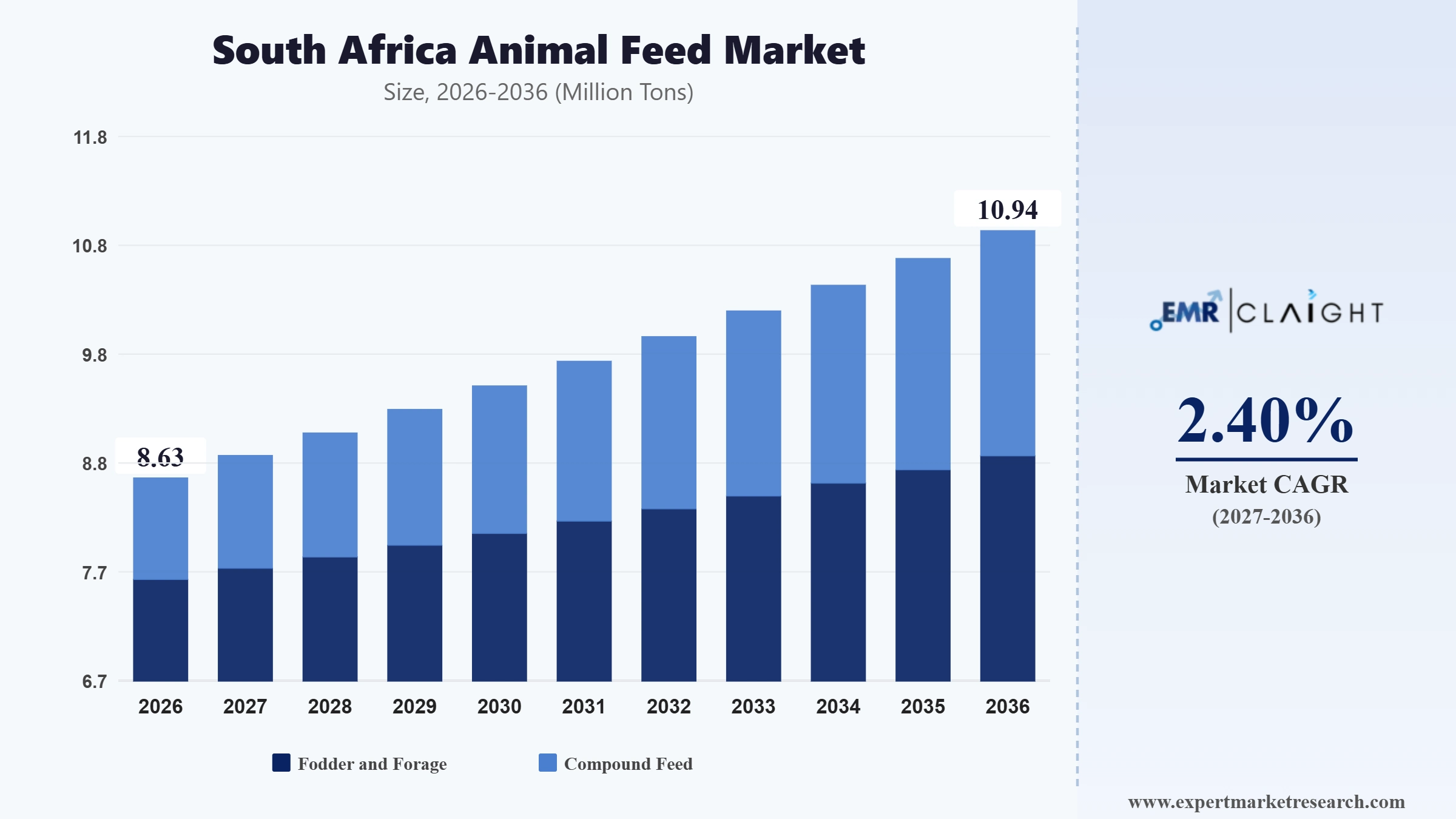
The South Africa animal feed market attained a volume of 8.43 Million Tons in 2025 and is projected to expand at a CAGR of 2.40% through 2035. The market is further expected to achieve a volume of 10.69 Million Tons by 2035. The growing need for cheaper poultry, dairy, and meat production is driving feed suppliers to increase efficiency in nutrition, use locally-sourced materials, and create customized feed products according to species for commercial farms around the country.
There are two driving factors that are affecting purchasing decisions among commercial feed buyers while expanding the overall South Africa animal feed market scope. First is the variability in weather conditions and uneven availability of grains that are motivating feed suppliers to diversify procurement arrangements. Secondly, increasingly stringent product registration and quality standards make it necessary to conduct laboratory tests and have proper formula and supplier information available.
One key trend in the South Africa animal feed market is the pursuit of better feed conversion efficiencies, diversified sources of proteins, and low production costs for livestock integrators. Notable in this respect is the development of insect feed ingredients by South African biotech firms such as Insecta Proteins and Khepri Biosciences, which produce proteins from insects as substitutes to traditional fishmeal and other protein sources. This business opportunity is commercially relevant since the Animal Feed Manufacturers Association (AFMA) suggests that its members make up about 60% of the animal feed manufacturing activity in South Africa.
Traditional feed manufacturing processes are closely tied to the poultry, dairy, beef, pork, pet, and aquaculture industries. The poultry sector is particularly significant since feed cost influences the profitability of broiler and egg production, accelerating the overall demand in the South Africa animal feed market. According to the Department of Trade, Industry and Competition, in January 2025, South Africa pursued an export strategy in the poultry sector based on the Poultry Sector Master Plan. As part of this plan, it was pointed out that the cost of feed, export constraints, and imports were problems faced by the sector.
Read more about this report - REQUEST FREE SAMPLE COPY IN PDF
The government of North West provided assistance to Taung lucerne growers in the form of a packhouse, providing better logistics and feed chain for forages. Companies in the South Africa animal feed market can collaborate with lucerne producers to get their regular forage supply, create ruminants feed from the local resources, and avoid feed procurement challenges.
Increased profitability of Rainbow Chicken emphasizes the significance of proper poultry farming and feed cost control. Feed producers may produce economically viable feed for poultry birds with nutritional balance and optimize farm operations.
Olam Agri introduced Tru Value cattle feed in Nigeria by offering beef and dairy feeds with emphasis on weight gains, finishing and increased milk production. Manufacturers in the South Africa animal feed market can modify specialized cattle feeds according to needs of their beef and dairy farmers, stressing consistent formulation and productive output.
RCL Foods agreed to acquire Martin & Martin for ZAR 695 million. Business opportunities for animal nutrition firms include acquisitions and collaboration in the manufacture of premium pet nutrition.
Feed innovation in South Africa increasingly focuses on incorporating insect protein into feed formulations to reduce dependence on conventional protein sources and improve resource efficiency. Insecta Proteins uses organic fruit waste to make black soldier fly larvae feed while Khepri Biosciences makes technology to convert organic waste into animal feed and fertilizer. In May 2026, ADM launched eight functional plant-based protein ingredients, expanding its portfolio to improve nutritional performance and formulation flexibility for food manufacturers. Such innovations in the South Africa animal feed market give feed mills a chance to consider alternatives to protein sources for poultry, aquaculture, and specialty feed formulations.
Feed mills and feed ingredient suppliers are giving increasing attention to additives that increase feed stability, optimize nutrient digestion, and maximize efficiency of feed production. Bitek Industries from South Africa, for example, manufactures technical additives, preservatives, and biosecurity products for livestock and food industry. This trend in the South Africa animal feed market demonstrates how one can differentiate its offerings not only on feed quality but also on the farm hygiene. Antioxidants and preservatives can be used to protect ingredients from oxidation and spoilage, especially under difficult storage conditions. In May 2023, Evonik upgraded Biolys with higher L-lysine concentration, improving livestock nutrition efficiency while reducing feed additive requirements and production emissions.
Feeding poultry continues to be a strategic issue due to the impact of feed price on profitability in broiler and egg production, accelerating the South Africa animal feed market penetration. Feed companies are focusing on developing formulations that guarantee predictable growth, good feed efficiency, and flock uniformity without raising the cost of ingredients. In July 2025, De Heus expanded feed operations across Uganda and Kenya, opening three modern factories to improve local feed availability and quality. The development of processing capacity in terms of infrastructure and investments in poultry projects would help feed manufacturers work with integrators for customized feed formulation, scheduling, and performance tracking.
The South Africa animal feed market observes increasing animal health hazards that make feed hygiene, feed ingredients management, and coordinated biosecurity important in livestock supply chains. South Africa's Department of Agriculture introduced the first mass poultry vaccination program in June 2025 in order to address avian influenza in addition to improving vaccine delivery and traceability of disease. Although vaccination is not a feed issue, the prevention of disease has business implications for the feed company providing feed to those farms affected by the disease. In November 2025, RMIS launched Phase 2 of its livestock traceability platform, integrating digital movement records to strengthen disease monitoring, export compliance, and transparency.
Requirements regarding product registration are affecting how new formulas, additives, and alternative animal feed ingredients are introduced in the region, thereby redefining the South Africa animal feed market trends and dynamics. As per the law called The Fertilizers, Farm Feeds, Agricultural Remedies and Stock Remedies Act, 1947, any manufacturer, importer, or seller of any farm feed products that are regulated must comply with product registration requirements. Moreover, government guidelines recommend that products should be subjected to analysis in an accredited laboratory, where the validity of such registrations is usually three years. In March 2025, Kemin Industries launched PROSIDIUM, a peroxy-acid-based feed sanitizer targeting Salmonella and viruses while improving livestock feed biosecurity and safety.
The Expert Market Research's report titled “South Africa Animal Feed Market Report and Forecast 2026-2035” offers a detailed analysis of the market based on the following segments:
Market Breakup by Type
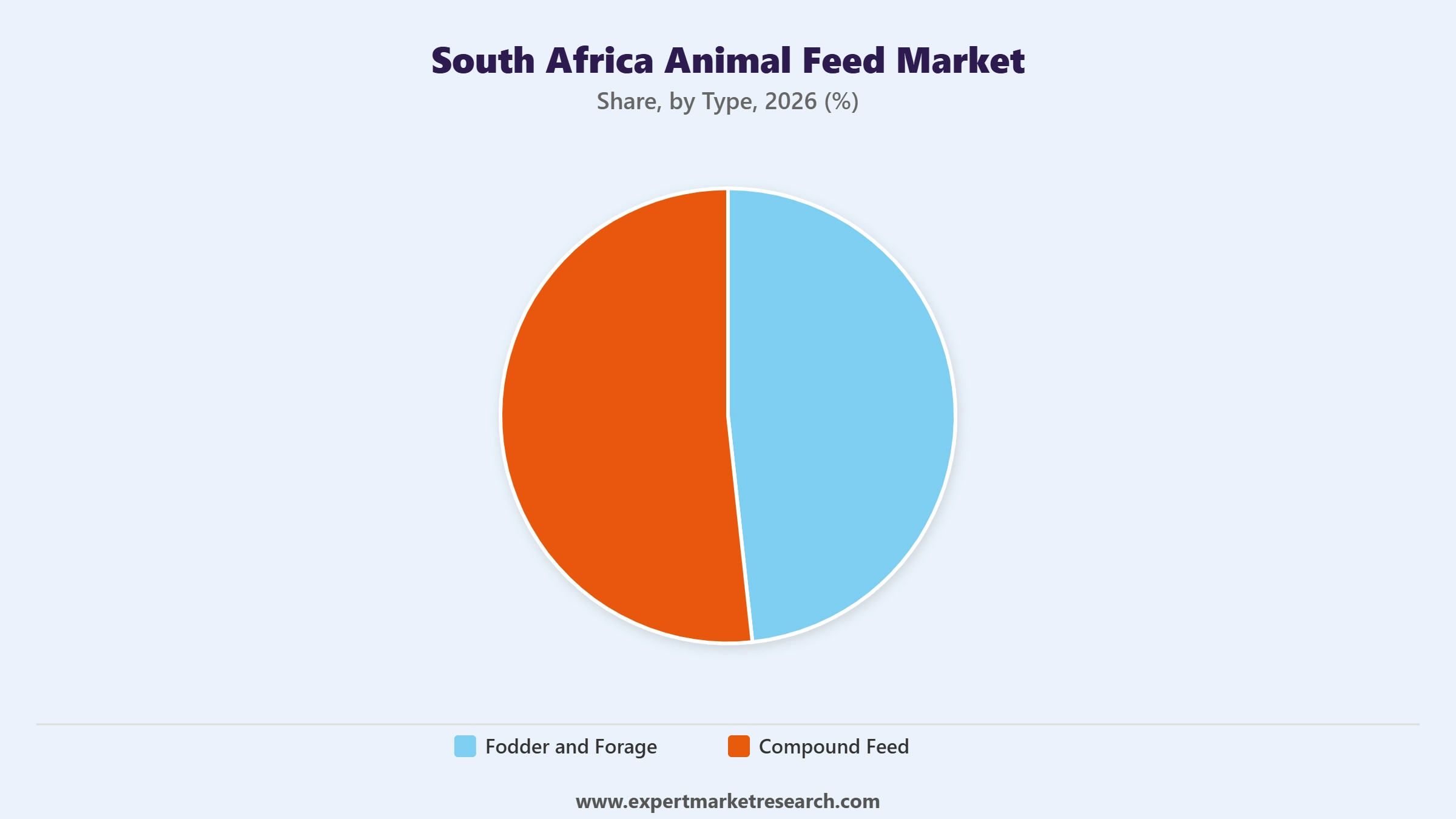
Key Insight: The form segmentation considered in the South Africa animal feed market report describes two distinct ways of managing the nutrition of animals. Compound feed is used in intensive farming systems where nutrients need to be specified, delivered, and fed with high degrees of control. Forage and fodder remain essential for ruminants, including cattle, as they support healthy rumen function and efficient digestion. In September 2026, Rwanda allocated Rwf100 million to youth-led hydroponic fodder projects, targeting year-round livestock feed availability and reduced dry-season milk shortages. The feed manufacturers have been working to balance the standardization of the composition of the feeds with seasonal feeding needs.
Market Breakup by Livestock
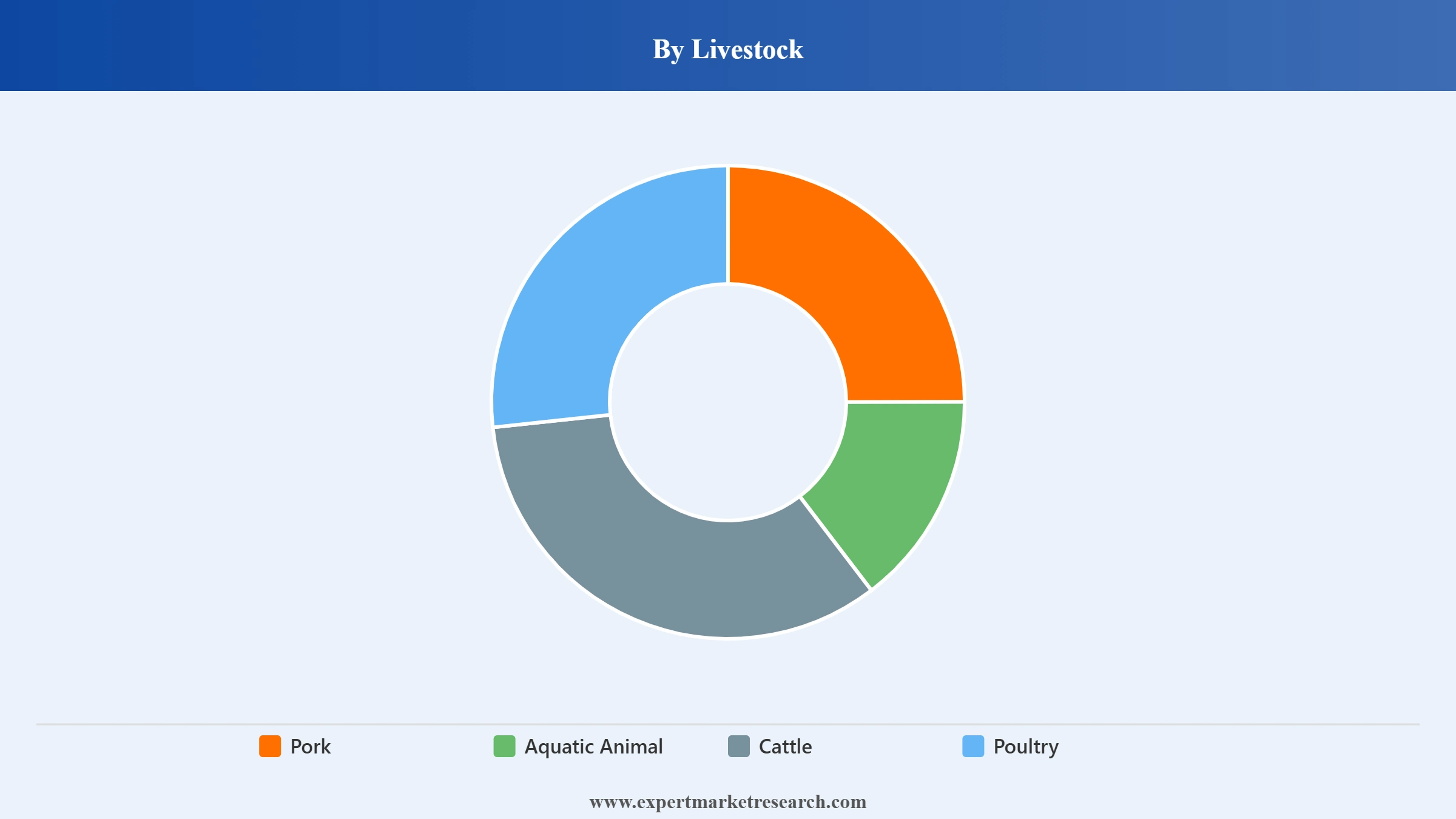
Key Insight: Poultry continues to be the main source of demand as broilers and layers require constant supply of feed, which is nutritionally complete, widening the scope of South Africa animal feed market penetration. Beef cattle have their specific needs according to grazing, feedlot finishing and milk production, where the demand depends on availability of forage and goals set for productivity. Pork producers aim at a quick growth rate and reproduction, while energy and amino acids need to be well balanced. Aquatic animal feed is dependent on investment in aquaculture, special nutritional needs and ability to stay in water as a pelleted product.
Market Breakup by Raw Material
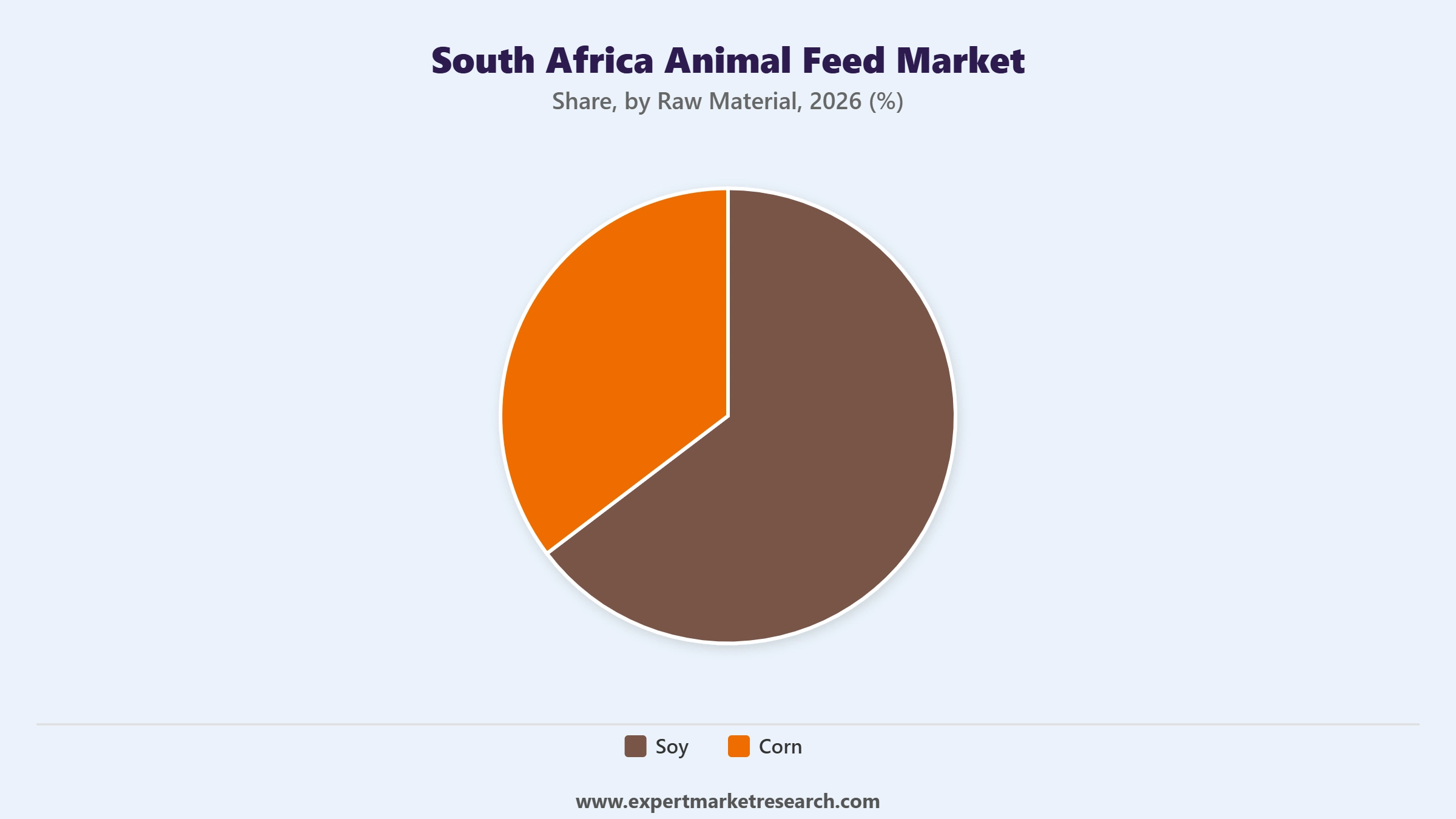
Key Insight: Corn meets the energy needs of different types of livestock animals, including poultry and pigs, accelerating demand in the South Africa animal feed market. Hence, the availability of grains and their procurement costs form a major concern for feed formulation. Soy is used for providing plant protein in concentrate form and is particularly useful in case of balancing amino acid needs with the cost of ration. Other ingredients are used by companies to formulate nutrients in different forms, which include waste products from wheat, bran, oil seed meals, fats, minerals, and other specialty additives. Substitution of ingredients depends on the factors of digestibility and cost of formulation.
Read more about this report - REQUEST FREE SAMPLE COPY IN PDF
By type, compound feed accounts for the dominant position in the market, supported by poultry integration, standardized nutrition, and commercial livestock productivity
The compound feed category dominates the South Africa animal feed market, due to the need for poultry, pigs and dairying businesses to feed their animals with a balance of energy, proteins, vitamins and minerals. South Africa-based companies are emphasizing accuracy of ration formulation, consistency of ingredients and efficient use of feeds to help farmers deal with fluctuating prices of inputs. Soybean crushing facilities are improving access to oilcakes that form an important protein source, while yellow maize provides the mainstay of energy formulation. In February 2026, De Heus opened a USD 23 million Kenyan feed mill with 240,000-ton annual capacity, supplying poultry, pig, and cattle farmers.
Read more about this report - REQUEST FREE SAMPLE COPY IN PDF
Fodder and forages help maintain livestock such as cattle through grazing, haying, ensiling, and preserved residues of crops. The demand depends on pasture quality, rainfall, and the need to maintain livestock condition when grazing becomes limited. Dairy and beef farming companies are using forage conservation plans to deal with seasonality of feed supply. Opportunities in the South Africa animal feed market exist for providers of better forage seeds, silage additives, and baling facilities.
By livestock, the poultry category dominates the market driven by affordable protein consumption, intensive production, and integrated supply chains
The poultry sector significantly boosts the South Africa animal feed market growth due to the presence of mature broiler poultry industry, commercial eggs production and the demand for affordable animal protein. Manufacturers focus on easily digestible proteins, amino acids' composition, enzymes' supplementation and feed conversion performance. In August 2026, Aviagen South Africa opened expanded Schikfontein Farm facilities, strengthening local breeding capacity, biosecurity, and poultry production support across the country.
Read more about this report - REQUEST FREE SAMPLE COPY IN PDF
The sector of aquatic animals' feeds offers South Africa animal feed market opportunities for specialized feeding, since aquaculture companies strive for steady growth, better feed use and loss reduction. Producers need specialized pellets with appropriate protein content, oil, water resistance, and digestibility. South African producers may try developing innovative formulas with alternative proteins, properly processed plants and functional additives to decrease dependence on traditional marine products. However, commercial development depends on the capacity of aquaculture farms, species choice, price level, and proper delivery.
By raw material, the corn sector remains the leading energy ingredient, supported by poultry feed demand, local grain availability, and formulation economics
Corn, especially yellow maize, is an essential energy feed component that is accelerating the South Africa animal feed market growth. The extensive usage of corn in feeding programs is based on existing grain purchase networks, suitability for poultry and swine, and the capability of providing consistent energy. AFMA industrial analysis classifies maize as an important animal feed ingredient, making production levels, grain quality, transportation costs, and seasonality relevant when purchasing.
Read more about this report - REQUEST FREE SAMPLE COPY IN PDF
Soybean meal is an essential protein component of poultry, pig, dairy, and aquaculture diets due to its high protein content and desirable amino acid composition. An increased domestic capacity for processing soybeans into soybean oilcake has decreased dependency on foreign sources of protein meals in South Africa. In September 2026, United Soybean Board launched four advisory teams targeting swine, poultry, dairy, and beef sectors to accelerate commercial adoption of soy-based feed solutions.
Competitive advantages in the industry include formulation knowledge, ingredient supply capability, production capacity, and the capability to serve the differing needs of various livestock production systems. Leading South Africa animal feed market players are focusing on unique premixes, feed additives, nutritional consultation, and formulations that enhance feed conversion and animal health. Poultry-oriented businesses have an edge from industrial demand, whereas companies dealing with cattle and dairy nutrition have a distinctive edge from their ability to manage forages and feeding schemes at specific production stages.
Aquaculture represents a specialized sector offering competitive opportunities for pellet development, alternative proteins, and water stable formulas. Ingredient supply is also a vital competitive factor since better local production of soybean would result in higher supply of protein meals, and the supply of maize would continue to be weather-sensitive. South Africa animal feed companies can create competitive advantages through investments in quality control, traceable procurement, technical partnerships, and flexible production capabilities. Digital ration formulation, farm performance tracking, and waste-to-feed ingredients represent some additional competitive advantages.
Founded in 1980, Alltech is headquartered in Kentucky, United States, and mainly focuses on animal nutrition and agricultural biotechnology. It is known for its yeast technology products, nutritional supplements, feed additives, and other products aimed at maximizing animal performance. With its fermentation knowledge base, there are many possibilities for increasing feed efficiency, digestion, and nutrient absorption in livestock farming.
Nutreco was founded in 1994 and is headquartered in the Netherlands. Leveraging its two companies Trouw Nutrition and Skretting, Nutreco produces feed specialties, premixes, nutritional services, and aquafeeds. The range of its competencies includes livestock nutrition and fish farming, thus making it possible to develop special formulas.
New Hope Liuhe Company is a Chinese firm that operates in agriculture and animal husbandry sectors. The company is listed at the Shenzhen Stock Exchange of China since 1998. The parent company of the corporation is called New Hope Group. The company’s main scope of business includes feeding, pig breeding, and slaughtering.
Cargill was founded in 1865, and the company’s headquarters is located in Minnesota, United States. The company provides animal nutrition products and engages in grain trading and agriculture. In South Africa, the firm has been operating since 1981 in fields such as animal nutrition and grain.
Other key players in the market include De Heus Voeders BV, BRF S.A., Country Bird Holdings Limited, AFGRI Operations (Pty) Limited, RCL FOODS Ltd., and Nova Feeds, among others.
*Please note that this is only a partial list; the complete list of key players is available in the full report. Additionally, the list of key players can be customized to better suit your needs.*
Unlock the latest insights with our South Africa animal feed market trends 2026 report. Discover regional growth patterns, consumer preferences, and key industry players. Stay ahead of competition with trusted data and expert analysis. Download your free sample report today and drive informed decisions in the market.


Upto 15% Off
USD
$2499 $2249
$3999 $3599
$4999 $4249
$5999 $5099


*While we strive to always give you current and accurate information, the numbers depicted on the website are indicative and may differ from the actual numbers in the main report. At Expert Market Research, we aim to bring you the latest insights and trends in the market. Using our analyses and forecasts, stakeholders can understand the market dynamics, navigate challenges, and capitalize on opportunities to make data-driven strategic decisions.*
In 2025, the market reached an approximate volume of 8.43 Million Tons.
The market is projected to grow at a CAGR of 2.40% between 2026 and 2035.
The market is estimated to witness healthy growth in the forecast period of 2026-2035 to reach 10.69 Million Tons by 2035.
Stakeholders are diversifying grain procurement, expanding local protein partnerships, testing alternative ingredients, strengthening quality controls, developing species-specific formulations, and using farm performance data to demonstrate measurable nutritional and commercial benefits.
The key trends aiding the market include demand for protein-based products, sustainable methods, and rising support from the government.
Based on type, market segmentations include fodder and forage and compound feed.
The key players in the market include Alltech, Inc., Nutreco N.V., New Hope Liuhe Co., Ltd., Cargill, Incorporated, De Heus Voeders BV, BRF S.A., Country Bird Holdings Limited, AFGRI Operations (Pty) Limited, RCL FOODS Ltd., and Nova Feeds, among others.
Companies are managing volatile maize and soybean prices, drought-related supply disruptions, disease outbreaks, transport constraints, regulatory compliance costs, and pressure to maintain feed quality while offering commercially affordable formulations.
Explore our key highlights of the report and gain a concise overview of key findings, trends, and actionable insights that will empower your strategic decisions.
| REPORT FEATURES | DETAILS |
| Base Year | 2025 |
| Historical Period | 2019-2025 |
| Forecast Period | 2026-2035 |
| Scope of the Report |
Historical and Forecast Trends, Industry Drivers and Constraints, Historical and Forecast Market Analysis by Segment:
|
| Breakup by Type |
|
| Breakup by Livestock |
|
| Breakup by Raw Material |
|
| Market Dynamics |
|
| Competitive Landscape |
|
| Companies Covered |
|
Datasheet
One User
USD 2,499
USD 2,249
tax inclusive*
Single User License
One User
USD 3,999
USD 3,599
tax inclusive*
Five User License
Five User
USD 4,999
USD 4,249
tax inclusive*
Corporate License
Unlimited Users
USD 5,999
USD 5,099
tax inclusive*
*Please note that the prices mentioned below are starting prices for each bundle type. Kindly contact our team for further details.*
Flash Bundle
Small Business Bundle
Growth Bundle
Enterprise Bundle
*Please note that the prices mentioned below are starting prices for each bundle type. Kindly contact our team for further details.*
Flash Bundle
Number of Reports: 3
20%
tax inclusive*
Small Business Bundle
Number of Reports: 5
25%
tax inclusive*
Growth Bundle
Number of Reports: 8
30%
tax inclusive*
Enterprise Bundle
Number of Reports: 10
35%
tax inclusive*
How To Order

Select License Type
Choose the right license for your needs and access rights.

Click on ‘Buy Now’
Add the report to your cart with one click and proceed to register.

Select Mode of Payment
Choose a payment option for a secure checkout. You will be redirected accordingly.
Strategic Solutions for Informed Decision-Making
Gain insights to stay ahead and seize opportunities.

Get insights & trends for a competitive edge.

Track prices with detailed trend reports.

Analyse trade data for supply chain insights.

Leverage cost reports for smart savings

Enhance supply chain with partnerships.

Connect For More Information
Our expert team of analysts will offer full support and resolve any queries regarding the report, before and after the purchase.
Our expert team of analysts will offer full support and resolve any queries regarding the report, before and after the purchase.
We employ meticulous research methods, blending advanced analytics and expert insights to deliver accurate, actionable industry intelligence, staying ahead of competitors.
Our skilled analysts offer unparalleled competitive advantage with detailed insights on current and emerging markets, ensuring your strategic edge.
We offer an in-depth yet simplified presentation of industry insights and analysis to meet your specific requirements effectively.




