

Consumer Insights
Uncover trends and behaviors shaping consumer choices today
Procurement Insights
Optimize your sourcing strategy with key market data
Industry Stats
Stay ahead with the latest trends and market analysis.
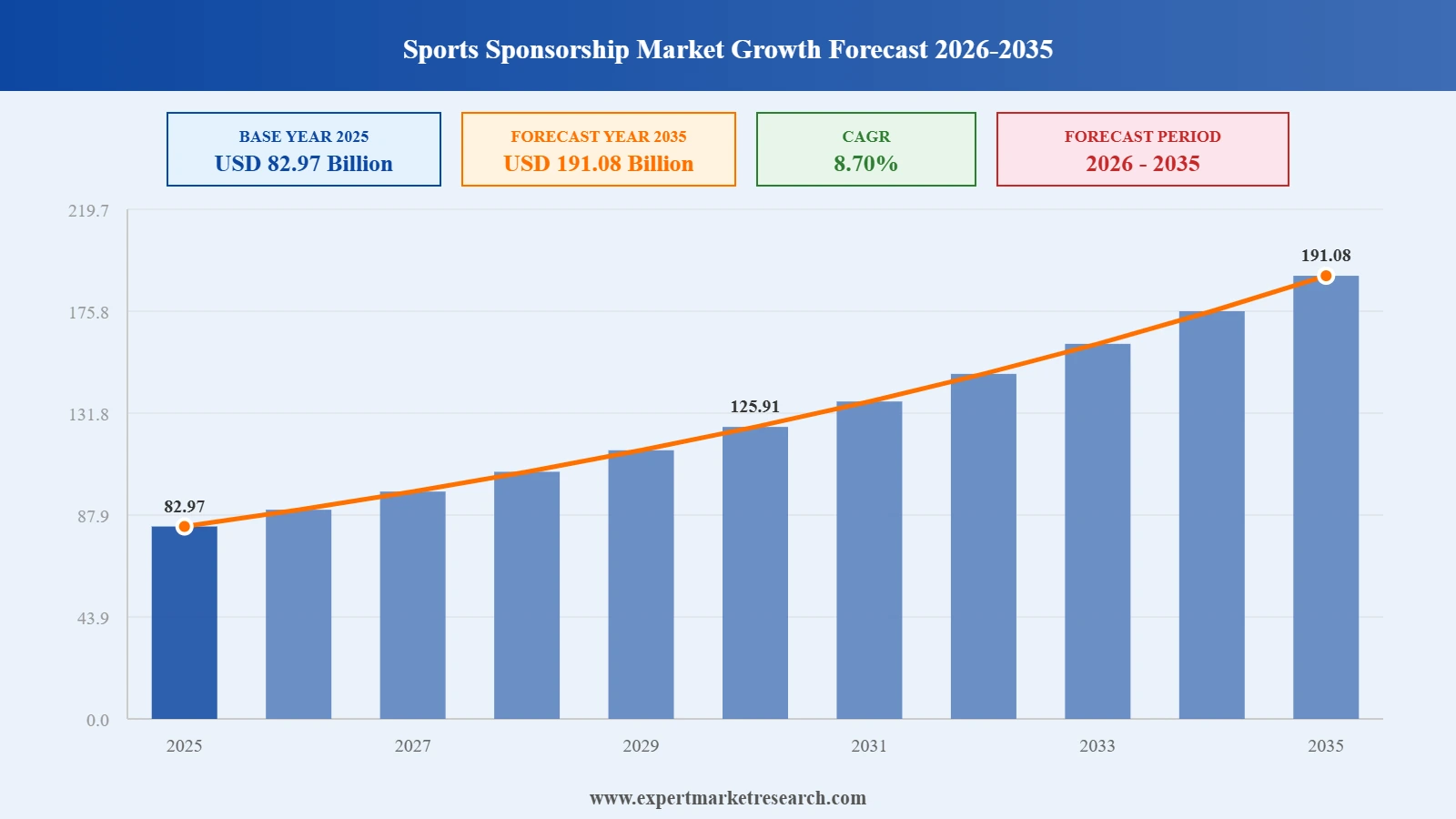
The global sports sponsorship market attained a value of USD 82.97 Billion in 2025 and is projected to expand at a CAGR of 8.70% through 2035. The market is further expected to reach USD 191.08 Billion by 2035. Rising sports viewership, growing brand investment in digital fan engagement, and the commercial expansion of women's sports are pushing companies across apparel, beverages, technology and financial services toward deeper, more measurable partnerships with teams, leagues, athletes and venues worldwide.
Sports sponsorship refers to commercial partnerships in which a brand provides financial or in-kind support to a team, league, athlete, venue or event in exchange for exposure, association and access to that property's fan base. The market spans signage, digital activation and club and venue activation, applied across competition sponsorship, training sponsorship and other engagement formats. Rising sports viewership, growing brand investment in digital fan engagement, and the commercial expansion of women's sports continue to widen the buyer base for the global sports sponsorship market.
Demand is concentrating around properties able to offer brand exposure across an entire organisation rather than a single team or event, particularly as sponsors increasingly value reach across multiple audiences from one agreement. In April 2026, PayPal opened an entirely new sponsorship category at the NFL by becoming the league's official peer to peer payments partner, a multi-year deal distinct from the league's existing banking and payment processing sponsorships. Agreements of this kind are converting properties' growing willingness to subdivide sponsorship categories directly into new revenue streams across the global sports sponsorship market.
Properties and brands are converging on a common development direction, widening from single-property sponsorship toward multi-year, multi-asset partnerships that combine jersey branding, digital content and hospitality experiences in one agreement. Sponsors are also increasingly demanding measurable engagement outcomes such as purchase intent and app downloads, positioning data driven accountability as a core requirement rather than a secondary benefit. Portfolios across the market are being rebuilt around fan engagement depth and measurable return rather than exposure and reach alone.
Read more about this report - REQUEST FREE SAMPLE COPY IN PDF
| Sports Sponsorship Market Report Summary | Description | Value |
| Base Year | USD Billion | 2025 |
| Historical Period | USD Billion | 2019-2025 |
| Forecast Period | USD Billion | 2026-2035 |
| Market Size 2025 | USD Billion | 82.97 |
| Market Size 2035 | USD Billion | 191.08 |
| CAGR 2019-2025 | Percentage | XX% |
| CAGR 2026-2035 | Percentage | 8.70% |
| CAGR 2026-2035 - Market by Region | Asia Pacific | 9.4% |
| CAGR 2026-2035 - Market by Country | India | 9.8% |
| CAGR 2026-2035 - Market by Country | Brazil | 9.1% |
| CAGR 2026-2035 - Market by Type | Digital Activation | 9.6% |
| CAGR 2026-2035 - Market by Application | Competition Sponsorship | 8.5% |
| Market Share by Country 2025 | Italy | 2.3% |
In June 2026, the Golden State Warriors signed a jersey patch deal with AI cloud provider Iren worth more than USD 50 million per year, the richest sponsorship deal in North American team sports history, spanning the NBA, WNBA and G League organisation. Other properties across the sports sponsorship market can learn from packaging exposure across an entire organisation into a single agreement rather than one team deal.
In March 2026, sponsorship figures reported ahead of the Australian Grand Prix confirmed Oracle as Formula 1's biggest team title sponsor, contributing approximately USD 110 million annually to Red Bull Racing. This offers a useful benchmark for other technology brands across the sports sponsorship market: a title sponsorship tied to a championship winning team commands a premium a mid-grid team simply cannot match.
In March 2026, American Express announced it would become the NFL's global official payment partner, securing cardholder benefits tied to the Super Bowl and NFL draft following the expiration of rival Visa's three-year sponsorship. Brands across the sports sponsorship market can take a similar approach by targeting a rival's expiring rights directly, inheriting fan familiarity immediately rather than building it from scratch.
In January 2026, the Chicago White Sox announced a sleeve patch deal with Chicago based CME Group, making the exchange operator the team's official global exchange partner and closing one of the last jersey patch gaps in MLB. This shows a workable model: prioritising a locally headquartered company with an emotional market tie over a higher bidding, less rooted brand.
Esports venues across the sports sponsorship market are increasingly bundling naming rights together with broadcasting and sponsorship rights into a single strategic partnership, rather than negotiating each right separately with different partners across separate agreements. This is reshaping how league’s structure major commercial deals, presenting one partner with venue branding, streaming rights and league sponsorship together in one package. In December 2025, Naver signed a five-year partnership with Riot Games renaming the LCK's home venue to CHZZK LoL Park, alongside broadcasting rights for the league through 2030.
Esports teams across the sports sponsorship market are increasingly renaming their entire organisation after a new sponsor, rather than limiting the sponsor's visibility to jersey branding or venue signage alone as in traditional sports. This is reshaping how sponsors value an esports partnership, since a team name change embeds a brand into every broadcast mention and headline the team generates. In March 2026, DRX renamed itself Kiwoom DRX following a new sponsorship deal with Kiwoom Securities, embedding the brand directly into the team's public identity.
Technology companies are increasingly converting an existing service relationship with a league into a formal sponsorship agreement, rather than treating the commercial and technical relationships as entirely separate arrangements handled independently. This is reshaping how leagues approach vendors already embedded in their operations, offering sponsorship rights as a natural extension of an existing contract. In March 2025, Palo Alto Networks became the NHL's official cybersecurity partner in North America, expanding a pre-existing service relationship into a formal sponsorship agreement.
Betting brands across the sports sponsorship market are increasingly seeking official global partner status with a single top-tier esports organisation, rather than spreading sponsorship investment across several smaller or regional teams simultaneously across markets. This is reshaping how betting brands build category association within esports, concentrating visibility on one widely recognised team rather than diluting it across a broader roster of partnerships. In February 2026, Betpanda became G2 Esports' official global betting partner, securing jersey branding as part of the agreement.
Legacy consumer brands with no prior esports’ presence are increasingly signing multi-split league sponsorship deals, rather than limiting their gaming related marketing to one-off activations or influencer campaigns as before. This is reshaping how traditional advertisers view esports audiences, treating a full season sponsorship as comparable in value to a conventional sports league partnership. In March 2026, Gillette signed a sponsorship deal with the LCK covering both the Spring and Summer splits of the 2026 season.
The Expert Market Research’s report titled "Global Sports Sponsorship Market Report and Forecast 2026-2035" offers a detailed analysis of the market based on the following segments:
Market Breakup by Type
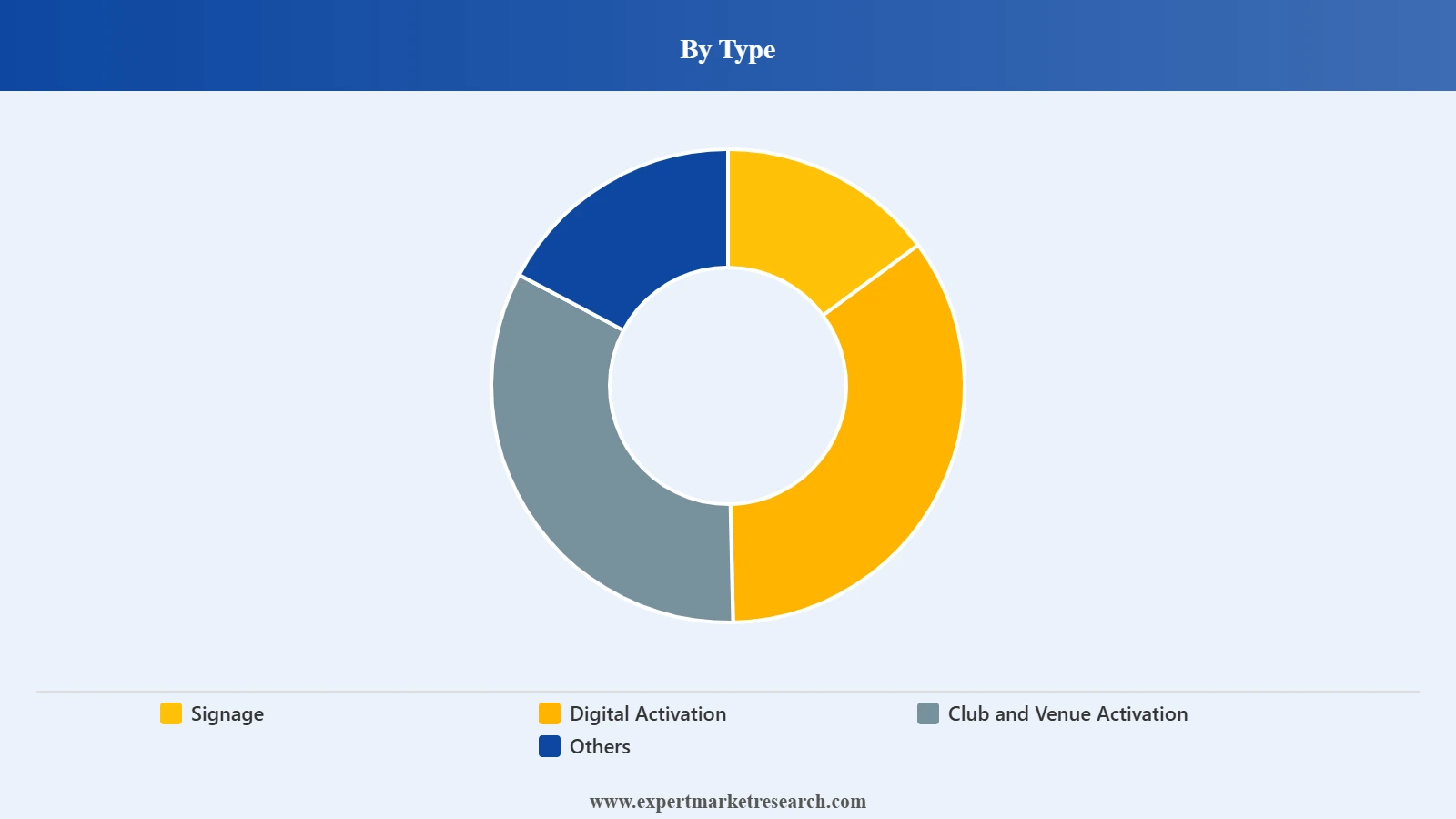
Key Insight: Club and venue activation holds the leading type of share of the sports sponsorship market, reflecting sustained brand demand for jersey branding, stadium naming and in-venue exposure tied directly to a team's identity. Digital activation forms the fastest-growing type as brands increasingly prioritise measurable, technology driven fan engagement over traditional static exposure. In May 2026, Alibaba signed an exclusive six-year partnership with UEFA to provide AI, cloud computing and 360-degree replay technology across the Champions League, Europa League and Conference League. Signage remains an important, well-established format for in-stadium and broadcast visibility, while the others category spans emerging formats such as hospitality packages and athlete-specific content partnerships.
Market Breakup by Application
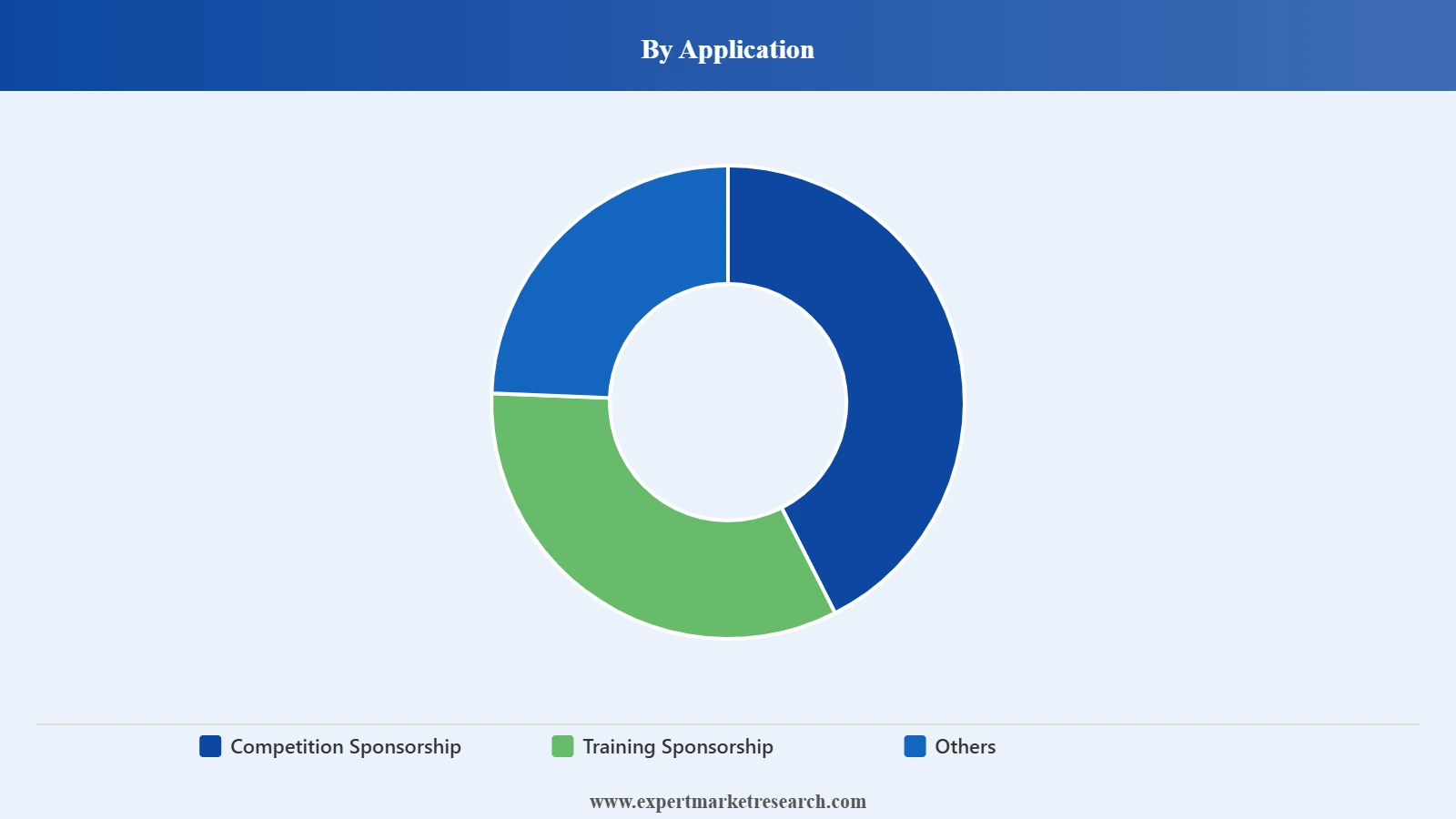
Key Insight: Competition sponsorship accounts for the leading application share of the sports sponsorship market, reflecting sustained brand demand for association with major tournaments, leagues and marquee sporting events. Training sponsorship forms a smaller but steady share as brands support practice facilities, training kit and behind-the-scenes team operations for longer-term brand association. The other category spans grassroots programmes, youth development initiatives and community focused sponsorship activity outside formal competition and training contexts.
Market Breakup by Region
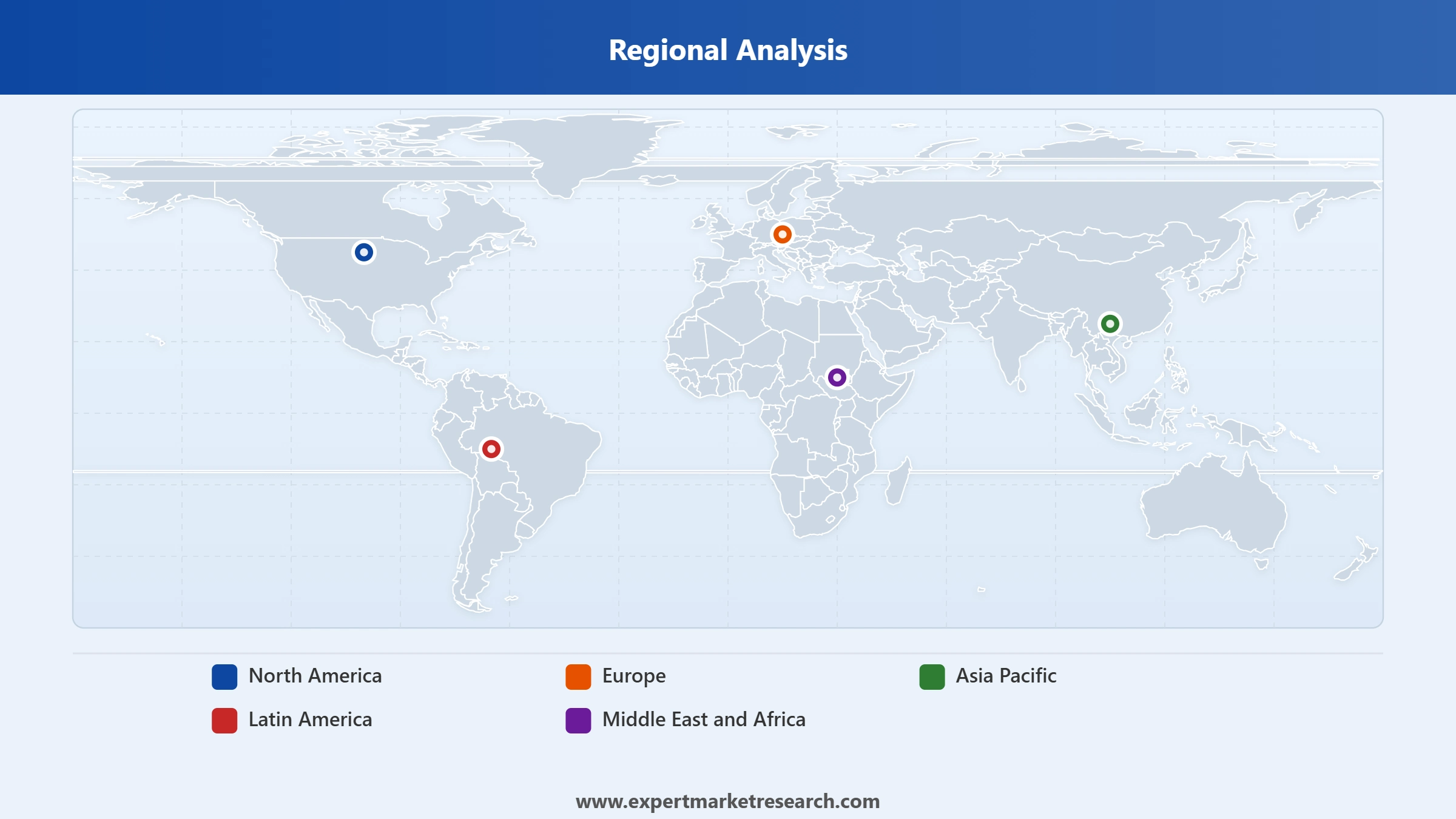
Key Insight: Regional dynamics in the sports sponsorship market continue to shape brand strategies. North America leads on the commercial scale of its major leagues and sustained brand investment in team and league partnerships. Europe combines strong football sponsorship activity with an established club and league ecosystem across multiple major markets. Asia Pacific grows fastest as expanding sports viewership and brand investment across the region's largest economies lifts sponsorship spending, while Latin America and the Middle East and Africa build on growing sports viewership and rising brand interest in regional properties.
By type, the club and venue activation segment dominates the market owing to its direct tie to a team's identity and loyal fan base
Club and venue activation holds the largest type of share of the sports sponsorship market because jersey branding, stadium naming and in-venue exposure tie a sponsor directly to a team's identity and fan base. In March 2026, Brazilian fintech company Nu signed one of MLS's largest stadium naming rights deals, with Inter Miami's new 26,700 seat venue set to open as Nu Stadium. Brands pursuing this format continue to prioritise long-term agreements, since a sponsor's logo closely associated with a team builds recognition a shorter campaign could not replicate.
Read more about this report - REQUEST FREE SAMPLE COPY IN PDF
Digital activation is the fastest-growing type as brands increasingly prioritise measurable, technology driven fan engagement over traditional static exposure that offers limited insight into actual audience response or campaign effectiveness overall. Brands are responding by expanding dedicated digital activation budgets targeting app engagement, social content and second screen experiences, since these formats generate the kind of direct, quantifiable performance data that signage and venue branding alone simply cannot provide to a sponsor evaluating return.
By application, competition sponsorship dominates the market owing to sustained brand demand for association with major tournaments and leagues
Competition sponsorship accounts for the largest application share of the sports sponsorship market because association with a major tournament, league or marquee sporting event delivers brand exposure to a scale and intensity of fan attention that training or grassroots contexts rarely match at any comparable price point. Brands serving this application continue to prioritise marquee competition rights accordingly, since the concentrated media attention around a major tournament generates a level of exposure that justifies the considerably higher rights fees these flagship properties command from sponsors.
Read more about this report - REQUEST FREE SAMPLE COPY IN PDF
Training sponsorship retains a steady share of the market as brands continue supporting practice facilities, training kit and team operations for lower-profile, longer-term brand association away from the competitive spotlight. In January 2026, Deutsche Bank agreed a reported EUR 100 million naming rights extension with Eintracht Frankfurt, with its logo also appearing on training and warm up kit sleeves across the club's men's, women's and youth teams. Brands serving this application are increasingly positioning training sponsorship as a complementary addition to a broader competition deal.




Read more about this report - REQUEST FREE SAMPLE COPY IN PDF
North America leads the market through commercial league scale while Asia Pacific grows fastest on expanding sports viewership
North America commands the largest share of the sports sponsorship market, supported by the commercial scale of its major professional leagues, an established base of long-standing team and league partnerships, and sustained brand investment across multiple major sports simultaneously each season across the calendar year. Brands serving this region continue to benefit from deep, long-standing relationships with teams and leagues built through decades of renewed sponsorship agreements and repeated commercial dealings across successive seasons and renewal cycles.
Asia Pacific is the fastest-growing regional sports sponsorship market as expanding sports viewership and brand investment across the region's largest economies lifts sponsorship spending faster than in more mature, already saturated markets elsewhere. In March 2026, Telekom Malaysia acquired naming rights to Kuala Lumpur's Bukit Jalil National Stadium, the 87,500-capacity venue's first corporate sponsor since it opened in 1998, rebranding it TM Stadium Nasional. Brands entering the region are increasingly building locally relevant activation strategies rather than simply extending an existing global sponsorship campaign wholesale.
Read more about this report - REQUEST FREE SAMPLE COPY IN PDF
The global industry is consolidating around brands able to package sponsorship across multiple properties and formats as leading sports sponsorship market companies invest in digital activation, measurable engagement platforms and multi-year, multi-asset partnerships to defend visibility across major leagues, teams and events. Providers are prioritising fan engagement depth, measurable return and long-term relationship continuity to differentiate their sponsorship approach in a segment where basic brand exposure is broadly comparable across competitors. Deep, long-standing relationships with teams and leagues remain a decisive advantage, since a multi-year sponsorship agreement typically renews with the incumbent brand rather than being rebid to a competitor.
Major sports sponsorship market players are also competing on digital capability, since a brand's ability to demonstrate measurable fan engagement increasingly determines which sponsor a property renews with when a multi-year agreement comes up for negotiation. Opportunities are emerging in women's sports sponsorship, in esports and gaming partnerships, and in expanding digital activation capability across fast-growing Asia Pacific markets. Brands combining strong digital engagement capability with defensible long-term property relationships are positioned to strengthen their standing as teams and leagues continue prioritising measurable value over exposure alone.
Founded in 1964 and headquartered in Beaverton, Oregon, United States, the company supplies athletic apparel and footwear while sponsoring teams, leagues and individual athletes across football, basketball, running and other major sports globally. Its sponsorship portfolio draws on decades of athlete and team partnership expertise, positioning Nike among the largest established sponsors in the market.
Founded in 1949 and headquartered in Herzogenaurach, Germany, the company supplies athletic apparel and footwear while sponsoring national football federations, clubs and athletes across multiple sports worldwide. Its sponsorship portfolio draws on a long-standing association with major football tournaments and Olympic events, positioning Adidas among the largest established sponsors in the market.
Founded in 1892 and headquartered in Atlanta, Georgia, United States, the company sponsors major sporting events, leagues and tournaments as part of its global beverage marketing strategy, serving consumers across more than 200 countries. Its sponsorship activity draws on more than a century of association with major global sporting events, positioning Coca-Cola among the largest established sponsors in the market.
Founded in 1965 and headquartered in Purchase, New York, United States, the company sponsors sports leagues and teams through its beverage and snack food brands, maintaining a broad presence across multiple major sports properties globally. Its sponsorship portfolio draws on decades of brand association with major sporting events and leagues, positioning PepsiCo among the largest established sponsors in the market.
Other key players in the market include Socios.com, Puma SE, Anheuser-Busch InBev SA, Macron S.p.A, Electronic Arts Inc, and Betway, among others.
*Please note that this is only a partial list; the complete list of key players is available in the full report. Additionally, the list of key players can be customized to better suit your needs.*
Unlock the latest insights with our sports sponsorship market trends 2026 report. Discover regional growth patterns, sponsorship economics, and key industry players. Stay ahead of competition with trusted data and expert analysis. Download your free sample report today and drive informed decisions in the market.
Singapore Sports and Fitness Goods Market
India Sports and Fitness Goods Market
Sports Supplements Market
Sports Sunglasses Market
Sports Technology Market


Upto 15% Off
USD
$2499 $2249
$3999 $3599
$4999 $4249
$5999 $5099


*While we strive to always give you current and accurate information, the numbers depicted on the website are indicative and may differ from the actual numbers in the main report. At Expert Market Research, we aim to bring you the latest insights and trends in the market. Using our analyses and forecasts, stakeholders can understand the market dynamics, navigate challenges, and capitalize on opportunities to make data-driven strategic decisions.*
In 2025, the market reached an approximate value of USD 82.97 Billion.
The market is projected to grow at a CAGR of 8.70% between 2026 and 2035.
The market is estimated to witness a healthy growth in the forecast period of 2026-2035 to reach a value of USD 191.08 Billion by 2035.
Bundling sponsorship rights across an entire multi-team organisation, targeting a rival's expiring league rights directly, investing in measurable digital activation platforms, and expanding sponsorship presence across multiple major leagues simultaneously.
The key trends in the market include the rapid digitalisation across emerging economies giving rise to online fundraising for sports, penetration of advanced equipment and technologies in sponsorship modes, and improving standards of living.
Signage, digital activation, and club and venue activation, among others, are the different types of sports sponsorships in the market.
Competition sponsorship, and training sponsorship, among others, are the major applications of sports sponsorships in the market.
The key players in the market include Nike Inc., Adidas AG, The Coca-Cola Company, Socios.com, Puma SE, PepsiCo, Inc., Anheuser-Busch InBev SA, Macron S.p.A, Electronic Arts Inc, and Betway, among others.
Brands face rising costs of securing marquee property rights, growing difficulty measuring return on sponsorship investment, intensifying competition for a limited pool of top-tier teams and events, and the complexity of coordinating multi-property, multi-year partnership agreements.
Explore our key highlights of the report and gain a concise overview of key findings, trends, and actionable insights that will empower your strategic decisions.
| REPORT FEATURES | DETAILS |
| Base Year | 2025 |
| Historical Period | 2019-2025 |
| Forecast Period | 2026-2035 |
| Scope of the Report |
Historical and Forecast Trends, Industry Drivers and Constraints, Historical and Forecast Market Analysis by Segment:
|
| Breakup by Type |
|
| Breakup by Application |
|
| Breakup by Region |
|
| Market Dynamics |
|
| Competitive Landscape |
|
| Companies Covered |
|
Datasheet
One User
USD 2,499
USD 2,249
tax inclusive*
Single User License
One User
USD 3,999
USD 3,599
tax inclusive*
Five User License
Five User
USD 4,999
USD 4,249
tax inclusive*
Corporate License
Unlimited Users
USD 5,999
USD 5,099
tax inclusive*
*Please note that the prices mentioned below are starting prices for each bundle type. Kindly contact our team for further details.*
Flash Bundle
Small Business Bundle
Growth Bundle
Enterprise Bundle
*Please note that the prices mentioned below are starting prices for each bundle type. Kindly contact our team for further details.*
Flash Bundle
Number of Reports: 3
20%
tax inclusive*
Small Business Bundle
Number of Reports: 5
25%
tax inclusive*
Growth Bundle
Number of Reports: 8
30%
tax inclusive*
Enterprise Bundle
Number of Reports: 10
35%
tax inclusive*
How To Order

Select License Type
Choose the right license for your needs and access rights.

Click on ‘Buy Now’
Add the report to your cart with one click and proceed to register.

Select Mode of Payment
Choose a payment option for a secure checkout. You will be redirected accordingly.
Strategic Solutions for Informed Decision-Making
Gain insights to stay ahead and seize opportunities.

Get insights & trends for a competitive edge.

Track prices with detailed trend reports.

Analyse trade data for supply chain insights.

Leverage cost reports for smart savings

Enhance supply chain with partnerships.

Connect For More Information
Our expert team of analysts will offer full support and resolve any queries regarding the report, before and after the purchase.
Our expert team of analysts will offer full support and resolve any queries regarding the report, before and after the purchase.
We employ meticulous research methods, blending advanced analytics and expert insights to deliver accurate, actionable industry intelligence, staying ahead of competitors.
Our skilled analysts offer unparalleled competitive advantage with detailed insights on current and emerging markets, ensuring your strategic edge.
We offer an in-depth yet simplified presentation of industry insights and analysis to meet your specific requirements effectively.




