

Consumer Insights
Uncover trends and behaviors shaping consumer choices today
Procurement Insights
Optimize your sourcing strategy with key market data
Industry Stats
Stay ahead with the latest trends and market analysis.
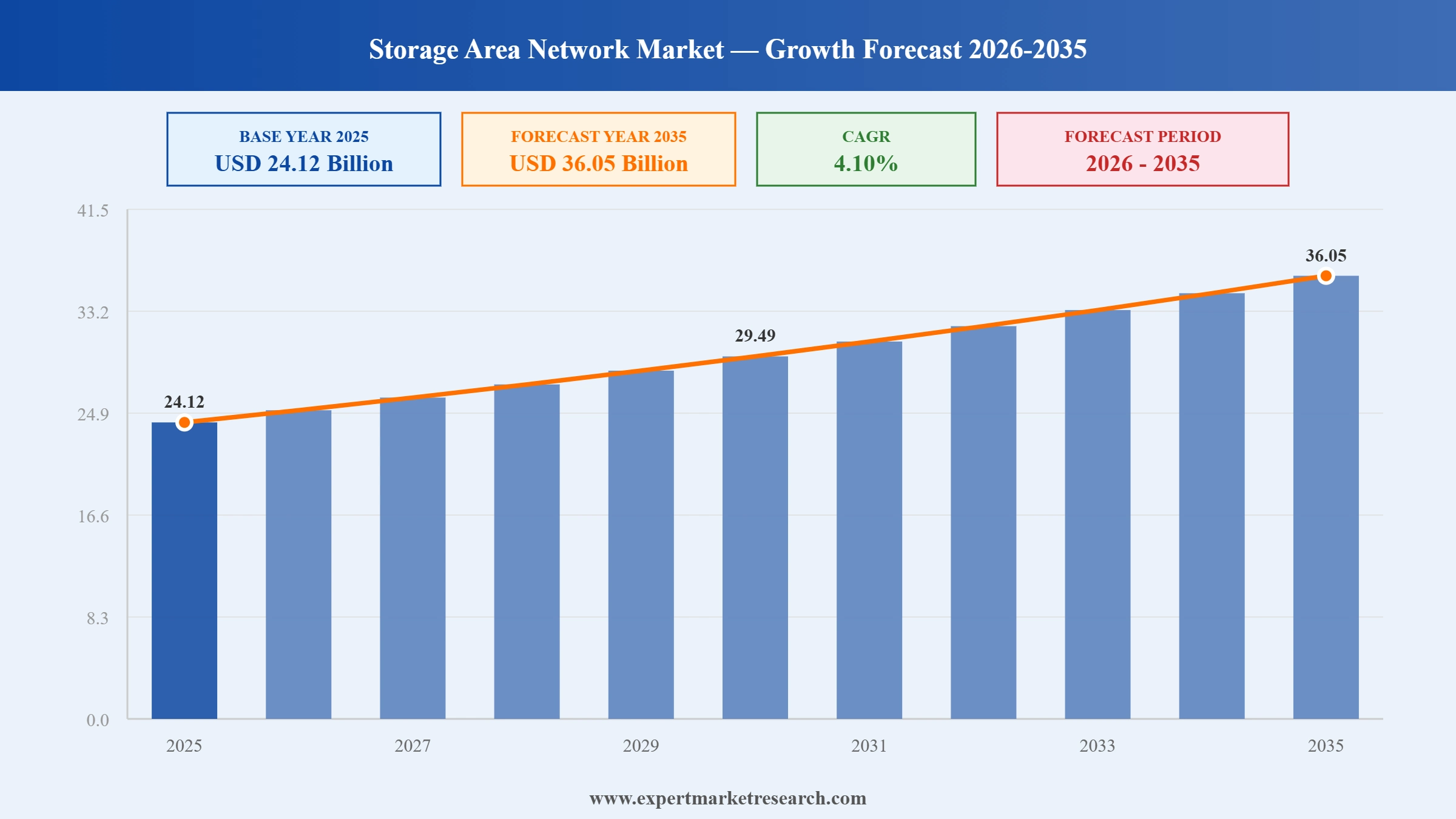
The global storage area network market was valued at USD 24.12 Billion in 2025 and is projected to reach USD 36.05 Billion by 2035, growing at a CAGR of 4.10% over the forecast period 2026-2035, according to Expert Market Research. This steady growth trajectory reflects the sustained enterprise demand for high-performance, low-latency centralised storage infrastructure supporting mission-critical workloads, the accelerating adoption of NVMe over Fabrics technology transforming the performance ceiling of Fibre Channel SAN environments, the mainstreaming of AI-driven autonomous storage management across enterprise data centres, and the growing requirement for regulatory-compliant, air-gapped storage in financial services, healthcare, and government verticals worldwide.
The storage area network market occupies a structurally resilient position within the enterprise IT infrastructure ecosystem. While public cloud has absorbed portions of warm and cold storage workloads, SAN infrastructure has strengthened its position in the performance-critical tier the layer serving live databases, transactional systems, virtualisation environments, and increasingly AI inference and training workloads where the combination of sub-millisecond latency, guaranteed throughput, and protocol-grade security cannot be replicated by cloud object storage at acceptable cost.
Read more about this report - REQUEST FREE SAMPLE COPY IN PDF
A storage area network is a dedicated, high-speed network that connects servers to shared storage devices, enabling block-level data access across multiple server hosts from a centralised pool of storage resources. Unlike network-attached storage which provides file-level access over standard Ethernet SAN infrastructure delivers block storage that allows servers to interact with shared storage as if it were directly attached, achieving the low latency and high throughput required by databases, virtualisation hypervisors, and enterprise applications that cannot tolerate the overhead of file system abstraction.
SAN environments typically consist of three core infrastructure layers: host connectivity hardware including host bus adapters (HBAs) and converged network adapters; SAN switching fabric including Fibre Channel switches or Ethernet switches for iSCSI and FCoE topologies; and storage arrays encompassing all-flash NVMe arrays, hybrid flash arrays, and disk-based systems. Modern SAN deployments increasingly overlay software-defined storage management, NVMe-oF protocols, and AI-driven automation on this hardware foundation to maximise utilisation, reduce administration overhead, and extend the performance envelope of existing infrastructure investments.
The primary structural driver of the SAN market is the sustained growth of enterprise data generated by transactional systems, ERP platforms, financial trading applications, healthcare electronic records, and operational databases that require the low latency and consistent throughput that only block storage over a dedicated fabric can deliver. Enterprise data workloads are expanding continuously through cloud hosting, virtualisation architecture, and high-density transactional systems across finance, healthcare, and retail creating sustained procurement demand for SAN infrastructure that serves the performance-critical layer of multi-tier storage environments. This mission-critical tier remains structurally resistant to cloud displacement because the round-trip latency inherent in cloud block storage access is incompatible with the sub-millisecond response time requirements of Oracle RAC, SAP HANA, and SQL Server workloads running at enterprise transaction volumes.
Artificial intelligence and machine learning workloads are creating a new and growing demand category for high-performance SAN infrastructure. GPU clusters for AI training and inference reach optimal efficiency only when storage can sustain multi-million IOPS throughput at sub-millisecond latency a performance profile that requires all-flash NVMe SAN arrays. Enterprises migrating AI model development to high-density compute environments are investing in NVMe-based SAN upgrades that can sustain the parallel I/O throughput required by GPU-accelerated workloads. NetApp's March 2026 launch of the AI Data Engine with NVIDIA co-engineering reflects the SAN market's strategic alignment with AI infrastructure investment as a primary growth driver for the current upgrade cycle. Dell's April 2026 AI Factory framework similarly integrates SAN-connected storage as a foundational component of enterprise AI infrastructure stacks.
NVMe over Fabrics extends the parallelism and low-latency performance of locally attached NVMe drives across shared SAN fabrics, enabling servers to access remote storage at performance levels approaching local direct-attached NVMe. This technology advancement is transforming enterprise SAN from a performance bottleneck into a performance enabler for AI, high-frequency trading, and real-time analytics workloads that previously required DAS configurations to achieve required performance levels. Early NVMe-oF adopters in high-frequency trading and real-time fraud detection environments have documented sub-100 microsecond response times and meaningful reductions in application latency following NVMe-oF rollout, creating a compelling proof-of-concept base that is driving broader enterprise adoption.
Enterprise storage architecture has evolved from choosing between on-premises SAN and public cloud to deploying SAN as the performance-critical on-premises tier within hybrid cloud architectures that distribute workloads across SAN, NAS, and cloud object storage based on performance, cost, and compliance criteria. Modern SAN platforms from Dell, NetApp, HPE, and IBM provide native cloud integration through ONTAP Cloud, PowerFlex cloud extensions, and HPE GreenLake that enables on-premises SAN to tier data automatically to cloud storage and provides consistent management across physical and virtual storage environments. Everpure's March 2026 extension of Evergreen//One storage-as-a-service to its highest-performance FlashBlade//EXA platform represents the market's direction toward consumption-based SAN pricing models that reduce the capital expenditure barrier to enterprise SAN adoption.
Read more about this report - REQUEST FREE SAMPLE COPY IN PDF
Rising cybersecurity threats and tightening data protection regulations are creating mandatory upgrade cycles across enterprise SAN deployments in regulated industries. Financial sector operators subject to DORA (the EU Digital Operational Resilience Act) and NIS2 requirements face legally mandated infrastructure resilience standards that require dedicated SAN fabric architectures with documented recovery time objectives. Healthcare operators managing HIPAA-covered patient data require air-gapped SAN configurations with immutable snapshots for ransomware recovery. IBM's February 2026 FlashSystem launch with enhanced encryption and autonomous tuning reflects the market's increasing emphasis on security-by-default storage infrastructure. The SAN market benefits from a virtuous compliance cycle: regulatory requirements drive SAN refresh investments that simultaneously improve performance, reduce administration overhead, and improve security posture.
Server SAN software-defined storage architectures that pool the NVMe flash drives inside servers into a shared, network-accessible storage pool without dedicated external storage arrays is an increasingly significant segment within the broader SAN market. Hyperscale server SAN, estimated to hold approximately 43% share of server SAN deployments in 2026, is driven by cloud service providers building software-defined block storage across large server clusters using Broadcom Fibre Channel switches and NetApp ONTAP software.
Fibre Channel remains the dominant SAN connectivity technology with approximately 57% of enterprise SAN deployments using FC protocol, supported by Broadcom's (Brocade) dominant market position in FC switch infrastructure and Cisco's MDS 9000 series. The transition from 16G to 32G and 64G Fibre Channel is creating hardware refresh cycles at major enterprise SAN operators, with BSI IT-Grundschutz standards published in November 2024 introducing guidance for NVMe-oF and software-defined SAN architectures supporting critical infrastructure investments in Germany and broader European markets.
The storage area network switches market represents a commercially significant hardware sub-segment anchored by Broadcom's Brocade G710 Gen 7 Fibre Channel switch launched in January 2025, an entry-level 32G Fibre Channel switch engineered for high-performance cloud-ready storage networks. Cisco Systems' MDS 9000 SAN switches compete with Brocade across the enterprise and hyperscale segments, while the transition to higher-speed FC protocols drives switch upgrade procurement across all enterprise size tiers. The switches segment provides recurring revenue for SAN market participants through hardware refresh cycles that track the performance upgrade cadence of host servers and storage arrays they interconnect.
Read more about this report - REQUEST FREE SAMPLE COPY IN PDF
Software-defined SAN architectures are decoupling SAN value from proprietary hardware by enabling standard servers and commodity networking to deliver enterprise-grade block storage through software abstraction layers. Pure Storage's (Everpure's) FlashArray//C and Nutanix's hyperconverged infrastructure represent the commercial expression of software-defined approaches that are compelling enterprises to evaluate alternatives to traditional hardware SAN vendor lock-in. Broadcom's USD 61 billion VMware acquisition in 2023 continues to reshape the software-defined storage landscape by aligning network silicon with storage virtualisation in a unified stack that extends from network interface card to hypervisor.
AI capabilities are being embedded into SAN management platforms to predict failures, automate capacity provisioning, optimise data placement across storage tiers, and detect anomalies indicative of ransomware encryption events before significant data loss occurs. IBM's February 2026 FlashSystem launch with autonomous tuning, NetApp's ONTAP autonomous ransomware protection using machine learning models trained on I/O behaviour, and Dell's PowerStore autonomous intelligent management reflect the market-wide investment in reducing the skilled storage administration labour required per terabyte of managed SAN capacity. These capabilities directly address the SAN market's most significant operational challenge: the scarcity of skilled storage administrators in the enterprise IT workforce.
The global storage area network market faces structural challenges that must be managed as the installed base matures and the competitive landscape evolves. The most significant operational challenge is skilled administrator scarcity: managing enterprise SAN environments particularly multi-vendor Fibre Channel fabrics with complex zoning, masking, and multi-path configurations requires storage expertise that is increasingly difficult to recruit and retain as a generation of experienced SAN administrators approaches retirement without a proportional pipeline of replacement talent. Cybersecurity sophistication is an escalating challenge: sophisticated ransomware operators specifically target backup and storage infrastructure to maximise recovery difficulty, requiring SAN vendors to continuously advance immutable snapshot, air-gap, and anomaly detection capabilities. Vendor lock-in is a persistent procurement concern: proprietary hardware and software ecosystems at Dell, HPE, and IBM create switching costs that may delay necessary technology upgrades and reduce the competitive pressure that drives pricing efficiency. The capital expenditure nature of enterprise SAN procurement creates procurement cycle friction in environments where IT leadership is under pressure to convert capex to opex through cloud and storage-as-a-service models.
Several structural dynamics constrain the SAN market's growth rate below the levels achievable in less mature storage categories. Cloud hyperscaler displacement of cold and warm storage workloads reduces the addressable SAN market by extracting data tiers that previously required on-premises block storage. The commoditisation of high-speed Ethernet infrastructure is eroding Fibre Channel's traditional performance and reliability premium, enabling iSCSI and NVMe-oF over Ethernet to compete with FC in workload categories where FC was previously unchallenged. Hyperconverged infrastructure adoption among mid-size enterprise buyers is redirecting SAN budget toward all-in-one HCI platforms that eliminate the dedicated SAN fabric layer. Macroeconomic pressure on enterprise IT budgets during periods of elevated interest rates and economic uncertainty compresses hardware refresh cycle investment, extending the operational life of existing SAN infrastructure beyond its optimal replacement timeframe.
Read more about this report - REQUEST FREE SAMPLE COPY IN PDF
The global SAN market presents substantial and durable commercial opportunities across technology tiers, industry verticals, and geographic markets. The NVMe-oF upgrade cycle represents the most commercially significant near-term opportunity: virtually every enterprise Fibre Channel SAN installation is a candidate for NVMe-oF protocol upgrade that dramatically improves AI training and database workload performance without complete infrastructure replacement, creating a large and recurring professional services and hardware refresh revenue opportunity for SAN vendors with NVMe-oF capable product portfolios. Regulatory-driven upgrade cycles in DORA-compliant financial institutions and NHS-grade healthcare infrastructure in the UK, Germany BSI IT-Grundschutz compliance, and FedRAMP-compliant US government procurement collectively create large recurring SAN investment cycles across regulated enterprise verticals. The AI workload storage category where sub-millisecond all-flash NVMe SAN delivers measurably better AI training and inference throughput than alternative storage is the fastest-growing demand category and positions SAN vendors with NVMe-capable portfolios for above-market growth through the forecast period. Explore the complete 2026–2035 investment opportunity analysis within the Expert Market Research Storage Area Network Market Report.
The EMR’s report titled “Storage Area Network Market Report and Forecast 2026-2035” offers a detailed analysis of the market based on the following segments:
Market Breakup by Component
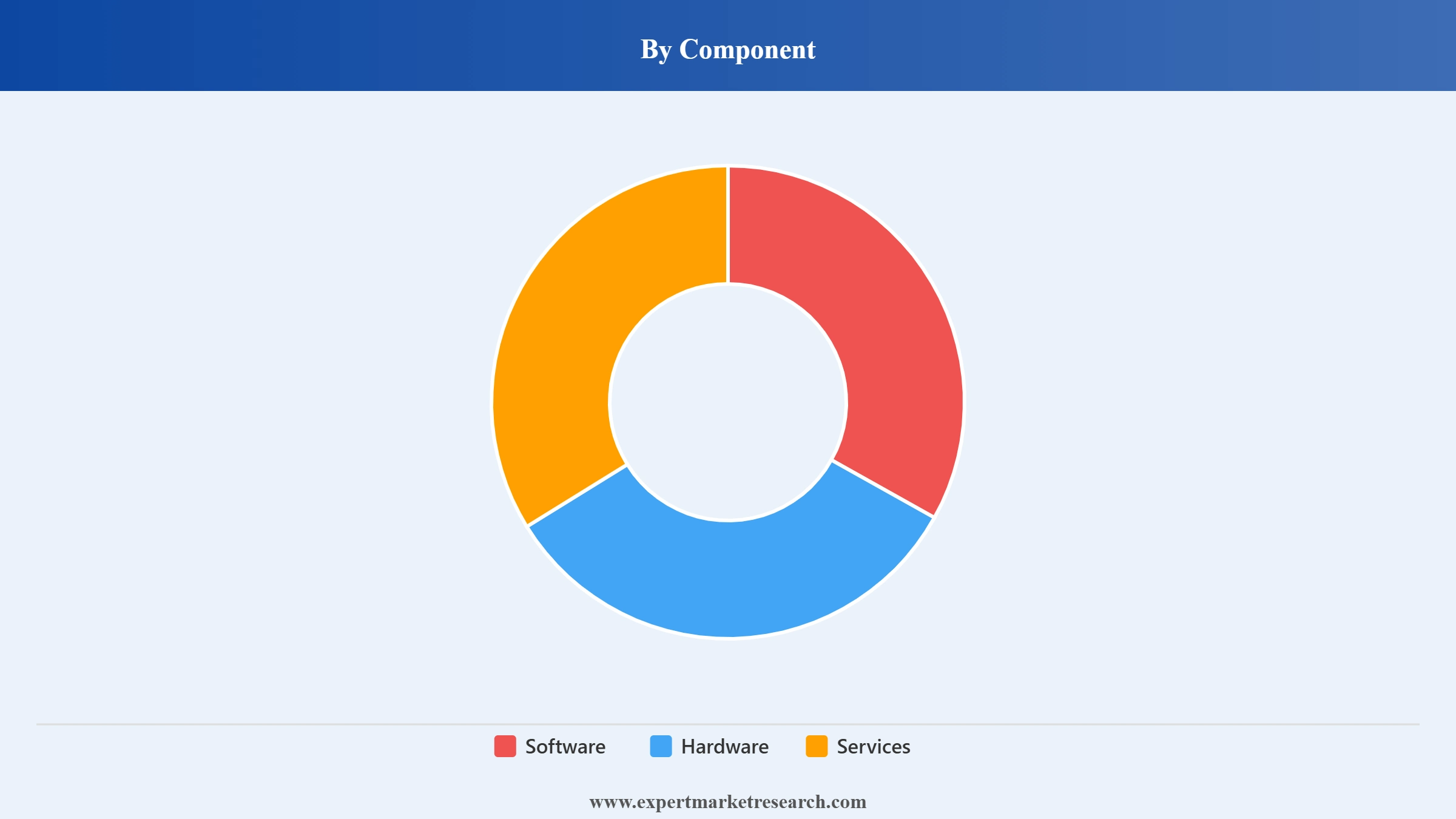
Hardware is the largest component revenue segment, encompassing FC and Ethernet SAN switches, host bus adapters, converged network adapters, all-flash NVMe storage arrays, hybrid flash arrays, and supporting cable and optical infrastructure. Storage arrays represent the highest-value hardware procurement category, with enterprise all-flash arrays from Dell PowerMax, HPE Alletra, IBM FlashSystem, and Pure Storage (Everpure) FlashArray commanding premium pricing per terabyte relative to hybrid or disk-based alternatives.
Software encompasses SAN management platforms, storage virtualisation software, automation and orchestration tools, data replication software, and cloud integration middleware. Software is the fastest-growing component segment, driven by AI-driven autonomous management subscriptions that generate recurring SaaS revenue for SAN vendors.
Services encompasses professional deployment, SAN fabric design, migration, managed SAN operations, and multi-year maintenance contracts that provide the most predictable recurring revenue stream for SAN market participants.
Market Breakup by Technology
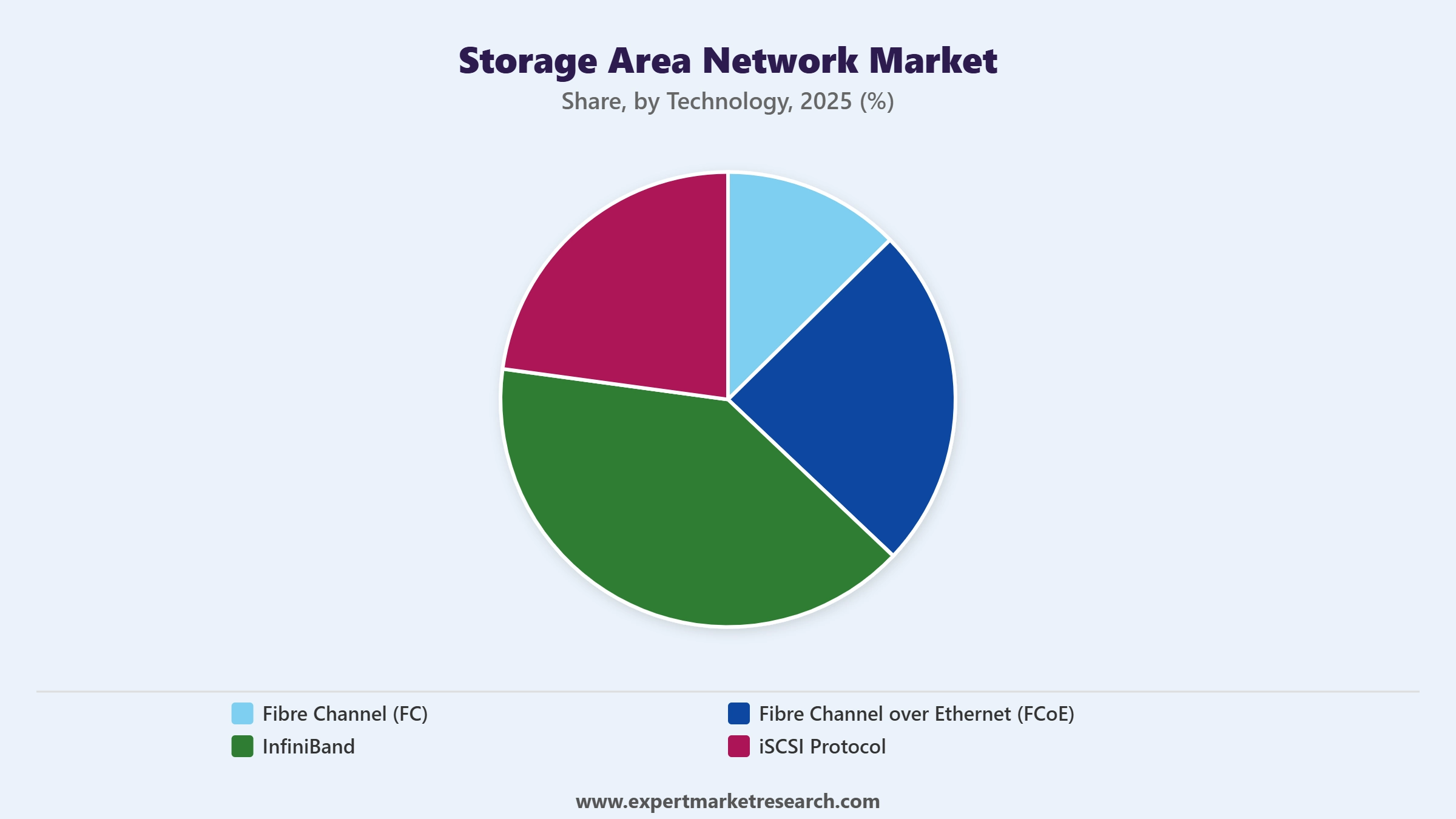
Fiber Channel (FC) SAN dominates the global SAN market with approximately 57% of enterprise deployments, supported by the installed base of Broadcom Brocade and Cisco MDS SAN fabric infrastructure, the performance characteristics of 32G and 64G FC for mission-critical workloads, and the operational familiarity of FC zoning and management in large enterprise IT teams. FC SAN's leadership is reinforced by the NVMe-oF protocol's availability over Fibre Channel transport, enabling enterprises to achieve NVMe performance levels within existing FC fabric investments.
iSCSI SAN is the fastest-growing SAN type, driven by the declining cost advantage of dedicated Fibre Channel infrastructure as 10GbE and 25GbE Ethernet has become standard server connectivity, enabling iSCSI-based block storage delivery at comparable performance to mid-tier FC SAN for a wide range of enterprise workloads at lower infrastructure investment.
Fibre Channel over Ethernet (FCoE) SAN serves enterprises seeking to consolidate Fibre Channel SAN and Ethernet networks onto a unified 10GbE or 25GbE fabric infrastructure, reducing cabling complexity and switch count while retaining FC protocol compatibility with existing storage and management software.
Market Breakup by Organisation Size
SMEs are the fastest-growing organisation size segment, driven by the increasing availability of affordable iSCSI and software-defined SAN solutions that deliver enterprise-grade block storage performance without the capital expenditure requirements of traditional Fibre Channel infrastructure, making centralised SAN accessible to organisations with limited IT budgets.
Large enterprises dominate SAN revenue, deploying comprehensive Fibre Channel and NVMe-oF SAN fabrics across multi-site data centre environments to serve mission-critical databases, virtualisation platforms, ERP systems, and AI workloads requiring guaranteed throughput and sub-millisecond latency.
Market Breakup by End Use
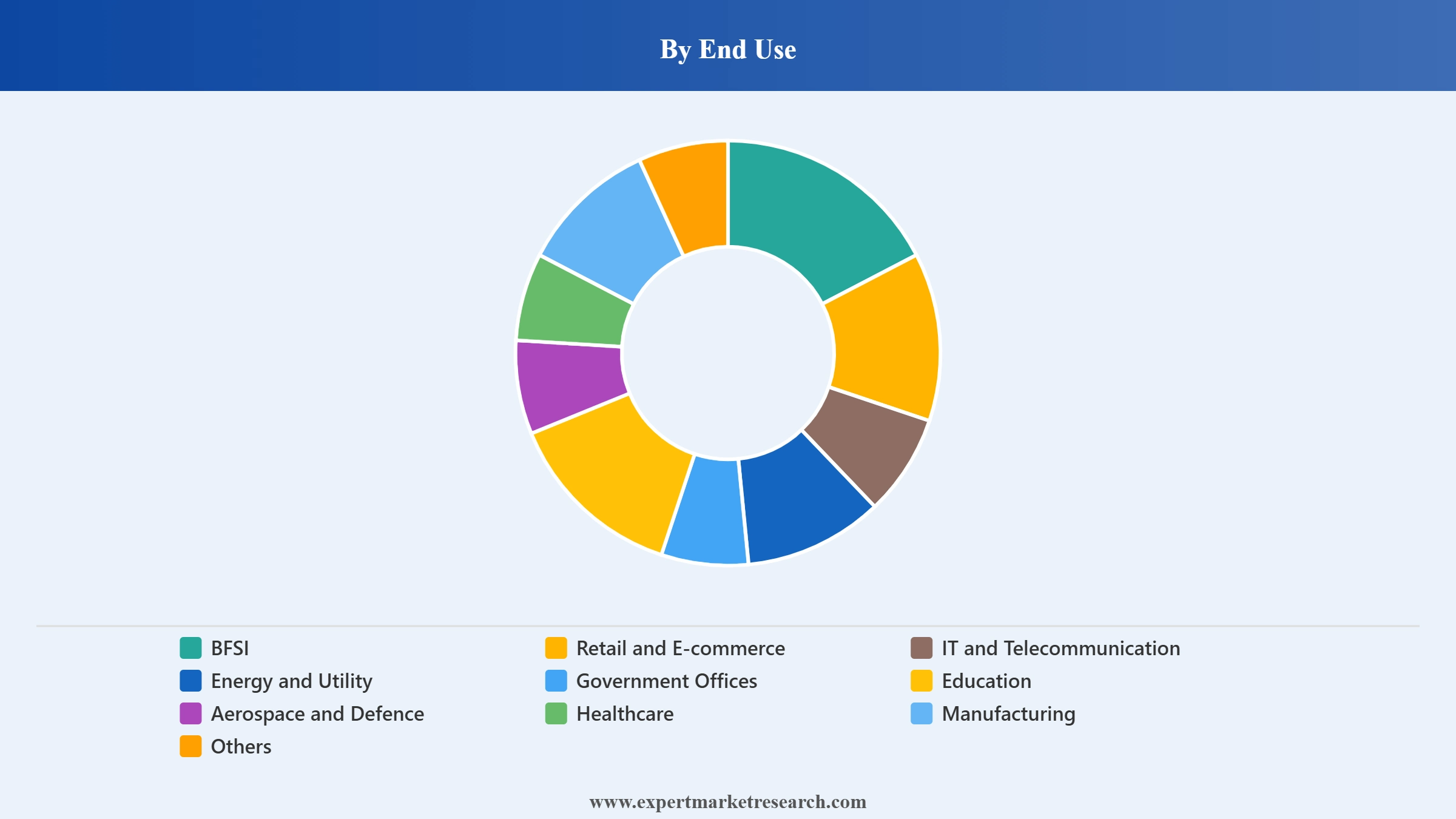
BFSI is the dominant end-use segment, deploying high-availability all-flash SAN for transactional banking systems, trading platforms, and insurance data management under SOX, PCI-DSS, DORA, and Basel III compliance frameworks requiring immutable storage and air-gapped recovery infrastructure.
Retail and e-commerce operators use SAN for high-transaction point-of-sale systems, inventory management databases, and personalisation analytics platforms requiring low-latency block storage that sustains peak-season transaction volumes without performance degradation.
IT and telecom companies are among the largest SAN buyers, deploying centralised block storage for virtualised service delivery infrastructure, network operations systems, and OSS/BSS platforms requiring high-availability active-active SAN configurations across geographically distributed data centres.
Energy and utility operators deploy SAN for SCADA system data management, grid monitoring platforms, and operational technology environments where the reliability and structured access controls of dedicated SAN fabric infrastructure are mandatory operational requirements.
Others include government agencies deploying secure SAN for classified data and citizen records; educational institutions using SAN for HPC research and AI workloads; aerospace and defence operators managing mission-critical programme data; healthcare providers storing PACS imaging and electronic health records under HIPAA compliance; manufacturing operators running CAD/CAM and Industry 4.0 data management; and media, legal, and logistics sectors requiring high-throughput, compliant, and real-time storage performance respectively.
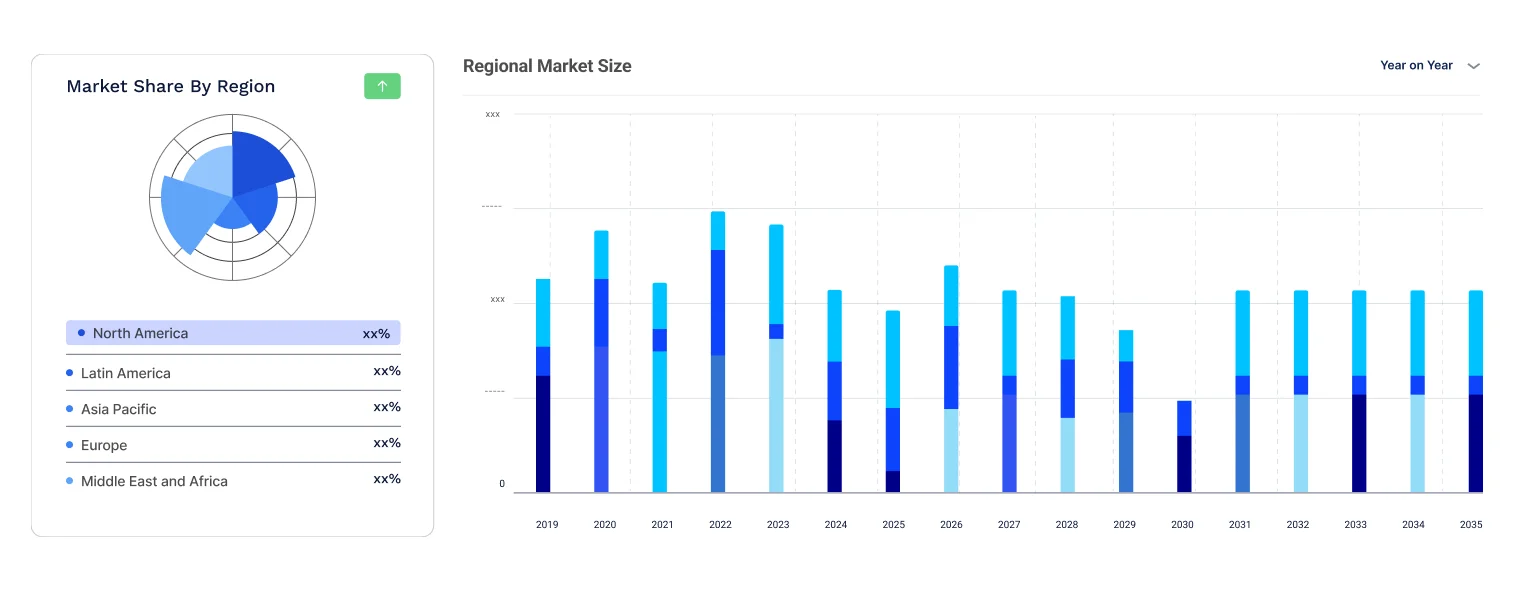
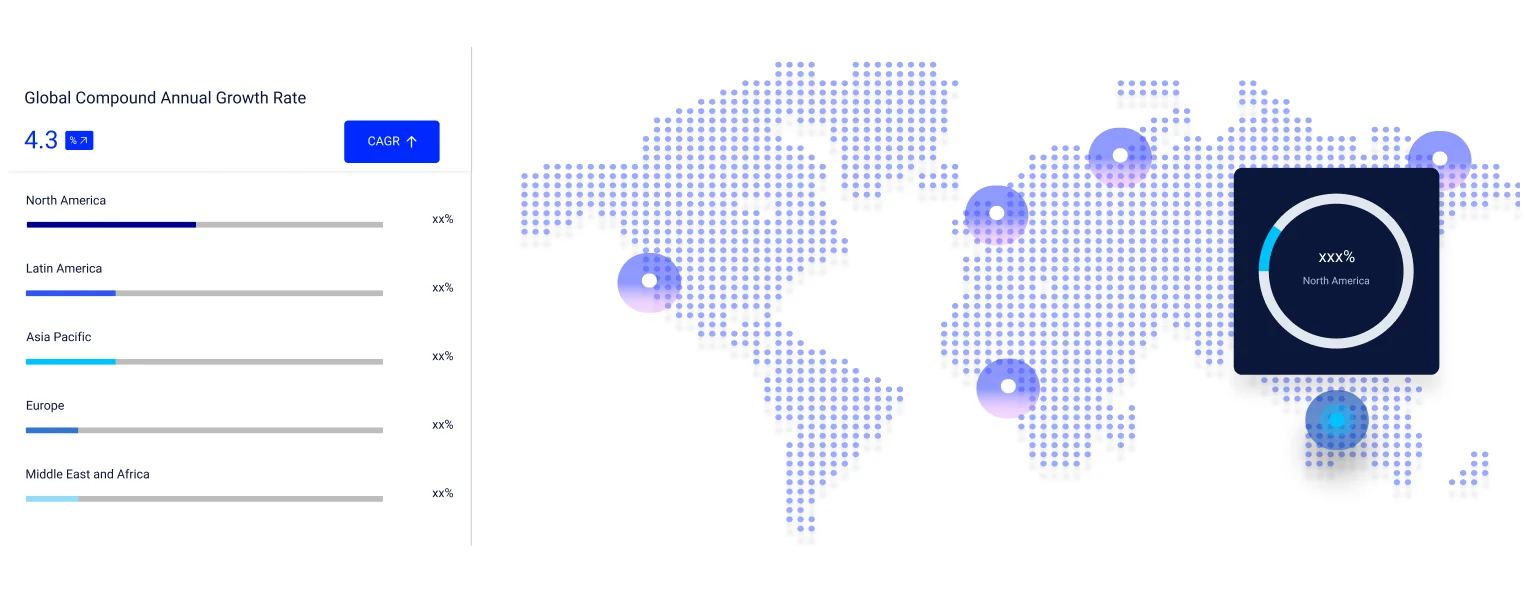
Market Breakup by Region
Read more about this report - REQUEST FREE SAMPLE COPY IN PDF
Read more about this report - REQUEST FREE SAMPLE COPY IN PDF
North America leads the global SAN market with the highest revenue share, driven by the world's largest concentration of enterprise data centres, the most advanced deployment of NVMe-oF and all-flash SAN technology, and a financial services sector with stringent SAN infrastructure requirements.
United States SAN Market The US is the dominant national SAN market, with FedRAMP-compliant NVMe-oF SAN procurement among federal agencies representing a significant and growing procurement category. Dell, HPE, NetApp, IBM, and Cisco compete across all US enterprise SAN segments, with technology distribution concentrated across the West, South, and Northeast regions where financial institutions, technology enterprises, and government data operations are concentrated.
Mexico SAN Market Mexico's SAN market is driven by manufacturing sector data management requirements and growing financial services digitisation. Mexico's position within Dell's and Cisco's strongest Latin American commercial footprint creates a well-served enterprise SAN environment with investment driven by nearshoring manufacturing expansion.
Europe's SAN market is the second-largest regional market globally, shaped by GDPR data residency requirements that sustain on-premises SAN investment, DORA financial sector resilience mandates, and NIS2 infrastructure operator obligations creating legally mandated SAN upgrade cycles across financial services, utilities, and public-sector data centres.
France SAN Market France's enterprise SAN market is driven by the country's large financial services sector, telecommunications operators, and defence industrial base that maintain significant on-premises SAN infrastructure under national data sovereignty and DORA compliance frameworks.
Italy SAN Market Italy's SAN market is driven by manufacturing sector enterprise digitisation, banking sector SAN compliance requirements, and growing data centre investment in Milan's established co-location hub serving both domestic and international enterprise tenants.
Germany SAN Market Germany's industrial sector manufacturing and R&D data management requirements anchor sustained SAN procurement. BSI IT-Grundschutz standards published in November 2024 introduced guidance for NVMe-oF and software-defined SAN architectures, supporting critical infrastructure operators' SAN modernisation investments.
Spain SAN Market Spain's SAN market is driven by financial services, telecommunications, and expanding data centre investment in Madrid and Barcelona attracting cloud and co-location operators with enterprise SAN infrastructure requirements.
United Kingdom SAN Market The UK SAN market is anchored by NHS healthcare storage modernisation for patient record management, financial services City of London SAN compliance requirements, and media and entertainment production sector storage representing the primary demand verticals.
Asia Pacific is the fastest-growing regional SAN market, driven by data centre expansion across China, India, Japan, South Korea, and Southeast Asia, combined with government data localisation mandates and expanding financial services sector SAN adoption.
India SAN Market India's rapidly expanding banking and financial services sector, IT services industry data centre investment, and government digital infrastructure programmes are collectively creating a growing enterprise SAN adoption environment.
China SAN Market State-led data centre investment programmes and indigenous technology substitution policies are creating both demand for enterprise SAN and opportunity for domestic SAN vendors including Huawei Technologies.
Japan SAN Market Japan's financial sector 32G Fibre Channel upgrade cycles, precision manufacturing sector data management requirements, and advanced semiconductor industry storage needs are the primary drivers of SAN procurement across the country.
The GCC SAN market is driven by Saudi Arabia's Vision 2030 digital infrastructure investment, UAE Smart Dubai data centre expansion, and the region's financial services and energy sector SAN modernisation programmes. GCC-based data centres serving both domestic enterprise and regional cloud deployment are increasingly specifying all-flash NVMe SAN infrastructure aligned with the performance requirements of their enterprise cloud tenants.
Brazil SAN Market Brazil's SAN market is driven by the country's financial services sector operating one of Latin America's most sophisticated enterprise IT environments, major retail sector digitalisation, and expanding cloud data centre investment in São Paulo. Brazil's central bank digital infrastructure requirements and LGPD data protection law create SAN procurement obligations comparable to European regulatory frameworks.
The comprehensive Expert Market Reseaech report provides an in-depth assessment of the market based on Porter's five forces model along with giving a SWOT analysis. The report gives a detailed analysis of the following key players in the global storage area network market, covering their competitive landscape and the latest developments like mergers, acquisitions, investments and expansion plans.
Dell Technologies is the global market leader in enterprise SAN infrastructure through its PowerMax, PowerStore, and PowerScale storage portfolio, holding an estimated 21% of global SAN market revenue through deep enterprise relationships and a comprehensive channel network. Dell's April 2026 introduction of the Dell AI Factory with NVIDIA Modular Architecture integrates Dell storage with NVIDIA AI software, positioning the company's SAN infrastructure as the foundational storage layer for enterprise AI deployment.
HPE holds approximately 18% of global SAN market revenue through its HPE Alletra all-flash and HPE Primera storage platforms, serving enterprise and service provider customers with Fibre Channel and NVMe-oF SAN solutions. HPE's USD 14 billion acquisition of Juniper Networks, closed in 2024, creates an end-to-end networking and storage stack for hybrid cloud environments that positions HPE as a unified infrastructure provider across SAN switching and storage.
IBM serves the enterprise SAN market through its FlashSystem all-flash storage portfolio with advanced data reduction, encryption, and autonomous management capabilities. IBM's February 2026 FlashSystem next-generation launch introduced computational storage with offloaded deduplication and compression, enhanced encryption, and autonomous tuning strengthening IBM's position in the high-security, high-reliability SAN segment serving financial services, government, and healthcare operators.
Cisco serves the SAN market primarily through its MDS 9000 NX-OS SAN switching portfolio, which competes with Broadcom's Brocade Fibre Channel switches across enterprise and hyperscale SAN fabric deployments. Cisco's RTX PRO 4500 Blackwell server partner status announced at NVIDIA GTC 2026 in March reinforces the company's position in AI-adjacent infrastructure where SAN switching fabric connects GPU compute to all-flash storage arrays.
*Please note that this is only a partial list; the complete list of key players is available in the full report. Additionally, the list of key players can be customized to better suit your needs.*
Other players in the market include Oracle Corporation, Cisco Systems, Inc., and NEC Corporation, among others.


Upto 15% Off
USD
$2499 $2249
$3999 $3599
$4999 $4249
$5999 $5099


*While we strive to always give you current and accurate information, the numbers depicted on the website are indicative and may differ from the actual numbers in the main report. At Expert Market Research, we aim to bring you the latest insights and trends in the market. Using our analyses and forecasts, stakeholders can understand the market dynamics, navigate challenges, and capitalize on opportunities to make data-driven strategic decisions.*
The global market for storage area network is expected to grow at a rate of 4.10% during the forecast period of 2026-2035.
According to the CAGR, the market size is expected to increase and attain a value of USD 36.05 Billion by 2035.
The market is driven by the increasing demand for storage area networks in various enterprises to store the large influx of data and the increasing cost-effectiveness of system infrastructure and data centres.
The rising number of SMEs in emerging market regions and increasing demand for SANs from small and medium enterprises are expected to propel market growth.
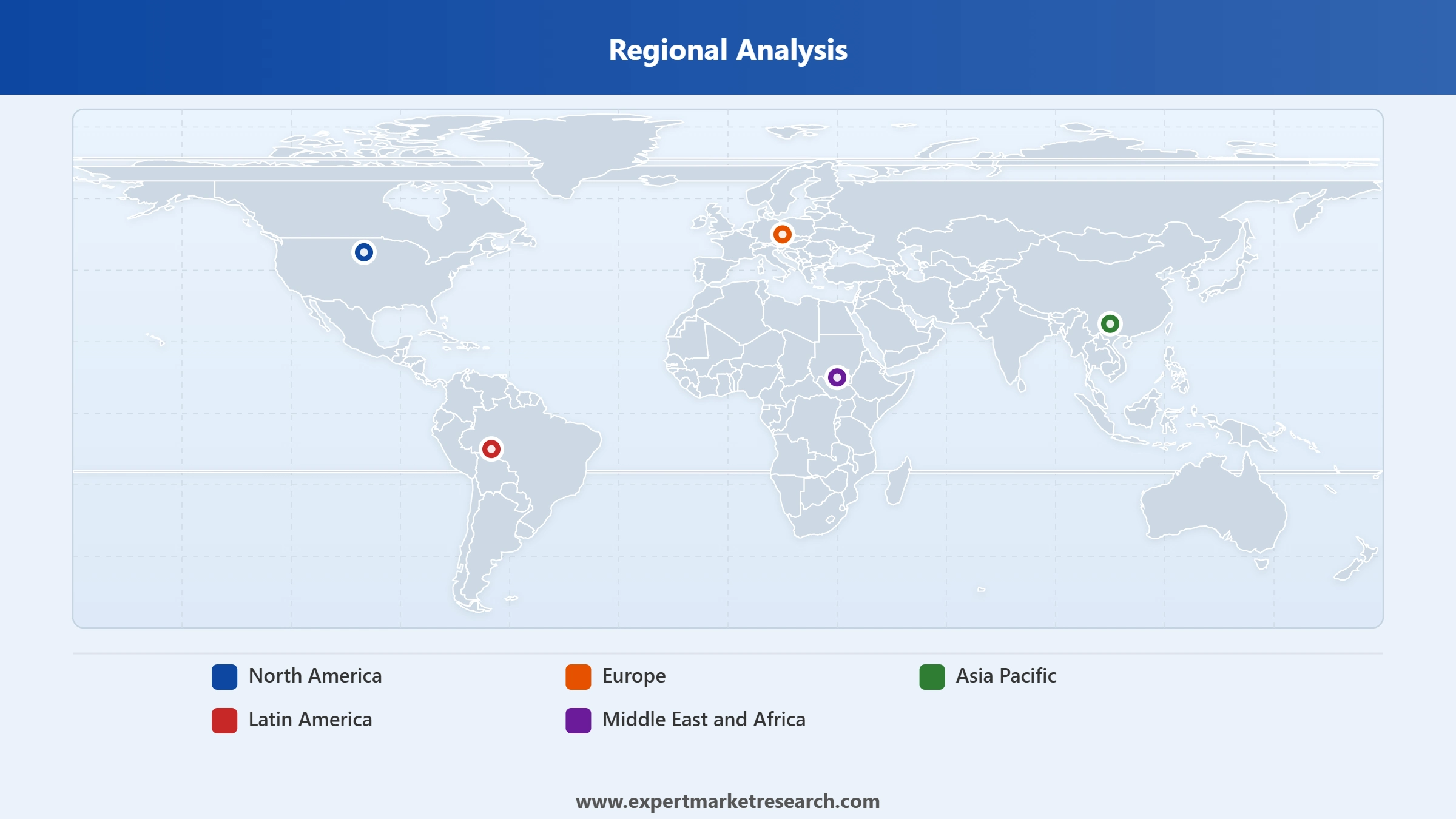
The major regions for the global storage area network market include North America, Europe, the Asia Pacific, Latin America, the Middle East and Africa.
The global market for storage area networks, based on components, can include software, hardware, and services.
The technologies for storage area networks include fibre channel (FE), fibre channel over ethernet (FCoE), InfiniBand, and iCSI protocol.
Small and medium enterprises (SMEs) and large enterprises are the two different sizes of organisations that utilise storage area networks.
The market finds end-uses in sectors like BFSI, retail and e-commerce, IT and telecommunication, energy and utility, government offices, education, aerospace and defence, healthcare, and manufacturing, among others.
The key players leading the storage area network market include HP Inc., Dell Technologies Inc., IBM Corporation, Oracle Corporation, Cisco Systems, Inc., and NEC Corporation, among others.
In 2025, the storage area network market reached an approximate value of USD 24.12 Billion.
The market is expected to witness steady growth during the forecast period of 2026-2035 to reach a value of USD 36.05 Billion by 2035.
Explore our key highlights of the report and gain a concise overview of key findings, trends, and actionable insights that will empower your strategic decisions.
| REPORT FEATURES | DETAILS |
| Base Year | 2025 |
| Historical Period | 2019-2025 |
| Forecast Period | 2026-2035 |
| Scope of the Report |
Historical and Forecast Trends, Industry Drivers and Constraints, Historical and Forecast Market Analysis by Segment:
|
| Breakup by Component |
|
| Breakup by Technology |
|
| Breakup by Organisation Size |
|
| Breakup by End Use |
|
| Breakup by Region |
|
| Market Dynamics |
|
| Competitive Landscape |
|
| Companies Covered |
|
Datasheet
One User
USD 2,499
USD 2,249
tax inclusive*
Single User License
One User
USD 3,999
USD 3,599
tax inclusive*
Five User License
Five User
USD 4,999
USD 4,249
tax inclusive*
Corporate License
Unlimited Users
USD 5,999
USD 5,099
tax inclusive*
*Please note that the prices mentioned below are starting prices for each bundle type. Kindly contact our team for further details.*
Flash Bundle
Small Business Bundle
Growth Bundle
Enterprise Bundle
*Please note that the prices mentioned below are starting prices for each bundle type. Kindly contact our team for further details.*
Flash Bundle
Number of Reports: 3
20%
tax inclusive*
Small Business Bundle
Number of Reports: 5
25%
tax inclusive*
Growth Bundle
Number of Reports: 8
30%
tax inclusive*
Enterprise Bundle
Number of Reports: 10
35%
tax inclusive*
How To Order

Select License Type
Choose the right license for your needs and access rights.

Click on ‘Buy Now’
Add the report to your cart with one click and proceed to register.

Select Mode of Payment
Choose a payment option for a secure checkout. You will be redirected accordingly.
Strategic Solutions for Informed Decision-Making
Gain insights to stay ahead and seize opportunities.

Get insights & trends for a competitive edge.

Track prices with detailed trend reports.

Analyse trade data for supply chain insights.

Leverage cost reports for smart savings

Enhance supply chain with partnerships.

Connect For More Information
Our expert team of analysts will offer full support and resolve any queries regarding the report, before and after the purchase.
Our expert team of analysts will offer full support and resolve any queries regarding the report, before and after the purchase.
We employ meticulous research methods, blending advanced analytics and expert insights to deliver accurate, actionable industry intelligence, staying ahead of competitors.
Our skilled analysts offer unparalleled competitive advantage with detailed insights on current and emerging markets, ensuring your strategic edge.
We offer an in-depth yet simplified presentation of industry insights and analysis to meet your specific requirements effectively.




