

Consumer Insights
Uncover trends and behaviors shaping consumer choices today
Procurement Insights
Optimize your sourcing strategy with key market data
Industry Stats
Stay ahead with the latest trends and market analysis.
The Variable Refrigerant Flow (VRF) System market was valued at USD 25.94 Billion in 2025. The market is expected to grow at a CAGR of 9.84% during the forecast period of 2026-2035 to reach a value of USD 66.31 Billion by 2035. Rising demand for energy-efficient HVAC solutions, tightening refrigerant regulations, and rapid construction growth across Asia Pacific are collectively driving the market growth.
The Variable Refrigerant Flow (VRF) System market spans commercial, residential, and industrial buildings, offering zoned, ductless climate control as an alternative to conventional central HVAC systems. The market's direction is increasingly shaped by tightening refrigerant regulations, pushing manufacturers toward low-GWP systems ahead of looming compliance deadlines, alongside growing integration of AI-enabled controls and cloud-based building management platforms. Adoption is also expanding beyond VRF's traditional commercial base into high-rise residential construction and mission-critical data center cooling, broadening the technology's addressable scope well past its original office and hospitality footprint.
Manufacturers are reinforcing their competitive position through continued refrigerant technology investment and strengthened regional service networks rather than relying on a single growth lever. In July 2026, for example, GE Appliances, a Haier company, launched a new R-32 Variable Refrigerant Flow platform expanding its commercial HVAC portfolio, illustrating how even newer entrants are investing in low-GWP refrigerant technology to compete for specification business alongside established players. This multi-pronged approach is helping leading manufacturers maintain reliable supply and installation support across commercial, residential, and industrial VRF projects even as refrigerant regulations and raw material costs continue to evolve, a dynamic that continues to shape product development across the industry.
The competitive landscape remains moderately consolidated, with supply concentrated among established Japanese, Korean, and Chinese manufacturers such as Daikin Industries, Mitsubishi Electric, LG Electronics, and Midea Group that maintain deep refrigerant engineering expertise, extensive service networks, and strong brand recognition among contractors and building owners. Participation requires sustained investment in compressor and heat-exchanger technology, refrigerant compliance, and installer training, creating meaningful entry barriers and reinforcing the position of long-established players across commercial, residential, and industrial applications.
Compound Annual Growth Rate
9.84%
Value in USD Billion
2026-2035
|
Variable Refrigerant Flow (VRF) System Market Report Summary |
Description |
Value |
|
Base Year |
USD Billion |
2025 |
|
Historical Period |
USD Billion |
2019-2025 |
|
Forecast Period |
USD Billion |
2026-2035 |
|
Market Size 2025 |
USD Billion |
25.94 |
|
Market Size 2035 |
USD Billion |
66.31 |
|
CAGR 2019-2025 |
Percentage |
XX% |
|
CAGR 2026-2035 |
Percentage |
9.84% |
|
CAGR 2026-2035 - Market by Region |
Asia Pacific |
11.98% |
|
CAGR 2026-2035 - Market by Component |
Control Systems and Accessories |
11.4% |
|
CAGR 2026-2035 - Market by Application |
Residential |
10.9% |
|
2025 Market Share by Region |
Asia Pacific |
38.4% |
The Variable Refrigerant Flow (VRF) System market is being reshaped by tightening refrigerant regulations pushing manufacturers toward low-GWP systems, rapid Asia Pacific construction growth, and increasing integration of AI-driven smart controls. Expanding data center cooling demand and rising VRF adoption in high-rise residential developments are further reshaping the competitive landscape.
Midea launched its V9 VRF system at MCE 2026 in Milan, featuring a new heat exchanger and R32 refrigerant that boosted outdoor unit efficiency by 15%. The launch reinforced Midea's push into critical commercial applications. Other companies can adopt similarly optimized heat-exchanger geometries to lift efficiency without expanding outdoor unit footprint.
LG Electronics launched the Multi V i, an all-electric heat recovery heat pump VRF system for U.S. commercial buildings powered by its Neural Engine, improving energy efficiency ratio by up to 28.3% over the prior generation. The system also adopted low-GWP R-32 refrigerant. This leads the way for other manufacturers to pair AI-driven controls with lower-GWP refrigerants to differentiate commercial VRF offerings.
Mitsubishi Electric's METUS announced a new commercial VRF line using low-GWP R-32 refrigerant, developed ahead of the United States' January 2026 shift to A2L refrigerant standards. The line gave contractors and building owners a transition option between refrigerant generations. Companies can leverage this trend by preparing similarly phased R-32 transitions to avoid disruption as deadlines approach.
Daikin brought its Eurovent-certified CO2 (R744) VRF system to commercial availability across Europe, targeting decarbonization-focused applications such as supermarkets and retail buildings that require natural refrigerants. The system was first showcased at ISH 2025 in Frankfurt. Other companies can pursue natural refrigerant VRF development to stay ahead of the EU's F-Gas phase-down timeline.
The EU's F-Gas Regulation is phasing down HFCs across the bloc by 2050, while the United States' AIM Act is requiring A2L refrigerants such as R-32 in new VRF systems from January 2026. These overlapping timelines are compressing manufacturers' transition windows, forcing investment in redesigned outdoor units, updated safety certifications, and contractor retraining across jurisdictions at once. For example, Germany is weighing a public procurement ban on VRF systems above 10kW of cooling capacity that continue to rely on higher-GWP refrigerants, pushing suppliers to accelerate low-GWP commercial product lines.
Building owners are increasingly looking to capture waste heat from VRF cooling operations to offset water heating loads and improve overall building energy efficiency, particularly across hospitality and multi-family residential projects where hot water demand runs continuously alongside cooling needs. For example, LG's Hydrokit solution, showcased at ACREX 2026 in India, recovers heat from VRF systems to produce hot water for residential and hospitality environments, reducing overall building energy consumption and cutting reliance on separate electric or gas-fired water heating equipment.
Rising AI workloads and high-density computing are pushing traditional cooling methods to their limits, as server racks generate heat loads far beyond what conventional commercial VRF configurations were originally designed to handle, prompting manufacturers to extend precision-cooling product lines well beyond their core commercial and residential ranges. For example, Daikin Applied introduced a new Pro-C computer room air handler in April 2025 to extend its data center cooling portfolio, reflecting the broader industry shift toward mission-critical, always-on cooling infrastructure investment.
Installation, commissioning, and after-sales service requirements vary significantly by region, encouraging global manufacturers to partner with established local players rather than building distribution networks from scratch. For instance, Mitsubishi Electric Trane HVAC US, formed as a joint venture between Trane Technologies and Mitsubishi Electric in 2018, illustrates this approach, combining VRF engineering expertise with an established regional commercial distribution and service network.
Urbanization, rising disposable incomes, and demand for individualized zone control are drawing VRF systems beyond their traditional commercial base into upscale residential and mixed-use projects. For example, the Regency Parc luxury residential development in South Florida, completed in 2025, adopted a VRF system as part of its sustainability positioning, illustrating how urban high-rise apartments and luxury residences are increasingly favoring VRF systems for their zoning flexibility, low noise levels, and space-saving design compared with conventional ducted systems.
The Expert Market Research's report titled "Variable Refrigerant Flow (VRF) System Market Report and Forecast 2026-2035" offers a detailed analysis of the market based on the following segments:
Market Breakup by Component
Key Insight: Outdoor units account for the largest share of the market by component, at approximately 46.8% of 2025 revenue, reflecting their role in housing the compressor, refrigerant management, and heat-exchange capacity that define overall system efficiency and installed cost. Indoor units represent a substantial and steadily growing share as building owners specify a wider mix of terminal types, from ceiling cassettes to wall-mounted and concealed duct units, to match diverse zone requirements. Control systems and accessories are seeing the fastest relative growth as smart building integration becomes a standard specification; in December 2025, for example, Mitsubishi Electric Trane HVAC US introduced the Comfort app, a next-generation control platform offering remote access and system management for its VRF and ductless heat pump lineups, illustrating the industry's shift toward app-based, cloud-connected building controls.
Market Breakup by System Type
Key Insight: Heat pump systems dominate the market by system type, holding a 62.7% share, as they provide a simpler, more cost-effective single-mode heating or cooling configuration well suited to buildings with relatively uniform seasonal demand. Heat recovery systems represent a smaller but faster-growing configuration as mixed-use and multi-tenant buildings increasingly require simultaneous heating and cooling across different zones. In February 2026, for example, LG published a case study on its Multi V Heat Recovery system installed at The Bristol Belgrade, a heritage five-star hotel in Serbia, illustrating how heat recovery VRF enables simultaneous zone-level heating and cooling in mixed-use hospitality properties.
Market Breakup by Application
Key Insight: Commercial buildings represent the largest application segment, reflecting decades of established specification in offices, hotels, hospitals, and retail complexes that value VRF systems for their zoning flexibility and reduced ductwork footprint. Residential applications are the fastest-growing segment as urban high-rise apartments, luxury residences, and multi-family housing developments increasingly favor VRF systems for their low noise levels and space-saving design relative to conventional ducted systems. Industrial applications, while a smaller share, continue to grow as manufacturing facilities adopt VRF systems for precise zone-level climate control across mixed-use production and office areas. Others includes healthcare, education, and institutional facilities, where precise, quiet, individually zoned control is increasingly valued alongside conventional systems.
Market Breakup by Region
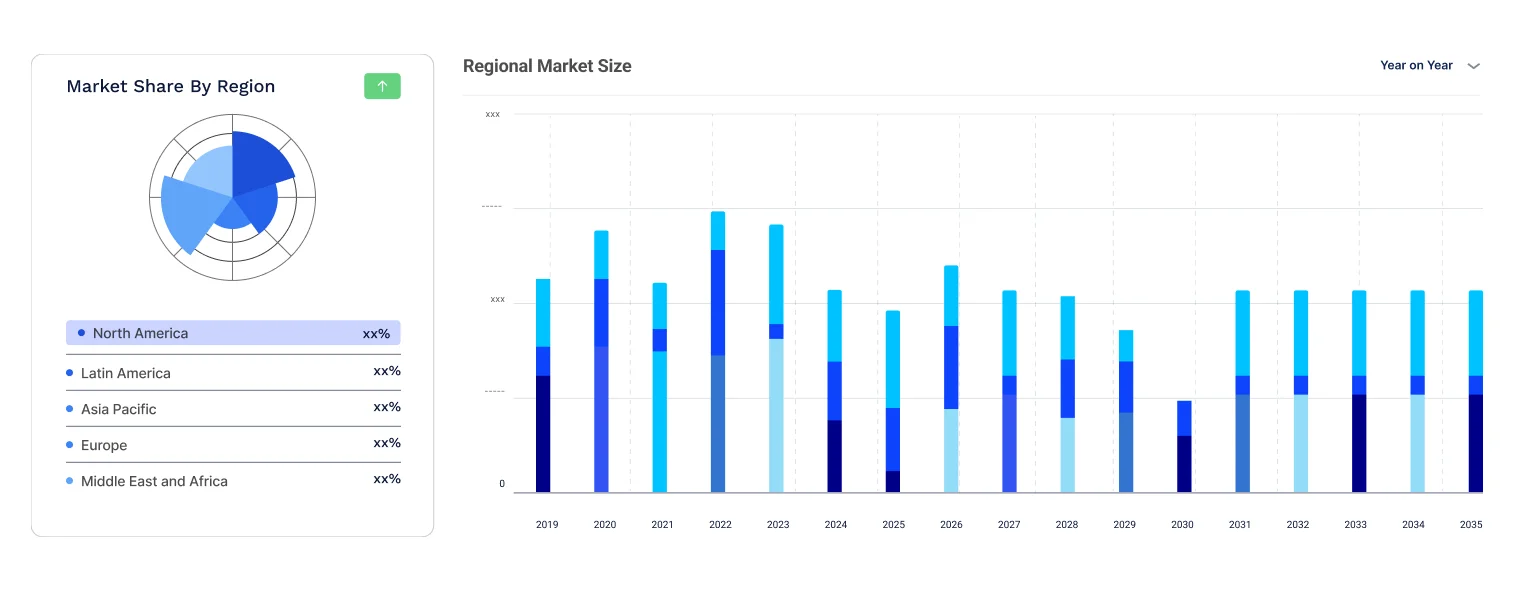
Key Insight: Asia Pacific dominates the Variable Refrigerant Flow (VRF) System market, holding a 38.4% share in 2024 and forecast to grow at the fastest regional CAGR of 11.98% through the forecast period, led by rapid urbanization and construction growth across China, Japan, India, and South Korea. North America held a 27.2% share the same year, supported by federal energy efficiency initiatives and strong retrofit demand in aging commercial buildings such as hotels and hospitals. Europe remains a significant market anchored by strict F-Gas refrigerant regulations that are accelerating replacement cycles toward low-GWP VRF systems; in December 2025, for example, NHS Property Services in the United Kingdom contracted for a new VRF system installation at Oaks Park Medical Centre, illustrating this replacement activity within the region's public healthcare estate. Latin America and the Middle East and Africa continue to see steadier growth tied to expanding commercial construction and hospitality infrastructure.
By component, outdoor units dominate the market due to their central role in compressor and heat-exchange capacity
Outdoor units accounted for approximately 46.8% of market revenue in 2025, reflecting their role in housing the compressor, refrigerant management, and heat-exchange capacity that defines total system efficiency and installed cost. Building owners and contractors weigh outdoor unit specifications most heavily during procurement, since compressor technology and refrigerant circuit design directly determine long-term energy performance and total cost of ownership across a VRF installation's operating life.
Control systems and accessories represent the fastest-growing component category as smart building integration becomes a standard specification rather than an optional upgrade. In February 2025, for example, the Samsung Lennox North America joint venture launched its first ductless heat pump products, including the Varix VRF system, featuring R32 refrigerant and SmartThings app compatibility for remote monitoring and control. Manufacturers are increasingly bundling similar cloud-connected interfaces with new outdoor unit ranges to support central building management system integration, giving facility managers remote visibility and control across large, multi-zone commercial properties that was previously unavailable with standalone VRF installations.
By system type, heat pump systems lead the market due to lower installation cost and simpler single-mode operation
Heat pump systems held a 62.7% share of the market, remaining the preferred configuration for buildings with relatively uniform seasonal heating or cooling demand. Their simpler single-mode design translates into lower upfront installation cost and reduced piping complexity compared with heat recovery architectures, making heat pump systems the default specification for standalone offices, retail units, and residential buildings; in Japan, heat pump systems account for nearly 63% of total VRF system demand, reflecting this same preference at national scale.
Heat recovery systems are the fastest-growing configuration as mixed-use and multi-tenant buildings increasingly require simultaneous heating and cooling across different zones. A 2024 review convened by the New York State Energy Research and Development Authority examined large split heat recovery VRF systems in multifamily buildings, underscoring the growing policy attention this configuration is receiving as adoption expands in dense urban housing stock. Despite higher capital cost, heat recovery architectures continue gaining share as hotels, hospitals, and mixed-use developments prioritize simultaneous climate control.
By application, commercial buildings lead the market due to decades of established VRF specification in offices and hospitality
Commercial buildings represent the largest application segment, reflecting decades of established VRF specification across offices, hotels, hospitals, and retail complexes that value the technology's zoning flexibility and reduced ductwork footprint relative to conventional central HVAC systems. Facility managers in commercial real estate continue to specify VRF systems for renovation and retrofit projects where minimizing disruption to occupied space and preserving ceiling height are priority design constraints.
Residential applications are the fastest-growing segment as urban high-rise apartments, luxury residences, and multi-family housing developments increasingly favor VRF systems for their low noise levels and space-saving design. In April 2025, for example, developer Marvel Realtors launched Basilo, an ultra-luxury high-rise residential project in Koregaon Park, Pune, featuring VRF air-conditioning in every residence, illustrating how rising disposable incomes and demand for individualized, room-by-room climate control in premium residential projects are drawing VRF systems beyond their traditional commercial base, particularly across fast-urbanizing Asia Pacific markets.
Asia Pacific dominates the market due to rapid urbanization and construction growth across the region's major economies
Asia Pacific dominates the Variable Refrigerant Flow (VRF) System market, holding a 38.4% share in 2024, led by rapid urbanization and sustained commercial and residential construction activity across China, Japan, India, and South Korea. The region's dense high-rise building stock and growing preference for zoned, ductless climate control over conventional central air systems continue to reinforce Asia Pacific's leading position across both new construction and renovation projects.
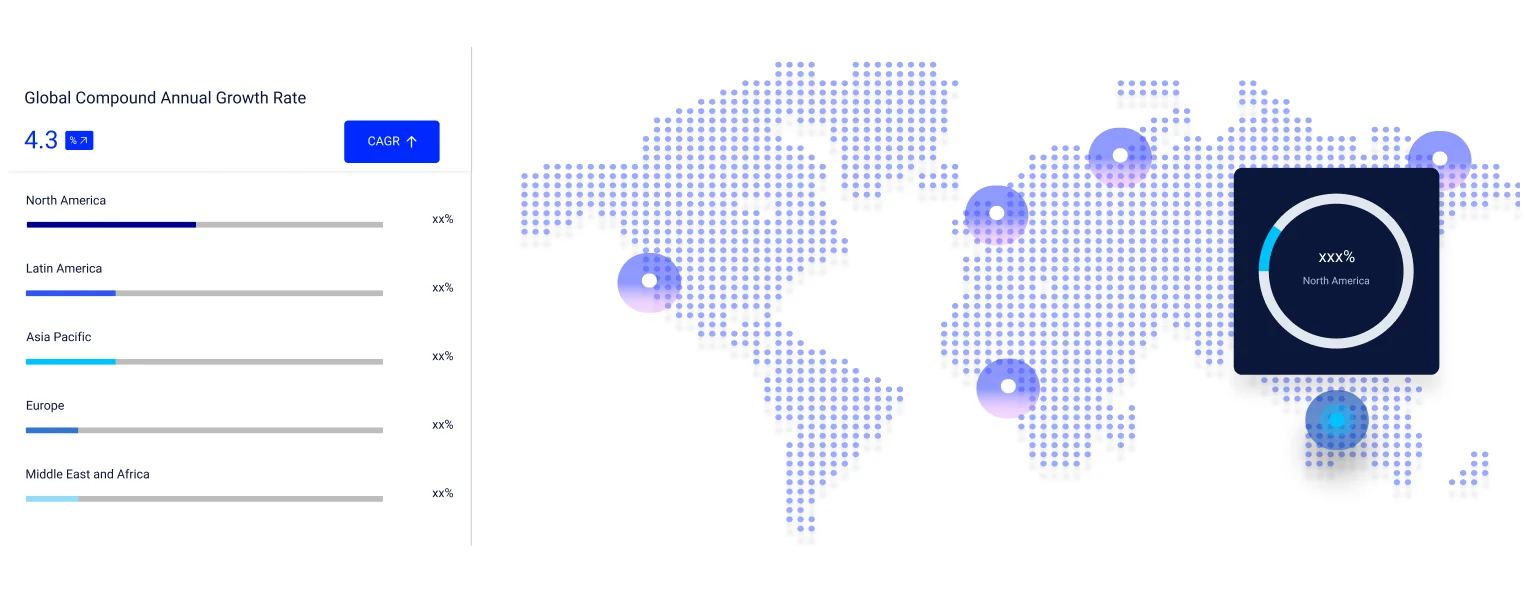
Asia Pacific is also the fastest-growing region, forecast to expand at an 11.98% CAGR through the forecast period, driven by continued urbanization, rising construction spending, and government-backed energy efficiency programs across China, India, and Southeast Asia. Trade events such as AHR 2026 have highlighted low-GWP refrigerants and broader systems-level thinking as a growing focus for manufacturers targeting this region, alongside strengthening building energy codes that continue to support above-average growth relative to the more mature North American and European markets.
|
CAGR 2026-2035 - Market by |
Region |
|
North America |
8.5% |
|
Europe |
7.6% |
|
Asia Pacific |
11.98% |
|
Latin America |
9.8% |
|
Middle East and Africa |
10.2% |
The global market features a moderately consolidated competitive structure led by established Japanese, Korean, and Chinese manufacturers with deep refrigerant engineering expertise and extensive service networks. Variable Refrigerant Flow (VRF) System companies like Daikin Industries, Mitsubishi Electric, and LG Electronics are competing primarily through refrigerant technology leadership and product efficiency, while Midea and other manufacturers are focusing on smart controls and reliability engineering.
Leading Variable Refrigerant Flow (VRF) System market players are focusing on low-GWP refrigerant transitions, AI-enabled smart controls, and expanded data center and residential product lines to strengthen their competitive position. Increasing emphasis on regulatory compliance, energy efficiency, and mission-critical reliability is also enabling manufacturers to diversify their customer base while supporting long-term market growth.
Daikin Industries, headquartered in Osaka, and founded in 1924, is the world's leading air-conditioning and fluorochemicals manufacturer, producing its own refrigerants alongside the compressors and VRV/VRF systems that use them. On December, 2025, Daikin and Copeland announced an expansion of their existing compressor joint venture into Europe, introducing advanced inverter swing rotary compressors, power electronics, and controls designed specifically for European residential heat pumps.
Mitsubishi Electric, headquartered in Tokyo, and founded in 1921, manufactures VRF air-conditioning systems offering distributed airflow and independent indoor unit control. The company's City Multi VRF platform is deployed across commercial, healthcare, and hospitality projects worldwide, supported by a global network of authorized dealers and technical training centers.
LG Electronics, headquartered in Seoul, and founded in 1958, supplies VRF, chiller, and water heating solutions for commercial and residential applications worldwide. On July, 2025, LG presented a strategic roadmap to transform its ES Company into a top-tier global HVAC solutions provider by 2030, including plans for serial acquisitions and a new production line at its Sri City plant in India, scheduled to open in 2026 with capacity for up to 1.5 million air conditioning units annually.
Midea Group, headquartered in Foshan, Guangdong, and founded in 1968, is one of the world's largest technology manufacturing conglomerates, with a Building Technologies division spanning VRF, heat pump, and building management solutions. In April 2024, the division unveiled its next-generation MagBoost Apex magnetic centrifugal chiller series at an event in Chongqing, China attended by more than 200 global partners, extending its HVAC portfolio beyond VRF into large-capacity chiller technology.
Other key players in the market report include Samsung Electronics Co., Ltd., Toshiba Carrier Corporation, Panasonic Corporation, Gree Electric Appliances, Inc., and Johnson Controls-Hitachi Air Conditioning, among others.
*Please note that this is only a partial list; the complete list of key players is available in the full report. Additionally, the list of key players can be customized to better suit your needs.*
Explore the latest trends shaping the Variable Refrigerant Flow (VRF) System market 2026-2035 with our in-depth report. Gain strategic insights, future forecasts, and key market developments that can help you stay competitive. Download a free sample report or contact our team for customized consultation on the market trends 2026.


Upto 15% Off
USD
$3999 $3599
$2499 $2249
$4999 $4249
$5999 $5099


*While we strive to always give you current and accurate information, the numbers depicted on the website are indicative and may differ from the actual numbers in the main report. At Expert Market Research, we aim to bring you the latest insights and trends in the market. Using our analyses and forecasts, stakeholders can understand the market dynamics, navigate challenges, and capitalize on opportunities to make data-driven strategic decisions.*
In 2025, the Variable Refrigerant Flow (VRF) System market reached an approximate value of USD 25.94 Billion.
The market is projected to grow at a CAGR of 9.84% between 2026 and 2035.
The key players in the market include Daikin Industries, Ltd., Mitsubishi Electric Corporation, LG Electronics Inc., Samsung Electronics Co., Ltd., Toshiba Carrier Corporation, Panasonic Corporation, Gree Electric Appliances, Inc., Midea Group Co., Ltd., and Johnson Controls-Hitachi Air Conditioning, among others.
Leading manufacturers are pursuing low-GWP refrigerant transitions, AI-enabled smart controls, expanded data center cooling lines, and regional joint ventures to strengthen market position.
Key challenges include compressed refrigerant transition timelines, higher installation and servicing complexity relative to conventional HVAC, and elevated upfront system cost.
Explore our key highlights of the report and gain a concise overview of key findings, trends, and actionable insights that will empower your strategic decisions.
|
Report Features |
Details |
|
Base Year |
2025 |
|
Historical Period |
2019-2025 |
|
Forecast Period |
2026-2035 |
|
Scope of the Report |
Historical and Forecast Trends, Industry Drivers and Constraints, Historical and Forecast Market Analysis by Segment:
|
|
Breakup by Component |
|
|
Breakup by System Type |
|
|
Breakup by Application |
|
|
Breakup by Region |
|
|
Market Dynamics |
|
|
Competitive Landscape |
|
|
Companies Covered |
|
Single User License
One User
USD 3,999
USD 3,599
tax inclusive*
Datasheet
One User
USD 2,499
USD 2,249
tax inclusive*
Five User License
Five User
USD 4,999
USD 4,249
tax inclusive*
Corporate License
Unlimited Users
USD 5,999
USD 5,099
tax inclusive*
*Please note that the prices mentioned below are starting prices for each bundle type. Kindly contact our team for further details.*
Flash Bundle
Small Business Bundle
Growth Bundle
Enterprise Bundle
*Please note that the prices mentioned below are starting prices for each bundle type. Kindly contact our team for further details.*
Flash Bundle
Number of Reports: 3
20%
tax inclusive*
Small Business Bundle
Number of Reports: 5
25%
tax inclusive*
Growth Bundle
Number of Reports: 8
30%
tax inclusive*
Enterprise Bundle
Number of Reports: 10
35%
tax inclusive*
How To Order

Select License Type
Choose the right license for your needs and access rights.

Click on ‘Buy Now’
Add the report to your cart with one click and proceed to register.

Select Mode of Payment
Choose a payment option for a secure checkout. You will be redirected accordingly.
Strategic Solutions for Informed Decision-Making
Gain insights to stay ahead and seize opportunities.

Get insights & trends for a competitive edge.

Track prices with detailed trend reports.

Analyse trade data for supply chain insights.

Leverage cost reports for smart savings

Enhance supply chain with partnerships.

Connect For More Information
Our expert team of analysts will offer full support and resolve any queries regarding the report, before and after the purchase.
Our expert team of analysts will offer full support and resolve any queries regarding the report, before and after the purchase.
We employ meticulous research methods, blending advanced analytics and expert insights to deliver accurate, actionable industry intelligence, staying ahead of competitors.
Our skilled analysts offer unparalleled competitive advantage with detailed insights on current and emerging markets, ensuring your strategic edge.
We offer an in-depth yet simplified presentation of industry insights and analysis to meet your specific requirements effectively.




