

Consumer Insights
Uncover trends and behaviors shaping consumer choices today
Procurement Insights
Optimize your sourcing strategy with key market data
Industry Stats
Stay ahead with the latest trends and market analysis.
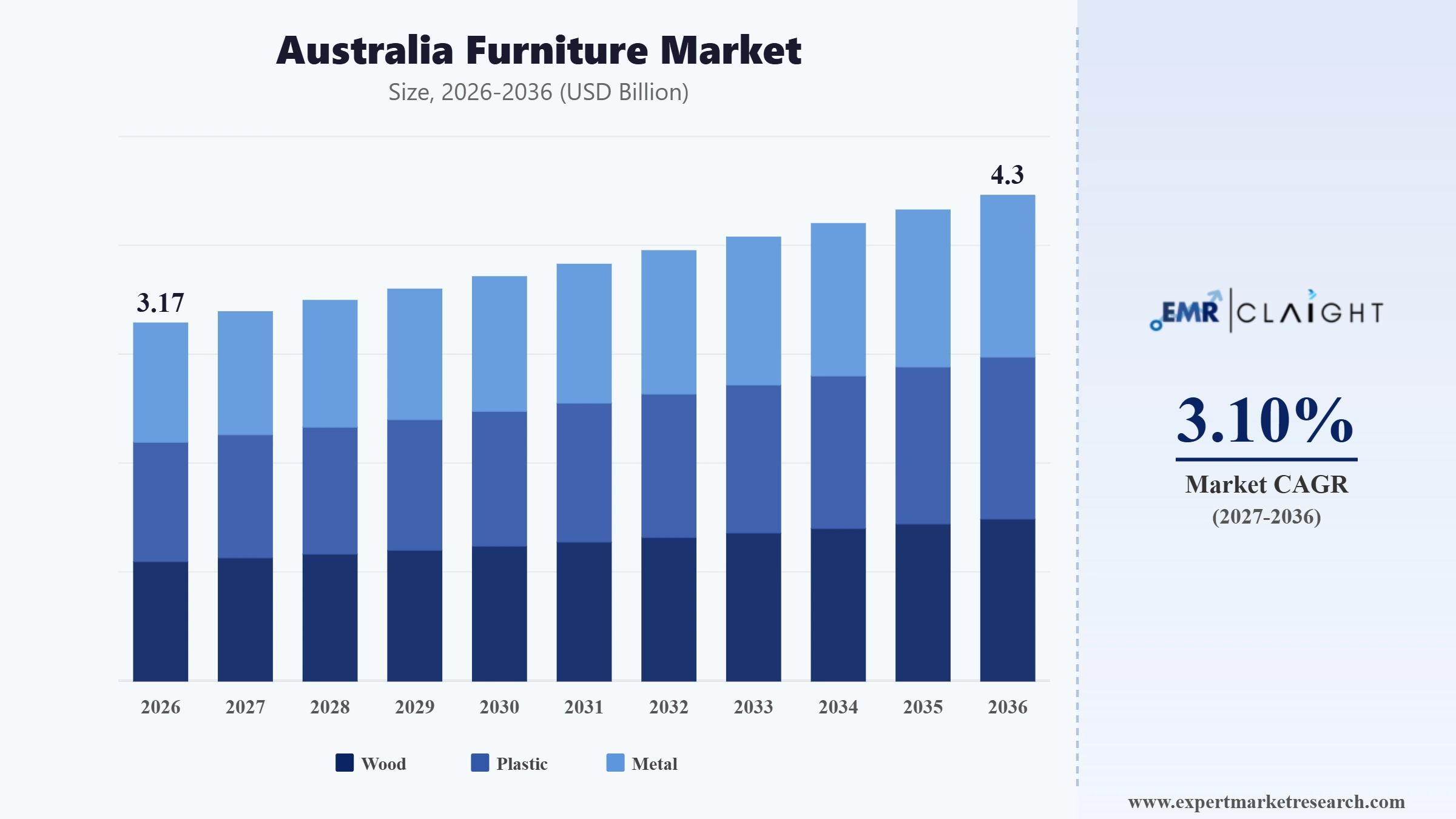
The Australia furniture market attained a value of USD 3.07 Billion in 2025 and is projected to expand at a CAGR of 3.10% through 2035. The market is further expected to reach USD 4.17 Billion by 2035. Rising demand for sustainable and locally manufactured furniture, together with a gradual recovery in housing turnover, is helping retailers stabilise margins after a prolonged consumer discretionary downturn. Growing omnichannel retail strategies, alongside continued investment in local manufacturing, is further encouraging established players to broaden their distribution footprint across the country.
Furniture refers to movable objects designed to support human activities including seating, sleeping, storage, and dining, manufactured from materials such as wood, metal, glass, and plastic. Wood holds a substantial share of the market owing to its durability, aesthetic versatility, and compatibility with both contemporary and traditional design preferences. Rising renovation activity and new residential construction continue to widen the customer base for furniture among both residential and commercial buyers across the country.
Demand is concentrating around retailers able to combine domestic manufacturing scale with omnichannel service models. In January 2026, the Australian Furnishing Industry Stewardship Council's Environmentally Sustainable Procurement Policy came into effect for furniture procurements exceeding 1 million dollars, requiring greater supply chain transparency and verified sustainability credentials. This consolidation driven positioning is converting rising demand for value oriented, locally sourced furniture directly into expanded adoption across the Australia furniture market.
Retailers across the market are converging on a common development direction, widening from standalone showroom formats toward integrated omnichannel models spanning in store consultation and online fulfilment. Companies are increasingly pursuing local manufacturing investment to reduce exposure to volatile international shipping costs. This shift is reshaping competitive dynamics among retailers, favouring companies who can demonstrate resilient domestic supply chains over those dependent entirely on imported product ranges.
Read more about this report - Request a Free Sample
| Australia Furniture Market Report Summary | Description | Value |
| Base Year | USD Billion | 2025 |
| Historical Period | USD Billion | 2019-2025 |
| Forecast Period | USD Billion | 2026-2035 |
| Market Size 2025 | USD Billion | 3.07 |
| Market Size 2035 | USD Billion | 4.17 |
| CAGR 2019-2025 | Percentage | XX% |
| CAGR 2026-2035 | Percentage | 3.10% |
| CAGR 2026-2035 - Market by Region | Queensland | 3.6% |
| CAGR 2026-2035 - Market by Region | New South Wales | 3.3% |
| CAGR 2026-2035 - Market by Material | Wood | 3.5% |
| CAGR 2026-2035 - Market by End Use | Residential | 3.4% |
| 2025 Market Share by Region | New South Wales | 30.8% |
Officeworks announced plans in May 2026 to open six new stores and complete major refurbishments to four existing outlets, part of a strategy to strengthen its physical footprint as workplace and stationery demand shifts toward hybrid retail formats blending in store service with online ordering. Companies across the Australia furniture market can pair store openings with refurbishments to modernise existing sites without abandoning proven locations.
Greenlit Brands launched a formal sale process for its Fantastic Furniture subsidiary in October 2025, appointing an investment bank to solicit bids from buyers interested in the chain's 86 stores after the group's earlier divestment of Freedom left Fantastic as its sole remaining furniture brand overall. Companies across the Australia furniture market can run structured auctions to secure competing offers before agreeing on final terms.
Koala expanded into the United Kingdom in September 2025, launching its sofa bed range with free delivery and a 120-day trial period, building on earlier entries into Japan and the United States as the brand sought new revenue outside its home market ahead of its planned listing. Companies across the Australia furniture market can test product lines in fresh markets before committing to local manufacturing.
Amart completed its acquisition of the Freedom furniture business in August 2025, adding 60 stores to its network across Australia and New Zealand after Greenlit Brands agreed to sell the chain two months earlier as part of a wider retreat from retail ownership. Companies can pursue acquisitions of established chains to add store footprint faster than opening new sites individually.
Furniture retailers across the Australia furniture market are increasingly reporting improved gross margins as freight rates stabilise and housing turnover shows tentative signs of recovery after a consumer discretionary downturn tied to affordability pressures. This is reshaping investor sentiment, favouring retailers who can show consistent margin improvement quarter after quarter rather than one off gain. According to the Australian Bureau of Statistics, spending on furniture, floor coverings, housewares, and textile goods rose 2.7 percent in the year to June 2025, recovering from a 3.6 percent decline the previous year.
Furniture retailers across the Australia furniture market are increasingly integrating in store design consultation with digital fulfilment to serve customers who want expert guidance without sacrificing the convenience of home delivery and flexible payment plans across every price bracket. This is reshaping retail format design, favouring retailers who can blend showroom expertise with the speed of online ordering across both metropolitan showrooms and regional distribution points. In February 2026, Harvey Norman reported a 6.9 percent half year sales lift surpassing 5 billion dollars, supported by disciplined cost control and strong franchising performance.
Furniture manufacturers across the Australia furniture market are increasingly prioritising domestic production capacity to manage volatility in imported goods costs, as shipping disruption and currency swings make offshore sourcing less predictable than it was in previous trading years. This is reshaping supply chain strategy, favouring manufacturers who can shift output closer to end markets without sacrificing the cost advantages that originally drove production offshore in the first place. In August 2026, Adairs reported full year revenue of 641.7 million dollars, with its Mocka brand growing 22.9 percent to 71.2 million dollars.
Furniture retailers across the Australia furniture market are increasingly adjusting pricing strategies to manage rising landed costs for imported goods, as elevated shipping and insurance expenses squeeze margins on bulky items that are costly to freight internationally by sea. This is reshaping cost management approaches, favouring retailers who can pass through increases gradually rather than in a single disruptive price rise that risks losing price sensitive customers altogether. According to United Nations Comtrade data updated in March 2026, Australia's furniture, lighting, and prefabricated building imports from China reached 4.26 billion dollars in 2025.
Furniture companies are increasingly pursuing sustainable material sourcing certifications to meet growing consumer demand for eco-friendly and ethically produced furniture, particularly among younger buyers who research supply chains before committing to large purchases. This is reshaping procurement strategy, favouring companies who can prove verified sourcing credentials rather than relying on unsubstantiated claims that regulators and consumer groups increasingly scrutinise closely. In June 2026, Winc Australia confirmed a partnership with Choice Hotels Asia Pacific to support furniture deliveries across more than 120 properties nationwide.
The Expert Market Research's report titled "Australia Furniture Market Report and Forecast 2026-2035" offers a detailed analysis of the market based on the following segments:
Market Breakup by Material
Key Insight: Wood dominates the material segment in the Australia furniture market given its durability, aesthetic versatility, and compatibility with both contemporary and traditional design preferences. Metal is registering the fastest growth given rising demand for industrial and minimalist design aesthetics across residential and commercial applications. In February 2026, the Australian Furniture Association joined GECA, AFISC, and RMIT University to host the Grow Promote Protect Forum in Melbourne, addressing circular economy readiness and responsible materials sourcing across the sector. Plastic and glass sustain steady demand through outdoor and accent furniture applications respectively, while other materials, including rattan and composite blends, serve specialised design niches.
Market Breakup by Product Type
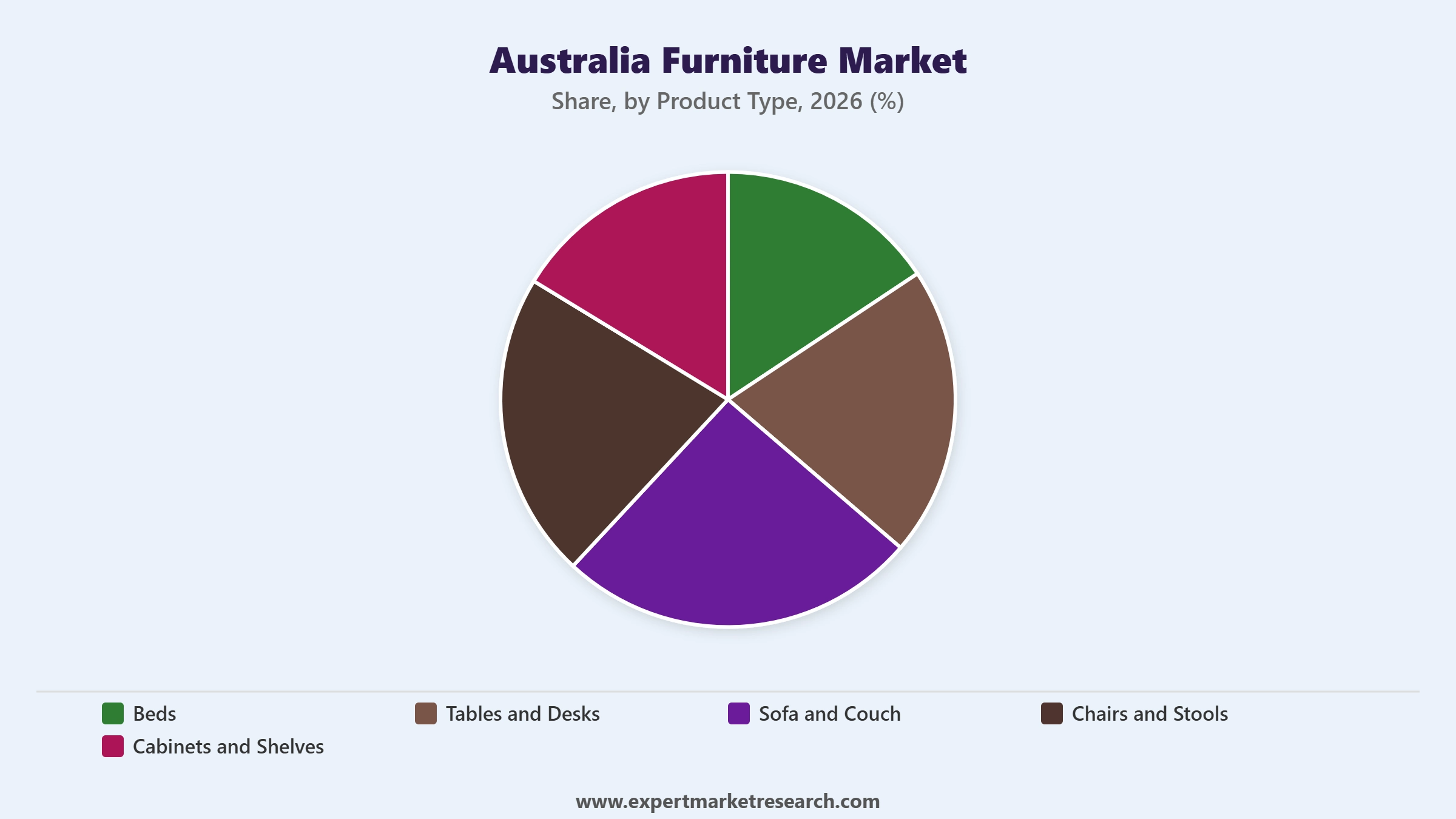
Key Insight: Beds dominate the product type segment in the Australia furniture market given their status as an essential furniture category across every household regardless of broader discretionary spending conditions. Sofa and couch products are registering the fastest growth as consumers prioritise living room upgrades amid gradually recovering housing turnover. Cabinets, shelves, chairs, and stools sustain steady demand through both residential and commercial storage and seating applications, while other product types, including outdoor and children's furniture, serve smaller specialised segments of the wider market.
Market Breakup by End Use
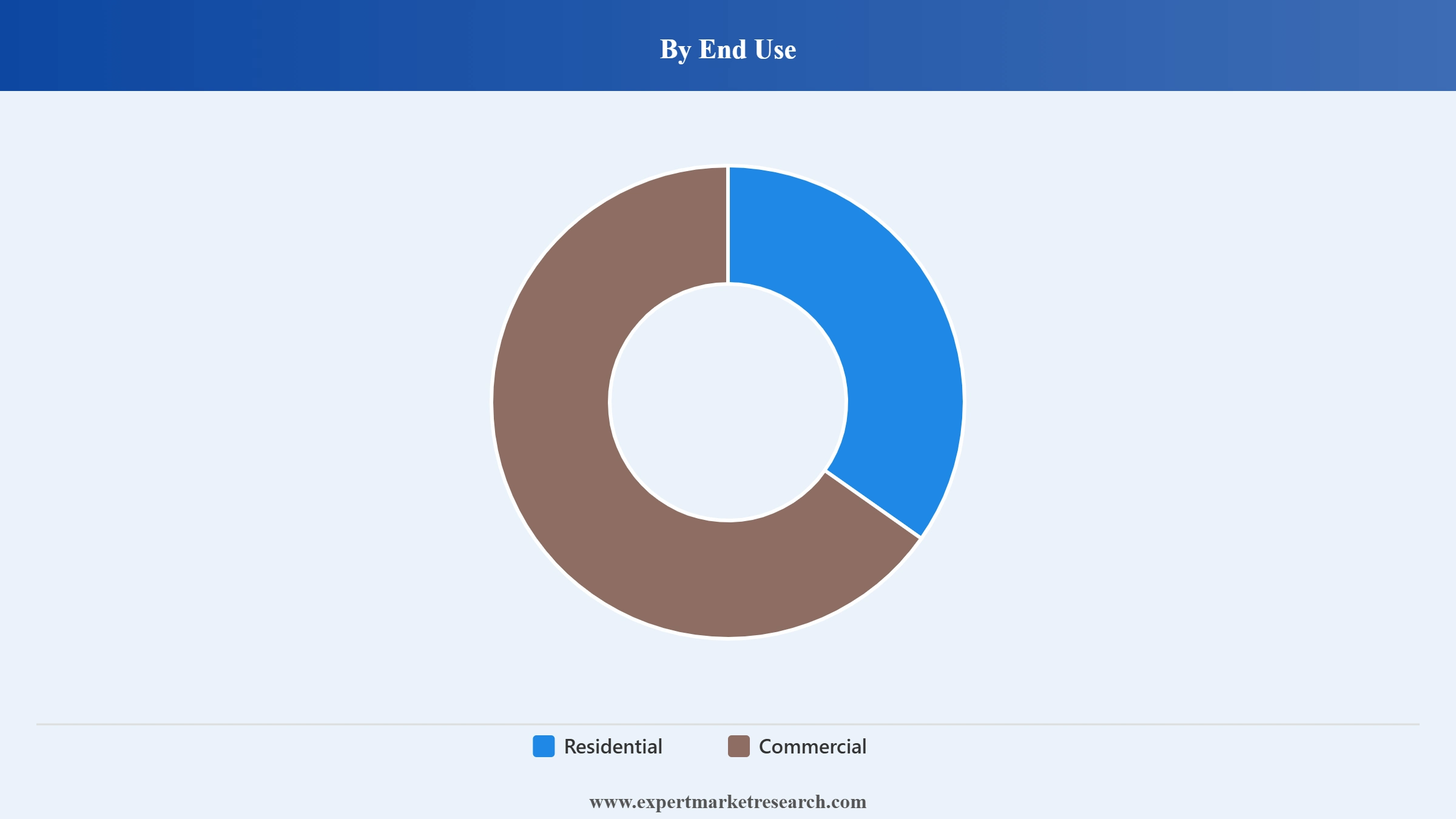
Key Insight: The residential segment dominates the end use category given sustained household furniture replacement and renovation activity across the Australia furniture market. The commercial segment is registering steady growth given expanding office, hospitality, and retail fit out activity across major metropolitan areas. In July 2026, the Housing Industry Association reported that detached house approvals for financial year 2025 to 2026 reached 121,140, a 7.0 percent increase compared with the previous year, supporting sustained residential furniture demand.
Market Breakup by Distribution Channel
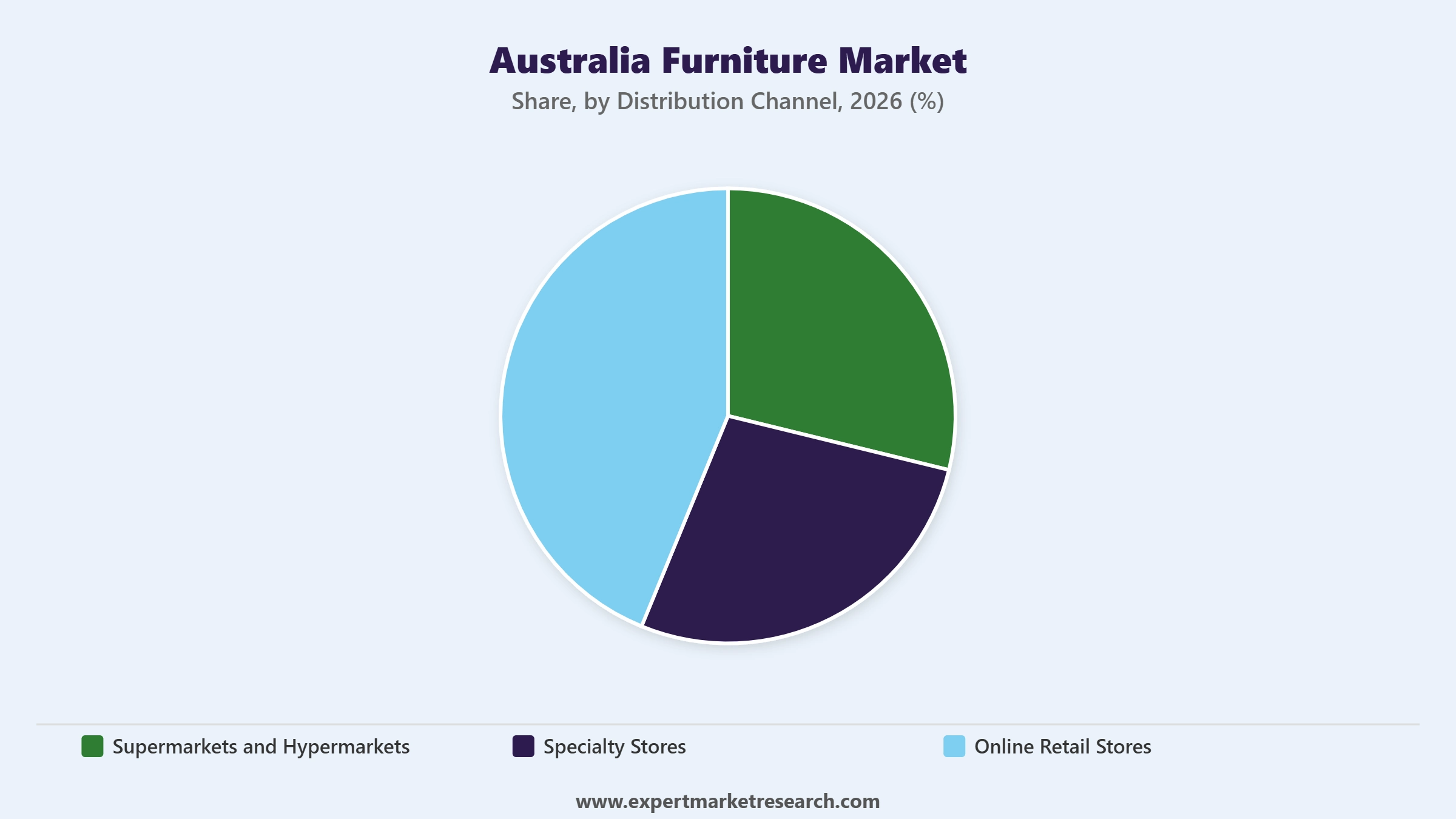
Key Insight: Specialty stores dominate the distribution channel segment given their curated product assortment and dedicated design consultation services. Online channels are registering the fastest growth as omnichannel strategies pairing digital fulfilment within store consultation expand reach across urban and regional catchments. Supermarkets, hypermarkets, and convenience stores serve limited furniture categories, while other channels, including direct manufacturer sales, serve specialised customer segments.
Market Breakup by Region
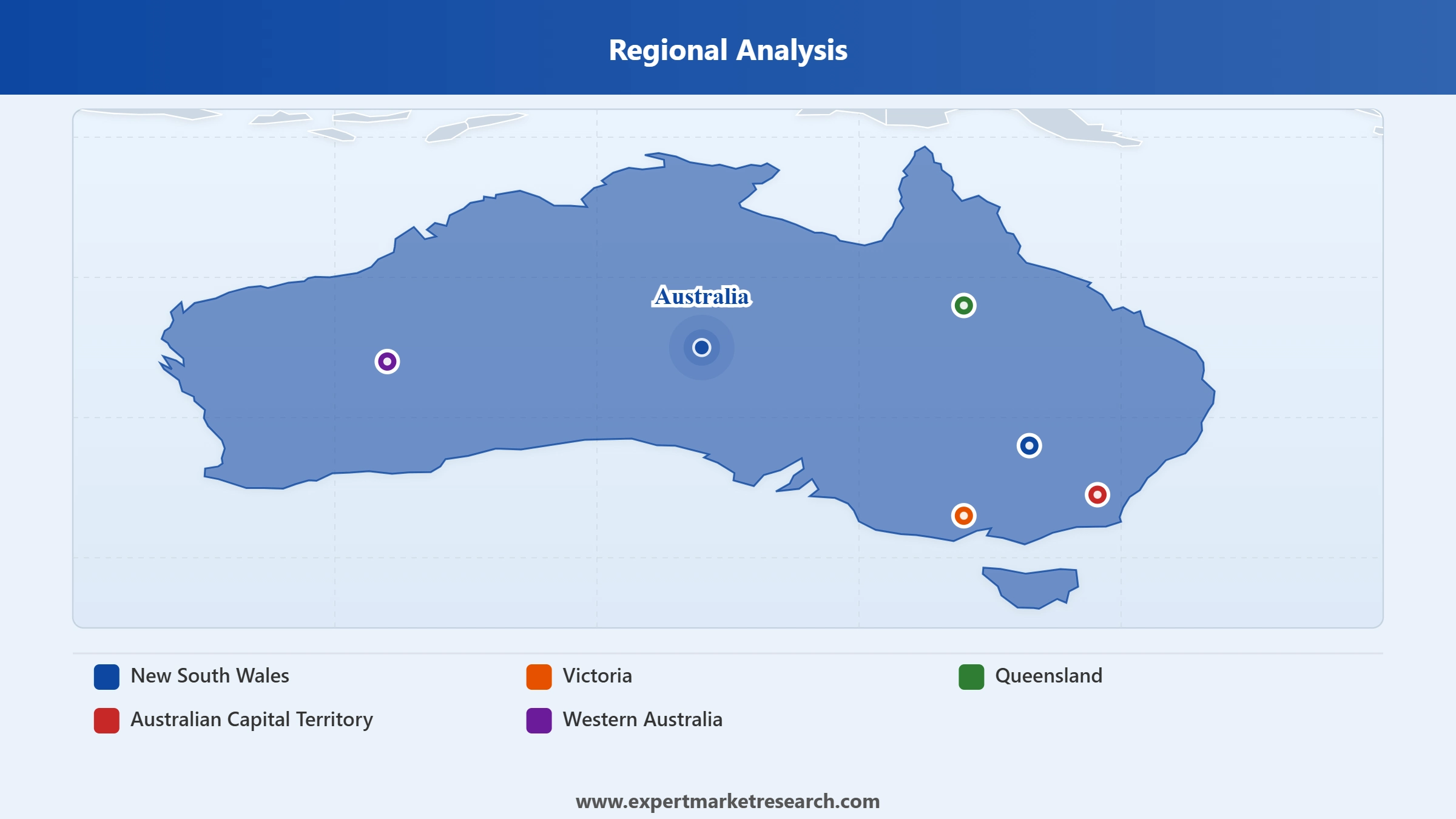
Key Insight: New South Wales dominates the regional breakup in the Australia furniture market given its large population base and concentration of furniture retail and manufacturing activity. Western Australia is registering the fastest growth given rising residential construction activity and population growth across the state. According to the Housing Industry Association, South Australia recorded the largest increase in dwelling approvals in the 2025 calendar year, up 22.3 percent, followed by New South Wales at 21.0 percent and Western Australia at 13.4 percent. Victoria, Queensland, and the Australian Capital Territory sustain steady demand through established retail networks and ongoing residential development, while other regions, including Tasmania and the Northern Territory, contribute smaller shares supported by localised population growth.
Read more about this report - Request a Free Sample
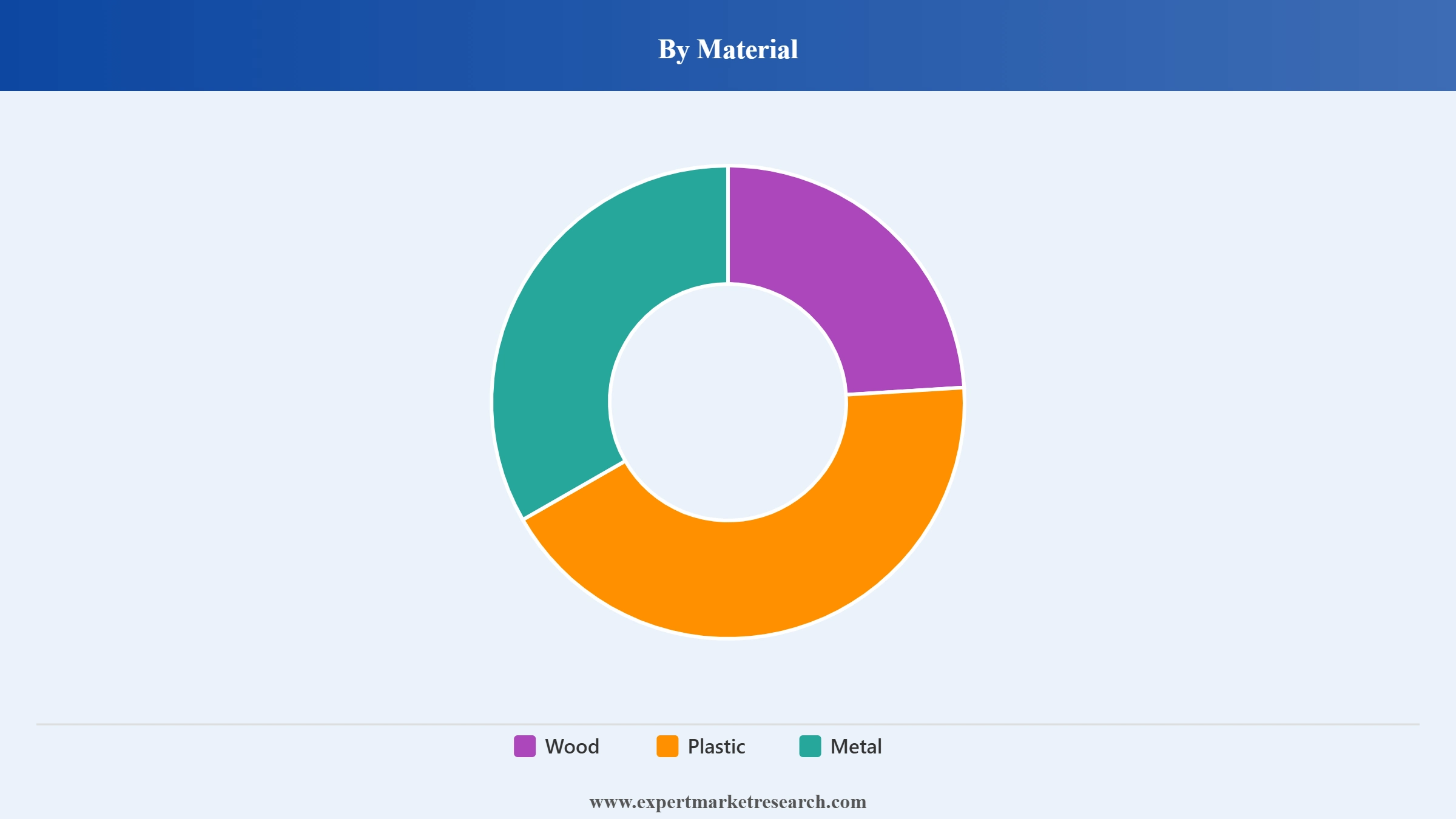
By material, wood dominates the market owing to its durability, aesthetic versatility, and compatibility with both contemporary and traditional design preferences
Wood dominates the material segment across the Australia furniture market given its durability, aesthetic versatility, and compatibility with both contemporary and traditional interior design preferences among Australian buyers renovating existing homes or furnishing new builds from scratch. In March 2026, Melbourne based sustainable timber maker Reconstructed expanded its furniture lineup with new recycled timber vanity designs, part of a broader push by manufacturers to pair the material's traditional appeal with verified environmental credentials that increasingly influence purchasing decisions among design conscious consumers weighing several competing suppliers.
Read more about this report - Request a Free Sample
Metal is registering the fastest material growth as designers across the Australia furniture market lean into industrial and minimalist aesthetics for both residential feature pieces and commercial fit outs across offices, cafes, and hospitality venues nationwide. Manufacturers serving this category are prioritising corrosion resistant finishes, since powder coated steel and aluminium frames now appear as often outdoors on patios and balconies as they do indoors, where their slim profiles suit smaller apartment living rooms, home offices, and compact study nooks.
By product type, beds account for the largest share owing to their status as an essential furniture category across every household
Beds dominate the product type segment across the Australia furniture market given their status as an essential purchase for every household, regardless of how tightly consumers are managing discretionary spending during periods of broader economic uncertainty and rising living costs. Manufacturers serving this category are prioritising mattress integration, bundling frames with mattresses into single packaged offers that simplify decision making for time poor buyers who would otherwise need to research and coordinate two separate purchases from entirely different suppliers before delivery day.
Read more about this report - Request a Free Sample
Sofa and couch products across the Australia furniture market are registering the fastest product type growth as consumers prioritise living room upgrades once housing turnover begins recovering from a prolonged period of subdued sales activity nationwide. In November 2025, the Housing Industry Association reported that building approvals rose 12 percent, with multi-unit approvals climbing from exceptionally low volumes as several state governments streamlined planning processes, a shift expected to translate into fresh furnishing demand as new apartments are completed and occupied by residents.
By end use, the residential segment dominates the market owing to sustained household furniture replacement and renovation activity across the country
The residential segment dominates the end use category given sustained household furniture replacement and renovation activity that continues regardless of broader economic conditions affecting discretionary spending elsewhere in a household budget. In July 2026, Office Furniture Company was named the country's leading commercial furniture supplier, though its founder noted that home office orders from single desks and chairs still made up a meaningful share of overall volume alongside larger corporate contracts secured that year.
Read more about this report - Request a Free Sample
The commercial segment is registering the fastest end use growth given expanding office, hospitality, and retail fit out activity across major metropolitan areas as businesses reconfigure workspaces for hybrid working arrangements that blend in office and remote days. In January 2026, the Victorian Government foreshadowed legislation granting employees a statutory right to work from home up to two days per week, prompting organisations to accelerate investment in flexible, modular office furniture systems ahead of the planned changes.
By distribution channel, specialty stores dominate the market owing to their curated product assortment and dedicated design consultation services
Specialty stores dominate the distribution channel segment across the Australia furniture market given their curated product assortment and dedicated design consultation services that help customers choose pieces suited to specific room dimensions and existing home decor. Retailers serving this category are investing in showroom experience, since staff who can advise on fabric durability, timber origin, or delivery timelines increasingly differentiate a premium furniture purchase from a same day, no questions asked transaction available at a discount big box retailer nearby.
Read more about this report - Request a Free Sample
Online channels are registering the fastest distribution channel growth across the Australia furniture market as omnichannel strategies pairing digital fulfilment within store consultation extend reach into regional towns previously underserved by dedicated furniture showrooms and design consultants. In October 2025, IKEA Australia expanded its zero-emission delivery footprint into additional regional postcodes, leasing four Volvo long range electric trucks to strengthen bulky product delivery beyond the major metropolitan areas its stores are traditionally built to serve directly and efficiently.
Read more about this report - Request a Free Sample
New South Wales leads the market through its large population base and concentration of furniture retail activity
New South Wales dominates the regional breakup of the Australia furniture market given its large population base and the concentration of furniture retail headquarters and manufacturing activity clustered around Sydney and its surrounding suburbs. Retailers across the state are investing in flagship showroom locations, since a single well positioned store in a major shopping precinct can draw customers from across several suburbs, reinforcing the state's lead over smaller regional markets with more dispersed populations and comparatively fewer established retail hubs nearby.
Western Australia is registering the fastest regional growth given rising residential construction activity and population growth concentrated around Perth, where new housing estates continue driving fresh demand for furnishing and homewares purchases. In December 2025, Bunnings opened a new warehouse in Mirrabooka, Western Australia, bringing a larger, more modern format designed to serve local demand as surrounding suburbs continue expanding, giving residents faster access to furniture, hardware, and home improvement products without travelling further into the city.
The industry is becoming increasingly consolidated as major furniture companies invest in local manufacturing capacity, omnichannel retail formats, and sustainable sourcing to defend their market positions. Furniture players are prioritising margin recovery strategies, integrated online and in store service models, and domestic supply chain resilience to differentiate themselves in an increasingly competitive landscape shaped by volatile international shipping costs.
Major Australia furniture market players are also focusing on sustainable material certification, pursuing verified sourcing credentials that appeal to environmentally conscious consumers. Opportunities are emerging in Western Australia's growing residential market and expanding omnichannel distribution formats. Companies that successfully combine resilient domestic manufacturing with integrated retail experiences are expected to strengthen their competitive position over the coming years.
Founded in 1970 and headquartered in Rochedale, Brisbane, Australia, Amart Furniture Pty Ltd. supports the furniture market through its extensive retail network offering household furniture across bedroom, living, and dining categories. The company continues to expand its store footprint through targeted acquisitions. Amart Furniture draws on its position as one of Australia's largest furniture retailers to serve customers across every state and territory.
Founded in 1912 and headquartered in Grand Rapids, Michigan, United States, Steelcase Inc. contributes to the furniture market through its office and architectural furnishing solutions, distributed through a global network of independent dealers. The company continues to expand its workplace design and technology integration offerings. Steelcase draws on its position as a leading global office furniture manufacturer to serve commercial customers across Australia.
Founded in 1905 and headquartered in Zeeland, Michigan, United States, MillerKnoll, Inc. supports the furniture market through its portfolio of premium furniture brands spanning commercial office, healthcare, education, and residential furnishings. The company continues to expand its design led furniture and textile offerings. MillerKnoll draws on its position as a leading global design furnishings company to serve customers across every major furniture category.
Founded in 2016 and headquartered in North Ryde, Australia, Greenlit Brands Pty Limited contributes to the furniture market through its Fantastic Furniture retail chain, serving customers across household furniture categories. The company continues to focus its portfolio following a multi year divestment programme across its retail brands. Greenlit Brands draws on its position as an established Australian furniture retail group to serve customers nationwide.
Other key players in the market include Resero Pty Ltd., BFX Furniture, Forty Winks Franchising Pty Ltd., and Nordic Design., among others.
*Please note that this is only a partial list; the complete list of key players is available in the full report. Additionally, the list of key players can be customized to better suit your needs.*
Unlock the latest insights with our furniture market trends 2026 report. Discover regional growth patterns, material and product economics, and key industry players. Stay ahead of the competition and identify emerging opportunities in the evolving Australia furniture market landscape.


Upto 15% Off
USD
$2499 $2249
$3999 $3599
$4999 $4249
$5999 $5099


*While we strive to always give you current and accurate information, the numbers depicted on the website are indicative and may differ from the actual numbers in the main report. At Expert Market Research, we aim to bring you the latest insights and trends in the market. Using our analyses and forecasts, stakeholders can understand the market dynamics, navigate challenges, and capitalize on opportunities to make data-driven strategic decisions.*
In 2025, the market reached an approximate value of USD 3.07 Billion.
The market is projected to grow at a CAGR of 3.10% between 2026 and 2035.
The revenue generated from the furniture market is expected to reach USD 4.17 Billion in 2035.
The furniture market is categorised according to material, which includes wood, plastic, metal and others.
The key players in the market include Amart Furniture Pty Ltd., Steelcase Inc., MillerKnoll, Inc., Greenlit Brands Pty Limited, Resero Pty Ltd., BFX Furniture, Forty Winks Franchising Pty Ltd., and Nordic Design., among others.
Based on the distribution channel, the market is divided into commercial and residential.
The market is broken down into New South Wales, Victoria, Queensland, Australian Capital Territory, Western Australia and others.
Companies face volatile international shipping costs, geopolitical disruption affecting import supply chains, prolonged consumer discretionary spending pressure, and the capital intensity of expanding local manufacturing capacity.
Expanding local manufacturing capacity, integrating omnichannel consultation and fulfilment models, pursuing sustainable material sourcing certifications, diversifying supplier sourcing, and prioritising margin recovery through cost management are key strategies driving the market.
Explore our key highlights of the report and gain a concise overview of key findings, trends, and actionable insights that will empower your strategic decisions.
| REPORT FEATURES | DETAILS |
| Base Year | 2025 |
| Historical Period | 2019-2025 |
| Forecast Period | 2026-2035 |
| Scope of the Report |
Historical and Forecast Trends, Industry Drivers and Constraints, Historical and Forecast Market Analysis by Segment:
|
| Breakup by Material |
|
| Breakup by Product Type |
|
| Breakup by End Use |
|
| Breakup by Distribution Channel |
|
| Breakup by Region |
|
| Market Dynamics |
|
| Competitive Landscape |
|
| Companies Covered |
|
Datasheet
One User
USD 2,499
USD 2,249
tax inclusive*
Single User License
One User
USD 3,999
USD 3,599
tax inclusive*
Five User License
Five User
USD 4,999
USD 4,249
tax inclusive*
Corporate License
Unlimited Users
USD 5,999
USD 5,099
tax inclusive*
*Please note that the prices mentioned below are starting prices for each bundle type. Kindly contact our team for further details.*
Flash Bundle
Small Business Bundle
Growth Bundle
Enterprise Bundle
*Please note that the prices mentioned below are starting prices for each bundle type. Kindly contact our team for further details.*
Flash Bundle
Number of Reports: 3
20%
tax inclusive*
Small Business Bundle
Number of Reports: 5
25%
tax inclusive*
Growth Bundle
Number of Reports: 8
30%
tax inclusive*
Enterprise Bundle
Number of Reports: 10
35%
tax inclusive*
How To Order

Select License Type
Choose the right license for your needs and access rights.

Click on ‘Buy Now’
Add the report to your cart with one click and proceed to register.

Select Mode of Payment
Choose a payment option for a secure checkout. You will be redirected accordingly.
Strategic Solutions for Informed Decision-Making
Gain insights to stay ahead and seize opportunities.

Get insights & trends for a competitive edge.

Track prices with detailed trend reports.

Analyse trade data for supply chain insights.

Leverage cost reports for smart savings

Enhance supply chain with partnerships.

Connect For More Information
Our expert team of analysts will offer full support and resolve any queries regarding the report, before and after the purchase.
Our expert team of analysts will offer full support and resolve any queries regarding the report, before and after the purchase.
We employ meticulous research methods, blending advanced analytics and expert insights to deliver accurate, actionable industry intelligence, staying ahead of competitors.
Our skilled analysts offer unparalleled competitive advantage with detailed insights on current and emerging markets, ensuring your strategic edge.
We offer an in-depth yet simplified presentation of industry insights and analysis to meet your specific requirements effectively.




