

Consumer Insights
Uncover trends and behaviors shaping consumer choices today
Procurement Insights
Optimize your sourcing strategy with key market data
Industry Stats
Stay ahead with the latest trends and market analysis.
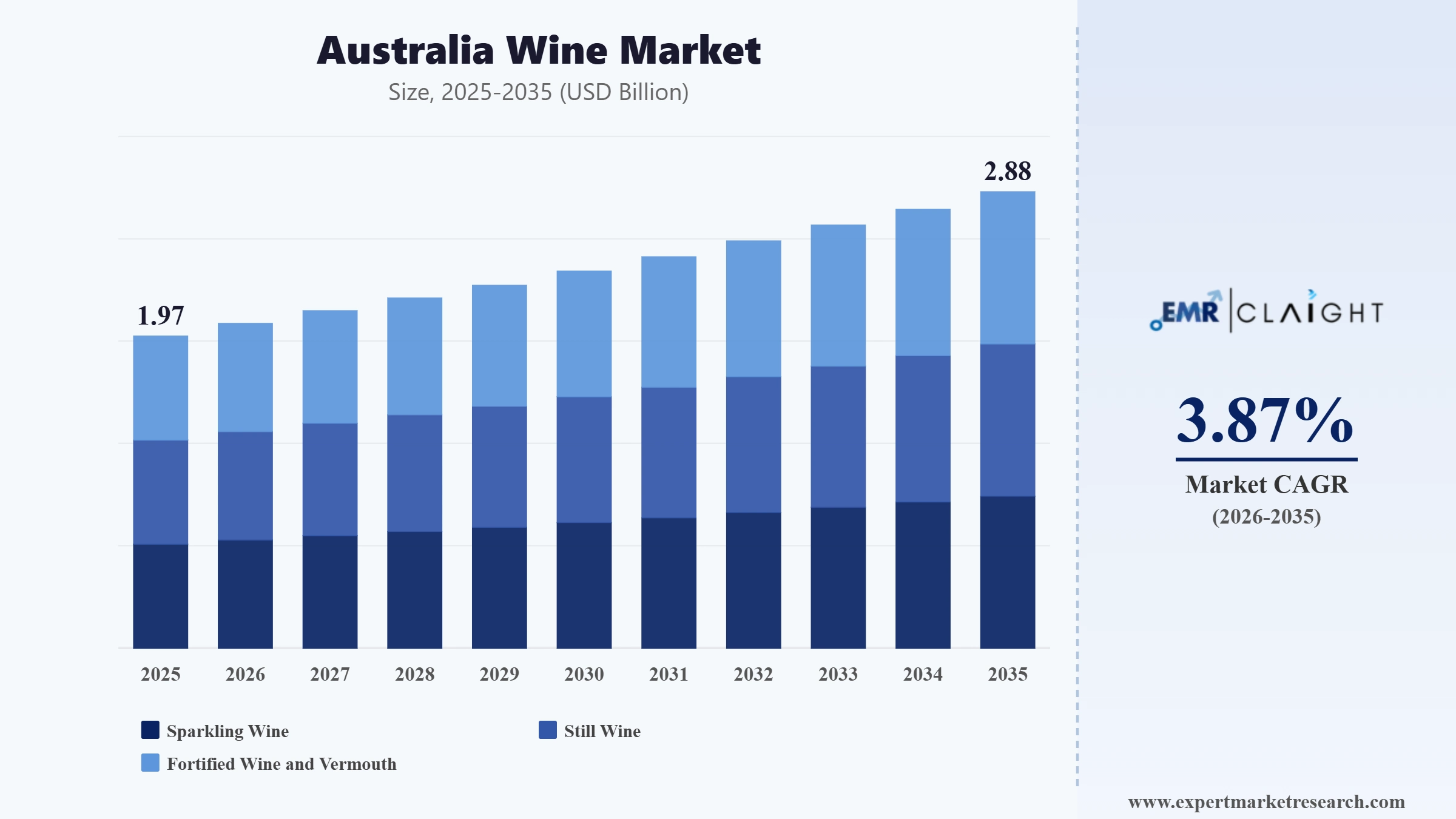
The Australia wine market attained a value of USD 1.97 Billion in 2025 and is projected to expand at a CAGR of 3.87% through 2035. The market is further expected to reach USD 2.88 Billion by 2035. Rising global demand for premium and sustainably produced wines, together with growing wine tourism activity, is strengthening Australian wine demand across both domestic and export markets. Increasing consumer interest in indigenous grape varieties, alongside continued investment in sustainable viticulture, is further encouraging producers to widen their product offerings across every wine style.
Wine refers to an alcoholic beverage typically produced through the fermentation of crushed grapes or fruit juice by yeast, converting sugars into alcohol and carbon dioxide. Still wine holds a substantial share of the market owing to its broad consumer familiarity and versatility across every day and formal dining occasions. Rising wine tourism and export demand continue to widen the customer base for Australian wine among both domestic consumers and international buyers across the country.
Demand is concentrating around producers able to combine sustainable viticulture credentials with strong export market relationships. In December 2025, a Wine Australia Market Bulletin reported that Australian wine exports increased 2 percent in value to 2.44 billion dollars in the 12 months to September 2025, with average export value rising 6 percent to 3.94 dollars per litre free on board. This export value driven positioning is converting rising international demand for premium Australian wine directly into expanded adoption across the Australia wine market.
Producers across the market are converging on a common development direction, widening from standalone varietal offerings toward diversified portfolios spanning premium, sustainable, and lighter wine styles. Companies are increasingly pursuing sustainable viticulture certification and export market expansion to broaden their customer base. This shift is reshaping competitive dynamics among producers, favouring companies who can demonstrate verified sustainability credentials over those competing on price alone.
Read more about this report - REQUEST FREE SAMPLE COPY IN PDF
| Australia Wine Market Report Summary | Description | Value |
| Base Year | USD Billion | 2025 |
| Historical Period | USD Billion | 2019-2025 |
| Forecast Period | USD Billion | 2026-2035 |
| Market Size 2025 | USD Billion | 1.97 |
| Market Size 2035 | USD Billion | 2.88 |
| CAGR 2019-2025 | Percentage | XX% |
| CAGR 2026-2035 | Percentage | 3.87% |
| CAGR 2026-2035 - Market by Region | Australian Capital Territory | 4.5% |
| CAGR 2026-2035 - Market by Region | Victoria | 3.7% |
| CAGR 2026-2035 - Market by Color | Rose Wine | 4.7% |
| CAGR 2026-2035 - Market by Distribution Channel | Online | 7.6% |
| 2025 Market Share by Region | Australian Capital Territory | 2.4% |
De Bortoli Wines expanded its Yarra Valley vineyard footprint in July 2026, purchasing a greenfield red volcanic soil site in Woori Yallock to become a new flagship family vineyard for the business, complementing existing holdings across the region. Companies across the Australia wine market can acquire greenfield sites in premium wine regions to secure long term fruit supply ahead of rising demand for regionally distinctive wines.
Casella Family Brands launched a new [yellow tail] Prosecco and Prosecco Rosé range in October 2025, partnering with brand ambassador Sophie Monk to capture growing Australian demand for the fastest growing wine category among younger drinkers. Companies across the Australia wine market can pair celebrity partnerships with fast growing wine styles to accelerate brand awareness among younger, trend conscious drinkers.
Treasury Wine Estates opened a new no and low alcohol wine production facility in the Barossa Valley in July 2025, investing 15 million dollars in patent pending technology that removes alcohol while preserving flavour, aroma, and texture in the finished product. Companies across the Australia wine market can invest in dedicated moderation focused facilities to capture growing demand from health-conscious wine drinkers.
Pernod Ricard completed the sale of its international wine portfolio, including Jacob's Creek, Orlando, and St Hugo, to Australian Wine Holdco in April 2025, sharpening its focus on premium spirits, champagne, and other higher margin beverage categories. Companies can divest non-core wine brands to concentrate capital and management attention on higher margin beverage categories.
Industry surveys across the Australia wine market are increasingly confirming that Australian wine production has outpaced sales, contributing to rising national inventory levels amid softer global consumption. This is reshaping supply planning across the Australia wine market, favouring producers who can moderate output growth in line with realistic demand forecasts. In December 2025, Wine Australia's Production, Sales and Inventory Report showed that 2025 production rose 9 percent to 1.13 billion litres, while national inventory increased 5 percent to 2.06 billion litres.
Family-owned wine businesses across the Australia wine market are increasingly consolidating ownership structures as founding families seek longer investment horizons than private equity or listed company timeframes typically allow. This is reshaping capital planning across the Australia wine market, illustrating how family control can support multi generation vineyard and sustainability commitments. In June 2026, Robert Hill-Smith took full outright ownership of Hill-Smith Family Estates, the business behind Yalumba, by buying out his brother's remaining stake in the company.
Wine industry suppliers across the Australia wine market are increasingly restructuring their operations in response to structural changes affecting key markets across the sector. This is reshaping the supplier landscape across the Australia wine market, favouring suppliers who can adapt service offerings to a smaller, more concentrated production base. In March 2026, Tarac Australia Limited announced it would begin an orderly sale process for Tarac Technologies, its near century old grape spirit distilling and winery residual management business.
Wine producers across the Australia wine market are increasingly launching single serve and smaller format products to capture younger, convenience focused consumers who find a full bottle too large a commitment for casual occasions. This is reshaping product innovation strategy across the Australia wine market, favouring producers who can scale successful pilot formats quickly into new categories. In October 2025, Australian Vintage launched sparkling and spritz versions of its Poco Vino single serve wine range in Australia and New Zealand, following strong early sales of the format in the United Kingdom.
Industry bodies are increasingly warning of structural oversupply risk as global wine consumption continues declining while Australian production recovers from earlier lows. This is reshaping long term vineyard investment planning across the market, favouring producers who can adjust plantings in line with realistic long-term demand. In May 2026, Riverina Winegrape Growers estimated that approximately 5,000 hectares of vineyards had already been removed in the Riverina region as growers responded to unprofitable grape prices.
The Expert Market Research's report titled "Australia Wine Market Report and Forecast 2026-2035" offers a detailed analysis of the market based on the following segments:
Market Breakup by Product Type
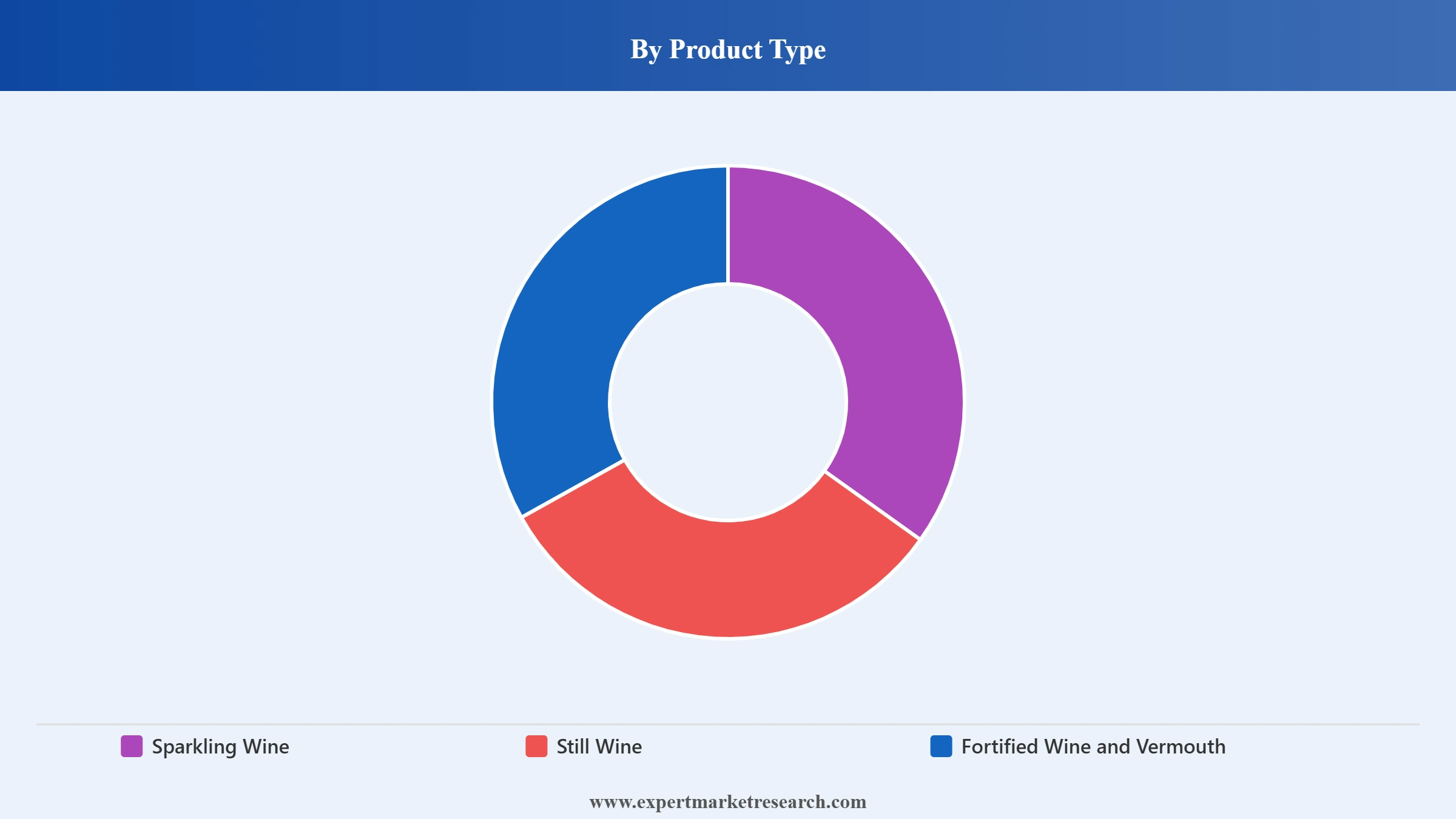
Key Insight: Still wine dominates the product type segment in the Australia wine market given its broad consumer familiarity and versatility across every day and formal dining occasions. Sparkling wine is registering the fastest growth as consumers increasingly favour lighter, celebratory wine styles across both domestic and export markets. In June 2026, McWilliam's Wines launched Terra, a new contemporary still wine range spanning Sauvignon Blanc, Chardonnay, Pinot Noir, and Shiraz, aimed at introducing the company's heritage to a new generation of drinkers. Fortified wine and vermouth sustain steady demand through established cocktail culture and traditional consumption occasions.
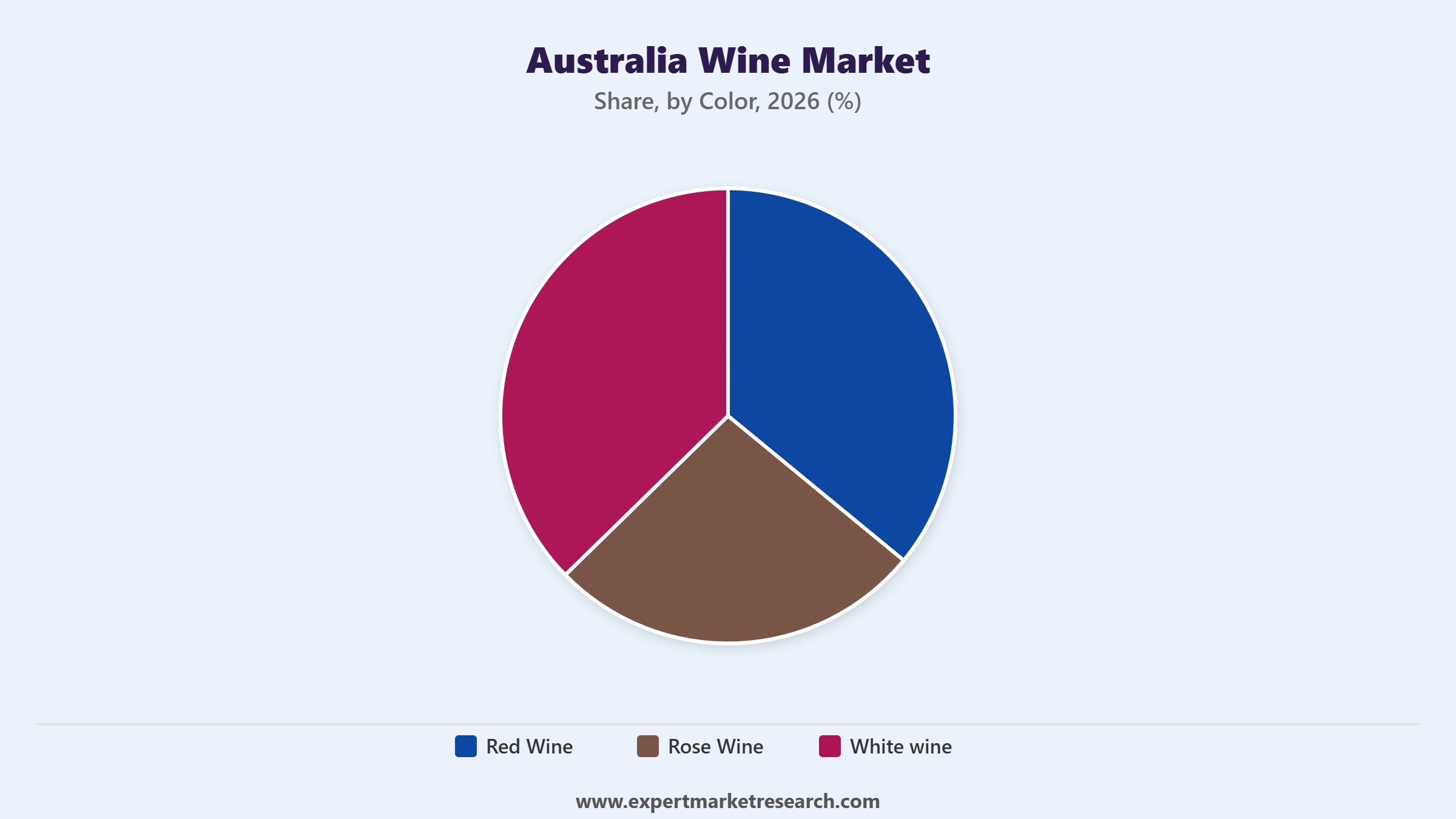
Market Breakup by Color
Key Insight: Red wine dominates the color segment given its established position across formal dining and gifting occasions in both domestic and export markets. Rose wine is registering the fastest growth across the Australia wine market as wellness minded consumers increasingly favour lighter, lower alcohol wine styles. In April 2026, Winemasters SA, a large-scale Riverland winery with 35 million litres of storage capacity, entered administration after failing to secure a buyer following a prolonged sale process. White wine sustains steady demand through its versatility across casual and warm weather drinking occasions.
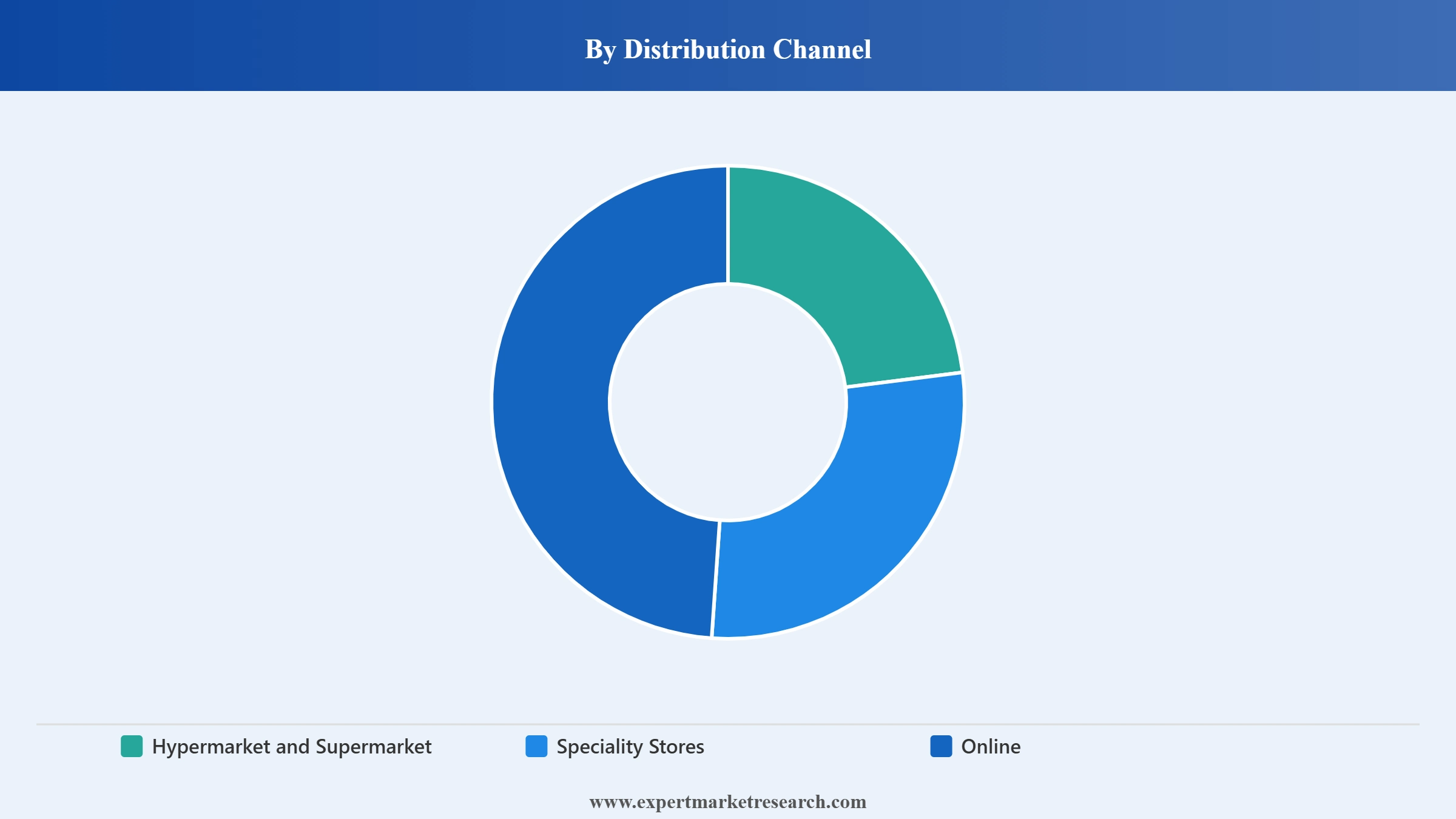
Market Breakup by Distribution Channel
Key Insight: Hypermarkets and supermarkets dominate the distribution channel segment given their broad reach and convenience for everyday wine purchases. Online channels are registering the fastest growth as direct to consumer wine clubs and subscription models expand reach beyond traditional retail. Speciality stores and other channels, including cellar door sales, continue to serve premium and wine tourism focused purchase occasions.
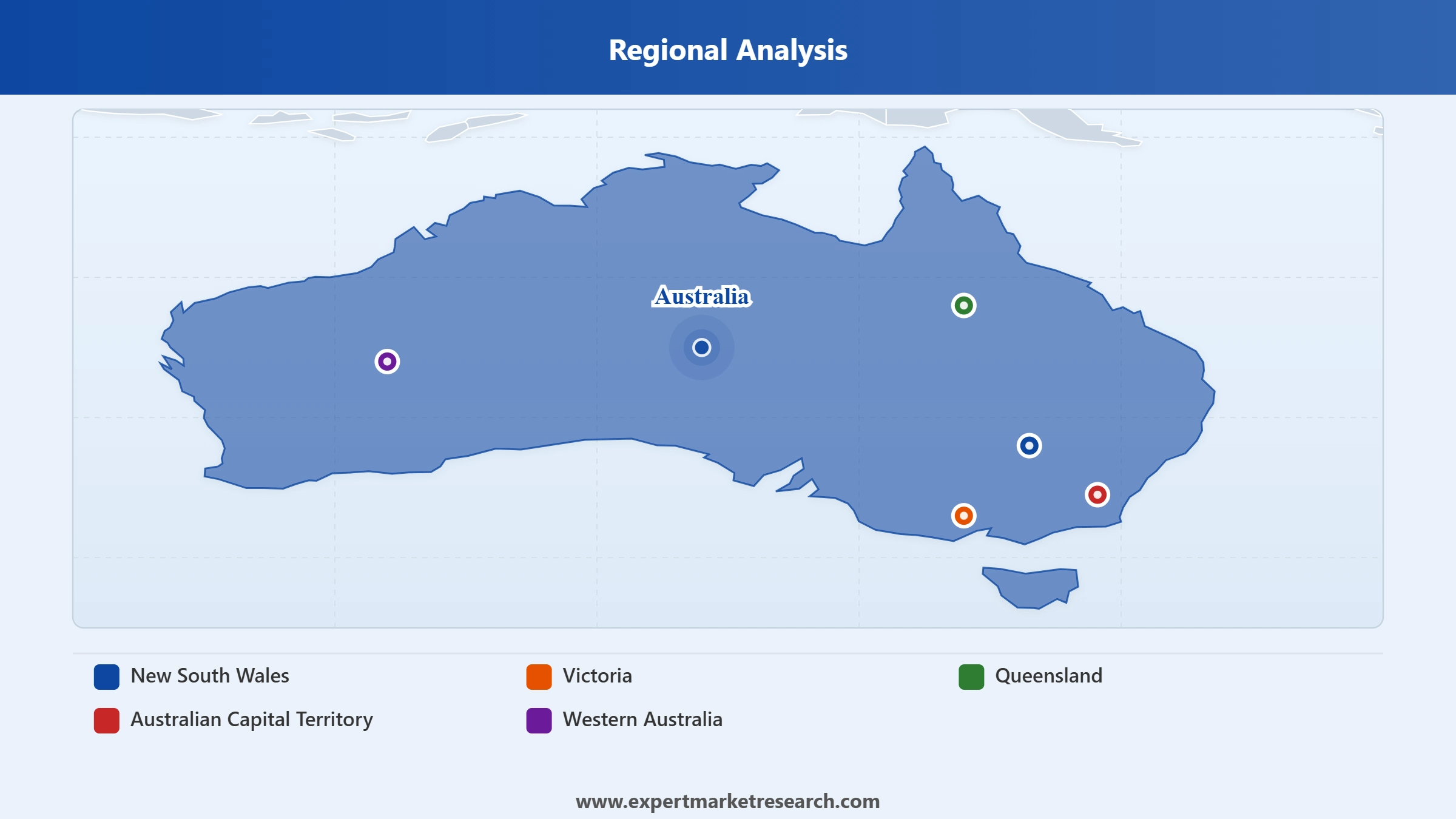
Market Breakup by Region
Key Insight: New South Wales dominates the regional breakup across the Australia wine market given its established wine producing regions and concentration of major wine company headquarters. Western Australia is registering the fastest growth given its prestigious Margaret River and Swan Valley wine regions and rising vineyard output. Victoria, Queensland, and the Australian Capital Territory sustain steady demand through established and emerging wine producing areas across the country, while other regions, including Tasmania and South Australia, contribute smaller shares supported by cool climate and premium wine production.
Read more about this report - REQUEST FREE SAMPLE COPY IN PDF
Still wine dominates the product type segment of the Australia wine market given its broad consumer familiarity and versatility across every day and formal dining occasions, from casual midweek dinners to formal celebrations requiring a dependable pairing every time. Producers serving this category continue to prioritise varietal consistency, since dependable flavour profiles increasingly support repeat purchase behaviour among domestic and export customers who return to the same bottle year after year without needing to research alternatives from competing wineries across the country.
Read more about this report - REQUEST FREE SAMPLE COPY IN PDF
Sparkling wine is registering the fastest product type growth as consumers increasingly favour lighter, celebratory wine styles across both domestic and export markets, moving beyond traditional new year and wedding occasions into everyday drinking moments across the calendar year. In October 2025, Brown Brothers released Australia's first aluminium wine bottle for its Prosecco range, roughly 40 percent lighter than glass and designed to cut the carbon footprint of transporting and chilling sparkling wine across long supply chains.
Red wine dominates the color segment across the Australia wine market given its established position across formal dining and gifting occasions in both domestic and export markets, backed by decades of brand recognition among Australian producers competing internationally for retail shelf space and restaurant wine lists. Producers serving this category continue to prioritise regional terroir branding, since distinctive regional characteristics increasingly differentiate red wine offerings in crowded international markets where buyers can otherwise struggle to distinguish between competing bottles on price alone.
Read more about this report - REQUEST FREE SAMPLE COPY IN PDF
Rose wine is registering the fastest color growth as wellness minded consumers increasingly favour lighter, lower alcohol wine styles across casual drinking occasions that were previously dominated by heavier reds and fortified varieties for several decades in a row. In May 2026, Endeavour Group announced a restructuring of its premium wine portfolio, consolidating winery operations from seven sites to three while retaining Cape Mentelle, Isabel Estate, and Dorrien Estate as strategically important long-term assets.
Hypermarkets and supermarkets dominate the distribution channel segment across the Australia wine market given their broad reach and convenience for everyday wine purchases across the country, from major cities down to regional towns with limited specialty retail options nearby for time pressed shoppers. In January 2026, Wine Australia's Sector at a Glance report showed that domestic wine sales reached 443 million litres in 2024-25, accounting for 84 percent of total sales volume within the domestic market alone that year.
Read more about this report - REQUEST FREE SAMPLE COPY IN PDF
Online channels are registering the fastest distribution channel growth as direct to consumer wine clubs and subscription models expand reach beyond traditional retail, letting smaller producers reach customers well outside their local distribution footprint entirely without a physical retail presence. Producers serving this category continue to prioritise personalised recommendation engines, since tailored wine suggestions increasingly improve subscription retention rates among online wine buyers who otherwise cancel after their first few unremarkable shipments arrive unannounced.
New South Wales dominates the regional breakup of the Australia wine market given its established wine producing regions and concentration of major wine company headquarters, drawing both established brands and emerging producers seeking proximity to distribution networks and export logistics close by. In July 2025, Wine Australia's National Vintage Report showed that New South Wales recorded a winegrape crush of 478,186 tonnes, up from 412,774 tonnes in 2024, reinforcing the state's lead in overall wine production nationally by a wide margin.
Read more about this report - REQUEST FREE SAMPLE COPY IN PDF
Western Australia is registering the fastest regional growth given its prestigious Margaret River and Swan Valley wine regions and rising vineyard output across the state, drawing increased tourism and premium positioning that smaller regions struggle to match elsewhere in the country. Producers across the region continue to prioritise premium positioning, since internationally recognised wine regions increasingly command higher export pricing than comparable wines produced in less well known Australian growing areas further inland.
The industry is becoming increasingly consolidated as major Australia wine companies invest in sustainable viticulture, export market expansion, and premium product positioning to defend their market positions against both larger multinationals and nimble independent producers. Wine players are prioritising verified sustainability credentials, wine tourism experiences, and diversified export portfolios to differentiate themselves in an increasingly competitive landscape shaped by evolving international trade relationships and shifting consumer preferences toward lighter, lower alcohol wine styles.
Major Australia wine market players are also focusing on regional terroir branding, pursuing recognition for distinctive varietals across both established and emerging wine producing regions from the Barossa Valley to Margaret River. Opportunities are emerging in sparkling and rose wine categories and expanding direct to consumer online channels that bypass traditional retail margins entirely. Companies that successfully combine sustainable production credentials with strong export relationships are expected to strengthen their competitive position over the coming years across every major consuming market.
Founded in 2011 and headquartered in Melbourne, Australia, Treasury Wine Estates Ltd. supports the wine market through its extensive portfolio including Penfolds, Wynns Coonawarra Estate, and 19 Crimes, serving customers across domestic and international markets spanning more than 70 countries. The company continues to expand its premium wine and direct to consumer offerings, having demerged from Foster's Group to focus exclusively on winemaking and distribution. Treasury Wine Estates draws on its position as a leading global winemaking and distribution company, listed on the Australian Securities Exchange, to serve customers across every major wine category from mass market to luxury collector labels.
Founded in 1853 and headquartered in Old Reynella, South Australia, Accolade Wines Australia Limited contributes to the wine market through its extensive portfolio of Australian and international wine brands built up across more than 170 years of continuous winemaking operations. The company continues to expand its premium and sustainably produced wine offerings following changes in private equity ownership over the past decade. Accolade Wines draws on its position as one of Australia's most established wine businesses, tracing its lineage to founder Thomas Hardy, to serve customers across domestic and export markets worldwide.
Founded in 1969 and headquartered in New South Wales, Australia, Casella Wines Pty Limited supports the wine market through its yellow tail brand, among the most recognised Australian wine exports internationally and a dominant presence on retail shelves in the United States. The company continues to expand its varietal and packaging innovation offerings while remaining under family ownership since its founding. Casella Wines draws on its position as a leading family-owned Australian wine company to serve customers across more than 50 export markets spanning North America, Europe, and Asia.
Founded in 1975 and headquartered in Paris, France, Pernod Ricard S.A. contributes to the wine market through its Australian wine portfolio including Jacob's Creek and St Hugo, alongside its broader international beverage business spanning spirits, champagne, and wine brands across every major consuming market. The company continues to expand its sustainable production and renewable energy initiatives across its winemaking operations in South Australia. Pernod Ricard draws on its position as one of the world's leading wine and spirits companies, publicly listed on Euronext Paris, to serve customers across global markets through an extensive distribution network.
Other key players in the market include Australian Vintage Limited, Kingston Estate Wines Pty Ltd., De Bortoli Wines Pty Limited, Qualia Wine Services Pty Ltd., Andrew Peace Wines, Nugan Estate Pty Limited, and Zilzie Wines., among others.
*Please note that this is only a partial list; the complete list of key players is available in the full report. Additionally, the list of key players can be customized to better suit your needs.*
Unlock the latest insights with our wine market trends 2026 report. Discover regional growth patterns, product type and colour economics, and key industry players. Stay ahead of the competition and identify emerging opportunities in the evolving Australia wine market landscape.


Upto 15% Off
USD
$2499 $2249
$3999 $3599
$4999 $4249
$5999 $5099


*While we strive to always give you current and accurate information, the numbers depicted on the website are indicative and may differ from the actual numbers in the main report. At Expert Market Research, we aim to bring you the latest insights and trends in the market. Using our analyses and forecasts, stakeholders can understand the market dynamics, navigate challenges, and capitalize on opportunities to make data-driven strategic decisions.*
In 2025, the market reached an approximate value of USD 1.97 Billion.
The market is projected to grow at a CAGR of 3.87% between 2026 and 2035.
The market is estimated to witness healthy growth in the forecast period of 2026-2035 to reach USD 2.88 Billion by 2035.
Sparkling Wine, Still Wine, Fortified Wine and Vermouth is considered in the report.
The key players in the market include Treasury Wine Estates Ltd., Accolade Wines Australia Limited, Casella Wines Pty Limited, Pernod Ricard S.A., Australian Vintage Limited, Kingston Estate Wines Pty Ltd., De Bortoli Wines Pty Limited, Qualia Wine Services Pty Ltd., Andrew Peace Wines, Nugan Estate Pty Limited, and Zilzie Wines., among others.
The significant colours in the market are red wine, rose wine, and white wine.
Regions considered in the market are New South Wales, Victoria, Queensland, Australian Capital Territory, Western Australia, and others.
Companies face evolving international trade relationships, climate related variability in grape quality and availability, intense competition among established and emerging wine regions, and the capital intensity of pursuing sustainable viticulture certification.
Pursuing sustainable viticulture certification, expanding wine tourism and cellar door experiences, diversifying export market portfolios, investing in emerging regional varietals, and strengthening direct to consumer online channels are key strategies driving the market.
Explore our key highlights of the report and gain a concise overview of key findings, trends, and actionable insights that will empower your strategic decisions.
| REPORT FEATURES | DETAILS |
| Base Year | 2025 |
| Historical Period | 2019-2025 |
| Forecast Period | 2026-2035 |
| Scope of the Report |
Historical and Forecast Trends, Industry Drivers and Constraints, Historical and Forecast Market Analysis by Segment:
|
| Breakup by Product Type |
|
| Breakup by Color |
|
| Breakup by Distribution Channel |
|
| Breakup by Region |
|
| Market Dynamics |
|
| Competitive Landscape |
|
| Companies Covered |
|
Datasheet
One User
USD 2,499
USD 2,249
tax inclusive*
Single User License
One User
USD 3,999
USD 3,599
tax inclusive*
Five User License
Five User
USD 4,999
USD 4,249
tax inclusive*
Corporate License
Unlimited Users
USD 5,999
USD 5,099
tax inclusive*
*Please note that the prices mentioned below are starting prices for each bundle type. Kindly contact our team for further details.*
Flash Bundle
Small Business Bundle
Growth Bundle
Enterprise Bundle
*Please note that the prices mentioned below are starting prices for each bundle type. Kindly contact our team for further details.*
Flash Bundle
Number of Reports: 3
20%
tax inclusive*
Small Business Bundle
Number of Reports: 5
25%
tax inclusive*
Growth Bundle
Number of Reports: 8
30%
tax inclusive*
Enterprise Bundle
Number of Reports: 10
35%
tax inclusive*
How To Order

Select License Type
Choose the right license for your needs and access rights.

Click on ‘Buy Now’
Add the report to your cart with one click and proceed to register.

Select Mode of Payment
Choose a payment option for a secure checkout. You will be redirected accordingly.
Strategic Solutions for Informed Decision-Making
Gain insights to stay ahead and seize opportunities.

Get insights & trends for a competitive edge.

Track prices with detailed trend reports.

Analyse trade data for supply chain insights.

Leverage cost reports for smart savings

Enhance supply chain with partnerships.

Connect For More Information
Our expert team of analysts will offer full support and resolve any queries regarding the report, before and after the purchase.
Our expert team of analysts will offer full support and resolve any queries regarding the report, before and after the purchase.
We employ meticulous research methods, blending advanced analytics and expert insights to deliver accurate, actionable industry intelligence, staying ahead of competitors.
Our skilled analysts offer unparalleled competitive advantage with detailed insights on current and emerging markets, ensuring your strategic edge.
We offer an in-depth yet simplified presentation of industry insights and analysis to meet your specific requirements effectively.




