Consumer Insights
Uncover trends and behaviors shaping consumer choices today
Procurement Insights
Optimize your sourcing strategy with key market data
Industry Stats
Stay ahead with the latest trends and market analysis.
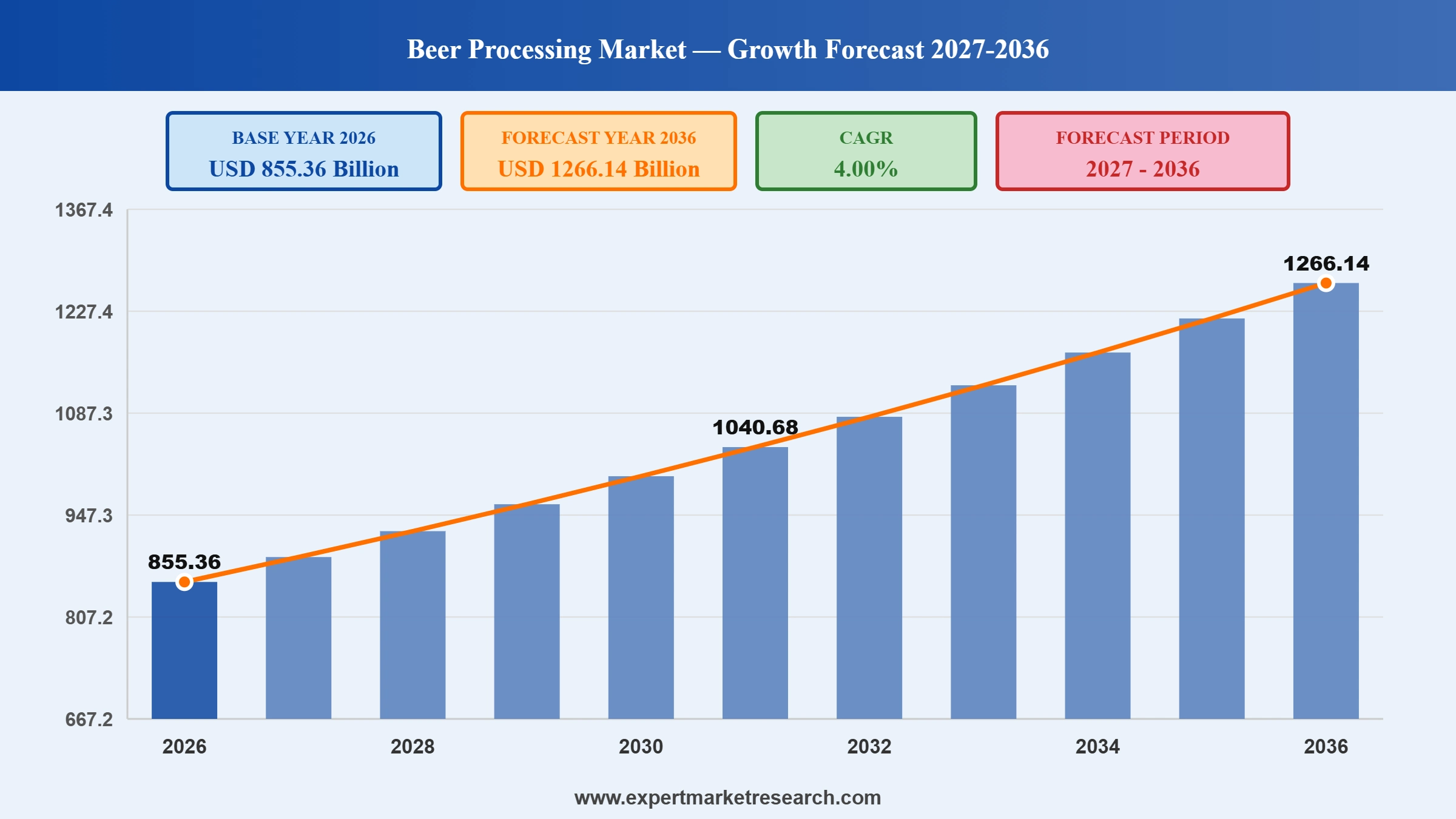
The global beer processing market attained a value of USD 822.46 Billion in 2025 and is projected to expand at a CAGR of 4.00% through 2035. The market is further expected to achieve USD 1217.44 Billion by 2035, driven by premiumisation of lager and specialty beer, rapid growth in low and no-alcohol brews, and the expanding reach of supermarket, convenience, and specialty retail channels worldwide.
Consolidation is reshaping the global brewing base. Heineken completed its acquisition of the beverage and retail businesses of FIFCO in January 2026 for EUR 2.9 billion, securing control of the Costa Rican brands Imperial and Pilsen. Deals of this kind show how large brewers add regional lager capacity, distribution networks, and retail relationships rather than relying only on organic volume growth in mature markets.
Operational resilience matters as much as capacity. In September 2025, a cyber-attack on Asahi Group Holdings disrupted its systems and halted production at Japanese factories, cutting core operating profit by roughly 1% in that period. By August 2026, its chief executive still cited the lingering effect of the disruption in Japan, a reminder that modern brewing, packaging, and dispatch lines depend on secure digital systems.
Demand remains uneven by region. Molson Coors reported in August 2026 that second-quarter financial volume fell 5.4% and net sales declined 3.3% to USD 3,096.5 million, as heightened macroeconomic pressure affected consumer behaviour and input costs. The company reaffirmed a flat net sales outlook for 2026, showing how brewers are leaning on pricing and portfolio changes while beer volumes stay soft.
Read more about this report - REQUEST FREE SAMPLE COPY IN PDF
Carlsberg published its first-half 2026 financial statement in August 2026, reporting organic revenue growth of 2.7% to DKK 47,053 million, with alcohol-free beverages up 11% and soft drinks up 9%. Management credited faster-than-expected delivery of Britvic synergies and said growth categories supported margin gains across the group. Companies can leverage alcohol-free and soft drink portfolios to offset slower growth in core beer volumes.
Heineken reported its 2026 half-year results in August 2026, with premium volume up 6%, the Heineken brand up 5.3%, and all five global brands growing, while Tiger returned to volume growth. Operating profit rose 6.7% organically. The results show how premium brand building can lift value even when total beer volume is flat. Companies can secure premium mix through consistent global brand investment.
AB InBev reported second-quarter 2026 results in July 2026, with total volumes up 0.9%, beer volumes up 1.1%, and revenue up 5.6%. Outside their home markets, Corona grew 17%, Stella Artois 19%, and Michelob Ultra 21%, showing that premium lager megabrands are lifting results despite cautious consumers. Companies can expand megabrand distribution into new markets to drive volume growth and premium pricing together.
Tsingtao Brewery reported first-quarter 2026 results in April 2026, with revenue of CNY 10,285.13 million, down about 1.5%, but net income up 5.2% to CNY 1,799.78 million. The result shows how a leading Chinese brewer is protecting earnings through efficiency and product mix while domestic demand is subdued. Companies can focus on cost control and a richer product mix to defend margins in flat markets.
In May 2026, capital markets regulators in Kenya, Tanzania, and Uganda approved Asahi Group Holdings' purchase of Diageo's 65% stake in East African Breweries and 53.7% stake in UDV Kenya, a deal valued at about USD 2.3 billion. They also granted an exemption from a mandatory takeover offer, so the brewer remains listed. Companies can leverage regulatory engagement to complete cross-border brewing acquisitions while protecting minority shareholders.
Heineken said in August 2026 that its licensed beer volume in China grew by nearly 30% in the first half, through its alliance with China Resources Beer covering Heineken Original, Heineken Silver, and Amstel, while Budweiser APAC's China volume fell 6%. Heineken added that it has outgrown the Chinese beer industry for eight consecutive years. Companies can leverage local distribution alliances to outgrow a weak market and build profit in large consumer bases.
Asahi Group Holdings reported in August 2026 that first-half sales of Asahi Super Dry rose 31% outside its home markets, and Peroni Nastro Azzurro grew 7%, while unit prices for beer and non-alcohol adult beverages rose 2.5%. The chief executive described the market as challenging, with softer demand across Europe and Asia Pacific. Companies can leverage global flagship brands to sustain premium pricing when regional demand softens.
AB InBev said in July 2026 that its no-alcohol beer revenue increased 27% in the second quarter, while revenue from its Beyond Beer portfolio rose 44%, and underlying earnings per share grew 23.4% to USD 1.21. The results show how non-traditional beer products are becoming a meaningful growth engine. Companies can expand no-alcohol and Beyond Beer ranges to reach new occasions and consumers.
This Expert Market Research Report titled "Global Beer Processing Market Report and Forecast 2026-2035" offers a detailed analysis of the market based on the following segments:
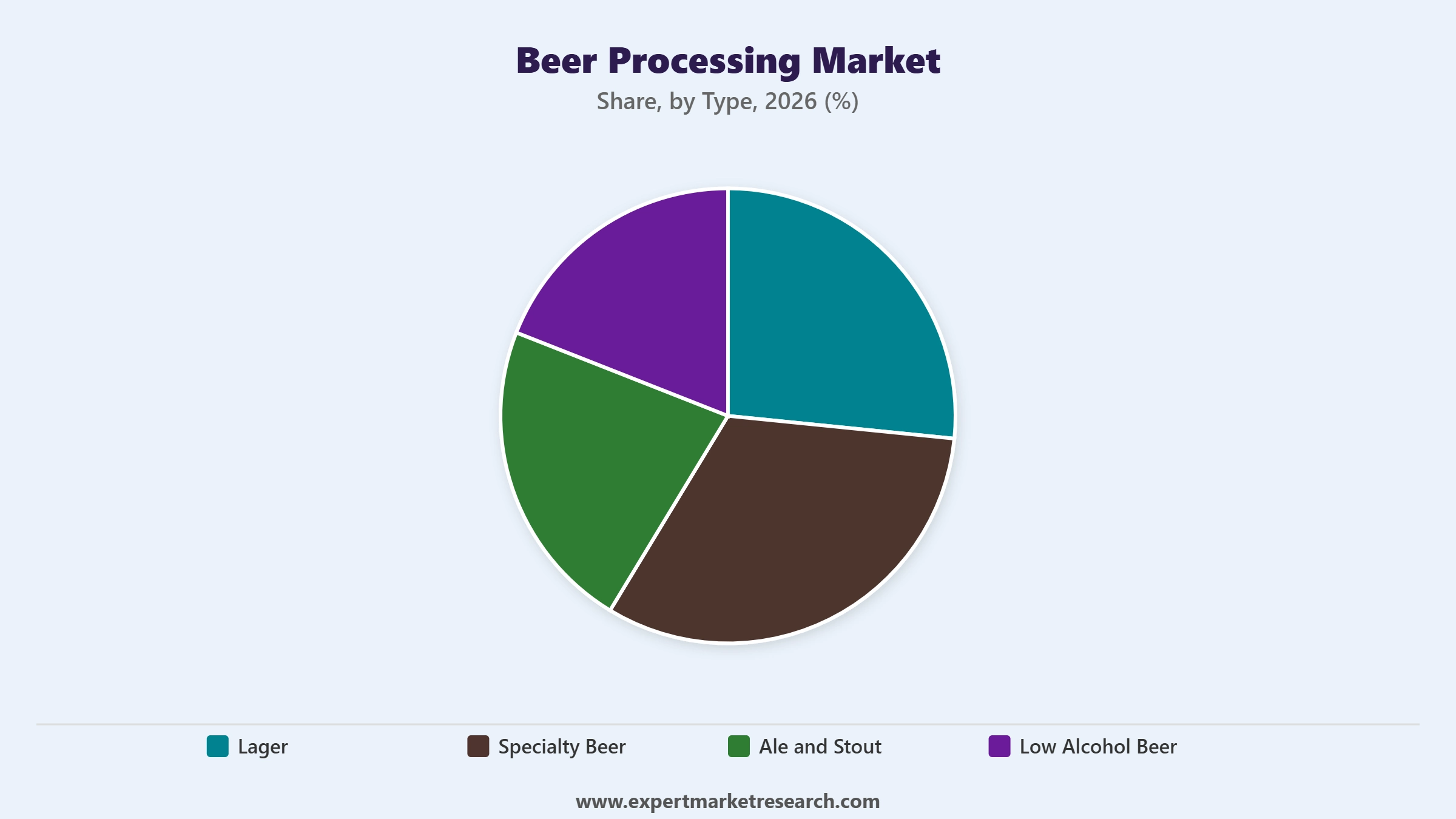
Market Breakup by Type
Key Insight: Lager is the leading type, with Heineken reporting in April 2026 that Heineken brand volume rose 6.9% in the first quarter, showing how global lager brands still anchor brewing volumes; Specialty Beer covers premium and differentiated brews that benefit from the same premiumisation trend; Ale and Stout serves traditional and craft drinkers in markets such as the United Kingdom and Ireland; and Low Alcohol Beer is the fastest-growing type, supported by Heineken's August 2026 report that Heineken 0.0 volume grew by a high-single-digit rate in the first half.
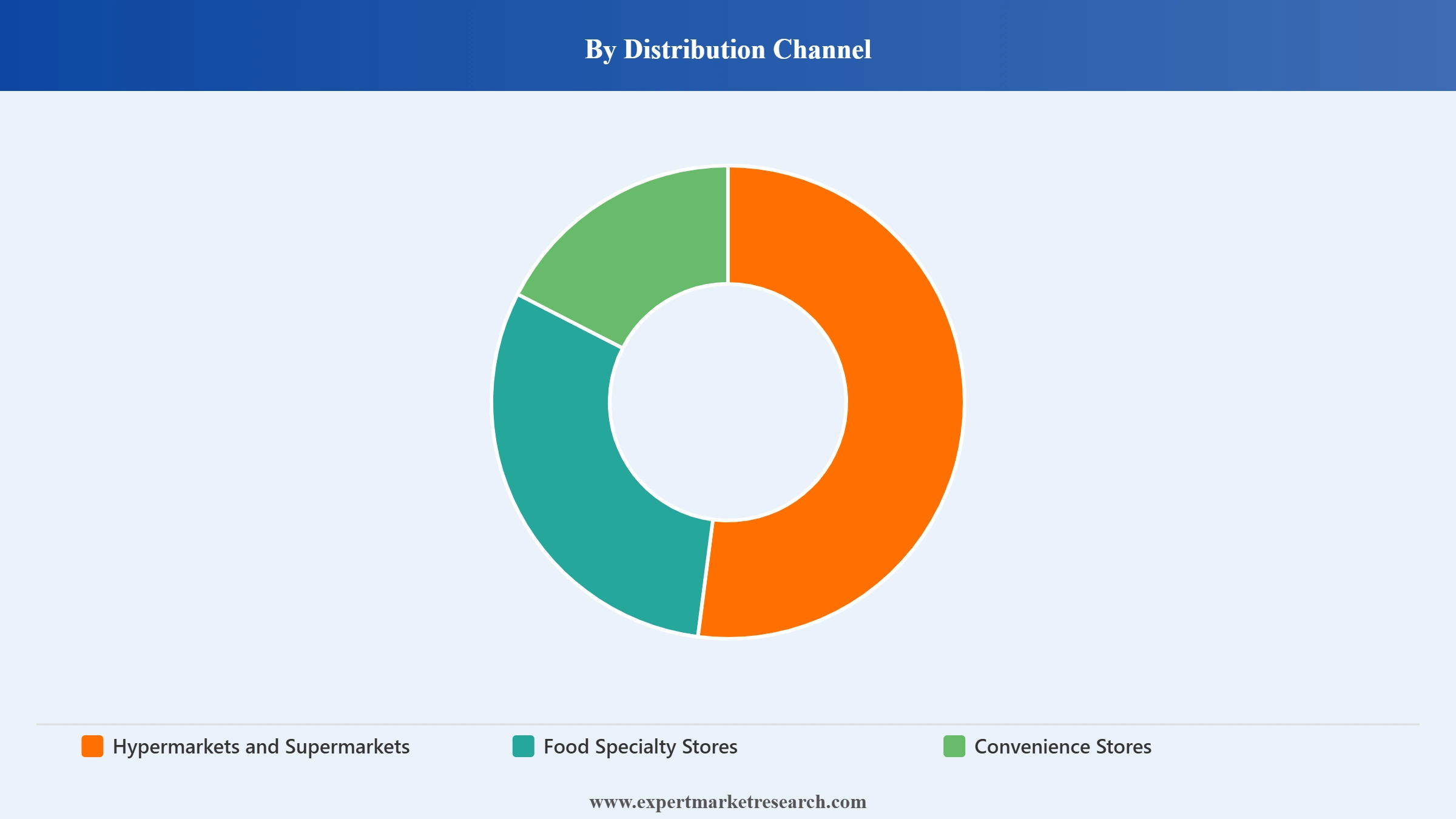
Market Breakup by Distribution Channel
Key Insight: Hypermarkets and Supermarkets are the leading channel, where channel mix and shelf pricing shape brewer earnings, as Molson Coors noted in August 2026 when EMEA and APAC income before taxes fell 41.5% on unfavourable channel mix; Food Specialty Stores serve premium, imported, and low-alcohol ranges for shoppers seeking variety; Convenience Stores are a fast-growing channel for single-serve and premium packs, with Asahi Group Holdings reporting in August 2026 that unit prices for beer and non-alcohol adult beverages rose 2.5% in the first half; and Others captures online retail and other direct-to-consumer routes.
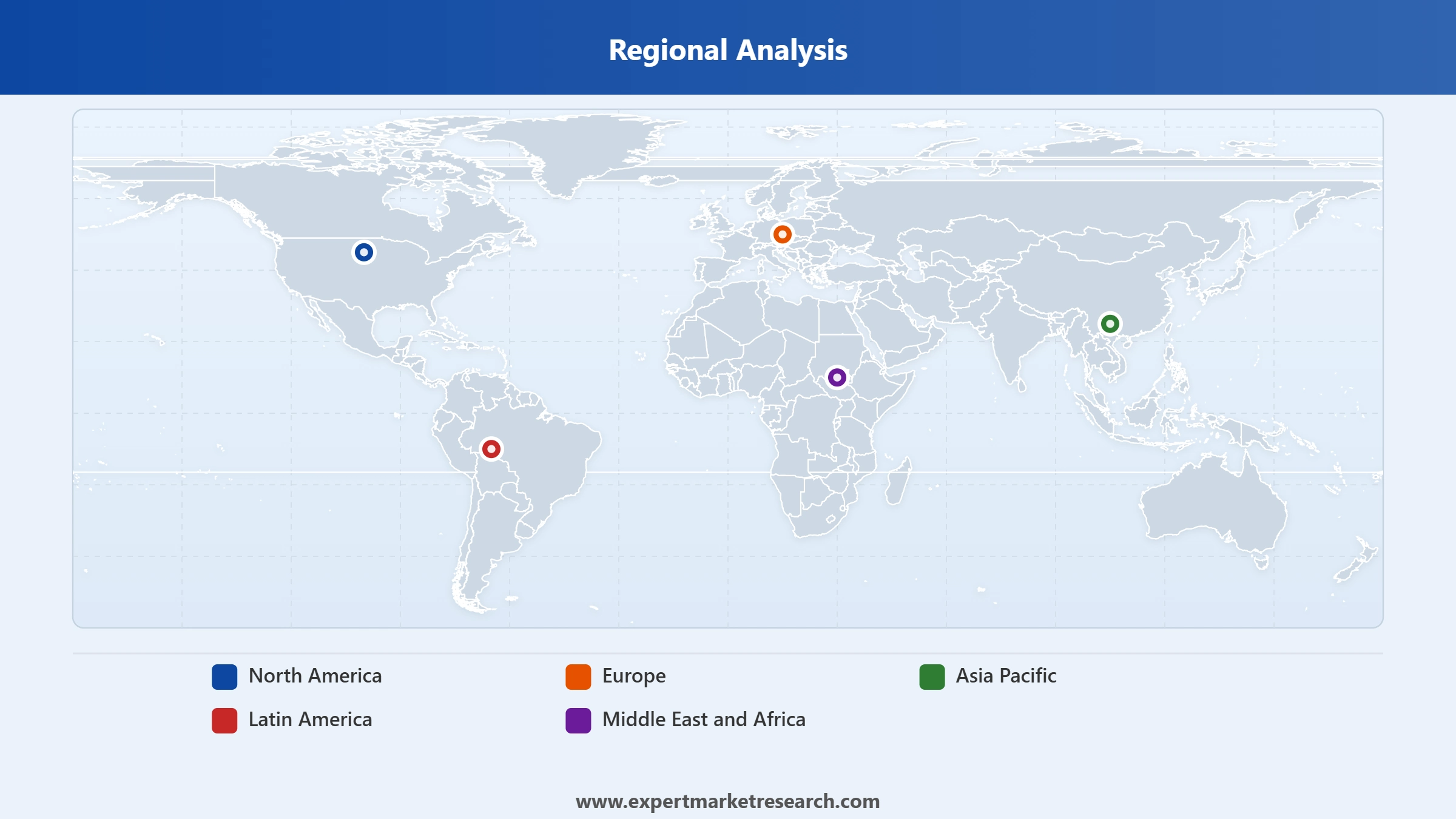
Market Breakup by Region
Key Insight: North America is a mature market under volume pressure, with Molson Coors reporting in August 2026 that Americas brand volume fell 5.3% in the second quarter; Europe is a large, premium-led market, where Carlsberg reported in August 2026 that Central and Eastern Europe and India grew 6.2% in the first half; Asia Pacific is the fastest-growing region, with Heineken's licensed volume in China rising by nearly 30% in the first half of 2026; Latin America is shaped by premiumisation, as Heineken reported in August 2026 that Amstel Ultra more than doubled its volume in Brazil; and the Middle East and Africa is an emerging market, with Heineken noting robust growth in Africa and the Middle East in April 2026.
Read more about this report - REQUEST FREE SAMPLE COPY IN PDF
By Type, Lager leads the market while Low Alcohol Beer grows fastest because consumers are moderating alcohol intake without leaving the beer category
Lager leads because bottom-fermented, crisp beers suit mass production, long shelf life, and global distribution. Carlsberg reported in August 2026 that its total volume expanded 2.8% in the first half, with premium beer growing 1% organically and revenue per hectolitre rising 1%, evidence that mainstream and premium lagers still carry the largest volumes at major brewers, even as growth is increasingly driven by price and mix, and that brewers continue to defend their lager portfolios through brand investment.
Read more about this report - REQUEST FREE SAMPLE COPY IN PDF
Low Alcohol Beer grows fastest as brewers extend core brands into lower-strength formats. Heineken said in its April 2026 trading update that low- and non-alcohol beverages grew double-digit in the first quarter, led by Heineken 0.0, and the trend has widened the range of occasions in which beer is consumed, from workday lunches to sports events, while giving retailers a new premium category to stock and promote across supermarkets, specialty outlets, and online platforms.
By Distribution Channel, Hypermarkets and Supermarkets lead the market while Convenience Stores grow fastest because single-serve, premium, and low-alcohol packs suit quick purchases
Hypermarkets and Supermarkets lead because large-format retail offers the widest beer range, promotional pricing, and multipack volumes. Carlsberg reported in August 2026 that revenue per hectolitre rose 1% across all regions in the first half, a sign that shelf pricing and pack mix remain central to brewer earnings in this channel, where brands compete directly on price per litre, visibility, and promotional support.
Read more about this report - REQUEST FREE SAMPLE COPY IN PDF
Convenience Stores gain share as shoppers favour smaller baskets and immediate consumption. Heineken reported in April 2026 that net revenue per hectolitre increased 3.0% in the first quarter, and AB InBev reported in July 2026 that Beyond Beer revenue rose 44% in the second quarter, both of which point to premium and novel single-serve products that sit naturally in convenience and food specialty formats, where shoppers pay for quality and occasion.
Read more about this report - REQUEST FREE SAMPLE COPY IN PDF
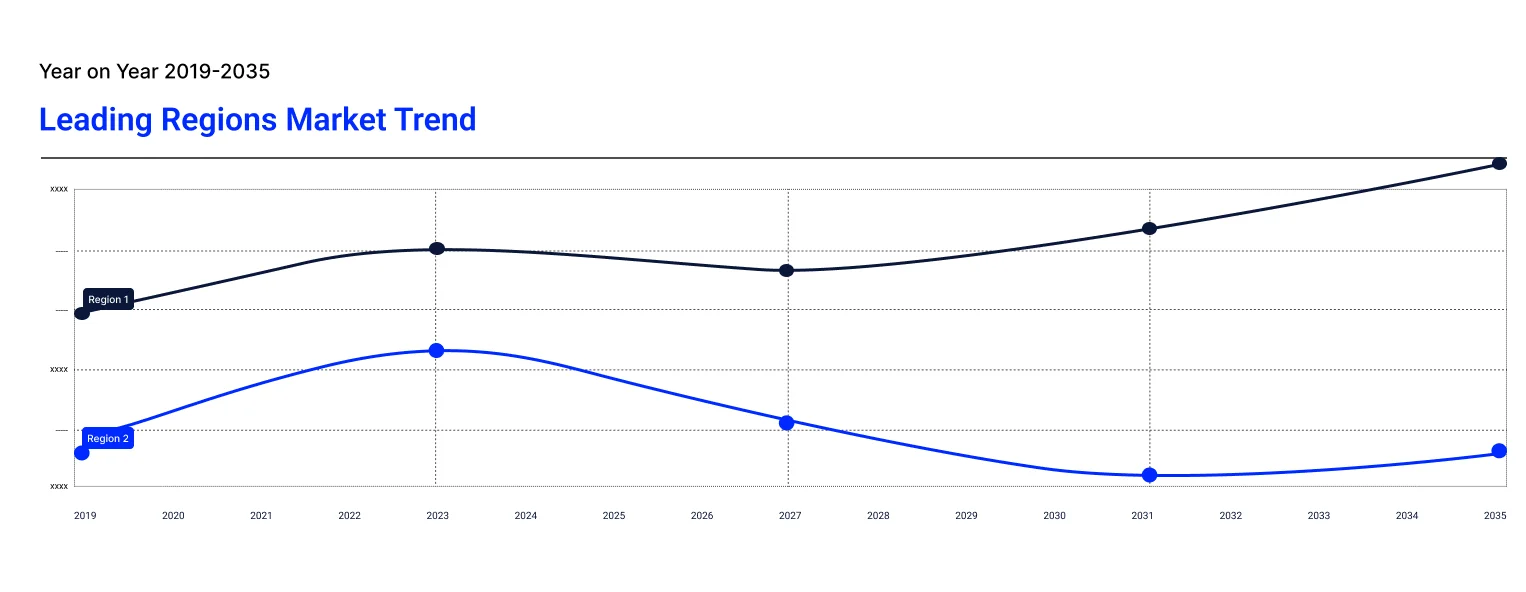
Europe holds a leading position in the global beer processing market, accounting for roughly one-third of the 2025 total, shaped by deep brewing traditions and a steady shift toward premium and alcohol-free products
This is supported by industry estimates placing the European market at USD 281.28 billion in 2025, rising to USD 424.44 billion by 2035. Carlsberg reported in August 2026 that Central and Eastern Europe and India led its regions with 6.2% growth in the first half, while Western Europe was close to flat at 0.1%, showing that growth within the region is moving toward eastern markets and premium categories, while mature western markets rely on pricing and mix.
Asia Pacific is the fastest-growing regional market, with Heineken noting in April 2026 that Vietnam and India drove a strong first quarter in the region. North America remains pressured, as Molson Coors reported falling volumes in August 2026, while Latin America and the Middle East and Africa are expanding on premium brands, including Asahi Group Holdings' approved acquisition of the East African Breweries stake in May 2026, which gives a Japanese brewer a larger base across Kenya, Tanzania, and Uganda.
The global beer processing market is moderately consolidated at the top, with a handful of multinational brewers holding large shares alongside many regional and national producers serving local tastes and distribution channels.
Competitive dynamics are increasingly shaped by premium brand building, growth in low and no-alcohol beer, acquisitions of regional brewers, and investment in digital and supply chain resilience, as leading groups seek to protect margins while overall beer volumes remain subdued.
Formed in 2008 through the combination of InBev and Anheuser-Busch and headquartered in Leuven, Belgium, Anheuser Busch Inbev Nv brews Budweiser, Corona, Stella Artois, and Michelob Ultra. In July 2026, it reported second-quarter normalized EBITDA of USD 5,938 million, up 5.8%, with underlying earnings per share up 23.4%.
Founded in 1864 and headquartered in Amsterdam, the Netherlands, Heineken N.V brews Heineken, Amstel, Tiger, and Desperados. In August 2026, it reported first-half operating profit up 6.7% organically to EUR 2,170 million, after completing its acquisition of FIFCO's beverage and retail businesses in January 2026.
Founded in 1847 and headquartered in Copenhagen, Denmark, Carlsberg A/S brews Carlsberg, Tuborg, and Somersby and also sells soft drinks following its Britvic acquisition. In August 2026, it reported first-half operating profit up 4.5% to DKK 7,448 million and narrowed its 2026 guidance to 4% to 6% organic operating profit growth.
Founded in 1889 and headquartered in Tokyo, Japan, Asahi Group Holdings Ltd. brews Asahi Super Dry and Peroni Nastro Azzurro for markets in Japan, Europe, and Oceania. In August 2026, it reported first-half revenue up 7.7% and core operating profit up 1.5%, and said it expects to complete its East African acquisition.
Other key players in the beer processing market include Molson Coors Brewing Company and Tsingtao Brewery Group Co. Ltd., among others.
*Please note that this is only a partial list; the complete list of key players is available in the full report. Additionally, the list of key players can be customized to better suit your needs.*
For a detailed assessment of opportunities across the beer processing market's type, distribution channel, and regional segments through 2026 and beyond, connect with Expert Market Research for a customized consultation.


Upto 15% Off
USD
$2499 $2249
$3999 $3599
$4999 $4249
$5999 $5099


*While we strive to always give you current and accurate information, the numbers depicted on the website are indicative and may differ from the actual numbers in the main report. At Expert Market Research, we aim to bring you the latest insights and trends in the market. Using our analyses and forecasts, stakeholders can understand the market dynamics, navigate challenges, and capitalize on opportunities to make data-driven strategic decisions.*
The global beer processing market attained a value of USD 822.46 Billion in 2025.
The beer processing market is projected to grow at a CAGR of 4.00% from 2026 to 2035.
Key strategies include premium brand building, expansion of low and no-alcohol ranges, regional acquisitions and partnerships to add brewing capacity and distribution, and investment in cost control and digital resilience.
The rising trend of low or no-alcohol and organic beer, coupled with the growing number of microbreweries and brewpubs are expected to propelling the market growth.
North America, Latin America, Middle East and Africa, Europe, Asia Pacific are the major regions in the market.
The major types of beer in the market are lager, specialty beer, ale and stout, and low alcohol beer.
The significant distribution channels in the market are hypermarkets and supermarkets, food specialty stores, and convenience stores, among others.
Key players in the beer processing market include Anheuser Busch Inbev Nv, Heineken N.V, Carlsberg A/S, Molson Coors Brewing Company, Asahi Group Holdings Ltd., and Tsingtao Brewery Group Co. Ltd., among others.
The market is estimated to witness healthy growth in the forecast period of 2026-2035 to reach a value of around USD 1217.44 Billion by 2035.
Key challenges include softening beer volumes in mature markets, rising input and packaging costs, shifting consumer preferences toward moderation, and exposure to cyber and supply chain disruption in highly automated brewing and packaging operations.
Explore our key highlights of the report and gain a concise overview of key findings, trends, and actionable insights that will empower your strategic decisions.
| REPORT FEATURES | DETAILS |
| Base Year | 2025 |
| Historical Period | 2019-2025 |
| Forecast Period | 2026-2035 |
| Scope of the Report |
Historical and Forecast Trends, Industry Drivers and Constraints, Historical and Forecast Market Analysis by Segment:
|
| Breakup by Type |
|
| Breakup by Distribution Channel |
|
| Breakup by Region |
|
| Market Dynamics |
|
| Competitive Landscape |
|
| Companies Covered |
|
| Report Price and Purchase Option | Explore our purchase options that are best suited to your resources and industry needs. |
| Delivery Format | Delivered as an attached PDF and Excel through email, with an option of receiving an editable PPT, according to the purchase option. |
Datasheet
One User
USD 2,499
USD 2,249
tax inclusive*
Single User License
One User
USD 3,999
USD 3,599
tax inclusive*
Five User License
Five User
USD 4,999
USD 4,249
tax inclusive*
Corporate License
Unlimited Users
USD 5,999
USD 5,099
tax inclusive*
*Please note that the prices mentioned below are starting prices for each bundle type. Kindly contact our team for further details.*
Flash Bundle
Small Business Bundle
Growth Bundle
Enterprise Bundle
*Please note that the prices mentioned below are starting prices for each bundle type. Kindly contact our team for further details.*
Flash Bundle
Number of Reports: 3
20%
tax inclusive*
Small Business Bundle
Number of Reports: 5
25%
tax inclusive*
Growth Bundle
Number of Reports: 8
30%
tax inclusive*
Enterprise Bundle
Number of Reports: 10
35%
tax inclusive*
How To Order

Select License Type
Choose the right license for your needs and access rights.

Click on ‘Buy Now’
Add the report to your cart with one click and proceed to register.

Select Mode of Payment
Choose a payment option for a secure checkout. You will be redirected accordingly.
Strategic Solutions for Informed Decision-Making
Gain insights to stay ahead and seize opportunities.
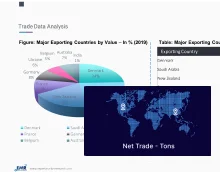
Get insights & trends for a competitive edge.
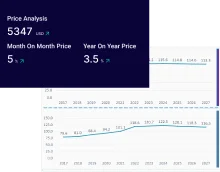
Track prices with detailed trend reports.
Analyse trade data for supply chain insights.
Leverage cost reports for smart savings
Enhance supply chain with partnerships.
Connect For More Information
Our expert team of analysts will offer full support and resolve any queries regarding the report, before and after the purchase.
Our expert team of analysts will offer full support and resolve any queries regarding the report, before and after the purchase.
We employ meticulous research methods, blending advanced analytics and expert insights to deliver accurate, actionable industry intelligence, staying ahead of competitors.
Our skilled analysts offer unparalleled competitive advantage with detailed insights on current and emerging markets, ensuring your strategic edge.
We offer an in-depth yet simplified presentation of industry insights and analysis to meet your specific requirements effectively.