

Consumer Insights
Uncover trends and behaviors shaping consumer choices today
Procurement Insights
Optimize your sourcing strategy with key market data
Industry Stats
Stay ahead with the latest trends and market analysis.
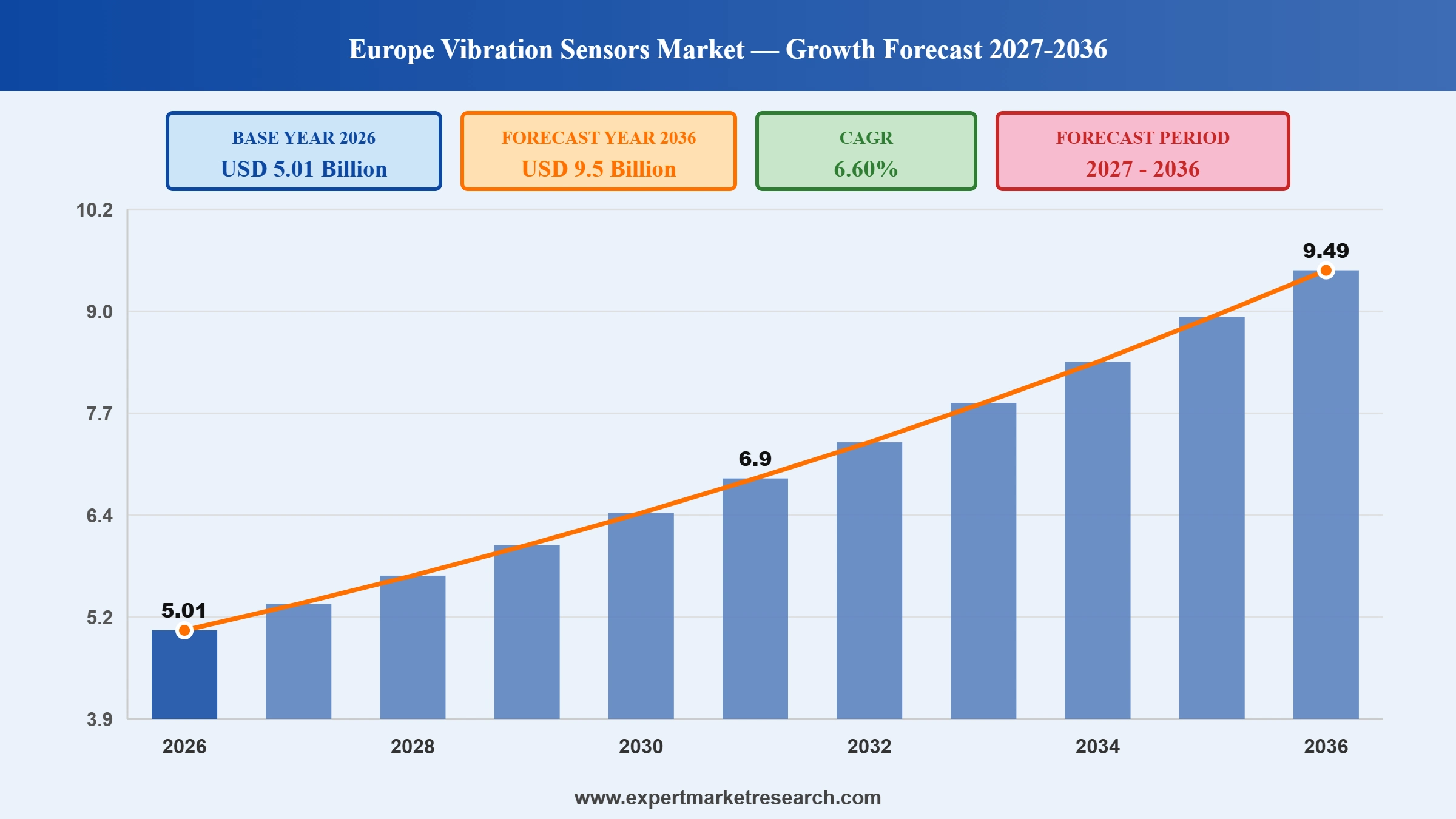
The Europe vibration sensors market attained a value of USD 4.70 Billion in 2025 and is projected to expand at a CAGR of 6.60% through 2035. The market is further expected to achieve USD 8.91 Billion by 2035. Vibration sensing with edge analytics and industrial automation is helping European manufacturers identify equipment abnormalities, improve maintenance scheduling, and minimize production downtime.
Wireless sensors are gaining favor with European industries due to their ability to replace traditional wired sensors where their application would otherwise be expensive or impractical. Moreover, new condition-monitoring techniques are fostering use cases involving the combination of vibration data with information on temperature and speed among other machine variables.
A trend affecting the Europe vibration sensors market is the shift from occasional machine inspection to constant monitoring with the help of data. The launch of the advanced version of the SKF Quick Collect Sensor CMDT 392 at Maintenance Dortmund, in February 2026, deserves special attention because this Bluetooth device is designed for collecting vibration and condition data faster. Additionally, it is necessary to mention that SKF revealed IMx1 starter package with wireless monitoring and anomaly analysis using artificial intelligence.
Product development in the Europe vibration sensors market is being driven by a trend toward miniaturization, connectivity, improved sampling speeds, and output that can be readily analyzed. For instance, Bosch offers the SMA286 vibration monitoring sensor with a 24/48 kHz sampling output suitable for predictive maintenance. This is contributing to growing opportunities in vibration sensors in rotating machines, automobiles, aircrafts, and connected manufacturing processes. In August 2026, VibraSens launched low-cost IEPE MEMS accelerometers, enabling continuous online vibration monitoring for machinery operating below 4,000 RPM.
Read more about this report - REQUEST FREE SAMPLE COPY IN PDF
The POLYN supplied VibroSense TMS engineering sensors to be tested for AI-based tire-road friction identification using advanced sensing through accelerometers. European sensor makers can build AI-capable solutions based on vibration and accelerometer technology for automotive safety, predictive maintenance, and intelligent mobility systems.
The Treon Industrial Node X received the 2026 Red Dot Award featuring wireless vibration sensing, edge computing, and AI-enabled maintenance. Companies in the Europe vibration sensors market can build robust wireless sensors with edge AI capabilities, long battery life, and hazardous area certifications.
High-performing vibration sensor that uses in-sensor AI technology, broadband performance, low energy consumption, and high-precision industrial condition monitoring was introduced by STMicroelectronics. Vibration sensors produced by the manufacturers may embed edge AI in a compact vibration device to reduce energy consumption and enhance fault detection in the industry.
Ruby is a wireless vibration sensor developed by Crystal Instruments that allows carrying out precise measurements used in machinery diagnostics, predictive maintenance, and structure monitoring applications. Manufacturers can create a scalable wireless sensor network providing high measurement accuracy and a long battery life, boosting growth in the Europe vibration sensors market.
Vibration sensors are becoming key inputs to AI-supported maintenance systems rather than standalone measurement instruments. Vendors are using vibration signatures to detect imbalance, misalignment, bearing degradation, and other discrepancies before visible failures, accelerating demand in the Europe vibration sensors market. In December 2025, Istec launched VibSys, a scalable vibration monitoring system combining edge processing, cloud connectivity, and open data integration. The European Commission is also recognizing predictive maintenance as a significant application in smart factories and advanced manufacturing. It creates openings for suppliers with an ability to integrate sensing hardware, analytics, and asset management software.
Machine makers are looking for smaller sensors that can detect more precise vibration signatures without complicating installation, redefining the entire Europe vibration sensors market dynamics. Predictive maintenance and condition monitoring use cases demonstrate the evolution of MEMS technology toward more advanced industrial machine health use cases. High bandwidth sensors allow detecting abnormal frequencies more precisely, and compact packages make integration into connected machines easier. In May 2026, Upbeat Technology showcased ultra-small AI-powered MEMS vibration sensors for predictive maintenance across industrial equipment and smart systems.
Wireless vibration monitoring is gaining commercial significance since companies in the Europe vibration sensors market can expand their condition monitoring program without having to set up much cabling infrastructure in their manufacturing plants. The Quick Collect system from SKF takes advantage of Bluetooth technology and mobile applications to collect vibration, bearing conditions, and temperature data. In May 2026, Crystal Instruments launched Ruby, a wireless vibration sensor offering high accuracy and 36-month battery life for industrial monitoring applications.
The aerospace industry is making sensors which can detect early-stage mechanical wear of safety critical systems in greater demand. For example, the new rotorcraft guidelines from EASA highlight the vibration health monitoring systems for critical rotors and rotor drive systems. They state the benefit of such systems in detecting developing faults in these safety-critical components. In February 2026, I-care launched the Wi-care 130 G23, a Belgian-made wireless vibration sensor offering triple data flow and five-year battery life. Such systems can comprise vibration sensors, data acquisition units, processing, and data storage units. This regulation is significant for suppliers in the Europe vibration sensors market since their aerospace customers are looking for reliability and system level solutions rather than simple measurement devices.
Europe’s Industry 5.0 vision focuses on more than productivity, emphasizing resilience, sustainability, and human-centric manufacturing across industrial operations. This is particularly applicable to vibration sensors since condition monitoring can help the maintenance staff replace components when they need to be replaced without wasting time on unnecessary component replacements, avoiding production loss, and increasing equipment uptime. Leveraging such trends in the Europe vibration sensors market, in March 2026, Murata launched a compact vibration sensor detecting frequencies up to 20 kHz, enabling predictive maintenance for industrial machinery. According to the European Commission, advanced manufacturing consists of automation, artificial intelligence, IoT, and data processing, where predictive maintenance is a part of smart factory operations.
The Expert Market Research's report titled “Europe Vibration Sensors Market Report and Forecast 2026-2035” offers a detailed analysis of the market based on the following segments:
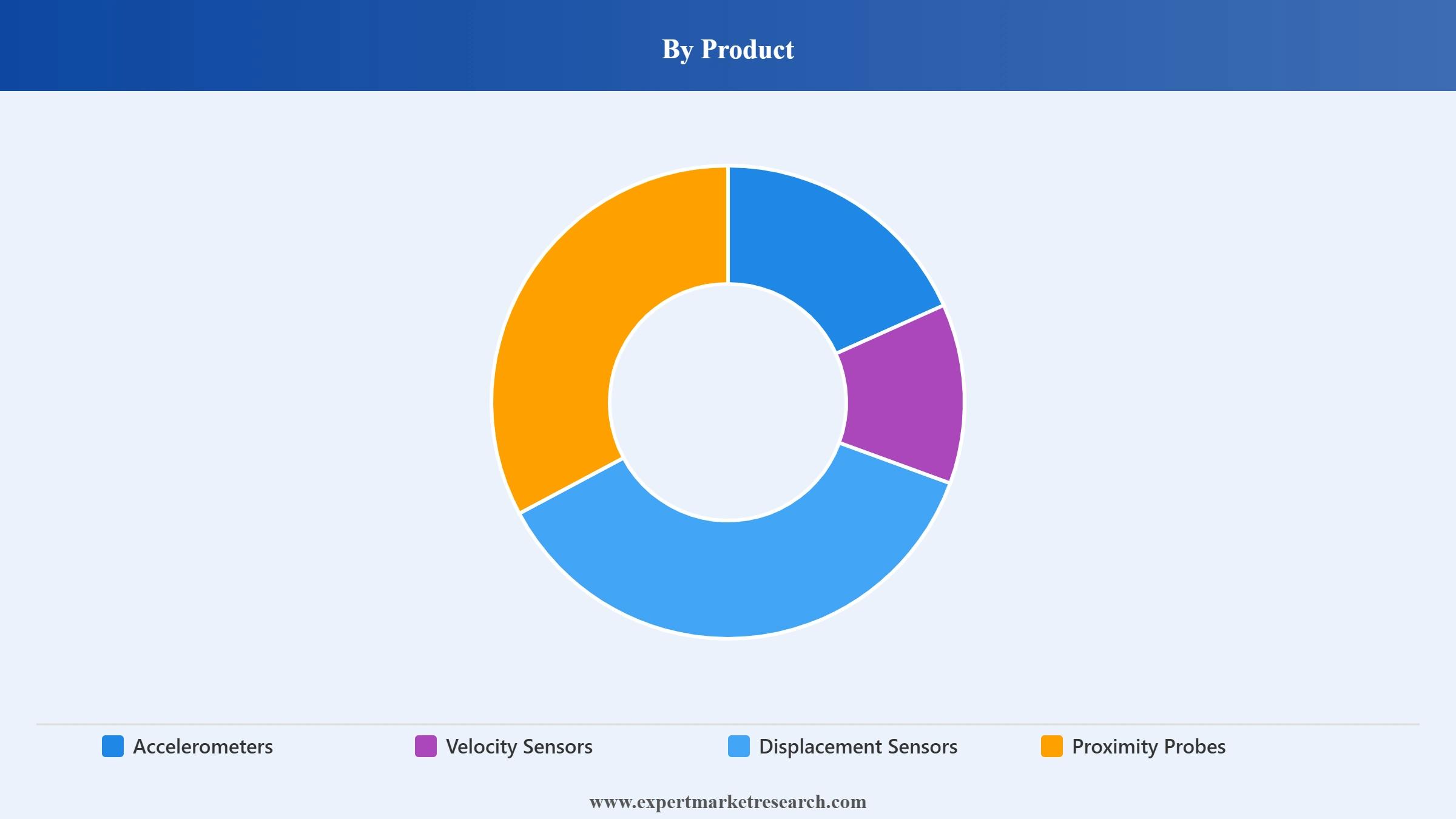
Market Breakup by Product
Key Insight: Accelerometers, velocity transducers, displacement transducers and proximity probes are catering to different measuring needs, creating new opportunities in the Europe vibration sensors market. Accelerometers are aiding in machine health monitoring while velocity transducers are used for routine maintenance activities. Displacement transducers have significance in case the shaft movements need to be measured directly at low frequencies, especially when high precision machinery is involved. Proximity probes have significance where the shafts are to be closely monitored.
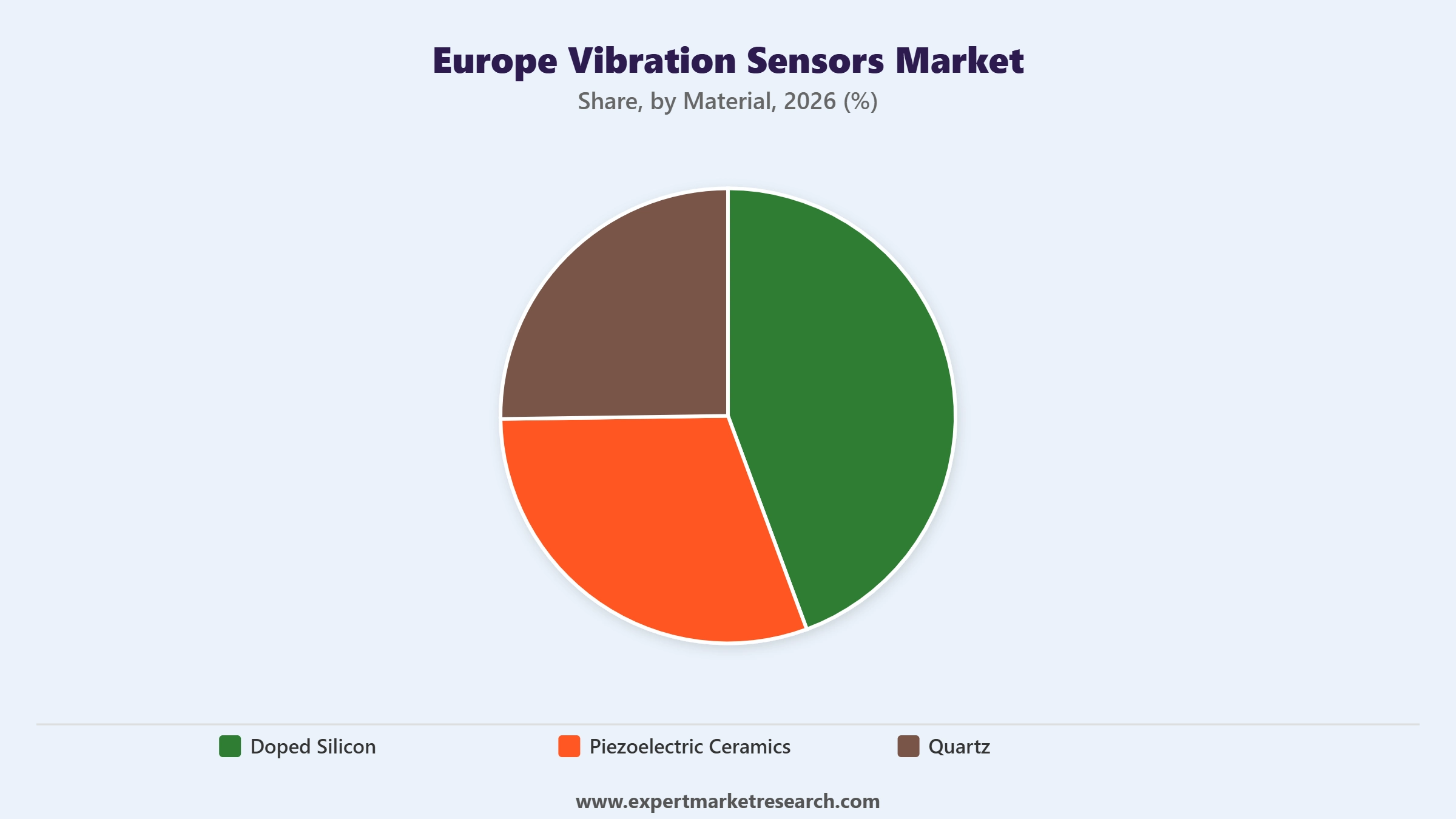
Market Breakup by Material
Key Insight: Doped silicon, piezoelectric ceramics and quartz cater to different demands in the European vibration sensors market. The use of Piezoelectric ceramics caters to applications involving precise industrial measurement and harsh industrial environments. Doped silicon helps miniaturize MEMS design, digital output, and sensor arraying. Quartz continues to be useful where there are needs for precise frequency response and measurement stability over time. The choice of material is related to the final system design and operating conditions.
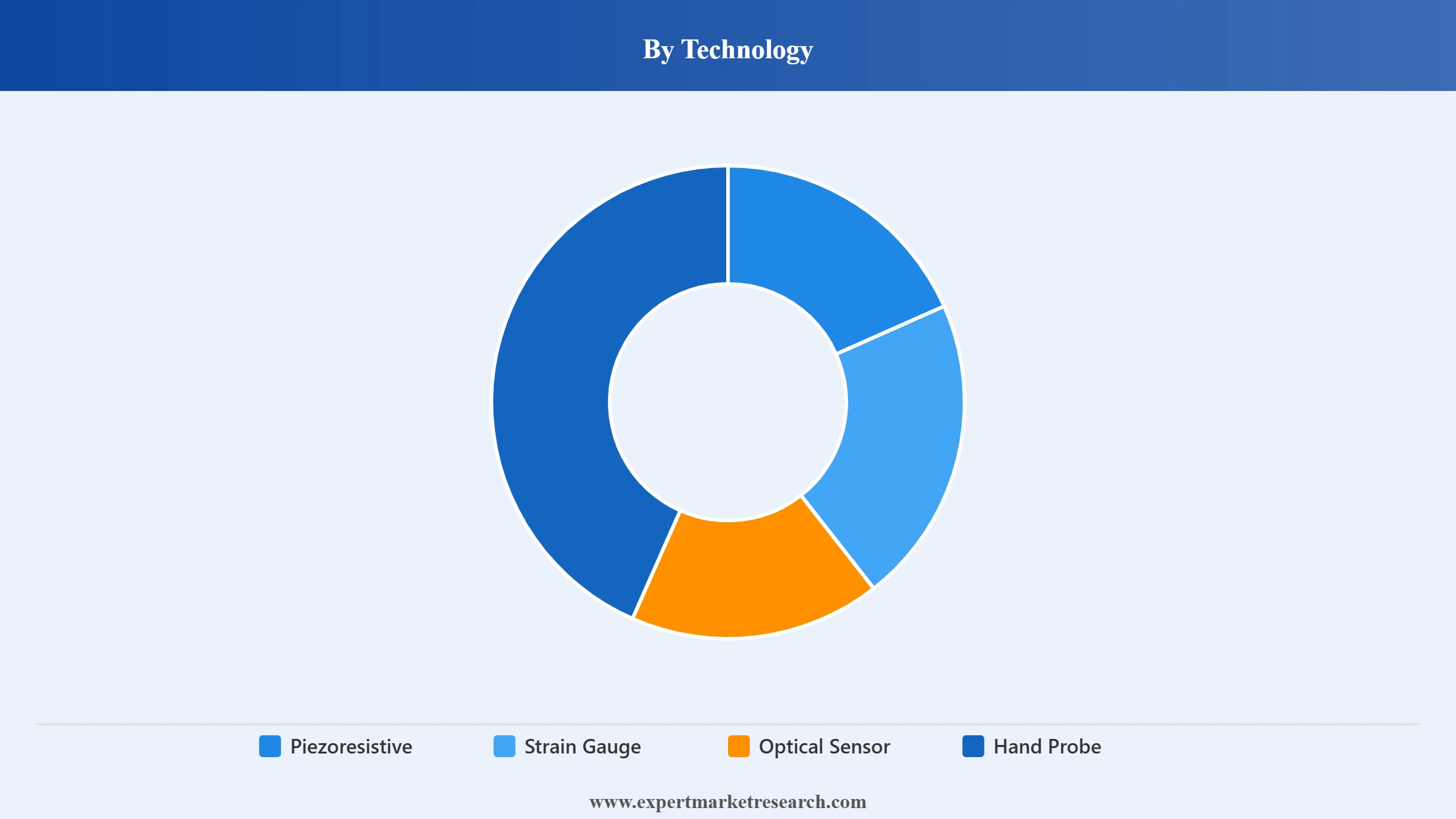
Market Breakup by Technology
Key Insight: Piezoresistive, strain gauge, optical sensor, hand probe, and other sensors are fulfilling monitoring requirements, stimulating the overall Europe vibration sensors market expansion. The piezoresistive sensors are used in compact embedded measurements, whereas the strain gauge sensors are useful in monitoring conditions that involve structural deformation and stress. The optical sensors are being used for high-precision measurements and electrical isolation. The hand probe sensors facilitate the maintenance engineers to perform portable tests where permanent monitoring is uneconomical.
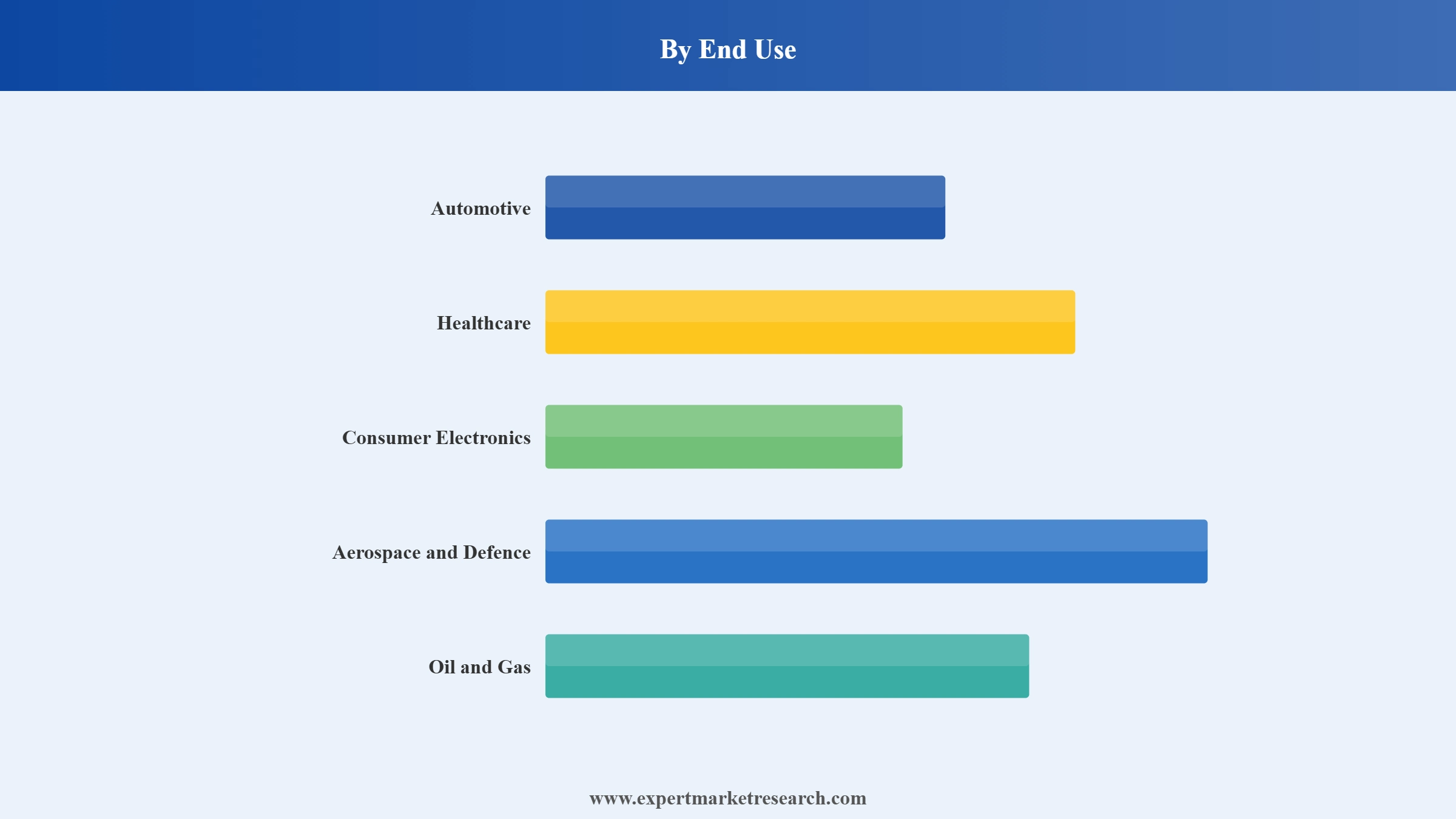
Market Breakup by End Use
Key Insight: In the automotive industry, vibration sensing is implemented in production equipment and vehicle electronics. In healthcare, stable measurements are needed in precise instruments, accelerating development in the Europe vibration sensors market. For consumer electronics, miniaturization of MEMS architecture and power efficiency are important. In September 2026, Atomica launched a Physical AI Sensor Platform supporting manufacturable sensing technologies for robotics, industrial automation, medical, and defense applications. In aerospace and defense, reliability, robustness to the environment, and traceability are important. Similarly, in the oil and gas industry, reliable sensors are needed in rotating equipment.
Market Breakup by Region
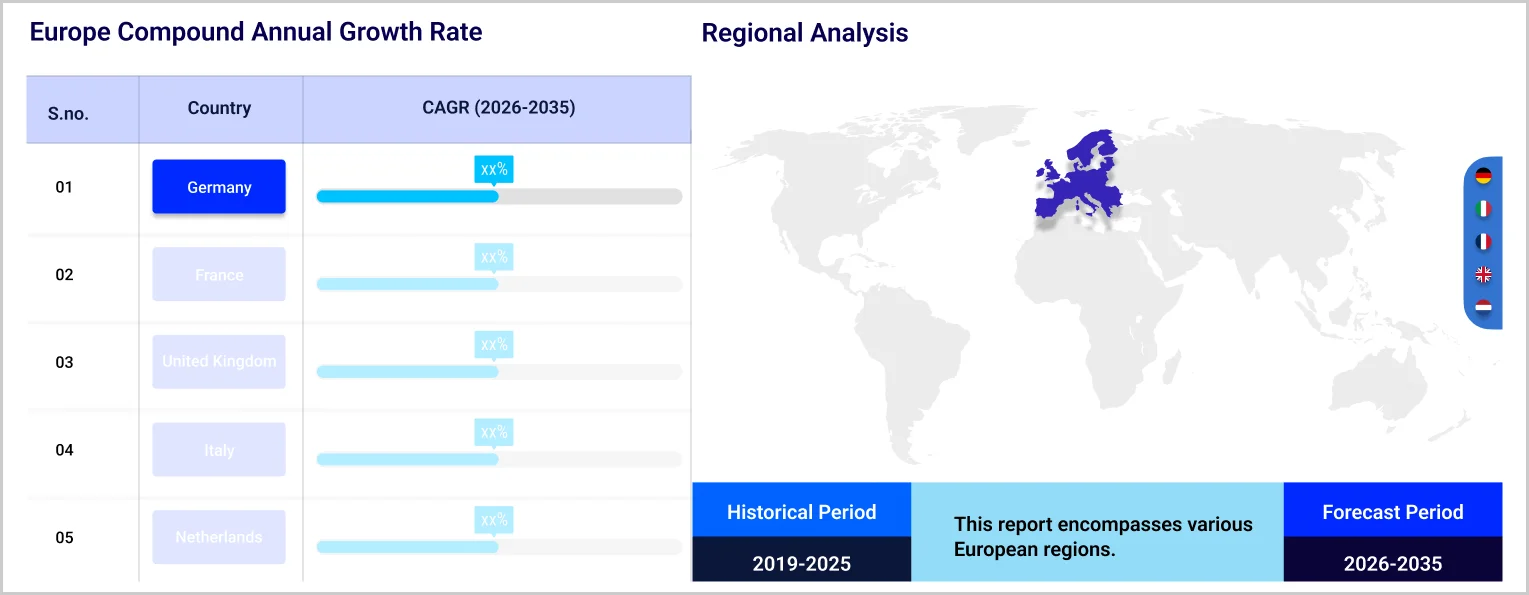
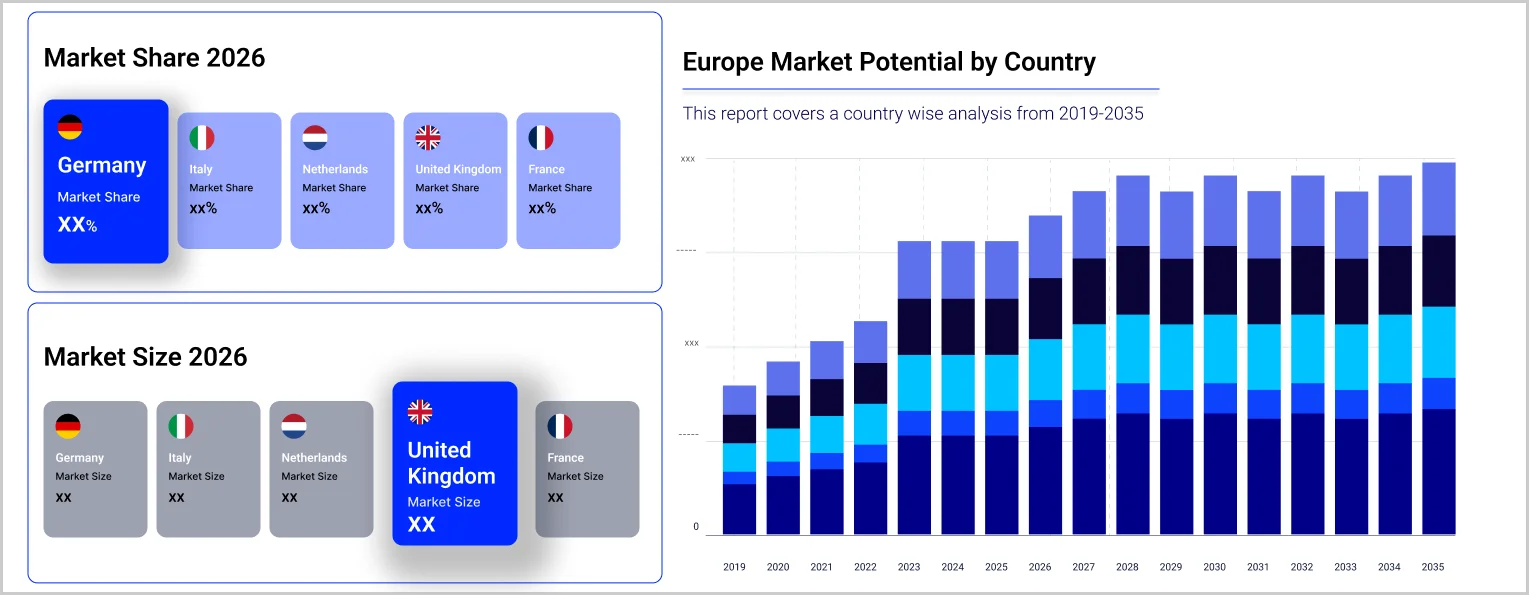
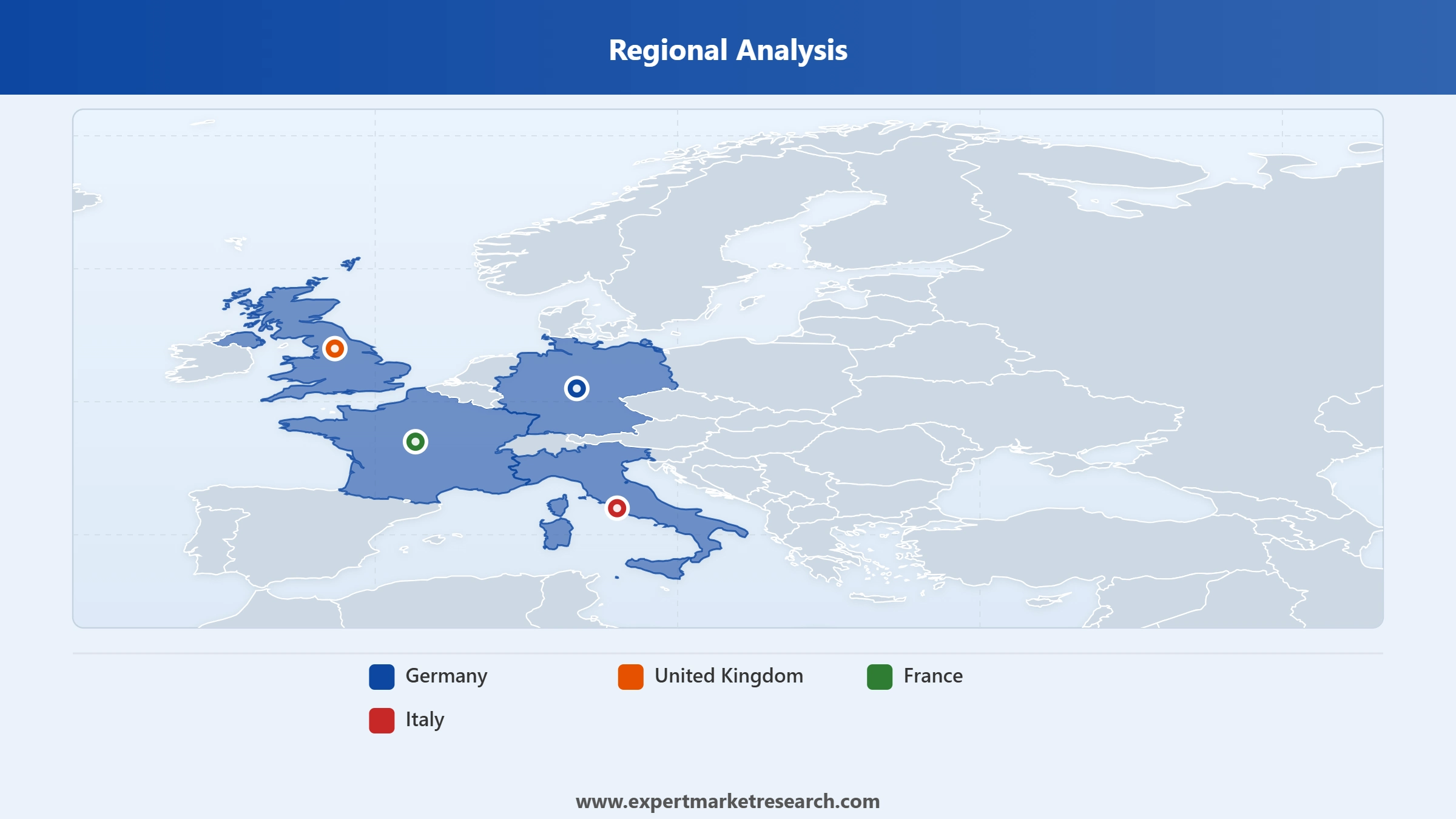
Key Insight: Regional dynamics of the Europe vibration sensors market indicate that Germany has its advantage due to manufacturing capabilities, automotive and machinery industries. The United Kingdom provides advantages for the aerospace industry, energy industry, and digital manufacturing. France provides advantages of aerospace industry, transportation, energy, and manufacturing applications. Italy has strong industries of machinery, automotive, and industrial equipment, which provides machine health monitoring. Other European countries provide advantages through the modernization of their industries.
Read more about this report - REQUEST FREE SAMPLE COPY IN PDF
By product, accelerometers remain dominant in the market as manufacturers prioritize broad machine-health measurement capabilities
Accelerometers retain their dominant share in the Europe vibration sensors market because of their capability to measure vibration changes on a wide range of rotary and reciprocating equipment. They are relevant for predictive maintenance purposes in motors, pumps, compressors, gearboxes, and other machines. European providers of accelerometers integrate their products with digital connectivity capabilities and analytics software that improves usage of this solution within connected maintenance programs. In January 2024, Bosch Sensortec launched BMA530 and BMA580, the world’s smallest MEMS accelerometers, enabling compact wearable and hearable designs.
Read more about this report - REQUEST FREE SAMPLE COPY IN PDF
Velocity sensors boast growing demand in cases where maintenance workers need an easy way to monitor the health of the rotary machine and do not have to develop sophisticated maintenance systems. Their capability to perform the assessment of vibration severity makes them relevant for pumps, motors, fans, and industrial drives, propelling growth in the Europe vibration sensors market. Maintenance companies are growing their interest in such solutions that allow for quick and easy installation and interpretation by plant personnel.
By material, piezoelectric ceramics continue to dominate the market as manufacturers require sensitive and rugged vibration conversion
Piezoelectric ceramics dominate the Europe vibration sensors market revenue due to their high efficiency in converting mechanical stress into electrical signals and vibration measurement with high reliability even under adverse conditions existing in industrial environment. This ability of this material to monitor the health condition of machines makes it suitable for motors, bearings, pumps and heavy-duty machines. Moreover, piezoelectric ceramic material can be used to develop sensors that work in dusty, humid, and other conditions existing in factories. In January 2026, Toray developed a highly sensitive piezoelectric vibration sensor, enabling precise structural health monitoring and predictive maintenance applications.
Read more about this report - REQUEST FREE SAMPLE COPY IN PDF
Doped silicon is becoming increasingly important as Europe vibration sensors market start increasing usage of the MEMS structures in small industrial and automotive solutions. Silicon-based sensors can allow developing miniature devices with the capability of digital integration and semiconductor technologies for mass production. It is enough just to consider Bosch's line of vibration-monitoring products as an example of the general trend towards development of miniature MEMS sensors intended for predictive maintenance and data acquisition at high frequencies.
Piezoresistive technology secures the dominant market position where robust measurement and compact integration are required
Piezoresistive technology enjoys rapid demand in the Europe vibration sensors market due to its ability to give reliable responses to deformation while allowing the construction of compact sensors. The importance of such technology is especially high in cases when direct integration into the machinery is required. European manufacturers are concentrating their efforts on the construction of sensors capable of providing reliable performance under varying conditions while producing clear signals for control and observation. In April 2026, IMI Sensors launched the Model 674A91, an IO-Link piezoelectric accelerometer designed for precise industrial vibration monitoring and condition monitoring.
Read more about this report - REQUEST FREE SAMPLE COPY IN PDF
The optical sensors segment’s growth in the Europe vibration sensors market is led by their high sensitivity, immunity to interference, and ability to work in environments that require electrical insulation of sensors. In cases when conventional electrical sensors cannot provide appropriate performance due to limitations in installation and transmission of signals, optical sensors can be helpful. European industrial enterprises actively introduce complex systems of monitoring near the critical machinery, which makes optical vibration measurements relevant for some special applications.
Automotive end use accounts for a substantial share in the market as manufacturers increasingly embed vibration monitoring into automated production and vehicle systems
The automotive manufacturing sector is an important use case as the factory floor has an elaborate network of motors, robotics, conveyors, press tools, machining equipment, and automation systems. In vehicles, vibrations and accelerometers enable the sensing of the dynamics and comfort and the advanced electronics of the vehicles. In January 2026, JUMO launched favoTRON, a compact PID controller delivering precise process automation with autotuning and USB-C configuration.
Read more about this report - REQUEST FREE SAMPLE COPY IN PDF
Applications in aerospace and defense are increasing the need for extremely reliable vibration sensors, thereby boosting the overall Europe vibration sensors market value. Regulation from Europe is aiding this trend with the recent guidelines of EASA on vibration health monitoring of critical rotor and rotor drive components. The vibration health monitoring system may include sensors that detect vibration and acquire, process, and store the vibration data in order to predict faults. In July 2026, Project Q unveiled a new sensor platform, strengthening Berlin’s defense-technology ecosystem and expanding capabilities for advanced sensing applications.
Germany remains dominant in the market as advanced manufacturing and industrial automation sustain demand for connected vibration monitoring
Germany continues to lead the Europe vibration sensors market owing to its substantial manufacturing industry base, machines ecosystem and automotive and engineering companies. The country's adoption of the Industry 4.0 model is an indication of the growing demand for sensors that link machine-based measurement and automation and analytics systems. European advanced manufacturing focuses continue to drive the usage of predictive maintenance and smart factory technology. German consumers are looking for dependable sensor platforms that will integrate with the existing industrial production infrastructure and not measurement devices in isolation. In January 2026, Senseonics received European approval for Eversense 365, enabling year-long continuous glucose monitoring across European markets.
Read more about this report - REQUEST FREE SAMPLE COPY IN PDF
The Europe vibration sensors market observes high demand in the United Kingdom owing to the efforts by manufacturers to carry out predictive maintenance, asset optimization and digital engineering. There are opportunities in aerospace, automotive, energy and process industries where portable wireless vibration sensors that will work with remote monitoring and analytics systems will have great applicability. Organizations focusing on resilience in their industrial infrastructure are driving visibility of equipment conditions.
Market competition centers around the capability to integrate sensing devices with diagnostic systems, industrial automation, and maintenance processes. Leading Europe vibration sensors market players are focusing on miniature MEMS technologies, wireless solutions, portable monitoring devices and software-enabled condition monitoring tools. The trend involves expanding the market scope from selling standalone sensors to developing machine health ecosystems. The differentiation factors include higher bandwidth capabilities, ease of installation, superior environmental robustness, integration, and analytics.
Expansion in predictive maintenance applications creates possibilities for service business models involving sensors, software, remote diagnostics, and maintenance services. Aerospace certification, automotive electronics, industrial automation and smart factory applications constitute further niche applications for manufacturers. In addition, the advanced manufacturing strategy of the European Commission highlights the relevance of connected solutions. Recent developments at SKF illustrate the approaches that Europe vibration sensor companies are adopting.
Robert Bosch GmbH was founded in 1886 and is headquartered in Stuttgart, Germany. Bosch offers vibration sensors using MEMS acceleration sensing technologies for vehicle dynamics, road noise applications, and industrial vibration measurements. SMA286 from Bosch addresses predictive maintenance applications requiring high bandwidth and represents Bosch's emphasis on small-size sensing and machine health data digitalization.
SKF AB was founded in 1907 and is headquartered in Gothenburg, Sweden. SKF addresses vibration sensing through their larger ecosystem of bearing, reliability, and condition monitoring solutions. They use Quick Collect to combine vibration and temperature measurement with mobile apps, and 2026 CMDT 392 provides upgrades that address easier handheld data collection.
Rockwell Automation Inc. was founded in the year 1903 and is based in the United States. The firm offers vibration detection via industrial automation, connected enterprise, and digital transformation services by associating machinery data with processes of manufacturing. Its industrial technology product range helps manufacturers implement solutions for their needs for productivity, sustainability, and asset optimization.
Emerson Electric Co. was founded in 1890, and its headquarters are in Missouri, United States. Emerson addresses the needs of industrial consumers through automation solutions that increase effectiveness, efficiency, and reliability of operations and even help establish autonomous factories. Through its orientation towards industrial software and automation, Emerson has opportunities to incorporate vibration data.
Other key players in the market include TE Connectivity Ltd., Honeywell International Inc., Monitran Ltd., Texas Instruments Inc., Analog Devices, Inc., NXP Semiconductors N.V., Hansford Sensors Ltd., and Murata Manufacturing Co., Ltd., among others.
*Please note that this is only a partial list; the complete list of key players is available in the full report. Additionally, the list of key players can be customized to better suit your needs.*
Unlock the latest insights with our Europe vibration sensors market trends 2026 report. Discover regional growth patterns, consumer preferences, and key industry players. Stay ahead of competition with trusted data and expert analysis. Download your free sample report today and drive informed decisions in the market.


Upto 15% Off
USD
$2499 $2249
$3999 $3599
$4999 $4249
$5999 $5099


*While we strive to always give you current and accurate information, the numbers depicted on the website are indicative and may differ from the actual numbers in the main report. At Expert Market Research, we aim to bring you the latest insights and trends in the market. Using our analyses and forecasts, stakeholders can understand the market dynamics, navigate challenges, and capitalize on opportunities to make data-driven strategic decisions.*
The market is projected to grow at a CAGR of 6.60% between 2026 and 2035.
The different products in the market include accelerometers, velocity sensors, displacement sensors, and proximity probes.
The different technologies in the market include piezoresistive, strain gauge, optical sensor, and hand probe, among others.
The different materials used in vibration sensors are doped silicon, piezoelectric ceramics, and quartz.
The major regions in the market include Germany, the United Kingdom, France, and Italy, among others.
The key players in the market include Robert Bosch GmbH, SKF AB, Rockwell Automation Inc., Emerson Electric Co., TE Connectivity Ltd., Honeywell International Inc., Monitran Ltd., Texas Instruments Inc., Analog Devices, Inc., NXP Semiconductors N.V., Hansford Sensors Ltd., and Murata Manufacturing Co., Ltd., among others.
In 2025, the market reached an approximate value of USD 4.70 Billion.
Companies face sensor calibration complexity, cybersecurity exposure, interoperability issues, high installation costs, fragmented legacy machinery, demanding certification requirements, and difficulty converting raw vibration data into actionable maintenance decisions.
Stakeholders are expanding wireless portfolios, integrating AI analytics, strengthening cybersecurity, developing application-specific sensors, building service models, improving interoperability, and targeting aerospace, automotive, and smart-factory deployments.
Explore our key highlights of the report and gain a concise overview of key findings, trends, and actionable insights that will empower your strategic decisions.
| REPORT FEATURES | DETAILS |
| Base Year | 2025 |
| Historical Period | 2019-2025 |
| Forecast Period | 2026-2035 |
| Scope of the Report |
Historical and Forecast Trends, Industry Drivers and Constraints, Historical and Forecast Market Analysis by Segment:
|
| Breakup by Product |
|
| Breakup by Material |
|
| Breakup by Technology |
|
| Breakup by End Use |
|
| Breakup by Region |
|
| Market Dynamics |
|
| Competitive Landscape |
|
| Companies Covered |
|
Datasheet
One User
USD 2,499
USD 2,249
tax inclusive*
Single User License
One User
USD 3,999
USD 3,599
tax inclusive*
Five User License
Five User
USD 4,999
USD 4,249
tax inclusive*
Corporate License
Unlimited Users
USD 5,999
USD 5,099
tax inclusive*
*Please note that the prices mentioned below are starting prices for each bundle type. Kindly contact our team for further details.*
Flash Bundle
Small Business Bundle
Growth Bundle
Enterprise Bundle
*Please note that the prices mentioned below are starting prices for each bundle type. Kindly contact our team for further details.*
Flash Bundle
Number of Reports: 3
20%
tax inclusive*
Small Business Bundle
Number of Reports: 5
25%
tax inclusive*
Growth Bundle
Number of Reports: 8
30%
tax inclusive*
Enterprise Bundle
Number of Reports: 10
35%
tax inclusive*
How To Order

Select License Type
Choose the right license for your needs and access rights.

Click on ‘Buy Now’
Add the report to your cart with one click and proceed to register.

Select Mode of Payment
Choose a payment option for a secure checkout. You will be redirected accordingly.
Strategic Solutions for Informed Decision-Making
Gain insights to stay ahead and seize opportunities.

Get insights & trends for a competitive edge.

Track prices with detailed trend reports.

Analyse trade data for supply chain insights.

Leverage cost reports for smart savings

Enhance supply chain with partnerships.

Connect For More Information
Our expert team of analysts will offer full support and resolve any queries regarding the report, before and after the purchase.
Our expert team of analysts will offer full support and resolve any queries regarding the report, before and after the purchase.
We employ meticulous research methods, blending advanced analytics and expert insights to deliver accurate, actionable industry intelligence, staying ahead of competitors.
Our skilled analysts offer unparalleled competitive advantage with detailed insights on current and emerging markets, ensuring your strategic edge.
We offer an in-depth yet simplified presentation of industry insights and analysis to meet your specific requirements effectively.




