

Consumer Insights
Uncover trends and behaviors shaping consumer choices today
Procurement Insights
Optimize your sourcing strategy with key market data
Industry Stats
Stay ahead with the latest trends and market analysis.
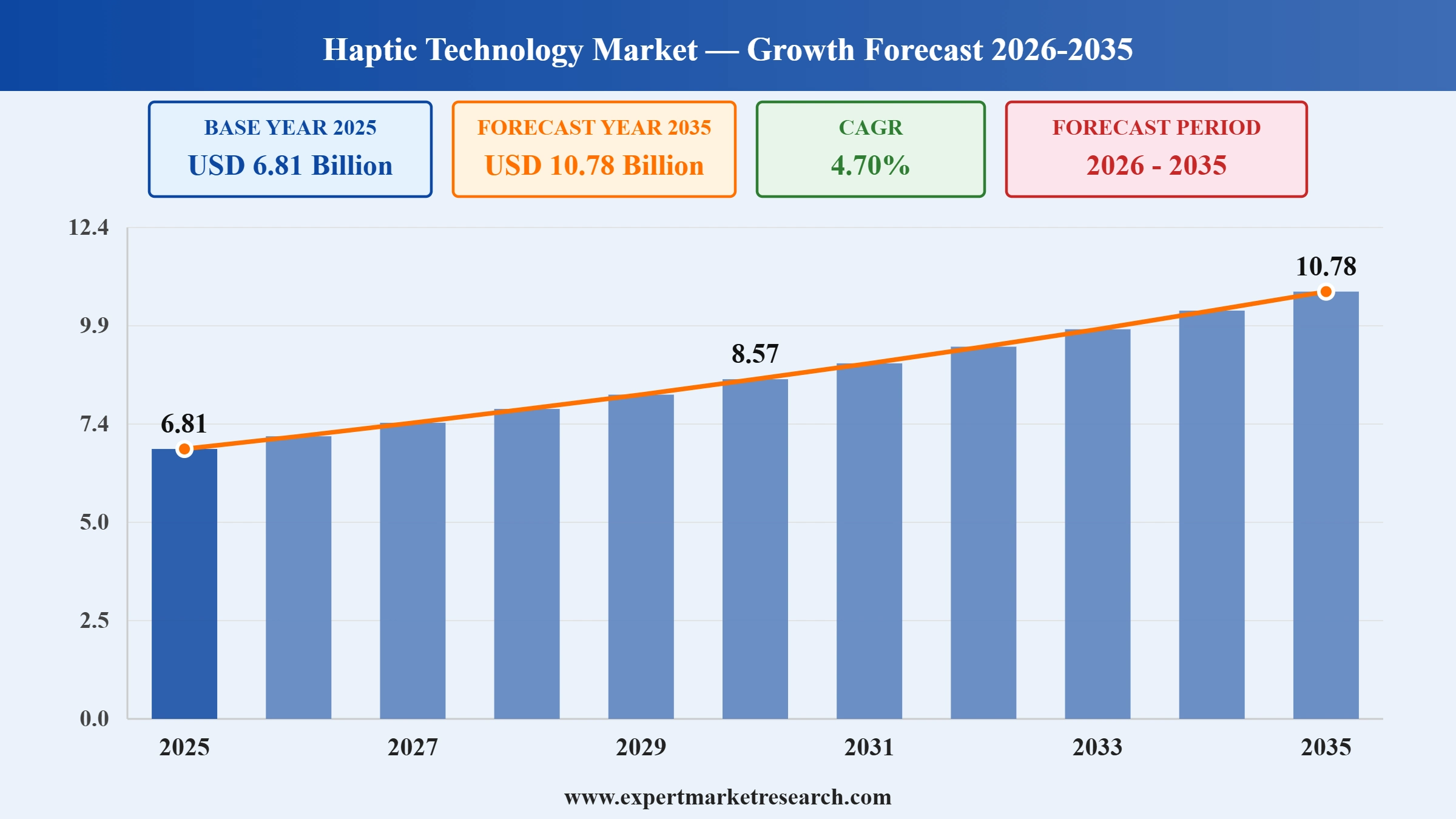
The haptic technology market was valued at USD 6.81 Billion in 2025. The market is expected to grow at a CAGR of 4.70% during the forecast period of 2026-2035 to reach a value of USD 10.78 Billion by 2035. Rising integration of tactile feedback technologies in smartphones, gaming devices, automotive systems, healthcare equipment, and virtual reality platforms is driving development in the market. Technology companies are developing advanced actuators, force feedback systems, and programmable haptic interfaces to deliver more immersive and responsive user experiences.
The global haptic technology market is growing due to the accelerating integration of tactile feedback systems across smartphones, gaming controllers, automotive human-machine interfaces, virtual reality platforms, wearable devices, and medical simulation equipment. Consumer demand for immersive and intuitive digital experiences is compelling device manufacturers to invest in advanced haptic actuators and programmable feedback systems that go beyond simple vibration alerts to deliver nuanced, context-sensitive physical sensations. The gaming sector is a particularly powerful demand driver, with total global gaming expenditure reaching USD 246 billion in 2025 according to industry estimates, and mobile, console, and PC gaming platforms all incorporating progressively sophisticated haptic feedback to replicate real-world physical sensations across gameplay interactions.
Technological convergence is a second major growth driver, as haptic technology increasingly intersects with artificial intelligence, 5G connectivity, robotics, IoT, and extended reality platforms to unlock new commercial applications. NTT DOCOMO and Keio University demonstrated in March 2026 the world's first high-precision commercial 5G robot teleoperation using Real Haptics force-feedback technology, illustrating how low-latency network infrastructure is enabling haptic systems to be deployed in remote surgery, industrial robotics, and telemedicine at practical commercial scale. The software component of the market is projected to be the fastest-growing at a CAGR of 15.8% through 2035, reflecting the shift toward programmable, software-defined haptic experiences that can be updated and customized across existing hardware platforms without requiring physical actuator redesign.
Read more about this report - REQUEST FREE SAMPLE COPY IN PDF
| Haptic Technology Market Report Summary | Description | Value |
| Base Year | USD Billion | 2025 |
| Historical Period | USD Billion | 2019-2025 |
| Forecast Period | USD Billion | 2026-2035 |
| Market Size 2025 | USD Billion | 6.81 |
| Market Size 2035 | USD Billion | 10.78 |
| CAGR 2019-2025 | Percentage | XX% |
| CAGR 2026-2035 | Percentage | 4.70% |
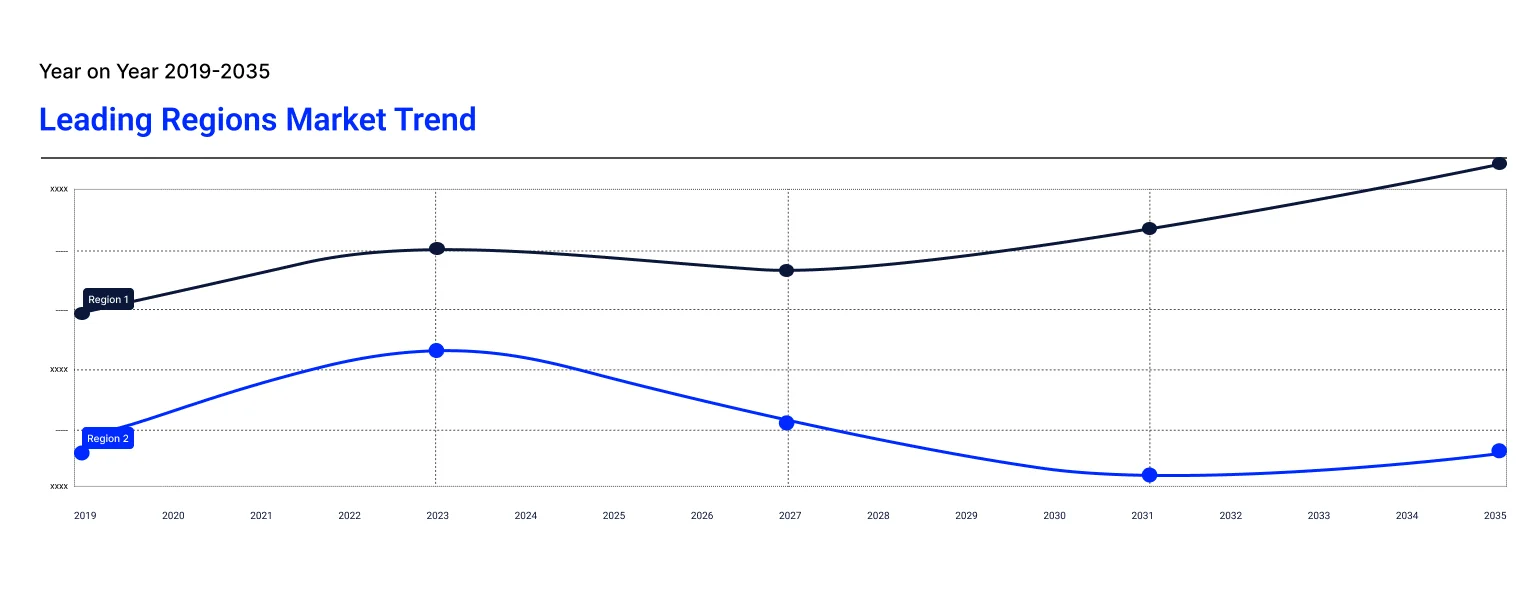
| CAGR 2026-2035 - Market by Region | North America | 15.3% |
| CAGR 2026-2035 - Market by Country | USA | 15.4% |
| CAGR 2026-2035 - Market by Country | UK | 15.2% |
| CAGR 2026-2035 - Market by Component | Software | 15.8% |
| CAGR 2026-2035 - Market by Feedback | Tactile | 14.7% |
| Market Share by Country 2025 | Italy | 2.6% |
Haptic technology simulates the sense of touch through vibrations or other sensations, serving as an interface between the user and the device. It delivers tactile or force feedback, enhancing user experience, thus, driving the demand of the haptic technology market. Haptics find wide applications and are known to enhance the user experience by engaging sound, light, and touch, especially in joysticks, controllers, and steering wheels in video games.
With growing digitisation and increasing penetration and usage of internet-enabled devices, the demand for haptic technologies is expected to grow in the coming years, especially in the Asia Pacific region. Additionally, technological advancements are expected to drive the haptic technology market forward. Early adoption of technology and rapid advancements in the field have provided impetus to the haptic technology industry growth.
Furthermore, research and development activities across the globe and the drive to develop newer applications for haptic technology are expected to drive the industry forward. Changing lifestyles coupled with an increasing demand for touchscreens for enhanced consumer experience are expected to bolster the growth of the haptic technology market.
According to the Industry report of 2020, consumer electronics ownership trends showed steady and increasing patterns globally. Smartphone ownership remained constant at 89% from 2019 to 2020. Smart TV ownership saw a notable rise from 51% in 2019 to 56% in 2020, while smart home devices (excluding smart speakers) increased from 18% to 22%. The smartwatch market also expanded, with ownership growing from 15% in 2019 to 20% in 2020. Smart speaker penetration went up from 26% in 2019 to 31% in 2020, and tablet ownership rose from 51% to 55%.
Desktop computer ownership saw a modest increase from 43% in 2019 to 44% in 2020, while laptop ownership rose notably from 62% to 66%. By 2020, 25% of consumers had tried VR technology, with 75% of them having a positive experience. This growing interest in VR, coupled with the benefits of haptic technology, which adds tactile feedback to enhance immersion, is driving the haptic technology market revenue.
According to MSIM estimates from June 2020, video game spending in 2019 totalled USD 194 billion, with mobile gaming contributing USD 85 billion, console gaming USD 54 billion, and PC gaming USD 55 billion globally. By 2020, total spending rose to USD 205 billion, with mobile gaming at USD 94 billion, console gaming at USD 55 billion, and PC gaming steady at USD 56 billion. The upward trend continued in 2021, reaching USD 214 billion in total spending. Mobile gaming further increased to USD 108 billion, console gaming stayed at USD 56 billion, and PC gaming grew to USD 58 billion. In 2022, total spending climbed to USD 224 billion, with mobile gaming at USD 114 billion, console gaming at USD 58 billion, and PC gaming at USD 60 billion.
As per industry reports, total gaming expenditure stood at USD 237 billion in 2023, with mobile gaming accounting for USD 119 billion, console gaming at USD 57 billion, and PC gaming at USD 61 billion. By 2024, total spending is expected to rise to USD 242 billion, with mobile gaming increasing to USD 125 billion, console gaming remaining at USD 57 billion, and PC gaming growing to USD 62 billion. In 2025, total spending is forecast to reach USD 246 billion, with mobile gaming continuing to lead at USD 125 billion, console gaming slightly increasing to USD 58 billion, and PC gaming rising to USD 63 billion. This growth in gaming expenditure supports the haptic technology industry revenue as it enhances gaming experiences through tactile feedback that replicates real-world sensations.
Read more about this report - REQUEST FREE SAMPLE COPY IN PDF
The Expert Market Research's report titled “Haptic Technology Market Report and Forecast 2026-2035" offers a detailed analysis of the market based on the following segments:
Market Breakup by Technology
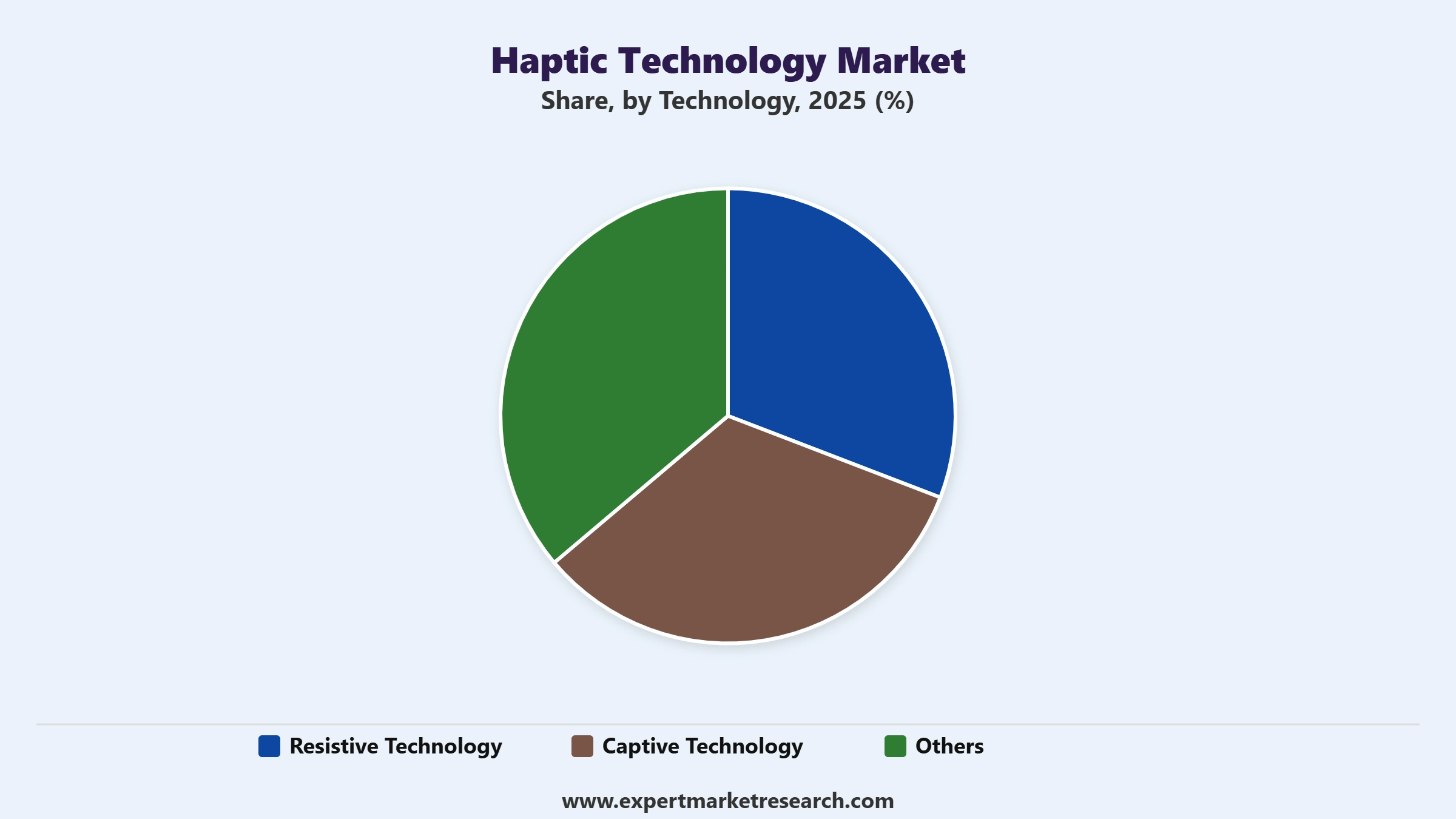
Key Insight: Resistive technology holds the largest share in the haptic technology market, widely integrated into touchscreen interfaces across smartphones, tablets, and automotive HMI systems due to its cost efficiency at high production volumes. Captive technology, which uses electrostatic principles to generate programmable surface textures and tactile effects on flat display panels without mechanical actuators, is gaining traction in premium automotive cockpit and professional simulation applications. Mid-air ultrasound haptics, pioneered by companies including Ultraleap Limited, represents an emerging third technology category expanding the market beyond contact-based feedback into touchless gesture interfaces for automotive, retail, and healthcare kiosks.
Market Breakup by Component
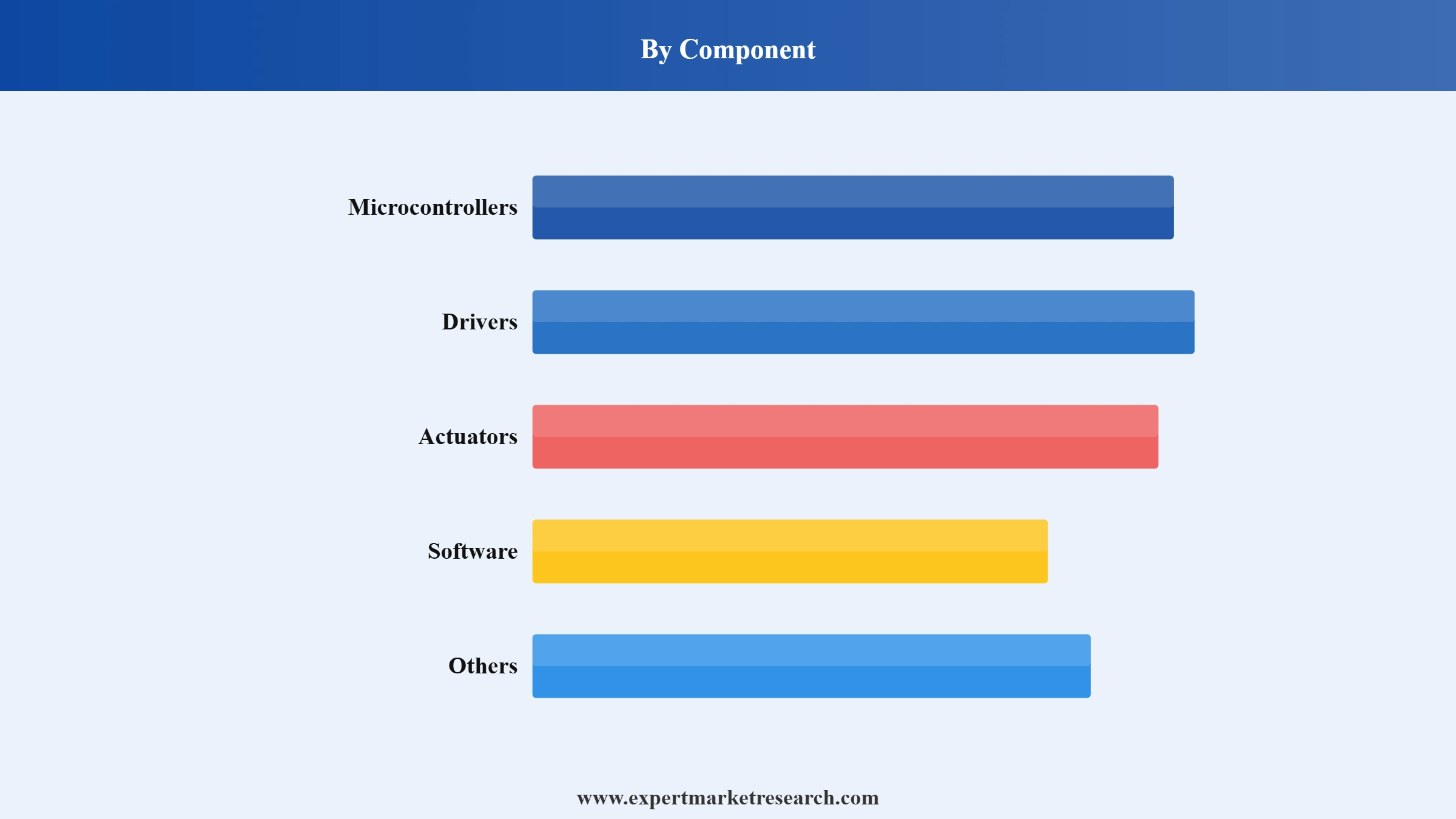
Key Insight: Actuators hold the largest component share as the core hardware element physically generating tactile or force feedback across all haptic-enabled devices, with linear resonant actuators dominating consumer electronics and piezoelectric actuators commanding premium medical and industrial applications. Software is the fastest-growing component segment, projected at a CAGR of 15.8% through 2035, as programmable haptic engines and licensing-based effect libraries allow device manufacturers to differentiate user experiences and deliver over-the-air feedback updates independently of hardware redesign. Immersion Corporation's licensing model with Samsung Electronics illustrates the growing commercial value of software-layer haptic intellectual property as a scalable, high-margin revenue stream across global consumer electronics supply chains.
Market Breakup by Feedback
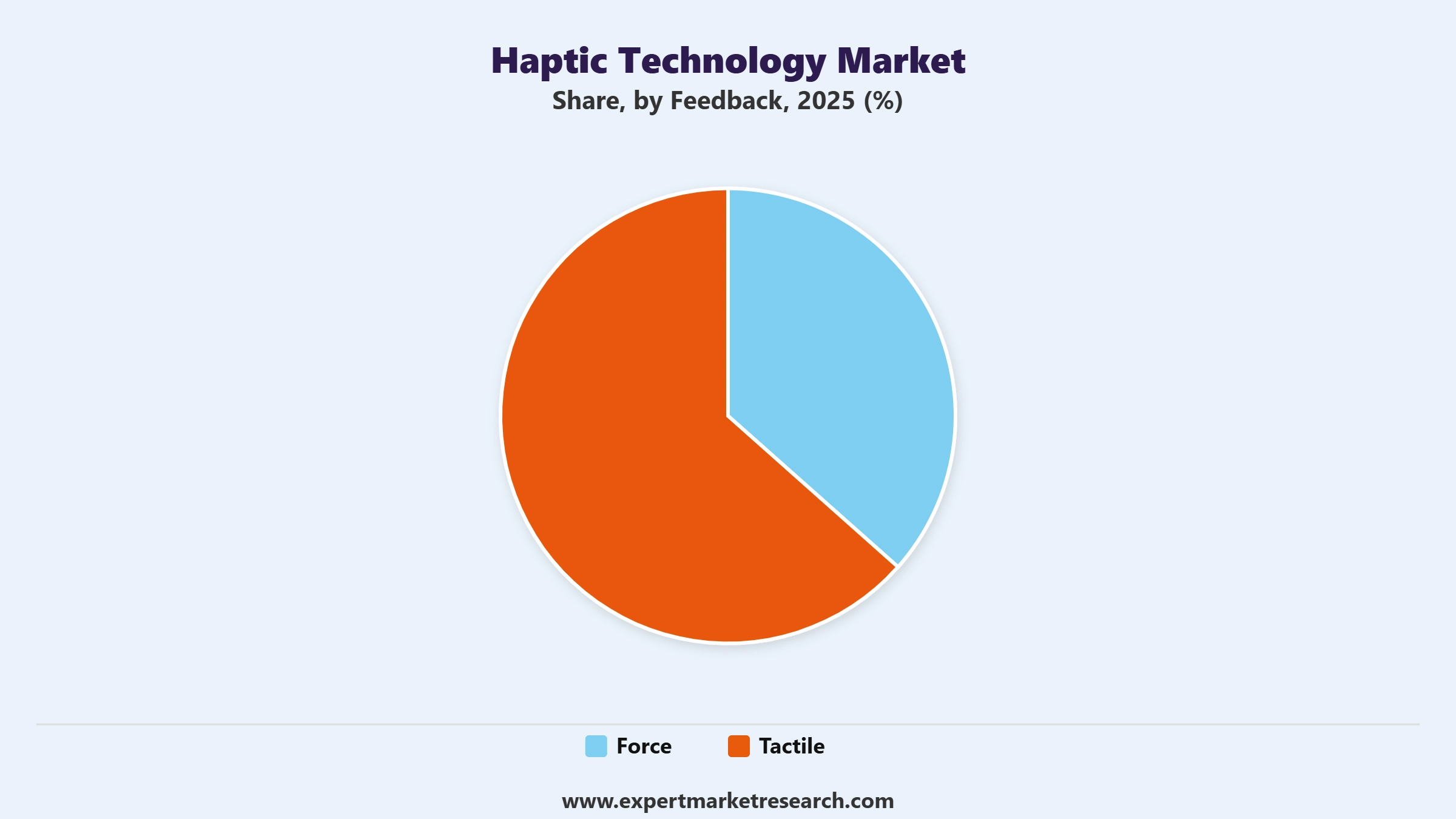
Key Insight: Tactile feedback holds the largest share and is the fastest-growing feedback segment at a projected CAGR of 14.7% through 2035, driven by widespread integration into smartphones, gaming controllers, automotive touchscreens, and wearables where localized vibration and surface pressure simulation define the primary haptic user interaction. Force feedback holds a smaller but significantly higher unit value share, concentrated in professional applications including surgical simulation systems, industrial robotic teleoperation, and flight and vehicle driving simulators where motorized physical resistance and load simulation are critical to functional and regulatory performance standards. The March 2026 demonstration by NTT DOCOMO and Keio University of commercial 5G robot teleoperation using Real Haptics force-feedback technology represents a landmark milestone in the practical deployment of force feedback beyond laboratory environments.
Market Breakup by Application
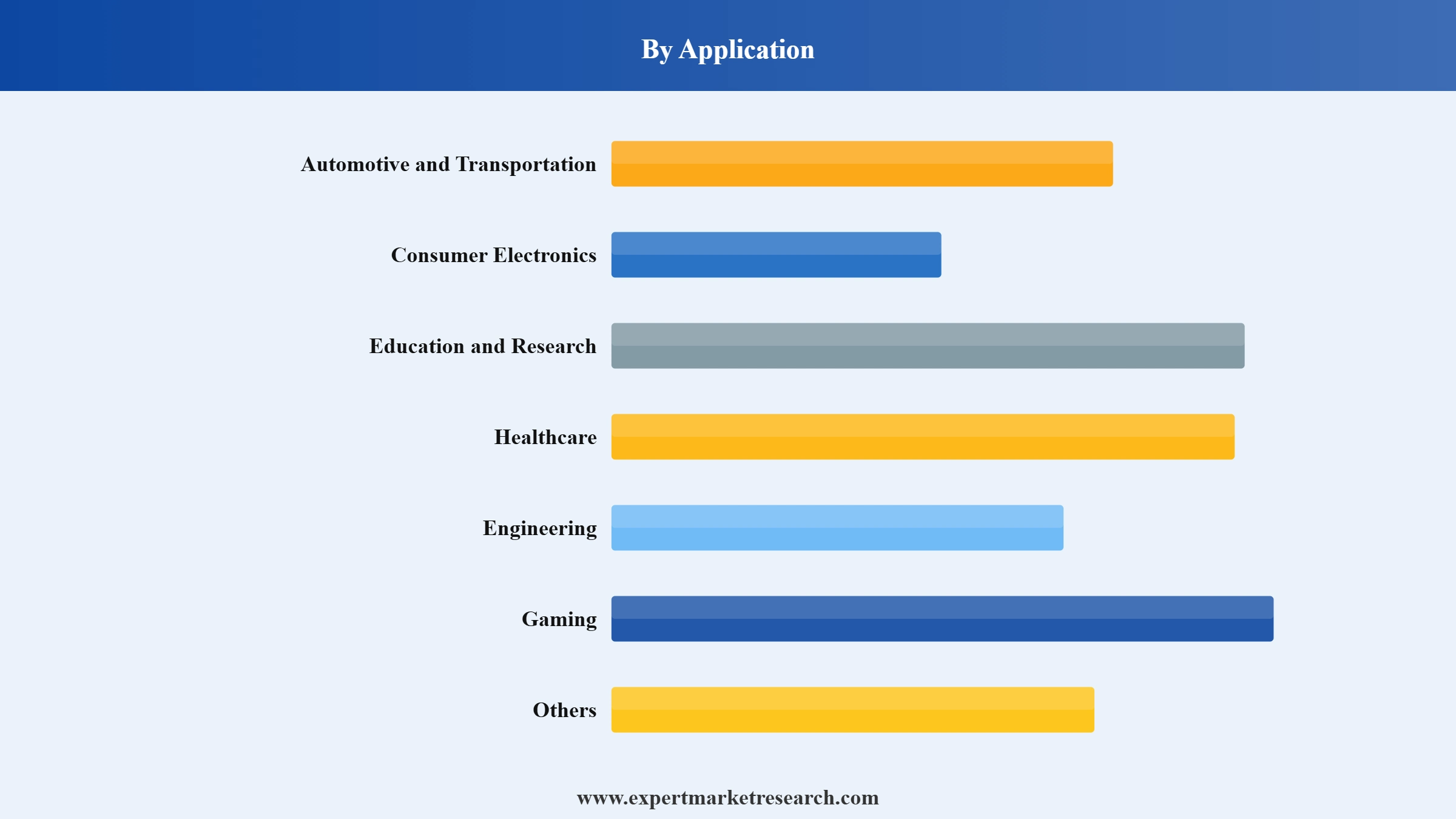
Key Insight: Gaming holds the largest application share, driven by the integration of advanced haptic systems including adaptive triggers and localized feedback in console controllers, gaming headsets, and VR peripherals for a global market with total gaming expenditure of USD 246 billion in 2025. Consumer electronics is the second largest application segment through smartphone, tablet, and wearable haptic actuator integration at scale. Healthcare is the fastest-growing and highest unit-value application segment, supported by rising demand for surgical training simulation, robotic surgery platforms, and haptic-enabled rehabilitation therapy devices. Automotive and transportation is a significant and accelerating segment as vehicles replace physical controls with haptic-enabled touchscreen HMI systems requiring tactile confirmation feedback under EU and U.S. driver distraction regulations.
Market Breakup by Region
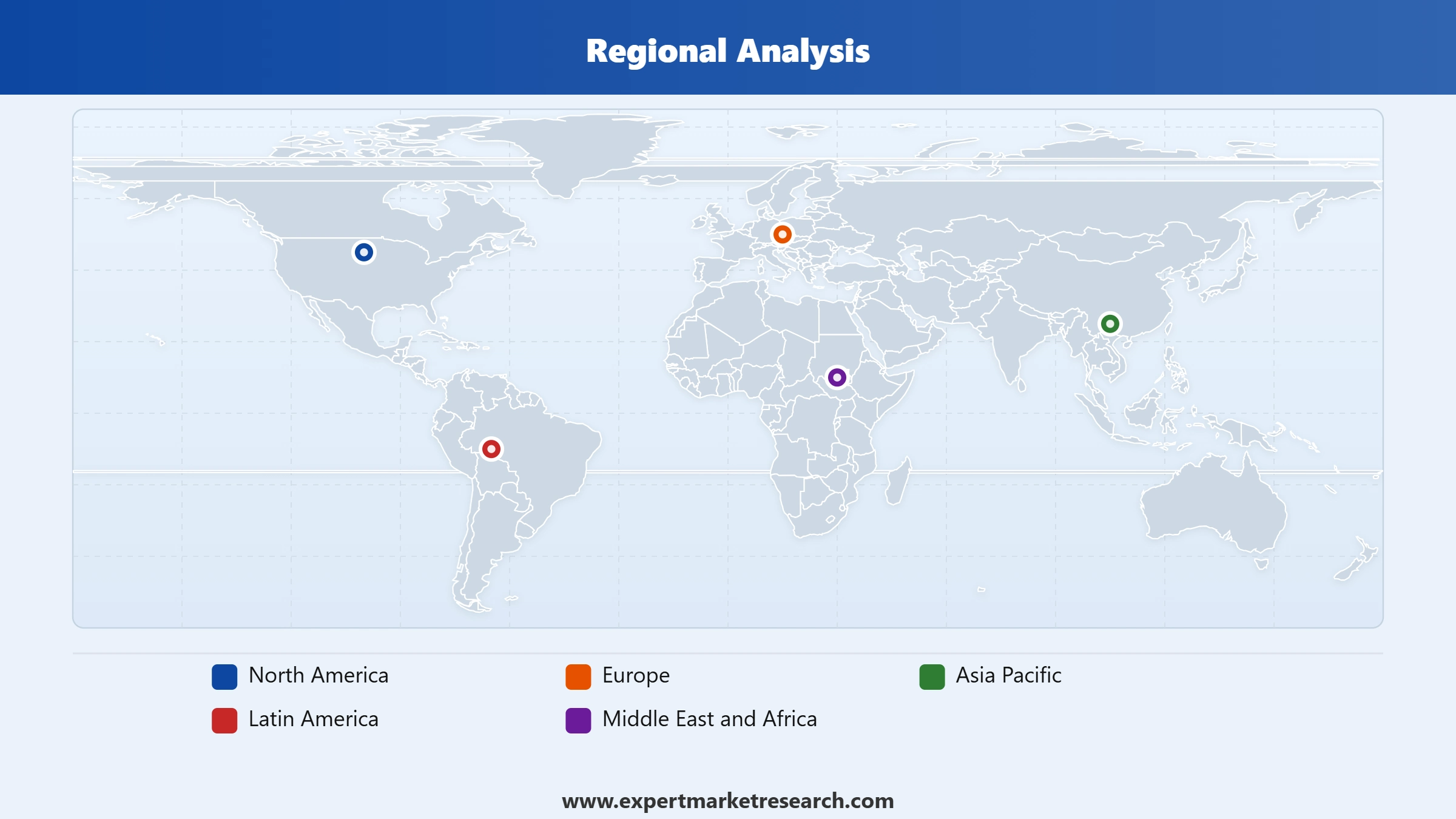
Key Insight: North America is the fastest-growing regional market at a CAGR of 15.3% through 2035, led by the United States at 15.4%, driven by leading haptic technology companies, a large premium gaming consumer base, and strong institutional healthcare and robotics demand. Asia Pacific holds the largest total market volume, anchored by China, Japan, South Korea, and Taiwan's dominance in consumer electronics manufacturing, where haptic actuators are integrated at scale across smartphones, tablets, and gaming devices. Europe is a mature innovation-active market led by the United Kingdom at 15.2% and Germany at 14.1% CAGR, driven by automotive HMI integration and medical simulation adoption. Latin America, led by Brazil at 13.2% CAGR, and the Middle East and Africa, led by Saudi Arabia at 12.8% CAGR, represent emerging high-growth corridors supported by gaming adoption, healthcare infrastructure investment, and smart city development programs.
By Technology: Captive Technology Gains Ground Against Resistive in Premium Applications
Resistive technology holds the largest share in the haptic technology market due to its established integration within touchscreen interfaces across smartphones, tablets, and automotive HMI systems where cost-efficiency at scale is a primary procurement requirement. Captive technology, which uses electrostatic principles to create surface texture and tactile effects directly on flat display surfaces without mechanical actuators, is gaining market share in premium automotive cockpit and professional simulation applications where ultra-thin form factors and programmable surface texture are commercially differentiated features. The ongoing development of new haptic modalities including ultrasound-based mid-air haptics by companies including Ultraleap Limited represents an emerging technology category that is expanding the total addressable market beyond contact-based feedback.
Read more about this report - REQUEST FREE SAMPLE COPY IN PDF
By Component: Actuators Lead While Software Is the Fastest-Growing Segment
Actuators hold the largest component share in the global haptic technology market as the core hardware element that physically generates tactile or force feedback in all haptic-enabled devices. Linear resonant actuators and eccentric rotating mass motors dominate volume-driven consumer electronics and gaming applications, while piezoelectric actuators command the premium segment for medical simulation and precision industrial haptic devices. Software is the fastest-growing component segment at a projected CAGR of 15.8% through 2035, as programmable haptic engines and licensing-based haptic effect libraries allow device manufacturers to differentiate user experiences and update feedback profiles independently of hardware redesign.
Read more about this report - REQUEST FREE SAMPLE COPY IN PDF
By Feedback: Tactile Feedback Leads with Force Feedback Dominating Healthcare and Robotics
Tactile feedback holds the largest share and is the fastest-growing feedback segment, projected at a CAGR of 14.7% through 2035, driven by its broad deployment across consumer electronics, automotive touchscreens, gaming peripherals, and wearable devices where localized vibration and pressure simulation are the primary haptic interaction mode. Force feedback holds a smaller but higher unit value share, concentrated in professional applications including surgical simulation systems, industrial robotic teleoperation platforms, and flight and driving simulators where the physical resistance and load simulation capabilities of motorized force feedback systems are critical to functional performance and regulatory compliance.
Read more about this report - REQUEST FREE SAMPLE COPY IN PDF
By Application: Gaming Leads Volume While Healthcare Commands Highest Unit Value
Gaming holds the largest application share in the global haptic technology market, driven by the integration of advanced rumble motors, adaptive triggers, and localized haptic feedback systems across console controllers, gaming headsets, and VR peripherals for a global gaming market with total expenditure of USD 246 billion in 2025. Consumer electronics represents the second largest application segment through the integration of haptic actuators in smartphones, tablets, and wearables. Healthcare is a high-value and fast-growing application segment, supported by growing demand for surgical training simulation, robotic surgery platforms, and rehabilitation therapy devices incorporating force and tactile feedback. Automotive and transportation is a significant and growing segment as vehicles transition from physical controls to haptic-enabled touchscreen HMI systems.
Read more about this report - REQUEST FREE SAMPLE COPY IN PDF
North America: Fastest-Growing Region Driven by Gaming, Healthcare, and Robotics Innovation
North America is the fastest-growing regional market for haptic technology, projected at a CAGR of 15.3% through 2035, led by the United States at 15.4%. The region benefits from the presence of leading haptic technology companies including Immersion Corporation and 3D Systems, Inc., a large and technologically sophisticated gaming consumer base, and advanced healthcare and surgical robotics sectors with strong institutional demand for high-fidelity force feedback simulation systems. Government and private sector investment in robotics and telemedicine infrastructure is additionally driving demand for commercially deployable haptic teleoperation platforms that benefit from the U.S. leadership in 5G network deployment and AI integration.
Europe: Innovation-Active Market Led by Automotive HMI and Medical Simulation Demand
Europe is a mature and innovation-active haptic technology market, led by the United Kingdom at a projected CAGR of 15.2% and Germany at 14.1% through 2035. The European automotive industry is a significant driver of haptic actuator demand, as German, French, and Italian automakers integrate tactile feedback into touchscreen-dominated vehicle cabin designs to maintain driver safety standards under EU human-machine interface regulations. The medical simulation and surgical robotics sectors in the UK, Germany, and Switzerland are active adopters of high-precision force feedback haptic devices for clinical training and minimally invasive procedure development, supporting premium-tier market growth within the region.
Asia Pacific: Largest Market by Volume Anchored by Consumer Electronics Manufacturing
Asia Pacific holds the largest total market volume for haptic technology, driven by the world's highest concentration of consumer electronics manufacturing across China, Japan, South Korea, and Taiwan, where haptic actuators and drivers are integrated at scale into smartphones, tablets, gaming controllers, and wearables. China is the single largest national market within the region, supported by its dominant position in global consumer electronics production and a rapidly expanding domestic gaming and virtual reality consumer base. Japan leads in haptic innovation for robotics and automotive applications, as demonstrated by NTT DOCOMO and Keio University's landmark 5G haptic robot teleoperation demonstration in March 2026.
Latin America: Emerging Market with Gaming and Consumer Electronics Leading Adoption
Latin America represents an emerging regional market for haptic technology, led by Brazil at a projected CAGR of 13.2% through 2035 and Mexico as the second significant national market. Gaming peripheral adoption and smartphone penetration across Brazil and Mexico are the primary demand drivers, as growing middle-class consumer bases in both countries invest in premium gaming experiences and feature-rich mobile devices that incorporate haptic feedback. Automotive manufacturing integration in Mexico, particularly within North American supply chain frameworks under USMCA, is generating demand for automotive HMI haptic components across Tier 1 supplier facilities. Market penetration remains limited relative to North America and Europe, constrained by lower per-capita technology spending and underdeveloped healthcare simulation infrastructure.
Middle East and Africa: High-Potential Region Driven by Healthcare Investment and Smart City Development
The Middle East and Africa region represents a high-potential emerging market for haptic technology, with Saudi Arabia carrying a projected country-level CAGR of 12.8% through 2035, the highest within the region. Saudi Arabia's Vision 2030 program is investing heavily in healthcare infrastructure modernization, medical simulation training facilities, and smart city technology deployment, all of which create institutional demand for advanced haptic systems across surgical training, rehabilitation, and interactive public technology applications. The UAE is an active technology adopter across gaming, entertainment, and automotive sectors in its major urban centers. Africa's mobile-first consumer base and expanding gaming culture represent a long-term demand corridor for entry-level haptic-enabled consumer electronics as smartphone penetration continues to deepen across the continent.
Read more about this report - REQUEST FREE SAMPLE COPY IN PDF
The companies specialise in motion subsystems and associated technologies, offering innovative solutions for automotive, industrial, and consumer markets.
The haptic technology market faces persistent technical and commercial challenges that slow broader adoption across its target application sectors. Delivering high-fidelity and consistently precise haptic feedback across diverse use cases and form factors remains technically demanding, as the physical constraints of compact consumer devices limit the size, power consumption, and mechanical travel of embedded actuators. In healthcare and surgical robotics applications, achieving sufficient force resolution and transmission stability over wireless networks for practical clinical deployment requires ongoing engineering refinement, as demonstrated by the multi-year research program between NTT DOCOMO and Keio University that culminated in the March 2026 MWC demonstration. Ecosystem fragmentation also presents a challenge, as automotive and medical original equipment manufacturers continue to rely on proprietary firmware stacks tied to specific hardware suppliers, limiting interoperability and raising integration costs across complex product development programs.
The high cost of developing and implementing advanced haptic systems presents the most significant structural restraint on market expansion, particularly among smaller technology companies and mid-market device manufacturers without dedicated hardware engineering resources. Consumer awareness of haptic technology capabilities and their practical benefits remains limited outside of gaming and premium smartphone categories, constraining demand in sectors including retail, education, and enterprise productivity software where haptic interfaces could meaningfully improve user experience. Standardization across the industry remains nascent, as the recently published ISO/IEC 23090-31 and IEEE 1918.1.1-2024 standards for parametric and wavelet haptic encoding have not yet achieved widespread adoption, prolonging the period of technological fragmentation that increases development costs for integrators and end users.
Substantial growth opportunities exist in the convergence of haptic technology with 5G connectivity, AI, and cloud computing platforms that enable remote haptic experiences at commercially viable latency levels for the first time. The integration of haptic feedback into IoT-connected consumer devices, industrial wearables, and smart home interfaces opens new market segments beyond traditional consumer electronics and gaming. The healthcare sector represents a high-value long-term opportunity, where growing demand for minimally invasive surgical training simulators, remote surgical robotics, and rehabilitation therapy devices with tactile feedback is creating a durable and price-insensitive application corridor for advanced force and tactile feedback systems. Emerging market adoption in Asia Pacific, driven by consumer electronics manufacturing investment in China and India, is additionally expanding the total addressable market for haptic actuators, drivers, and software platforms across the forecast period.


Upto 15% Off
USD
$2499 $2249
$3999 $3599
$4999 $4249
$5999 $5099


*While we strive to always give you current and accurate information, the numbers depicted on the website are indicative and may differ from the actual numbers in the main report. At Expert Market Research, we aim to bring you the latest insights and trends in the market. Using our analyses and forecasts, stakeholders can understand the market dynamics, navigate challenges, and capitalize on opportunities to make data-driven strategic decisions.*
The global haptic technology market value is assessed to grow at a CAGR of 4.70% between 2026 and 2035.
The major drivers of the market include increasing digitisation, and the rising demands for consumer electronics devices.
The key trends guiding the growth of the market include the increasing rural penetration of internet in emerging economies and rapid improvements in technologies.
The market is broken down into North America, Europe, Asia Pacific, Latin America, the Middle East, and Africa.
The leading technologies in the market are resistive technology and captive technology, among others.
The significant components in the market are microcontrollers, drivers, actuators, and software, among others.
Based on feedback the market is divided into force and tactile.
The various applications in the market are automotive and transportation, consumer electronics, education and research, healthcare, engineering, and gaming, among others.
The competitive landscape consists of Immersion Corporation, Johnson Electric Holdings Limited, Force Dimension, 3D Systems, Inc., and Ultraleap Limited, among others.
In 2025, the global haptic technology market reached an approximate value of USD 6.81 Billion.
The market is expected to witness healthy expansion and attain approximately USD 10.78 Billion by 2035.
Explore our key highlights of the report and gain a concise overview of key findings, trends, and actionable insights that will empower your strategic decisions.
| REPORT FEATURES | DETAILS |
| Base Year | 2025 |
| Historical Period | 2019-2025 |
| Forecast Period | 2026-2035 |
| Scope of the Report |
Historical and Forecast Trends, Industry Drivers and Constraints, Historical and Forecast Market Analysis by Segment:
|
| Breakup by Technology |
|
| Breakup by Component |
|
| Breakup by Feedback |
|
| Breakup by Application |
|
| Breakup by Region |
|
| Market Dynamics |
|
| Competitive Landscape |
|
| Companies Covered |
|
| Report Price and Purchase Option | Explore our purchase options that are best suited to your resources and industry needs. |
| Delivery Format | Delivered as an attached PDF and Excel through email, with an option of receiving an editable PPT, according to the purchase option. |
Datasheet
One User
USD 2,499
USD 2,249
tax inclusive*
Single User License
One User
USD 3,999
USD 3,599
tax inclusive*
Five User License
Five User
USD 4,999
USD 4,249
tax inclusive*
Corporate License
Unlimited Users
USD 5,999
USD 5,099
tax inclusive*
*Please note that the prices mentioned below are starting prices for each bundle type. Kindly contact our team for further details.*
Flash Bundle
Small Business Bundle
Growth Bundle
Enterprise Bundle
*Please note that the prices mentioned below are starting prices for each bundle type. Kindly contact our team for further details.*
Flash Bundle
Number of Reports: 3
20%
tax inclusive*
Small Business Bundle
Number of Reports: 5
25%
tax inclusive*
Growth Bundle
Number of Reports: 8
30%
tax inclusive*
Enterprise Bundle
Number of Reports: 10
35%
tax inclusive*
How To Order

Select License Type
Choose the right license for your needs and access rights.

Click on ‘Buy Now’
Add the report to your cart with one click and proceed to register.

Select Mode of Payment
Choose a payment option for a secure checkout. You will be redirected accordingly.
Strategic Solutions for Informed Decision-Making
Gain insights to stay ahead and seize opportunities.

Get insights & trends for a competitive edge.

Track prices with detailed trend reports.

Analyse trade data for supply chain insights.

Leverage cost reports for smart savings

Enhance supply chain with partnerships.

Connect For More Information
Our expert team of analysts will offer full support and resolve any queries regarding the report, before and after the purchase.
Our expert team of analysts will offer full support and resolve any queries regarding the report, before and after the purchase.
We employ meticulous research methods, blending advanced analytics and expert insights to deliver accurate, actionable industry intelligence, staying ahead of competitors.
Our skilled analysts offer unparalleled competitive advantage with detailed insights on current and emerging markets, ensuring your strategic edge.
We offer an in-depth yet simplified presentation of industry insights and analysis to meet your specific requirements effectively.




