

Consumer Insights
Uncover trends and behaviors shaping consumer choices today
Procurement Insights
Optimize your sourcing strategy with key market data
Industry Stats
Stay ahead with the latest trends and market analysis.
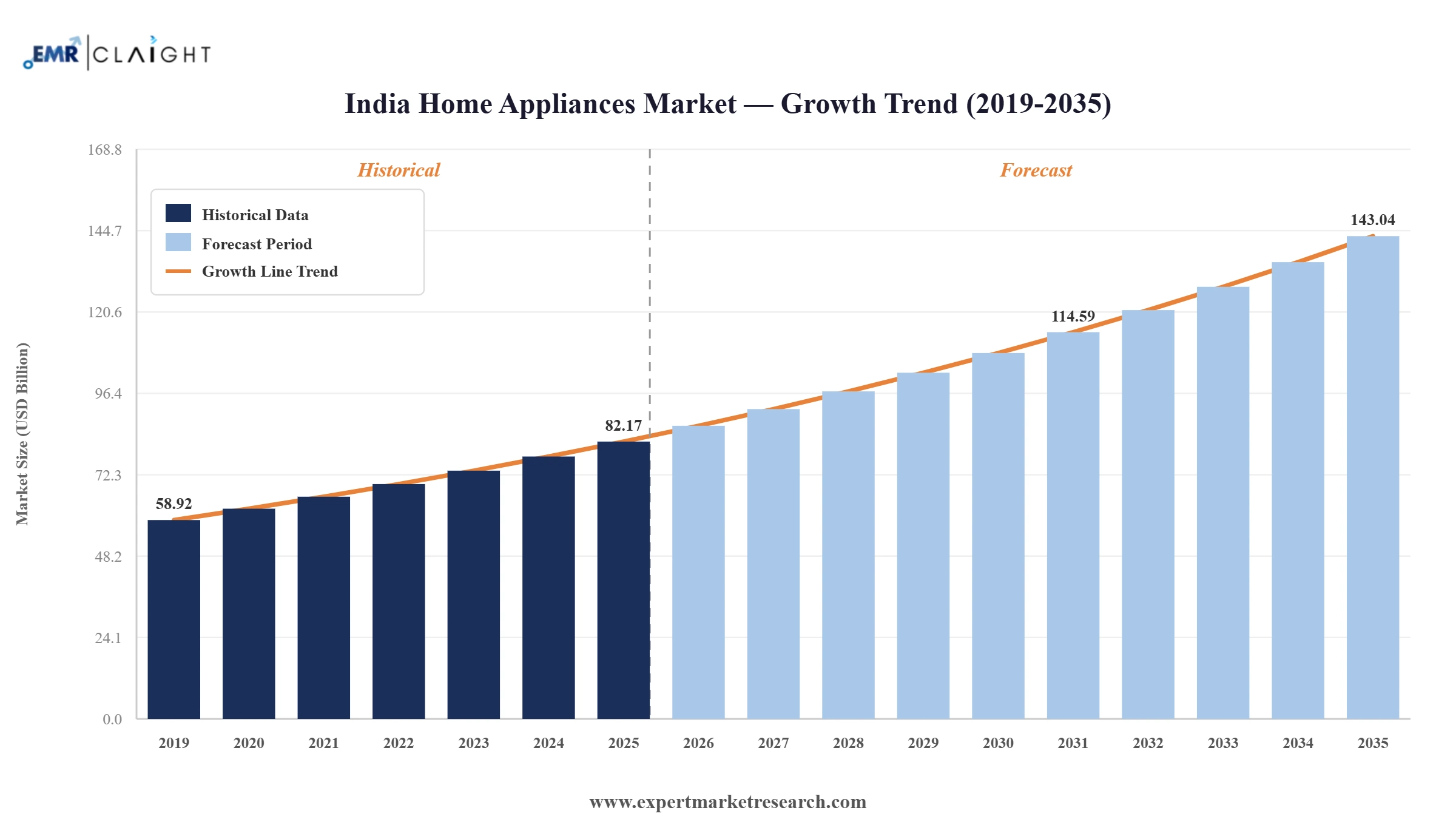
The India home appliances market size attained a value of USD 82.17 Billion in 2025. The market is expected to grow at a CAGR of 5.70% during the forecast period of 2026-2035. By 2035, the market is expected to reach USD 143.04 Billion.
Surging rate of smart appliance adoption is benefiting the India home appliances market share. Consumers are preferring appliances that can be controlled remotely while learning user habits and optimizing energy usage. In February 2025, Samsung launched its Bespoke AI refrigerator series to offer smart cooling with AI energy mode, Wi-Fi control, and personalized user settings. Smart air conditioners, washing machines with auto-dosing, and voice-activated kitchen devices have grown popular, especially amongst urban millennials. This shift is reflecting the rising tech-savviness and lifestyle expectations in income segments.
Energy efficiency and eco-consciousness are reshaping the India home appliances market dynamics by aligning consumer priorities with environmental and economic sustainability. In August 2023, Samsung became India’s first brand with a 5Star BEE side by side fridge, saving 444 kWh/year and cutting 359 kg CO₂. Government-led programs are also reinforcing these efforts via awareness campaigns by incentivizing the adoption of high-efficiency appliances.
The rising Ewaste pressure is complimenting the market revenue by driving companies to rethink product design, pricing, and compliance strategies. As per industry reports, India produced 1.7 million metric tons of e-waste in 2023-24. The government is also introducing mandatory minimum recycling rates for appliances, setting firms on edge. As a result, manufacturers are innovating to create eco-friendly designs, increase product lifespans, adopt modular components, and formalize recycling partnerships for reducing end-of-life costs, maintaining margins, and meeting regulatory expectations.
Read more about this report - REQUEST FREE SAMPLE COPY IN PDF
| India Home Appliances Market Report Summary | Description | Value |
| Base Year | USD Billion | 2025 |
| Historical Period | USD Billion | 2019-2025 |
| Forecast Period | USD Billion | 2026-2035 |
| Market Size 2025 | USD Billion | 82.17 |
| Market Size 2035 | USD Billion | 143.04 |
| CAGR 2019-2025 | Percentage | XX% |
| CAGR 2026-2035 | Percentage | 5.70% |
| CAGR 2026-2035 - Market by Region | North India | 6.5% |
| CAGR 2026-2035 - Market by Region | South India | 5.4% |
| CAGR 2026-2035 - Market by Price Range | Mid-Economy | 6.4% |
| CAGR 2026-2035 - Market by Distribution Channel | Online | 10.3% |
| 2025 Market Share by Region | North India | 31.9% |
Samsung introduced its Bespoke AI product line in India, including advanced refrigerators, ovens, and washing machines, powered by artificial intelligence and integrated with its SmartThings platform. This launch highlighted Samsung's commitment to the premium segment and tech-savvy consumers.
Kitchen appliances firm TTK Prestige disclosed plans to expand its retail footprint by 30% over the next four years, particularly targeting tier-2 and tier-3 cities. The company currently operates about 680 exclusive stores with aims to increase market reach by tapping into India’s growing middle-class demand for premium kitchen solutions.
Flipkart partnered with American brand Admiral to introduce its range of air conditioners, refrigerators, washing machines, and LED televisions in India, available in mid to premium segments. The products are sold via Flipkart’s marketplace, with aftersales support handled by Jeeves, Flipkart’s service arm.
Thomson launched its kitchen and home appliance lineup in India via Flipkart, featuring juicers, sandwich makers, electric cookers, geysers, room heaters, and dry/steam irons. This debut combined Thomson’s French heritage with local pricing and quality, facilitated by licensing partner LicenseWorks and ecommerce presence.
The rising incomes, driven by the surge in urban families and dual-income households is driving the India home appliances market by boosting the purchases of both premium and basic appliances. As per industry reports, the per capita income of India more than doubled to reach over ₹2 lakh in 2025. With more households affording refrigerators, washing machines, and ACs, the market share is swelling, reflecting the heightened purchasing power and the shift towards lifestyle-enhancing products.
The strong urban sprawl and the influx of new residential complexes is contributing to the home appliances market share in India. The rapid infrastructure upgrades in Tier‑2/3 cities are leading to higher penetration of appliances. Ownership of modern homes is also rising, prompting significant demand for refrigerators, microwaves, and washing machines. Supporting with industry reports, the import of microwave ovens to India touched 15.726 million kgs in 2023. Home architecture trends are also supporting product uptake, with built-in ovens and dishwashers gaining preference.
Rapid technology advances are adding to the growth of the India home appliances market for transforming user experience, efficiency, and product value. Features, such as AI-powered controls, IoT connectivity, and smart diagnostics are reshaping consumer expectations. Appliances are offering remote access, energy optimization, personalized settings, and voice integration via various platforms. In February 2024, Panasonic introduced the first Matter-compatible air conditioners, supported by the Miraie app control in India. This tech-driven convenience is appealing mainly to urban, tech-savvy consumers and dual-income households, boosting demand across segments.
The rise of online platforms and quick-commerce deliveries for improving accessibility and convenience is fostering the India home appliances market development. E-commerce giants along with newer quick-commerce players are enabling consumers in urban and rural areas to access a wide range of appliances with discounts, zero-cost EMIs, and doorstep service. In March 2025, Blinkit started delivering Lloyd airconditioners within 10 minutes in DelhiNCR, with installation scheduled within 24 hours. This shift is reducing the reliance on physical stores while expanding the reach to remote regions and accelerating the purchase cycle.
The influx of programs, FDI liberalization, and rural electrification for propelling domestic appliance production is boosting the India home appliances industry growth. In June 2025, the government of Maharashtra inaugurated a 2 MW as well as a 10 MW solar plant in Akola for powering 2,595 farmers. Safety regulations are helping to limit low-quality Chinese imports while boosting local manufacturing quality. The government’s semiconductor push is also strengthening electronics value‑chain.
The EMR’s report titled “India Home Appliances Market Report and Forecast 2026-2035” offers a detailed analysis of the market based on the following segments:
Market Breakup by Type
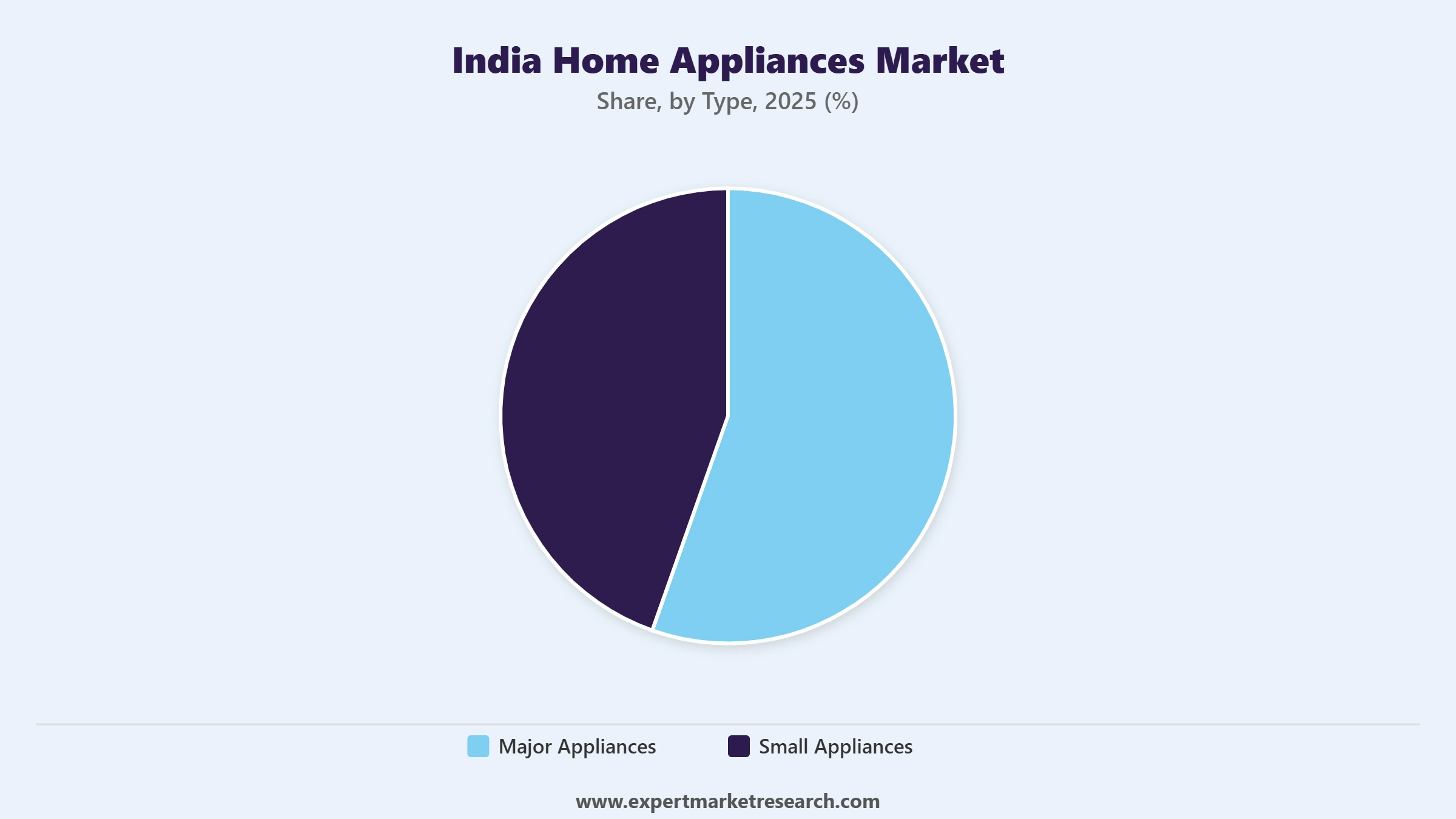
Key Insight: The major appliances segment is gaining traction in the India home appliances market. Refrigerators and washing machines are recording higher demand in both urban and semi-urban areas, with the presence of leading brands. Voltas and Blue Star dominate the air conditioner space, especially during summer surges. Dishwashing machines, though niche, are attaining traction in metro cities. Ovens and freezers are commonly adopted in both homes and small businesses. Ongoing launches are highlighting the growing innovation and consumer preference for smart, energy-efficient solutions. For instances, in March 2025, Acerpure India introduced Acerpure Chill Conditioners, an innovation in home cooling solutions for catering to the cooling requirements of Indian households.
Market Breakup by Price Range
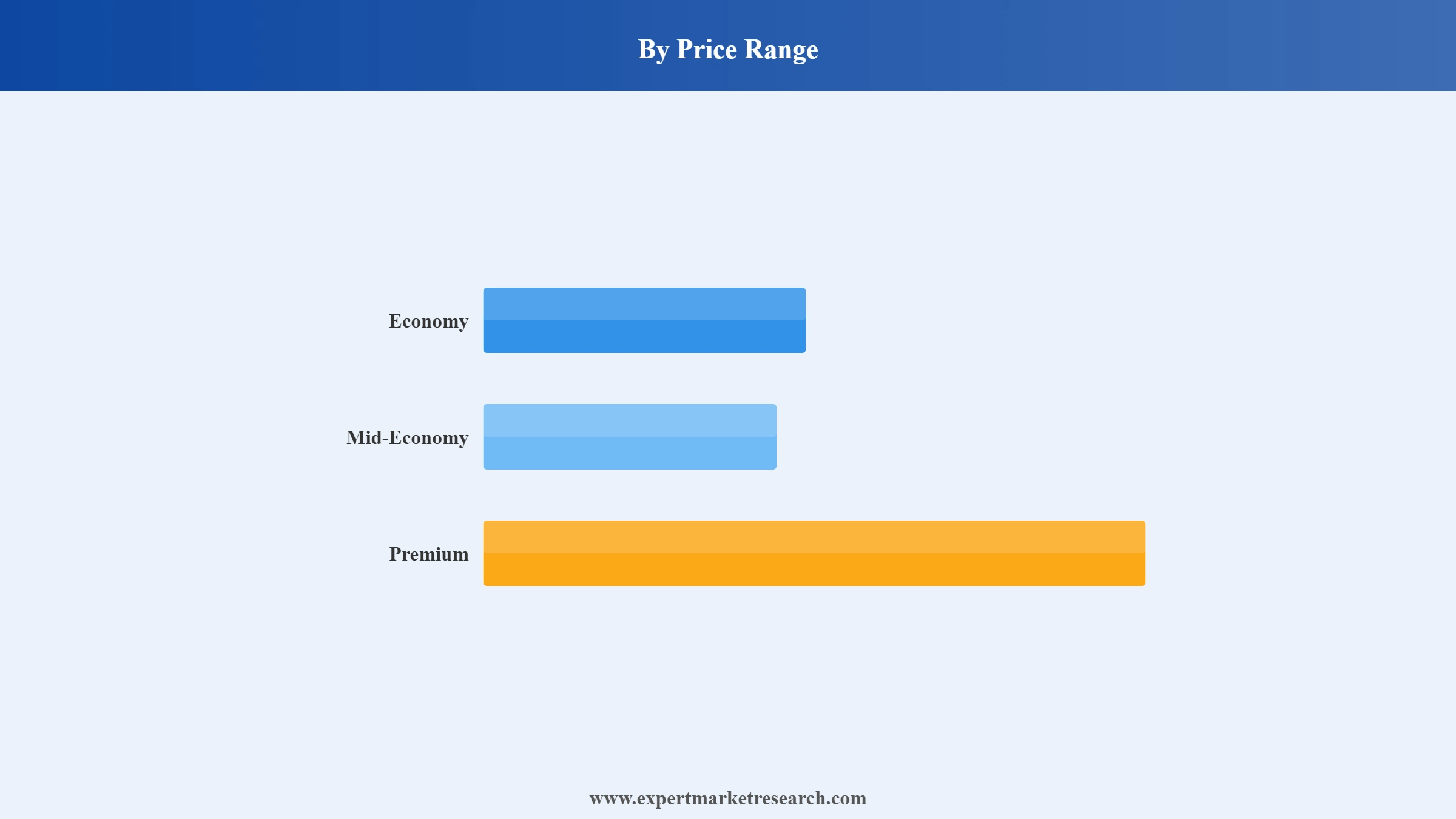
Key Insight: The mid-economy segment leads the India home appliances market for catering to the expanding middle class population. As per industry reports, Indian middle class is expected to nearly double to 61% by 2046 or 2047. Consumers in this segment are prioritizing value-for-money, energy efficiency, and durable products. Brands, such as LG, Samsung, Whirlpool, and Godrej are dominating this space by offering a balance of affordability and performance. Retailers including Flipkart and Amazon are enabling greater access via easy financing and festive discounts, making this segment competitive.
Market Breakup by Distribution Channels
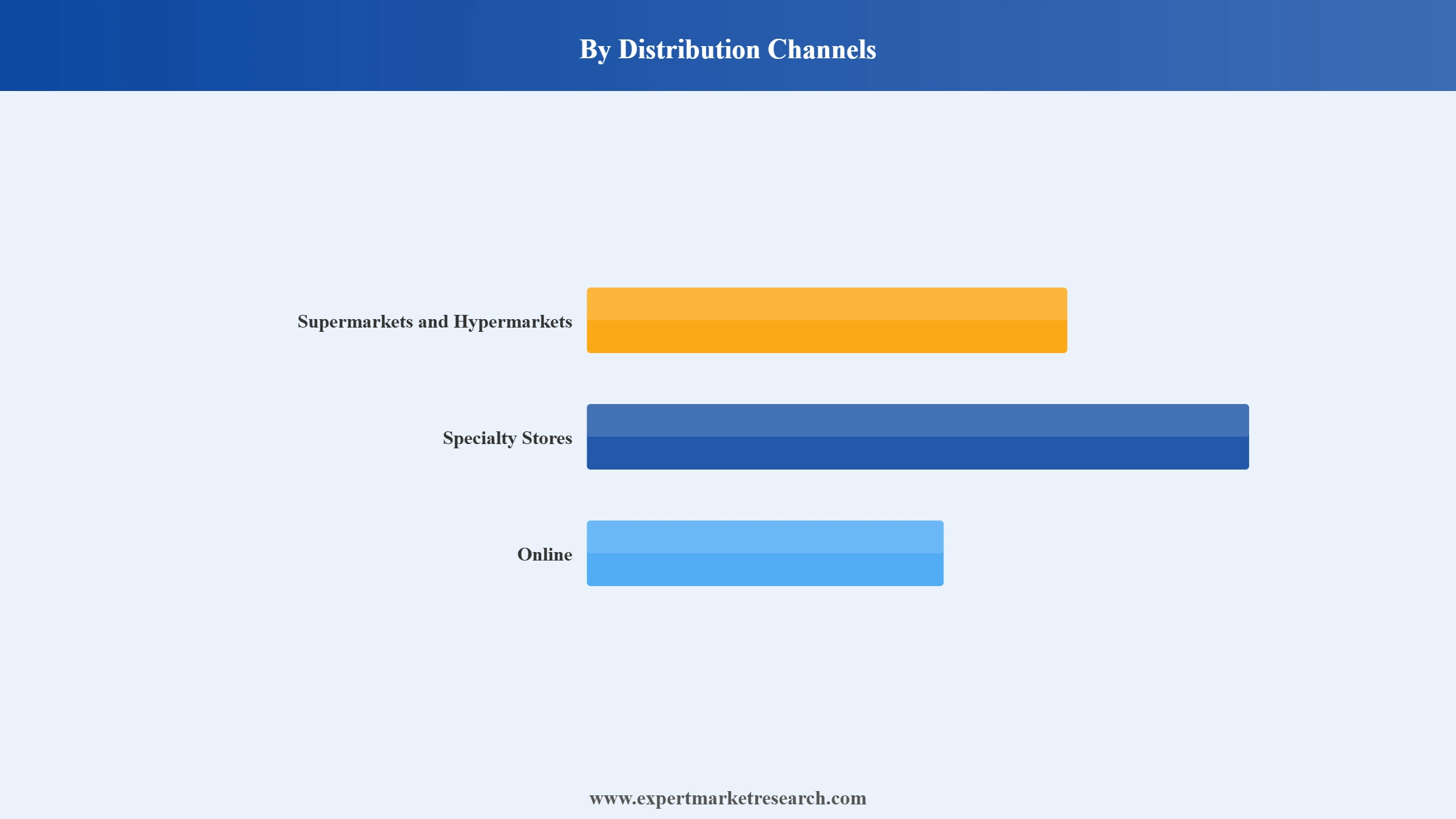
Key Insight: The online segment is a rapidly growing distribution channel of the home appliances market in India. Consumers are increasingly preferring to buy appliances online due to detailed product information, customer reviews, and easy EMI schemes. Brands are also actively promoting their products via exclusive online launches and discounts. In January 2023, Panasonic launched its prime convertible refrigerators with advanced cooking modes on its D2C platform and Amazon. Tier-2 and tier-3 cities are also becoming significant contributors to online sales growth, making digital retail the most accessible channel nationwide.
Market Breakup by Region
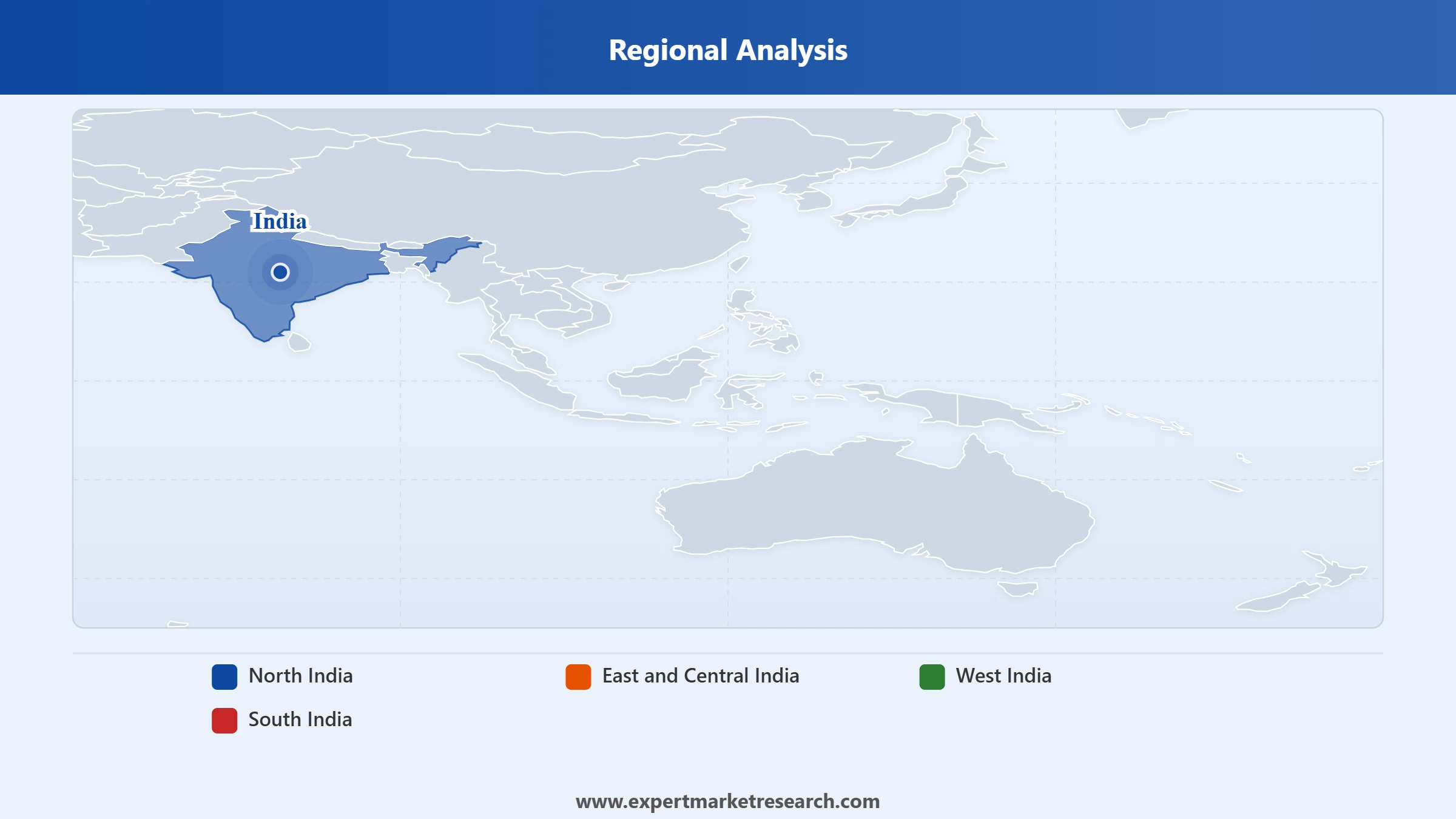
Key Insight: South India dominates the India home appliances market, driven by higher urbanization, technological adoption, and disposable incomes. Bengaluru, Chennai, and Hyderabad have emerged as key demand centers for smart appliances and energy-efficient products. In August 2023, Croma opened its 300th store in Chennai, marking major expansion with 100 new outlets this year. Retail chains and local brands are witnessing high footfall in South Indian metros, while digital adoption is fueling online sales. The region’s tech-savvy consumers are further boosting the demand for smart home solutions significantly.
Read more about this report - REQUEST FREE SAMPLE COPY IN PDF
| CAGR 2026-2035 - Market by | Price Range |
| Mid-Economy | 6.4% |
| Premium | 5.4% |
| Economy | XX% |
| CAGR 2026-2035 - Market by | Distribution Channel |
| Online | 10.3% |
| Specialty Stores | 5.5% |
| Supermarkets and Hypermarkets | XX% |
| Others | XX% |
| CAGR 2026-2035 - Market by | Region |
| North India | 6.5% |
| South India | 5.4% |
| East and Central India | XX% |
| West India | XX% |
Small Home Appliances to Witness Huge Adoption in India
The small appliances segment in the India home appliances industry is driven by rising urbanization, health consciousness, and compact living spaces. Brands, such as Philips and Kent are leading in air and water purifiers, especially in metro cities facing pollution and water quality issues. Vacuum cleaners are gaining traction with robotic models. For instance, in August 2023, Dyson introduced its first all inone wet and dry cordless vacuum in India, featuring an illuminating Fluffy cleaning head and wet-cleaning capability. Food processors and grills from companies witnessing consistent demand for modern kitchens. The segment also benefits from festive sales, online promotions, and increasing consumer preference for convenience and hygiene.
Read more about this report - REQUEST FREE SAMPLE COPY IN PDF
Surging Demand for Economy & Premium Home Appliances in India
The economy segment of the India home appliances industry caters to budget-conscious consumers, primarily in rural and semi-urban areas. Several brands and local players are targeting this segment to offer affordable washing machines, air coolers, and refrigerators. The demand is further driven by the increasing rural electrification and government schemes for promoting housing and basic amenities. Flipkart and offline distributors are helping to reach remote areas, often supported by EMI and buy-now-pay-later models. Products in this segment are also offering basic functionality, making them ideal for first-time buyers and low-income households.
The premium segment is growing steadily in the India home appliances market due to rising disposable incomes and urban lifestyle upgrades. Consumers are demanding smart, energy-efficient, and design-focused appliances. In June 2025, Daewoo partnered with EBG Group to launch premium and energy-efficient home appliances in India by leveraging advanced technology and wide distribution. Features, such as Wi-Fi connectivity, AI integration, and sleek aesthetics are key differentiators. High-end retail stores, experience centres, and premium e-commerce platforms cater to this audience.
Read more about this report - REQUEST FREE SAMPLE COPY IN PDF
Escalating Home Appliances Sales in Supermarkets and Hypermarkets & Specialty Stores across India
Supermarkets and hypermarkets are gaining traction in the India home appliances market as they serve as important mass-market retail channels, especially in urban and suburban areas. Chains, such as Big Bazaar, Reliance Fresh, and D-Mart are providing a one-stop shopping experience for consumers looking to purchase home appliances alongside groceries. These formats are attracting middle-income shoppers seeking the convenience of offline touch-and-feel experiences with assured warranty and immediate product availability. Large hypermarkets are also running promotional campaigns and festive offers, further boosting appliance sales during peak seasons.
Specialty stores in the India home appliances industry focus exclusively on electronics and home appliances for offering expert advice, installation services, and personalized after-sales support. These stores cater mainly to metro and tier-1 city consumers who prefer hands-on product demonstrations and professional guidance before purchase. In May 2024, Tata Group-owned electronics retailer Croma opened its largest store in Mumbai for providing wide range of electronics and home appliances. Specialty stores maintain strong brand partnerships and showcase the latest product ranges while hosting brand-specific promotions.
Read more about this report - REQUEST FREE SAMPLE COPY IN PDF
Booming Home Appliances Usage in West & North India
West India home appliances market share is increasing with the strong retail ecosystem and rapidly growing e-commerce mainly in Mumbai, Pune, Ahmedabad, and Surat. Consumers in Maharashtra and Gujarat are highly receptive to premium and mid-range appliances with robust distribution networks of brands, such as Voltas, Godrej, and Whirlpool. The rising disposable incomes along with increased urban housing, and festive buying behaviour are further enhancing sales, especially in refrigerators, ACs, and washing machines.
Read more about this report - REQUEST FREE SAMPLE COPY IN PDF
North India is recording a substantial share of the market, especially in Punjab, NCR and Uttar Pradesh. While premium and mid-economy appliances are dominating in Delhi, Noida, and Chandigarh, rural areas are more inclined toward affordable options. Seasonal extremes in temperature are driving the demand for air conditioners and room heaters. In May 2024, AC seller Carrier Midea India Pvt. Ltd. established its first Midea Cooling Solutions ProShop in Gurugram to cater to residential and commercial purposes. Specialty stores and emerging franchisee models are also supporting regional growth.
Key players in the India home appliances market are employing several key strategies to stay competitive and capture market share in a rapidly evolving landscape. With product innovation, firms are focusing on energy efficiency, smart technology integration, and IoT-enabled appliances to appeal to tech-savvy and environmentally conscious consumers. Brands are also emphasizing localization, tailoring products to Indian usage patterns and preferences, such as high durability washing machines for hard water or refrigerators suited for frequent power cuts.
Pricing strategies are critical, with companies offering a wide product range across premium, mid-range, and budget segments. Omnichannel presence is another focus area, blending strong offline retail networks with digital channels and e-commerce platforms for broader reach. To strengthen customer loyalty and increase after-sales value, many brands are investing in robust service networks and offer extended warranties. Strategic partnerships, such as tie-ups with fintech firms for easy financing and EMI options are also helping to tap into aspirational demand from middle-income households.
Founded in 1969, Samsung Electronics is headquartered in Suwon, South Korea and offers a vast range of home appliances, including washing machines, refrigerators, air conditioners, microwaves, and smart home solutions. Known for innovation, Samsung integrates advanced technologies like AI and IoT into its consumer electronics products.
Whirlpool Corporation, founded in 1911 and headquartered in Benton Harbor, the United States, manufactures and markets home appliances, such as washing machines, refrigerators, dishwashers, ovens, and air purifiers. Whirlpool operates globally and focuses on energy efficiency, user-centric design, and sustainability in its product development.
LG Electronics, founded in 1958 and headquartered in Seoul, South Korea, offers a broad portfolio of home appliances, including refrigerators, washing machines, air conditioners, vacuum cleaners, and kitchen appliances. LG is recognized for incorporating smart technology and energy-saving features across its product lines.
Voltas Limited, a part of the Tata Group, was formed in 1954 with its headquarters in Mumbai, India. The company specializes in air conditioning and cooling solutions, including residential and commercial ACs, air coolers, and refrigerators. Voltas also engages in engineering solutions for infrastructure and international projects.
Other players in the India home appliances market are Koninklijke Philips N.V., Electrolux AB, Hitachi Ltd., Panasonic Holdings Corporation, Robert Bosch GmBH, Haier Group Corporation, and Havells India Limited, among others.
*Please note that this is only a partial list; the complete list of key players is available in the full report. Additionally, the list of key players can be customized to better suit your needs.*
Unlock valuable insights into India home appliances market trends 2026 with our comprehensive report. From detailed forecasts to competitor strategies, our data equips you with the tools to make informed decisions. Download a free sample today and stay ahead in this rapidly growing industry powered by innovation and consumer demand.
Middle East and Africa Major Home Appliances Market
North America Small Home Appliances Market
South Korea Major Home Appliances Market
Latin America Home Appliances Market
United States Home Appliances Market
Europe Major Home Appliances Market
Saudi Arabia Home Appliances Market
Australia Home Appliances Market
Smart Home Appliances Market
Chile Home Appliances Market


Upto 15% Off
USD
$2499 $2249
$3999 $3599
$4999 $4249
$5999 $5099


*While we strive to always give you current and accurate information, the numbers depicted on the website are indicative and may differ from the actual numbers in the main report. At Expert Market Research, we aim to bring you the latest insights and trends in the market. Using our analyses and forecasts, stakeholders can understand the market dynamics, navigate challenges, and capitalize on opportunities to make data-driven strategic decisions.*
In 2025, the market reached an approximate value of USD 82.17 Billion.
The market is projected to grow at a CAGR of 5.70% between 2026 and 2035.
The market for home appliances in India is estimated to witness a healthy growth in the forecast period of 2026-2035 to reach USD 143.04 Billion by 2035.
Key strategies driving the market include product innovation, smart technology integration, competitive pricing, and robust after-sales service. Companies focus on rural penetration, localized product features, and omnichannel retailing. Strategic partnerships and financing options also boost accessibility, while sustainability and energy efficiency attract eco-conscious consumers.
Key trends aiding the market expansion include the increasing demand for energy efficient appliances and growing demand for connected home appliances with increasing internet penetration.
North India, East and Central India, West India, and South India are the significant Indian markets for home appliances.
Based on type, the market is segmented into major appliances and small appliances.
Home appliances are devices that aid in completion of various household activities such as cleaning, cooking, and storing food, among others, in an efficient and time saving manner.
The key players in the market report include Samsung Electronics Co. Ltd., Whirlpool Corporation, LG Electronics Inc., Voltas Limited, Koninklijke Philips N.V., Electrolux AB, Hitachi Ltd., Panasonic Holdings Corporation, Robert Bosch GmBH, Haier Group Corporation, and Havells India Limited, among others.
The rising disposable income, expansion of the electrical and electronics sector, and the increasing penetration of smart technology support the market for home appliances.
High competition, economic uncertainty, high sensitivity to price changes, and supply chain disruptions are the key challenges faced by the industry.
The major appliances segment dominates the India home appliances market due to higher demand in both urban and semi-urban areas, with the presence of leading brands.
Explore our key highlights of the report and gain a concise overview of key findings, trends, and actionable insights that will empower your strategic decisions.
| REPORT FEATURES | DETAILS |
| Base Year | 2025 |
| Historical Period | 2019-2025 |
| Forecast Period | 2026-2035 |
| Scope of the Report |
Historical and Forecast Trends, Industry Drivers and Constraints, Historical and Forecast Market Analysis by Segment:
|
| Breakup by Type |
|
| Breakup by Price Range |
|
| Breakup by Distribution Channels |
|
| Breakup by Region |
|
| Market Dynamics |
|
| Competitive Landscape |
|
| Companies Covered |
|
Datasheet
One User
USD 2,499
USD 2,249
tax inclusive*
Single User License
One User
USD 3,999
USD 3,599
tax inclusive*
Five User License
Five User
USD 4,999
USD 4,249
tax inclusive*
Corporate License
Unlimited Users
USD 5,999
USD 5,099
tax inclusive*
*Please note that the prices mentioned below are starting prices for each bundle type. Kindly contact our team for further details.*
Flash Bundle
Small Business Bundle
Growth Bundle
Enterprise Bundle
*Please note that the prices mentioned below are starting prices for each bundle type. Kindly contact our team for further details.*
Flash Bundle
Number of Reports: 3
20%
tax inclusive*
Small Business Bundle
Number of Reports: 5
25%
tax inclusive*
Growth Bundle
Number of Reports: 8
30%
tax inclusive*
Enterprise Bundle
Number of Reports: 10
35%
tax inclusive*
How To Order

Select License Type
Choose the right license for your needs and access rights.

Click on ‘Buy Now’
Add the report to your cart with one click and proceed to register.

Select Mode of Payment
Choose a payment option for a secure checkout. You will be redirected accordingly.
Strategic Solutions for Informed Decision-Making
Gain insights to stay ahead and seize opportunities.

Get insights & trends for a competitive edge.

Track prices with detailed trend reports.

Analyse trade data for supply chain insights.

Leverage cost reports for smart savings

Enhance supply chain with partnerships.

Connect For More Information
Our expert team of analysts will offer full support and resolve any queries regarding the report, before and after the purchase.
Our expert team of analysts will offer full support and resolve any queries regarding the report, before and after the purchase.
We employ meticulous research methods, blending advanced analytics and expert insights to deliver accurate, actionable industry intelligence, staying ahead of competitors.
Our skilled analysts offer unparalleled competitive advantage with detailed insights on current and emerging markets, ensuring your strategic edge.
We offer an in-depth yet simplified presentation of industry insights and analysis to meet your specific requirements effectively.




