

Consumer Insights
Uncover trends and behaviors shaping consumer choices today
Procurement Insights
Optimize your sourcing strategy with key market data
Industry Stats
Stay ahead with the latest trends and market analysis.
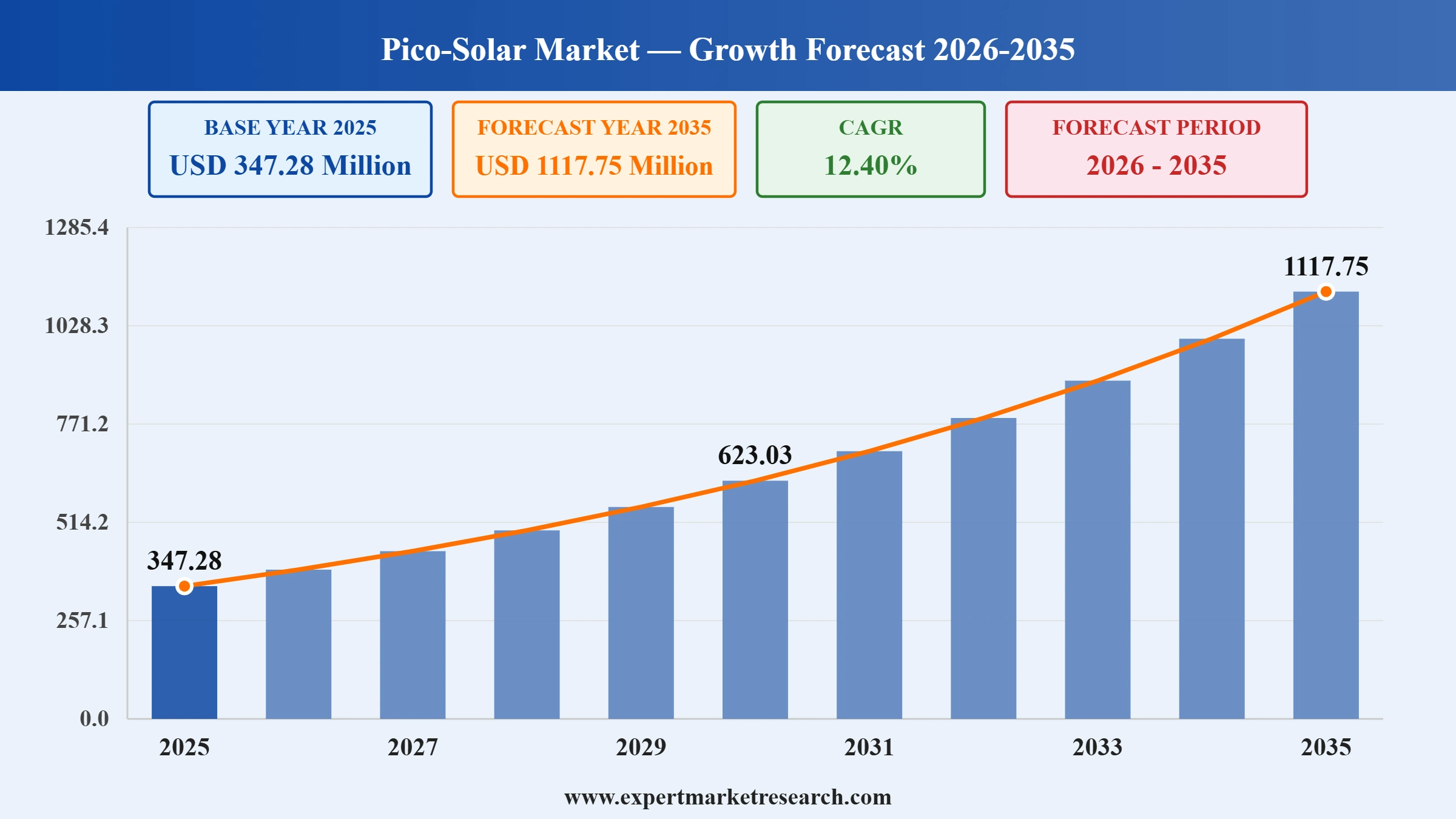
The global pico-solar market attained a value of USD 347.28 Million in 2025 and is projected to expand at a CAGR of 12.40% through 2035. The market is further expected to reach USD 1117.75 Million by 2035. Rising demand for affordable solar lanterns, multi-light home kits, and phone charging systems across unelectrified and weak-grid communities in Sub-Saharan Africa and South Asia is helping distributors widen pay-as-you-go financing models and broaden last-mile retail networks. Growing emphasis on quality-verified products, mobile-money-enabled instalment plans, and results-based financing support is further encouraging manufacturers to expand assembly capacity and after-sales service coverage across the Americas, Asia Pacific, and the Europe Middle East and Africa region.
The pico-solar market covers low-wattage solar lighting and charging products, lanterns and multi-light home kits, for households without grid access. Adoption concentrates across Sub-Saharan Africa and South Asia, where more than half a billion people live without stable electricity. Single-purpose lanterns remain an affordable entry point for first-time buyers, while multi-purpose kits bundling lighting, radio, and phone charging gain preference among households. Distributors pair these products with mobile-money instalment plans.
Demand is shaped by the scale distribution networks have achieved in recent years. In June 2026, GOGLA's Global Off-Grid Solar Market Report recorded member companies sold 10.2 million solar energy kits in 2025, nearly 10 percent more than the prior year, reaching over 148 million people cumulatively, with pay-as-you-go sales climbing close to 50 percent. East Africa and Nigeria accounted for the strongest volumes, aided by subsidies lowering upfront costs.
Manufacturers active in this industry are directing investment toward quality-verified components, longer-lasting lithium batteries, and digital payment integration that reduces default rates for instalment customers. Portfolios are widening beyond basic lanterns into multi-light kits, solar-powered radios, and small appliances suited to productive use. Several firms are expanding assembly operations closer to end markets, cutting logistics costs for customers. This broadening of product lines helps companies defend margins as competition intensifies.
Read more about this report - REQUEST FREE SAMPLE COPY IN PDF
| Global Pico-Solar Market Report Summary | Description | Value |
| Base Year | USD Million | 2025 |
| Historical Period | USD Million | 2019-2025 |
| Forecast Period | USD Million | 2026-2035 |
| Market Size 2025 | USD Million | 347.28 |
| Market Size 2035 | USD Million | 1117.75 |
| CAGR 2019-2025 | Percentage | XX% |
| CAGR 2026-2035 | Percentage | 12.40% |
| CAGR 2026-2035 - Market by Region | Americas | 10.2% |
| CAGR 2026-2035 - Market by Country | Nigeria | 15.4% |
| CAGR 2026-2035 - Market by Country | Brazil | 12.0% |
| CAGR 2026-2035 - Market by Application | Multi-Purpose | 12.7% |
| CAGR 2026-2035 - Market by End Use | Residential Sector | 11.9% |
| Market Share by Country 2025 | Germany | 2.0% |
Odyssey Energy Solutions closed a USD 74 million round to expand its platform connecting small and mid-sized solar installers with financing and equipment suppliers across more than fifty countries. The company reported that its India operations tripled in the preceding year. Such platforms help installers secure working capital, letting them serve rural pico-solar market customers without the usual cash-flow strain.
All On opened its 2026 Off-Grid Energy Challenge, offering Nigerian-owned companies between USD 200,000 and USD 1,000,000 in blended funding for mini-grids, solar home systems, and productive-use energy ventures serving unserved communities. Winners receive technical assistance and readiness support over eighteen months. Such funding competitions help smaller distributors scale capacity, strengthening retail coverage across underserved segments of the pico-solar market.
Mirova, a Natixis Investment Managers unit, provided a USD 15 million debt facility to iSAT Africa to convert 1,000 rural telecom towers in Liberia and Zambia from diesel generators to solar power with battery storage. The facility targets off-grid sites where fuel costs have risen. Such financing shows energy users adopting solar power, broadening commercial applications within the market.
BioLite acquired a controlling stake in Baobab+, an African solar distributor backed by Baobab Group and Norfund, to strengthen its position as a vertically integrated off-grid provider. The deal combines BioLite product design with Baobab+ distribution reach across West Africa. Such consolidation lets companies cut distribution costs and widen after-sales reach, a pattern seen among distributors in the pico-solar market.
State governments across South Asia are increasingly funding direct distribution of solar lighting kits to low-income rural households rather than relying solely on commercial retail channels. This lowers upfront cost barriers for first-time buyers who previously could not access financing. In July 2026, the Punjab provincial government in Pakistan directed officials to expedite rollout of solar kits to 275,000 poor households under its solar home system program. Such rollouts widen reach for the pico-solar market where distribution networks remain thin.
Distributors are increasingly leaning on women-led entrepreneur networks to reach rural households that conventional retail channels struggle to serve well, particularly where trust and door-to-door relationships drive purchasing decisions. These networks combine product sales with customer support and financing guidance. Solar Sister annual report, published April 2026, recorded more than 5.8 million people reached and over 12,500 women entrepreneurs supported, with over 1 million clean energy products distributed. Such entrepreneur-led models are becoming a durable channel for pico-solar market growth.
Governments in high-deficit electrification markets increasingly treat off-grid solar as a core pillar of national electrification planning rather than a stopgap measure, given the cost and time needed to extend grid infrastructure to remote areas. This reshapes how public funding is allocated between grid and off-grid investment. In October 2025, Rwanda reported that 25 percent of households already receive power through off-grid systems, mostly solar, targeting universal electricity access by 2030. Such prioritization supports household demand within the pico-solar market.
Regional financing facilities are stepping in to support smaller solar distributors that struggle to access commercial bank credit, particularly in markets where currency risk and thin balance sheets deter conventional lenders. These facilities blend grant and concessional debt to lower financing costs for last-mile distribution. In June 2025, the Regional Off-Grid Electrification Project disbursed USD 3.7 million to solar companies across West Africa to support last-mile distribution. Such disbursements help maintain working capital for smaller players in the market.
Development agencies are pairing public grant funding with private partners to electrify public institutions that commercial solar distributors otherwise find too costly to serve alone, given thin margins on institutional contracts. These partnerships combine technical assistance with maintenance financing to avoid failures from underfunded upkeep. In February 2025, Sweden and the Clinton Health Access Initiative launched a partnership to solarise thousands of health facilities in South Africa, Eswatini, Malawi, and Kenya. Such partnerships expand demand adjacent to the pico-solar market.
The Expert Market Research's report titled "Global Pico-Solar Market Report and Forecast 2026-2035" offers a detailed analysis of the market based on the following segments:
Market Breakup by Application
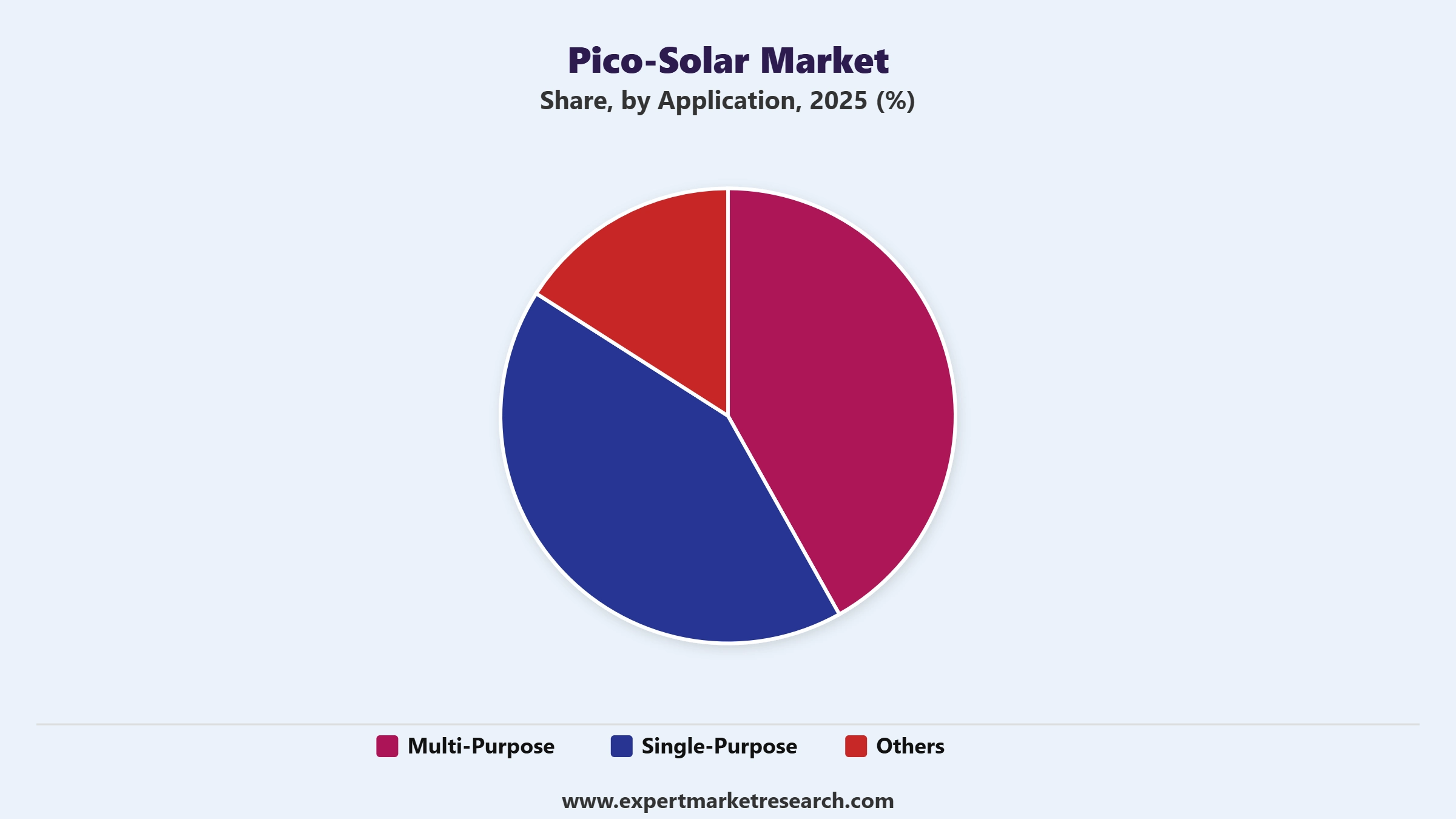
Key Insight: Multi-purpose solar kits, bundling lighting with phone charging and radio functions, dominate this segment as households seek more utility for a comparable price point. Single-purpose lanterns remain an important entry-level category for first-time buyers with the lowest available budgets, particularly in deeply unelectrified rural communities. The others category, covering portable solar chargers and task lights sold outside standard kit configurations, serves niche uses such as market vending and small workshop lighting that fall outside typical household lighting needs.
Market Breakup by End Use
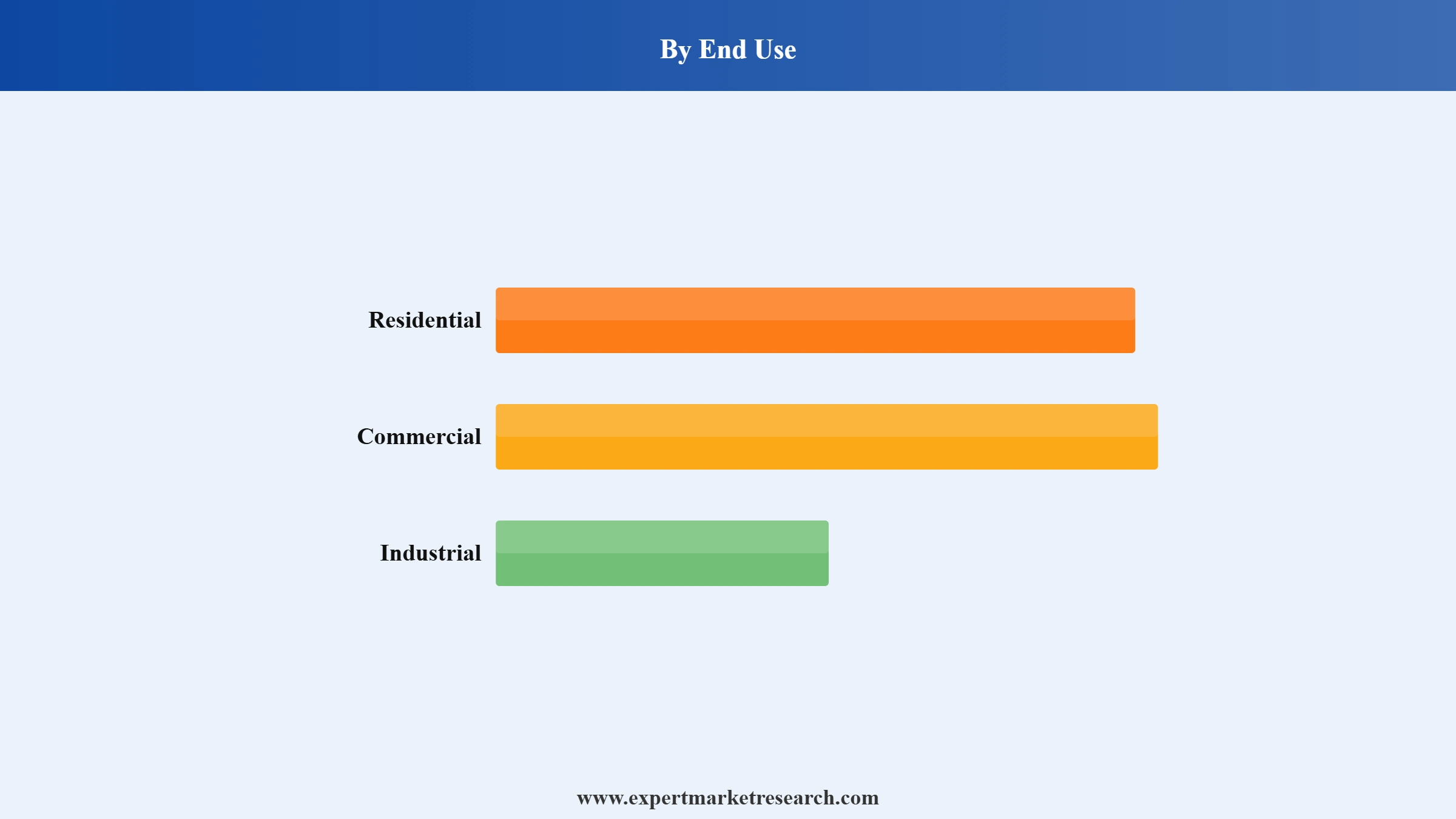
Key Insight: Residential use dominates this segment as households without stable grid access rely on solar lanterns and home kits for lighting, phone charging, and basic appliance use. Commercial use is expanding as market stalls and clinics adopt solar power, with the Beyond the Grid Fund for Africa reaching roughly 7,500 businesses by May 2026. Industrial use remains comparatively limited, covering applications such as off-grid telecom tower lighting and site security where small-scale solar units replace diesel-powered alternatives.
Market Breakup by Region
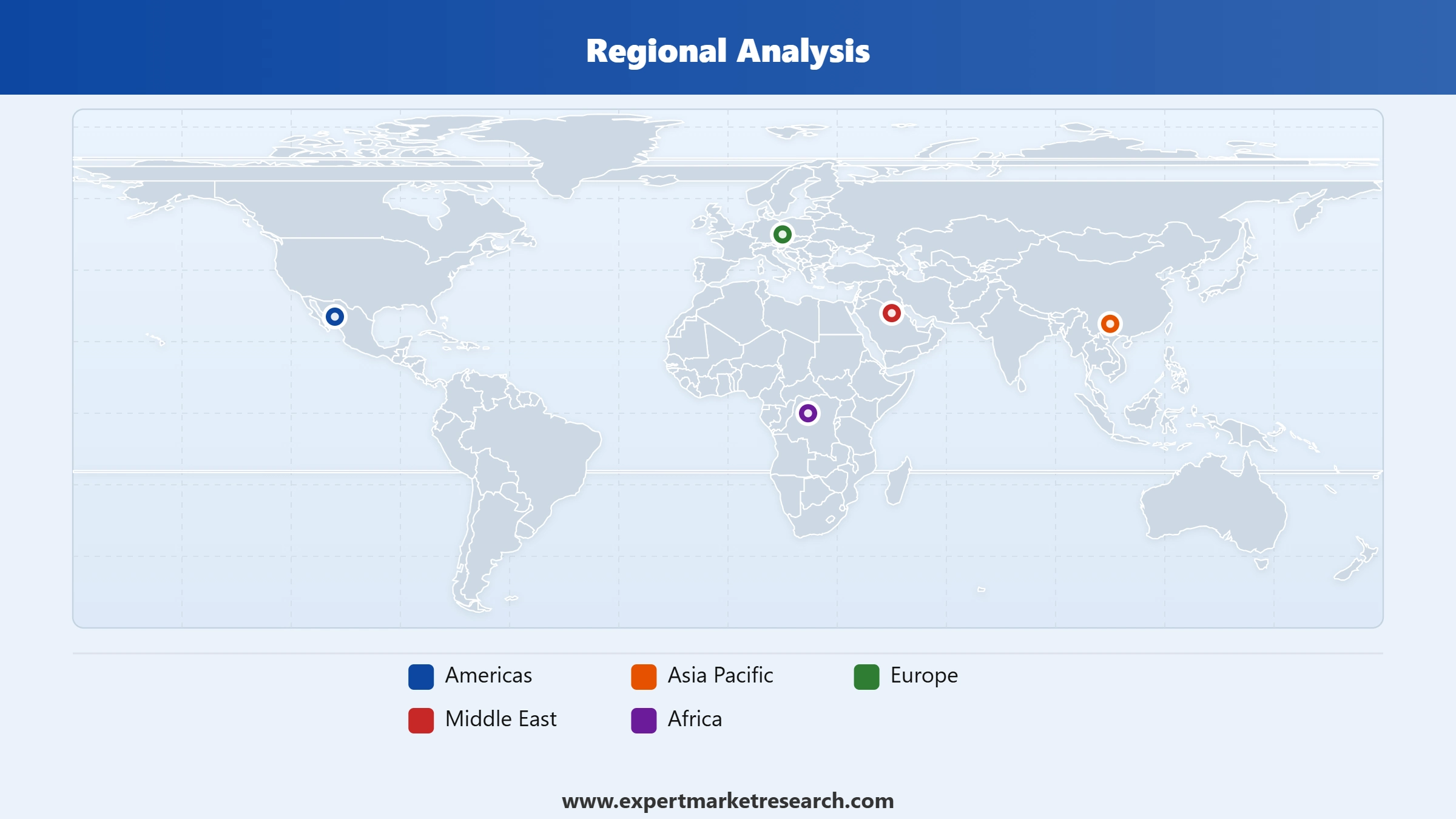
Key Insight: Regional dynamics across these regions continue to reflect the distribution of unelectrified populations. The EMEA region, anchored by Sub-Saharan Africa, accounts for the largest base of off-grid households and the deepest distributor networks. Asia Pacific is expanding quickly as India's off-grid solar scheme reached 11,838 tribal households by August 2026. The Americas region covers a smaller but steady base of demand concentrated in remote Latin American communities beyond reliable grid reach.
Read more about this report - REQUEST FREE SAMPLE COPY IN PDF
By application, multi-purpose solar kits dominate the pico-solar market owing to the added utility of combined lighting, charging, and radio functions
Multi-purpose kits account for the largest share of the pico-solar market as households increasingly prefer one single product that covers lighting, phone charging, and entertainment needs rather than purchasing several separate single-function devices for each household task they face. Distributors favour multi-purpose kits because higher price points support better instalment margins under pay-as-you-go financing structures, while customers value the combined utility relative to a comparable total outlay for several single-purpose products bought separately over time as household needs grow larger.
Read more about this report - REQUEST FREE SAMPLE COPY IN PDF
Single-purpose lanterns continue to register the fastest growth in the pico-solar market as distributors use low-cost lighting-only products to introduce first-time buyers to solar technology before gradually upselling them toward multi-purpose kits once trust and a steady repayment history are firmly established with each individual rural household. Subsidy-supported programs targeting the very poorest unelectrified households, including several state-funded distribution drives across South Asia, continue to lean on single-purpose lanterns as the most affordable entry product available to new customers today.
By end use, residential applications dominate the pico-solar market as households without stable grid connections depend on solar kits for daily lighting and charging needs
Residential demand accounts for the largest share of the market, with households across Sub-Saharan Africa and South Asia relying heavily on solar lanterns and multi-light home kits for evening lighting, mobile phone charging, and small appliance use each day. Multilateral development financing continues to support this residential segment directly, with the Inter-American Development Bank approving a USD 70 million operation in October 2025 to fund hybrid solar minigrids for roughly 7,600 rural households in the Peruvian Amazon.
Read more about this report - REQUEST FREE SAMPLE COPY IN PDF
Commercial use is registering the fastest growth in the pico-solar market as small enterprises and public institutions are increasingly adopting solar lighting and charging equipment to extend operating hours and support basic refrigeration needs for perishable goods and essential medicines. In August 2025, Gavi committed approximately USD 28 million to solarise 1,277 health facilities across Zambia, Ethiopia, Pakistan, and Uganda, installing small-scale solar photovoltaic systems and cold-chain equipment that extend reliable power to clinics previously dependent on unstable grid supply.
Read more about this report - REQUEST FREE SAMPLE COPY IN PDF
EMEA leads the pico-solar market through the largest concentration of unelectrified households and the most established distributor networks across Sub-Saharan Africa
The EMEA region commands the largest share of the market, anchored by Sub-Saharan Africa, where the largest concentration of unelectrified households and the most mature pay-as-you-go distribution networks are located today. Mission 300, a joint World Bank and African Development Bank initiative, reported in June 2026 that it had connected more than 50 million people to electricity across 40 Sub-Saharan African countries in roughly two years, with off-grid solar accounting for a substantial share of new connections in Nigeria.
Asia Pacific is registering the fastest growth in the pico-solar market as South Asian distribution networks and government subsidy programs widen rural solar access at a rapid pace across many unserved districts. Frontier Markets, recognised with an Ashden Award for Outstanding Achievement in the Asia region reported in June 2026, operates a network of more than 40,000 women entrepreneurs who have reached 4.3 million households across 5,000 villages in four Indian states, illustrating how distribution models are accelerating regional adoption.
The global industry is becoming increasingly consolidated as leading pico-solar companies pursue acquisitions and distribution partnerships to widen last-mile reach across underserved rural markets. Established manufacturers are integrating financing, logistics, and after-sales service capabilities to differentiate from smaller regional distributors competing primarily on price.
Major pico-solar market players are also investing in quality-verified components, mobile-money payment integration, and expanded product ranges spanning lanterns, multi-light home kits, and small appliances to capture a larger share of household spending in off-grid and weak-grid communities.
Founded in 2007 and headquartered in Nairobi, Kenya, Sun King, formerly known as Greenlight Planet, markets solar lanterns, home systems, and small appliances under pay-as-you-go financing plans enabled by mobile money. The company operates assembly and distribution functions across more than forty countries in Sub-Saharan Africa and South Asia, with a customer base built primarily around first-time solar buyers in rural and peri-urban communities seeking affordable lighting and charging solutions.
Founded in 2011 and headquartered in London, United Kingdom, M-KOPA Group pioneered pay-as-you-go asset financing beginning with solar home systems before expanding into smartphones and other connected devices. The company embeds remote-monitoring technology into its products, allowing instalment tracking and remote deactivation for unpaid accounts, and operates primarily across Kenya, Uganda, Nigeria, Ghana, and South Africa, serving customers who lack access to conventional consumer credit.
Founded in 2016 and headquartered in Eindhoven, Netherlands, Signify N.V., the former Philips Lighting business, supplies a broad portfolio of LED and connected lighting products spanning both grid-connected and off-grid applications. Its solar-ready and battery-based luminaire ranges serve public lighting and emerging-market electrification projects, complementing its larger professional and consumer lighting business with solutions adapted for regions facing unreliable grid supply.
Founded in 2007 and headquartered in San Francisco, California, United States, d.light Limited was established by Stanford Graduate School of Business students to design affordable solar lighting for households without reliable electricity. The company has since broadened its range to solar home systems and small appliances, distributed through retail and agent networks across more than seventy countries, with manufacturing and quality testing functions supporting its product development.
Other key players in the market include Shenzhen Power-Solution Ind Co., Ltd and Fosera Solarsystems GmbH & Co. KGaA, among others.
*Please note that this is only a partial list; the complete list of key players is available in the full report. Additionally, the list of key players can be customized to better suit your needs.*
Unlock the latest insights with our global pico-solar market trends 2026 report. Discover regional growth opportunities, competitive strategies, and demand forecasts shaping the pico-solar industry through 2035, equipping your business with actionable intelligence for strategic planning.
Artificial intelligence market
Latin America Explosives Market
Electro-Optical/Infrared (EO/IR) Systems Market
Maintenance, Repair, and Operations (MRO) Market


Upto 15% Off
USD
$2499 $2249
$3999 $3599
$4999 $4249
$5999 $5099


*While we strive to always give you current and accurate information, the numbers depicted on the website are indicative and may differ from the actual numbers in the main report. At Expert Market Research, we aim to bring you the latest insights and trends in the market. Using our analyses and forecasts, stakeholders can understand the market dynamics, navigate challenges, and capitalize on opportunities to make data-driven strategic decisions.*
The market is projected to grow at a CAGR of 12.40% between 2026 and 2035.
Expanding pay-as-you-go financing, strengthening last-mile agent and entrepreneur distribution networks, broadening multi-purpose product ranges, and pursuing acquisitions to consolidate regional distribution capacity.
The increasing demand for energy and the fast growth in the adoption of portable devices are the key market trends propelling the market's growth.
The major regions in the market are Americas, Asia Pacific, and Europe, Middle East and Africa.
Pico-solar find their major application in a multi-purpose and single-purpose, among others.
The industry can be divided based on its end-use as residential, commercial, and industrial.
The key players in the market include Sun King, M-KOPA Group, Signify N.V., Shenzhen Power-Solution Ind Co., Ltd, Fosera Solarsystems GmbH & Co. KGaA, and d.light Limited, among others.
In 2025, the market reached an approximate value of USD 347.28 Million.
Companies face thin rural distribution margins, currency and repayment risk under instalment financing, counterfeit and substandard product competition, and limited after-sales service infrastructure across remote markets.
Explore our key highlights of the report and gain a concise overview of key findings, trends, and actionable insights that will empower your strategic decisions.
| REPORT FEATURES | DETAILS |
| Base Year | 2025 |
| Historical Period | 2019-2025 |
| Forecast Period | 2026-2035 |
| Scope of the Report |
Historical and Forecast Trends, Industry Drivers and Constraints, Historical and Forecast Market Analysis by Segment:
|
| Breakup by Application |
|
| Breakup by End Use |
|
| Breakup by Region |
|
| Market Dynamics |
|
| Competitive Landscape |
|
| Companies Covered |
|
| Report Price and Purchase Option | Explore our purchase options that are best suited to your resources and industry needs. |
| Delivery Format | Delivered as an attached PDF and Excel through email, with an option of receiving an editable PPT, according to the purchase option. |
Datasheet
One User
USD 2,499
USD 2,249
tax inclusive*
Single User License
One User
USD 3,999
USD 3,599
tax inclusive*
Five User License
Five User
USD 4,999
USD 4,249
tax inclusive*
Corporate License
Unlimited Users
USD 5,999
USD 5,099
tax inclusive*
*Please note that the prices mentioned below are starting prices for each bundle type. Kindly contact our team for further details.*
Flash Bundle
Small Business Bundle
Growth Bundle
Enterprise Bundle
*Please note that the prices mentioned below are starting prices for each bundle type. Kindly contact our team for further details.*
Flash Bundle
Number of Reports: 3
20%
tax inclusive*
Small Business Bundle
Number of Reports: 5
25%
tax inclusive*
Growth Bundle
Number of Reports: 8
30%
tax inclusive*
Enterprise Bundle
Number of Reports: 10
35%
tax inclusive*
How To Order

Select License Type
Choose the right license for your needs and access rights.

Click on ‘Buy Now’
Add the report to your cart with one click and proceed to register.

Select Mode of Payment
Choose a payment option for a secure checkout. You will be redirected accordingly.
Strategic Solutions for Informed Decision-Making
Gain insights to stay ahead and seize opportunities.

Get insights & trends for a competitive edge.

Track prices with detailed trend reports.

Analyse trade data for supply chain insights.

Leverage cost reports for smart savings

Enhance supply chain with partnerships.

Connect For More Information
Our expert team of analysts will offer full support and resolve any queries regarding the report, before and after the purchase.
Our expert team of analysts will offer full support and resolve any queries regarding the report, before and after the purchase.
We employ meticulous research methods, blending advanced analytics and expert insights to deliver accurate, actionable industry intelligence, staying ahead of competitors.
Our skilled analysts offer unparalleled competitive advantage with detailed insights on current and emerging markets, ensuring your strategic edge.
We offer an in-depth yet simplified presentation of industry insights and analysis to meet your specific requirements effectively.




