

Consumer Insights
Uncover trends and behaviors shaping consumer choices today
Procurement Insights
Optimize your sourcing strategy with key market data
Industry Stats
Stay ahead with the latest trends and market analysis.
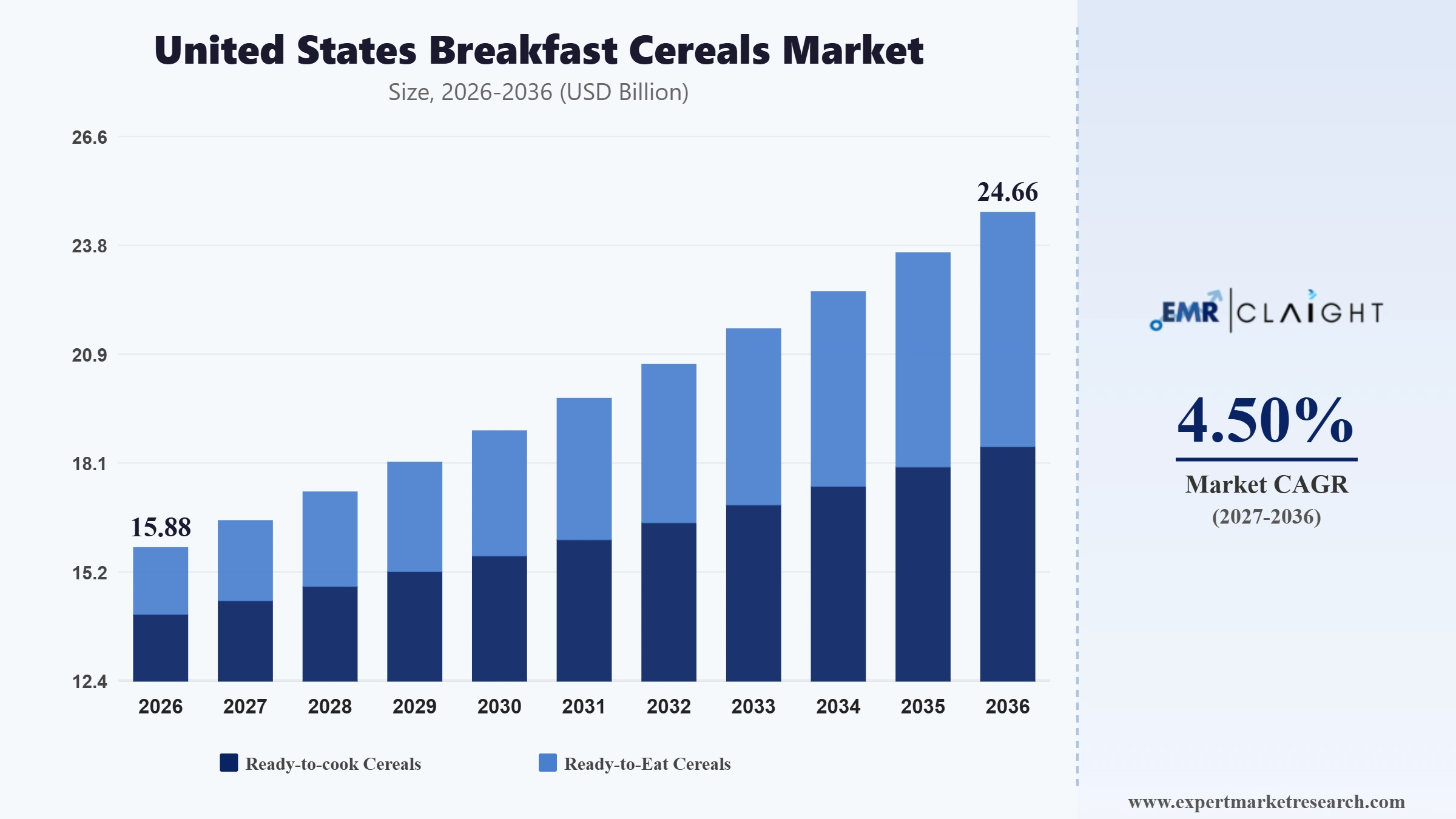
The United States breakfast cereals market attained a value of USD 15.20 Billion in 2025 and is projected to expand at a CAGR of 4.50% through 2035. The market is further expected to achieve USD 23.61 Billion by 2035. Through protein enrichment, cereal is evolving as a carbohydrate-oriented breakfast food into a functional meal, thus compelling manufactures to modify their cereal, granola, and oat offerings with an increase in proteins, fiber, and whole grain content.
The development of the United States breakfast cereals market can be attributed to two major trends. Retailers are allocating more shelf space to single-serving, and portable breakfast cereals, whereas the manufacturers are relying on limited-edition cereals and cross-category marketing to drive incremental trial. Online grocery channel is further assisting specialty cereals to connect with customers without necessarily needing shelf penetration nationally, which enhances the business rationale behind small batch production and novel formulation.
Companies in the United States breakfast cereals market are actively introducing such drinkable solutions to the market via large-scale retailers and proving their ability to extend grains in different forms while keeping benefits of convenience and nutrition. For example, in July 2026, Quaker from PepsiCo developed Oat Shake & Go that is bottle-ready oat formula providing 15 grams of protein, 16 grams of whole grain, and 3 grams of fiber per serving as a response to the trend of shifting from bowl cereals towards functional breakfasts in the form of drinks.
Product development in United States breakfast cereals market is becoming concentrated around proteins, fibers, whole grains, and distinctive flavors instead of yet another flake variety. For instance, General Mills offers eight new cereal and granola product varieties that included Cheerios Protein with 8 grams of protein per serving while limited editions like Cinnamon Toast Crunch Bacon Flavored Cereal were tested to develop innovative combinations of flavors. On the other hand, in December 2025, Honey Bunches of Oats launched protein-focused cereal delivering 9g protein per serving across two familiar flavors.
Read more about this report - REQUEST FREE SAMPLE COPY IN PDF
| United States Breakfast Cereals Market Report Summary | Description | Value |
| Base Year | USD Billion | 2025 |
| Historical Period | USD Billion | 2019-2025 |
| Forecast Period | USD Billion | 2026-2035 |
| Market Size 2025 | USD Billion | 15.20 |
| Market Size 2035 | USD Billion | 23.61 |
| CAGR 2019-2025 | Percentage | XX% |
| CAGR 2026-2035 | Percentage | 4.50% |
| CAGR 2026-2035 - Market by Region | Southeast | 4.5% |
| CAGR 2026-2035 - Market by Region | New England | 4.2% |
| CAGR 2026-2035 - Market by Type | Ready-to-Eat Cereals | 5.0% |
| CAGR 2026-2035 - Market by Product Type | Mixed/Blended Breakfast Cereals | 5.1% |
| Market Share by Region | Plains | 6.7% |
The WK Kellogg Co. revealed intentions to stop using artificial colors in its cereals during the production process by the end of 2026 in all of its cereals. Companies can create new cereals using natural colors and ingredients to set themselves apart while still making them recognizable, further widening the United States breakfast cereals market scope.
WK Kellogg Co. launched the R Super Stars, which is a K-12 breakfast cereal aimed at making life easier for food service providers at schools as well as boosting participation among students. Breakfast cereal makers can make cereals specifically for schools.
Mini Melts USA offered the product Fruity Cereal Crunch where the flavor profile is similar to that of cereal but comes with the freeze-dried ice cream offering from Mini Melts. Companies have the option of extending flavors from breakfast foods into snack foods and other categories, boosting the United States breakfast cereals market value.
General Mills came up with flavor variants of its flagship cereals namely Lucky Charms and Trix. In such cases, cereal makers can experiment with flavor varieties and even collaborations for the same without redesigning the basic product form.
The cereal companies are making the move to capitalize on protein in product development since protein nutrition is a relevant topic beyond breakfast energy. For example, in December 2024, General Mills launched new Cheerios Protein, delivering 8 grams of protein per serving across two flavors. Such advancements in the United States breakfast cereals market demonstrate that manufacturers are exploring product categories beyond cereal. Opportunities for the suppliers of ingredients exist in protein blends, fiber systems, flavor masking, and fortified solutions.
The United States breakfast cereals market observes the formulation and procurement of the products have increasingly involved sugar reduction due to the impact of federal nutrition standards on the specifications of the cereals. Specifically, the USDA guidance dictates that the breakfast cereals provided in the national school meal program contain not more than 6 grams of added sugar per dry ounce starting October 2025. Considering such trends, in April 2025, PepsiCo’s Life launched Mighty Life multigrain cereal with functional benefits, targeting immunity, bone health, and whole-family wellness.
Short-term collaborations and seasonal products allow makers to generate urgency and experiment with flavors through portfolio risk, widening the United States breakfast cereals market scope. For instance, General Mills offers a sweet and savory cereal called Cinnamon Toast Crunch cereal featuring the flavor of Hormel Black Label Bacon. Moreover, General Mills developed Wicked-themed cereal associated with Universal’s film in July 2025. On the other hand, in May 2024, Post Consumer Brands launched three limited-edition summer cereals and expanded three existing products into larger sizes nationwide.
Innovation in breakfast cereals is currently being extended from the bowl, as food manufacturers come up with formats of foods which can be taken while on the go, at work, or in snack moments. For example, in August 2026, NOON launched nationwide at Target, introducing America’s first breakfast-in-a-can with 20g protein and 5g fiber. Such innovative formats offer United States breakfast cereals market opportunities for contract manufacturers, bottle manufacturers, dry blender providers, and retailers.
Brands are leveraging both mass retail and value channel strategies along with convenience stores and online shopping to guard distribution and target specific occasions. According to industry studies, online commerce is growing in significance while careful spending is driving the competition of private labels. This is compelling the United States breakfast cereals market players to optimize packaging design, pricing strategies, multipacks, and digital merchandising. Post Consumer Brands, for instance, offers an extensive range of iconic, natural, organic, hot, bagged, and ready-to-eat cereal in its private label. Similarly, in May 2026, Seven Sundays launched PB Puffs and exclusive dye-free Red Velvet Oat Protein Cereal at Target, emphasizing cleaner ingredients and protein. The key opportunities for suppliers are appropriately sized packaging, efficient case pack for the shelf, retailer-specific product development, and data-driven assortment management.
The Expert Market Research's report titled “United States Breakfast Cereals Market Report and Forecast 2026-2035” offers a detailed analysis of the market based on the following segments:
Market Breakup by Type
Key Insight: Ready-to-eat cereal leverages consumer habits, good shelf impact, and scalable family and single-serve packages, but ready-to-cook cereal enjoys warm breakfast occasions, fast preparation, and functional oat formulations. Both categories are distinguished through protein, fiber, whole grain, low sugar, and flavor formulations. Ready-to-eat cereal benefits from efficiency of national distribution and promotion, while ready-to-cook cereal can take advantage of greater portion control and premium opportunities. Category balance in the United States breakfast cereals market is driven by convenience, reformulation of nutrition, package architecture, time of preparation, and supplier’s ability to deliver consistent texture and taste in several formats.
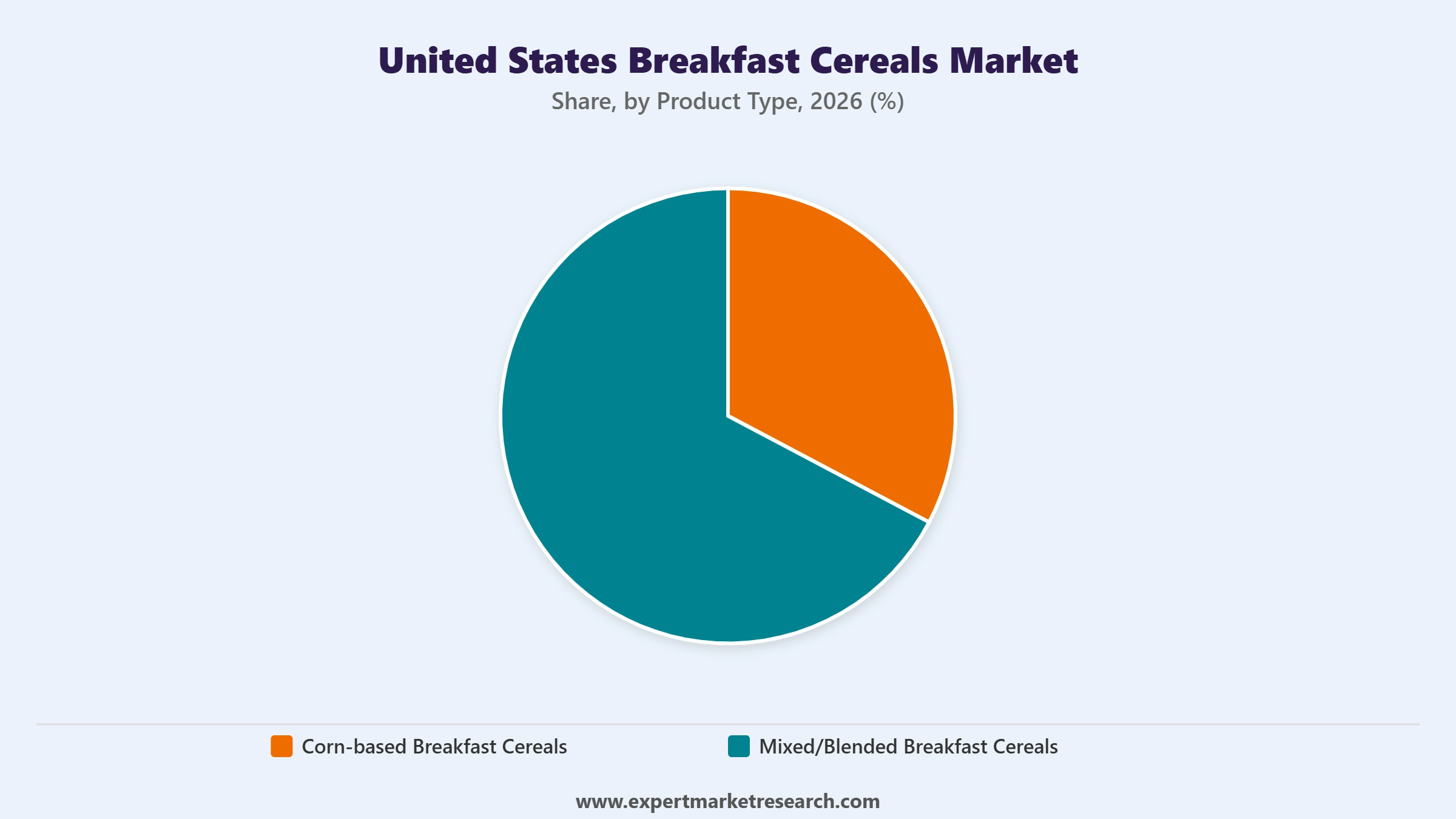
Market Breakup by Product Type
Key Insight: Corn-based cereals for breakfast have an advantage over others due to the familiarity of texture, ease of processing, and suitability for sweet, savory, fortified, and whole grain formulations. Blended cereal products are differentiating themselves by the combination of grains, seeds, nuts, fruits, protein sources, and textures. There are opportunities for other types of cereal products that will cater to various dietary needs, such as organic and functional foods.
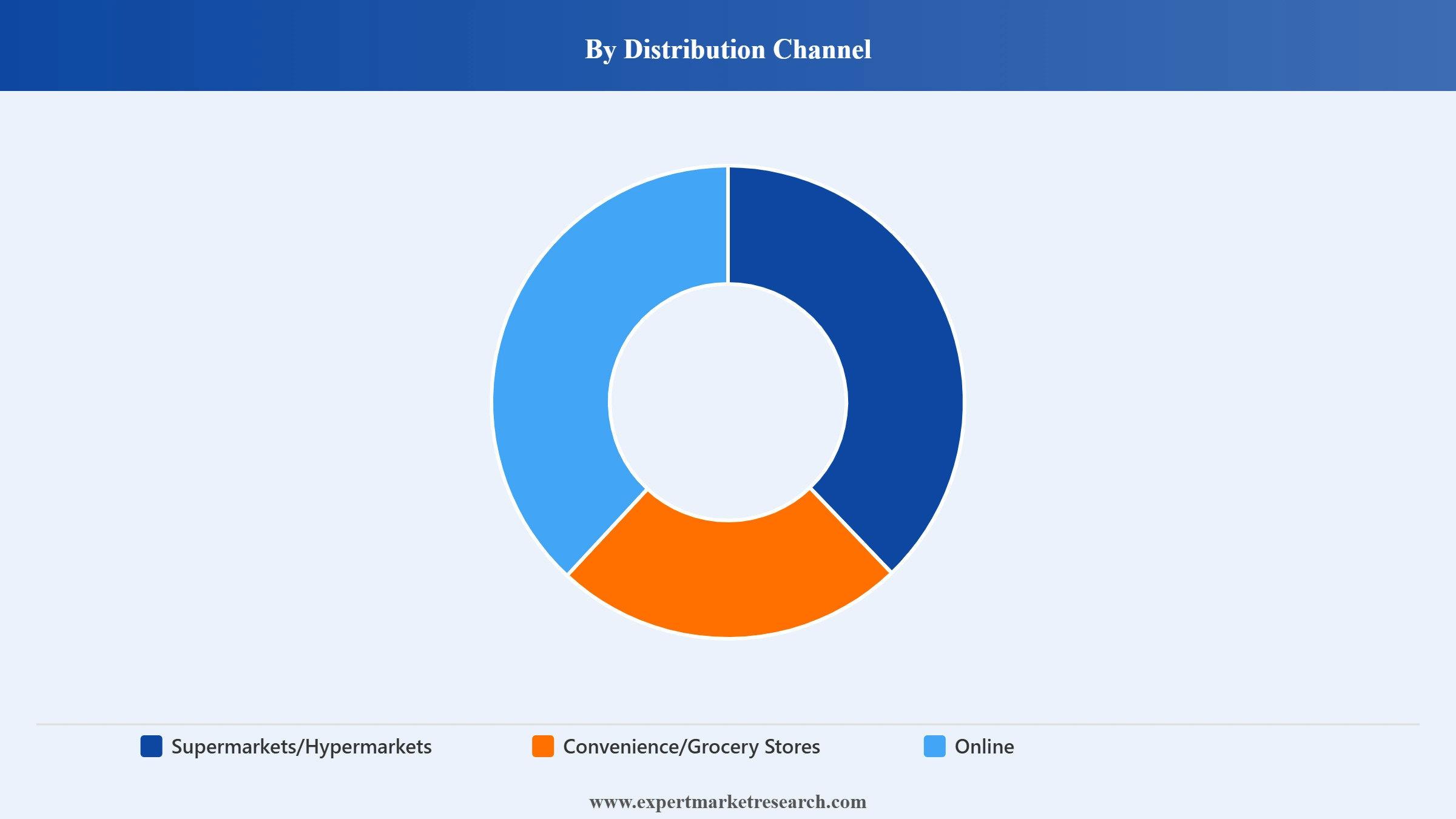
Market Breakup by Distribution Channel
Key Insight: As per the United States breakfast cereals market report, the supermarket/hypermarket channel continues to be key because of their availability of plenty of shelf space for family packs, premium products, private labels, and promotions. The convenience/grocery channel caters to small packs and immediate consumption, thus making efficiency in distribution vital. In terms of online channels, there are more avenues opened up for the launch of unique products, subscriptions, multipacks, and digital merchandising. The other channels of application include institutional and foodservice channels.
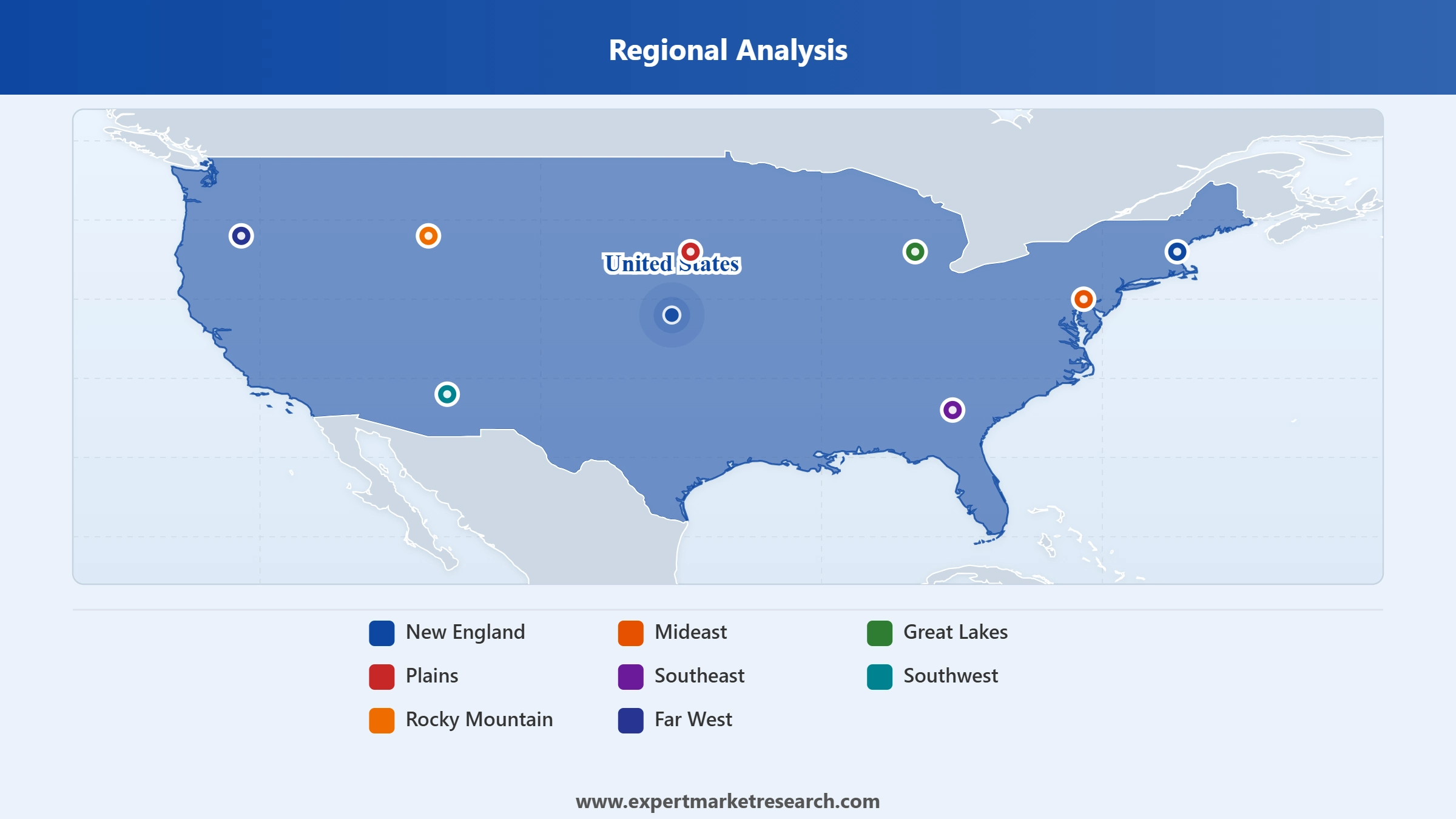
Market Breakup by Region
Key Insight:The Northeast and the Midwest United States breakfast cereals market cater to luxury, health-focused, and urban retail segments. Markets in the Great Lakes region and the Plains region present possibilities for established grain-based product lines. The South East is an amalgamation of size and variety in terms of household requirements, which makes it appropriate for wide-ranging cereal lines. The Southwest markets create space for mobile, protein-heavy, and adaptable products. The Rocky Mountains market can prefer natural and unique product formulations.
Read more about this report - REQUEST FREE SAMPLE COPY IN PDF
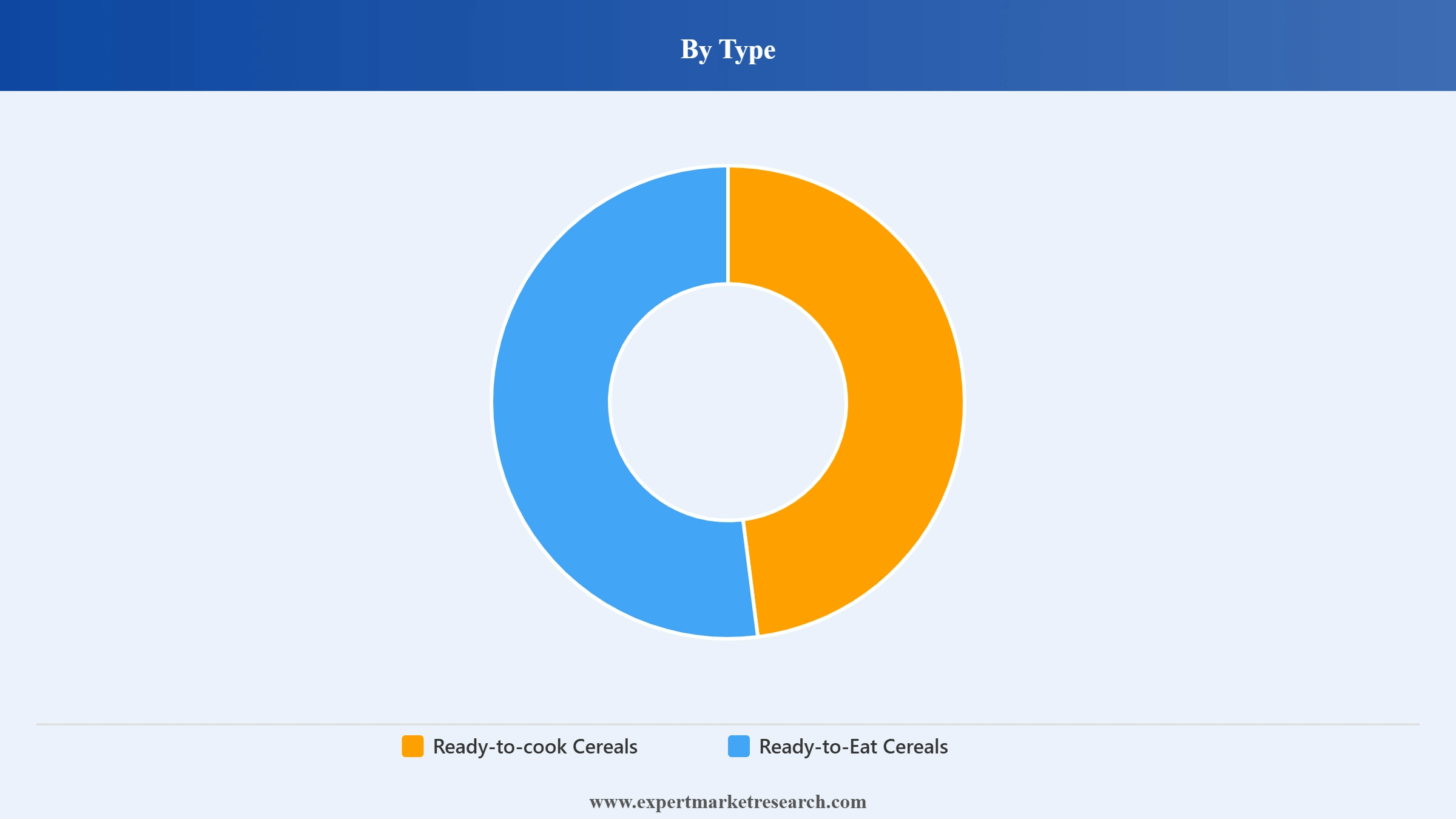
By type, ready-to-eat cereals lead growth in the market due to convenience, shelf stability, and variety
Ready-to-eat cereals dominate the United States breakfast cereals market leveraging consumer habits, effective product shelf placement, and scalable packaging solutions for families and individuals, while the ready-to-cook cereals benefit from hot breakfast consumption, easy preparation and functional oat ingredients. Both types of cereal are being differentiated through protein, fiber, whole grain, low-sugar content, and flavor ingredients. The ready-to-eat cereals have efficient national distribution and promotional opportunities, while the ready-to-cook products give some more space for portion control and premiumization. In January 2024, WK Kellogg launched Eat Your Mouth Off cereal, offering vegan puffs with 22 grams of protein and zero sugar per bowl.
Read more about this report - REQUEST FREE SAMPLE COPY IN PDF
The ready-to-cook cereals category is gaining momentum across the United States breakfast cereals market scope through consumer demands for hot meals that could be easily customized and faster preparation times. Oat products allow incorporating proteins, fibers, fruits, flavors and also fit into microwave cups, sachets and other portable packaging solutions. The recent development of Quaker with its bottled oat nutrition proves that suppliers are leveraging their expertise in oat production beyond the conventional bowls. This segment gives suppliers an opportunity to develop some premiumized products with functional ingredients and portion control packaging.
By product type, corn-based cereals lead growth in the market through scalable processing, familiar textures, and versatility
Corn-based breakfast cereals occupy a substantial share in the United States breakfast cereals market revenue due to the fact that the corn ingredient allows for using flakes, crisps, and sweetened variants with scalable processes and versatility of flavors. It is possible to modify the corn-based products according to whole-grain position, enriched nutrition, or low-sugar recipes, retaining the same textures. In addition, the ingredient demonstrates efficiency in the development of family-size and individual-size packages, which will satisfy the needs of retailers. In March 2024, Kellanova launched a new Corn Flakes campaign, reviving its mascot through CGI and celebrating the brand’s centenary.
Read more about this report - REQUEST FREE SAMPLE COPY IN PDF
Mixed/blended breakfast cereals are boosting the overall United States breakfast cereals market development through blending of various grains, nuts, seeds, fruits, proteins, and textural contrasts. Such formulation enables manufacturers to develop products with special nutrition or sensory positions without the necessity to use only one grain type. Blending allows for developing premium positioning, higher fibers content, enriched protein, and simpler ingredient sourcing. Moreover, suppliers have an opportunity to change ingredients on a seasonal basis, thus launching limited edition or retailer's exclusive products.
Supermarkets/hypermarkets dominate the market through broad assortments, promotions, visibility, and replenishment
Supermarkets/hypermarkets continue to dominate the United States breakfast cereals market since there is sufficient shelf space for family packs, premium products, private labels, and promotions. Manufacturers can sell family packs, value packs, premium granolas, and special editions in the same store environment. Established retailers can offer scale advantages for new product introductions and product reformulations, as well as allow category managers to assess pack sizes, pricing points, and promotions performance. In April 2026, Walmart partnered with General Mills on an exclusive Cinnamon Toast Crunch flavor, combining root beer float and cereal flavors.
Read more about this report - REQUEST FREE SAMPLE COPY IN PDF
The online segment is the fastest growing one because purchasing of cereal can increasingly leverage subscription trends, digital promotions, personalization capabilities, and repeat orders due to convenience. E-commerce reduces distribution challenges for niche products that might fail to gain extensive shelf placement in physical stores. Manufacturers in the United States breakfast cereals market can test multipacks, special flavors, functional cereals, direct-to-consumer packs, and gather demand signals faster. Retail media becomes another channel through which manufacturers can tie product benefits to targeted consumers and measure campaigns' performance.
Southeast leads the market through population scale, diverse households, and broad distribution
The Southeast market’s growth is led by its large and diverse consumer base that can generate demand for value cereals, family formats, hot cereals, and breakfast convenience products. Manufacturers have an opportunity to leverage the distribution density of regions to promote existing brands by providing flavors, pack sizes, and promotion activities that address different needs of consumers. Retailer penetration in supermarkets, mass merchandisers, convenience stores, and grocery chains enable different distribution options for cereal companies.
Read more about this report - REQUEST FREE SAMPLE COPY IN PDF
The Southwest United States breakfast cereals market is positioned as a fast-growing market due to population growth, urbanization, and diverse consumer tastes, which make possible differentiation in breakfast foods. Manufacturers can focus on portable formats, protein-rich cereals, bilingual packs, and appropriate flavors for various consumers. Convenience and grocery channels make the region suitable for small pack sizes and on-the-go consumption. The region provides cereal suppliers with opportunities in regional co-manufacturing, retailer private label, distribution, and formulation. In September 2026, WK Kellogg highlighted cereal’s nutritional benefits, introducing SPOONS and accelerating artificial-color removal across its portfolio.
Competitive dynamics are less influenced by the expansion of flavors and more by portfolio repositioning, nutritional reformulations, format innovation, and commercialization. United States breakfast cereal companies are investing in protein, fiber, wholegrains, low sugar formulations, and packaging appropriate for on-the-go consumption, while established brands generate demand through limited editions and collaborations.
Opportunities exist for manufacturers in protein-based cereals, blends of grain systems, oats, and unique formats for exclusive retail distribution. United States breakfast cereals market players are assisting in reducing sugar content, fortifying, controlling textures, and clean label reformulation. Packaging companies should focus on single serving sizes, re-sealable options, lightweight packaging, and ecommerce packaging solutions. Digital retail and grocers generate demand for assortment management, promotions, and multipacks based on analytics. The biggest commercial opportunities exist in the combination of traditional brands with improved nutrition and formats for breakfast.
Kellogg Company was founded in 1906 and was based traditionally in Battle Creek, Michigan, United States. North American cereals business of Kellogg Company is currently named as WK Kellogg Co. Ferrero purchased WK Kellogg, improving the development of cereals production, brands, and distribution in North America and Canada.
General Mills, Inc. was founded in 1866 and has headquarters in Minneapolis, Minnesota, United States. General Mills, Inc. is serving the market with its cereals like Cheerios, Cinnamon Toast Crunch, and Lucky Charms. Its strategy involves leveraging brand equity and protein-oriented products, license deals, limited edition cereals, and nutrition-oriented reformulation.
Post Holdings, Inc., was founded in 1895 and has its headquarters in Missouri, United States. Via Post Consumer Brands, it manufactures Honey Bunches of Oats, Pebbles, Grape-Nuts, Malt-O-Meal, Great Grains, and other private label cereal products. It provides a diverse portfolio of branded, value, natural, organic, hot, bagged, and ready to eat formats for major retailers.
PepsiCo, Inc., was founded in 1965 and has its headquarters in New York, United States, Via Quaker Oats Company, it manufactures oatmeal and other breakfast products based on oats, with a good nutritional proposition. Its recent innovation is Quaker Oat Shake & Go, which is an oat-based shake product with a good protein content.
Other key players in the market include Nestlé S.A., among others.
*Please note that this is only a partial list; the complete list of key players is available in the full report. Additionally, the list of key players can be customized to better suit your needs.*
Unlock the latest insights with our United States breakfast cereals market trends 2026 report. Discover regional growth patterns, consumer preferences, and key industry players. Stay ahead of competition with trusted data and expert analysis. Download your free sample report today and drive informed decisions in the market.
Australia Breakfast Cereals Market
North America Breakfast Cereal Market
United Kingdom Breakfast Cereal Market


Upto 15% Off
USD
$2499 $2249
$3999 $3599
$4999 $4249
$5999 $5099


*While we strive to always give you current and accurate information, the numbers depicted on the website are indicative and may differ from the actual numbers in the main report. At Expert Market Research, we aim to bring you the latest insights and trends in the market. Using our analyses and forecasts, stakeholders can understand the market dynamics, navigate challenges, and capitalize on opportunities to make data-driven strategic decisions.*
In 2025, the market reached an approximate value of USD 15.20 Billion.
The market is projected to grow at a CAGR of 4.50% between 2026 and 2035.
The key players in the market include Kellogg Company, General Mills, Inc., Post Holdings, Inc., PepsiCo, Inc. (Quaker Oats Company), and Nestlé S.A., among others.
Companies are facing sugar-reduction pressure, volatile grain and ingredient costs, private-label competition, evolving breakfast habits, retailer bargaining power, packaging costs, and the challenge of maintaining taste while reformulating under pressure.
Stakeholders are developing higher-protein formulations, improving whole-grain nutrition, reducing added sugars, expanding portable formats, testing limited editions, optimizing packaging, and strengthening digital retail execution across priority channels and consumer occasions.
Explore our key highlights of the report and gain a concise overview of key findings, trends, and actionable insights that will empower your strategic decisions.
| REPORT FEATURES | DETAILS |
| Base Year | 2025 |
| Historical Period | 2019-2025 |
| Forecast Period | 2026-2035 |
| Scope of the Report |
Historical and Forecast Trends, Industry Drivers and Constraints, Historical and Forecast Market Analysis by Segment:
|
| Breakup by Type |
|
| Breakup by Product Type |
|
| Breakup by Distribution Channel |
|
| Breakup by Region |
|
| Market Dynamics |
|
| Competitive Landscape |
|
| Companies Covered |
|
Datasheet
One User
USD 2,499
USD 2,249
tax inclusive*
Single User License
One User
USD 3,999
USD 3,599
tax inclusive*
Five User License
Five User
USD 4,999
USD 4,249
tax inclusive*
Corporate License
Unlimited Users
USD 5,999
USD 5,099
tax inclusive*
*Please note that the prices mentioned below are starting prices for each bundle type. Kindly contact our team for further details.*
Flash Bundle
Small Business Bundle
Growth Bundle
Enterprise Bundle
*Please note that the prices mentioned below are starting prices for each bundle type. Kindly contact our team for further details.*
Flash Bundle
Number of Reports: 3
20%
tax inclusive*
Small Business Bundle
Number of Reports: 5
25%
tax inclusive*
Growth Bundle
Number of Reports: 8
30%
tax inclusive*
Enterprise Bundle
Number of Reports: 10
35%
tax inclusive*
How To Order

Select License Type
Choose the right license for your needs and access rights.

Click on ‘Buy Now’
Add the report to your cart with one click and proceed to register.

Select Mode of Payment
Choose a payment option for a secure checkout. You will be redirected accordingly.
Strategic Solutions for Informed Decision-Making
Gain insights to stay ahead and seize opportunities.

Get insights & trends for a competitive edge.

Track prices with detailed trend reports.

Analyse trade data for supply chain insights.

Leverage cost reports for smart savings

Enhance supply chain with partnerships.

Connect For More Information
Our expert team of analysts will offer full support and resolve any queries regarding the report, before and after the purchase.
Our expert team of analysts will offer full support and resolve any queries regarding the report, before and after the purchase.
We employ meticulous research methods, blending advanced analytics and expert insights to deliver accurate, actionable industry intelligence, staying ahead of competitors.
Our skilled analysts offer unparalleled competitive advantage with detailed insights on current and emerging markets, ensuring your strategic edge.
We offer an in-depth yet simplified presentation of industry insights and analysis to meet your specific requirements effectively.




