

Consumer Insights
Uncover trends and behaviors shaping consumer choices today
Procurement Insights
Optimize your sourcing strategy with key market data
Industry Stats
Stay ahead with the latest trends and market analysis.
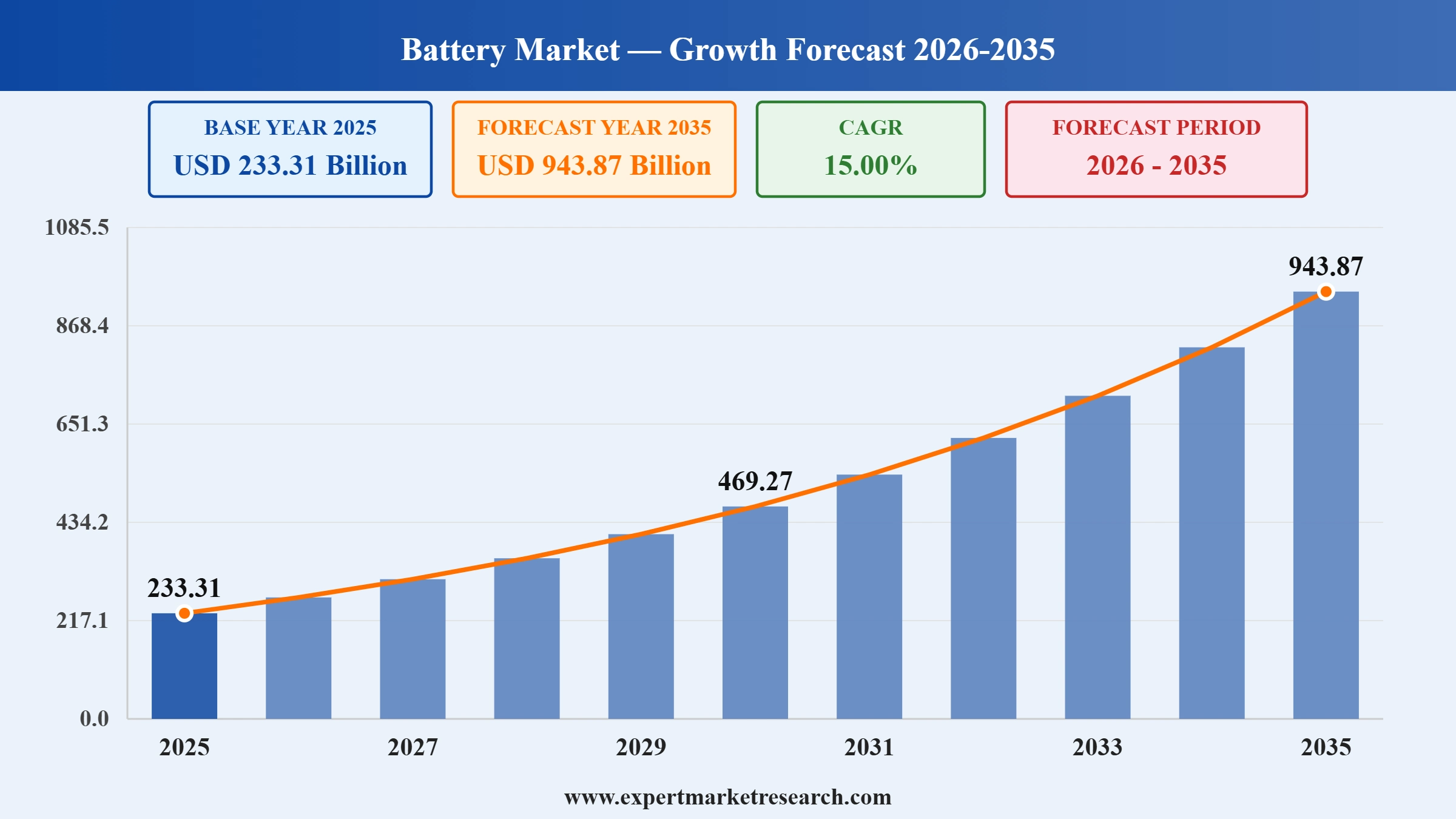
The battery market attained a value of USD 233.31 Billion in 2025 and is projected to expand at a CAGR of 15.00% through 2035. The market is further expected to achieve USD 943.87 Billion by 2035. Increasing usage of battery energy storage systems for renewable power generation is driving innovations for safe and durable batteries, which is opening new avenues for businesses involved in manufacturing batteries.
The growing trend of localized manufacturing of batteries is fueling the growth of the battery market as governments are promoting manufacturing within their countries by means of offering tax benefits, infrastructure development, and business collaborations. At the same time, rapid developments in battery recycling technology are helping companies recycle critical minerals from used batteries without the need for raw material extraction.
The most significant factor affecting the battery market is the quick adoption of lithium iron phosphate and high energy density batteries for electric mobility and stationary applications. In April 2025, CATL launched its second-generation Shenxing battery which is fast charging and able to provide long-range drive with ultra-fast charging while providing performance in cold weather. This kind of innovation makes easy for automobile companies to shift towards mass adoption of EVs and minimize charging anxiety. As per statistics from International Energy Agency, more than 20 million electric vehicles were sold around the globe in 2025 which is pushing the market beyond one terawatt hour demand.
There is consistent change taking place in the battery market as producers try to adopt localized production, diverse raw materials and next generation battery chemistry. Investments are being made by battery producers on silicon anode, sodium-ion battery, solid state battery, and improved battery management system to increase energy density and performance. Besides that, production incentives, localization and clean energy investments are being provided by government organizations in North America, Europe and Asia Pacific region. In August 2026, Sila received a conditional USD 1.4 billion loan commitment to expand domestic silicon-carbon anode and battery cell manufacturing.
Read more about this report - REQUEST FREE SAMPLE COPY IN PDF
| Global Battery Market Report Summary | Description | Value |
| Base Year | USD Billion | 2025 |
| Historical Period | USD Billion | 2019-2025 |
| Forecast Period | USD Billion | 2026-2035 |
| Market Size 2025 | USD Billion | 233.31 |
| Market Size 2035 | USD Billion | 943.87 |
| CAGR 2019-2025 | Percentage | XX% |
| CAGR 2026-2035 | Percentage | 15.00% |
| CAGR 2026-2035 - Market by Region | Europe | 16.1% |
| CAGR 2026-2035 - Market by Country | India | 19.6% |
| CAGR 2026-2035 - Market by Country | Canada | 17.1% |
| CAGR 2026-2035 - Market by Product | Lithium-Ion | 15.7% |
| CAGR 2026-2035 - Market by Application | Automotive Batteries | 18.7% |
| Market Share by Country 2025 | Germany | 5.4% |
Deployment of UNIGRID's sodium-ion batteries for residential use extended to Europe, with United States shipments planned, focusing on the resilient energy storage market segments. Battery market companies may develop sodium-ion batteries for residential use, extreme temperatures, and non-lithium-ion battery alternative markets.
CATL released Tianxing II, an 8C ultra-fast-charging battery designed for commercial EVs, which would take less than seven minutes to reach 80% charge for fleet usage. Battery developers may target commercial fleets with ultra-fast-charging technology that would minimize downtime and improve battery life and cold-temperature capability.
Gen-ECB battery platform was introduced by Solidion that is ideal for extreme environments and space technologies like satellites, the moon, and AI data centers. The battery market players should look into developing special batteries for applications that need thermal stability and energy storage.
CATL and CHANGAN rolled out the first commercialized sodium-ion passenger vehicle in the world, moving further into the adoption of dual chemistry across electric mobility sectors around the world. Automakers and battery providers can therefore develop programs involving sodium-ion vehicles.
Manufacturers of batteries are building more gigafactories to address the increase in demand due to electric vehicles, energy storage solutions for renewable sources, and electrification of industries. For instance, LG Energy Solution, Samsung SDI, CATL, and Northvolt continue investing more in regional manufacturing capabilities with help from partnerships with automobile OEMs, boosting the battery market growth. In August 2026, Ola Electric expanded its gigafactory strategy into energy storage, drones, defense, and near-space battery applications. In the United States, the Inflation Reduction Act is encouraging companies to build local factories for batteries and components by offering production tax credits and thus attracting billions of dollars of private investments.
Developers of batteries are rapidly developing the technology of solid-state batteries, silicon-based anodes, sodium-ion batteries, and lithium manganese iron phosphate batteries, broadening the battery market scope. Toyota is continuing to expand the production of pilot batches of its solid-state batteries for use in next generation electric vehicles. CATL and HiNa Battery are continuing to expand their use of sodium-ion batteries that can provide affordable mobility and stationary energy storage. On the other hand, in June 2026, Stellantis and Factorial integrated advanced solid-state batteries into a development vehicle, beginning road testing for performance validation. The Ministry of Economy, Trade and Industry of Japan continues to support advanced batteries through national innovation programs. The United States Department of Energy supports the next generation of batteries' chemistries through Battery Materials Processing and Battery Manufacturing Program.
Grid-level battery storage technologies are becoming crucial for balancing the generation from intermittent sources and enhancing grid reliability, propelling demand in the battery market. Leading energy companies such as Tesla Energy, Fluence Energy, Wärtsilä Energy, and Sungrow are implementing large-scale battery storage projects coupled with solar/wind power farms. In August 2026, Serentica Renewables commissioned its first 200MWh BESS phase in Rajasthan, India, supporting round-the-clock renewable power for industrial consumers. In the government front, the United States Department of Energy is providing financing for long-duration storage systems that would enhance grid resilience while India's Ministry of Power has set the guidelines for procurement of energy storage systems for renewable energy.
Recycling is becoming an urgent issue for battery market players who need to ensure their supply of lithium, nickel, cobalt, graphite, and manganese and minimize environmental footprint. Redwood Materials, Li-Cycle, and Umicore are building commercial recycling centers for recovering battery-grade materials that can be used to produce new batteries. In May 2026, SUEZ partnered with Eagol New Energy Group to advance battery recycling and strengthen circular solutions for energy storage. The EU Battery Regulation sets out requirements for recycling efficiency and the recovery of the materials used for producing batteries. The United States Department of Energy is funding research on battery recycling at the ReCell Center.
Battery makers are now developing long-term relationships with miners, car companies, technology companies, and renewable energy firms to provide raw materials and innovative materials. GM and LG Energy Solution are continuing to develop their Ultium Cells manufacturing partnership, and CATL is also developing supply partnerships with many global automakers for the production of electric vehicles, accelerating the battery market growth. In April 2026, Lion Energy partnered with American Battery Factory to strengthen United States LFP battery manufacturing and domestic energy storage supply chains. The European Battery Alliance is advocating for international collaboration in industry to enhance the competitiveness of the batteries in that region, while the South Korean government is advocating strategic investments in battery materials through its industrial policies.
Read more about this report - REQUEST FREE SAMPLE COPY IN PDF
The EMR’s report titled “Global Battery Market Report and Forecast 2026-2035” offers a detailed analysis of the market based on the following segments:
Market Breakup by Product
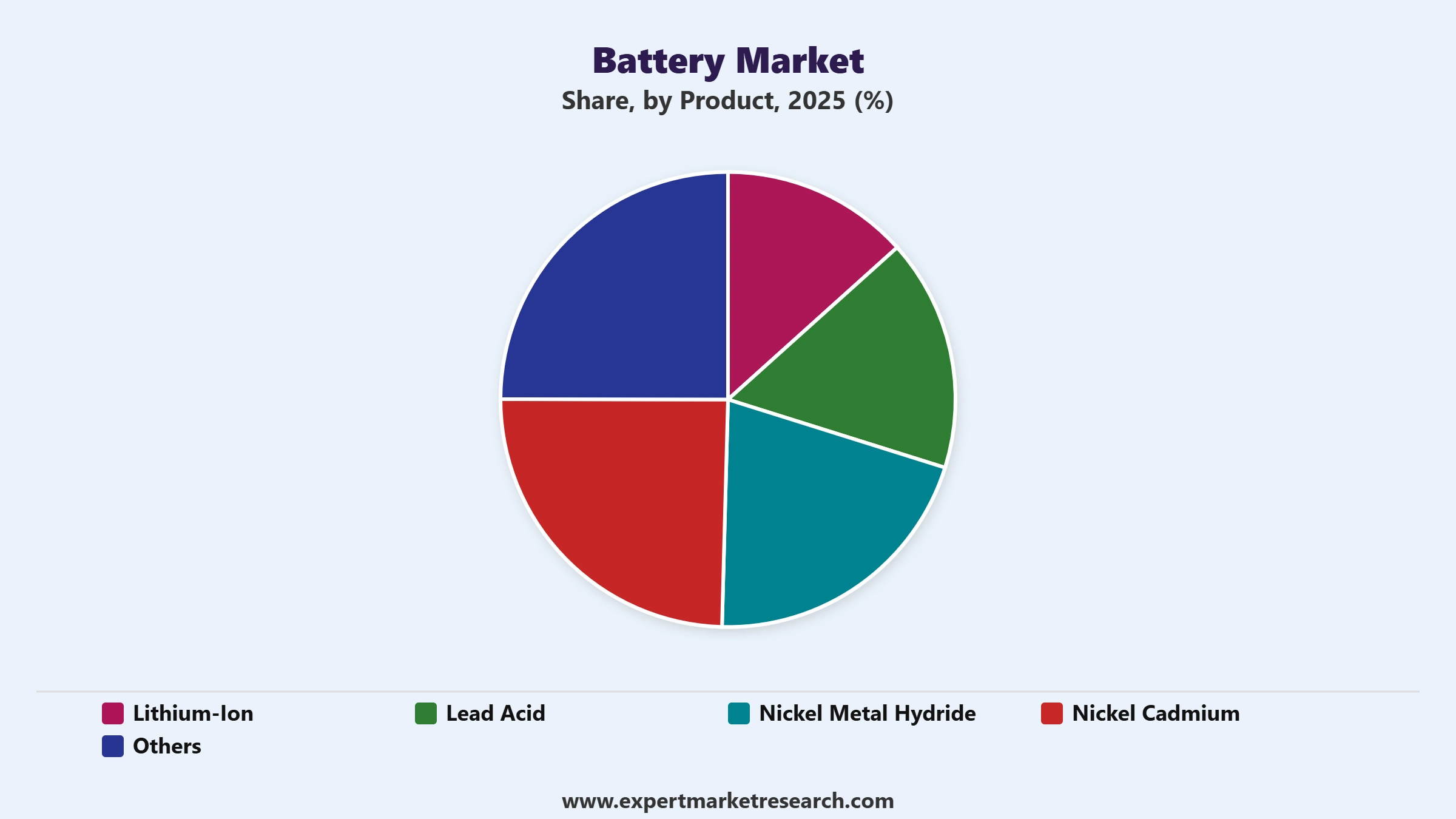
Key Insight: The battery market report analyzes lithium-ion, lead acid, nickel-metal hydride, nickel-cadmium batteries, and some new battery technologies which cater to different operational needs. The dominance of lithium-ion is maintained due to its high energy density and wide-ranging applicability in the field of transport and energy storage. Lead acid keeps expanding its market share through inexpensive backup power as well as recycling facilities. In October 2025, Toshiba launched a new SCiB 24V lithium-ion battery pack for automotive, marine, and heavy equipment applications. Nickel-metal hydride is relevant for use in hybrid cars and electronics. Nickel-cadmium finds application in tough industrial environments where durability under harsh working conditions becomes crucial.
Market Breakup by Application
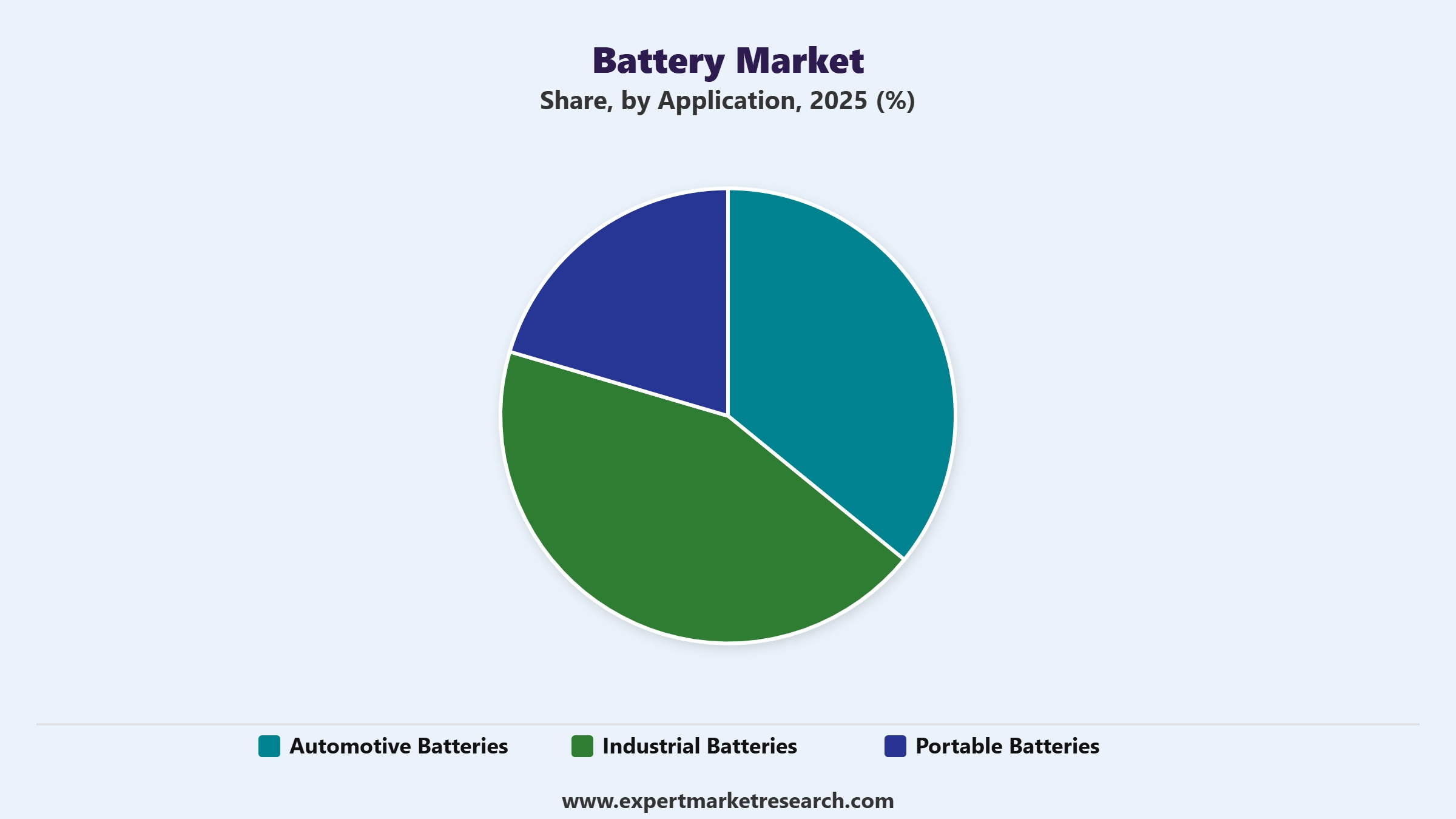
Key Insight: Demand in the battery market stems from different application areas such as automotive, industrial, and portable batteries; all having different needs in operation. Automotive batteries have the largest share as the capacity of electric vehicle production is increasing. Industrial batteries are in the process of rapid growth as utilities and manufacturers are making use of energy storage solutions for their operations. Portable batteries are being used in smartphones, laptops, wearables, and tools, where size and long operating life become important factors.
Market Breakup by Region
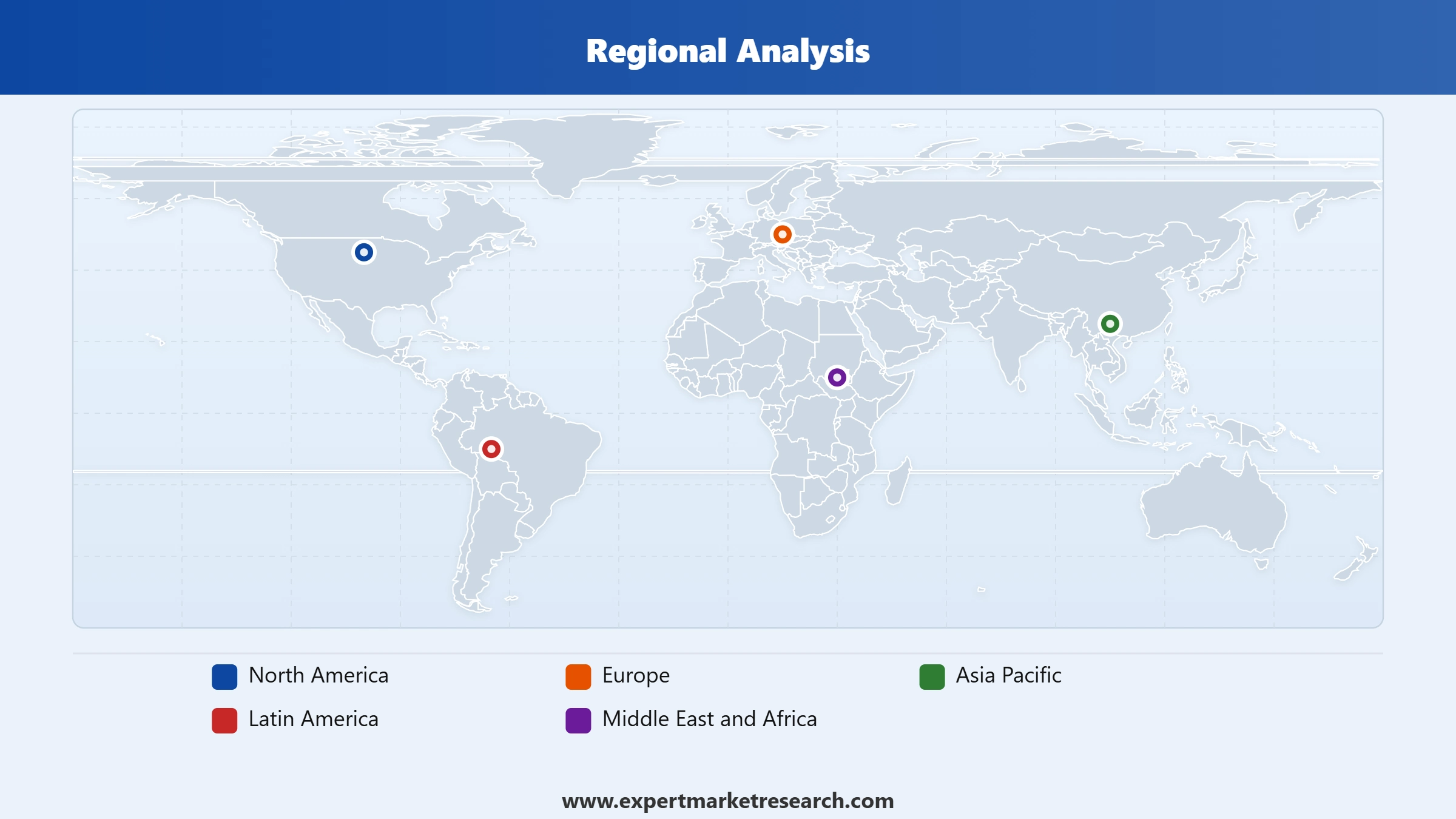
Key Insight: Growth patterns for the regional battery market vary based on their manufacturing capacity, industrial policies, and approaches towards electrification. Asia Pacific region leads through battery manufacturing, integrated logistics, and EV manufacturing. North America is witnessing rapid growth owing to battery manufacturing within the region, advanced recycling and efforts towards the adoption of clean energy. Europe is focusing on sustainable battery manufacturing, adopting circular economy approaches, and promoting low carbon technologies. Latin America is improving its position with an abundance of lithium in addition to mining investments for batteries. On the other hand, the Middle East and Africa regions are increasing their usage of batteries through renewable energy and industry developments.
Read more about this report - REQUEST FREE SAMPLE COPY IN PDF
By product, lithium-ion accounts for the largest market share due to superior energy density and EV adoption
The popularity of the lithium-ion battery market stems from their ability to provide high energy density, light weight, longevity, and fast-charging capacity. The continued dominance of lithium-ion batteries in the use of electric vehicles, consumer electronics, renewable energy sources, and other heavy-duty machines is driving the market leaders to invest in advanced technology and production techniques to increase their efficiency and secure their supply. The ongoing research related to improvements in the field of thermal management and recycling is further improving their reliability, ensuring lithium-ion batteries become an industry standard of high performance. In August 2026, Pure Lithium received Australian patent for its lithium-metal anode and battery technology, supporting next-generation energy storage.
Read more about this report - REQUEST FREE SAMPLE COPY IN PDF
The lead-acid battery market is being expanded due to the growing demand for inexpensive energy storage devices among businesses to store power for backup purposes, telecommunication, data centers, and for the purpose of renewable energy storage. The improvements in advanced lead-carbon technology are increasing its longevity and charging efficiency, keeping in view their affordable prices. The development in recycling techniques is keeping the lead-acid batteries at par in terms of sustainability.
By application, automotive batteries lead the market growth owing to accelerating electric mobility and hybrid vehicle production
Battery used in automobiles accounts for the largest application segment, as more car manufacturers across the world increase the production of electric and hybrid cars. Increased spending on battery-operated cars and vehicles, commercial fleets, and high-performance vehicles increases the need for better batteries. Battery market participants are prioritizing batteries with higher energy density, faster charging speed, and better safety features for meeting the new mobility demands. Long-term contracts between battery manufacturers and automotive Original Equipment Manufacturers (OEM), along with expansion of the charging network, are sustaining the leadership position of this segment in both developed and developing auto markets.
Read more about this report - REQUEST FREE SAMPLE COPY IN PDF
Growth in the industrial battery market is driven by increased usage in renewable energy storage, manufacturing units, telecommunications infrastructures, warehouses, and utilities. Smart batteries with predictive monitoring and longer lifespan are preferred to increase reliability and reduce maintenance expenditure. Investments in grid modernization and uninterrupted power supply infrastructure are further increasing the adoption. Need for reliable high-capacity batteries for continuous operation in logistics automation and data centers is rising. In April 2026, LiNova Energy unveiled high-power polymer-based battery technology targeting AI data centres’ growing power and reliability demands.
Read more about this report - REQUEST FREE SAMPLE COPY IN PDF
Asia Pacific registers the dominant share in the market through integrated battery manufacturing and electric vehicle leadership
The Asia Pacific region leads the global battery market owing to its possession of the world's largest battery manufacturing ecosystem which includes electric vehicles manufacturing, logistics infrastructure, and battery material processing. Manufacturers from China, Japan, and South Korea are continuing their investments in battery chemistries, automation, and battery exports. Electrification, renewable energy storage, and battery innovations are being promoted within the regions' government policies. This allows companies to produce batteries efficiently, and compete in automotive, industrial, and consumer electronics markets.
North America records the fastest regional growth rate due to the expansion of the battery manufacturing capacity via construction of gigafactories and processing of critical minerals. The strong policy support in relation to electric vehicle production and renewable energy sources is attracting international battery makers. Investments in recycling of batteries, processing of critical minerals, and innovations are helping to create more industrial partnerships while decreasing import dependence on battery components and materials. Aligning with this trend in the battery market, in August 2026, Base Power launched Base Core, a United States-built home battery, alongside USD 1 billion Series D financing to expand nationally.
Competition in the industry is escalating as battery companies are focusing on advanced chemical compositions, localization of production, battery recycling, and forming strategic alliances throughout the supply chain. Solid-state batteries, sodium-ion batteries, battery management systems powered by artificial intelligence, and rapid charging technologies are among the key innovations being developed by the battery manufacturers to differentiate themselves. Vertical integration is another crucial trend that entails manufacturers of batteries securing sustainable sources of supply of minerals such as lithium, nickel, graphite, and others through joint ventures for mining and refinement.
Lucrative opportunities for battery market players include battery energy storage systems, electrification of commercial vehicles fleets, aviation batteries, and data centers' AI-powered backup batteries. Battery manufacturers are increasingly collaborating with OEMs of cars, renewable energy project developers, and IT firms to develop battery systems tailored to different applications. Sustainability requirements in the regulations become increasingly stringent globally, and companies are expanding capacity for closed-loop recycling systems and digital battery passports to increase traceability, sustainability, and customer relations.
LG Energy Solution was formed in 2020 in Seoul, South Korea, and specializes in the development of lithium-ion batteries for electric cars, energy storage, and consumer electronics. In addition, the company keeps increasing its capacity in North America by researching lithium iron phosphate battery technology, recycling programs, and AI-driven battery quality control system.
GS Yuasa International was founded in 1917 in Kyoto, Japan. GS Yuasa International is engaged in the production of automotive, industrial, aviation, and energy storage batteries. Currently, the company pays more attention to the development of lithium-ion and lead-acid batteries as well as research in space batteries, aviation power sources, and industrial energy storage.
BYD Company was incorporated in 1995 and is based out of Shenzhen, China. The company produces batteries for electric cars, buses, commercial transport, and stationary purposes. The company has been continuously improving their Blade Battery product range by vertically integrating batteries manufacturing into vehicles manufacturing and improving safety, charging, and manufacturing efficiencies.
Exide Industries Ltd. was founded in 1947 and has headquarters in Kolkata, India. It manufactures both lead-acid and lithium-ion batteries for automotive, industrial, telecommunication, and renewable energy segments. The company is working on increasing its lithium-ion battery manufacturing capacities, developing battery recycling capabilities, and collaborating with technology partners for Indian electric mobility eco-system.
Other key players in the market include Johnson Controls, and Panasonic Corporation, among others.
*Please note that this is only a partial list; the complete list of key players is available in the full report. Additionally, the list of key players can be customized to better suit your needs.*
Unlock the latest insights with our battery market trends 2026 report. Discover regional growth patterns, consumer preferences, and key industry players. Stay ahead of competition with trusted data and expert analysis. Download your free sample report today and drive informed decisions in the market.


Upto 15% Off
USD
$2499 $2249
$3999 $3599
$4999 $4249
$5999 $5099


*While we strive to always give you current and accurate information, the numbers depicted on the website are indicative and may differ from the actual numbers in the main report. At Expert Market Research, we aim to bring you the latest insights and trends in the market. Using our analyses and forecasts, stakeholders can understand the market dynamics, navigate challenges, and capitalize on opportunities to make data-driven strategic decisions.*
In 2025, the market reached an approximate value of USD 233.31 Billion.
The market is projected to grow at a CAGR of 15.00% between 2026 and 2035.
Securing critical minerals, managing volatile raw material prices, complying with evolving sustainability regulations, scaling battery recycling economically, and commercializing next-generation battery technologies without compromising safety remain major industry challenges.
The increasing research and development (R&D) by major players activities, technological advancements and innovations, the growing demand for sustainable batteries, and the surging usage of lithium-ion batteries are the key trends supporting the market expansion.
The major regions in the market are North America, Latin America, the Middle East and Africa, Europe, and the Asia Pacific.
The major products considered in the market report are lithium-ion, lead acid, nickel metal hydride, and nickel cadmium, among others.
The significant applications of battery include automotive batteries, industrial batteries, and portable batteries.
The key players in the market include LG Energy Solution, GS Yuasa International Ltd., BYD Company Ltd., Exide Industries Ltd., Johnson Controls, and Panasonic Corporation, among others.
The market is estimated to witness a healthy growth in the forecast period of 2026-2035 to reach USD 943.87 Billion by 2035.
Stakeholders are expanding regional manufacturing, strengthening mineral sourcing partnerships, investing in battery recycling, adopting AI-enabled production systems, and developing diversified battery chemistries to improving long-term competitiveness and resilience.
Explore our key highlights of the report and gain a concise overview of key findings, trends, and actionable insights that will empower your strategic decisions.
| REPORT FEATURES | DETAILS |
| Base Year | 2025 |
| Historical Period | 2019-2025 |
| Forecast Period | 2026-2035 |
| Scope of the Report |
Historical and Forecast Trends, Industry Drivers and Constraints, Historical and Forecast Market Analysis by Segment:
|
| Breakup by Product |
|
| Breakup by Application |
|
| Breakup by Region |
|
| Market Dynamics |
|
| Competitive Landscape |
|
| Companies Covered |
|
Datasheet
One User
USD 2,499
USD 2,249
tax inclusive*
Single User License
One User
USD 3,999
USD 3,599
tax inclusive*
Five User License
Five User
USD 4,999
USD 4,249
tax inclusive*
Corporate License
Unlimited Users
USD 5,999
USD 5,099
tax inclusive*
*Please note that the prices mentioned below are starting prices for each bundle type. Kindly contact our team for further details.*
Flash Bundle
Small Business Bundle
Growth Bundle
Enterprise Bundle
*Please note that the prices mentioned below are starting prices for each bundle type. Kindly contact our team for further details.*
Flash Bundle
Number of Reports: 3
20%
tax inclusive*
Small Business Bundle
Number of Reports: 5
25%
tax inclusive*
Growth Bundle
Number of Reports: 8
30%
tax inclusive*
Enterprise Bundle
Number of Reports: 10
35%
tax inclusive*
How To Order

Select License Type
Choose the right license for your needs and access rights.

Click on ‘Buy Now’
Add the report to your cart with one click and proceed to register.

Select Mode of Payment
Choose a payment option for a secure checkout. You will be redirected accordingly.
Strategic Solutions for Informed Decision-Making
Gain insights to stay ahead and seize opportunities.

Get insights & trends for a competitive edge.

Track prices with detailed trend reports.

Analyse trade data for supply chain insights.

Leverage cost reports for smart savings

Enhance supply chain with partnerships.

Connect For More Information
Our expert team of analysts will offer full support and resolve any queries regarding the report, before and after the purchase.
Our expert team of analysts will offer full support and resolve any queries regarding the report, before and after the purchase.
We employ meticulous research methods, blending advanced analytics and expert insights to deliver accurate, actionable industry intelligence, staying ahead of competitors.
Our skilled analysts offer unparalleled competitive advantage with detailed insights on current and emerging markets, ensuring your strategic edge.
We offer an in-depth yet simplified presentation of industry insights and analysis to meet your specific requirements effectively.




