

Consumer Insights
Uncover trends and behaviors shaping consumer choices today
Procurement Insights
Optimize your sourcing strategy with key market data
Industry Stats
Stay ahead with the latest trends and market analysis.
The Brazil wheat market is projected to grow at a CAGR of 3.90% between 2026 and 2035. The market is being aided by the growing consumption of wheat-based products in Brazil.
Compound Annual Growth Rate
3.9%
2026-2035
Read more about this report - REQUEST FREE SAMPLE COPY IN PDF
| Brazil Wheat Market Report Summary | Description | Value |
| Base Year | USD Billion | 2025 |
| Historical Period | USD Billion | 2019-2025 |
| Forecast Period | USD Billion | 2026-2035 |
| Market Size 2025 | USD Billion | XX |
| Market Size 2035 | USD Billion | XX |
| CAGR 2019-2025 | Percentage | XX% |
| CAGR 2026-2035 | Percentage | 3.90% |
| CAGR 2026-2035 - Market by Region | São Paulo | 4.5% |
| CAGR 2026-2035 - Market by Region | Rio de Janeiro | 4.2% |
| CAGR 2026-2035 - Market by Product | Flour | 4.4% |
| CAGR 2026-2035 - Market by Application | Food | 4.3% |
| 2025 Market Share by Region | Rio de Janeiro | 17.3% |
Brazil, home to a population of 215 million, has a wheat and wheat-based product consumption exceeding 12 million tonnes annually, surpassing the national production forecast of approximately 9.5 million tonnes for the marketing year 2024-25. Consequently, Brazil ranks among the top ten wheat importers globally, with Argentina supplying over 80% of its imports. The expanding population of Brazil, coupled with increasing income levels, is leading to a surge in the consumption of wheat-derived products, including bread, pasta, and various processed foods. This escalating domestic demand plays a crucial role in propelling the wheat market forward.
Despite being a significant agricultural player in corn and soybean production, Brazil aims to achieve self-sufficiency in wheat production within the next decade, as reported by the Foreign Agricultural Service (FAS) of the US Department of Agriculture (USDA). The majority of wheat cultivation occurs in the southern states, particularly Rio Grande do Sul and Paraná, which together account for around 80% of the nation's total wheat output. Furthermore, developments in agricultural technology and farming methodologies are enabling Brazilian farmers to enhance their wheat production. This encompasses the implementation of innovative wheat varieties, improved soil management techniques, and more effective irrigation methods, all of which can lead to a rise in domestic output.
Read more about this report - REQUEST FREE SAMPLE COPY IN PDF
Brazil’s National Supply Company (Conab) revised its 2026 wheat outlook in August 2026, estimating planted area at 1.947 million hectares, 20.4% below the 2025 season and the smallest area since 2017. Production was reduced to 5.813 million tonnes, down 26.2% year-on-year. With domestic availability tightening, Conab raised its wheat import forecast by 4% to 7.1 million tonnes for August 2026-July 2027 and lowered its export forecast to 1.497 million tonnes. The revision indicates increasing dependence on imported wheat to balance Brazilian millers’ requirements.
Brazilian wheat imports were forecast to increase in 2026 as higher fertiliser and fuel costs and concerns about an El Niño weather pattern reduced incentives for domestic planting. Industry group Abitrigo estimated that imports could reach around 7 million tonnes, compared with 6.87 million tonnes in 2025. The sourcing pattern was also expected to become more diversified, with Brazilian millers potentially purchasing 1-1.5 million tonnes from origins outside Mercosur. Argentina’s wheat quality concerns were cited as a factor that could increase purchases from the United States and Russia.
Embrapa launched BRS Savana and BRS Cracker at AgroBrasília 2026, expanding the range of wheat genetics available for tropical production environments. BRS Savana was developed for rainfed cultivation and incorporates resistance to blast, while BRS Cracker is an irrigated cultivar positioned for high productivity and differentiated markets. The launch is significant for Brazil’s wheat industry because it supports the expansion of cultivation beyond traditional southern producing areas into the Cerrado. Greater adoption of wheat adapted to tropical conditions could broaden the country’s domestic production base and reduce geographic concentration of supply.
Brazil’s National Supply Company (Conab) conducted government-supported Pepro and PEP wheat auctions during 2026 to support producers and facilitate the movement of wheat from the southern producing region. Under Pepro, producers or cooperatives could receive a subsidy after demonstrating that wheat had been sold and transported according to auction rules, while PEP provided support to industries purchasing wheat at the government-established minimum price and demonstrating its subsequent movement. The programme is particularly relevant to Rio Grande do Sul, Santa Catarina and Paraná, helping maintain price support and improve wheat marketing conditions for producers.
Brazil’s wheat market is facing a notable contraction in domestic production. IBGE’s July 2026 agricultural survey estimated wheat output at 6.357 million tonnes, down 18.6% from 2025 and 4.2% below the previous monthly estimate. The decline reflects reduced planting and weaker producer economics, with wheat prices offering limited profitability after recent production and quality losses linked to adverse weather in southern states. Conab’s September 2026 assessment also confirmed that wheat production was among the crops expected to decline in 2025/26. The contraction is increasing the importance of imports for Brazilian millers and food processors, particularly when domestic harvest volumes are insufficient to meet consumption requirements.
Brazilian wheat procurement is becoming more dependent on international suppliers as domestic production declines. Data from São Paulo’s Institute of Agricultural Economics showed that Brazil imported 3.42 million tonnes of wheat between January and July 2026, although this was 18.3% lower than the volume imported during the same period of 2025. Wheat nevertheless remained the country’s leading agribusiness import product by volume and generated US$770.45 million in import value during the period. The combination of lower domestic production and continued large-scale imports is reinforcing the importance of international sourcing for Brazilian flour mills, pasta manufacturers, bakeries and other wheat-consuming industries.
Climate conditions are becoming a major factor influencing Brazil’s wheat production and quality. In July 2026, Brazil’s National Institute of Meteorology reported that wheat sowing had reached 94.7% of the planned area, but heavy rainfall in western and southwestern Paraná increased phytosanitary pressure, particularly the risk of fungal diseases and leaf spots. Rio Grande do Sul had reached 87% of its planned sowing, while Santa Catarina benefited from drier conditions that supported germination and crop establishment. These regional differences are increasing the importance of disease management, weather monitoring and agronomic technologies for maintaining wheat yields and grain quality across Brazil’s southern production belt.
Brazilian wheat producers are increasingly under pressure to deliver consistent grain quality alongside adequate yields. IBGE linked the reduction in 2026 wheat cultivation partly to recent production losses and quality problems caused by climate conditions in the South. This is significant because Brazilian millers require wheat with characteristics suited to different flour applications, while weather-related deterioration can reduce the usability and commercial value of harvested grain. The combination of lower prices and recurring quality losses is influencing producers’ planting decisions. Consequently, breeding for disease and climate tolerance, improved crop management and more reliable grain quality are becoming increasingly important for strengthening the competitiveness of locally produced wheat against imported supplies.
Brazil’s wheat market is increasingly being managed around the interaction between domestic harvests and international supply availability. Conab maintains monthly supply-and-demand assessments covering wheat production, stocks, imports, exports and domestic use, reflecting the crop’s importance to national food supply planning. The latest 2026 estimates show wheat moving differently from Brazil’s broader grain complex: while overall 2025/26 grain production is projected at 361.7 million tonnes, wheat is among the crops registering a decline from the previous season. This divergence is encouraging closer attention to wheat-specific inventories, import requirements and supply balances rather than relying on the broader strength of Brazil’s agricultural production.
The growing global population and the consequent rise in food demand are boosting the consumption of wheat. The excellent nutritional profile of wheat, coupled with its exceptional storage properties, has made wheat one of the key components of sustainable and plant-based diets. Besides, wheat-based raw materials such as wheat protein and wheat starch are essential in the production of bread, baked goods, pasta, confectionery, and sauces, among others.
Key players in the market are developing wheat seeds that do not require synthetic fertilisers, improve soil health, meet the demands of eco-conscious consumers, and lower the environmental impact of farming.
"Brazil Wheat Market Report and Forecast 2026-2035” offers a detailed analysis of the market based on the following segments:
Market Breakup by Product
Market Breakup by Application
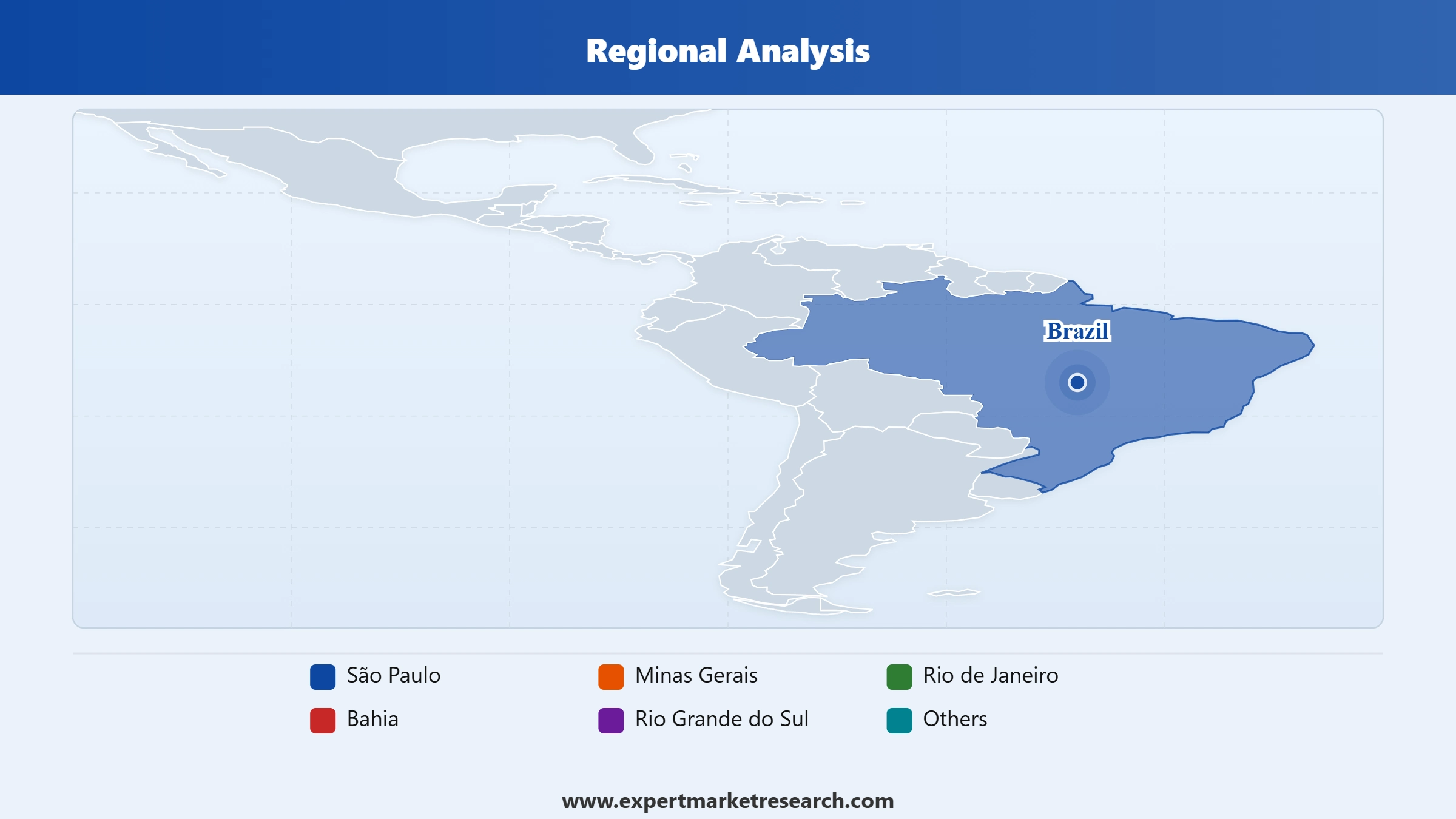
Market Breakup by Region
Read more about this report - REQUEST FREE SAMPLE COPY IN PDF
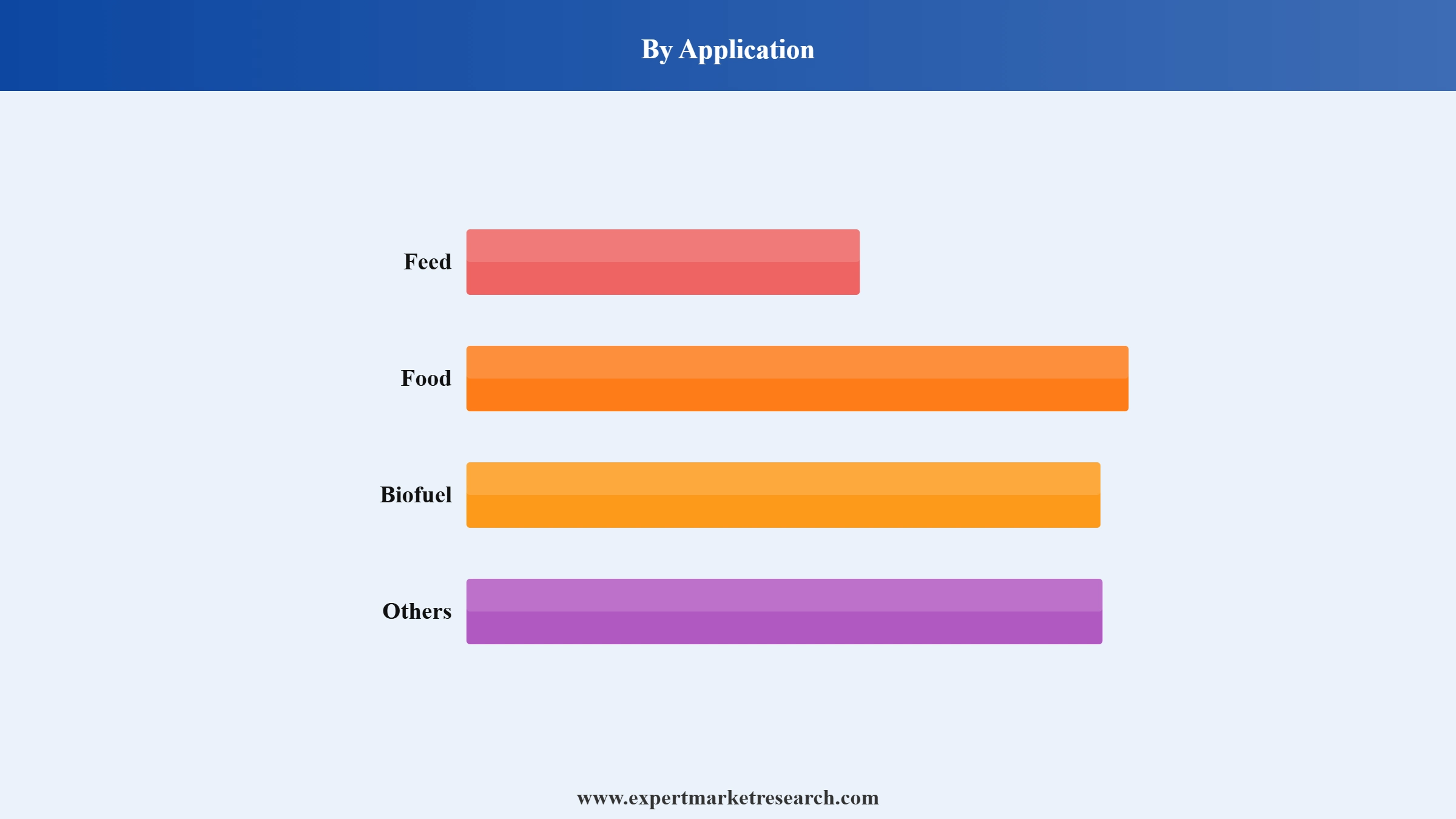
Based on the application, the market is segmented into feed, food, and biofuel, among others.
Read more about this report - REQUEST FREE SAMPLE COPY IN PDF
Food is projected to grow at a CAGR of 4.3% during the forecast period of 2026-2035. Wheat is used to make a wide variety of food products, including biscuits, pasta, cakes, noodles, breads, muffins, and crackers, among others.
Major players are focusing on organic and chemical-free wheat production to gain a competitive edge in the market.
The comprehensive report looks into the macro and micro aspects of the market. The EMR report gives an in-depth insight into the market by providing a SWOT analysis as well as an analysis of Porter’s Five Forces model.


Upto 15% Off
USD
$2499 $2249
$3999 $3599
$4999 $4249
$5999 $5099


*While we strive to always give you current and accurate information, the numbers depicted on the website are indicative and may differ from the actual numbers in the main report. At Expert Market Research, we aim to bring you the latest insights and trends in the market. Using our analyses and forecasts, stakeholders can understand the market dynamics, navigate challenges, and capitalize on opportunities to make data-driven strategic decisions.*
The market is assessed to grow at a CAGR of 3.90% between 2026 and 2035.
The market is being driven by the increasing population in the country and the rising efforts of Brazil to become a wheat-sufficient nation.
The key trends aiding the market expansion include the shift towards organic and chemical-free wheat production and the adoption of advanced agricultural technology and farming practices.
The major applications of wheat are feed, food, and biofuel, among others.
The major regions considered in the market are São Paulo, Minas Gerais, Rio de Janeiro, Bahia, and Rio Grande do Sul, among others.
The major players in the market are Ocrim S.A., SLC Agrícola S.A., and Olam Group Limited, among others.
Explore our key highlights of the report and gain a concise overview of key findings, trends, and actionable insights that will empower your strategic decisions.
| REPORT FEATURES | DETAILS |
| Base Year | 2025 |
| Historical Period | 2019-2025 |
| Forecast Period | 2026-2035 |
| Scope of the Report |
Historical and Forecast Trends, Industry Drivers and Constraints, Historical and Forecast Market Analysis by Segment
|
| Breakup by Product |
|
| Breakup by Application |
|
| Breakup by Region |
|
| Market Dynamics |
|
| Competitive Landscape |
|
| Companies Covered |
|
Datasheet
One User
USD 2,499
USD 2,249
tax inclusive*
Single User License
One User
USD 3,999
USD 3,599
tax inclusive*
Five User License
Five User
USD 4,999
USD 4,249
tax inclusive*
Corporate License
Unlimited Users
USD 5,999
USD 5,099
tax inclusive*
*Please note that the prices mentioned below are starting prices for each bundle type. Kindly contact our team for further details.*
Flash Bundle
Small Business Bundle
Growth Bundle
Enterprise Bundle
*Please note that the prices mentioned below are starting prices for each bundle type. Kindly contact our team for further details.*
Flash Bundle
Number of Reports: 3
20%
tax inclusive*
Small Business Bundle
Number of Reports: 5
25%
tax inclusive*
Growth Bundle
Number of Reports: 8
30%
tax inclusive*
Enterprise Bundle
Number of Reports: 10
35%
tax inclusive*
How To Order

Select License Type
Choose the right license for your needs and access rights.

Click on ‘Buy Now’
Add the report to your cart with one click and proceed to register.

Select Mode of Payment
Choose a payment option for a secure checkout. You will be redirected accordingly.
Strategic Solutions for Informed Decision-Making
Gain insights to stay ahead and seize opportunities.

Get insights & trends for a competitive edge.

Track prices with detailed trend reports.

Analyse trade data for supply chain insights.

Leverage cost reports for smart savings

Enhance supply chain with partnerships.

Connect For More Information
Our expert team of analysts will offer full support and resolve any queries regarding the report, before and after the purchase.
Our expert team of analysts will offer full support and resolve any queries regarding the report, before and after the purchase.
We employ meticulous research methods, blending advanced analytics and expert insights to deliver accurate, actionable industry intelligence, staying ahead of competitors.
Our skilled analysts offer unparalleled competitive advantage with detailed insights on current and emerging markets, ensuring your strategic edge.
We offer an in-depth yet simplified presentation of industry insights and analysis to meet your specific requirements effectively.




