

Consumer Insights
Uncover trends and behaviors shaping consumer choices today
Procurement Insights
Optimize your sourcing strategy with key market data
Industry Stats
Stay ahead with the latest trends and market analysis.
The global computer software market attained a value of USD 373.09 Billion in 2025 and is projected to expand at a CAGR of 6.20% through 2035. The market is further expected to achieve USD 680.86 Billion by 2035. Increased enterprise need for self-driving AI systems, interoperability, and usage-based software is prompting vendors to revamp their products in line with measurable workflow execution.
The growth of cloud-native development frameworks is resulting in increased software demands from businesses seeking to update applications and deploy them in a scalable, secure, and integrated manner. At the same time, tighter data governance and cybersecurity regulations are spurring spending on software that includes identity management, auditing features, observability, and compliance.
The computer software market is expected to face new changes as vendors turn the generative AI into a standalone piece of software that can be used to perform tasks independently. One of the significant changes was seen when Microsoft stated that the total number of its GitHub Copilot users reached 50 million in the first quarter of 2026, as per reports published in July 2026, with Copilot revenue growth exceeding 60 percent quarter over quarter. At the same time, Microsoft is enabling more than 650,000 actions through the Model Context Protocol in sales, finance, supply chain, HR, and customer service, which means a shift towards the agent-first enterprise applications. It is crucial as software vendors are trying to generate revenue not only through subscription fees based on usage but also by charging for autonomous workloads.
One of the current trends in the computer software market is the development of software platforms that can leverage proprietary enterprise data, AI models, governance, and workflow automation. In October 2025, Salesforce introduced Agentforce IT Service and stated that more than 180 companies opted for its service within four months after it became available on the market. The company targeted legacy IT service management systems, providing autonomous and collaborative agents instead.
Compound Annual Growth Rate
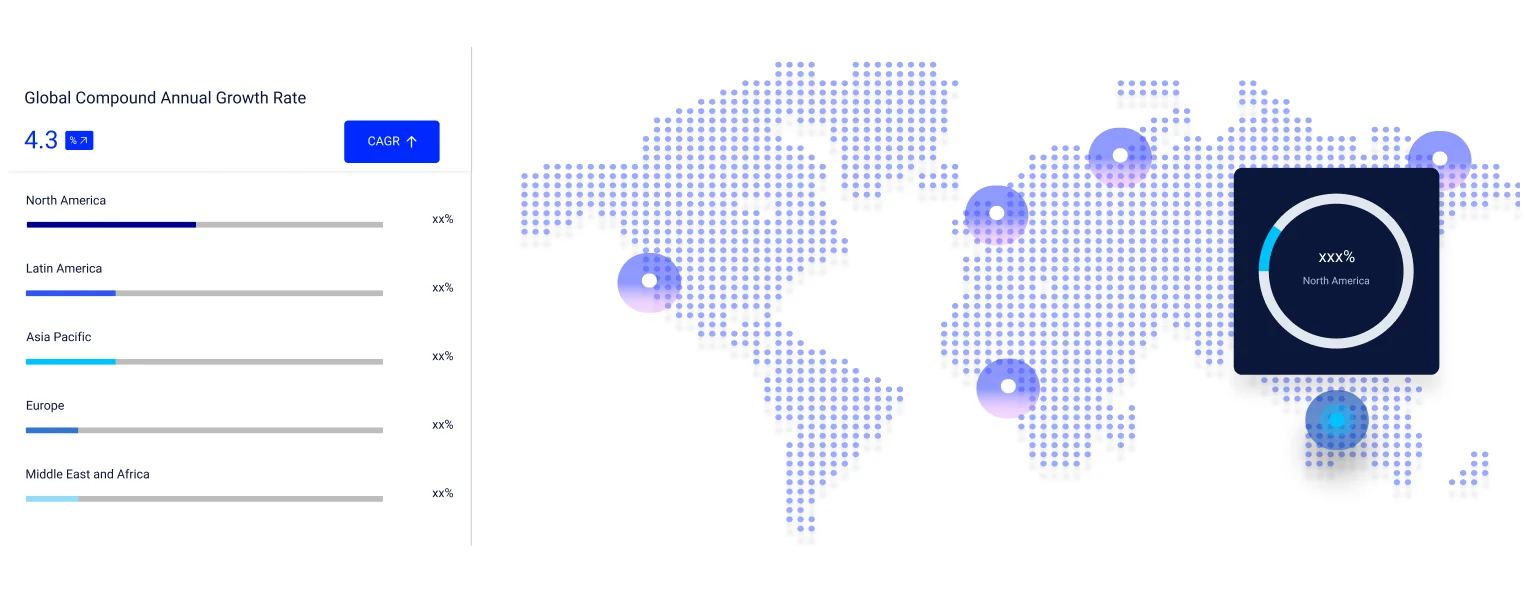
6.2%
Value in USD Billion
2026-2035
Read more about this report - REQUEST FREE SAMPLE COPY IN PDF
NVIDIA joined forces with six major financial institutions to raise over USD 500 billion in funding for AI compute infrastructure deployment. Companies in the computer software market can create solutions for management, orchestration, and optimization of AI infrastructure, as the compute capacity increases.
Microsoft announced the launch of its Frontier Company with an investment of USD 2.5 billion and 6,000 experts working on the development and optimization of enterprise AI. Vendors can address enterprise AI deployments with specialized solutions, widening the computer software market scope.
Newgen Software created an AI orchestration layer within NewgenONE which has agents, workflow, enterprise systems, governance, and operational intelligence capabilities. Competitors can develop interoperable orchestration layers to integrate AI agents, enterprise software, workflows, and governance processes in regulated industries.
Fujitsu introduced an AI-Driven Software Development Platform to automate requirement gathering, designing, coding, testing, and updating software. Developers can create AI-driven development tools that will automate legacy modernization, compliance update, and application maintenance.
AI Agentry is set to become a significant driving factor of the computer software market growth, as providers move from copilots to applications capable of performing multistep workflows. ServiceNow introduced AI Agent Orchestrator and AI Agent Studio in January 2025, backed by thousands of pre-built agents for IT, HR, customer service, and other departments. Modernization efforts in the public sector have also increased the demand for software, as ServiceNow reported in July 2026 that almost all 50 US states utilize its software. These trends present opportunities for companies offering governable and measurable industry-specific autonomous software solutions.
The growing importance of AI governance and interoperability is becoming one of the key criteria for enterprise software purchases, since enterprises employ agents offered by various providers. ServiceNow announced the expansion of its AI Control Tower integration with Microsoft Agent 365 in May 2026, allowing governance across Microsoft Foundry and Copilot Studio platforms. The solution is aimed at addressing agent sprawl problems by providing enterprises with centralized views, policies, and life-cycle management. Government needs are increasing this computer software market trend's significance. The Office of Management and Budget issued a requirement to appoint Chief AI officers and establish AI governance frameworks in March 2024.
Industry-specific software is starting to gain traction among vendors in the computer software market as they create AI functionalities for vertical workflow requirements and not general-purpose chat agents. Companies like Veltris are investing in vertical AI solution accelerators to modernize, monetize, and build solutions for micro-industries. While, in August 2026, Smobler expanded its vertical AI platform into food compliance, addressing HACCP, Halal, and regulatory requirements for businesses. The government is also motivating such vertical adoption through digital modernization programs and regulated AI policies. Hence, there is an opportunity for vendors to create purpose-built products for healthcare, finance services, manufacturing, government, legal, and telecom customers.
Enterprises' demand for proprietary generative AI models is creating computer software market trends for IP protection and custom content generation. In October 2025, Adobe launched Firefly Foundry, which enables enterprises to create highly tuned private models based on proprietary brand content in the domain of images, videos, audio, vectors, and 3D formats. Government policy encourages adoption of trusted AI through initiatives focused on responsible AI and risk management, like United States NIST AI RMF.
The growth enablers in cloud modernization and software security continue to provide a strong drive as firms in the computer software market migrate from disjointed applications to a cohesive platform that enables continuous delivery and enhances cyber resilience. Secure by Design is a policy being pushed forward by the United States' Cybersecurity and Infrastructure Security Agency, which adds more pressure on providers to ensure security becomes an integral aspect of products. GitHub introduced Copilot functionality for agentic software development in May 2025, with developers relying on automation for coding, testing, and mitigating vulnerabilities.
The Expert Market Research's report titled “Computer Software Market Report and Forecast 2026-2035” offers a detailed analysis of the market based on the following segments:
Market Breakup by Type
Key Insight: The computer software market includes a number of different types of software defined by different purchase motives. Operating systems and productivity software dominate the market owing to constant use, collaboration and interoperability, whereas the database, storage and backup software’s growth is fueled by ever-increasing demand for storing larger amounts of data. The category of business analytics and enterprise software is expanding market shares because of AI-based decision making and process integration. The category of design, editing, and rendering software depends on the needs for digital content creation, visualization, and immersive processes. There are other types of software addressing new demands via cybersecurity, specialized automation, development, and industry-specific software. In August 2026, Qualcomm and HUMAIN unveiled Horizon Ultra, an AI PC enabling advanced artificial intelligence processing directly on devices.
Market Breakup by Deployment
Key Insight: As per the computer software market report, on-premises software is key where there is emphasis on data sovereignty, infrastructure predictability, processing in-house, and security control. In August 2026, Gruve launched PulseAI, combining private AI infrastructure, agentic software, and enterprise security for secure deployments. The use of cloud deployment makes greater adoption possible owing to subscription-based pricing, upgrades, speed of delivery, and ease of integrating artificial intelligence and analytics services. Hybrid approaches are the solution for many customers, although they have varying needs depending on the nature of work. Suppliers capable of maintaining uniformity in functionality, security, and management regardless of deployment scenarios can cater to more clients and simplify application modernization processes.
Market Breakup by Application
Key Insight: The application segmentation demonstrates the variation in software requirements based on operating environments. The requirements for personal applications include communication, creation, productivity, entertainment, and device integrations. The business/commercial applications take precedence across the computer software market scope since the software helps with consumer engagement, finance, workforces' collaboration, security, and organization's internal operations. Industrial applications are increasing since the software integrates production systems with analytics, automation, engineering, and maintenance applications.
Market Breakup by End Use
Key Insight: The downstream ecosystem presents different opportunities in the computer software market. Media and entertainment categories are focused on creating content and distributing them digitally, BFSI focuses on security measures, fraud detection, analytics, and compliance, and IT and telecommunications is responsible for the creation of demand through infrastructure and network automation. The energy and utilities sector demands solutions for asset management and grid management, Government and public sector needs solutions for secure digital services and legacy systems transformation, while manufacturing implements software for connected manufacturing and predictive maintenance. Other sectors generate vertical-specific demand, which motivates software vendors to develop industry-specific solutions.
Market Breakup by Region
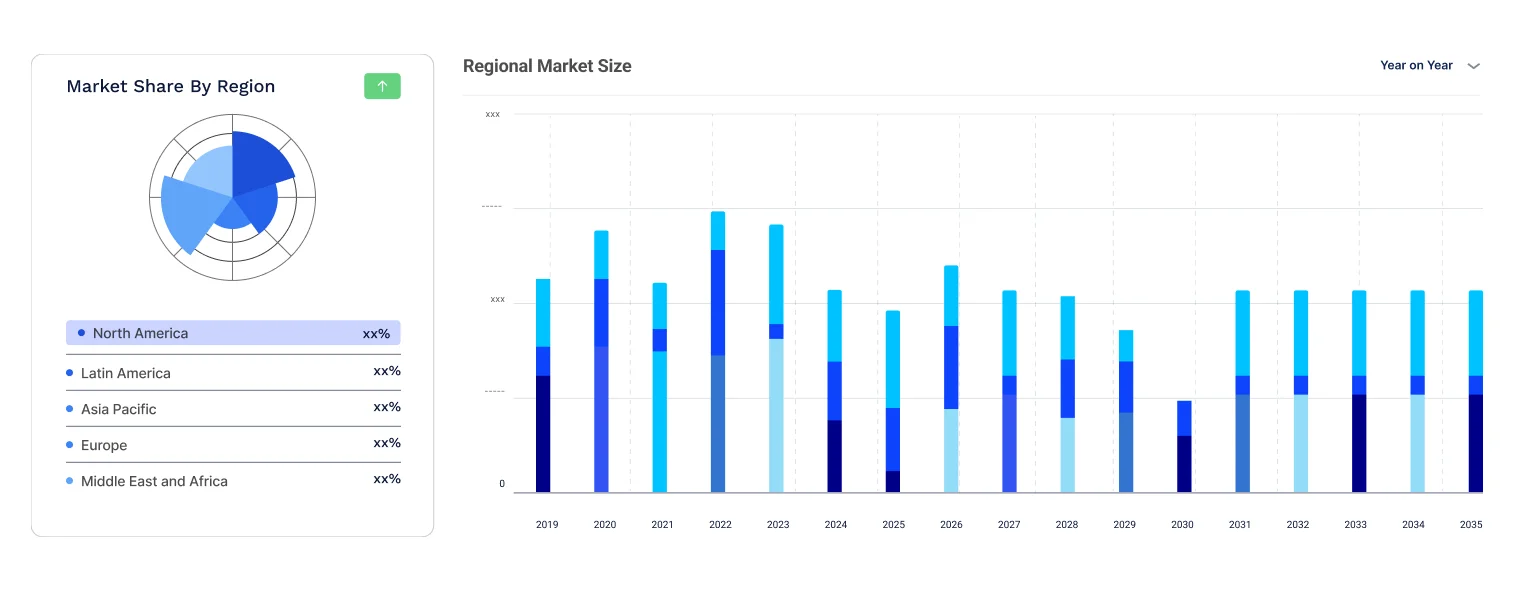
Key Insight: Regional demand dynamics in the computer software market are influenced by varying degrees of software maturity and digitalization. The leading region is North America due to high enterprise maturity, concentration of software vendors, and AI implementation. Europe focuses on regulation, data protection, security, and cross-border compatibility. Asia Pacific observes the most rapid growth owing to digitalization of infrastructure, cloud usage, industrial transformation, and varied enterprise demands. Latin America has its development driven by the digitalization of the finance sector and increasing cloud adoption, while the Middle East and Africa gain impetus from the state-supported development of smart infrastructure and digitization projects. In April 2025, Vritti Solutions expanded its global presence by launching operations in the UAE, strengthening its international software services footprint.
Operating systems and productivity software register the largest share of the market due to widespread enterprise standardization and recurring demand for collaboration tools
Operating systems and productivity software dominate the computer software market as it acts as a basic level software foundation for computing activities in enterprises, governments, educational organizations, and individuals. Demand driving factors include the need for OS upgrades, hybrid workplace needs, endpoint management, collaboration software, and AI integration. There is an increased preference among businesses for integrated ecosystems consisting of document management, communications, security, workflow, and identity management. The licensing through subscription ensures consistent revenue streams as well as updates to the product features. In August 2026, HUMAIN and Kora partnered to develop an AI-powered operating system, strengthening enterprise digital transformation and intelligent software capabilities.
Business analytics and enterprise software emerge as the fastest-growing subcategory in the computer software market since companies need solutions which help in turning the scattered operational information into intelligent decisions. Demand for the platforms combining analytics, ERP, customer management, automation, and predictive analytics are boosting this segment’s growth. Enterprises are preferring connected solutions instead of fragmented applications as this increases transparency in finance, sales, logistics, and HR processes. Generative AI technology is further increasing adoption by making data queries and insights automated. In August 2026, Thomson Reuters launched its own frontier AI model, leveraging proprietary data to enhance professional software and workflow solutions.
Cloud deployment registers the largest share of the market due to scalable subscriptions and integrated access
Cloud deployment largely contributes to the computer software market revenue due to increasing purchases of software via subscription services which minimize the need to own infrastructure and make deployment easy among distributed users. Enterprises prefer cloud deployment because of centralized updates, rapid release of new features, flexibility, elasticity, and easier integration with AI capabilities. Software companies also enjoy the ability to have continuous revenue streams, visibility into product usage, and chances to grow accounts by adding extra modules. In August 2026, Broadcom introduced VMware Private AI Cloud, enabling enterprises to scale secure AI workloads cost-effectively while keeping data local.
On-premises deployment turns out to be the fastest growing subsegment in the computer software market due to the fact that companies with sensitive information want to be able to manage data, infrastructure, and operations of AI models on their premises. It becomes the choice for government agencies, financial organizations, defense companies, and industries due to regulatory restrictions on using third-party cloud infrastructures to process data. It also gets support from edge computing and local AI inference due to connectivity and latency problems.
Business/commercial applications capture a significant market share due to intensive software use across core revenue and operational workflows
The business/commercial application segment is the most popular one since businesses require software to be used throughout all the income generation and administration procedures, accelerating the computer software market growth. Demand exists for enterprise resource planning, customer relationship management, collaboration, cybersecurity, analysis, accounting, and workflow automation software. In addition, organizations tend to converge software stacks to increase interoperability and make the procedure of managing separate software less complicated. The use of artificial intelligence in the features of software extends its range of use and automates employees' routine procedures. In April 2026, Intel launched Core Series 3 processors, delivering improved everyday computing performance, efficiency, and AI capabilities across affordable PCs.
Industrial applications also generate demand in the computer software market, as manufacturers and facility owners connect software with physical equipment and sensors of engineering and maintenance systems. The increasing demand appears in digital twins, predictive maintenance, industrial analysis, manufacturing execution, and asset performance management software. Such software helps organizations avoid disruptions and optimize equipment utilization and production planning.
IT and Telecommunications capture the largest share of the market due to extensive infrastructure software needs and continuous network modernization
The IT and telecommunications segment dominates the computer software market due to the extensive use of software by suppliers to facilitate their cloud computing, network management, cybersecurity, service assurance, customer systems and infrastructure automation. Increasing data volumes and complex distributed networks are driving the need for platforms that will offer centralized visibility and operational automation. Telecommunications operators are also applying AI in their network design and customer care services, making more demands for software on their traditional and advanced infrastructure.
The government and public sector end-use segment is rapidly expanding its share in the computer software market due to the modernization of citizen services, administration, data management, and technology infrastructure of governments. The need for secure cloud platforms, identity management, case management, digital process automation, and AI applications that have strong governance features is rising. In August 2026, India’s government launched a nationwide cloud and AI skilling initiative with Amazon Web Services to strengthen digital workforce capabilities.
Read more about this report - REQUEST FREE SAMPLE COPY IN PDF
North America secures the leading market position due to strong enterprise software spending and concentration of major technology vendors
North America is the key regional computer software market due to its extensive enterprise technology buyer base, established cloud infrastructure, and prominent software developers. Enterprises throughout the region have made investments in artificial intelligence platforms, cybersecurity, cloud migration, analytics, and workflow automation solutions for efficiency enhancement and competitiveness. The presence of prominent technology ecosystems helps drive software innovation through collaboration, development communities, and investments. In July 2026, IBM launched new Power Systems and software designed to help enterprises manage risk, improve productivity, and enhance flexibility.
Growth of the computer software market in Asia Pacific is driven by digital transformation efforts of enterprises and governments across rapidly developing economies. Investments in cloud software, artificial intelligence, cybersecurity, enterprise resource planning, digital public infrastructure, and cloud migration are seen. Diversity of markets offers opportunities for software vendors providing localized languages, flexible pricing, mobile integration, and vertical-specific functionality. Increased manufacturing activities and growing IT services are driving demand for engineering and industrial automation software.
The industry is a competitive one, where the major computer software market players are working with AI native applications, agentic applications, proprietary data integrations, cloud solutions, cyber security, and industry-specific software. For instance, Microsoft is developing agentic productivity and development tools while Google is embedding generative AI in its cloud and workspace solutions. Similarly, IBM is focusing on enterprise AI governance and hybrid infrastructure while Adobe is building commercially deployable AI models in its creative workflows.
One major opportunity for computer software companies is in developing software that would help to use AI beyond an assistant into something that does measurable business tasks. Some of the other areas of opportunities include interoperable platforms that integrate third party agentic tools and enterprise data. The rising need for sovereign AI, secured private deployments, and specific industry automation software is providing more opportunities.
Microsoft Corporation, established in 1975 and based out of Redmond, Washington, United States, is offering its products in the market through artificial intelligence-enabled productivity, cloud, developer, and enterprise software. Microsoft is further developing Copilot and agentic features, whereby users are able to automate coding, research, and business processes, while generating demand through subscriptions, cloud consumption, and enterprise-level AI solutions.
Alphabet Inc., established in 1998 and based out of Mountain View, California, United States, is meeting the needs of the market through Google Workspace, Google Cloud, Gemini, and AI development platforms. The strategy of the firm is increasingly focused on connecting foundation models with enterprise data and apps, whereby enterprises can build, deploy, and manage generative AI solutions.
Founded in 1911, IBM Corporation's headquarters are located in Armonk, New York, United States. The company is focused on enterprises that require hybrid cloud, AI governance, and secure software deployments. Watsonx plays an important role as it enables organizations to build and govern AI applications and keeps their workloads secure in controlled environments. IBM is focused on regulated industries and enterprise modernization projects.
Founded in 1982, Adobe Inc.'s headquarters are located in San Jose, California, United States. The company is focused on customers who use creative and marketing software and uses generative AI in existing workflows to help enterprises create content in accordance with brand specifications. The company's Firefly platform and customized AI models are used to address intellectual property challenges.
Other key players in the market include Oracle Corporation, SAP SE, Dell Inc., HP Inc., McAfee, LLC, Salesforce, Inc., NortonLifeLock Inc., and VMware, Inc., among others.
*Please note that this is only a partial list; the complete list of key players is available in the full report. Additionally, the list of key players can be customized to better suit your needs.*


Upto 15% Off
USD
$2499 $2249
$3999 $3599
$4999 $4249
$5999 $5099


*While we strive to always give you current and accurate information, the numbers depicted on the website are indicative and may differ from the actual numbers in the main report. At Expert Market Research, we aim to bring you the latest insights and trends in the market. Using our analyses and forecasts, stakeholders can understand the market dynamics, navigate challenges, and capitalize on opportunities to make data-driven strategic decisions.*
In 2025, the market reached an approximate value of USD 373.09 Billion.
The market is expected to grow at a CAGR of 6.20% between 2026 and 2035.
The market is estimated to witness a healthy growth in the forecast period of 2026-2035 to reach USD 680.86 Billion by 2035.
Stakeholders are building interoperable AI platforms, strengthening data governance, developing vertical solutions, embedding security, adopting flexible deployment models, and measuring customer outcomes to improve retention and expansion opportunities.
The demand for cloud-based deployment of computer software is expanding as it offers the benefit of flexibility and scalability.
North America, Europe, Asia Pacific, Latin America, and the Middle East and Africa are the regional markets analysed in the global computer software market report.
The different types of computer software are operating systems and productivity software; database, storage and backup software; business analytics and enterprise software; and design, editing and rendering software; among others.
The two deployment modes are on-premises and cloud.
Computer software is used for personal, business/commercial, and industrial purposes.
The end use sectors encompass media and entertainment, BFSI, IT and telecommunications, energy and utilities, government and public sector, and manufacturing, among others.
The key players in the market include Microsoft Corporation, Alphabet Inc. (Google LLC), IBM Corporation, Adobe Inc., Oracle Corporation, SAP SE, Dell Inc., HP Inc., McAfee, LLC, Salesforce, Inc., NortonLifeLock Inc., and VMware, Inc., among others.
Companies are facing rising AI infrastructure costs, cybersecurity threats, intellectual property disputes, fragmented data, interoperability issues, regulatory uncertainty, and customer pressure to demonstrate measurable returns from software investments.
Explore our key highlights of the report and gain a concise overview of key findings, trends, and actionable insights that will empower your strategic decisions.
| REPORT FEATURES | DETAILS |
| Base Year | 2025 |
| Historical Period | 2019-2025 |
| Forecast Period | 2026-2035 |
| Scope of the Report |
Historical and Forecast Trends, Industry Drivers and Constraints, Historical and Forecast Market Analysis by Segment:
|
| Breakup by Type |
|
| Breakup by Deployment |
|
| Breakup by Application |
|
| Breakup by End Use |
|
| Breakup by Region |
|
| Market Dynamics |
|
| Competitive Landscape |
|
| Companies Covered |
|
Datasheet
One User
USD 2,499
USD 2,249
tax inclusive*
Single User License
One User
USD 3,999
USD 3,599
tax inclusive*
Five User License
Five User
USD 4,999
USD 4,249
tax inclusive*
Corporate License
Unlimited Users
USD 5,999
USD 5,099
tax inclusive*
*Please note that the prices mentioned below are starting prices for each bundle type. Kindly contact our team for further details.*
Flash Bundle
Small Business Bundle
Growth Bundle
Enterprise Bundle
*Please note that the prices mentioned below are starting prices for each bundle type. Kindly contact our team for further details.*
Flash Bundle
Number of Reports: 3
20%
tax inclusive*
Small Business Bundle
Number of Reports: 5
25%
tax inclusive*
Growth Bundle
Number of Reports: 8
30%
tax inclusive*
Enterprise Bundle
Number of Reports: 10
35%
tax inclusive*
How To Order

Select License Type
Choose the right license for your needs and access rights.

Click on ‘Buy Now’
Add the report to your cart with one click and proceed to register.

Select Mode of Payment
Choose a payment option for a secure checkout. You will be redirected accordingly.
Strategic Solutions for Informed Decision-Making
Gain insights to stay ahead and seize opportunities.

Get insights & trends for a competitive edge.

Track prices with detailed trend reports.

Analyse trade data for supply chain insights.

Leverage cost reports for smart savings

Enhance supply chain with partnerships.

Connect For More Information
Our expert team of analysts will offer full support and resolve any queries regarding the report, before and after the purchase.
Our expert team of analysts will offer full support and resolve any queries regarding the report, before and after the purchase.
We employ meticulous research methods, blending advanced analytics and expert insights to deliver accurate, actionable industry intelligence, staying ahead of competitors.
Our skilled analysts offer unparalleled competitive advantage with detailed insights on current and emerging markets, ensuring your strategic edge.
We offer an in-depth yet simplified presentation of industry insights and analysis to meet your specific requirements effectively.




