

Consumer Insights
Uncover trends and behaviors shaping consumer choices today
Procurement Insights
Optimize your sourcing strategy with key market data
Industry Stats
Stay ahead with the latest trends and market analysis.
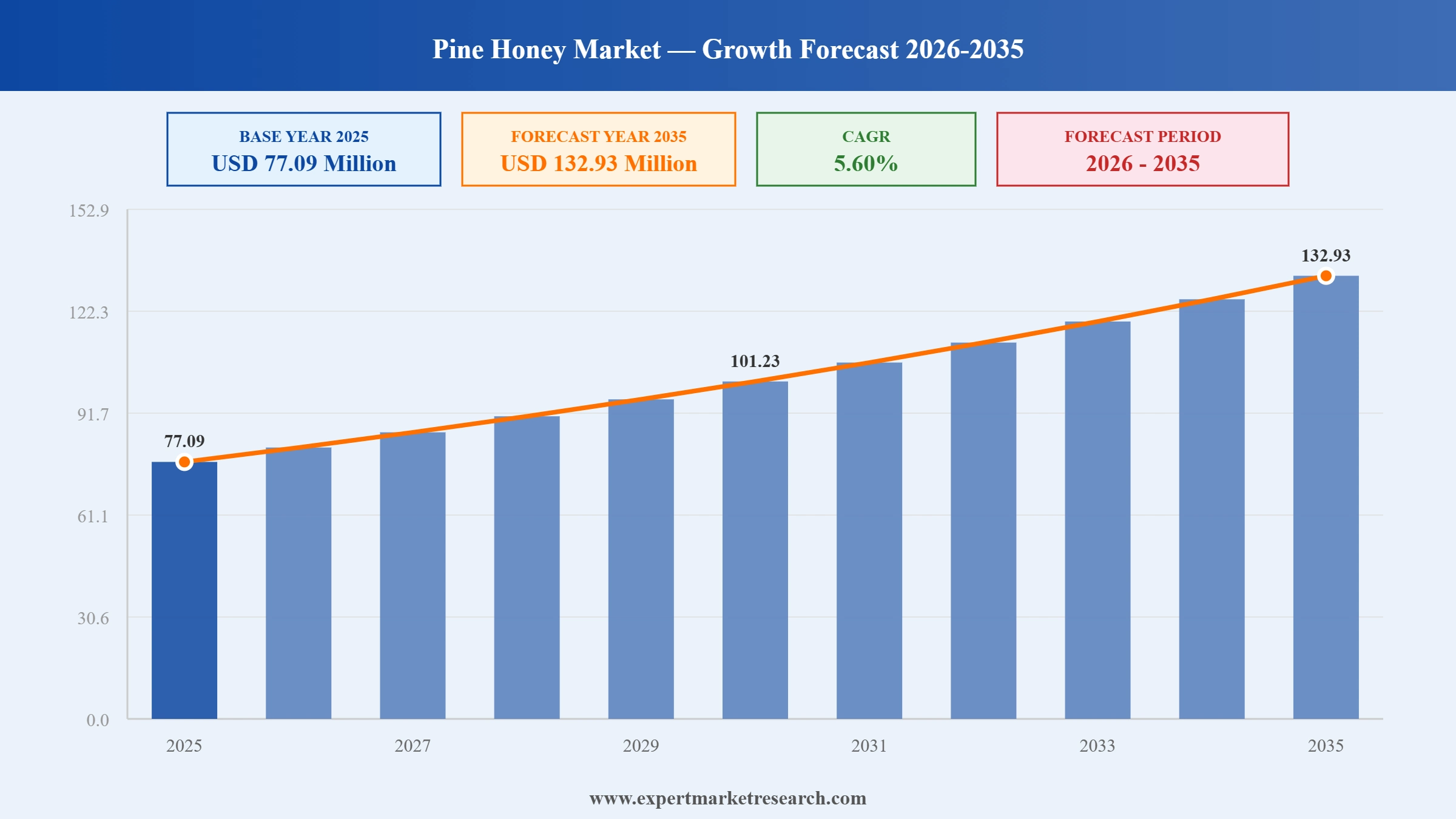
The global pine honey market attained a value of USD 77.09 Million in 2025 and is projected to expand at a CAGR of 5.60% through 2035. The market is further expected to achieve USD 132.93 Million by 2035. An increased requirement by the functional food industry for natural ingredients, which have been proven to possess antioxidants, is boosting pine honey consumption within premium nutrition, wellness drink, and nutraceutical products formulation industries.
According to Daily Sabah, Türkiye reinforced its position as the world's largest pine honey producer in April 2026 commentary from the Turkish Beekeepers Central Union. The country's Aegean and Mediterranean forests continued to anchor global supply, supporting export demand into Germany, the United States, and Gulf markets where pine honey is valued for its dark color, low glucose content, and distinctive resinous profile.
As covered by Kathimerini, Greek beekeeping associations advanced protected designation of origin (PDO) initiatives for pine honey from key producing regions in March 2026. The effort aligns with EU geographical indication frameworks and supports premium positioning for Greek pine honey in European specialty food retail, complementing Türkiye's volume leadership and supporting traceability for export markets.
There are two key factors that are motivating the growth of the pine honey market. The increasing inclusion of premium monofloral honey by food and beverages manufacturers in order to provide consumers with products containing natural ingredients is boosting market growth. Secondly, there is an increasing effort made by export-oriented companies in terms of procuring organic certifications defined by quality control systems in order to access mature international markets.
Commercial trends are becoming evident in the pine honey market in the form of an increased emphasis on traceability, geographical differentiation, and premium exporting opportunities. One of such trends was introduced into Greek honey producers' activities when producer associations and packers started developing protected origin certified pine honeys. Greece is still one of the world's largest pine honey producers; approximately 60% of Greek honey originates from pine trees. Due to such production volume, Greek processors are developing innovative solutions to ensure the filtration, authenticity testing, and even digital traceability of their products.
Trends in the pine honey market are currently being impacted by new product development strategies used by leading players in the honey processing industry. Honey producers are launching several varieties of monofloral pine honey that possess scientifically proven antioxidative characteristics. For example, in August 2025, QNET launched Nutriplus Monofloral Honey in India featuring sustainably sourced pure Ramtil and Tulsi variants. In addition, pine honey manufacturers are targeting food service, functional food, and wellness product manufacturers through their product lineups. Some producers are also building sustainable relationships with forest ecosystems to ensure future raw materials supplies.
Read more about this report - REQUEST FREE SAMPLE COPY IN PDF
Organic Yellow launched flavored honey sticks and health-focused campaigns, making honey more accessible and appealing to health-conscious millennials. To cater to busy wellness enthusiasts, companies can develop portable pine honey sticks that offer extra health benefits, boosting the pine honey market value.
Türkiye secured National Geographic Indication Protection for their pine honey. This boosted the company’s reputation as an authentic, premium product manufacturer that follows strict traceability, and made it more competitive in global markets. Such developments encourage companies to continue to push for such certifications and robust tracking systems to increase pine honey's worth, build consumer faith, and broaden its reach internationally.
Honey & Toast launched premium pine honey, touting its unique, woody flavors and presenting it as a specialty item. Other companies can also aim to create single-origin portfolios that offer distinct tastes and eco-friendly sourcing practices, leveraging such developments in the pine honey market.
Nutrica Foods penetrated the honey market with wellness-targeted formulations that are focused on energy, fitness, and immunity. Companies can therefore introduce pine honey formulations tailored for immunity, digestive health, and active lifestyle applications to capture functional food demand.
Origin certification is set to emerge as an important factor motivating the pine honey market growth due to differentiation in premium food chains. The demand for pine honey that carries regional origin certification is on the rise, resulting in investments towards traceability and authentication systems. Governments in Mediterranean honey producing countries are offering support in developing geographical indications that would preserve the traditional methods of production while boosting export capabilities. In the case of Greece, pine honey continues to be among the most popular varieties, leading producer associations to increase efforts in assuring quality. On the other hand, in January 2025, Country Delight introduced its 100% Pure Farm Honey, which has undergone extensive testing utilizing Nuclear Magnetic Resonance (NMR) technology.
There has been significant growth in the demand for functional foods, providing important pine honey market opportunities for producers. Pine honey is increasingly used by manufacturers in supplements, immune boosters, and health drinks due to its antioxidant properties. Many product manufacturers are turning away from processed sweeteners to natural sweeteners. There are several European ingredient suppliers who are developing pine honey-based formulations in the sports nutrition and healthy snack food sectors. Aligning with this trend, in January 2026, ForestHoney launched raw forest honey sourced from pristine forests, emphasizing purity, ethical harvesting, natural nutrition, and sustainability.
Concerns about the integrity of honey are prompting more investments in traceability technology within the pine honey market. Honey processing companies are utilizing blockchain technology, QR codes, and sophisticated lab analysis to provide proof of the authenticity and source of their products. Besides increasing compliance with the ever-strengthening food safety laws, this might help manufacturers gain credibility with buyers. In November 2024, Intertek introduced HoneyTrace, a blockchain-based platform enabling honey authentication, supply-chain transparency, fraud prevention, and regulatory compliance. Manufacturers realize that traceability will not only reduce risks along the supply chain but will also give producers an opportunity for premium positioning.
Production processes geared towards sustainability are becoming increasingly popular in the pine honey market. Producers are collaborating with forest authorities and environmental conservation organizations in order to cultivate the pine ecosystem conducive to the sustainable production of the product. Sustainability initiatives are helping conserve biodiversity as well as providing a guarantee of consistent sources of nectar and honeydew. For example, in May 2026, Kali Tiger Reserve introduced Adavi Jhenkara honey, supporting tribal livelihoods, sustainable harvesting, quality assurance, and conservation-led production. Environmental programs backed by the government in Mediterranean countries are promoting sustainable forest and pollinator management practices.
Premiumization is making an important impact on innovations in the pine honey market. Leading brands are coming up with luxury packages, single source honey products, and gift packs tailored to gourmet and specialty retailers. Good packaging in tandem with information on the sources of the honey enables brands to tell consumers about the authenticity of their honey products. Honey producers focusing on exports target wealthy consumers in Europe, Asia, and North America. For example, in March 2026, Nate’s Honey introduced USDA-certified Organic Honey Minis, expanding portable wellness options for organic-focused consumers nationwide.
The EMR’s report titled “Global Pine Honey Market Report and Forecast 2026-2035” offers a detailed analysis of the market based on the following segments:
Market Breakup by Product Type
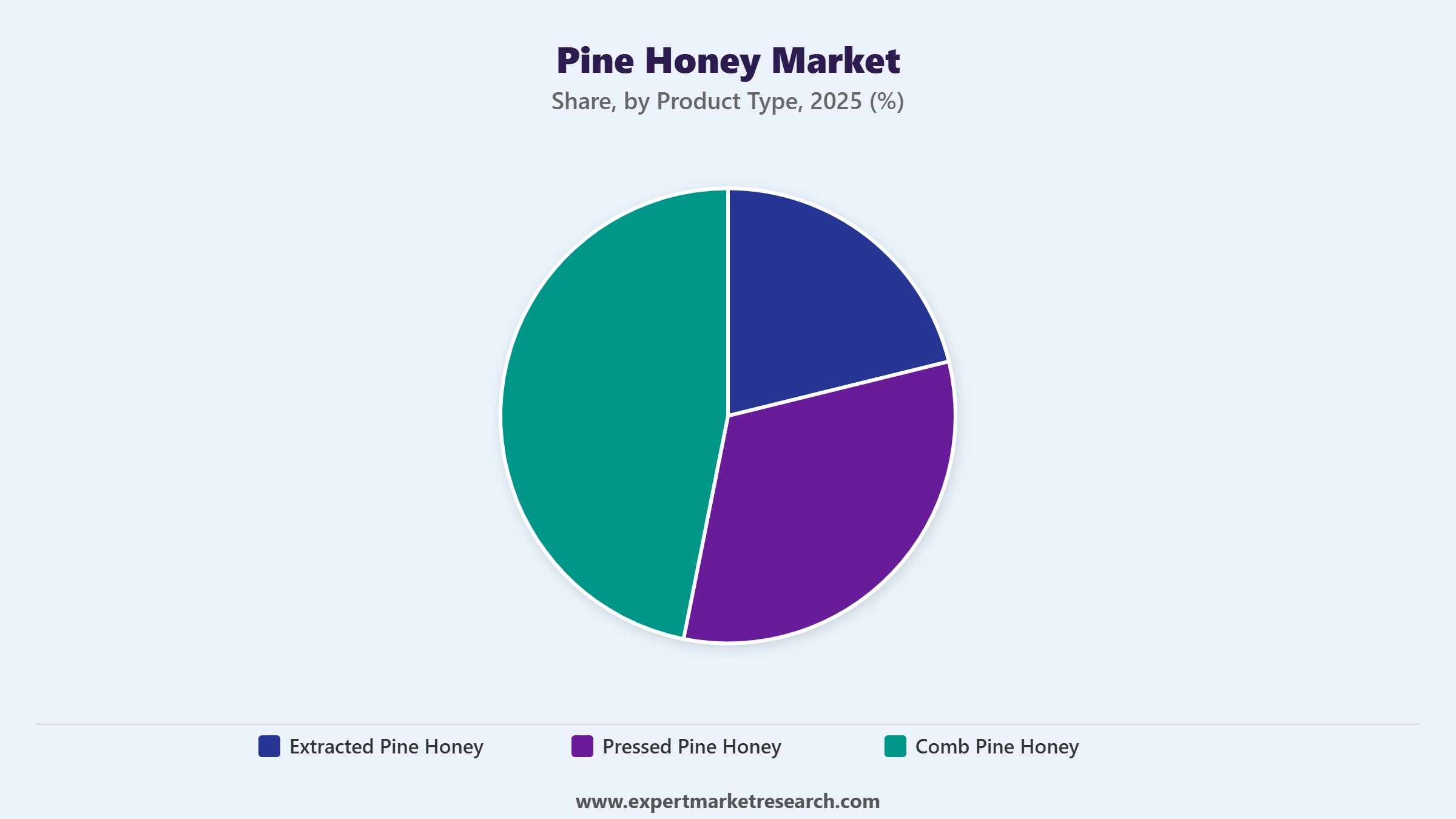
Key Insight: The product type landscape shows differences in customer needs depending on whether they buy in retail or industrial settings. Processed pine honey holds the leading position in the pine honey market considering its production efficiency, compatibility with exports, and versatility of usage. Pressed pine honey caters to the needs of specialized customers looking for honey that is extracted in the traditional way and offers unique taste. Rapid growth in comb pine honey is driven by premiumization tendencies and rising interest in authentic minimally processed honey products. In April 2026, Nate’s Honey introduced Peach Honey with natural peach flavor, expanding seasonal offerings, and enhancing honey-based culinary experiences.
Market Breakup by Application
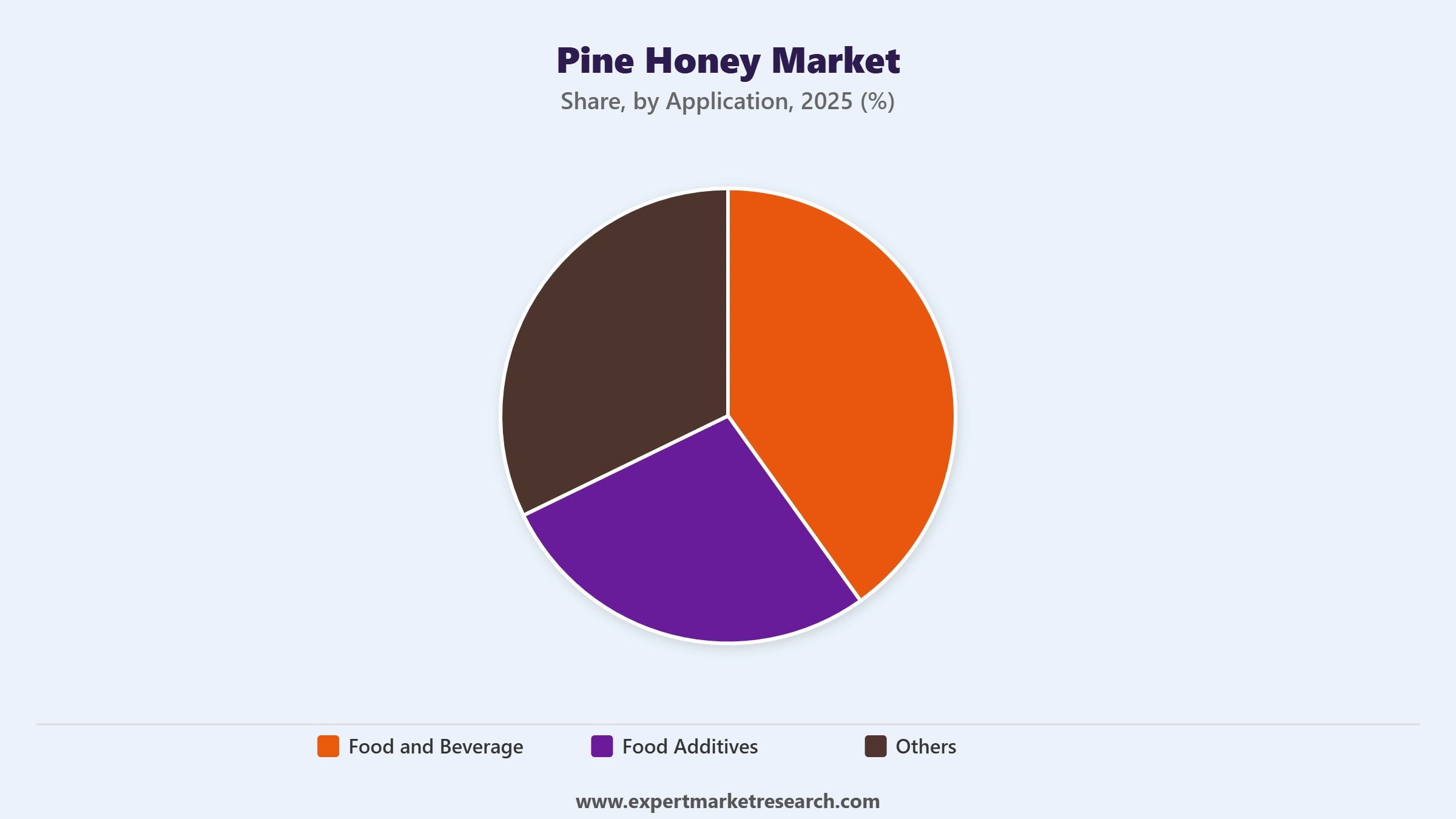
Key Insight: Trends in the application segment point toward an increase in the overall pine honey consumption in commercial settings rather than retail consumption alone. Food and beverages continue to be the major applications of pine honey due to its use in improving taste profiles and offering premium quality and clean labeling. Food additives continue to be the major growth driving factor within this segment due to increased usage in reformulated products with natural ingredients. Others consist of nutraceuticals, personal care, and wellness applications in which the premium quality of pine honey aids in differentiating the products in the market.
Market Breakup by Region
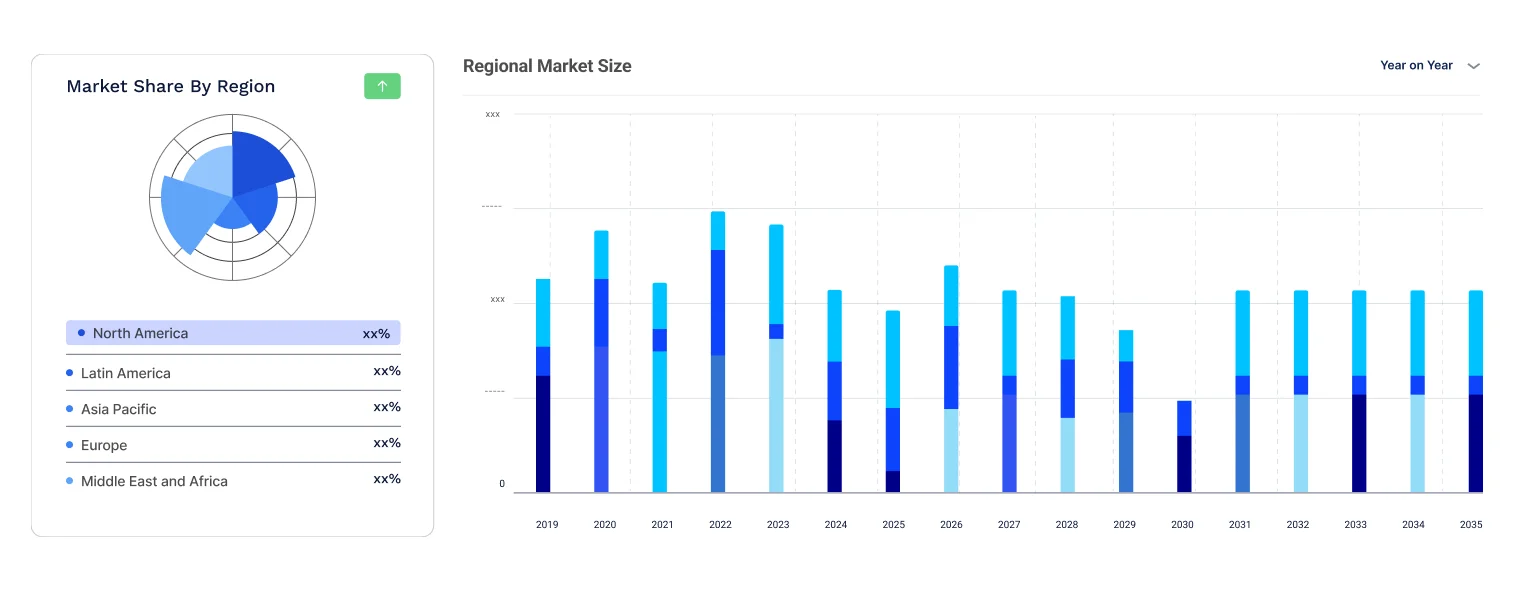
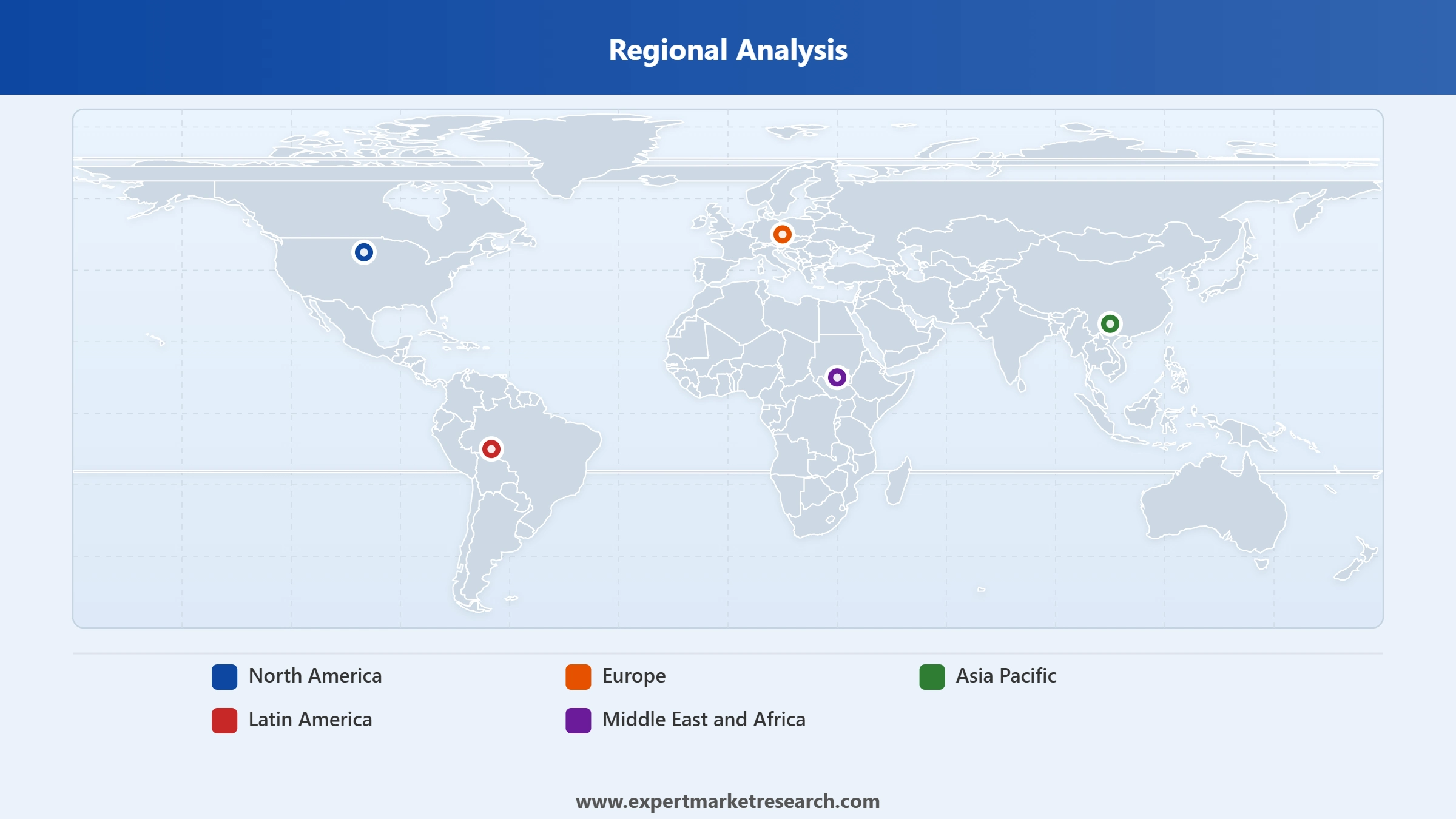
Key Insight: The dynamics of regional pine honey markets are influenced by production abilities, consumer demands, and maturity levels of the distribution channel. The European region dominates the global industry due to its high quality of pine honey production along with existing export capabilities. The highest growth rates are reported in the Asia Pacific region driven by growing popularity of premium food and wellness-based buying behaviors. The United States market shows strong demand owing to rising interest in specialty honey products. Latin America exhibits high potential for growth due to increasing channels of premium foods sales.

Read more about this report - REQUEST FREE SAMPLE COPY IN PDF
By product type, the extracted pine honey category registers the largest share of the market due to superior scalability and suitability for commercial packaging operations
Extracted pine honey commands the largest share of the pine honey market owing to its higher processing efficiency, quality standards, and easier inclusion in supply chains of commercial food products. Extracted honey is favored by food manufacturers due to its standard filtration process and easy handling during packaging and transportation. This sector is also witnessing higher sales due to increased preference among buyers for food manufacturers looking for high-quality natural sweeteners with certified origins. Long shelf life and ease of transportation add to the advantages of extracted pine honey. In March 2026, scientists detected pharmaceutical contaminants affecting honeybees, highlighting growing demand for cleaner, traceable, and sustainably sourced honey.
Read more about this report - REQUEST FREE SAMPLE COPY IN PDF
Comb honey is emerging as the fastest-growing segment, driven by rising consumer demand for authentic, minimally processed food products and a growing preference for premium specialty foods. Naturalness of the food product increases its appeal with specialty food retailers and helps honey sellers capture premium segments of gifting purposes. The rise in consumption of artisanal and specialty foods creates opportunities for manufacturers to leverage growing consumer demand in this sector.
Food and beverage applications account for a substantial market share due to expanding natural sweetener utilization across premium product formulations
The food and beverages category largely contributes to the pine honey market revenue as manufacturers are focusing on using natural sweeteners in various bakery, confectionary, beverages, and dairy products. With its unique taste and premium positioning, pine honey fits perfectly with the trend for clean-label products. The growing interest among food manufacturers in the use of premium honey as an ingredient helps boost the adoption rate due to its ability to provide unique benefits over conventional ingredients. This trend makes long-term strategic partnerships beneficial for both honey producers and food manufacturers. In May 2026, Hive Beverage launched BeePop, a honey-sweetened beverage combining functional refreshment, natural ingredients, and wellness-focused hydration benefits.
Read more about this report - REQUEST FREE SAMPLE COPY IN PDF
The food additives category represents another fast-growing category within the pine honey market with manufacturers focusing on using natural ingredients that help improve flavor and nutritional value of foods. Natural products such as pine honey replace synthetic additives in various food formulas. Premium qualities of pine honey attract the attention of ingredient suppliers as they offer their clients value-added products. For example, in October 2024, TopGum introduced liquid honey-filled gummy supplements, combining natural sweetness, functional nutrition, enhanced taste, and convenient wellness delivery.
Europe accelerates global market growth with strong pine honey production traditions and premium export-oriented supply networks
Europe emerges as the primary regional pine honey market on account of its established honey-producing industry within the region. The existing consumer awareness regarding premium honey products, coupled with excellent export infrastructure, enables Europe to lead within the specialty food sector. The region observes continued investment in geographical indication systems and certification programs by honey producers to improve competitiveness. The existence of specialty honey manufacturers along with growing demands for premium monofloral honey products is further strengthening its position. Such characteristics enable European manufacturers to retain control over international markets. In August 2024, The Greek Providore introduced limited-edition organic pine tree honey from Thassos, highlighting premium sourcing, heritage beekeeping, sustainability, and collaboration.
Read more about this report - REQUEST FREE SAMPLE COPY IN PDF
The Asia Pacific is expected to experience the highest regional pine honey market growth rate owing to growing demands for premium food products along with natural food ingredients. Growing middle-class consumers along with an expanding population base are generating rising interest towards specialty honey products. Importers and distributors within this region are aggressively promoting their products among consumers. The development of e-commerce infrastructure also provides a boost to their exports and sales in such regions. Such dynamics provide good prospects for international pine honey companies looking to expand overseas beyond Europe.
The growing competition in the industry is revolving around authentication, premium positioning of products, sustainable sourcing, and internationalization. Leading pine honey market players are focusing on implementing sophisticated traceability methods, laboratory tests, and certification procedures to increase consumer trust by dealing with issues related to honey adulteration. In addition, the strategy of differentiation is increasingly being employed through premium product positioning as well as focusing on geographical source and premium packaging in order to meet the needs of specialty stores and gourmet food products.
Moreover, pine honey companies are trying to develop direct links with beekeeping communities to ensure a stable supply chain and consistent quality. Export-oriented companies are continuously working on establishing distribution channels in markets that have an increasing demand for premium natural products. In addition, the opportunities in the development of functional foods, nutraceuticals, and health-conscious products can leverage natural attributes of pine honey to create value for consumers.
Since its founding in 1960, Barkman Honey LLC, which is based in the United States, has accumulated considerable experience in sourcing, processing, and private labeling of honey. It helps promote the market for pine honey by providing high-quality packaging services, ensuring product traceability, and diversifying its distribution methods, including retail, foodservice, and industrial channels. In this way, the company ensures the continuity of its relations with commercial customers who look for high-quality honey products.
Based in Winnipeg, Manitoba, Canada, Beemaid Honey Limited was established in 1954. This beekeeper-owned firm produces high-quality processed honey, providing its customers with top-quality honey products. Beemaid Honey Limited offers its customers innovative packaging, branding, and different kinds of specialty honey products, which makes it attractive both for food producers and retailers.
Beeyond the Hive LLC was founded in 1908 and operates from the United States. This company is known to offer high-quality honey and bee products with a focus on health-aware consumers. This organization also focuses on consumer engagement, education, and marketing initiatives. The use of minimally processed honey and unique product offerings resonates well with the current demand for premium honey types.
Founded in 1958 and based in Toronto, Canada, Billy Bee Honey Products Company is known for offering branded honey products in retail settings. Quality control and product innovation, in addition to accessibility for consumers, are the core areas of focus for this company. This organization can help with market growth by virtue of its solid retail connections and effective supply chain management.
Other key players in the market include Capilano Honey Ltd., Comvita Ltd., and Dabur, among others.
*Please note that this is only a partial list; the complete list of key players is available in the full report. Additionally, the list of key players can be customized to better suit your needs.*
Unlock the latest insights with our pine honey market trends 2026 report. Discover regional growth patterns, consumer preferences, and key industry players. Stay ahead of competition with trusted data and expert analysis. Download your free sample report today and drive informed decisions in the market.
Colombia Honey Market
Mexico Honey Market
United States Honey Market
South Korea Honey Market
Honey Food Market


Upto 15% Off
USD
$2499 $2249
$3999 $3599
$4999 $4249
$5999 $5099


*While we strive to always give you current and accurate information, the numbers depicted on the website are indicative and may differ from the actual numbers in the main report. At Expert Market Research, we aim to bring you the latest insights and trends in the market. Using our analyses and forecasts, stakeholders can understand the market dynamics, navigate challenges, and capitalize on opportunities to make data-driven strategic decisions.*
The global pine honey market is projected to grow at a CAGR of nearly 5.60% in the forecast period of 2026-2035.
The major drivers of the industry include rising disposable incomes, increasing population, increased awareness about gluten and celiac diseases, rising awareness about the product’s health benefits and cost-effectiveness, rising demand for natural products and ingredients, and the growing popularity of vegan diet.
The increasing production of the product is expected to be a key trend guiding the growth of the industry.
North America, Europe, the Asia Pacific, Latin America, and the Middle East and Africa are the leading regions in the market.
Extracted, pressed, and comb pine honey are the leading product types in the industry.
The major application segments of the market include food and beverage and food additives, among others.
The leading players in the market are Barkman Honey LLC, Beemaid Honey Limited., Beeyond the Hive LLC, Billy Bee Honey Products Company, Capilano Honey Ltd., Comvita Ltd., and Dabur, among others.
Explore our key highlights of the report and gain a concise overview of key findings, trends, and actionable insights that will empower your strategic decisions.
| REPORT FEATURES | DETAILS |
| Base Year | 2025 |
| Historical Period | 2019-2025 |
| Forecast Period | 2026-2035 |
| Scope of the Report |
Historical and Forecast Trends, Industry Drivers and Constraints, Historical and Forecast Market Analysis by Segment:
|
| Breakup by Product Type |
|
| Breakup by Application |
|
| Breakup by Region |
|
| Market Dynamics |
|
| Competitive Landscape |
|
| Companies Covered |
|
| Report Price and Purchase Option | Explore our purchase options that are best suited to your resources and industry needs. |
| Delivery Format | Delivered as an attached PDF and Excel through email, with an option of receiving an editable PPT, according to the purchase option. |
Datasheet
One User
USD 2,499
USD 2,249
tax inclusive*
Single User License
One User
USD 3,999
USD 3,599
tax inclusive*
Five User License
Five User
USD 4,999
USD 4,249
tax inclusive*
Corporate License
Unlimited Users
USD 5,999
USD 5,099
tax inclusive*
*Please note that the prices mentioned below are starting prices for each bundle type. Kindly contact our team for further details.*
Flash Bundle
Small Business Bundle
Growth Bundle
Enterprise Bundle
*Please note that the prices mentioned below are starting prices for each bundle type. Kindly contact our team for further details.*
Flash Bundle
Number of Reports: 3
20%
tax inclusive*
Small Business Bundle
Number of Reports: 5
25%
tax inclusive*
Growth Bundle
Number of Reports: 8
30%
tax inclusive*
Enterprise Bundle
Number of Reports: 10
35%
tax inclusive*
How To Order

Select License Type
Choose the right license for your needs and access rights.

Click on ‘Buy Now’
Add the report to your cart with one click and proceed to register.

Select Mode of Payment
Choose a payment option for a secure checkout. You will be redirected accordingly.
Strategic Solutions for Informed Decision-Making
Gain insights to stay ahead and seize opportunities.

Get insights & trends for a competitive edge.

Track prices with detailed trend reports.

Analyse trade data for supply chain insights.

Leverage cost reports for smart savings

Enhance supply chain with partnerships.

Connect For More Information
Our expert team of analysts will offer full support and resolve any queries regarding the report, before and after the purchase.
Our expert team of analysts will offer full support and resolve any queries regarding the report, before and after the purchase.
We employ meticulous research methods, blending advanced analytics and expert insights to deliver accurate, actionable industry intelligence, staying ahead of competitors.
Our skilled analysts offer unparalleled competitive advantage with detailed insights on current and emerging markets, ensuring your strategic edge.
We offer an in-depth yet simplified presentation of industry insights and analysis to meet your specific requirements effectively.




