

Consumer Insights
Uncover trends and behaviors shaping consumer choices today
Procurement Insights
Optimize your sourcing strategy with key market data
Industry Stats
Stay ahead with the latest trends and market analysis.
The Europe household appliances market attained a value of USD 98.24 Billion in 2025 and is projected to expand at a CAGR of 4.10% through 2035. The market is further expected to achieve USD 146.82 Billion by 2035. Appliance efficiency is increasingly becoming an operational selling point rather than merely a compliance attribute. In 2024, EU households consumed 9.54 million terajoules of energy, while electricity accounted for 26.9% of household energy use. This gives manufacturers scope to monetize measurable energy savings through smarter controls, load optimization and appliances engineered around variable electricity consumption.
Consumer inclination towards durable and easily repaired home appliances is opening up an untapped market opportunity in Europe due to growing association between sustainability and cost of ownership. From July 2026, the EU’s right to repair laws will apply to home appliances such as washing machines and vacuum cleaners, obliging manufacturers to ensure that repairs are possible and that spare parts can be purchased at reasonable prices. The European Commission projects that this legislation will yield a growth potential of €4.8 billion. Companies can take advantage of this through the adoption of durable parts alongside remote diagnostics and serviceability. For example, Electrolux Group has developed connected-appliance capabilities that enable remote diagnostics, helping service teams identify faults and potentially reduce unnecessary technician visits. This combination of durability, repair access and service convenience can attract consumers seeking lower lifecycle costs and greater value from appliance purchases.
The emergence of AI-powered ecosystems is revolutionizing the functionality of home appliances by enabling each individual product to adapt to user behavior and collaborate with the ecosystem of connected homes. Appliance manufacturers are using sensors, machine learning, voice interfaces, and energy management tools to automate appliance settings while achieving higher efficiency in resource consumption. For instance, Samsung’s 2026 European appliance lineup will feature AI refrigerators, washing machines, dishwashers, and cooking appliances that work via its connected SmartThings ecosystem. Its 2026 Bespoke AI washing machines also incorporate AI-based functions for optimizing washing performance and energy use. This innovation enables manufacturers to move beyond conventional hardware differentiation toward personalized appliance experiences, predictive maintenance, and connected energy management. For B2B players, opportunities are emerging across sensors, embedded processors, connectivity modules, software platforms, and cybersecurity solutions supporting next-generation European appliances, thereby boosting the Europe household appliances market value.
High upfront prices for AI-enabled, connected, and energy-efficient appliances can restrain adoption, particularly among price-sensitive households replacing products primarily on the basis of immediate affordability. Advanced sensors, connectivity modules, heat-pump systems, and sophisticated control electronics increase manufacturing and retail costs, making premium models less accessible despite their potential lifecycle savings. Manufacturers can address this restraint through tiered product portfolios that transfer selected smart and efficiency features into mid-range models rather than reserving them exclusively for flagship products. Flexible financing, retailer installment programs, extended warranties, and transparent lifetime energy-cost comparisons can further reduce the perceived initial cost. Standardized components and scalable software platforms can also lower production costs while allowing manufacturers to offer differentiated functionality across several price points without substantially increasing development expenditure, thereby boosting the Europe household appliances market developments.
Compound Annual Growth Rate
4.1%
Value in USD Billion
2026-2035
Read more about this report - REQUEST FREE SAMPLE COPY IN PDF
Electrolux Group's premium AEG brand showcased OnePot Pasta, a hob with a dedicated pasta-cooking function, alongside the AEG ErgoMini vacuum cleaner and Trilobite 8000 GEN2 robot vacuum. The portfolio demonstrates the company's emphasis on differentiated functionality and premium small-appliance design. Product-specific cooking and cleaning functions can expand premium-category replacement demand and strengthen brand differentiation.
Bosch introduced a new single-door refrigerator and freezer range in September 2026, featuring its largest single-door capacity to date, new cooling technology and noise levels within class B at 30-35 dB. Market rollout began in April 2026. Higher usable capacity within established appliance footprints supports replacement demand where European kitchens require greater storage without larger external dimensions.
Samsung announced new 10 kg and 13 kg Bespoke AI washing machines at IFA 2026. The 10 kg model can consume up to 70% less energy than the minimum requirement for a European Class A rating, while the 13 kg model maintains a 600 mm depth. High-efficiency laundry technology combined with European-standard dimensions strengthens the market for premium replacement and connected laundry systems.
LG announced the expansion of its Fit & Max concept from refrigerators into washing machines, dryers and dishwashers. The approach combines space-efficient installation with greater usable capacity and performance, and was scheduled for display at IFA 2026. The strategy supports demand for compact, high-capacity appliances and encourages suppliers to develop components optimized for constrained European installation environments.
EU energy labels strongly influence appliance purchasing, with 93% of consumers recognising them and 75% reporting an impact on purchases. Manufacturers are extending advanced efficiency technologies across broader portfolios, rather than limiting them to premium models. LG’s August 2026 expansion of energy-saving technologies across laundry, refrigeration and dishwashing illustrates this strategy, including models exceeding European A-grade thresholds. This creates opportunities for component suppliers to deliver efficient motors, compressors, sensors and control systems for mass-premium appliances while helping manufacturers differentiate products through lower energy consumption and stronger sustainability credentials.
European appliance development is shifting from standalone smart products toward coordinated household systems. Samsung’s 2026 portfolio integrates AI-enabled appliances through SmartThings, including connected refrigeration, dishwashing and cooking products. Its April 2026 Milan showcase highlighted this approach, demonstrating appliances designed around integrated kitchen management and personalised functions. This transition is increasing demand for interoperable sensors, connectivity modules, embedded computing, cybersecurity and software infrastructure. Suppliers that support cross-category communication and intelligent automation can address manufacturers’ growing requirements for connected appliance ecosystems, while enabling more personalised, remotely managed and energy-conscious household operations.
Limited living spaces are encouraging manufacturers to maximise appliance capacity and functionality without substantially increasing external dimensions. LG’s 2026 Fit & Max strategy targets refrigerators, washing machines, dryers and dishwashers, while its 25-inch WashTower specifically addresses European space constraints. Refrigerator configurations designed for close cabinet integration further demonstrate this focus. The trend creates opportunities for suppliers developing compact motors, compressors, heat pumps, insulation systems and electronic controls. Higher performance within smaller footprints is becoming increasingly important as manufacturers seek to accommodate European installation constraints while maintaining product capacity, convenience, energy efficiency and premium functionality.
EU right-to-repair requirements applying from July 31, 2026 are increasing attention on appliance longevity, repair services and spare-parts availability. Covered manufacturers must support repairs under defined conditions and provide reasonably priced parts, while selected repairs can extend legal-guarantee liability. Consequently, manufacturers are increasingly considering modular architectures, diagnostic capabilities and accessible components during product development. Remote fault detection, digital service scheduling and integrated parts logistics can further improve after-sales operations. For suppliers, this creates opportunities in durable components, diagnostic electronics and service technologies while allowing appliance manufacturers to build longer customer relationships and recurring aftermarket revenue.
European household cooling requirements are gaining importance as thermal conditions change. Household energy consumption for space cooling reached 80.4 thousand terajoules in 2024, double the 40.5 thousand terajoules recorded in 2018. Italy, Spain and Greece accounted for the largest absolute consumption levels, at 26.3, 14.3 and 11.9 thousand terajoules, respectively. This environment is encouraging investment in air conditioners, heat pumps, variable-speed compressors, air purification and connected climate-control technologies. Manufacturers can increasingly differentiate through systems that optimize cooling according to occupancy, temperature conditions and electricity-price signals, supporting both comfort and energy management.
The Expert Market Research’s report titled "Europe Household Appliances Market Report and Forecast 2026-2035” offers a detailed analysis of the market based on the following segments:
Market Breakup by Product
Key Insight: Major and small appliances are gaining traction through different but increasingly interconnected purchasing requirements. Major appliances remain closely tied to household replacement cycles, kitchen renovation and energy-performance considerations, while small appliances benefit from shorter replacement periods, compact housing and multifunctional product formats. France provides evidence of this broader product momentum: household purchases of appliances increased 2.3% in volume in 2025, supported partly by products such as wet-and-dry vacuum cleaners and climate-related appliances during a hot summer. Major-appliance manufacturers are increasingly adding software, connectivity and efficiency features, while small-appliance suppliers are using multifunctionality, portability and design differentiation to raise average transaction values.
Market Breakup by Price Range
Key Insight: The economy, mid-economy and premium categories are increasingly differentiated by energy consumption, functionality, connectivity, design and service support rather than purchase price alone. Economy products retain relevance where upfront affordability determines purchasing decisions, while mid-economy appliances are positioned around measurable efficiency and practical feature upgrades. Premium products are increasingly incorporating AI, advanced sensors, integrated design and software-supported functionality. The EU's energy-label system reinforces this segmentation because consumers can directly compare performance characteristics across models. In 2024, 75% of EU consumers accepted the fact that the energy label had influenced an appliance purchase during the previous five years, creating a stronger commercial case for manufacturers to monetize efficiency improvements across all price tiers, thus driving the demand in the Europe household appliances market.
Market Breakup by Distribution Channel
Key Insight: Supermarkets and hypermarkets, specialty stores, online platforms and other channels increasingly operate as complementary rather than isolated routes to market. Physical retailers remain important for major appliances because installation dimensions, demonstrations, financing and after-sales support can influence purchase decisions. Specialty stores provide technical advice and premium-brand presentation, while online channels offer price comparison, model availability and direct manufacturer access. Digital purchasing has nevertheless become a substantial European behavior. Almost 78% of EU internet users bought or ordered goods or services online in 2025, compared with 62% in 2015. For appliance manufacturers, this supports omnichannel strategies linking online configuration and comparison tools with physical delivery, installation and service networks.
Market Breakup by Region
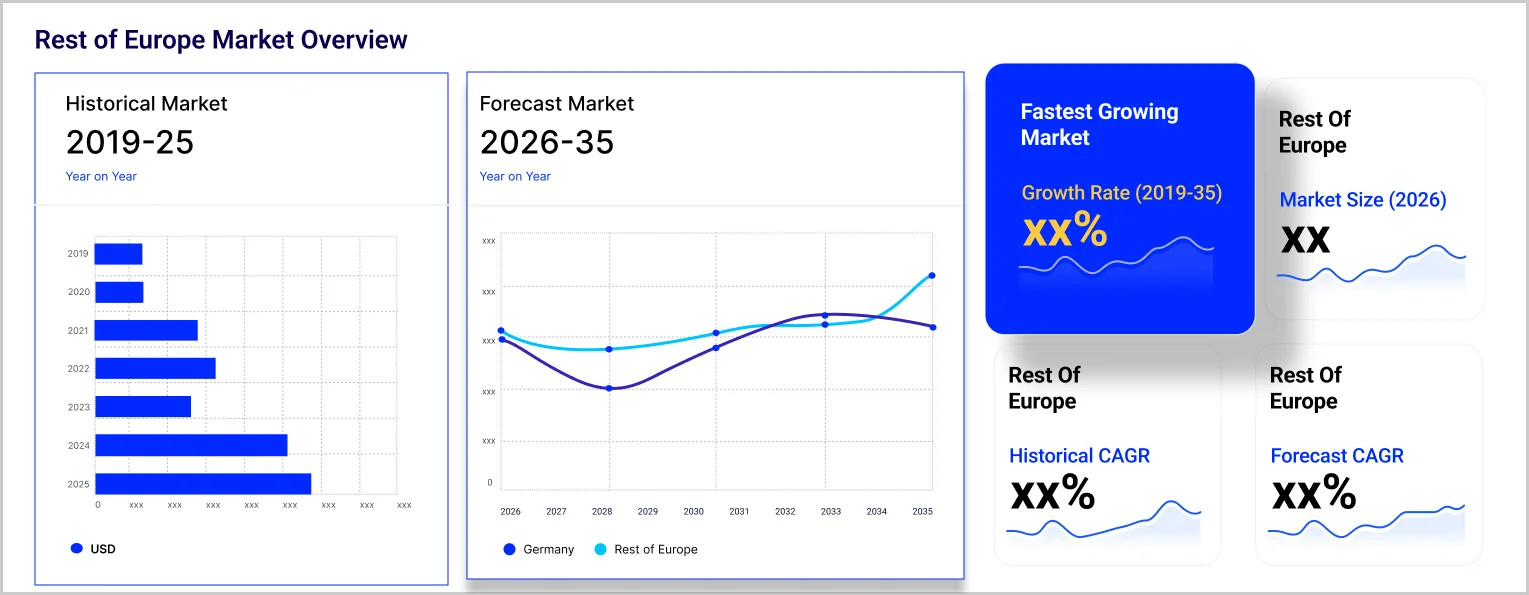
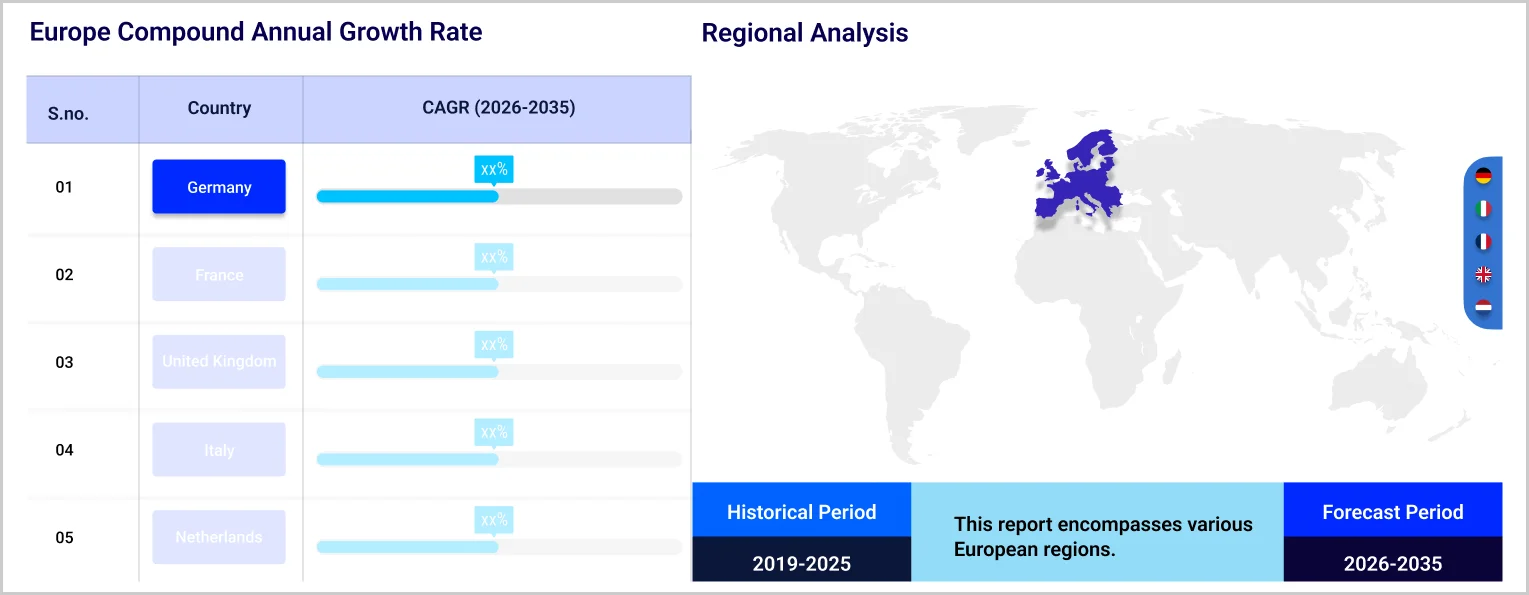
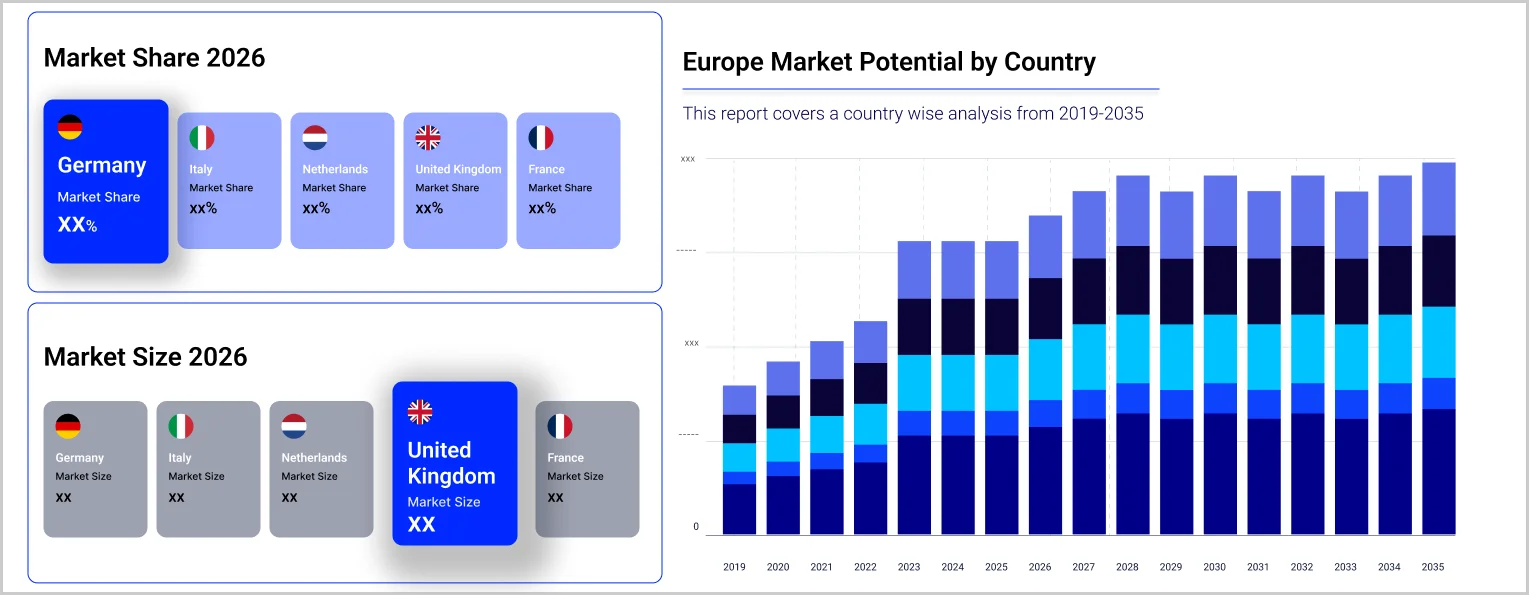
Key Insight: Germany, the United Kingdom, France, Italy and other European markets display distinct appliance demand profiles based on housing stock, energy costs, climate, retail structure and replacement cycles. Germany provides a strong installed-base environment for major appliances and remains strategically important for appliance engineering and manufacturing. France recorded a 2.3% increase in household appliance purchases in volume in 2025, showing renewed product demand despite broader weakness in furniture and household equipment consumption. Southern European markets offer strong opportunities for cooling appliances, while the United Kingdom combines an established appliance market with highly developed online purchasing behavior.
Read more about this report - REQUEST FREE SAMPLE COPY IN PDF
By product, major appliances dominate due to high-value replacement and installed-base demand
Major appliances represent the core of household equipment spending because refrigerators, washing machines, dishwashers, ovens and air conditioners involve higher-ticket purchases and longer replacement cycles. Germany's official household-equipment data illustrates the depth of installed demand. In the latest reported series, 51.0% of households had a refrigerator/refrigerator-freezer combination, 41.2% had a washing machine, and 32.7% had a dishwasher under the relevant Destatis household-equipment measure. The installed base creates a recurring replacement opportunity as manufacturers introduce more efficient and connected generations. Such developments will thus boost Europe household appliances market trends in the long run.
Biofertilizers are becoming increasingly popular in Peru since Peruvian agriculture has been using biological products in soil and crop management programs. The Peruvian SENASA registered over 200 products based on microorganisms for agricultural use by 2024, thus demonstrating the increasing number of biological options available for agriculture. The use of biofertilizers which include beneficial microorganisms could help provide nutrients and stimulate soil life while at the same time supplementing traditional fertilization. Their appeal is also linked to growers seeking input strategies that improve soil health and reduce dependence on purely chemical nutrient sources, particularly in production systems adopting more sustainable agricultural practices.
By price range, mid-economy products lead through balanced affordability, efficiency, and functionality
The mid-economy category benefits from the widening availability of efficiency technologies previously concentrated in premium models. Manufacturers are increasingly transferring inverter controls, sensor-based operation, improved insulation and automated programs into products targeted at larger customer pools. LG's 2026 strategy of extending high-efficiency technologies beyond flagship appliances illustrates this movement, with the company specifically describing the expansion as an effort to make advanced energy-saving technologies available to more households. This supports mid-economy products that offer quantifiable running-cost benefits without requiring the full feature set or pricing of flagship connected appliances.
Premium appliances are gaining momentum through AI, integrated design, advanced automation and differentiated user interfaces. Samsung's 2026 European kitchen portfolio, for example, includes AI-enabled refrigeration and dishwashing alongside an integrated extractor induction hob, while its laundry portfolio adds advanced AI controls and high-efficiency specifications. Such products shift competition from basic appliance functionality toward ecosystem value, personalization and energy optimization. The premium segment therefore offers manufacturers opportunities to increase average selling prices through software-enabled functions, premium materials, connected services and differentiated installation formats rather than relying solely on physical hardware upgrades.
By distribution channel, supermarkets and hypermarkets remain dominant due to broad physical reach
Supermarkets and hypermarkets continue to provide substantial reach for standardized appliances and frequently purchased small appliances, particularly where manufacturers seek broad geographic availability. Their value is strongest for products where consumers can compare brands, specifications and promotional pricing within a single retail environment. The channel also benefits from established logistics and physical display capabilities. However, manufacturers increasingly need to integrate retailer merchandising with digital product information, QR-linked technical specifications and after-sales systems so that physical retail remains competitive against online comparison and direct-to-consumer purchasing, thus boosting the demand in the Europe household appliances market.
Online distribution is gaining the strongest structural momentum because European consumers are increasingly accustomed to researching and purchasing products digitally. In 2025, 78% of EU internet users purchased goods or services online, with the proportion reaching 95% in Ireland and 94% in the Netherlands. Online channels allow appliance suppliers to offer wider assortments without maintaining equivalent physical shelf space and facilitate direct collection of product-performance, service and customer-feedback data.
By region, Germany leads due to installed-base depth and sophisticated replacement opportunities
Germany represents a major strategic center for the Europe household appliances market because of its established appliance ownership, sophisticated consumer expectations and strong manufacturing ecosystem. Official Destatis data indicates widespread ownership of core major appliances, with refrigerators at 51.0%, washing machines at 41.2% and dishwashers at 32.7% in the latest household-equipment series. The United Kingdom also represents an important commercial market because electrical household appliances have a dedicated category within the Office for National Statistics Retail Sales Index, enabling manufacturers and retailers to track changes in appliance retail activity separately, thereby directly boosting the Europe household appliances market regional growth.
France is showing renewed appliance demand, with household purchases of appliances increasing 2.3% in volume in 2025. INSEE linked the performance partly to newer products such as wet-and-dry vacuum cleaners and demand for air conditioners and fans during elevated summer temperatures. Italy provides a different growth pathway through climate-related appliance demand: household cooling-energy use reached 26.3 thousand TJ in 2024, the highest absolute level among EU countries. The broader European opportunity therefore spans both replacement-driven northern and central markets and climate-led appliance adoption in southern Europe. Manufacturers that localize product dimensions, energy specifications, installation requirements and channel strategies by country can address these distinct demand profiles more effectively.
Leading Europe household appliances market players are increasingly aiming to strengthen their portfolios around energy efficiency, smart connectivity, product durability, and premiumisation. Manufacturers are developing appliances that consume less electricity and water while meeting increasingly stringent European sustainability and efficiency requirements. At the same time, companies are integrating AI, IoT, automated programmes, and connected-home platforms to offer personalised appliance operation and remote monitoring. Premium product categories, including smart refrigerators, advanced washing machines, connected ovens, and high-performance coffee appliances, are also being used to differentiate offerings and support higher-value sales.
Europe household appliances companies are working to improve repairability, extend appliance lifespans, reduce material use, and incorporate recycled or recyclable components. Key players are also strengthening digital and omnichannel distribution while improving after-sales services, refurbishment, and spare-parts availability. Together, these strategies aim to respond to changing European consumer expectations while improving operational efficiency, strengthening brand loyalty, and maintaining competitiveness across mature appliance markets.
Established in 1919, Electrolux AB is headquartered in Stockholm, Sweden, and offers refrigerators, freezers, ovens, hobs, dishwashers, washing machines, tumble dryers, vacuum cleaners, air conditioners, air purifiers, and small domestic appliances through brands including Electrolux and AEG. In Europe, the company is focusing on energy-efficient and quieter appliances. In September 2026, AEG introduced its OnePot Pasta hob, its first hob with a dedicated pasta-cooking function, alongside new robot vacuum and small-appliance innovations at IFA 2026.
Founded by the De’Longhi family in 1902 and headquartered in Treviso, Italy, De’Longhi Group specialises in small domestic appliances spanning coffee preparation, food preparation and cooking, air conditioning, heating, and home care. Its portfolio includes De’Longhi, Kenwood, Braun, Nutribullet, and other brands. A notable new focus is improving sustainability and product efficiency: the Group is targeting Class A energy efficiency for all new fully automatic coffee makers and coffee pumps sold in the EU by 2026, while piloting refurbishment of commercial returns in Europe.
Established in 1969, Samsung Electronics is headquartered in Suwon, South Korea, and offers refrigerators, washing machines, dryers, dishwashers, ovens, cooktops, air conditioners, vacuum cleaners, and other connected home appliances. Its latest European strategy centres on Bespoke AI appliances integrated through SmartThings. In April 2026, Samsung showcased new AI kitchen appliances in Milan, while its European portfolio includes a Bespoke AI washer offering up to 65% greater energy efficiency than the European Class A minimum requirement, alongside connected and personalised functions.
LG Electronics was established in 1958 and is headquartered in Seoul, South Korea. Its household-appliance portfolio includes refrigerators, washing machines, dryers, air conditioners, vacuum cleaners, microwaves, and other smart-home products. LG is increasingly integrating contextual AI across its European appliance ecosystem. At IFA 2026, the company introduced ThinQ Claw, a text-based AI interface designed to understand user intent and coordinate connected devices and services. LG also demonstrated Home Energy Management connecting appliances with solar panels, batteries, EV chargers, and smart meters.
Other key players in the Europe household appliances market include Whirlpool Corporation, Hisense Corporation, Hitachi, Ltd., Panasonic Holdings Corporation, Haier Group Corporation, Gree Electric Appliances, lnc., Robert Bosch GmbH, Koninklijke Philips N.V., Conair LLC, Midea Group Co. Ltd., and others.
*Please note that this is only a partial list; the complete list of key players is available in the full report. Additionally, the list of key players can be customized to better suit your needs.*
Download the sample report to explore the Europe Household Appliances Market forecast 2026-2035, including detailed market segmentation, competitive landscape, regional opportunities, and Europe Household Appliances Market trends 2026. Access the report to evaluate product, pricing, distribution and country-level opportunities and understand how energy efficiency, AI-enabled appliances, repairability and connected-home technologies are reshaping the European household appliances industry.


Upto 15% Off
USD
$2499 $2249
$3999 $3599
$4999 $4249
$5999 $5099


*While we strive to always give you current and accurate information, the numbers depicted on the website are indicative and may differ from the actual numbers in the main report. At Expert Market Research, we aim to bring you the latest insights and trends in the market. Using our analyses and forecasts, stakeholders can understand the market dynamics, navigate challenges, and capitalize on opportunities to make data-driven strategic decisions.*
In 2025, the market reached an approximate value of USD 98.24 Billion.
The market is projected to grow at a CAGR of 4.10% between 2026 and 2035.
The market is estimated to witness healthy growth in the forecast period of 2026-2035 to reach USD 146.82 Billion by 2035.
The most owned household appliances are microwaves, refrigerators, cookers/ovens, vacuum cleaners, and washing machines.
A home appliance or a household appliance is a machine that assists in household functions such as cooking, cleaning, and food preservation.
Key strategies include expanding energy-efficient product portfolios, integrating smart and connected technologies, strengthening omnichannel distribution, investing in sustainable and recyclable materials, improving product durability and repairability, localising supply chains, developing premium appliances, and using digital platforms to enhance customer engagement and after-sales services.
Key trends aiding market expansion include advancement in appliance design, rising demand for energy-efficient products, and the expansion of the residential real estate market.
Major countries in the market are Germany, United Kingdom, France, Italy, others.
The distribution channels of household appliances are supermarkets and hypermarkets, specialty stores, online, and others.
Key players in the market are Electrolux AB, De’Longhi S.p.A., Samsung Electronics Co. Ltd., LG Electronics Inc., Whirlpool Corporation, Hisense Corporation, Hitachi, Ltd., Panasonic Holdings Corporation, Haier Group Corporation, Gree Electric Appliances, lnc., Robert Bosch GmbH, Koninklijke Philips N.V., Conair LLC, Midea Group Co. Ltd., and others.
Key challenges include high energy and raw material costs, stringent EU energy-efficiency and environmental regulations, supply chain disruptions, intense price competition, evolving consumer preferences, product repairability requirements, and the need for manufacturers to invest continuously in energy-efficient, connected, and sustainable appliance technologies.
Explore our key highlights of the report and gain a concise overview of key findings, trends, and actionable insights that will empower your strategic decisions.
| REPORT FEATURES | DETAILS |
| Base Year | 2025 |
| Historical Period | 2019-2025 |
| Forecast Period | 2026-2035 |
| Scope of the Report |
Historical and Forecast Trends, Industry Drivers and Constraints, Historical and Forecast Market Analysis by Segment:
|
| Breakup by Type |
|
| Breakup by Price Range |
|
| Breakup by Distribution Channel |
|
| Breakup by Region |
|
| Market Dynamics |
|
| Competitive Landscape |
|
| Companies Covered |
|
Datasheet
One User
USD 2,499
USD 2,249
tax inclusive*
Single User License
One User
USD 3,999
USD 3,599
tax inclusive*
Five User License
Five User
USD 4,999
USD 4,249
tax inclusive*
Corporate License
Unlimited Users
USD 5,999
USD 5,099
tax inclusive*
*Please note that the prices mentioned below are starting prices for each bundle type. Kindly contact our team for further details.*
Flash Bundle
Small Business Bundle
Growth Bundle
Enterprise Bundle
*Please note that the prices mentioned below are starting prices for each bundle type. Kindly contact our team for further details.*
Flash Bundle
Number of Reports: 3
20%
tax inclusive*
Small Business Bundle
Number of Reports: 5
25%
tax inclusive*
Growth Bundle
Number of Reports: 8
30%
tax inclusive*
Enterprise Bundle
Number of Reports: 10
35%
tax inclusive*
How To Order

Select License Type
Choose the right license for your needs and access rights.

Click on ‘Buy Now’
Add the report to your cart with one click and proceed to register.

Select Mode of Payment
Choose a payment option for a secure checkout. You will be redirected accordingly.
Strategic Solutions for Informed Decision-Making
Gain insights to stay ahead and seize opportunities.

Get insights & trends for a competitive edge.

Track prices with detailed trend reports.

Analyse trade data for supply chain insights.

Leverage cost reports for smart savings

Enhance supply chain with partnerships.

Connect For More Information
Our expert team of analysts will offer full support and resolve any queries regarding the report, before and after the purchase.
Our expert team of analysts will offer full support and resolve any queries regarding the report, before and after the purchase.
We employ meticulous research methods, blending advanced analytics and expert insights to deliver accurate, actionable industry intelligence, staying ahead of competitors.
Our skilled analysts offer unparalleled competitive advantage with detailed insights on current and emerging markets, ensuring your strategic edge.
We offer an in-depth yet simplified presentation of industry insights and analysis to meet your specific requirements effectively.




