

Consumer Insights
Uncover trends and behaviors shaping consumer choices today
Procurement Insights
Optimize your sourcing strategy with key market data
Industry Stats
Stay ahead with the latest trends and market analysis.
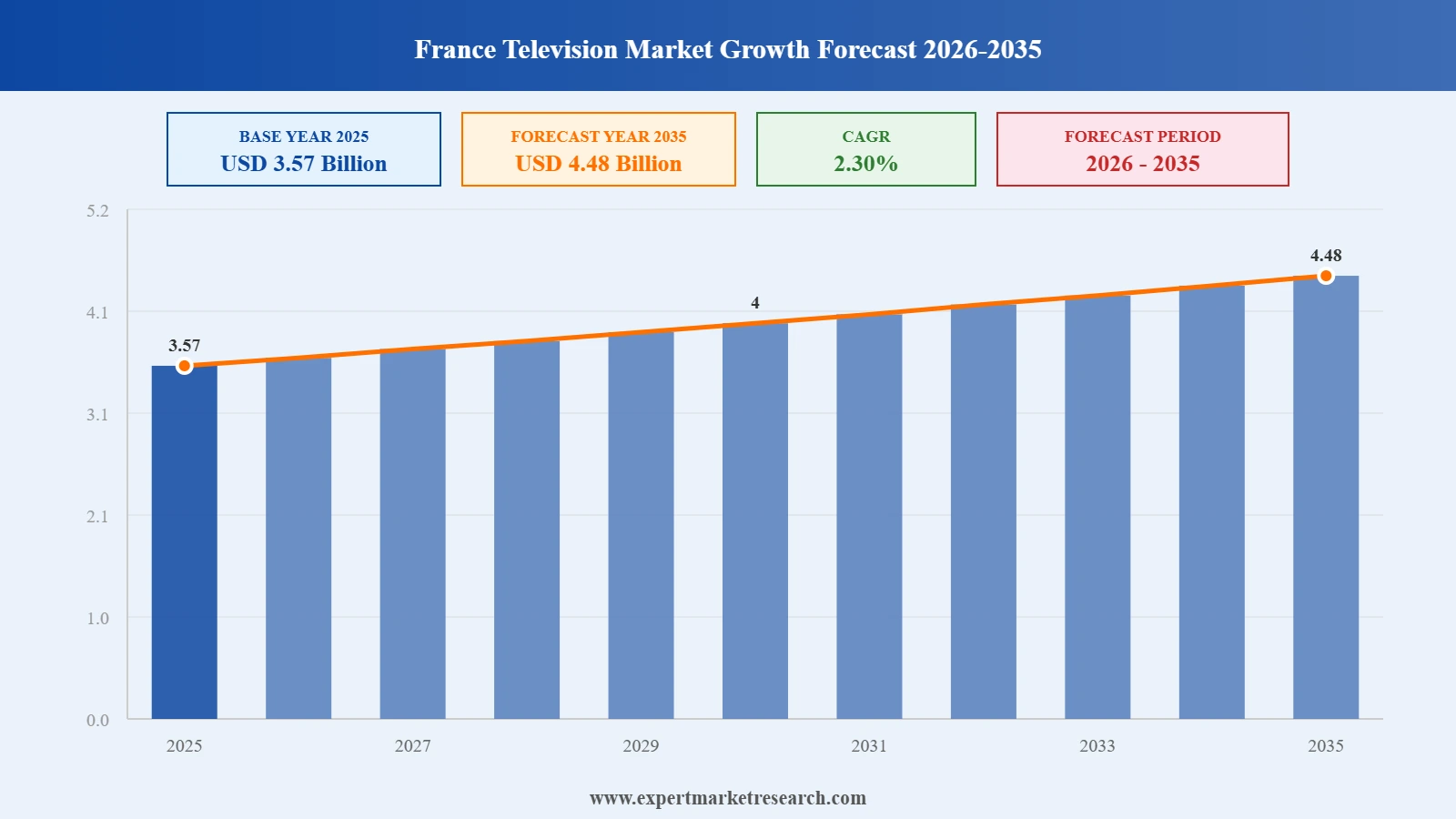
The France television market attained a value of USD 3.57 Billion in 2025 and is projected to expand at a CAGR of 2.30% through 2035. The market is further expected to achieve USD 4.48 Billion by 2035. French households are moving toward television systems that combine broadcasting, streaming, gaming and connected services. The commercial opportunity is shifting toward devices capable of supporting multiple content environments, longer software lifecycles and higher-value viewing experiences rather than simple screen replacement.
The rapid expansion of connected commerce is making premium television purchasing more accessible across digital channels. French consumers spent EUR 196.4 billion online in 2025, with product sales increasing 4%, while electronics and household appliances were among the stronger categories tracked by Fevad. This gives television brands greater scope to use direct-to-consumer platforms, marketplaces, targeted promotions and bundled services to reach buyers. Furthermore, the migration from traditional broadcasting toward connected viewing is increasing the commercial value of smart television hardware. By the end of the first half of 2025, 22.4 million French households had a television screen connected to the internet, equivalent to 74% of households. Around 12.8 million households directly connected a smart TV to the internet, creating a substantial installed base for streaming interfaces, advertising technology and connected services.
A notable market-side development is the expansion of content-level audience measurement. Médiamétrie announced that its 2026 Watch measurement would move beyond platform-level comparisons toward measurement by individual video content, allowing SVOD programs to be assessed through indicators comparable with television. For television manufacturers, this development can support more sophisticated recommendations, advertising measurement and content discovery strategies. It also strengthens the commercial importance of smart TV interfaces because manufacturers and platform partners can increasingly connect hardware usage with measurable content engagement. The development creates an opportunity for television suppliers to build more data-oriented partnerships with broadcasters, streaming providers and advertising technology companies, thereby boosting the France television market value.
Television replacement frequency remains a major commercial challenge because French consumers are not replacing screens as frequently as they did during the pandemic-era upgrade cycle. In 2024, the smartphone overtook the television as the leading household device for watching video, with 93% of households using smartphones for video compared with 89% using televisions. Average daily video consumption also declined by four minutes to 4 hours and 23 minutes. Television manufacturers therefore need to demonstrate clear performance improvements and ecosystem value to justify replacement rather than relying on basic hardware upgrades, thereby augmenting the France television market developments.
Read more about this report - REQUEST FREE SAMPLE COPY IN PDF
Samsung Electronics presented its 2026 television and artificial intelligence portfolio at its European First Look event in April 2026. The company highlighted Micro RGB displays, AI-powered television experiences and connected-home integration, while presenting the portfolio to European media and partners. Samsung's European strategy places greater emphasis on premium picture performance, intelligent interfaces and broader screen-size availability. The development should support France market growth by giving distributors additional premium products and creating new upgrade propositions for consumers seeking more advanced connected entertainment systems.
Sony expanded its BRAVIA portfolio in March 2026 with the BRAVIA 3 II and BRAVIA 2 II televisions alongside new BRAVIA Theatre products. The BRAVIA 3 II reaches screen sizes up to 100 inches, while the BRAVIA 2 II targets the entry segment from 43 to 75 inches. The portfolio combines Google TV, 4K upscaling and home cinema audio integration. The broader range should strengthen Sony's position across multiple price points and encourage replacement demand in France through differentiated screen sizes and integrated entertainment systems.
Panasonic launched its 2026 European television portfolio in February 2026, covering OLED, QD Mini LED, QLED, 4K LED and 2K LED products. The range extends to 86-inch screens and introduces Glare Free technologies designed for brighter viewing environments. Selected products support refresh rates reaching 144 Hz and multiple smart TV platforms are available across the portfolio. The development should broaden Panasonic's relevance in France by combining premium display technology with multiple price and screen-size options, supporting both replacement and premiumization opportunities.
LG Electronics introduced its 2026 OLED evo AI G6 television generation, including models available in France. The range incorporates Hyper Radiant Color, advanced alpha 11 AI processing, Reflection Free Premium and gaming capabilities reaching up to 165 Hz in selected configurations. LG's French product portfolio also includes large-screen 77-inch and 83-inch models. The development should support market growth by strengthening the premium OLED segment and encouraging consumers to upgrade for improved brightness, gaming performance, AI-enabled picture processing and sophisticated large-format home cinema experiences.
French households increasingly expect television sets to integrate linear channels, streaming applications, internet services and interactive content within one interface. This creates opportunities for manufacturers to differentiate through operating systems, recommendation engines, voice interfaces and partnerships with content providers. The commercial importance of connected hardware is reinforced by the fact that 54% of French households with internet access had a connected television in 2024, according to Arcep. Manufacturers can use this installed base to build recurring software and advertising relationships rather than depending exclusively on hardware replacement.
France introduced the television durability index on January 8, 2025, replacing the repairability index for televisions. The system uses a score out of 10 and incorporates repairability, reliability, robustness and maintenance considerations. The requirement applies both in physical retail environments and online. This creates a more measurable sustainability proposition for television manufacturers and distributors. Companies can strengthen competitiveness by improving component accessibility, software maintenance, spare-parts availability and product reliability while communicating durability scores clearly throughout their retail and digital sales channels.
French e-commerce reached EUR 196.4 billion in 2025, while 3.2 billion online transactions were recorded during the year. Fnac Darty reported that online sales represented 22% of its group sales in 2025 and that click-and-collect represented nearly half of its online sales. Television brands can therefore combine online product discovery with physical demonstrations, installation services, trade-in programs and click-and-collect models. This approach is particularly relevant for large-screen products where customers may research specifications online but still value physical product demonstrations and delivery support, thereby bolstering the France television market dynamics and trends.
France introduced a revised national DTT numbering structure in 2025, with new channels including T18 and NOVO19 joining the landscape. The restructuring grouped news channels together and repositioned several existing services. The change demonstrates that broadcast television remains an active component of the French media ecosystem even as streaming expands. Television manufacturers can respond by optimizing electronic program guides, search functions and content discovery interfaces so users can move more easily between DTT channels, broadcaster applications and streaming services.
The European Ecolabel for televisions considers environmental impacts across raw materials, energy use and end-of-life management. ADEME notes that eligible televisions must address energy consumption, product longevity and recyclability, with operational power limits varying according to screen size and product configuration. This is encouraging manufacturers to consider energy efficiency, serviceability and lifecycle characteristics alongside image quality. For suppliers, sustainability can therefore become a specification advantage in procurement and retail rather than remaining only a corporate responsibility message.
The Expert Market Research’s report titled "France television Market Report And Forecast 2026-2035” offers a detailed analysis of the market based on the following segments:
Market Breakup by Type
Key Insight: Smart TVs are gaining the strongest traction as 54% of French households with internet access owned a connected television in 2024, up 1 percentage point year on year. Their growth is supported by expanding IPTV usage, which reached 71.2% of TV-equipped households, alongside rising consumption of both linear and non-linear content. LCD, LED and other flat-panel TVs remain important for replacement demand, particularly as consumers shift from older sets towards connected and higher-resolution displays. In contrast, CRT and rear-projection TVs are steadily losing relevance as replacement cycles favour thinner, connected devices. IPTV has also strengthened this transition, while TNT usage fell to 38.5% in 2024 from 41.3% in 2023, indicating continued movement towards internet-enabled television consumption.
Market Breakup by Distribution Channel
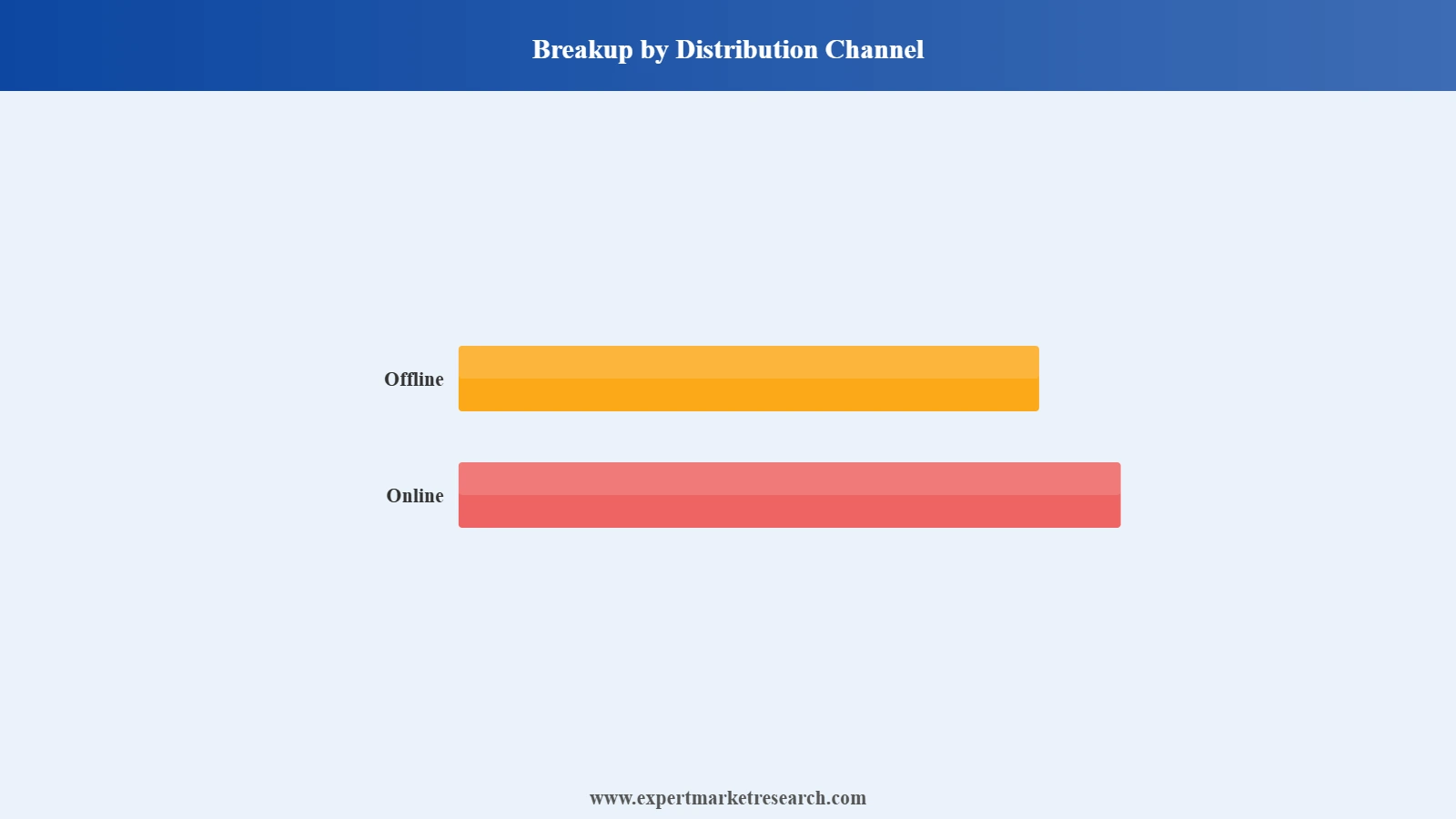
Key Insight: Offline distribution remains important because television purchases involve high-ticket products, screen-size comparison, installation requirements and demand for after-sales services. Physical retailers also allow consumers to compare brightness, contrast, sound and viewing angles directly. However, online channels are gaining strategic relevance as buyers increasingly research specifications and prices digitally before purchasing. The growth of marketplaces and click-and-collect services is creating an integrated retail model rather than a simple shift from stores to websites. Manufacturers can therefore improve conversion by synchronizing online inventory, physical demonstrations, installation services, financing, product registration and returns across both channels, thus driving the demand in the France television market.
Market Breakup by Region
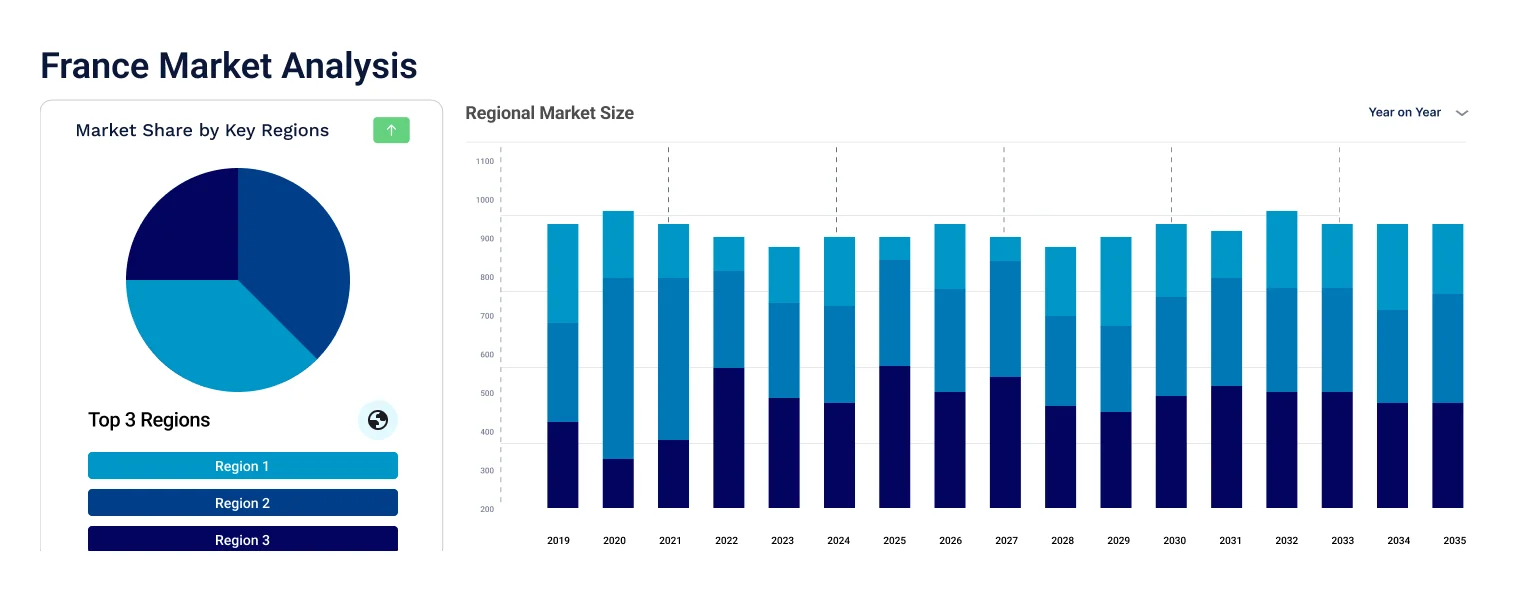
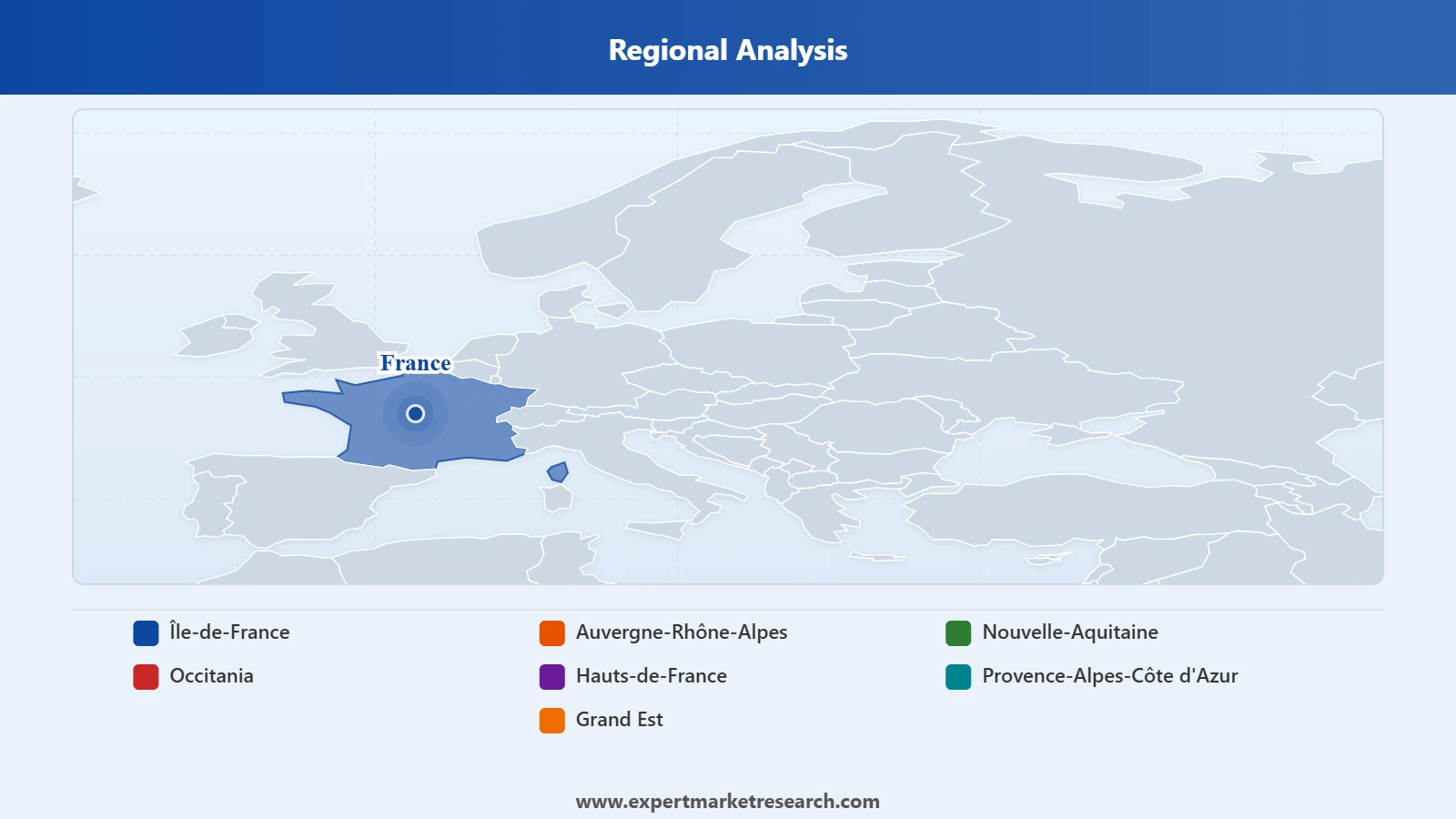
Key Insight: The regional television market is gaining traction from large and increasingly connected household bases, with Île-de-France leading at 12.46 million residents and 5.40 million households, supporting demand for premium smart and large-screen televisions. Auvergne-Rhône-Alpes follows with 8.21 million residents and 3.73 million households, while Nouvelle-Aquitaine and Occitanie account for 6.15 million and 6.12 million residents respectively. Hauts-de-France has 5.99 million residents and 2.62 million households, with a relatively higher 6.5% share of households containing five or more people, supporting larger-screen demand. Grand Est has 5.56 million residents and 2.55 million households, while Provence-Alpes-Côte d’Azur has 5.22 million residents and 2.42 million households. Île-de-France also has 7.7% of households with five or more people, reinforcing opportunities for family-oriented home entertainment products.
Read more about this report - REQUEST FREE SAMPLE COPY IN PDF
By type, Smart TV dominates due to widespread connected household adoption
Smart TV is the dominant type segment because connected functionality is increasingly integrated into mainstream television purchasing. A 2025 M6 Group report indicated that 73.1% of French households owned a smart TV, with ownership increasing by 1.2 percentage points year on year. The installed base supports demand for operating-system updates, applications, streaming integration and connected advertising services. Manufacturers can therefore generate value beyond panel specifications by improving software ecosystems, content discovery and device interoperability.
LCD, LED, and other flat-panel televisions are among the fastest-growing types in France because they combine affordability, slim designs, high-definition picture quality, and broad availability across retail channels. LED-backlit LCD models particularly benefit from lower energy consumption and competitive pricing compared with older display technologies. Demand is further supported by replacement of ageing television sets and consumer preference for larger screens with 4K resolution, HDR, smart connectivity, and gaming capabilities. Their compatibility with streaming and IPTV services also strengthens adoption among French households.
By distribution channel, offline sales dominate through physical demonstrations and integrated retail services
Offline distribution remains the dominant channel because television retail benefits from physical demonstrations, professional installation and immediate comparison between competing display technologies. Large consumer-electronics retailers also provide financing, delivery, warranty and after-sales services that are particularly relevant to large-screen products. The channel remains essential for manufacturers seeking strong in-store visibility and premium product presentation. Retail partnerships are especially valuable when companies introduce new display technologies that consumers may not fully understand from specifications alone. Such developments will thus boost France television market trends in the long run.
Read more about this report - REQUEST FREE SAMPLE COPY IN PDF
Online distribution is the fastest-growing channel as French consumers increasingly combine digital research with marketplace purchasing and home delivery. Fevad reported that online sales increased 7% across products and services in 2025, while product sales rose 4%. The opportunity for television suppliers extends beyond simple online transactions. Brands can use digital configuration tools, comparison engines, financing offers, installation scheduling and extended warranty packages to increase conversion. Online channels also enable manufacturers to introduce niche screen sizes and premium models without requiring equivalent shelf space across every physical store.
Read more about this report - REQUEST FREE SAMPLE COPY IN PDF
By region, Île-de-France dominates due to household concentration and purchasing power
Île-de-France is the dominant regional market because of its exceptional concentration of households, employment and purchasing power. The region recorded a median standard of living of EUR 28,210 in 2023, the highest among the regions covered in this report. It also had 6.14 million dwellings, providing an extensive installed base for television replacement, connected-device upgrades and premium home entertainment products. Manufacturers can prioritize Paris-area retail partnerships, direct-to-consumer campaigns and premium screen formats while using the region as an early-adoption market for new television technologies, thereby directly boosting the France television market regional growth.
Occitania is the fastest-growing regional opportunity because of sustained demographic expansion and migration-led population gains. The region's population increased by an average 0.8% annually between 2017 and 2023, twice the national rate outside Mayotte. In addition, Toulouse and Montpellier continue to experience population expansion, supporting new household formation and replacement demand. Television manufacturers can target these urban growth centers with connected mid-range products, while retailers can expand delivery and installation coverage into surrounding peri-urban areas.
Leading France television market players are aiming to strengthen their positions through premiumisation, smart connectivity, and advanced display technologies. Companies such as Samsung Electronics, LG Electronics, Sony, TCL, and Hisense are focusing on OLED, QLED, Mini LED, and larger-screen televisions to attract consumers seeking higher picture quality and immersive home entertainment. Manufacturers are also integrating artificial intelligence, voice control, personalized recommendations, gaming features, and connected-home compatibility into television platforms. Energy efficiency is another priority as French consumers and regulators increasingly emphasise lower household energy consumption and sustainable electronics.
France television companies are also aiming to expand consumer reach through competitive pricing, broader online distribution, and partnerships with streaming and content providers. The growing importance of connected television is encouraging manufacturers to strengthen proprietary operating systems and smart-TV ecosystems, while advertising-supported services provide additional revenue opportunities. Companies are further focusing on product differentiation, improved after-sales support, and environmentally responsible designs, including longer product lifecycles, recyclable materials, and reduced packaging.
Established in 1969 and headquartered in Suwon, South Korea, Samsung Electronics operates a major consumer-electronics business with televisions spanning OLED, Neo QLED, Mini LED, UHD and lifestyle formats. Its television portfolio emphasizes AI-enabled picture processing, connected-home functionality, gaming and premium display technologies. The company has maintained a major position in France, supported by extensive retail distribution and a broad range covering mainstream through ultra-premium screens.
Established in 1958 and headquartered in Seoul, South Korea, LG Electronics develops televisions, displays, home appliances and connected consumer technologies. Its television offering is strongly associated with OLED, OLED evo, AI-powered processing and webOS. The company also targets gaming and home cinema applications through high refresh rates, large screens and advanced picture technologies. Its French portfolio includes multiple 2026 OLED evo AI products across different screen sizes.
Founded in 1918 and headquartered in Kadoma, Osaka, Japan, Panasonic Holdings oversees a diversified technology group whose consumer-electronics operations include Panasonic televisions. Its television portfolio covers OLED, QD Mini LED, QLED and LED models, with emphasis on image accuracy, cinema applications, gaming and home entertainment. The company is particularly relevant to the premium television segment through products featuring advanced panel technologies and professional-style calibration capabilities.
Established in 1946 and headquartered in Tokyo, Japan, Sony Group operates across entertainment, gaming, imaging, technology and consumer electronics. Its television portfolio is centered on the BRAVIA brand and combines premium display technologies with image processing, Google TV and home cinema integration. Sony also maintains a professional display business serving corporate, education, retail and other institutional applications, giving the company exposure to both consumer and commercial display demand.
Other key players in the France television market include Toshiba Corporation, Hisense International Co., Ltd, KONKA Group Co. Ltd., and Hon. Hai Precision Industry Co., Ltd. (Sharp Corp.), and Xiaomi Corp., among others.
*Please note that this is only a partial list; the complete list of key players is available in the full report. Additionally, the list of key players can be customized to better suit your needs.*
Access the latest analysis of the France television market to understand evolving demand, connected TV adoption, premium display opportunities and distribution shifts. The report provides actionable insight into France television market trends 2026 and supports strategic planning around the France television market forecast 2026-2035. Download the sample report to assess market opportunities, competitive dynamics and emerging growth areas across France.


Upto 15% Off
USD
$2499 $2249
$3999 $3599
$4999 $4249
$5999 $5099


*While we strive to always give you current and accurate information, the numbers depicted on the website are indicative and may differ from the actual numbers in the main report. At Expert Market Research, we aim to bring you the latest insights and trends in the market. Using our analyses and forecasts, stakeholders can understand the market dynamics, navigate challenges, and capitalize on opportunities to make data-driven strategic decisions.*
In 2025, the market reached an approximate value of USD 3.57 Billion.
The market is projected to grow at a CAGR of 2.30% between 2026 and 2035.
The market is assessed to witness a healthy growth in the forecast period to reach around USD 4.48 Billion in 2035.
The different types of televisions in the market include smart TVs, LCD, plasma, and LED TVs, and cathode-ray tube (CRT) and rear-projection TVs.
The different distribution channels of television in the market include offline and online.
The different regions covered in the market report are Île-de-France, Auvergne-Rhône-Alpes, Nouvelle-Aquitaine, Occitania, Hauts-de-France, Provence-Alpes- Côte d'Azur, and Grand Est.
Key players in the market are Samsung Electronics Co., Ltd., LG Corp., Panasonic Holdings Corp., Sony Group Corp., Toshiba Corporation, Hisense International Co., Ltd, KONKA Group Co. Ltd., and Hon. Hai Precision Industry Co., Ltd. (Sharp Corp.), and Xiaomi Corp., among others.
Key challenges in the France television market include intense competition, rapid technological changes, high prices of premium smart TVs, changing consumer viewing habits, rising energy-efficiency requirements, dependence on imported components, content fragmentation across streaming platforms, and increasing electronic waste management concerns.
Key strategies driving the France television market include expanding smart TV and connected-TV offerings, integrating AI-powered features, developing energy-efficient and premium display technologies, strengthening partnerships with streaming platforms, offering competitive pricing, enhancing after-sales services, localising content and user interfaces, and adopting omnichannel retail strategies to reach diverse consumer segments.
Explore our key highlights of the report and gain a concise overview of key findings, trends, and actionable insights that will empower your strategic decisions.
| REPORT FEATURES | DETAILS |
| Base Year | 2025 |
| Historical Period | 2019-2025 |
| Forecast Period | 2026-2035 |
| Scope of the Report |
Historical and Forecast Trends, Industry Drivers and Constraints, Historical and Forecast Market Analysis by Segment:
|
| Breakup by Type |
|
| Breakup by Distribution Channel |
|
| Breakup by Region |
|
| Market Dynamics |
|
| Competitive Landscape |
|
| Companies Covered |
|
Datasheet
One User
USD 2,499
USD 2,249
tax inclusive*
Single User License
One User
USD 3,999
USD 3,599
tax inclusive*
Five User License
Five User
USD 4,999
USD 4,249
tax inclusive*
Corporate License
Unlimited Users
USD 5,999
USD 5,099
tax inclusive*
*Please note that the prices mentioned below are starting prices for each bundle type. Kindly contact our team for further details.*
Flash Bundle
Small Business Bundle
Growth Bundle
Enterprise Bundle
*Please note that the prices mentioned below are starting prices for each bundle type. Kindly contact our team for further details.*
Flash Bundle
Number of Reports: 3
20%
tax inclusive*
Small Business Bundle
Number of Reports: 5
25%
tax inclusive*
Growth Bundle
Number of Reports: 8
30%
tax inclusive*
Enterprise Bundle
Number of Reports: 10
35%
tax inclusive*
How To Order

Select License Type
Choose the right license for your needs and access rights.

Click on ‘Buy Now’
Add the report to your cart with one click and proceed to register.

Select Mode of Payment
Choose a payment option for a secure checkout. You will be redirected accordingly.
Strategic Solutions for Informed Decision-Making
Gain insights to stay ahead and seize opportunities.

Get insights & trends for a competitive edge.

Track prices with detailed trend reports.

Analyse trade data for supply chain insights.

Leverage cost reports for smart savings

Enhance supply chain with partnerships.

Connect For More Information
Our expert team of analysts will offer full support and resolve any queries regarding the report, before and after the purchase.
Our expert team of analysts will offer full support and resolve any queries regarding the report, before and after the purchase.
We employ meticulous research methods, blending advanced analytics and expert insights to deliver accurate, actionable industry intelligence, staying ahead of competitors.
Our skilled analysts offer unparalleled competitive advantage with detailed insights on current and emerging markets, ensuring your strategic edge.
We offer an in-depth yet simplified presentation of industry insights and analysis to meet your specific requirements effectively.




