

Consumer Insights
Uncover trends and behaviors shaping consumer choices today
Procurement Insights
Optimize your sourcing strategy with key market data
Industry Stats
Stay ahead with the latest trends and market analysis.
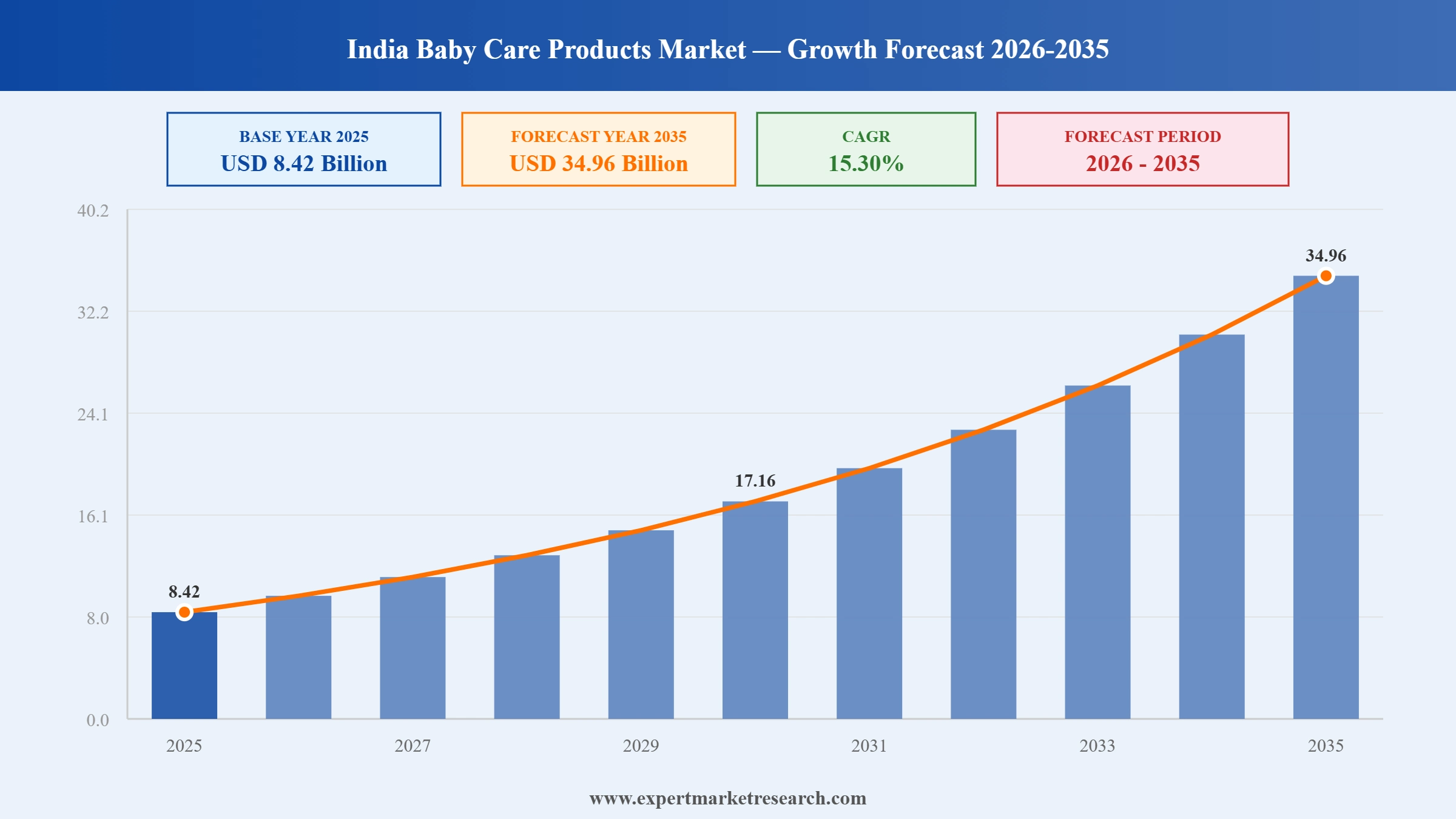
The India baby care products market attained a value of USD 8.42 Billion in 2025 and is projected to expand at a CAGR of 15.30% through 2035. The market is further expected to achieve USD 34.96 Billion by 2035. Growing urban affluence and conscious parenting fuel a rise in demand for toxin-free, dermatologically-tested baby care essentials across tier-2 and tier-3 Indian cities.
Increased focus on skin safety and transparent formulations is steering the market toward ultra-gentle, dermatologically tested product lines. In August 2025, Mamaearth rolled out a new “DermaSoft” range that is specifically designed for babies with sensitive skin. The launch comes at a time when baby-care shoppers in India are increasingly alert to skin safety and ingredient transparency. According to the brand, these new products tap into a surging base of parents demanding gentle, dermatologically-tested products for newborns and toddlers.
Meanwhile Himalaya BabyCare, a long-standing player in Indian baby care products market dynamics launched its “Maa Ka Bharosa” campaign in June 2025. Through this campaign, Himalaya spotlighted their key products namely Gentle Baby Lotion, Gentle Baby Shampoo, Gentle Baby Wash, Gentle Baby Soap, Crème Cleansing Bar and Baby Crème. This move underscores Himalaya’s strategy to deepen trust among parents by emphasizing safety and natural-ingredient formulations rooted in Ayurvedic heritage blended with modern science.
Read more about this report - REQUEST FREE SAMPLE COPY IN PDF
| India Baby Care Products Market Report Summary | Description | Value |
| Base Year | USD Billion | 2025 |
| Historical Period | USD Billion | 2019-2025 |
| Forecast Period | USD Billion | 2026-2035 |
| Market Size 2025 | USD Billion | 8.42 |
| Market Size 2035 | USD Billion | 34.96 |
| CAGR 2019-2025 | Percentage | XX% |
| CAGR 2026-2035 | Percentage | 15.30% |
| CAGR 2026-2035 - Market by Region | North India | 17.2% |
| CAGR 2026-2035 - Market by Region | South India | 15.6% |
| CAGR 2026-2035 - Market by Type | Baby Hair Care Products | 16.4% |
| CAGR 2026-2035 - Market by Distribution Channel | Online | 19.5% |
| 2025 Market Share by Region | North India | 30.8% |
Popees Baby Care broadened its FMCG offerings by introducing bamboo-based wipes designed specifically for babies. This enhancement strengthens the brand's dedication to purity, comfort, and environmental sustainability. The launch of bamboo-based wipes reinforces the market’s shift toward eco-friendly and skin-safe baby hygiene products that appeal to conscious Indian parents.
CuteStory, a modern baby care brand founded on principles of safety, sustainability, and emotional comfort, was officially launched. CuteStory addresses emerging trends with dermatologically tested, paraben-free, sulfate-free, pH-balanced, and non-irritating formulas made from gentle natural extracts, designed for babies aged 0 to 10 years. This India baby care products market development highlights the growing demand for clean-label, sensitive-skin baby products with emotional branding and premium positioning.
Fixderma ventured into the baby care sector with the introduction of its new product range Hoopoe, that is now accessible on its direct-to-consumer e-commerce platform. The collection includes items aimed at tackling usual baby skin issues. This reflects the rising medical-dermatology influence on baby care purchases across Indian household.
Lifelong Online announced its entry in the in the Indian market with the launch of its all-new baby category with strollers, bottle warmers, collapsible baby bathtubs, anti-slip baby bathers, and baby car seats. This signals the expansion of India baby care products market beyond toiletries into lifestyle, travel and safety essentials.
Organic and sensitive skincare is becoming an essential category in India, driven by brands launching targeted ranges for delicate infant skin. Mamaearth’s DermaSoft line for sensitive babies and similar sulphate free lotions from domestic brands show how formula design is becoming a key differentiator. In September 2025, Panacea Biotec's subsidiary, Panacea Biotec Pharma Limited, introduced 'NikoMom' which is a 100% toxin-free baby care line featuring products like Baby Massage Oil, Baby Head to Toe Wash, Baby Daily Lotion, and Diaper Rash Cream, shaping the India baby care products market trends. For B2B buyers, this means higher rotation for premium SKUs in chemists and modern trade, as parents actively shift their choices from basic oils and talc to clinically tested products for their children.
Quick commerce and app led distribution are redefining how Indian parents buy baby essentials, creating new opportunities for brands ready to serve instant demand in the India baby care products market. Babycare focused startup Peeko, which recently secured USD 3.2 million as fresh seed funding, in August 2025, positions itself as a vertical quick commerce platform promising curated assortments and rapid delivery. Established players like FirstCry and Nykaa Now are pushing faster delivery features over their marketplaces, while platforms such as SND experiment with three to five hour drops in metro cities.
Government nutrition missions are building a stronger base for baby care products demand in India by hard wiring early childhood health into policy and infrastructure. Mission Poshan 2.0 and Saksham Anganwadi upgrades focus on children from zero to six years, with thousands of centers getting better water, sanitation and growth monitoring tools. State programs use digital trackers and even face recognition pilots to ensure nutrition actually reaches infants. For example, in January 2024, Danone India launched its toddler nutrition range with the national launch of AptaGrow.
Sustainability is pushing product innovation. Brands like Happy Panda position themselves as fully biodegradable baby care labels, offering compostable diapers and organic wipes to parents worried about landfill waste everywhere. Research firms flag environmental concerns around conventional synthetic wipes, which clog sewage systems and sit in dumps for decades. For example, Mother Sparsh offers 98% water-based baby wipes. B2B buyers are starting to allocate shelf space to eco-friendly SKUs, especially in premium baby boutiques and modern trade. This India baby care products market trend creates openings for private labels, contract manufacturers and material innovators focused on plant based, plastic light formats.
Deeper penetration into smaller cities and digital first parenting communities is changing how baby brands build trust and scale. Hyper-value platforms like Shopsy now deliver products to thousands of remote pin codes, while parenting apps and forums such as BabyChakra or Parentune help parents swap product reviews and seek expert advice instantly. In January 2022, Digital parenting platform BabyChakra also announced the launch of 14 new baby care products, catering to the surging demand in the India baby care products market. India’s smartphone has led millennial parents to constantly research ingredients, certifications and peer feedback before choosing lotions, formula or diapers.
The EMR’s report titled “India Baby Care Products Market Report and Forecast 2026-2035” offers a detailed analysis of the market based on the following segments:
Market Breakup by Type
Key Insight: Diapers significantly boost the India baby care products market penetration because they capture the highest repeat purchase and drive most parent experimentation with brands. Wipes grow popular as a convenient extension around nappies, strollers and travel moments rather than a simple hygiene extra. Baby toiletries, including bath soaps and washes, reflect parents shifting from multipurpose family bars to milder child specific formats. The popularity of baby skin care products, from lotions to barrier creams and oils, is shaped by concerns about dryness, pollution and hard water.
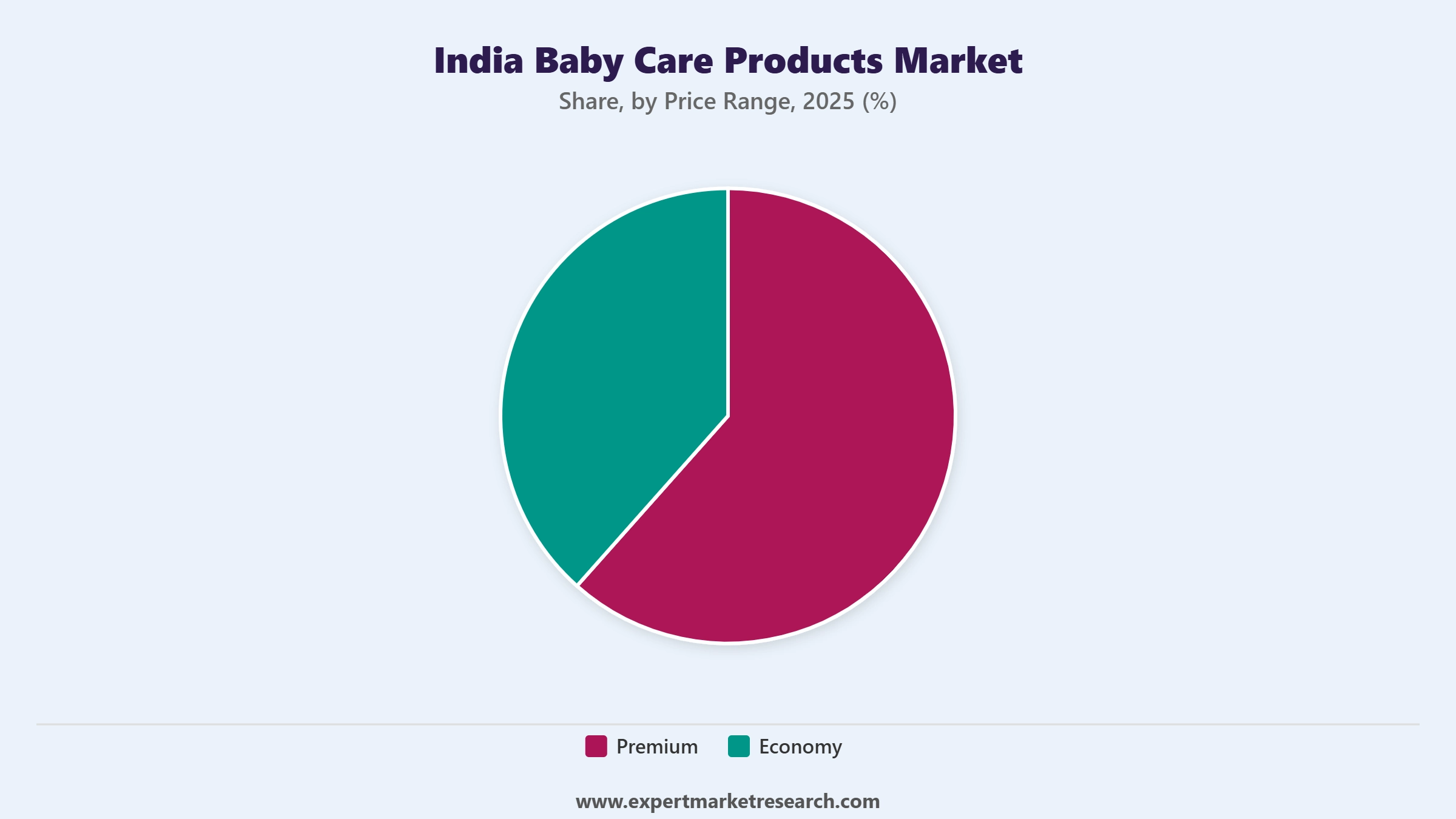
Market Breakup by Price Range
Key Insight: Price segmentation in the India baby care products market dynamics reflects how families balance aspiration with reality. Economy products keep the category inclusive by offering reliable diapering, cleansing and basic skin protection at accessible costs. Premium lines, in contrast, promote the usage of softer materials, cleaner ingredients and elevated packaging. Many parents operate across both ranges at once, using economy packs for daily routines and reserving premium items for nighttime, travel or gifting.
Market Breakup by Distribution Channel
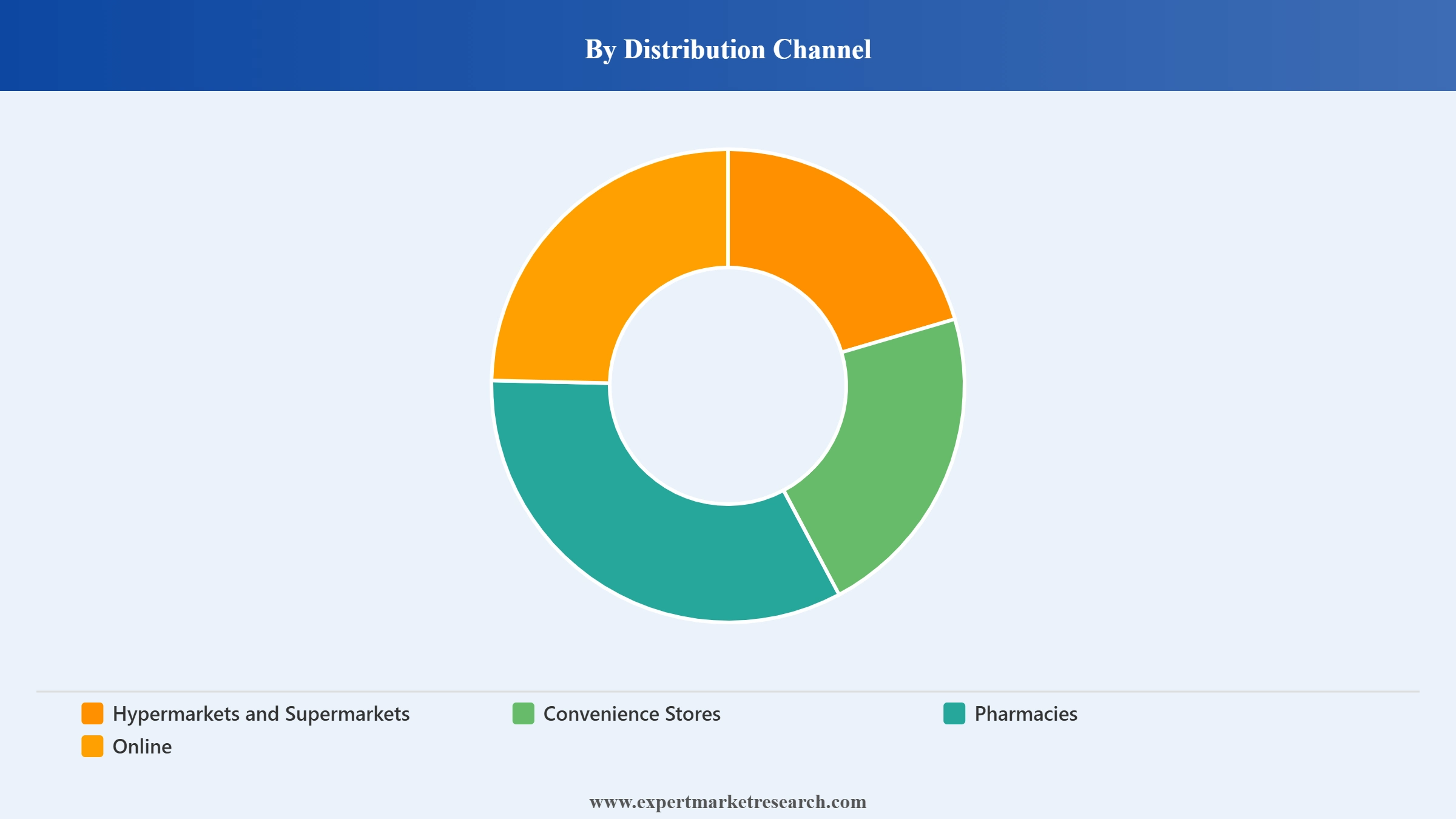
Key Insight: Hypermarkets and supermarkets anchor visibility for leading brands, where parents browse, compare textures and pick up multipacks. Convenience stores and pharmacies maintain relevance as they serve last minute diaper or wipe needs. Online channels add a research and subscription layer that suits digitally native caregivers planning ahead, creating new India baby care products market opportunities. Other outlets, including specialized baby boutiques and hospital pharmacies, give room for premium and specialist lines.
Market Breakup by Region
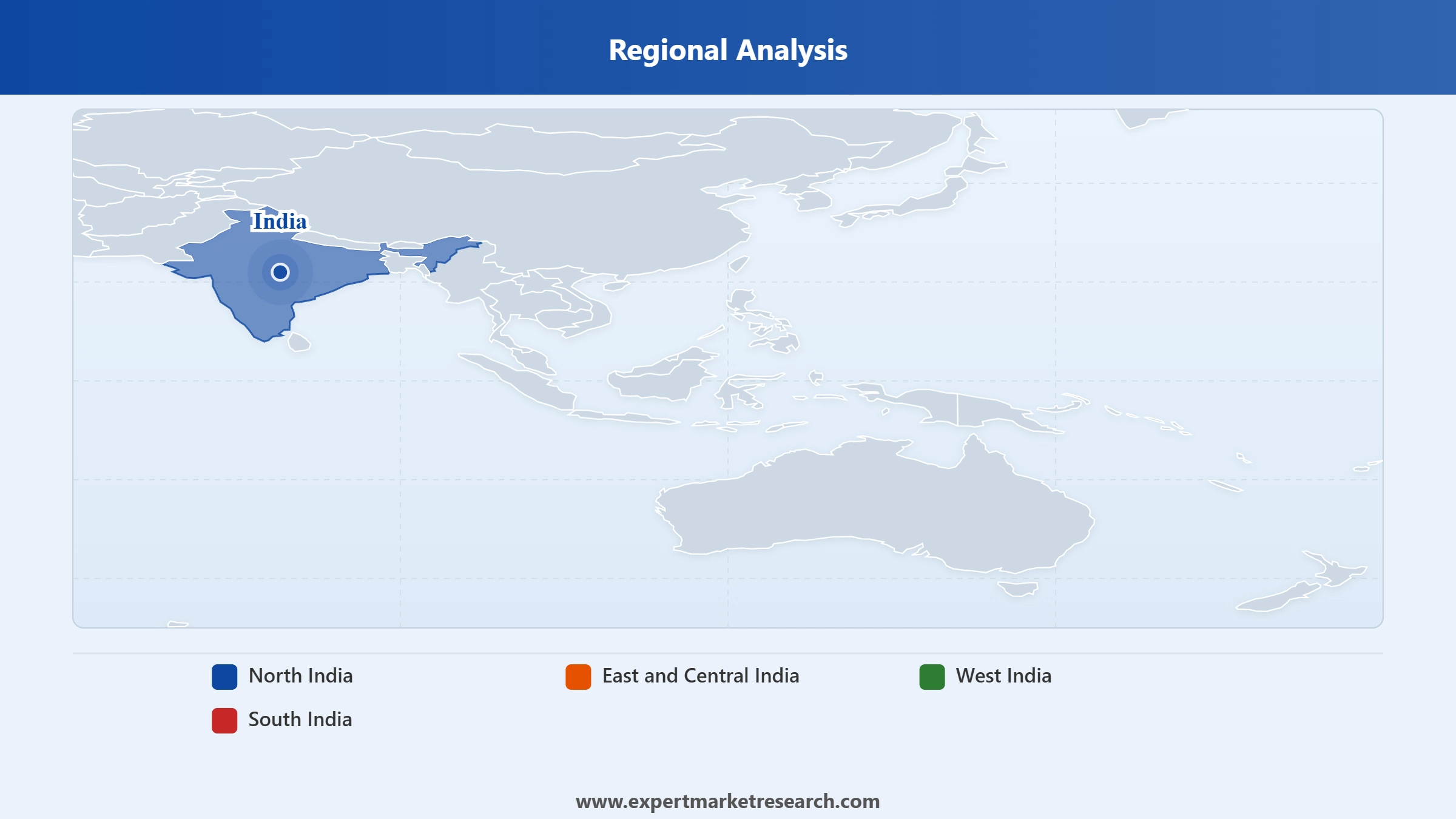
Key Insight: The North India baby care products market contributes strong volumes through its population density and growing organized trade. South India also contributes to the market growth, driven by parental awareness, healthcare access and openness to premium experiments. West India, with hubs like Mumbai and Pune, mixes corporate employment and migrant families who lean on convenient products to manage tight schedules. East and Central India continue to rely more on traditional practices, yet gradually adopt branded basics as distribution improves.
Read more about this report - REQUEST FREE SAMPLE COPY IN PDF
By type, diapers occupy the largest share of the market revenue due to everyday repeat usage
Diapers remain the dominant type in India’s baby care market. Parents may experiment with lotions or oils but rarely downgrade diaper performance once they settle on a trusted brand. Leading companies push improvements in dryness, breathability and overnight protection. Institutional demand also matters as hospitals and maternity clinics standardize disposable usage for newborns. Wider availability in kirana stores, pharmacies and modern trade gives diapers constant visibility at the point of purchase, contributing to the India baby care products market revenue.

Read more about this report - REQUEST FREE SAMPLE COPY IN PDF
Baby skin care products are emerging as the fastest growing type as Indian parents become more alarmed about rashes, allergies and long-term skin health. They now scan ingredient labels, avoid harsh fragrances, and look for dermatologically tested claims even in daily-use creams and washes. Brands respond with specialized lines for newborns, eczema prone babies and sensitive skin, often developed with pediatric or dermatology inputs. Influencer recommendations and pediatrician advice reinforce demand in the premium category.
By price range, the economy category dominates the market as parents seek affordability with acceptable quality
The economy price range remains dominant in the India baby care products market dynamics. Economy diapers, soaps and wipes are usually the entry point for first time buyers, especially in smaller cities and semi urban belts. Manufacturers tune pack sizes and grammage so shoppers can test products without heavy upfront spending. Distributors and kirana stores favor this price range since they rotate faster and fit existing shelf formats.
Read more about this report - REQUEST FREE SAMPLE COPY IN PDF
Premium baby care products are growing popular as aspirational Indian parents link price with trust, safety and performance. This segment covers dermatologist recommended skin care, plant-based wipes, pants style diapers and imported like experiences across categories. Urban professionals, especially dual income couples, are more willing to pay extra for softness, fragrance free claims and sustainable packaging. In January 2022, Glowderma announced a partnership with Sanosan, a German premium baby care brand, to launch Sanosan Baby Skin Care Range in India.
By distribution channel, hypermarkets and supermarkets account for the dominant market share, offering variety and visibility for brands
Hypermarkets and supermarkets dominate organized baby care distribution because they combine range, touch and visibility at one stop. Parents can compare multiple diaper brands, lotion textures, and price points on the same aisle before making a decision. In store promotions, bundled displays and sampling counters allow companies to push new variants without needing heavy media expenditure each time. Large formats also give space for education walls or doctor led sessions on topics like rash prevention or bath routines.
Read more about this report - REQUEST FREE SAMPLE COPY IN PDF
Online channels are observing rapid growth in the India baby care products market, as young parents lean on convenience and information. Marketplaces and brand sites allow comparison of ingredients, reviews and bundle pricing at any hour. Subscription programs for diapers and wipes reduce the risk of stockouts, which matters when caring for newborns. Smaller brands, including organic and niche labels, gain national reach without building expensive field sales teams.
North India leads the market driven by higher births and organized retail
North India holds the dominant share in baby care products market because of its large population base and dense urban clusters. Cities such as Delhi NCR, Lucknow, Jaipur and Chandigarh support modern retail, pharmacies and e-commerce penetration that favor branded baby product lines. Public and private maternity hospitals across the region create steady newborn inflows, where starter kits and doctor recommendations shape early brand choices.
Read more about this report - REQUEST FREE SAMPLE COPY IN PDF
The South India baby care products market is also expanding its shares, supported by higher awareness, strong healthcare networks and a long tradition of using oils and herbal remedies. Urban centers like Bengaluru, Hyderabad, Chennai and Kochi show high adoption of premium diapers, organic lotions and imported style toiletries.
Global majors and strong India baby care product companies are competing to gain traction through necessary products like diapers and wipes. Their portfolios are getting sharper as companies push sensitive skin care products enriched with eco-friendly ingredients designed for hot, humid weather. Players are also competing for hospital visibility, influencer backed trust and better reach in tier two and tier three cities.
Quick commerce, social commerce and pharmacy chains give India baby care products market players new entry points. The biggest opportunities lie in solving real caregiver pain points, like nighttime dryness, colic friendly routines, gentle cleansing in hard water and affordable upgrades from traditional home remedies. Data led innovation is becoming another concerning area, as brands mine review data, pediatric feedback and regional insights to tweak absorbency, fragrances, textures and even pack graphics to capture traction.
The Procter & Gamble Company, founded in 1837 and headquartered in Cincinnati, Ohio, United States, builds its India baby care strategy around Pampers diapers and pants formats tailored for hot, active babies. The company works closely with pediatricians and maternity hospitals to seed trial packs, then nudges parents into subscriptions like repeat purchases online.
Unicharm Corporation, established in 1961 and headquartered in Tokyo, drives India growth mainly through its Mamy Poko brand. The company popularized pants style diapers in India, positioning them as quick to wear for wriggly babies and helpful for grandparents too. Unicharm keeps sharpening absorbency zones and stretch waistbands specifically for Indian body types and climate.
Kimberly-Clark Corporation, founded in 1872 and headquartered in Irving, Texas, serves Indian parents mainly through its Huggies diaper and wipes portfolio. The company leans on skin loving, bubble bed and ultra soft variants, pitched as gentle for overnight use, boosting the India baby care products market growth. It collaborates with pediatricians, maternity hospitals, and parenting platforms to run diaper fitting workshops and rash education.
Johnson & Johnson Private Limited, incorporated in 1886 and headquartered in the United States, represents the India face of the Johnson & Johnson baby portfolio. The company has been reformulating and relaunching baby lotions, washes and shampoos with gentler ingredient lists and clearer labelling, after listening closely to parents and doctors.
*Please note that this is only a partial list; the complete list of key players is available in the full report. Additionally, the list of key players can be customized to better suit your needs.*
Other key players in the market include Himalaya Global Holdings Ltd., Artsana S.p.A., Dabur India Limited, Pigeon Corporation, Honasa Consumer Limited, Nobel Hygiene Private Limited, and Bio Veda Action Research Co., among others.
Unlock the latest insights with our India baby care products market trends 2026 report. Discover regional growth patterns, consumer preferences, and key industry players. Stay ahead of competition with trusted data and expert analysis. Download your free sample report today and drive informed decisions in the market.
United States Baby Infant Formula Market
North America Baby Monitors Market
United States Baby Monitors Market
Asia Pacific Baby Diapers Market
South Korea Baby Diapers Market
United States Baby Food Market
North America Baby Food Market
Australia Baby Stroller Market
Australia Baby Carrier Market
India Baby Diapers Market
GCC Baby Formula Market


Upto 15% Off
USD
$2499 $2249
$3999 $3599
$4999 $4249
$5999 $5099


*While we strive to always give you current and accurate information, the numbers depicted on the website are indicative and may differ from the actual numbers in the main report. At Expert Market Research, we aim to bring you the latest insights and trends in the market. Using our analyses and forecasts, stakeholders can understand the market dynamics, navigate challenges, and capitalize on opportunities to make data-driven strategic decisions.*
The market is projected to grow at a CAGR of 15.30% between 2026 and 2035.
The market is estimated to witness a healthy growth in the forecast period of 2026-2035 to reach USD 34.96 Billion by 2035.
Stakeholders are investing in sensitive skin innovation, tailoring packs for smaller cities, partnering with hospitals and parenting apps, and actively using quick commerce data to keep refining assortments and communication.
Public knowledge of the hygiene and comfort associated with baby care products and favourable government initiatives are the key market trends.
Regions considered in the market are North India, East and Central India, West India, and South India.
The product types include baby toiletries, baby skin care products, bath products and baby hair care products.
The diverse distribution channels for the market are hypermarkets and supermarkets, convenience stores, pharmacies, and online, among others.
The key players in the market in the India baby care products market include Procter & Gamble Company, Unicharm Corporation, Kimberly-Clark Corporation, Johnson & Johnson Private Limited, Himalaya Global Holdings Ltd., Artsana S.p.A., Dabur India Limited, Pigeon Corporation, Honasa Consumer Limited, Nobel Hygiene Private Limited, and Bio Veda Action Research Co., among others.
In 2025, the market reached an approximate value of USD 8.42 Billion.
Companies face input costs, price competition, regulatory scrutiny on safety claims, complex distribution in smaller towns, and pressure to differentiate their products.
Explore our key highlights of the report and gain a concise overview of key findings, trends, and actionable insights that will empower your strategic decisions.
| REPORT FEATURES | DETAILS |
| Base Year | 2025 |
| Historical Period | 2019-2025 |
| Forecast Period | 2026-2035 |
| Scope of the Report |
Historical and Forecast Trends, Industry Drivers and Constraints, Historical and Forecast Market Analysis by Segment:
|
| Breakup by Type |
|
| Breakup by Price Range |
|
| Breakup by Distribution Channel |
|
| Breakup by Region |
|
| Market Dynamics |
|
| Competitive Landscape |
|
| Companies Covered |
|
Datasheet
One User
USD 2,499
USD 2,249
tax inclusive*
Single User License
One User
USD 3,999
USD 3,599
tax inclusive*
Five User License
Five User
USD 4,999
USD 4,249
tax inclusive*
Corporate License
Unlimited Users
USD 5,999
USD 5,099
tax inclusive*
*Please note that the prices mentioned below are starting prices for each bundle type. Kindly contact our team for further details.*
Flash Bundle
Small Business Bundle
Growth Bundle
Enterprise Bundle
*Please note that the prices mentioned below are starting prices for each bundle type. Kindly contact our team for further details.*
Flash Bundle
Number of Reports: 3
20%
tax inclusive*
Small Business Bundle
Number of Reports: 5
25%
tax inclusive*
Growth Bundle
Number of Reports: 8
30%
tax inclusive*
Enterprise Bundle
Number of Reports: 10
35%
tax inclusive*
How To Order

Select License Type
Choose the right license for your needs and access rights.

Click on ‘Buy Now’
Add the report to your cart with one click and proceed to register.

Select Mode of Payment
Choose a payment option for a secure checkout. You will be redirected accordingly.
Strategic Solutions for Informed Decision-Making
Gain insights to stay ahead and seize opportunities.

Get insights & trends for a competitive edge.

Track prices with detailed trend reports.

Analyse trade data for supply chain insights.

Leverage cost reports for smart savings

Enhance supply chain with partnerships.

Connect For More Information
Our expert team of analysts will offer full support and resolve any queries regarding the report, before and after the purchase.
Our expert team of analysts will offer full support and resolve any queries regarding the report, before and after the purchase.
We employ meticulous research methods, blending advanced analytics and expert insights to deliver accurate, actionable industry intelligence, staying ahead of competitors.
Our skilled analysts offer unparalleled competitive advantage with detailed insights on current and emerging markets, ensuring your strategic edge.
We offer an in-depth yet simplified presentation of industry insights and analysis to meet your specific requirements effectively.




