

Consumer Insights
Uncover trends and behaviors shaping consumer choices today
Procurement Insights
Optimize your sourcing strategy with key market data
Industry Stats
Stay ahead with the latest trends and market analysis.
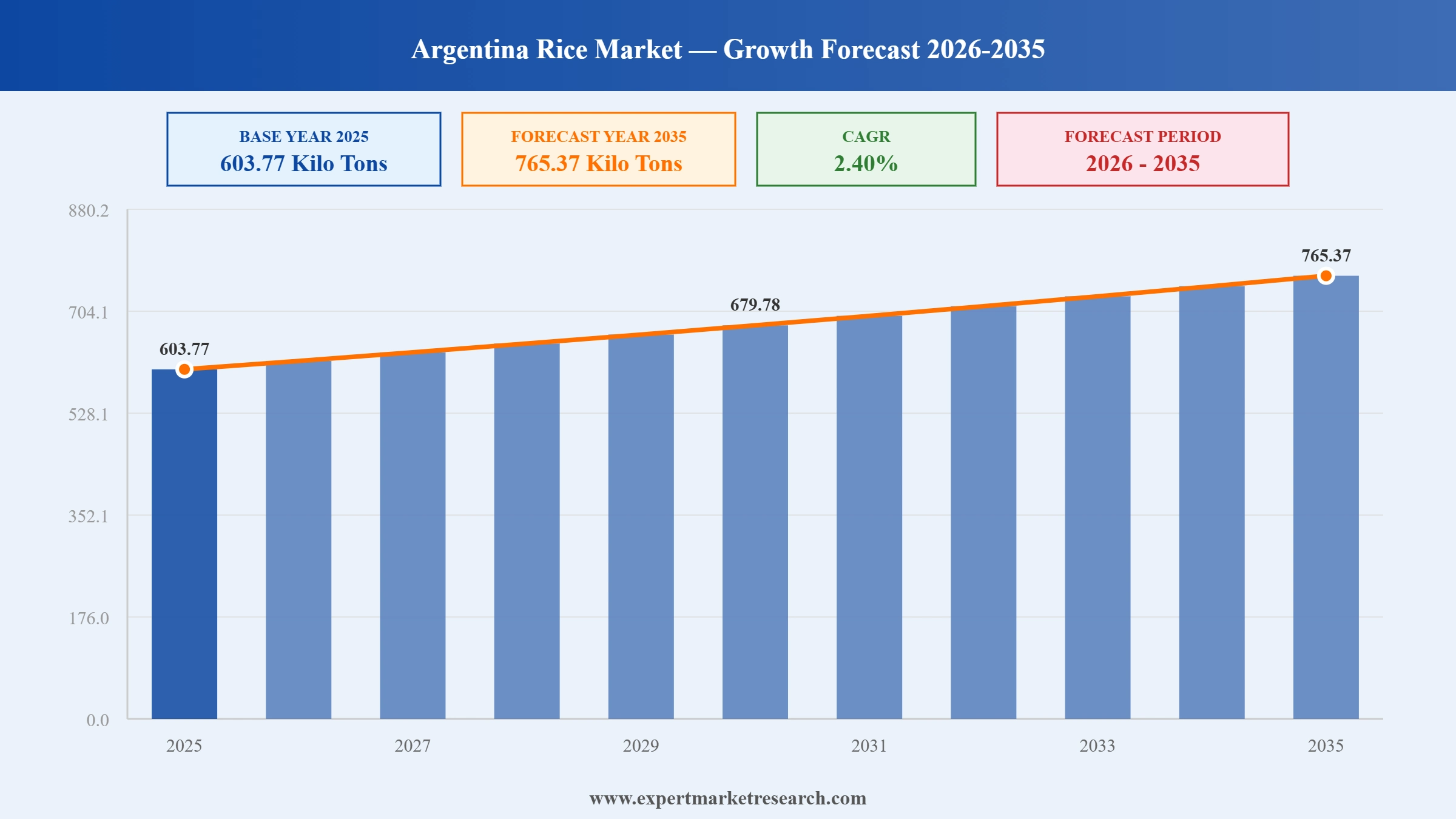
The Argentina rice market attained a volume of 603.77 Kilo Tons in 2025 and is projected to expand at a CAGR of 2.40% through 2035. The market is further expected to achievea volume of 765.37 Kilo Tons by 2035. Demand increase from Brazil, Chile and other countries in the region is driving Argentinian mills to improve their processing efficiency, enhance export logistics, and enter into stable supply contracts for commercial buyers.
There are two elements that are helping the Argentina rice market grow. The first is the growth of exports that is opening up better opportunities for the utilization of mills with Argentina’s exports of rice and Americas receiving majority of the exports. The second factor is breeding innovation, with Crianza 749 offering early flowering and efficient irrigation, while Crianza 1329 provides high tolerance to Pyricularia.
The Argentina rice market is further experiencing a transition to export-based cultivation, varietal innovation, driven by changing margins in the business. Noteworthy in this respect is the development by INTA of new rice varieties such as Crianza 749, which allows earlier flowering and water-saving irrigation, and the Crianza 1329, a new variety bred with high resistance to Pyricularia. The breeding is important to practitioners as it may help to decrease production risk and increase its efficiency. There were more than 200 participants from the producer, adviser, seed company, and other stakeholders sides at the 2025 INTA and Fundación ProArroz Rice Field Day, held in February 2025.
Performance on the export side is giving positive signals. According to the Argentina rice market analysis, in 2025, the country exported 502,000 tons of rice, the largest export in seven years, whereas export revenues exceeded USD 259 million. Chile, Brazil, and Costa Rica are among the major recipients. This regional reach is encouraging mills and exporters to prioritize consistent quality, logistics reliability, and product formats suited to buyers.
Read more about this report - REQUEST FREE SAMPLE COPY IN PDF
The Argentine rice cargo weighing 17,000 tons made it to Valencia, showcasing the increasingly easier access that Mercosur has in the European market due to lowered tariffs. Argentina rice market companies may explore the possibility of increasing their export to other regions, producing high-quality rice types, and forming distribution partnerships to take advantage of regional demands.
INTA signed new strategic agreements with Copra SA, supporting technology transfer and highlighting newly developed Vicente INTA FL and Alfredo INTA FL rice varieties. This can accelerate adoption of improved rice varieties, enhancing productivity and competitiveness while encouraging greater collaboration between seed developers, producers, and processors.
Adecoagro obtained 90% equity of Profertil, broadening its portfolio of agribusiness ventures in addition to enhancing the capability of providing agricultural inputs for the Argentine agricultural industry.
Collaboration between AgriCapture and Upchar helped to increase the methane reduction initiatives for rice. This allowed the Argentine farmers to conserve water and participate in the carbon market. Farmers can implement regenerative agriculture techniques and carbon credits scheme and earn more income and better environmental performance, leveraging such developments in the Argentina rice market.
The Argentina rice market is becoming dependent on genetically improved local varieties to achieve increased stability in yield, water usage, and disease resistance. The two new varieties from INTA are Karandú INTA CL and Ivaté INTA CL, which are bred with shorter growth periods, the Clearfield technology and better resistance to Pyricularia oryzae. Karandú may save water because of the early maturity while Ivaté, according to INTA, is the most resistant variety developed at the moment. The registration of Alfredo INTA and Vicente INTA by the National Seed Institute is an addition to commercialization efforts made by INTA. On the other hand, in August 2026, Cibus expanded rice partnerships, advancing herbicide-tolerant traits toward commercialization across Latin America, including Argentina. These events motivate the seed producers and farmers to use genetics which work effectively in the local conditions.
As the suppliers of the Argentina rice market enter new markets close and abroad, export is becoming one more motivating factor for businesses. As per the reports published in August 2026, Argentina's agri-food exports to the European Union reached USD 2.5 billion in the first half of 2026, up 30% from a year earlier. This success motivates millers and exporters to increase processing quality, classification, packaging, and logistics. With the help of state-promoted exports in conjunction with regional trading relations, processors can offer reliable supply services to foreign food producers and distributors.
Water management is gaining strategic importance among Argentine rice producers owing to the important role irrigation plays in production economics. INTA is developing varieties with the intention of cutting down the requirement for irrigation through the development of varieties such as Crianza 749, featuring earlier flowering and improved utilization of water for irrigation. These innovations are of high significance especially in Entre Ríos and Corrientes, areas of focus for production, further reshaping the Argentina rice market dynamics. In June 2026, GCC approved a methodology reducing rice methane emissions through improved water management, supporting sustainable cultivation and climate finance opportunities. For the suppliers of irrigation equipment, agronomy technology and seed companies, there is a growing demand for innovations that combine choice of variety with increased efficiency in the use of resources.
Differentiation is opening up new market possibilities apart from Argentina’s traditionally long grain rice. This trend in the Argentina rice market is evident in the development of KIRA INTA by INTA with the features of long and wide grains and also characteristics suitable for premium quality. In January 2026, Horizon Ag launched two new rice varieties and established a Grower Advisory Board to address producer challenges. According to market research, about 83% of Argentine rice production is made up of long fine grains. There is therefore opportunities for specialized varieties to take advantage of their value addition.
Argentina is adopting a strategy for the biotechnological improvement of rice as INTA develops methods of gene editing in elite varieties used commercially. In February 2026, researchers at INTA successfully developed plantlets from Gurí INTA CL, which laid the groundwork for future development of gene editing processes. The focus of the program includes disease resistance to Pyricularia oryzae, increased yield, nutritive qualities, and reduced dependence on crop protection products, further broadening the Argentina rice market scope. In addition, it was recognized by INTA that genetics resistant to disease would assist in reducing the use of phytosanitary products and overcome possible non-tariff barriers in challenging export markets.
The Expert Market Research's report titled “Argentina Rice Market Report and Forecast 2026-2035” offers a detailed analysis of the market based on the following segments:
Market Breakup by Rice Type
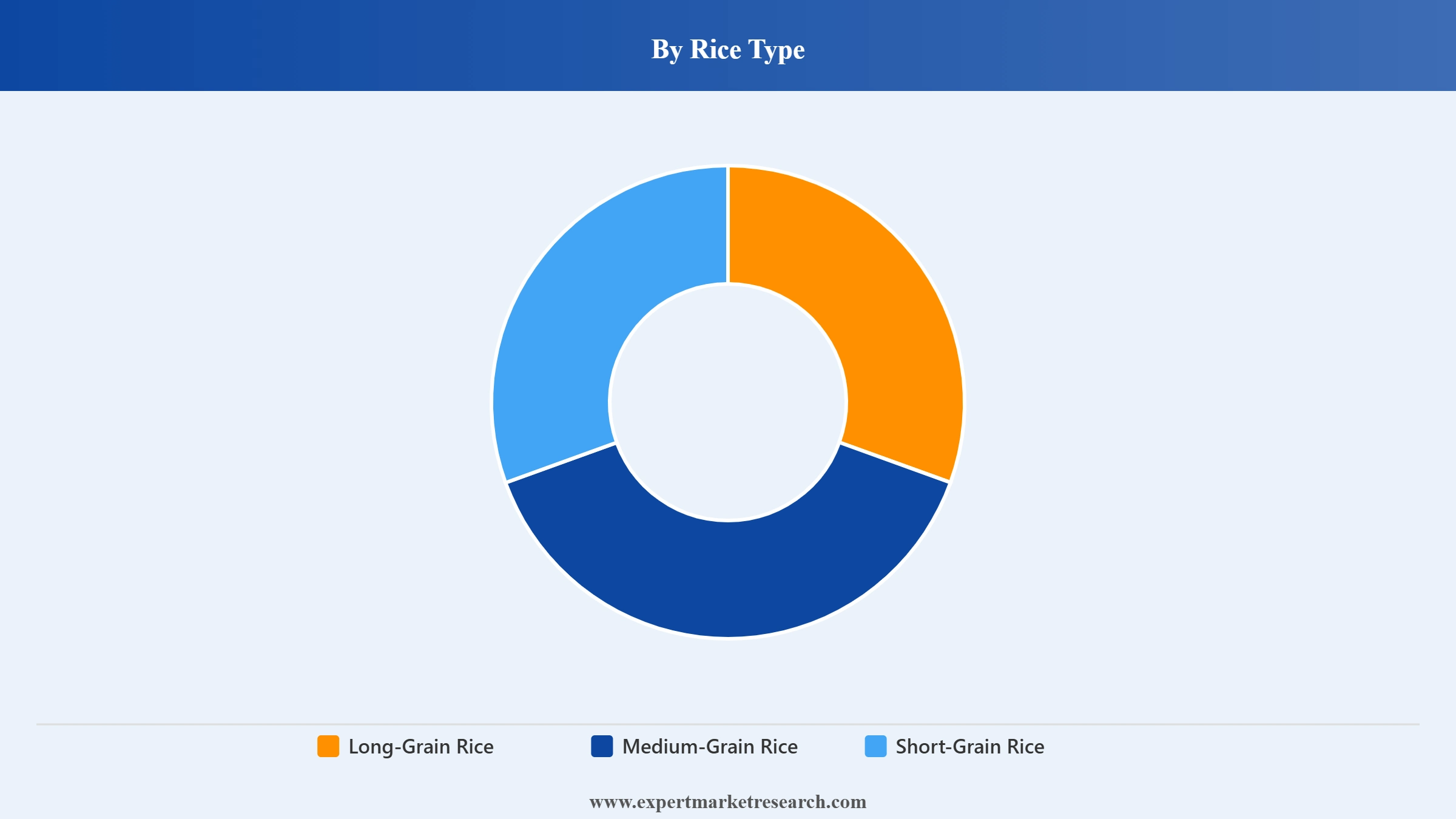
Key Insight: Long grain rice enjoys advantages because of the established export business relationship, standard milling, and its usage for food service and packaged food, boosting the overall Argentina rice market penetration. Medium grain rice obtains popularity due to the specific application for cooking, texture application, and diversification of product range by processors. Short grain rice is used in a limited demand market, which is facilitated by specific cooking needs, sticky-textured products, and specialty retail distribution. Argentine exporters are progressively focusing on the choice of the variety and technology of production according to the needs of the buyers rather than treating rice as a commodity. Such segmentation promotes the mills’ efforts to combine large-scale long grain contracts with the unique medium and short grain.
Market Breakup by Processing Type
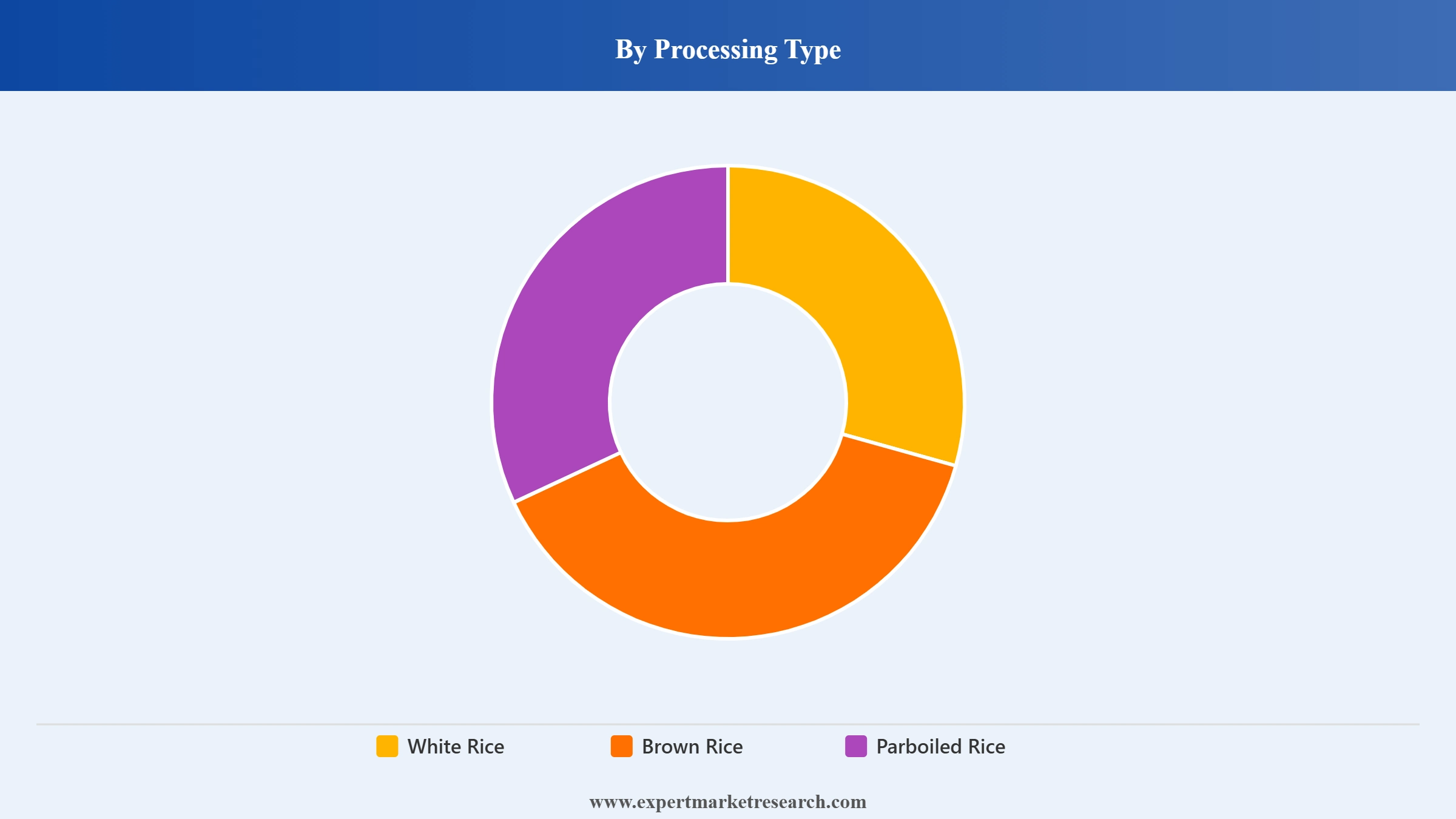
Key Insight: As per the Argentina rice market report, the white variety continues to dominate because of uniform milling, distribution, and consistent cooking quality, which allow for bulk procurement of this staple. Brown rice is growing in significance owing to its positioning from the perspective of health, premium retail marketing, and specialized food production. The parboiled version plays an important niche role, based on specific needs of food service sector for firm grains, easier handling, and lower cooking losses. Together these varieties allow Argentine processors to address different procurement preferences among their customers in various market segments. Modern processors use different techniques of polishing, steaming, drying, sorting, and packaging to meet customer needs.
Market Breakup by End Use
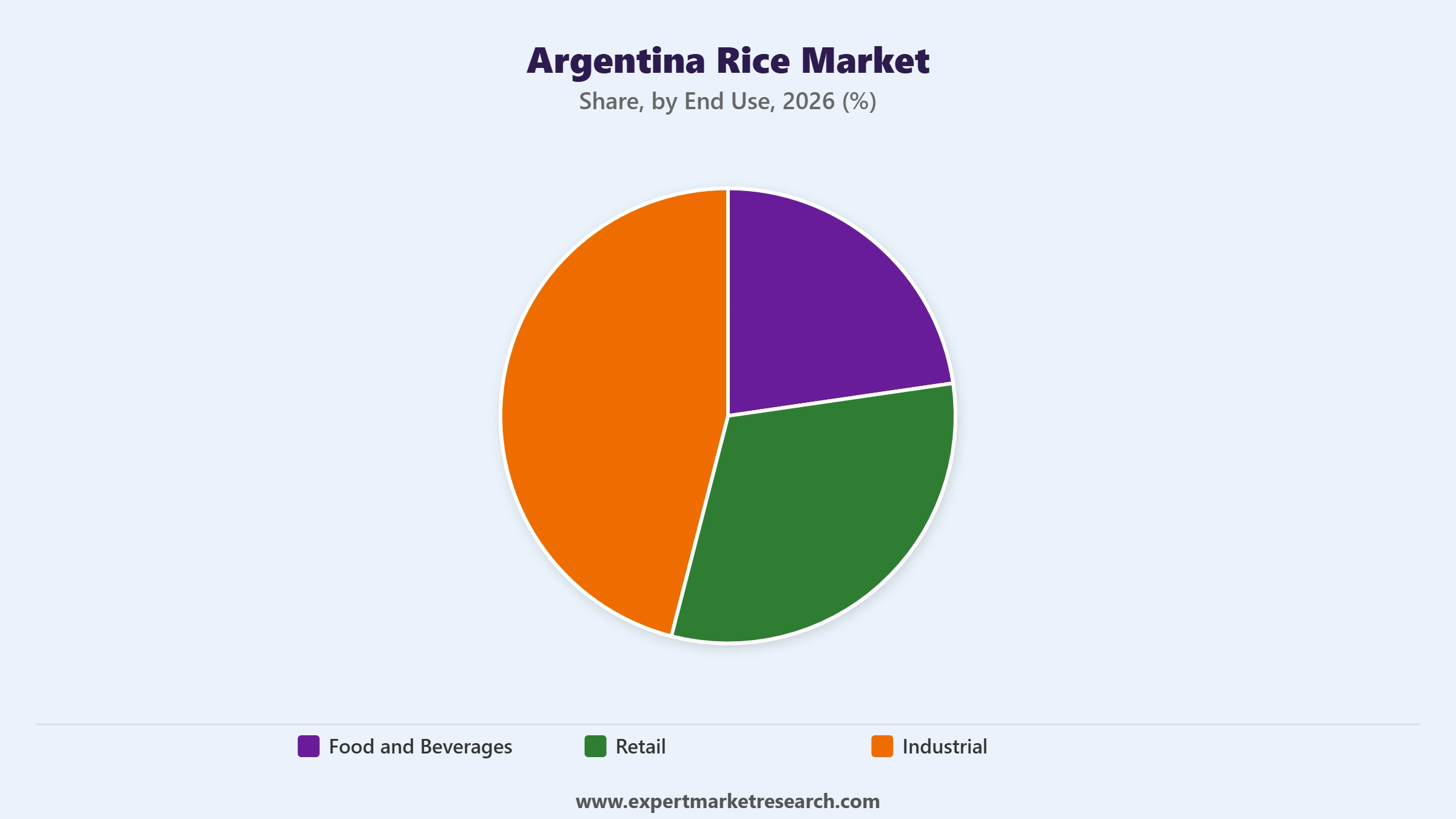
Key Insight: Use for food and beverages continues to be the main outlet, fueled by continued purchases from consumers, restaurants, caterers, and manufacturers utilizing rice in processed foods. Retail is becoming increasingly important through packaged goods, private labels, specialty, and convenience marketing that allows processors to better position their products, widening the Argentina rice market scope. In March 2026, Regrow Ag and PUMA merged, combining global agricultural data with Latin American expertise to strengthen sourcing, sustainability, and compliance. Applications in industry make up a niche market fueled by rice usage in ingredient, starch, brewing, pet food, and processing applications. Argentine producers can enhance their market reach by adapting their grain characteristics, processing, packaging, and quality control according to each market, rather than producing generic commodity products.


Read more about this report - REQUEST FREE SAMPLE COPY IN PDF
Long-grain rice accounts for the largest share of the market due to established exports, milling infrastructure, and versatile applications
Long-grain rice is the dominant type of rice owing to the focus of Argentine production, milling operations, and exports on long, separate-grain varieties. The suitability of the variety for packaged rice, foodservice operations, and international wholesale contracts provides an opportunity for widespread adoption. Processors find it easy to grade and polish large batches of long grain rice, which makes this category popular among distributors and institutional buyers. The demand in the Argentina rice market is further driven by applications that need consistent cooking results, such as prepared meals and restaurant supplies. Exporters find the category appealing since it already has a buyer base and requires minimal marketing activities while at the same time providing maximum output from milling and polishing. In December 2025, IRRI developed whole-grain super rice, improving nutritional value and climate resilience while supporting healthier, sustainable rice production.
Read more about this report - REQUEST FREE SAMPLE COPY IN PDF
Medium-grain rice is becoming the fastest-growing type owing to the diversification of Argentine suppliers outside their established long-grain sales networks and targeting buyers looking for a softer texture and better moisture absorption capacity. The quality of the rice makes it suitable for use in risottos, prepared foods, specialty meal products, and foodservice operations where texture is commercially important. Mills can differentiate the grades of medium-grain rice by selling them under differentiated contracts. This diversification also benefits processors seeking a wide range of products for different regional markets.
White rice dominates the market due to standardized milling, broad distribution, and consistent cooking characteristics across commercial channels
The white rice dominates the Argentina rice market due to the reason that the country’s milling and distribution system is tailored towards polished rice which is popular in the local markets. This is mainly because of the long history of commercial experience which makes purchasing easier for distributors, restaurants, hotels, and food manufacturers who need rice with a standard look and cooking quality. Processors can easily incorporate white rice into their standardized processes of grading, polishing, sorting, and packaging which are easy to apply among large consumer accounts. Aligning with global rice market trends, January 2026, LT Foods launched DAAWAT I’m Organic, offering traceable organic Basmati and Sona Masoori rice to premium consumers.
Read more about this report - REQUEST FREE SAMPLE COPY IN PDF
The fastest growing processing type is the brown rice due to the fact that suppliers in Argentina are reacting to increasing demand for minimally processed rice and nutrition-focused products. Since the bran is not removed during polishing, brown rice serves the purposes of health-oriented consumers, specialty retailers, premium foodservice, and manufactures of nutritious meals. The commercial attractiveness of brown rice motivates processors to improve their efforts in cleaning, sorting, packaging, shelf-life control, and product promotion. It also provides the mills with an alternative high value product.
Food and beverages account for a significant share of the market due to recurring household, foodservice, and food manufacturing procurement requirements
The food and beverages segment stands out as the largest end-use segment, as rice continues to be a major ingredient in household staples, restaurant meals, processed foods, and food formulations. The need for consistent supply, good grain quality, and good cooking characteristics makes rice an ideal choice for the Argentine food manufacturers and foodservice distributors who need to fulfill their procurement needs. In addition to food formulations, rice can also be used in soups, snacks, frozen dinners, sides, and convenience foods in order to increase industrial demand in the Argentina rice market. For the millers, supplying the food and beverages end-use customers enables them to achieve regular contract volumes and to invest in grading, packaging, and quality control. In August 2026, Cibus and Interoc expanded their rice collaboration from two to five traits, advancing herbicide-tolerant varieties toward Latin American commercialization.
Read more about this report - REQUEST FREE SAMPLE COPY IN PDF
Retail is viewed as the fastest growing end-use segment as an increasing number of brands differentiate rice by packaging, varieties, convenience, and premium positioning. Supermarkets and specialty stores give food manufacturers a direct connection to consumers looking for brown rice, long-grain, medium-grain, and parboiled rice in specific pack sizes. It is important to mention private-label programs as well, as retailers can specify product requirements, while Argentine mills handle sourcing and processing.
The competitive landscape of the market is characterized by export competitiveness, efficiency of production, variety of rice and control over processing and distribution. Integrated Argentina rice companies like Molinos Río de la Plata take advantage of existing brand presence, extensive retail reach and vertical integration in rice processing. On the other hand, specialists are placing an increasing emphasis on export agreements and geographical market access.
Furthermore, Argentina rice market players are improving their milling performance, logistics, certification and destination specific rice quality. Seed genetics is an area where there are plenty of competitive opportunities in place, owing to the public-private technology transfer approach of INTA. Water conservation, resistant genetics, brown rice processing, premium rice varieties, traceability and export contract supply are some of the ways in which businesses can differentiate themselves. In terms of cost reduction, automation, efficient irrigation, energy management, and higher-yielding genetics are becoming even more crucial.
Established in 2002 and based in Argentina, Adecoagro offers an integrated rice business operation in Argentina and Uruguay. The company develops proprietary seeds, farms rice, has six mills and markets its products through brands such as Molinos Ala. The vertical integration allows for traceability, variety and flexibility to respond to domestic and international market dynamics.
Founded in 1902 and headquartered in Argentina, Molinos Río de la Plata specializes in meeting the needs of the rice market through an extensive branded food distribution network. The consumer-food reach of this company facilitates accessibility and brand recognition, while the rice products meet household consumption needs.
Founded in 1975 and headquartered in Argentina, Copra S.A. is a specialty rice manufacturer and processor catering to domestic and international market segments. The company provides its services through the complete process of cultivation, drying, milling, and commercialization. This facilitates quality control within the chain and provision of various rice types to consumers.
Founded in 1976 and headquartered in Brazil, Grupo Ceolin is a key player in the rice market through agricultural production, processing and commercialization. The operations are focused at meeting the needs of rice product supply to domestic and international customers by leveraging cultivation, processing, and distribution capabilities of the company.
*Please note that this is only a partial list; the complete list of key players is available in the full report. Additionally, the list of key players can be customized to better suit your needs.*
Unlock the latest insights with our Argentina rice market trends 2026 report. Discover regional growth patterns, consumer preferences, and key industry players. Stay ahead of competition with trusted data and expert analysis. Download your free sample report today and drive informed decisions in the market.


Upto 15% Off
USD
$2499 $2249
$3999 $3599
$4999 $4249
$5999 $5099


*While we strive to always give you current and accurate information, the numbers depicted on the website are indicative and may differ from the actual numbers in the main report. At Expert Market Research, we aim to bring you the latest insights and trends in the market. Using our analyses and forecasts, stakeholders can understand the market dynamics, navigate challenges, and capitalize on opportunities to make data-driven strategic decisions.*
In 2025, the market reached an approximate volume of 603.77 Kilo Tons.
The market is projected to grow at a CAGR of 2.40% between 2026 and 2035.
The rice market in Argentina is estimated to witness a healthy growth during 2026-2035 to reach around 765.37 Kilo Tons by 2035.
Key strategies driving the market include expanding exports, adopting sustainable farming practices, improving yields, investing in processing capabilities, developing premium varieties, and strengthening regional and international distribution networks.
The key trends aiding the market include the adoption of sustainable agricultural practices and ongoing research and development efforts to enhance rice strains that can better withstand climate variations and pest attacks.
Based on rice type, market segmentations include long-grain rice, medium-grain rice, and short-grain rice.
Different end uses are food and beverages, retail, and industrial.
The key players in the market include Adecoagro S.A., Molinos Río de la Plata S.A., Copra S.A., and Grupo Ceolin, among others.
Key challenges include climate variability, water availability, rising input costs, limited processing infrastructure, export competition, and fluctuating international rice prices.
Explore our key highlights of the report and gain a concise overview of key findings, trends, and actionable insights that will empower your strategic decisions.
| REPORT FEATURES | DETAILS |
| Base Year | 2025 |
| Historical Period | 2019-2025 |
| Forecast Period | 2026-2035 |
| Scope of the Report |
Historical and Forecast Trends, Industry Drivers and Constraints, Historical and Forecast Market Analysis by Segment:
|
| Breakup by Rice Type |
|
| Breakup by Processing Type |
|
| Breakup by End Use |
|
| Market Dynamics |
|
| Competitive Landscape |
|
| Companies Covered |
|
Datasheet
One User
USD 2,499
USD 2,249
tax inclusive*
Single User License
One User
USD 3,999
USD 3,599
tax inclusive*
Five User License
Five User
USD 4,999
USD 4,249
tax inclusive*
Corporate License
Unlimited Users
USD 5,999
USD 5,099
tax inclusive*
*Please note that the prices mentioned below are starting prices for each bundle type. Kindly contact our team for further details.*
Flash Bundle
Small Business Bundle
Growth Bundle
Enterprise Bundle
*Please note that the prices mentioned below are starting prices for each bundle type. Kindly contact our team for further details.*
Flash Bundle
Number of Reports: 3
20%
tax inclusive*
Small Business Bundle
Number of Reports: 5
25%
tax inclusive*
Growth Bundle
Number of Reports: 8
30%
tax inclusive*
Enterprise Bundle
Number of Reports: 10
35%
tax inclusive*
How To Order

Select License Type
Choose the right license for your needs and access rights.

Click on ‘Buy Now’
Add the report to your cart with one click and proceed to register.

Select Mode of Payment
Choose a payment option for a secure checkout. You will be redirected accordingly.
Strategic Solutions for Informed Decision-Making
Gain insights to stay ahead and seize opportunities.

Get insights & trends for a competitive edge.

Track prices with detailed trend reports.

Analyse trade data for supply chain insights.

Leverage cost reports for smart savings

Enhance supply chain with partnerships.

Connect For More Information
Our expert team of analysts will offer full support and resolve any queries regarding the report, before and after the purchase.
Our expert team of analysts will offer full support and resolve any queries regarding the report, before and after the purchase.
We employ meticulous research methods, blending advanced analytics and expert insights to deliver accurate, actionable industry intelligence, staying ahead of competitors.
Our skilled analysts offer unparalleled competitive advantage with detailed insights on current and emerging markets, ensuring your strategic edge.
We offer an in-depth yet simplified presentation of industry insights and analysis to meet your specific requirements effectively.




