

Consumer Insights
Uncover trends and behaviors shaping consumer choices today
Procurement Insights
Optimize your sourcing strategy with key market data
Industry Stats
Stay ahead with the latest trends and market analysis.
The Europe polylactic acid (PLA) market was valued at USD 574.76 Million in 2025. The market is expected to grow at a CAGR of 12.20% during the forecast period of 2026-2035 to reach a value of USD 1817.25 Million by 2035. This booming growth is resulting from the implementation of tight environmental policies, and the circular economy plans at the regional scale.
The Europe polylactic acid (PLA) market dynamics are evolving with the increasing demand for sustainable and environmentally friendly materials, especially in the packaging and consumer goods sectors, as companies are developing biodegradable materials to replace the usual plastics to achieve regulatory and environmental objectives. Meanwhile, the innovation of the PLA manufacturing technologies and high-quality fibers are allowing them to be used in a wider variety of textiles, industrial products and specialty consumer goods. These advances not only improve material efficiency and reduce carbon emissions, but they also allow manufacturers to diversify their product lines, which helps expand the use of PLA and create a circular, low-carbon economy.
Moreover, manufacturers are being pushed to utilize greener substitutes like PLA in packaging, textiles, and technical items due to regulations on single-use plastic, packaging waste reduction, and carbon footprint reduction. In response, companies are creating high-performance, recyclable, and biodegradable PLA solutions that enable them to both comply with regulations and meet the growing demand from customers for the usage of environmentally friendly materials. This regulatory impetus is creating growth opportunities in the Europe polylactic acid (PLA) market for players to increase production, diversify applications, and enhance supply chains. For instance, in April 2025, TotalEnergies Corbion collaborated with Useon to commercially launch expanded PLA (EPLA) foam technology. This green packaging and insulation solution exemplifies how strategic alliances are propelling the market to adopt this material, hence improving long-term growth in the market.
Compound Annual Growth Rate
12.2%
Value in USD Million
2026-2035
Read more about this report - REQUEST FREE SAMPLE COPY IN PDF
TotalEnergies Corbina collaborated with IMCD to promote the usage of Luminy PLA in the German plastics market. Presented at K2025, the project advances sustainable and circular materials, supports the European bio-based plastics market, and assists in the decarbonization of industries as it works to satisfy increasing demand for high-performance, eco-friendly materials.
TripleW, together with Sulzer, released the first commercial PLA bioplastic produced entirely out of food waste. This innovation contributed to the development of a sustainable circular plastics system, increase the supply of high-demand PLA production, strengthening the Europe polylactic acid (PLA) market value through the transformation of waste into scalable green materials across various industries.
Futerro and Galactic declared a new plant in Port-Jerome-sur-Seine, France, to convert lactic acid to bio-based derivatives for agri-food and green chemistry. This development strengthens Europe's PLA supply chain, promotes a circular bio-industrial environment, and meets the growing demand for sustainable and de-fossilized materials across multiple industries.
Futerro initiated FEED for its integrated PLA biorefinery in Saint-Jean-de-Folleville, which produces lactidic acid, lactide, PLA, and recycling. This green chemistry cluster, which includes Ingerop, Eiffage, and Ataub, strengthens Europe polylactic acid (PLA) market by promoting sustainable polymers and aiding the region's industrial and environmental transformation.
Biobased plastic production is gaining momentum in response to rising sustainability demands, leading to expanding applications across packaging, textiles, automotive components, and consumer goods. Global capacity for PLA and other biopolymers have been increasing, due to the expansion of important polymers like PLA across Europe. According to the Europe polylactic acid (PLA) market analysis, the capacity of biobased plastics is expected to nearly double to 4.69 million tonnes by 2030, up from 2.31 million tonnes in 2025, hence promoting the product adoption.
Global supply networks are being strengthened and the shift to sustainable materials is being supported by increasing investments in large-scale PLA production plants. The continuous growth of the European polylactic acid (PLA) market is supported by increased manufacturing capacity, which makes biodegradable polymers used in consumer goods, packaging, and disposable products more widely available. To keep up with this trend, Emirates Biotech declared in December 2024 that it will build the largest PLA production facility in the world in the United Arab Emirates, with an annual capacity of 160,000 tons, with a focus on major international markets, such as Europe.
The polylactic acid (PLA) demand in Europe is being driven by increased research in biomedical engineering and pharmaceutical technologies. PLA's biodegradability, biocompatibility, and adaptability for additive manufacturing make it an excellent choice for medical implants, tissue engineering, and sophisticated drug delivery systems. The growing usage of PLA in 3D and emerging 4D printing technologies for controlled drug release and personalized healthcare solutions is broadening its application area and driving market growth.
Textile makers and brands in Europe are pushing for eco-friendly alternatives to fossil-fuel-based fibers. HighChem's corn-based HIGHLACT PLA fiber, which is biodegradable, carbon neutral, and emits 72% less CO₂ than polyester, is gaining traction in European markets. Since 2021, the fiber has expanded its presence in the Japanese, American, and European markets, where HighChem showcased the largest number of PLA fabric varieties ever exhibited at the Filo event in Milan, highlighting sustainability solutions in textiles and the potential of the Europe polylactic acid (PLA) market.
Strong regulatory frameworks encouraging the use of sustainable materials are speeding up the use of biodegradable plastics in Europe. The policies that are in line with the European Green Deal and circular economy goals are pushing businesses to create and certify ecofriendly polymers for packaging, consumer, and other industrial uses. Following this Europe polylactic acid (PLA) market trend, in June 2023, TotalEnergies Corbion disclosed that its Luminy polylactic acid bioplastics comply with the strict criteria of the EU Taxonomy Regulation for climate change mitigation and adaptation, which not only strengthens the credibility of PLA as a sustainable alternative but also supports the growth of the market.
Read more about this report - REQUEST FREE SAMPLE COPY IN PDF
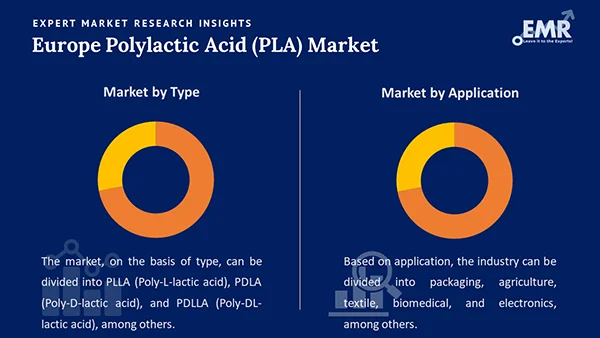
The EMR’s report titled “Europe Polylactic Acid (PLA) Market Report and Forecast 2026-2035” offers a detailed analysis of the market based on the following segments:
Market Breakup by Type
Key Insight: The Europe polylactic acid (PLA) market scope comprises PLLA, PDLA, and PDLLA, which have different performance characteristics for use in different applications. PLLA is widely used in packaging and textiles, as it is highly crystalline, and it is also used in biomedical and electronic industries because of the biodegradability and thermal stability of PDLA and PDLLA. Firms such as NatureWorks, Total Corbion PLA, and Futerro are undertaking research initiatives in order to enhance polymer grades, introduce new fibers, and establish new sustainable solutions, which strengthens the move in Europe towards eco-friendly and high-performance PLA materials.
Market Breakup by Application
Key Insight: The Europe polylactic acid (PLA) market caters to applications across multiple markets, including packaging, agriculture, textiles, biomedical, electronics, and so on. In packaging, Luminy® PLA by Total Corbion is used to facilitate sustainable alternatives to PET. Biodegradable films are used in agriculture to minimize soil contamination, whereas the use of textile fibers, such as the HIGHLACT of HighChem, is also increasing. PDLLA is used in biomedical sciences as a drug delivery agent and in implants and electronics as a biodegradable material in a component. Businesses are increasing production levels, introducing new PLA fibers, and collaborating to meet the growing demand in Europe in terms of materials that are sustainable and support the circular economy.
Market Breakup by Region
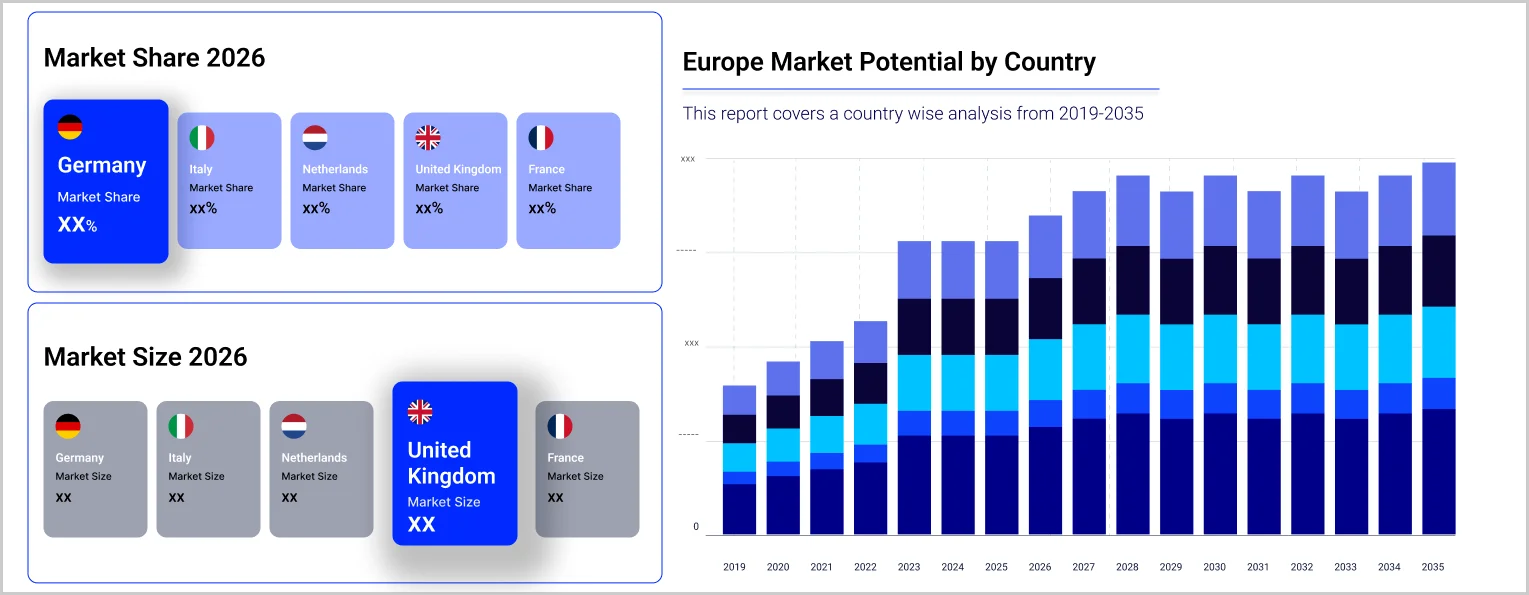
Key Insight: The Europe polylactic acid (PLA) market landscape includes regions such as Germany, the United Kingdom, France, Italy, Spain, and so on. Germany is at the forefront with its high level of research and development and production facilities, whereas the United Kingdom is focused on sustainable packaging programs. Textile PLA and medicinal devices in France and Italy are embracing PLA through collaboration and domestic growth. Meanwhile, Spain emphasizes the production of agricultural mulch films and consumer goods.
By type, the PLLA (PolyLlactic acid) category witnesses high demand due to its growing adoption in biomedical and aesthetic applications
The PLLA (poly-L-lactic acid) is picking up momentum in the Europe polylactic acid (PLA) market, led by the growing biomedical use of biocompatible and biodegradable polymers for tissue support and cosmetic treatments. There is increasing demand for materials that can be used in clinical environments and offer safety and a long life cycle. For instance, since March 2021, Galderma offers Sculptra4 (injectable PLLA) in Europe using a renewed protocol that allows more rapid reconstitution and greater patient comfort, which increases clinical adoption and supports the use of PLLA as a regenerative and aesthetic medicine.
On the other hand, PDLA (poly-D-lactic acid), despite having a lesser market share, is finding its way into specialist stereo complex PLA (scPLA) mixes when thermal stability and higher melting points are required. Such enhanced blends are finding use in high-performance industrial and specialty packaging solutions that require thermal resistance beyond standard PLA barriers. The expansion of PDLA-based stereocomplex blends is strengthening the integration of tailored PLA-based products into specialized European markets seeking durable, high-performance applications.
By application, the packaging category shows robust growth owing to increasing adoption of eco-friendly and biodegradable materials
The requirement for sustainable packaging solutions is also a significant growth factor boosting the Europe polylactic acid (PLA) market revenue, particularly as businesses transition to biodegradable and compostable films that offer performance and environmental benefits. A significant product breakthrough was the home compostable shrink sleeve solution for PET alternatives in packaging, announced by Carbios and Sleever, which develops biodegradable PLA-based films that match Europe's sustainability requirements. This type of introduction increases the rate of adoption in food and beverage packaging, where regulatory pressure and customer demand for low-impact materials are growing.
In contrast to typical polymers, PLA's biodegradable feature is gaining favor across the Europe polylactic acid (PLA) market dynamics, especially in the agriculture businesses where they are used in environmentally friendly mulch films, seed coatings, and controlled-release formulations. The next generation of compostable and recyclable PLA-based agricultural solutions is being developed by emerging research on biodegradable PLA copolymers, including the EUR 7.5 million in Greco project work by TotalEnergies Corbion and partners that was announced in May 2025. These initiatives promise to reduce waste and improve moisture and aroma retention. This kind of innovation relationship strengthens PLA's position in eco-agriculture.
Read more about this report - REQUEST FREE SAMPLE COPY IN PDF
By region, France leads the market growth driven by strong investments in large-scale PLA production
France is becoming an important hub in the Europe polylactic acid (PLA) market as manufacturers and technology partners shift their focus to increased sustainability standards in Europe. Applications in flexible and rigid packaging, fibers, nonwovens, food service ware, and durable goods support the market growth, whereby biobased and recyclable materials are becoming more popular. Firms are also investing in the high advanced polymerization technologies and green chemistry solutions in order to maintain the high quality of supply of PLA. One example of this trend is the 100,000-ton-per-year PLA facility that TotalEnergies Corbion built in Grandpuits, which was commissioned in 2024.
United Kingdom accounts for a significant share of the Europe polylactic acid (PLA) market, owing to the increased sustainability obligations in the supply chains that are pushing the use of PLA materials, especially in the packaging and textile sector. There is also an emerging trend where British companies and technologists are entering into partnerships in an attempt to introduce sustainable versions of PLA in the market. For example, the production of eco-friendly PLA films for food packaging offers improved barrier properties and waste-reduction benefits, aligning with the United Kingdom’s regulatory framework on single-use plastics and the growing adoption of locally produced PLA.
The major Europe polylactic acid (PLA) market players are implementing the concept of strategic alliances and technology-related partnerships to expand sustainable production. The firms are focusing on new polymerization and fiber technology, which allow high-quality PLA resins that can be used in packaging, textiles, and consumer products. These initiatives are making material more readily available and less harmful to the environment by incorporating efficient and low-carbon production processes and utilizing renewable feedstocks, which solidifies the position of PLA as an option to traditional plastics.
Many Europe polylactic acid (PLA) companies are also targeting awareness programs. PLA manufacturers are displaying innovative fibers, fabrics, and biodegradable products to end-users and brands to showcase them through exhibitions, regional partnerships, and pilot facilities. With a focus on circular solutions to the economy, certifications, and regulatory compliance, firms are increasingly adopting the approach across all industries.
NatureWorks LLC is a sustainable bioplastics company that produces polylactic acid (PLA) and is based in Minnetonka, Minnesota, United States of America, and was established in 2001. The company aims at packaging, textile, and consumer goods solutions in the name of environmental friendliness, using advanced polymer technologies to encourage a circular economy.
The joint venture between TotalEnergies and Corbion is Total Corbion PLA, which was established in 2011 and has its headquarters in Gorinchem, Netherlands. The company manufactures PLA-type resins as well as lactide monomers that are of high quality and promote sustainable solutions to packaging, fibers, and other industrial solutions.
Futerro S.A. is a plastic maker manufacturing PLA and biodegradable solutions situated in Mouscron, Belgium, and was founded in 2007. The firm combines both new fermentation and polymerization technology to provide high-performance PLA for packaging, textiles, and consumer goods.
BIOTEC GmbH & Co.KG is a company based in Germany and was established in 1997 that deals with the production of biodegradable plastics such as PLA. The firm focuses on sustainable production, serving packaging, agricultural films, and compostable products to the global markets.
*Please note that this is only a partial list; the complete list of key players is available in the full report. Additionally, the list of key players can be customized to better suit your needs.*
Other key players in the Europe Polylactic Acid (PLA) market include Evonik Industries AG, among others.
Explore the latest trends shaping the Europe polylactic acid (PLA) market 2026-2035 with our in-depth report. Gain strategic insights, future forecasts, and key market developments that can help you stay competitive. Download a free sample report or contact our team for customized consultation on Europe polylactic acid (PLA) market trends 2026.


Upto 15% Off
USD
$2499 $2249
$3999 $3599
$4999 $4249
$5999 $5099


*While we strive to always give you current and accurate information, the numbers depicted on the website are indicative and may differ from the actual numbers in the main report. At Expert Market Research, we aim to bring you the latest insights and trends in the market. Using our analyses and forecasts, stakeholders can understand the market dynamics, navigate challenges, and capitalize on opportunities to make data-driven strategic decisions.*
In 2025, the Europe polylactic acid (PLA) market reached an approximate value of USD 574.76 Million.
The market is projected to grow at a CAGR of 12.20% between 2026 and 2035.
The market is estimated to witness a healthy growth in the forecast period of 2026-2035 to reach about USD 1817.25 Million by 2035.
Key strategies driving the market include expanding PLA production capacities, launching innovative biodegradable products, forming strategic partnerships, targeting sustainable packaging and textile applications, and focusing on circular economy initiatives.
The key trends of the market include the increasing research and development (R&D) activities to improve the functionality of polylactic acid, development of superior polylactic acid, and rising use of polylactic acid in medical applications.
The major countries in the market are Germany, United Kingdom, France, Italy, and Spain, among others.
The leading types of polylactic acid (PLA) in the market are PLLA (Poly-L-lactic acid), PDLA (Poly-D-lactic acid), and PDLLA (Poly-DL-lactic acid), among others.
The significant applications in the market are packaging, agriculture, textile, biomedical, and electronics, among others.
The key players in the market include NatureWorks LLC, Total Corbion PLA, Futerro S.A., BIOTEC GmbH & Co.KG, and Evonik Industries AG, among others.
The major challenges that the players face includes high production costs, limited feedstock availability, regulatory compliance, competition from conventional plastics, and technological hurdles in scaling advanced PLA applications.
Explore our key highlights of the report and gain a concise overview of key findings, trends, and actionable insights that will empower your strategic decisions.
| REPORT FEATURES | DETAILS |
| Base Year | 2025 |
| Historical Period | 2019-2025 |
| Forecast Period | 2026-2035 |
| Scope of the Report |
Historical and Forecast Trends, Industry Drivers and Constraints, Historical and Forecast Market Analysis by Segment:
|
| Breakup by Type |
|
| Breakup by Application |
|
| Breakup by Region |
|
| Market Dynamics |
|
| Competitive Landscape |
|
| Companies Covered |
|
| Report Price and Purchase Option | Explore our purchase options that are best suited to your resources and industry needs. |
| Delivery Format | Delivered as an attached PDF and Excel through email, with an option of receiving an editable PPT, according to the purchase option. |
Datasheet
One User
USD 2,499
USD 2,249
tax inclusive*
Single User License
One User
USD 3,999
USD 3,599
tax inclusive*
Five User License
Five User
USD 4,999
USD 4,249
tax inclusive*
Corporate License
Unlimited Users
USD 5,999
USD 5,099
tax inclusive*
*Please note that the prices mentioned below are starting prices for each bundle type. Kindly contact our team for further details.*
Flash Bundle
Small Business Bundle
Growth Bundle
Enterprise Bundle
*Please note that the prices mentioned below are starting prices for each bundle type. Kindly contact our team for further details.*
Flash Bundle
Number of Reports: 3
20%
tax inclusive*
Small Business Bundle
Number of Reports: 5
25%
tax inclusive*
Growth Bundle
Number of Reports: 8
30%
tax inclusive*
Enterprise Bundle
Number of Reports: 10
35%
tax inclusive*
How To Order

Select License Type
Choose the right license for your needs and access rights.

Click on ‘Buy Now’
Add the report to your cart with one click and proceed to register.

Select Mode of Payment
Choose a payment option for a secure checkout. You will be redirected accordingly.
Strategic Solutions for Informed Decision-Making
Gain insights to stay ahead and seize opportunities.

Get insights & trends for a competitive edge.

Track prices with detailed trend reports.

Analyse trade data for supply chain insights.

Leverage cost reports for smart savings

Enhance supply chain with partnerships.

Connect For More Information
Our expert team of analysts will offer full support and resolve any queries regarding the report, before and after the purchase.
Our expert team of analysts will offer full support and resolve any queries regarding the report, before and after the purchase.
We employ meticulous research methods, blending advanced analytics and expert insights to deliver accurate, actionable industry intelligence, staying ahead of competitors.
Our skilled analysts offer unparalleled competitive advantage with detailed insights on current and emerging markets, ensuring your strategic edge.
We offer an in-depth yet simplified presentation of industry insights and analysis to meet your specific requirements effectively.




