

Consumer Insights
Uncover trends and behaviors shaping consumer choices today
Procurement Insights
Optimize your sourcing strategy with key market data
Industry Stats
Stay ahead with the latest trends and market analysis.
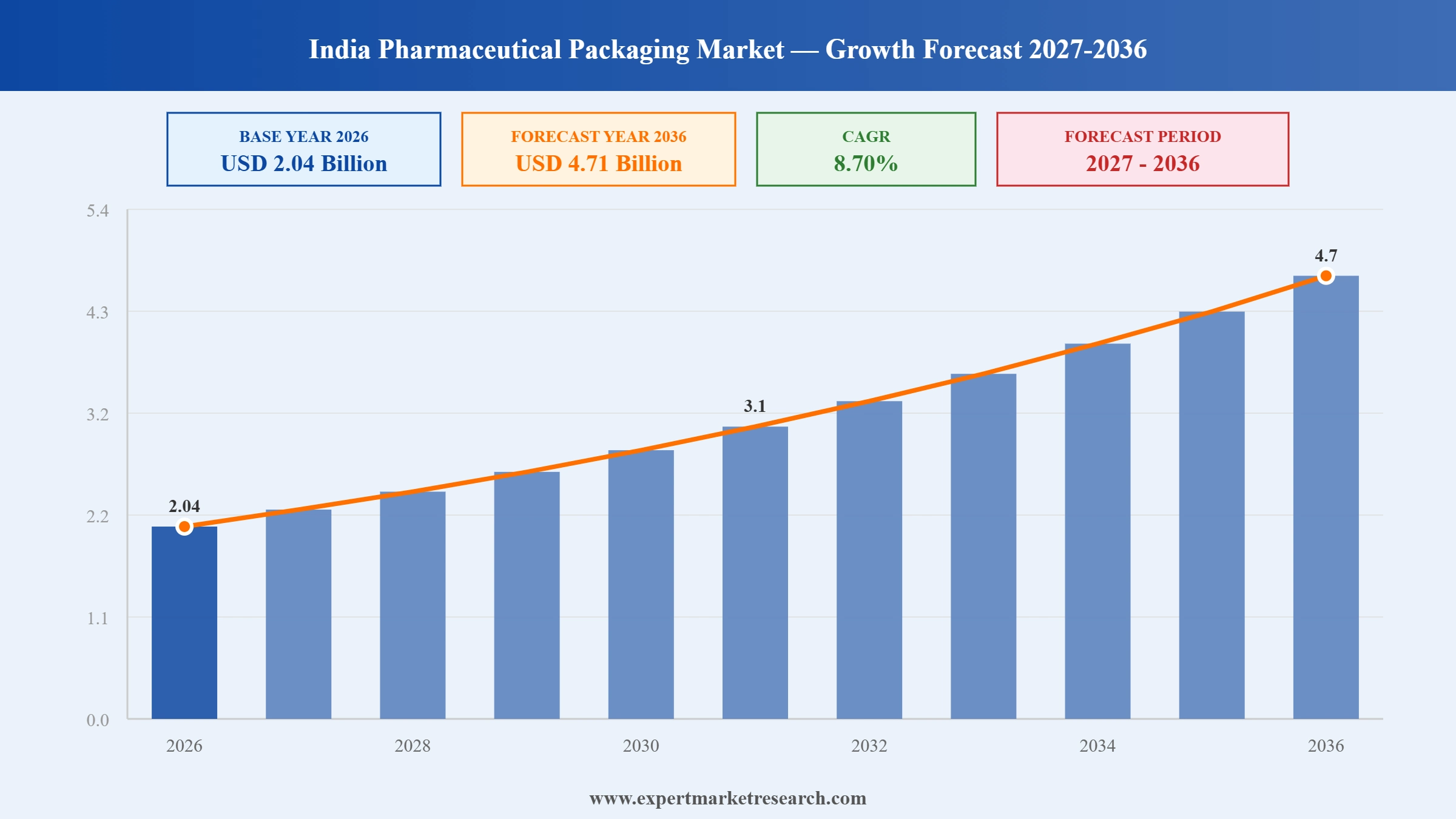
The India pharmaceutical packaging market attained a value of USD 1.88 Billion in 2025 and is projected to expand at a CAGR of 8.70% through 2035. The market is further expected to reach USD 4.33 Billion by 2035. Growing pharmaceutical manufacturing, rising demand for sustainable and tamper evident packaging, and India's role as a leading generic medicine supplier are strengthening demand across every segment. Smart packaging features, vaccine export requirements, and capacity expansions by global packaging groups are further encouraging companies to widen their offerings across the country.
Pharmaceutical packaging refers to materials and containers used to protect, dose, and transport medicines, ranging from bottles and blister packs to vials and specialty bags. Plastics and polymers hold a large share of the India pharmaceutical packaging market given their versatility and cost effectiveness, while glass remains essential for injectable and vaccine packaging. Rising generic drug exports, vaccine manufacturing, and stricter regulatory standards continue to widen the customer base among pharmaceutical manufacturers, contract packagers, and retail pharmacies.
Demand is concentrating around packaging suppliers able to combine compliant materials with export scale capacity. In April 2026, the Pharmaceuticals Export Promotion Council of India reported pharmaceutical exports of about USD 28.29 billion for April to February of financial year 2026, up more than 5 percent, with over 60 percent directed to highly regulated markets. This export driven positioning is converting rising pharmaceutical manufacturing directly into expanded adoption across the India pharmaceutical packaging market.
Companies across the India pharmaceutical packaging market are converging on a common development direction, widening from basic containers toward smart, sustainable, and tamper evident packaging solutions. Suppliers are increasingly pursuing capacity expansions, joint ventures, and advanced manufacturing technologies to broaden their customer base. This shift is reshaping competitive dynamics among packaging companies, favouring those able to demonstrate regulatory compliance, automation, and sustainable materials over those offering conventional packaging alone.
Read more about this report - REQUEST FREE SAMPLE COPY IN PDF
Romaco India held an open house event at its Hyderabad Experience Centre, demonstrating its S 710 Prime tablet press and NBL 400 blister line to Indian pharmaceutical companies over three days. Equipment suppliers across the India pharmaceutical packaging market can use experience centres to showcase capabilities and build direct relationships with domestic packaging and drug manufacturers. Live demonstrations also let equipment buyers compare throughput and changeover speed before committing to a purchase.
Amcor announced a multimillion-dollar investment in its healthcare packaging facility in Sira, Karnataka, adding automated online vision systems for ophthalmic containers and injectable vials. Packaging companies across the India pharmaceutical packaging market can use such automated quality systems to shorten lead times and win business from pharmaceutical customers seeking reliable, high-quality supply. This kind of investment also signals long term confidence in India's healthcare packaging demand.
Nipro announced the start of high-quality glass cartridge production for dental and pen applications at its Pune manufacturing site, beginning in July 2025, to support rising Asian demand. Packaging companies across the India pharmaceutical packaging market can use targeted capacity expansions at existing plants to serve growing regional demand without the cost of building new facilities. Such expansions also let established plants scale output quickly without the cost of building new facilities.
TPG entered a binding agreement to acquire a 35 percent stake in SCHOTT Poonawalla, the Indian joint venture between SCHOTT Pharma and Serum Institute of India, with Novo Holdings as co investor. Packaging companies can use such strategic investments to fund capacity growth and strengthen their position in the vaccine and injectable packaging segment. Such deals also bring in outside capital that accelerates capacity building in specialised packaging segments.
Domestic film manufacturers are increasingly expanding packaging capacity to serve rising pharmaceutical and healthcare demand across the country. This is strengthening supply reliability across the India pharmaceutical packaging market, since local capacity reduces dependence on imports. In November 2025, UFlex announced an investment of over INR 700 crore to expand packaging film capacity at its Dharwad, Karnataka plant, adding 54,000 tonnes per year of manufacturing capacity. Domestic capacity of this kind also shortens lead times for pharmaceutical customers seeking reliable, locally sourced supply.
Domestic manufacturers are increasingly launching advanced barrier films that reduce reliance on imported packaging materials. This is strengthening local supply chains across the India pharmaceutical packaging market. In March 2025, JPFL Films, a subsidiary of Jindal Poly Films, became the first Indian manufacturer to launch Biaxially Oriented Polyamide nylon films, investing INR 120 crore in its Nashik facility to serve pharma, medical, and food packaging customers previously dependent on imports. Import substitution of this kind is becoming a wider theme.
Regulators are increasingly widening the categories of medicines that require mandatory barcode or QR code authentication. This is expanding demand for smart packaging features across the India pharmaceutical packaging market. In June 2026, the Ministry of Health and Family Welfare amended the Drugs Rules, 1945, expanding Schedule H2 to cover additional medicine categories under the QR code-based traceability framework, with phased effective dates for newly included products. Suppliers that master these authentication features early gain an edge when bidding for large-volume supply contracts.
Regulators are increasingly easing compliance timelines for plastic packaging producers while retaining recycling targets. This is shifting compliance planning across the market. In March 2026, the government notified the Plastic Waste Management Amendment Rules, 2026, allowing shortfalls in recycled content targets for 2025 to 2026 to be carried forward over three subsequent years instead of facing immediate penalties. Suppliers that adapt early are expected to win contracts from manufacturers preparing for stricter enforcement later. Suppliers that adapt quickly stand to gain favour with manufacturers planning ahead of stricter enforcement.
Contract manufacturers are increasingly acquiring specialised biologics and fill finish capacity to meet rising demand from innovator and generic customers. This is widening the contract packaging segment of the India pharmaceutical packaging market. In December 2025, Syngene International acquired a multi modal biologics manufacturing facility from Stelis Bio-pharma for about INR 617 crore, adding 20,000 litres of drug substance capacity and a high-speed fill finish unit. Such acquisitions let contract manufacturers add specialised capacity quickly without long delays from building new facilities from scratch.
The Expert Market Research's report titled "India Pharmaceutical Packaging Market Report and Forecast 2026-2035" offers a detailed analysis of the market based on the following segments:
Market Breakup by Materials
Key Insight: Plastics and Polymers dominate the materials segment of the India pharmaceutical packaging market given their versatility, durability, and cost effectiveness across bottles, blisters, and containers. Aluminium Foil is registering the fastest growth as blister packaging demand rises. Effective July 2025, the Central Board of Indirect Taxes and Customs required importers of plastic raw materials and plastic packaged goods to present valid Extended Producer Responsibility registration before customs clearance, tightening compliance across imported packaging materials. Glass sustains steady demand through injectable and vaccine packaging, while Paper and Paperboard and Others support sustainable packaging trends.
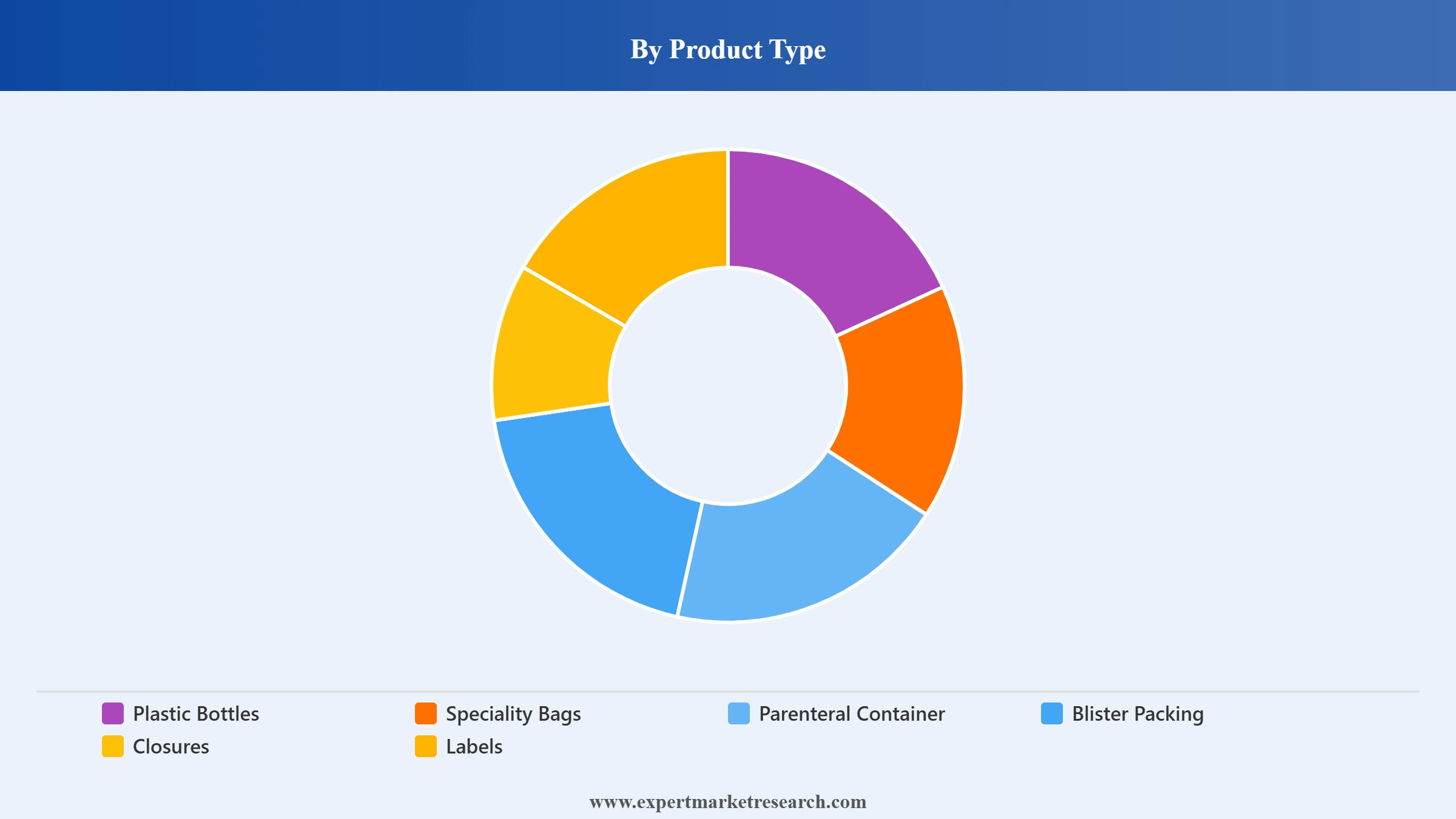
Market Breakup by Product Type
Key Insight: Blister Packing dominates the product type segment given its wide use for oral solid dosage forms across generic and branded medicines. Parenteral Container is registering the fastest growth as injectable and vaccine manufacturing expands. Effective February 2025, the Directorate General of Foreign Trade withdrew its mandatory Track and Trace provision for exported drug formulations, shifting authentication responsibility to the Ministry of Health and Family Welfare under the Drugs Rules. Plastic Bottles, Specialty Bags, Closures, and Labels sustain steady demand, while Others support overall volumes.
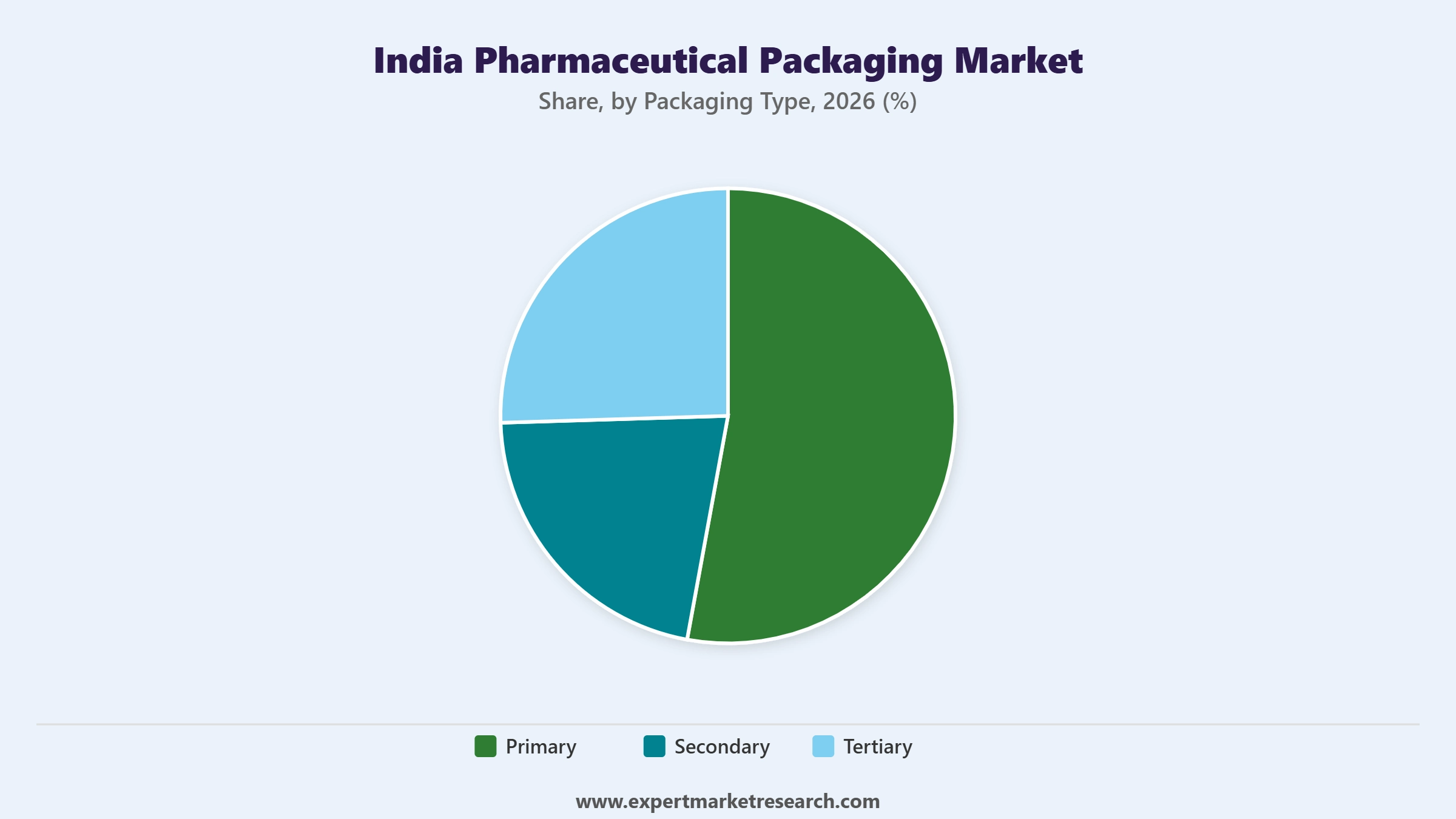
Market Breakup by Packaging Type
Key Insight: Primary packaging dominates the packaging type of segment given its direct role in protecting and dosing medicines in contact with the product. Secondary packaging is registering the fastest growth as branding, anti-counterfeiting, and patient information requirements expand. Tertiary packaging sustains steady demand through bulk transport and warehousing of finished medicines.
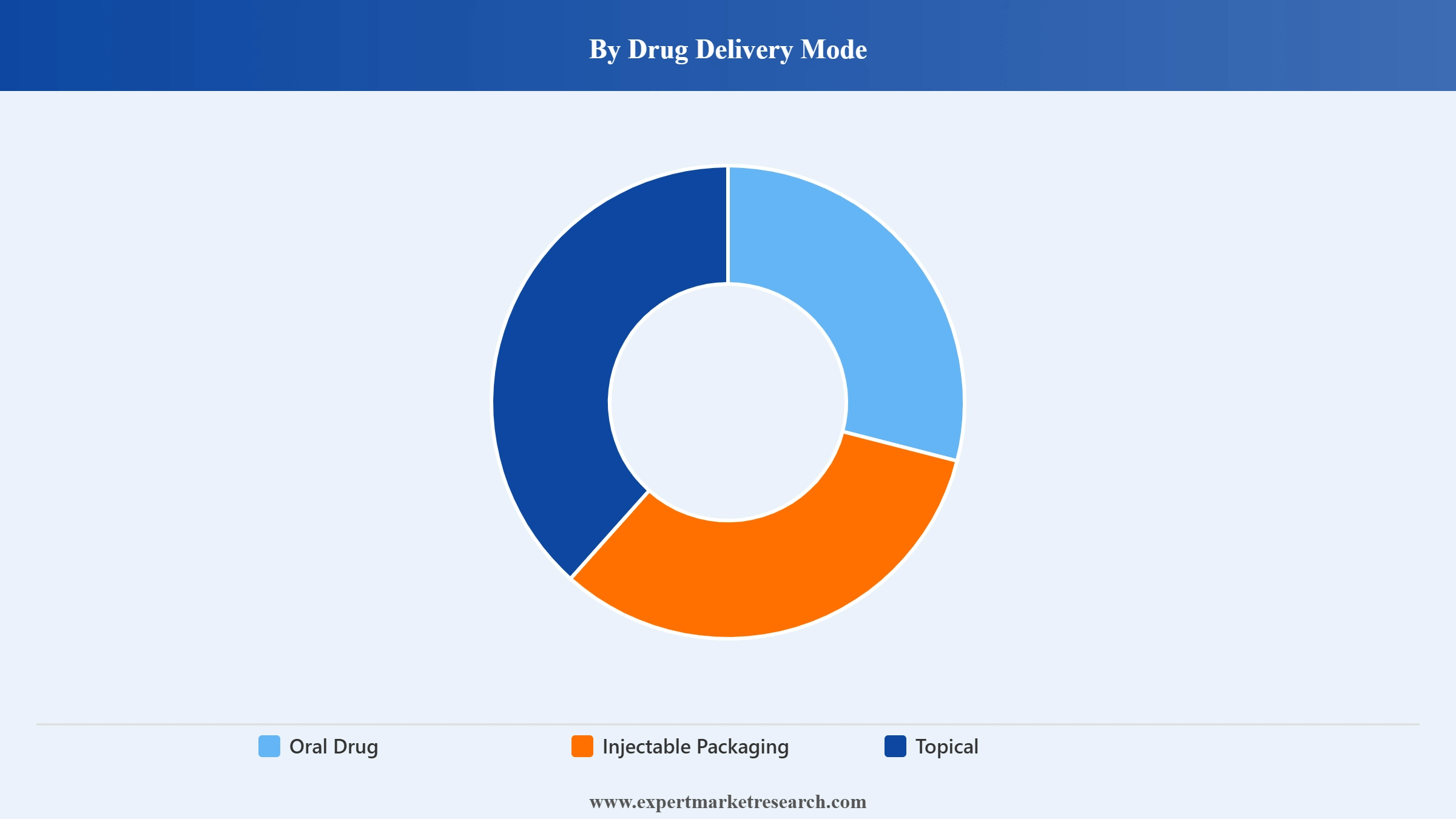
Market Breakup by Drug Delivery Mode
Key Insight: Oral Drug packaging dominates the drug delivery mode segment given the large volume of tablets and capsules manufactured in India. Injectable Packaging is registering the fastest growth as vaccine and biologic manufacturing expands. Topical and Others, including inhalers and nasal sprays, sustain steady demand through specialised therapeutic categories.
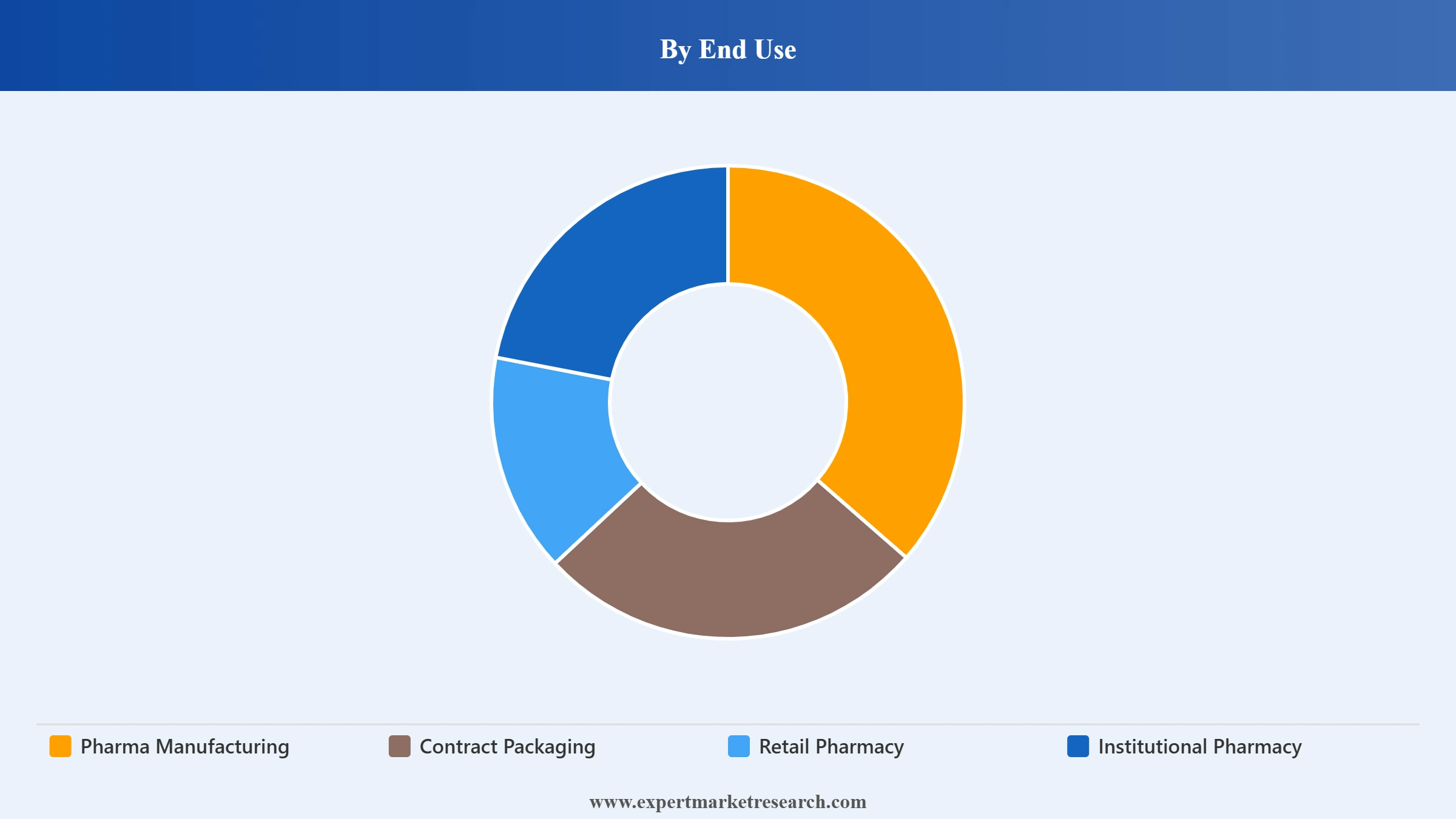
Market Breakup by End Use
Key Insight: Pharma Manufacturing dominates the end use segment given its central role in producing and packaging medicines at scale. Contract Packaging is registering the fastest growth as manufacturers outsource packaging during periods of high export demand. In April 2025, government data showed India's pharmaceutical exports reached about USD 30.47 billion in financial year 2025, up 9.4 percent, reinforcing manufacturing scale that supports packaging demand. Retail Pharmacy and Institutional Pharmacy sustain steady demand through domestic dispensing and hospital supply chains.
Market Breakup by Region
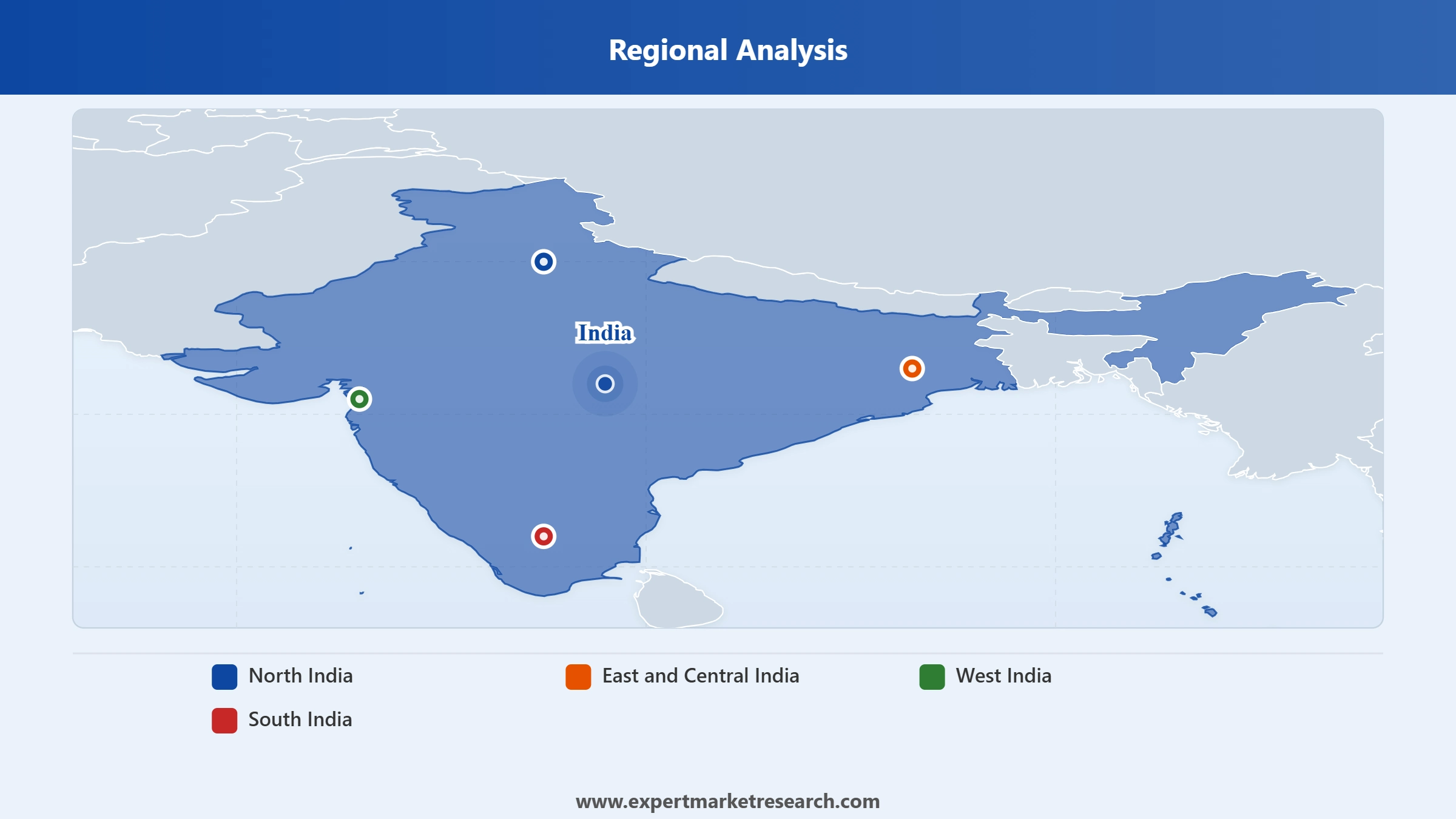
Key Insight: West India dominates the regional breakup of the India pharmaceutical packaging market given its dense concentration of pharmaceutical manufacturing units and port access across Maharashtra and Gujarat. South India is registering the fastest growth as pharmaceutical and biotechnology clusters expand around Hyderabad and Bengaluru. North India and East and Central India sustain steady demand through domestic manufacturing hubs.
Read more about this report - REQUEST FREE SAMPLE COPY IN PDF
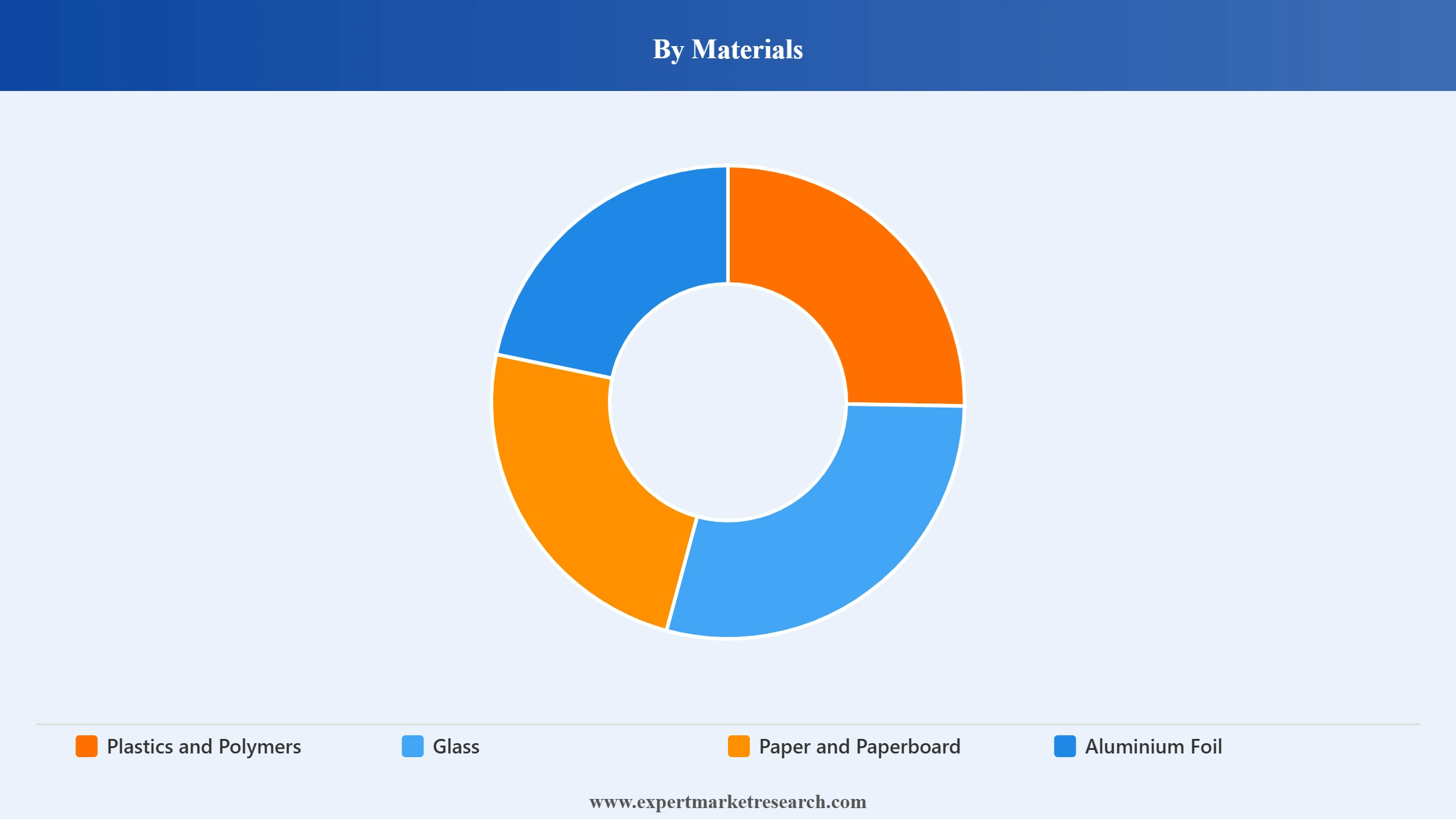
By materials, plastics and polymers dominate the market owing to their versatility, durability, and cost effectiveness across bottles, blisters, and containers
Plastics and Polymers dominate the materials segment of the India pharmaceutical packaging market given their versatility, durability, and cost effectiveness across bottles, blisters, and containers used throughout the pharmaceutical supply chain. Suppliers serving this category continue to prioritise barrier properties and moulding precision, since consistent wall thickness and seal integrity directly affect shelf life and protect medicines from moisture, light, and contamination during storage and transport nationwide. Such properties matter most for medicines shipped across India's varied climate and long domestic distribution networks.
Read more about this report - REQUEST FREE SAMPLE COPY IN PDF
Aluminium Foil is registering the fastest materials growth as blister packaging demand rises for oral solid dosage forms across generic and branded medicines. Effective July 2025, all plastic packaging sold in India was required to carry mandatory QR code or barcode labelling under Rule 11 of the Plastic Waste Management Rules, pushing manufacturers toward foil and mono material formats that simplify compliance and traceability across export shipments. Suppliers that master these formats early gain an edge when bidding for export.
By product type, blister packing dominates the market owing to its wide use for oral solid dosage forms across generic and branded medicines
Blister Packing dominates the product type segment of the market given its wide use for oral solid dosage forms across generic and branded medicines manufactured for domestic and export markets. Suppliers serving this category continue to prioritise machine speed and format flexibility, since manufacturers across the India pharmaceutical packaging market need lines that switch quickly between pack sizes to serve fragmented domestic demand and large export orders. Export contracts in particular reward suppliers who invest in flexible, high-speed converting.
Read more about this report - REQUEST FREE SAMPLE COPY IN PDF
Parenteral Container is registering the fastest product type growth in the India pharmaceutical packaging market as injectable and vaccine manufacturing expands under India's Production Linked Incentive scheme for critical pharmaceutical ingredients. As of June 2025, 48 projects had been approved under the scheme, with actual investments progressing toward its Rs 6,940 crore outlay, supporting new vial, ampoule, and cartridge capacity for injectable drug manufacturers across the country. Suppliers serving this category continue to prioritise sterile packaging validation, since injectable products carry stricter regulatory requirements. This matters.
By packaging type, primary packaging dominates the market owing to its direct role in protecting and dosing medicines in contact with the product
Primary packaging dominates the packaging type of segment of the market given its direct role in protecting and dosing medicines in contact with the product across every therapeutic category. Suppliers serving this category continue to prioritise regulatory compliance and material purity, since primary packaging must meet the strictest contamination and stability standards among all packaging levels used across the India pharmaceutical packaging market. Regulatory audits also focus heavily on primary packaging validation data submitted with every drug approval. This matters most.
Read more about this report - REQUEST FREE SAMPLE COPY IN PDF
Secondary packaging is registering the fastest packaging type growth in the India pharmaceutical packaging market as branding, anti-counterfeiting, and patient information requirements expand across exported and domestic medicines. According to the Economic Survey 2025 to 2026, India's pharmaceutical sector recorded an annual turnover of about INR 472,000 crore in financial year 2025, a scale that is widening demand for cartons, labels, and authentication features across secondary packaging formats. Suppliers serving this category continue to prioritise anti-counterfeiting features, since counterfeit medicines remain a persistent regulatory concern across export markets.
By drug delivery mode, oral drug packaging dominates the market owing to the large volume of tablets and capsules manufactured in India
Oral Drug packaging dominates the drug delivery mode segment of the market given the large volume of tablets and capsules manufactured in India for domestic and export markets. Suppliers serving this category continue to prioritise blister and bottle line efficiency, since oral solid dosage forms in particular reward India pharmaceutical packaging market suppliers who can maintain consistent quality across long production runs for generic manufacturers. Export orders further reward suppliers who deliver consistent quality across long production runs nationwide, where speed to market is a key differentiator.
Read more about this report - REQUEST FREE SAMPLE COPY IN PDF
Injectable Packaging is registering the fastest drug delivery growth in the India pharmaceutical packaging market as vaccine and biologic manufacturing expands across the country. In June 2026, drugs and pharmaceuticals exports rose about 2.7 percent year on year to reach USD 2.66 billion for the month, according to commerce ministry data, reflecting sustained momentum in specialised categories including injectable and biologic formulations shipped to regulated markets. Suppliers serving this category continue to prioritise cold chain compatible materials. Cold chain compatible materials remain essential since many injectables require temperature controlled storage and transport.
By end use, pharma manufacturing dominates the market owing to its central role in producing and packaging medicines at scale
Pharma Manufacturing dominates the end use segment of the market given its central role in producing and packaging medicines at scale for domestic and export customers. Suppliers serving this category continue to prioritise long term supply contracts, since large manufacturers value India pharmaceutical packaging market partners who can guarantee consistent quality and volume across multiyear production agreements tied to regulatory approvals. Long term supply contracts also give packaging suppliers stable, predictable revenue across multiple years. Stability matters greatly here.
Read more about this report - REQUEST FREE SAMPLE COPY IN PDF
Contract Packaging is registering the fastest end use growth in the India pharmaceutical packaging market as manufacturers outsource packaging during periods of high export demand. As of December 2025, Gujarat had 22 operational special economic zones spanning sectors including pharmaceuticals, giving contract packagers and manufacturers dedicated infrastructure and tax incentives to expand capacity for both domestic and export focused customers based in the state. Such infrastructure also helps smaller manufacturers access export markets that would otherwise require significant capital investment alone. This lowers the barrier to entry for smaller contract packagers pursuing export business.
West India leads the market through its dense concentration of pharmaceutical manufacturing units and port access across Maharashtra and Gujarat
West India dominates the regional breakup of the market given its dense concentration of pharmaceutical manufacturing units, research centres, logistics infrastructure, and port access across Maharashtra and Gujarat. In June 2026, Gujarat launched its Viksit Gujarat Industrial Policy 2026, targeting about INR 10 lakh crore in fresh investment over five years across manufacturing sectors including pharmaceuticals, reinforcing the India pharmaceutical packaging market's position as a packaging and drug manufacturing hub. Such policy support continues to draw new pharmaceutical and packaging investment into the region.
Read more about this report - REQUEST FREE SAMPLE COPY IN PDF
South India is registering the fastest regional growth as pharmaceutical and biotechnology clusters expand around Hyderabad and Bengaluru, drawing new packaging investment. In September 2025, Corning and SGD Pharma inaugurated a Type I borosilicate glass tubing facility in Telangana, strengthening local material supply for vials used in injectable and vaccine packaging across the region's growing biotechnology corridor. Such expansions continue to draw specialised suppliers deeper into South India's manufacturing base. This growing base continues to draw international glass and vial manufacturers seeking a foothold near the region's biotechnology cluster.
Competition combines global glass and plastics groups, Indian flexible packaging manufacturers, and specialist injectable packaging firms that compete for contracts with domestic and export focused pharmaceutical companies. India pharmaceutical packaging companies are investing in automated production lines, sustainable materials, and smart packaging features, while joint ventures and outside investment continue to reshape capacity in vials and injectable packaging.
India pharmaceutical packaging market players are also responding to demand for tamper evident and child resistant designs, since regulators and export markets increasingly require verified compliance. Opportunities are emerging in vaccine packaging, smart authentication features, and sustainable blister materials. Suppliers that combine regulatory compliance with automation and export scale capacity are expected to strengthen their competitive position over the coming years.
Founded in 1860 and headquartered in Zurich, Switzerland, Amcor Plc supports the market through its healthcare packaging plants in Sira and Bangalore, offering rigid containers, vials, and injectable packaging solutions. The company continues to invest in automated vision systems and capacity expansions across its Indian facilities. Amcor draws on its position as a global leader in responsible packaging to serve pharmaceutical manufacturers across India and South Asia.
Founded in 1897 and headquartered in Paris, France, SGD S.A. contributes to the market through its SGD Pharma brand, offering glass vials, bottles, and tubular glass containers for injectable and oral medicines. The company continues to develop coated vial technology through partnerships with glass innovators. SGD Pharma draws on its position as a global pharmaceutical glass packaging specialist to serve manufacturers across India.
Founded in 1954 and headquartered in Osaka, Japan, Nipro Corp. supports the market through its Pune manufacturing site, producing glass containers and cartridges for dental, pen, and injectable applications. The company continues to expand its glass cartridge production capacity to serve rising Asian demand. Nipro draws on its position as a global healthcare and drug delivery systems leader to serve Indian and international pharmaceutical customers.
Founded in 1864 and headquartered in Dusseldorf, Germany, Gerresheimer AG contributes to the market through its glass and plastic packaging solutions, including vials, syringes, and specialty containers for injectable and oral medicines. The company continues to widen its plastics and glass capacity across international locations serving Indian pharmaceutical exporters. Gerresheimer draws on its position as a leading global pharmaceutical packaging group to serve manufacturers across the country.
Other key players in the market include Uflex Ltd., West Pharmaceutical Services, Inc., Sonoco Products Co., Hoffmann Neopac AG, Schott AG, WestRock Co., and AptarGroup, Inc., among others.
*Please note that this is only a partial list; the complete list of key players is available in the full report. Additionally, the list of key players can be customized to better suit your needs.*
Unlock the latest insights with our India pharmaceutical packaging market trends 2026 report. Discover regional growth patterns, materials and product type economics, and key industry players. Stay ahead of the competition and identify emerging opportunities in the evolving market landscape.


Upto 15% Off
USD
$2499 $2249
$3999 $3599
$4999 $4249
$5999 $5099


*While we strive to always give you current and accurate information, the numbers depicted on the website are indicative and may differ from the actual numbers in the main report. At Expert Market Research, we aim to bring you the latest insights and trends in the market. Using our analyses and forecasts, stakeholders can understand the market dynamics, navigate challenges, and capitalize on opportunities to make data-driven strategic decisions.*
In 2025, the market reached an approximate value of USD 1.88 Billion.
The market is projected to grow at a CAGR of 8.70% between 2026 and 2035.
The market is estimated to witness a healthy growth during 2026-2035 to reach around USD 4.33 Billion by 2035.
Plastics and polymers, glass, paper and paperboard, and aluminium foil are some of the commonly used materials in pharmaceutical packaging.
North India, East and Central India, West India, and South India are the regions in the market report.
The delivery modes in the market are oral drug, injectable packaging, and topical, among others.
Pharma manufacturing, contract packaging, retail pharmacy, and institutional pharmacy are the key end uses.
The key players in the market include Amcor Plc, SGD S.A., Nipro Corp., Gerresheimer AG, Uflex Ltd., West Pharmaceutical Services, Inc., Sonoco Products Co., Hoffmann Neopac AG, Schott AG, WestRock Co., and AptarGroup, Inc., among others.
Suppliers in the market face raw material price volatility, strict regulatory compliance requirements, competition from low-cost domestic manufacturers, and capacity constraints in specialised glass and injectable packaging.
Investing in automated production lines, expanding glass and injectable packaging capacity, developing smart and sustainable packaging features, and pursuing joint ventures are key strategies driving the market.
Explore our key highlights of the report and gain a concise overview of key findings, trends, and actionable insights that will empower your strategic decisions.
| REPORT FEATURES | DETAILS |
| Base Year | 2025 |
| Historical Period | 2019-2025 |
| Forecast Period | 2026-2035 |
| Scope of the Report |
Historical and Forecast Trends, Industry Drivers and Constraints, Historical and Forecast Market Analysis by Segment:
|
| Breakup by Materials |
|
| Breakup by Product Type |
|
| Breakup by Packaging Type |
|
| Breakup by Drug Delivery Mode |
|
| Breakup by End Use |
|
| Breakup by Region |
|
| Market Dynamics |
|
| Competitive Landscape |
|
| Companies Covered |
|
Datasheet
One User
USD 2,499
USD 2,249
tax inclusive*
Single User License
One User
USD 3,999
USD 3,599
tax inclusive*
Five User License
Five User
USD 4,999
USD 4,249
tax inclusive*
Corporate License
Unlimited Users
USD 5,999
USD 5,099
tax inclusive*
*Please note that the prices mentioned below are starting prices for each bundle type. Kindly contact our team for further details.*
Flash Bundle
Small Business Bundle
Growth Bundle
Enterprise Bundle
*Please note that the prices mentioned below are starting prices for each bundle type. Kindly contact our team for further details.*
Flash Bundle
Number of Reports: 3
20%
tax inclusive*
Small Business Bundle
Number of Reports: 5
25%
tax inclusive*
Growth Bundle
Number of Reports: 8
30%
tax inclusive*
Enterprise Bundle
Number of Reports: 10
35%
tax inclusive*
How To Order

Select License Type
Choose the right license for your needs and access rights.

Click on ‘Buy Now’
Add the report to your cart with one click and proceed to register.

Select Mode of Payment
Choose a payment option for a secure checkout. You will be redirected accordingly.
Strategic Solutions for Informed Decision-Making
Gain insights to stay ahead and seize opportunities.

Get insights & trends for a competitive edge.

Track prices with detailed trend reports.

Analyse trade data for supply chain insights.

Leverage cost reports for smart savings

Enhance supply chain with partnerships.

Connect For More Information
Our expert team of analysts will offer full support and resolve any queries regarding the report, before and after the purchase.
Our expert team of analysts will offer full support and resolve any queries regarding the report, before and after the purchase.
We employ meticulous research methods, blending advanced analytics and expert insights to deliver accurate, actionable industry intelligence, staying ahead of competitors.
Our skilled analysts offer unparalleled competitive advantage with detailed insights on current and emerging markets, ensuring your strategic edge.
We offer an in-depth yet simplified presentation of industry insights and analysis to meet your specific requirements effectively.




