

Consumer Insights
Uncover trends and behaviors shaping consumer choices today
Procurement Insights
Optimize your sourcing strategy with key market data
Industry Stats
Stay ahead with the latest trends and market analysis.
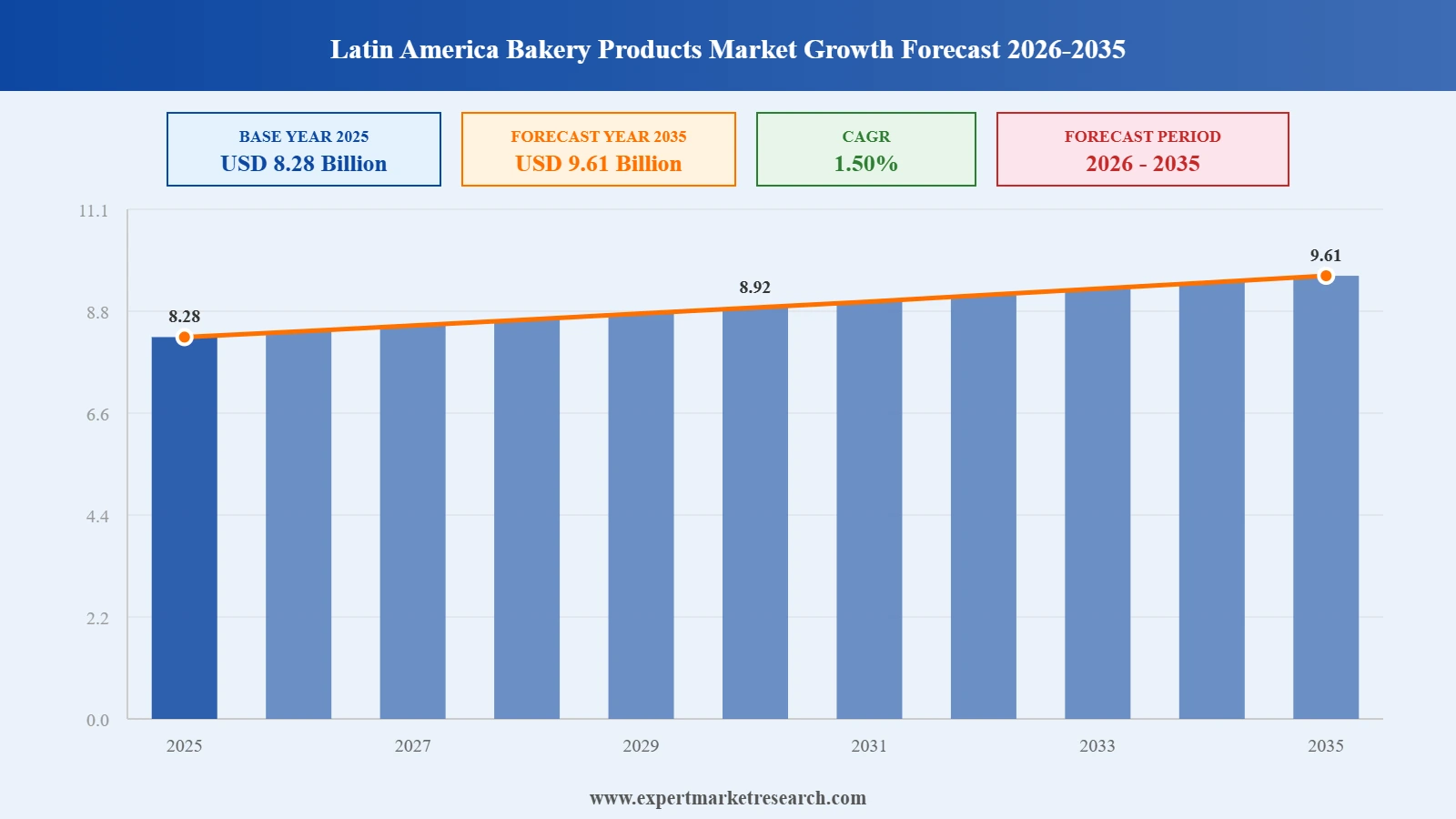
The Latin America bakery products market was valued at USD 8.28 Billion in 2025. The market is expected to grow at a CAGR of 1.50% during the forecast period of 2026-2035. Growing demand for private-label baked goods across Brazil and Mexico, driven by retail consolidation and price-sensitive consumers, is prompting bakeries to expand in-store production and partner with supermarket chains for exclusive offerings, aiding the market to reach a value of USD 9.61 Billion by 2035.
The revival of indigenous grains such as amaranth, quinoa, and chia is a significant factor pushing the growth of the Latin America bakery products market. Artisanal bakers incorporate these traditional ingredients into breads and pastries, appealing to health-focused consumers seeking authentic, nutrient-rich alternatives. This trend not only reconnects modern diets with cultural heritage but also supports local farming communities and biodiversity. Particularly strong in Peru and Mexico, this revival is turning traditional grains into premium bakery staples with growing domestic and export demand.
Government-led nutrition programmes are also reshaping the market dynamics. Mexico’s “Estrategia Nacional para la Prevención y el Control del Sobrepeso, la Obesidad y la Diabetes” has led to reformulations in bakery items, compelling firms to develop healthier, wholegrain alternatives. Chile, on the other hand, enforces front-of-package warning labels, prompting R&D in low-sugar, fortified options. Such a regulatory environment is sparking innovation and repositioning baked goods as nutritious snack solutions.
Brazil continues to anchor regional demand, while Mexico and Argentina witness growing premium bakery products consumption. The rise of health-conscious urban millennials is causing a notable shift towards low-carb, fortified, and gluten-free bakery variants. Additionally, significant investment is also flowing in from foreign food-tech firms. For instance, Grupo Bimbo announced a USD 150 million investment to introduce 4000 electric vehicles for its Latin American operations.
Read more about this report - REQUEST FREE SAMPLE COPY IN PDF
The Expert Market Research's report titled “Latin America Bakery Products Market Report and Forecast 2026-2035” offers a detailed analysis of the market based on the following segments:
Market Breakup by Product Type
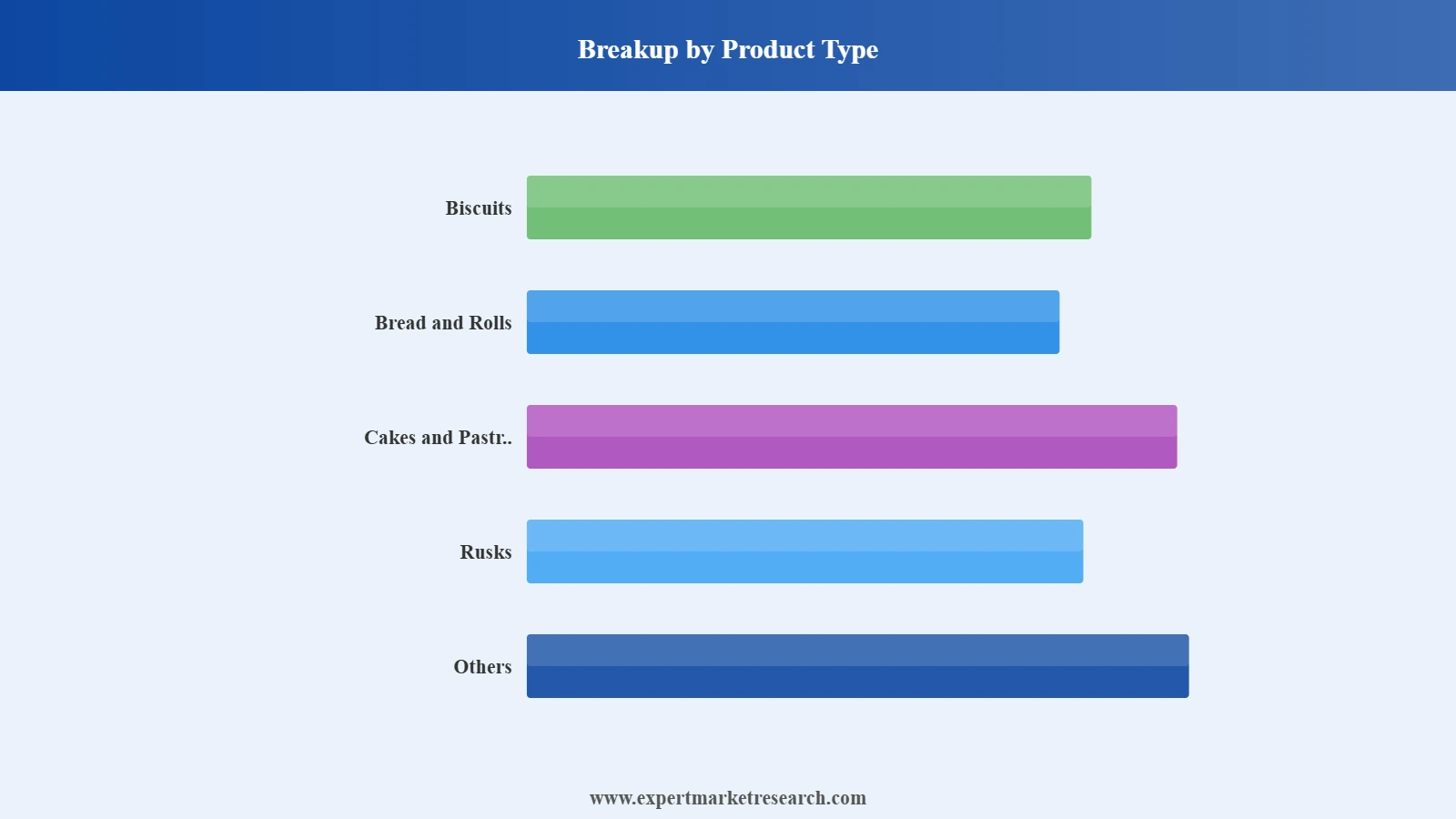
Key Insight: Bread and rolls dominate the bakery products market share in Latin America due to their integration into cultural meals. The growing demand for prebiotic and probiotic-enriched bread has also captured consumer interest. In October 2023, RONDO launched a “smart bread” line to meet a production capacity of up to 1000 kg of dough processed per hour and to broaden the bread items that their B2B customers can manufacture on a single line. Furthermore, the school meals initiative in Brazil now mandates fortified bread with iron and zinc. Hence, these developments not only stabilize demand but also attract institutional buyers, making bread a scalable revenue stream for B2B players.
Market Breakup by Distribution Channel
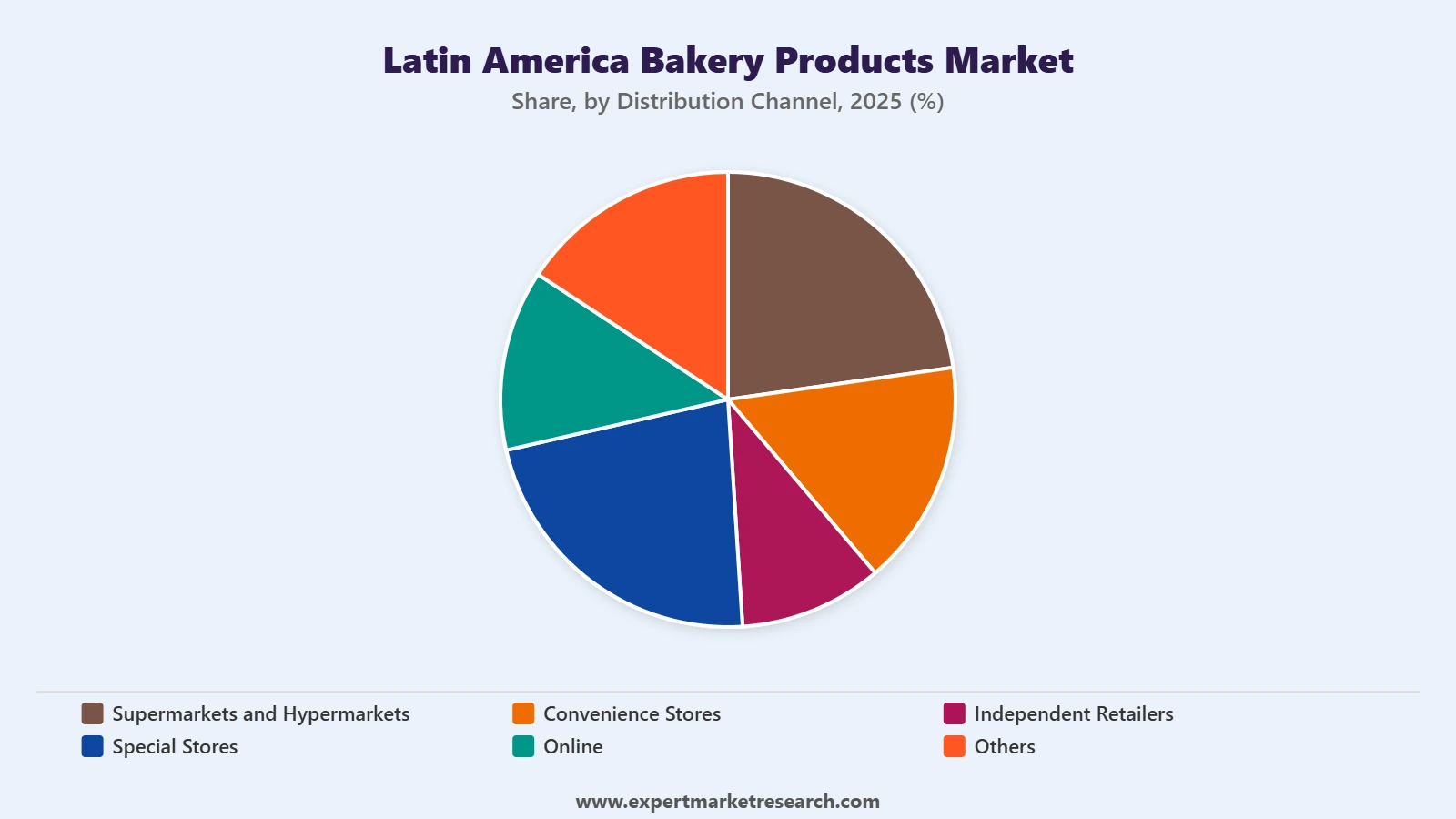
Key Insight: Supermarkets dominate the Latin America bakery products industry. Exclusive supermarket-only bakery launches, like Krispy Kreme in Brazil, create urgency and drive footfall. B2B bakeries find stable revenue streams in white-label production for these chains. Additionally, loyalty programmes provide rich consumer data, allowing for co-branded promotions and seasonal SKU planning. With advanced logistics, supermarkets can rotate SKUs based on demand, shrinkage data, and local events, boosting profit margins and flexibility for suppliers.
Market Breakup by Region
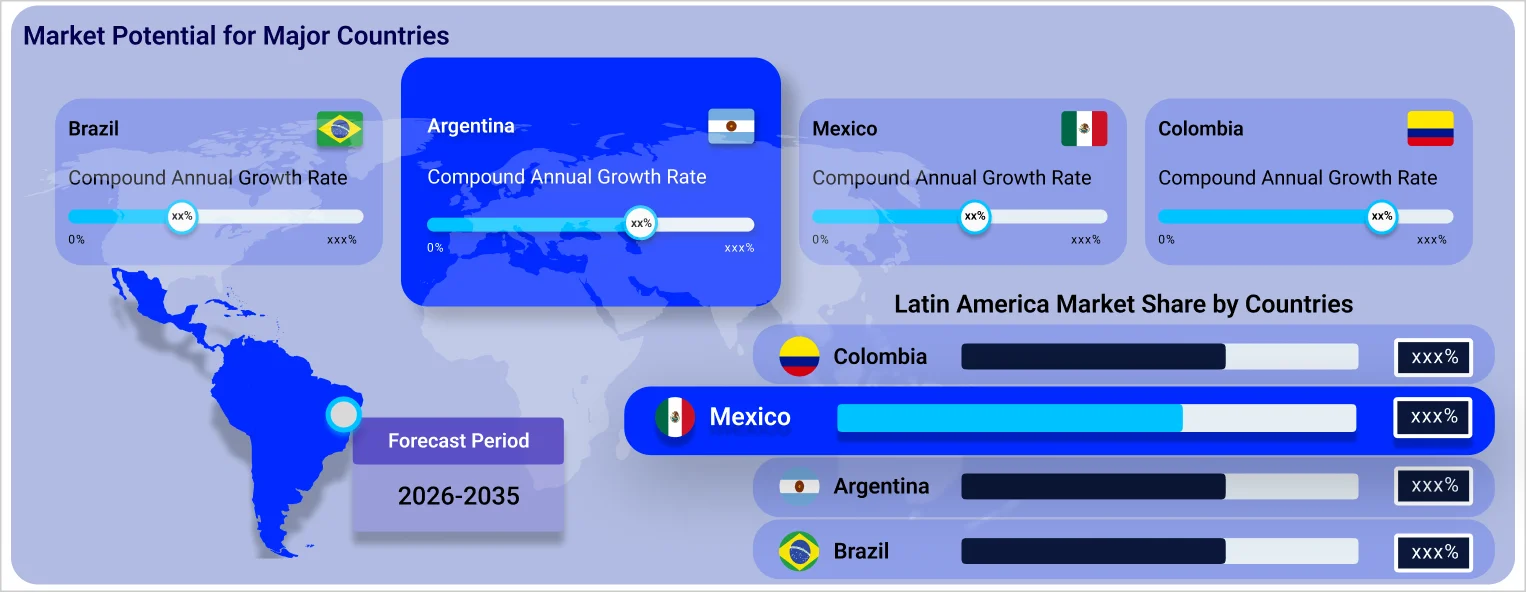
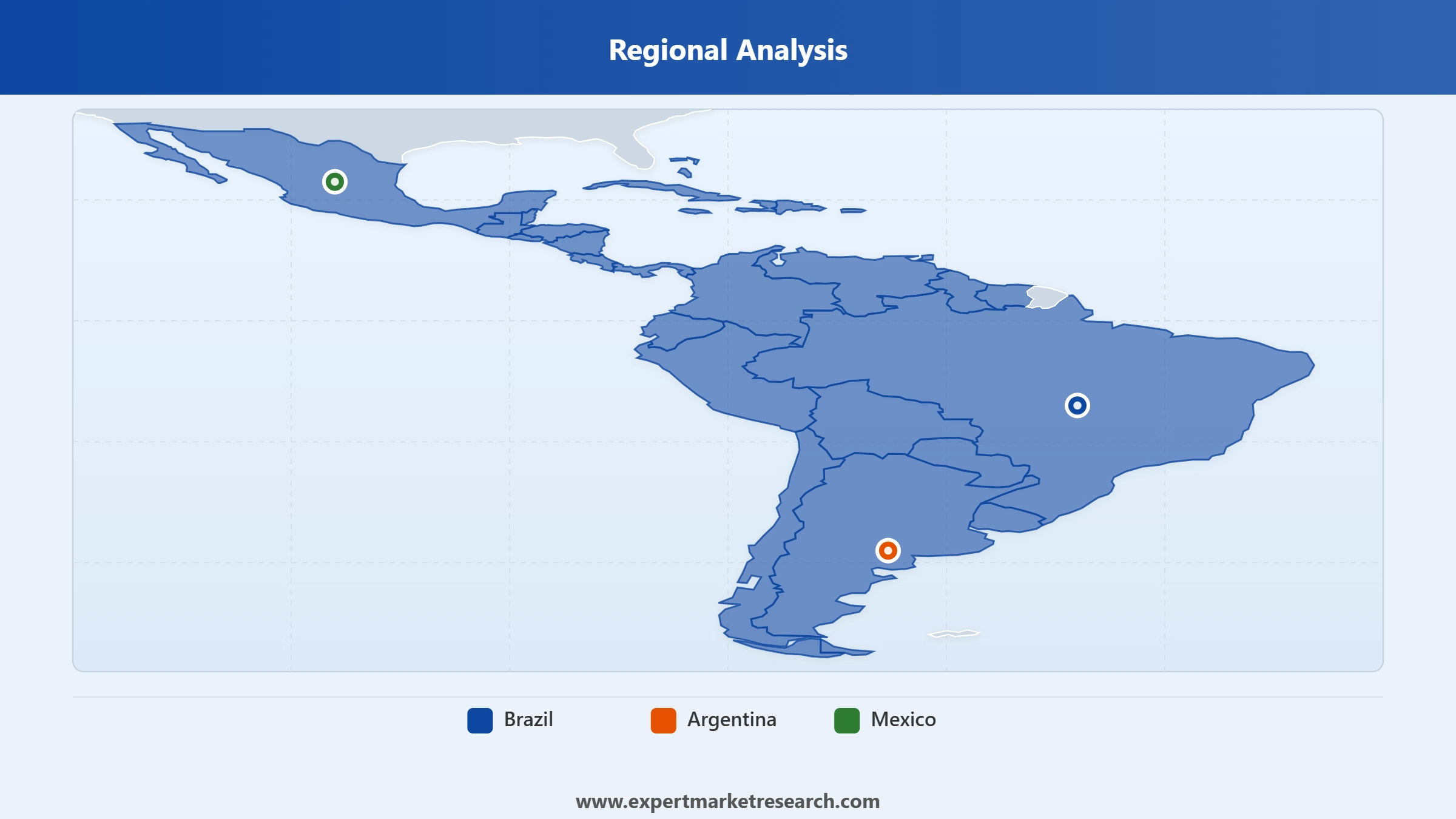
Key Insight: Brazil is anticipated to dominate the bakery products market in Latin America. Several factors underpin the country’s dominance, including its population and consumer base, robust production and distribution infrastructure, and supportive government and business institutions. With over 70,000 bakeries officially registered, Brazil has indicated considerable performance in terms of total volume production and innovation. Additionally, Brazil has become a key growth hub for bakery technology labs, funded in part through the SENAI and SEBRAE. These further indicate robust research and development activities focused on clean-label, fortifying, and gluten-free products.
Read more about this report - REQUEST FREE SAMPLE COPY IN PDF
By Product Type, Bread and Rolls Secure the Largest Share of the Market
Bread and rolls continue to dominate the industry owing to their staple status in daily diets across Brazil and Argentina. White sandwich breads have become mainstream products while brands are focusing on diversification to accelerate further consumer demand. Premium sourdough and artisan ciabatta have gained immense popularity, especially in high-income urban zones. Grupo Bimbo’s investment in gluten-free roll production in 2024 signals a shift toward health-driven buyers. Governments also subsidise fortified breads for school meal programmes, like Brazil’s FNDE School Feeding Programme, boosting the overall bakery products consumption in Latin America.
Cakes and pastries have emerged to be the fastest-growing product category. Argentina leads the charge with fusion pastries that blend European recipes and native flavours. B2B bakeries offer customised cakes with QR codes for order tracking and dietary information as a direct response to urban tech-savvy consumers. Supermarket chains in Mexico also offer in-store patisseries, elevating the demand for fresh, on-the-go pastries. This category benefits from tourism as well; hotels and cafés stock up on high-margin artisanal bakes tailored to international palates.
Read more about this report - REQUEST FREE SAMPLE COPY IN PDF
By Distribution Channel, Supermarkets and Hypermarkets Account for the Significant Market Share
Supermarkets account for the majority of the market share. Their widespread reach, coupled with chilled storage, makes them the go-to option for acquiring fresh and packaged bakery. Hypermarkets like Carrefour and Walmart are investing in private-label bakery sections, offering premium and ethnic bakery variants. Digital shelf labelling and real-time inventory systems enable them to minimise waste and offer personalized promotions. Cross-promotional bundling, like pairing bread with cheese or deli items, further helps increase sales.
Online distribution channels have witnessed enormous growth in the Latin America bakery products market. Mobile app orders and digital payments dominate in urban hubs like Mexico and Argentina, fuelled by platforms like Rappi and Cornershop. SMEs and artisanal bakers benefit from lower overheads and broader reach. Moreover, AI-based order customisation is also on the rise, offering gluten-free, vegan, or low-sugar products. Subscription-based bakery boxes have grown popular as well.
Read more about this report - REQUEST FREE SAMPLE COPY IN PDF
By Region, Brazil Holds the Leading Position in the Market
The ongoing dominance of the Brazilian market is sustained by the region’s deeply rooted bread culture. Urban bakeries in São Paulo and Rio now offer fortified and diet-specific bread to appeal to fitness and wellness-focused consumers. Retail giants partner with local bakers for developing cultural products like pão de queijo (cheese bread), increasing both reach and diversity in offerings.
On the other hand, the Mexico bakery products market observes rapid growth as the region boasts young demographic and increased food technology adoption. Traditional pan dulce (sweet bread) remains popular in this region. The market relies heavily on ceremonial foods and celebratory products such as Pan de Muerto and Rosca de Reyes. Government campaigns promoting sugar reduction have given rise to low-sugar and natural ingredient innovations.
Read more about this report - REQUEST FREE SAMPLE COPY IN PDF
The Latin America bakery products market players are investing in automation, regionalisation, and product diversification. As consumers increasingly demand clean labels, fortified, and personalised bakery goods, companies focus on R&D, digital logistics, and retail co-creation models. Hotels and QSR chains mainly use ready-made bakery mixes to reduce operational costs. Moreover, Latin America bakery product companies are investing in integrating e-commerce channels, regional flavour variants, and AI-based production tools. Multinational firms are eyeing joint ventures with local players to localise offerings and improve agility. Sustainable packaging and traceability systems are also becoming key differentiators in B2B contracts and long-term retail partnerships. With investments in low-emission ovens and biodegradable packaging lines, companies in Brazil and Chile indicate that the regional market is gearing towards global ESG conformity.
Founded in 1945, headquartered in Mexico City, Grupo Bimbo is the largest bakery company worldwide. In Latin America, it operates 45+ plants, pioneering AI baking and solar-energy facilities to cut emissions and costs.
Headquartered in Chile, Empresas Carozzi S.A. is a food manufacturing company. Pasta, sauces, beverages, grains, fruit, juices, desserts, pastries, cereals, and confectionery foods are among the company's branded items. Carozzi is one of Latin America's most well-known mass-consumption companies.
Founded in 1996 and headquartered in Zurich, Switzerland, Barry Callebaut provides chocolate to the whole food industry, from industrial food manufacturers to artisanal and professional chocolate users like chocolatiers, pastry chefs, bakers, hotels, restaurants, and caterers.
Established in 1951 in Buenos Aires, Argentina, Arcor leads in packaged pastries and fortified bread. The company’s bakery division recently expanded into Brazil and Chile with innovative, cassava-based snack cakes.
*Please note that this is only a partial list; the complete list of key players is available in the full report. Additionally, the list of key players can be customized to better suit your needs.*
The Latin America bakery products market faces persistent operational pressures driven by raw material cost volatility. Wheat, sugar, and dairy the foundational inputs of most baked goods are highly susceptible to weather disruptions, supply chain constraints, and global trade dynamics. For small and medium-sized bakery operators, which constitute the overwhelming majority of businesses across markets like Mexico and Brazil, absorbing sudden spikes in ingredient costs without passing them onto price-sensitive consumers remains a critical operational challenge. Concurrently, an expansive informal sector of micro-bakeries and artisanal producers intensifies competition for packaged goods manufacturers, limiting the pricing power and market penetration of larger commercial players.
On the regulatory front, the accelerating rollout of front-of-package warning labeling frameworks across Argentina, Brazil, Chile, Colombia, Mexico, and Peru reinforced by the Pan American Health Organization's March 2026 best-practices report is placing sustained compliance pressure on manufacturers. Bakery products, particularly sweet baked goods and biscuits, frequently attract nutrient-warning labels for elevated sugar, sodium, and saturated fat content. This directly constrains marketing options, increases reformulation costs, and compels producers to invest in ongoing product development to maintain shelf positioning.
Despite these pressures, the market holds meaningful growth potential. Rising urbanization is expanding the consumer base for packaged and convenience bakery formats, while growing health awareness is opening demand for functional, high-fiber, protein-fortified, and gluten-free products across Brazil, Mexico, and Chile. The increasing penetration of modern retail and e-commerce channels is improving product accessibility beyond traditional distribution networks, and the broad cultural centrality of baked goods across the region provides manufacturers with a durable consumption base from which to introduce premium and reformulated product lines.
Explore the latest trends shaping the Latin America bakery products Market 2026-2035 with our in-depth report. Gain strategic insights, future forecasts, and key market developments that can help you stay competitive. Download a free sample report or contact our team for customized consultation on Latin America bakery products Market trends 2026.
United States Bake-off Bakery Market
Australia Bakery Ingredients Market
Bakery Processing Equipment Market
South Korea Bakery Premixes Market
Gluten-Free Bakery Products Market
Australia Bakery Products Market
France Bakery Products Market
Bakery Products Market
Bakery Enzymes Market
Indian Bakery Market


Upto 15% Off
USD
$2499 $2249
$3999 $3599
$4999 $4249
$5999 $5099


*While we strive to always give you current and accurate information, the numbers depicted on the website are indicative and may differ from the actual numbers in the main report. At Expert Market Research, we aim to bring you the latest insights and trends in the market. Using our analyses and forecasts, stakeholders can understand the market dynamics, navigate challenges, and capitalize on opportunities to make data-driven strategic decisions.*
In 2025, the Latin America bakery products market reached an approximate value of USD 8.28 Billion.
The market is projected to grow at a CAGR of 1.50% between 2026 and 2035.
Key strategies driving the market include diversifying portfolios, investing in clean-label innovation, integrating AI in production, building regional B2B ties, and localizing flavours.
The key trends in the market include clean-label bakery demand, AI baking, plant-based SKUs, indigenous grain use, and online bakery platforms.
The major regions in the market are Brazil, Argentina and Mexico.
By product type, the market is divided into biscuits, bread and rolls, cakes and pastries, and rusks, among others. Biscuits are further divided into cookies, cream biscuits, glucose biscuits, Marie biscuits, milk biscuits, non-salt cracker biscuits, and salt cracker biscuits, among others. Bread and rolls, cake and pastries, and rusks are all sub-divided into artisanal bakeries, in-store bakeries, and packaged.
The online retailing segment is the leading distribution channel in the market.
The major players in the market are Grupo Bimbo, Empresas Carozzi SA, Barry Callebaut AG, and Arcor Group, among others.
The key challenges hindering companies to grow are rising raw material costs, sugar reduction mandates, and labour shortages. Supply chain disruptions and technological gaps in smaller bakeries also limit scalability and product consistency.
Explore our key highlights of the report and gain a concise overview of key findings, trends, and actionable insights that will empower your strategic decisions.
| REPORT FEATURES | DETAILS |
| Base Year | 2025 |
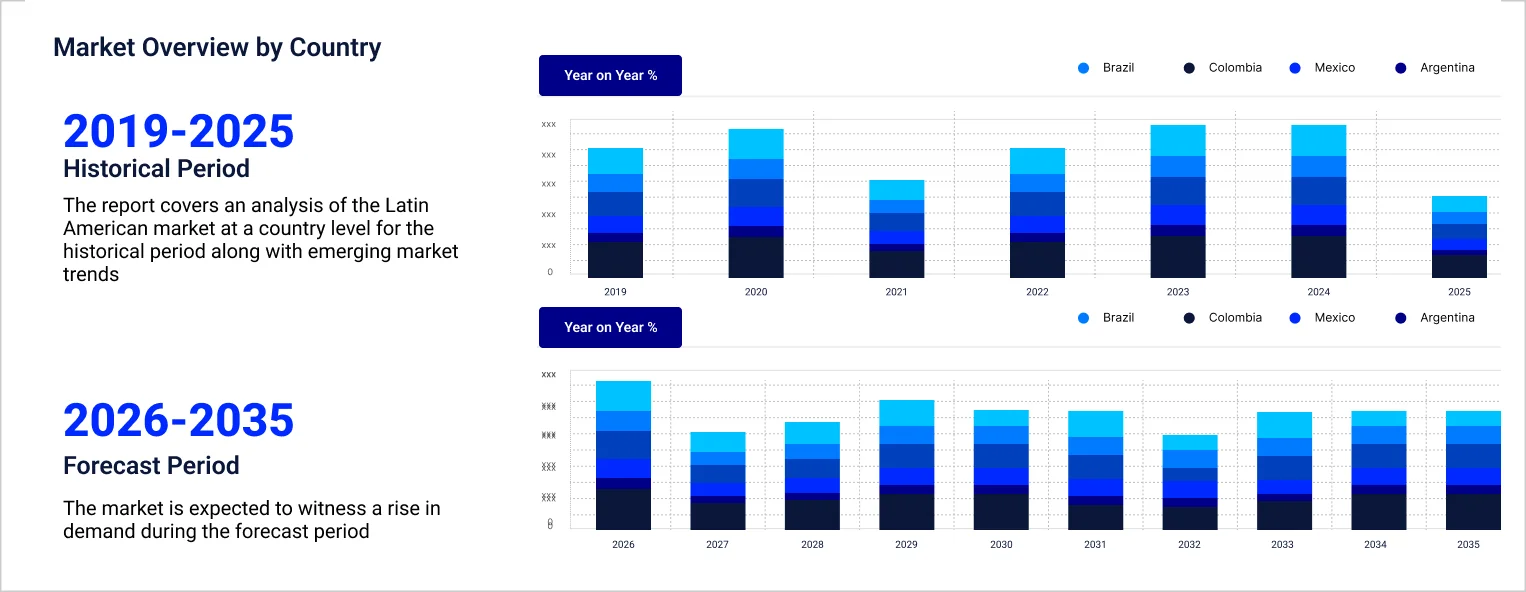
| Historical Period | 2019-2025 |
| Forecast Period | 2026-2035 |
| Scope of the Report |
Historical and Forecast Trends, Industry Drivers and Constraints, Historical and Forecast Market Analysis by Segment:
|
| Breakup by Product Type |
|
| Breakup by Distribution Channel |
|
| Breakup by Region |
|
| Market Dynamics |
|
| Competitive Landscape |
|
| Companies Covered |
|
| Report Price and Purchase Option | Explore our purchase options that are best suited to your resources and industry needs. |
| Delivery Format | Delivered as an attached PDF and Excel through email, with an option of receiving an editable PPT, according to the purchase option. |
Datasheet
One User
USD 2,499
USD 2,249
tax inclusive*
Single User License
One User
USD 3,999
USD 3,599
tax inclusive*
Five User License
Five User
USD 4,999
USD 4,249
tax inclusive*
Corporate License
Unlimited Users
USD 5,999
USD 5,099
tax inclusive*
*Please note that the prices mentioned below are starting prices for each bundle type. Kindly contact our team for further details.*
Flash Bundle
Small Business Bundle
Growth Bundle
Enterprise Bundle
*Please note that the prices mentioned below are starting prices for each bundle type. Kindly contact our team for further details.*
Flash Bundle
Number of Reports: 3
20%
tax inclusive*
Small Business Bundle
Number of Reports: 5
25%
tax inclusive*
Growth Bundle
Number of Reports: 8
30%
tax inclusive*
Enterprise Bundle
Number of Reports: 10
35%
tax inclusive*
How To Order

Select License Type
Choose the right license for your needs and access rights.

Click on ‘Buy Now’
Add the report to your cart with one click and proceed to register.

Select Mode of Payment
Choose a payment option for a secure checkout. You will be redirected accordingly.
Strategic Solutions for Informed Decision-Making
Gain insights to stay ahead and seize opportunities.

Get insights & trends for a competitive edge.

Track prices with detailed trend reports.

Analyse trade data for supply chain insights.

Leverage cost reports for smart savings

Enhance supply chain with partnerships.

Connect For More Information
Our expert team of analysts will offer full support and resolve any queries regarding the report, before and after the purchase.
Our expert team of analysts will offer full support and resolve any queries regarding the report, before and after the purchase.
We employ meticulous research methods, blending advanced analytics and expert insights to deliver accurate, actionable industry intelligence, staying ahead of competitors.
Our skilled analysts offer unparalleled competitive advantage with detailed insights on current and emerging markets, ensuring your strategic edge.
We offer an in-depth yet simplified presentation of industry insights and analysis to meet your specific requirements effectively.




