

Consumer Insights
Uncover trends and behaviors shaping consumer choices today
Procurement Insights
Optimize your sourcing strategy with key market data
Industry Stats
Stay ahead with the latest trends and market analysis.
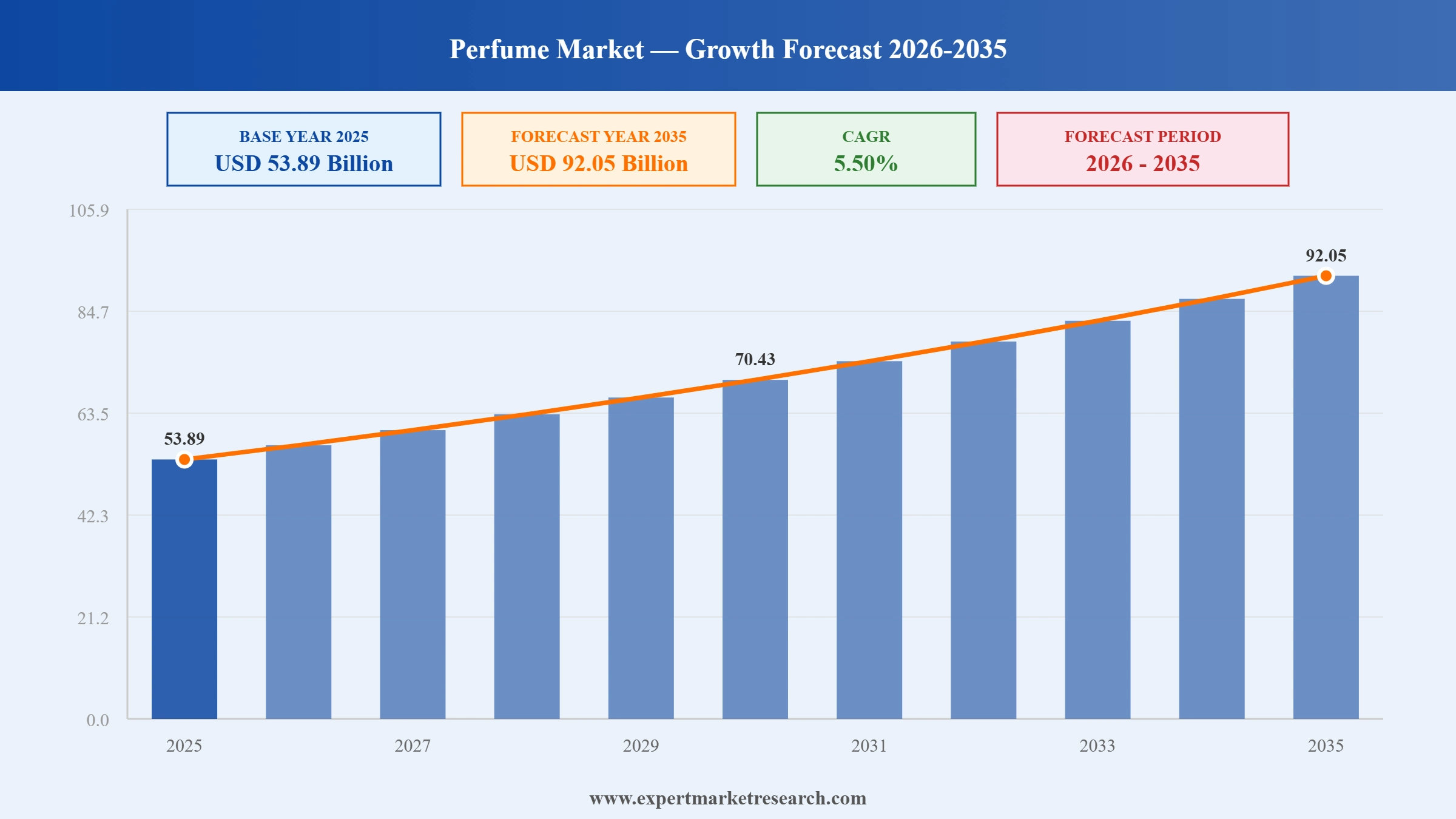
The global perfume market attained a value of USD 53.89 Billion in 2025 and is projected to expand at a CAGR of 5.50% through 2035. The market is further expected to achieve USD 92.05 Billion by 2035. Increasing investment in biotechnology-based perfume ingredients and refillable luxury perfume ranges is helping firms enhance sustainability, innovate rapidly in their premium product lines, foster brand loyalty, and expand their global distribution strategy.
Two primary driving factors are propelling the perfume market forward. The first one is biotechnology, which has helped in developing high-quality aromas that have supply chain resilience without relying heavily on nature-based fragrances that are highly susceptible to climatic conditions. The second driving factor is an AI-based fragrance design tool, which brings down the development time of products to a significant extent, allowing global beauty firms to cater to consumer preferences quickly.
Transformative changes are taking place within the perfume market as companies incorporate biotechnology, artificial intelligence, and sustainable sourcing into the manufacture of premium fragrances. For example, in September 2024, Givaudan introduced Bloomful Splash, which was formulated using its AI-based fragrance design technology known as Carto. It facilitates quick formula development while cutting down the development process. Companies are also focusing on incorporating biotechnology-produced aroma molecules in an effort to lower reliance on conventional raw materials.
Apart from the innovative formulation processes, the perfume market observes heavy investment from manufacturing companies towards premiumization, ingredient transparency, and individualized fragrances in efforts to distinguish themselves. Leading players such as L'Oréal Groupe, Puig, Coty, and Interparfums are intensifying collaborations with fashion houses in efforts to offer refillable perfume lines along with perfume products customized to different regions. In addition, in February 2026, Libas entered the fragrance segment, targeting 15-20% non-apparel revenue through premium perfumes, expanding its lifestyle product portfolio. Scent profiling digitally, incorporation of biotechnology-based ingredients, and use of recyclable packaging are therefore becoming crucial competitive strategies.
Read more about this report - REQUEST FREE SAMPLE COPY IN PDF
| Global Perfume Market Report Summary | Description | Value |
| Base Year | USD Billion | 2025 |
| Historical period | USD Billion | 2019-2025 |
| Forecast Period | USD Billion | 2026-2035 |
| Market Size 2025 | USD Billion | 53.89 |
| Market Size 2035 | USD Billion | 92.05 |
| CAGR 2019-2025 | Percentage | XX% |
| CAGR 2026-2035 | Percentage | 5.50% |
| CAGR 2026-2035 - Market by Region | Asia Pacific | 6.9% |
| CAGR 2026-2035 - Market by Country | Brazil | 6.2% |
| CAGR 2026-2035 - Market by Country | Canada | 5.3% |
| CAGR 2026-2035 - Market by Type | Eau De Cologne (EDC) | 6.1% |
| CAGR 2026-2035 - Market by End User | Men | 5.9% |
| Market Share by Country | Canada | 1.5% |
CUNIN raised USD 450,000 in pre-seed capital to create its culture-focused fragrances, boosting innovation and expansion towards its Gen Z audience. Brands have the potential to create culturally themed fragrance collections for Gen Z, while also improving their digital branding and DTC marketing approach.
IFF launched SENSORA, an innovative fragrance technology that provides enhanced longevity in personal care and home fragrance products. Companies in the perfume market can consider investing in advanced fragrance delivery technology to add uniqueness to their products.
L'Oreal launched NYX Hair and Body Fragrance Mists, catering to the Gen Z market through affordable yet trendy perfumes in various international locations. Companies can therefore launch affordable perfume mists as well as influencer-driven marketing tactics to win over young consumers looking for premium yet affordable perfumes.
Oriflame collaborated with Givaudan to roll out the Top Scents range of perfumes, which consisted of niche fragrances developed by emerging international perfumers. Companies can form partnerships with leading fragrance brands and new perfumers to develop premium product lines, leveraging such trends in the perfume market.
Artificial intelligence is revolutionizing the perfume market dynamics as it enables companies to develop fragrances and design new scents with precisely selected fragrance ingredients. The application of AI platforms for predicting fragrance preferences, formulating the most efficient formulas, and cutting down time required for commercializing their products helps to enhance competitive position of companies in both the high-end and affordable segments of the market. For instance, Givaudan continues to develop its Carto AI-enabled fragrance design platform that facilitates the creation of custom fragrances with increased efficiency by perfumers. Similarly, dsm-firmenich applies digital solutions for accelerating the process of discovering ingredients and developing customer-oriented fragrances. In June 2026, HUL launched Unilever's AI-powered Fragrance Hub in Mumbai, accelerating premium fragrance innovation and consumer-focused product development.
Companies in the perfume market are increasingly turning to biotechnology to obtain fragrance ingredients that cause minimal harm to the environment and decrease reliance on climate-dependent raw materials. Biotechnology helps to produce aromatic molecules consistently without extensive cultivation and extraction of resources from nature. Companies such as Givaudan and dsm-firmenich are expanding biotechnology-based ingredients portfolios to enhance sustainable production of fragrances. On the other hand, the EU continues to promote bio-based industry innovation through the Circular Bio-based Europe Joint Undertaking. Aligning with this trend, in July 2025, Debut launched plant cell biotechnology producing cultivation-free fragrance ingredients, debuting rare orris through sustainable, precision biomanufacturing innovation.
Luxury perfumery brands are starting to launch refillable fragrances in order to increase sustainability efforts and boost their relationship with customers in the long run. Refillable packaging cuts down on the use of raw materials and helps to position high-end brands through the durability of bottle design and repeat purchase incentives. L'Oréal Groupe, Prada Beauty, Mugler and other luxury perfume brands are developing collections of refillable perfumes in multiple international perfume markets. EU Packaging and Packaging Waste Directive are also encouraging brands to make their packaging sustainable and recyclable. In July 2026, Quadpack introduced Arena fragrance packaging, combining premium aesthetics, refill-ready design, and enhanced sustainability for luxury perfume brands.
Individualization of product offerings is emerging as an effective competitive tool, as brands start offering consumers a chance to develop personalized fragrance products through digital technologies and consumer data. Online perfume profiling and recommendations based on AI, as well as the creation of bespoke perfumes, is helping brands offer unique products. Companies such as Coty and Puig are continuing to develop personalized beauty programs while building their digital consumer platforms, reshaping the perfume market dynamics. Digital interaction also helps manufacturers gain valuable insights about their consumers for future product development. For instance, in July 2025, Rare Beauty launched its first customizable Rare Eau de Parfum with fragrance layering balms and accessible ergonomic packaging.
The perfume market players from the Middle East are becoming more popular as they develop a greater presence globally through launching superior lines of oud-based perfumes and penetration into Europe, North America, and Asia Pacific markets. Firms like Ajmal Perfumes, Arabian Oud, and Rasasi continue developing their brand reputation in foreign markets through launching unique perfumes and opening flagship stores. For example, in December 2025, Parisbelle debuted in India, launching five luxury fragrance collections inspired by French craftsmanship and Middle Eastern perfumery traditions. The governments of GCC states are implementing programs to support diversification and luxury consumer industry in order to transform their economies in the long run. Such trends contribute to increased competition and greater demand for Oriental fragrances.
The Expert Market Research’s report titled “Global Perfume Market Report and Forecast 2026-2035” offers a detailed analysis of the market based on the following segments:
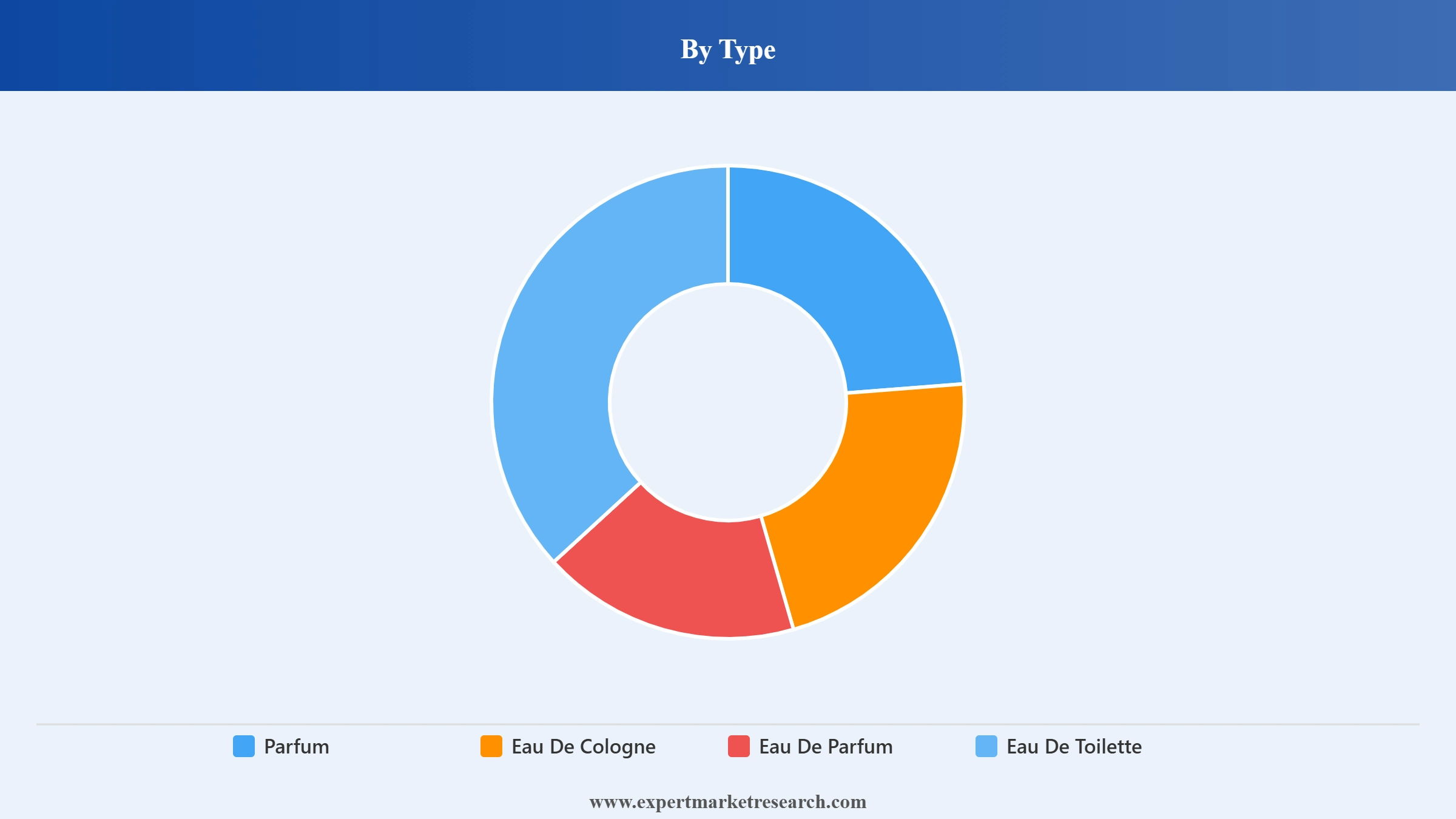
Market Breakup by Type
Key Insight: The perfume market shows varied demands depending on different types of fragrances. Parfum is growing with its luxurious personalized products along with craft-based production and premium consumer spendings. Eau De Cologne continues to be popular for consumers that need less intense fragrances for daily usage and hot weather. Eau De Parfum dominates the market due to the good balance between durability and variety of its consumption. In July 2026, HEIR launched five luxury Eau de Parfum collections in India, blending global craftsmanship with modern premium fragrance experiences. Eau De Toilette continues to attract value-seeking customers who prefer everyday fragrances that have average concentration.
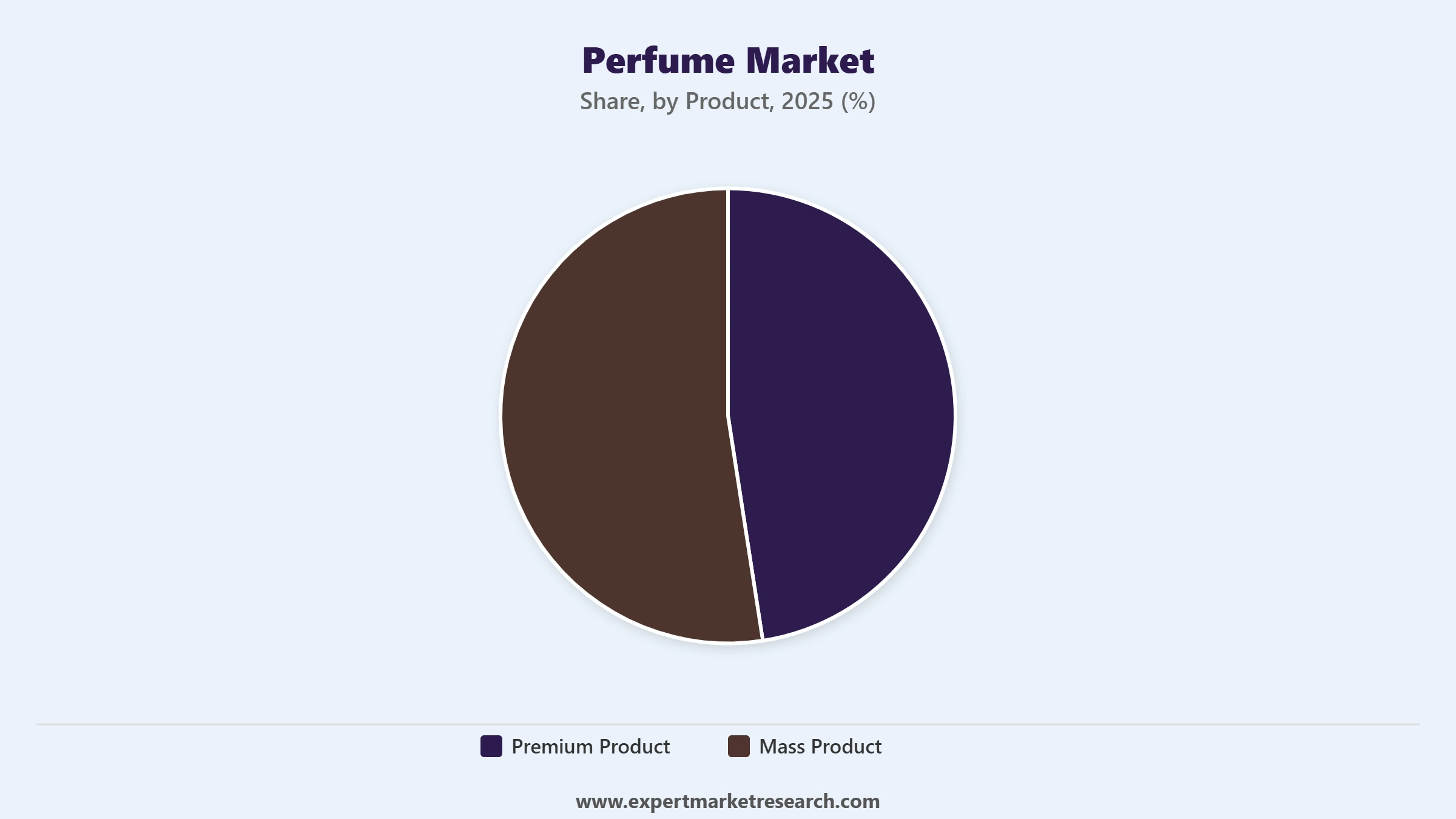
Market Breakup by Product
Key Insight: Premium products dominate the perfume market through their high-quality formulation, luxury branding, refills, and personalization which helps in creating loyal customers. Mass products keep growing due to low prices, improved fragrance formulation, appealing packaging, and wide distribution channels which favor average customers. Manufacturers are combining premium product innovations with affordable pricing strategies to develop products that appeal to consumers across different income groups.
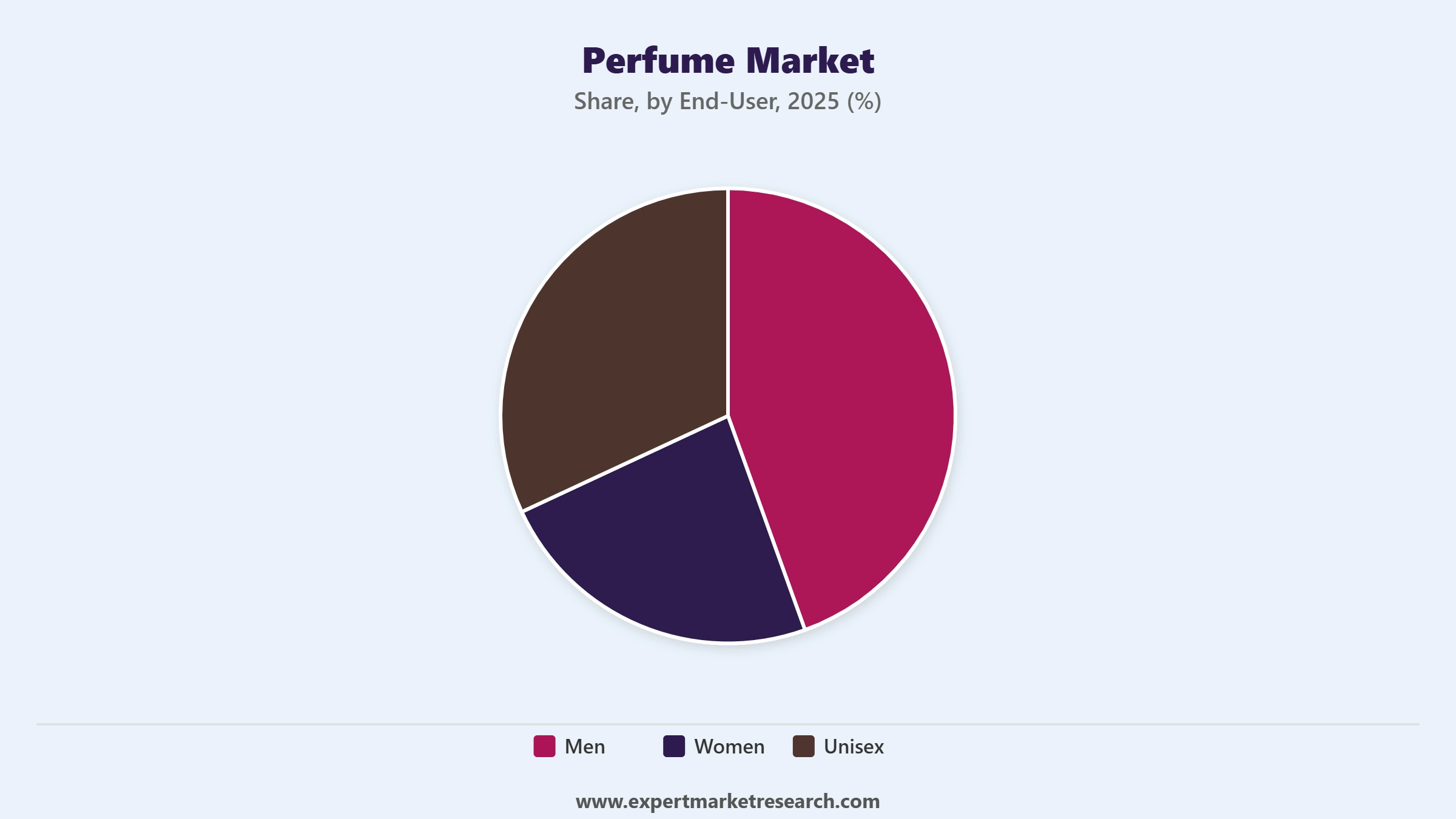
Market Breakup by End User
Key Insight: As per the perfume market report, the men’s fragrance category is positively impacted by the increasing grooming behavior, high-end spending on personal care products, as well as complex woody and fresh scent notes. The women’s perfumes continue to be dominant because of extensive availability of products, constant development of high-end products, and gifting requirements. In July 2026, Boss expanded the Bottled franchise with Beyond for Her, introducing its first women's fragrance featuring empowering ambassadors. Unisex fragrances are increasingly gaining traction with innovative branding approach, scent versatility, and increasing acceptance by younger consumers who want to express their uniqueness. Manufacturers are increasingly offering both gender-oriented and gender-neutral lines of perfumes.
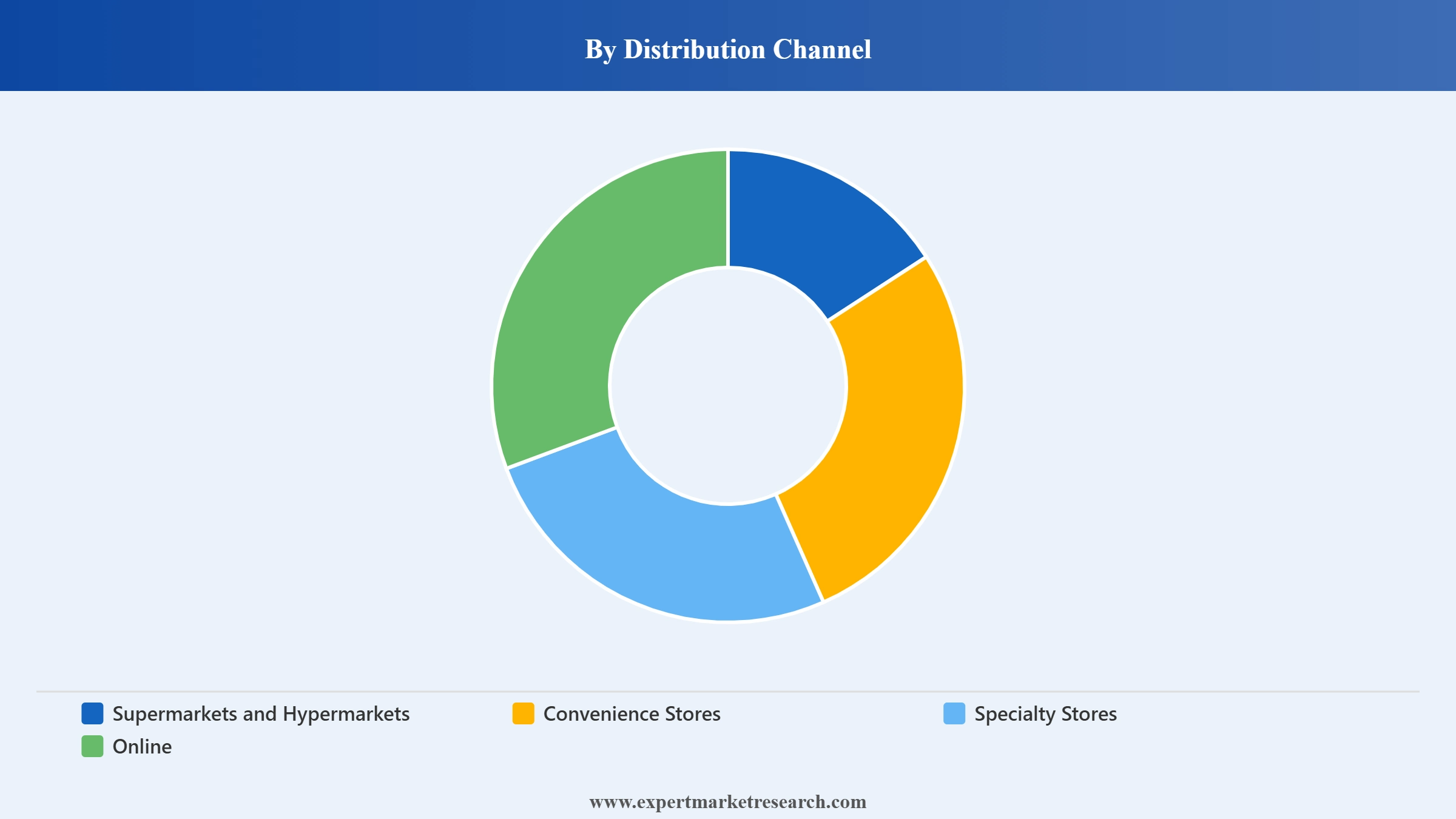
Market Breakup by Distribution Channel
Key Insight: The distribution channels as a whole play an integral role in ensuring greater access to perfumes. Supermarkets and hypermarkets provide customers with easy and extensive access to different products. Convenience stores cater to the rapid purchase of affordable and portable fragrances. Specialty stores are necessary for providing superior quality fragrances, specialized advice, and luxurious branding to ensure customer loyalty, accelerating the perfume market penetration. Online platforms keep growing due to personalized suggestions, greater variety of products, and purchasing ease facilitated by digital interactions. Manufacturers are also using an omnichannel approach wherein physical retailing merges with internet commerce.
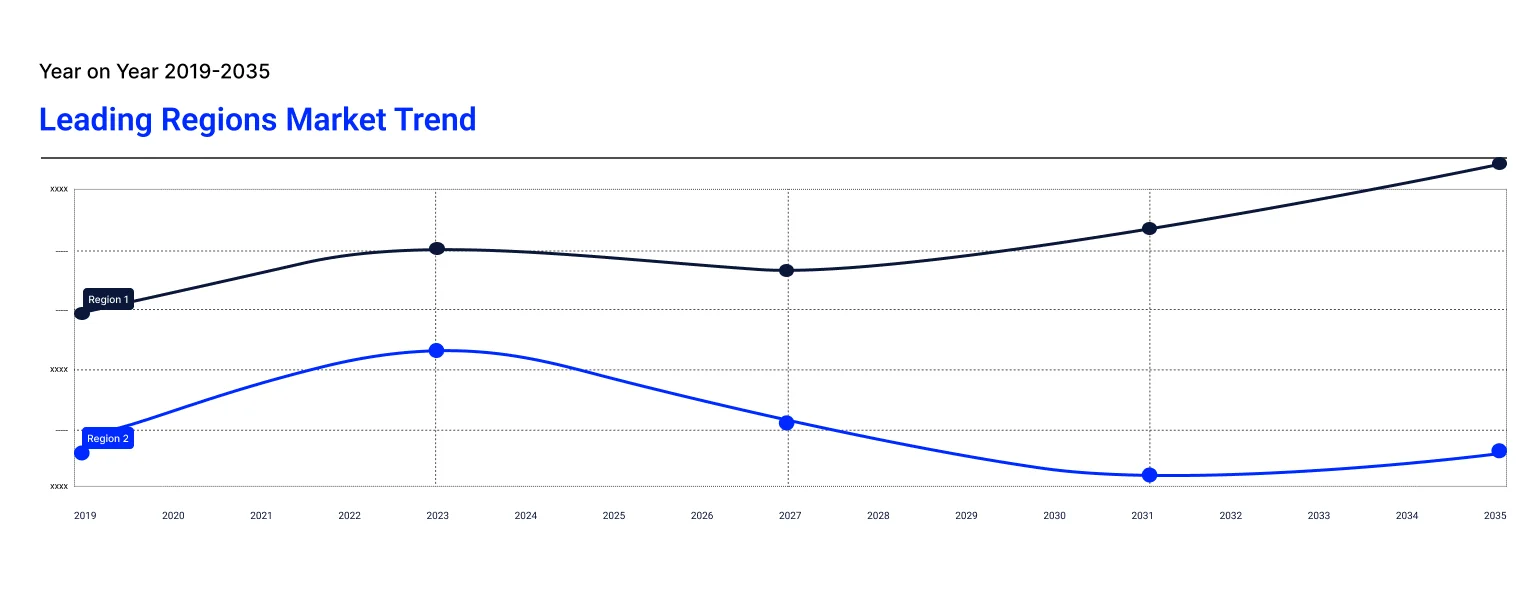
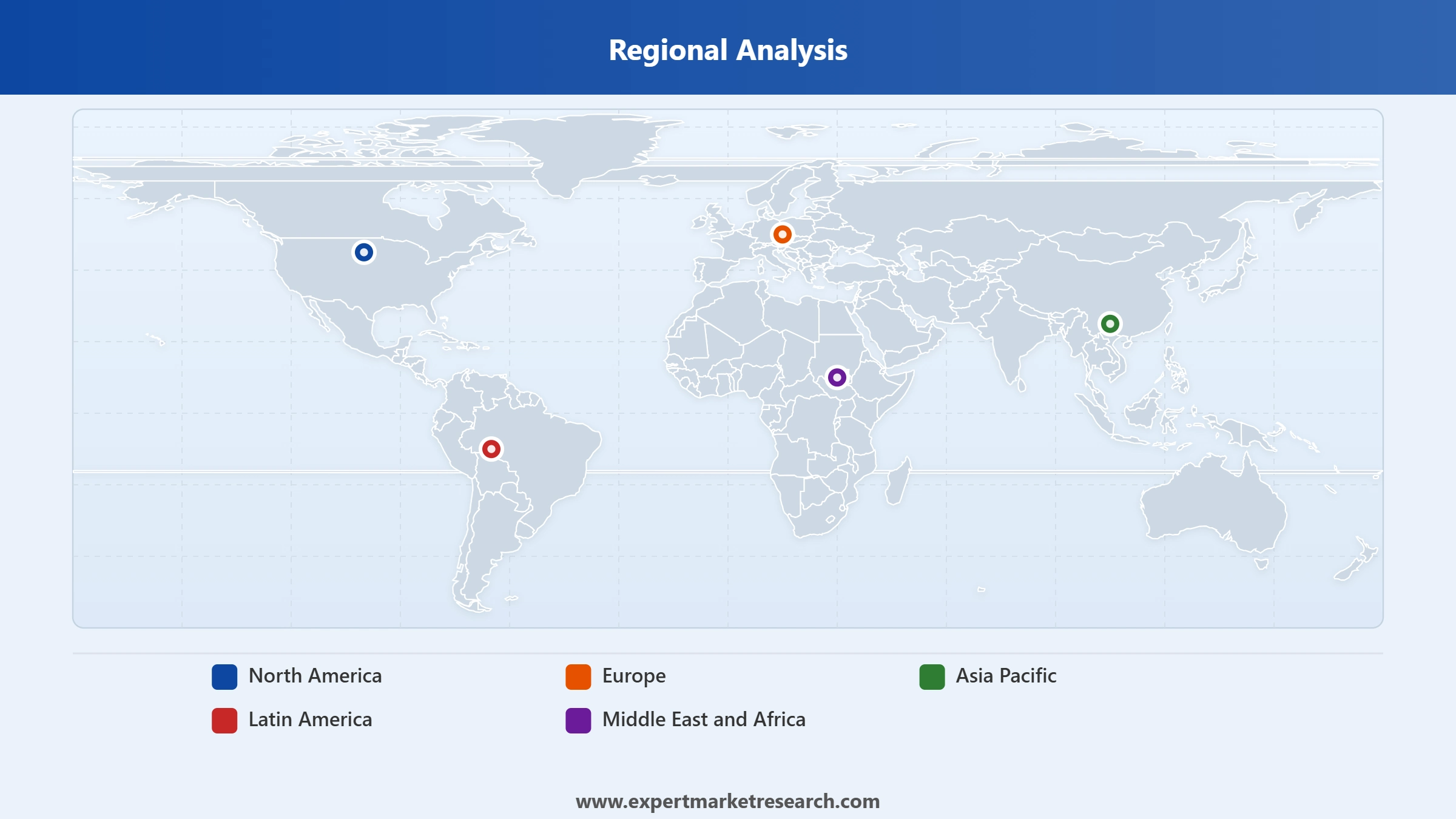
Market Breakup by Region
Key Insight: Regional performance in the perfume market is becoming more evident due to differences in consumer tastes and industrial maturity. The growth driving factors of North America include innovation in premium fragrances, brand loyalty, and online retailing. Europe has an edge owing to its luxury history, sophistication in manufacturing, and established perfume brands. Asia Pacific shows the highest growth rate owing to premiumization trends, urbanization, and increased consumption of beauty products. Latin America grows on account of the rise in the demand for low-cost and region-specific fragrances. The Middle East and Africa exhibit good growth prospects due to the cultural liking of perfumes and consumption of luxury fragrances.
Read more about this report - REQUEST FREE SAMPLE COPY IN PDF
By type, Eau De Parfum dominates the market due to its lasting fragrance and premium consumer preference
Eau De Parfum (EDP) continues to dominate the perfume market as customers become more interested in fragrances that have higher concentrations of oils and last longer. The luxury companies continue adding more EDP collections to their line by offering unique collections, refills, and limited editions, thereby reinforcing their branding position. Premium retailers also focus on EDP products owing to high profit margins and better customer loyalty. Increasing demand for custom fragrances from professionals and affluent individuals is driving the category’s growth, making it imperative for producers to launch advanced and unique scents with new ingredients. For example, in June 2026, Scentbird launched the official Love Island Eau de Parfum, transforming reality television fandom into an exclusive fragrance experience.
Read more about this report - REQUEST FREE SAMPLE COPY IN PDF
Parfum is becoming the fastest-growing category, owing to the interest from luxury consumers in concentrated fragrances that promise longer-lasting and exclusive scents. Top perfume players are launching custom parfum collections and consultations to entice premium customers. The growing interest of customers in quality ingredients and craftsmanship is motivating the manufacturers to come up with unique offerings. Increased expenditure on luxury gifts and premium beauty products is further fueling growth of this category.
Premium products hold the largest share of the market due to luxury positioning and innovation
The premium product category dominates the perfume market as luxury firms keep launching new collections of fragrances, sustainable packages, and premium natural ingredients. Customers are increasingly inclining towards products of a premium category as they expect premium craftsmanship, reputation, and special fragrances. Manufacturers are developing personalized fragrances, refilling packages, and cooperation with fashion houses in order to differentiate their products better. The high level of visibility at luxury boutiques and department stores also plays an important role in creating high demand for premium products and ensures high margin and customer loyalty. In February 2026, Silgan Dispensing launched Aspire Chroma fragrance pumps, offering customizable colors, refill-ready packaging, and enhanced sustainability for premium brands.
Read more about this report - REQUEST FREE SAMPLE COPY IN PDF
Rapid development in the perfume market is observed in mass products as manufacturers succeed in improving the quality of the fragrances but keep prices competitive. Brands develop affordable collections in stylish packages, celebrity fragrance dupes, and trendy smells in order to attract young customers. More effective distribution channels, including supermarkets and pharmacies as well as online retailing, provide higher availability of products. The increased need for fragrances for everyday use and value-based purchases keeps motivating manufacturers to launch affordable products.
Women end users largely dominate the market due to extensive premium fragrance portfolios and surging demand
Women users record notable growth in the perfume market owing to the consistent introduction of various collections by the fragrance manufacturers in the floral, oriental, woody, and contemporary categories. In addition, there are many beauty firms that are investing in fragrances tailored to women's preferences. The trend is expected to be boosted by increased interest in self-care, beauty rituals, and premium gifting. Continued innovations in terms of fragrance formulations and collaboration with fashion brands enable manufacturers to maintain high customer involvement as well as the expansion of their premium collections.
Read more about this report - REQUEST FREE SAMPLE COPY IN PDF
Unisex fragrances are quickly gaining popularity across the perfume market scope because of changing consumer preference for personal care products that do not distinguish on the basis of gender. There are many top-notch brands that are introducing minimalistic fragrance collections, emphasizing individuality rather than gender classification. Niche perfume houses are particularly leading in the innovation of fragrance mixes suited to different lifestyle preferences. Gender-inclusive marketing coupled with increasing preference for customized fragrance experiences enable manufacturers to introduce more unisex products. For example, in July 2026, NYX launched affordable hair and body fragrance mists, targeting Gen Z with playful scents and accessible premium experiences.
By distribution channel, specialty stores account for the largest share of the market through premium experiences, expert guidance, and exclusive fragrance collections
The specialty store channel dominates the perfume industry as consumers feel the need to test perfumes before buying high-end products. Luxury perfume sellers offer customized consultation services, unique collections, and an engaging shopping experience that increases the buyer's trust and loyalty. Manufacturers consider specialty stores as the first point of sale when introducing limited edition fragrances and other premium collections. The specialized retail setting helps firms to highlight their product features, stories, and craftsmanship, allowing greater consumer engagement and premium brand positioning. In March 2026, GIVA launched six premium Eau de Parfum fragrances, expanding beyond jewelry into India's accessible luxury fragrance market.
Read more about this report - REQUEST FREE SAMPLE COPY IN PDF
Online sales channels record the fastest rates of growth in the perfume market due to the increased use of AI-powered recommendations and consultations, as well as e-commerce subscriptions. The direct-to-consumer approach helps manufacturers build stronger ties with customers and obtain important information regarding purchases. The improved logistics and marketing tactics, along with the efforts of influencers, continue to attract young buyers looking for convenience and more product options. Firms are introducing loyalty and personal promotion programs for more frequent sales online. For example, in July 2025, Kult launched home perfume trials with 150 luxury fragrance testers, redefining personalized fragrance discovery and convenient shopping.
Europe dominates the market through luxury fragrance heritage, premium manufacturing, and established global brands
Europe dominates as the primary regional perfume market, owing to the existence of some of the best fragrances, luxury perfumes, and ingredient manufacturers. Reinvesting in high-end formulas and fragrance innovation increases regional competitiveness. Consumers value high-end craftsmanship, niche perfumes, and luxury personal care products. With an established manufacturing base, along with advanced fragrance research, product quality can be enhanced, thereby allowing European manufacturers to dominate globally in terms of prestigious and premium perfumes. In October 2025, The Estée Lauder Companies opened a global Fragrance Atelier in Paris, accelerating AI-enabled perfume innovation and luxury fragrance development.
Read more about this report - REQUEST FREE SAMPLE COPY IN PDF
The perfume market in Asia Pacific is growing at the fastest rate, owing to the increasing middle-class population investing in premium beauty and personal care products. International brands are now launching regionalized collections according to local tastes in scents while building up retail distribution and digital marketing. Increasing disposable income, urbanization, and beauty awareness make consumers buy premium perfumes more often. Manufacturers keep expanding their regional manufacturing and partnership capacity. In May 2026, Elizabeth Arden launched Eternal Aura across Asia Pacific travel retail, celebrating modern femininity through premium fragrance innovation and exclusivity.
The global industry is observing an increasing focus on innovation as major perfume companies are engaging in the use of artificial intelligence in creating fragrances, producing aroma molecules through biotechnology, using refillable packaging and creating premium niche collections. Acquisitions of luxury and artisanal brands by these firms help them diversify their portfolios and build more digital routes of engagement directly with consumers.
Manufacturers have significant opportunities to expand through personalized fragrances, gender-neutral collections, and sustainably sourced ingredients, reflecting changing consumer expectations. Collaboration with biotech firms, fashion houses, and ingredient makers is helping perfume market players accelerate their efforts to produce premium products and reduce commercialization time. Moreover, manufacturing plants are being expanded in high potential locations along with leveraging digital insights of consumers for product development.
Founded in 1987, LVMH Moët Hennessy - Louis Vuitton is based in Paris, France, and supports the perfume industry through its distinguished brand portfolio of Dior, Guerlain, and Maison Francis Kurkdjian. LVMH concentrates on developing exclusive perfume collections, refillable luxury bottles, and quality natural ingredients along with providing premium fragrances via select retail experience throughout the globe via product innovation.
Founded in 1946, The Estée Lauder Companies Inc is based in New York, United States, and bolsters its perfume portfolio through Jo Malone London, Tom Ford Beauty, and Le Labo. The company concentrates on premium luxury fragrance development, personalized consumer experience, digital consumer connection, and premium fragrance innovation.
Founded in 1909 and located in Paris, France, L'Oréal S.A. serves the perfume industry by offering luxury fragrances under the brands of Lancôme, Yves Saint Laurent Beauté, Prada Beauty, and Valentino Beauty. The company emphasizes refillable packaging, sustainable practices using biotechnology, artificial intelligence-based consumer understanding, new premium fragrances, and omnichannel retailing approaches in the beauty industry.
Founded in 1872 and located in Tokyo, Japan, Shiseido Co., Ltd. produces premium fragrances through the combination of cosmetic science and Japanese artistry. The company concentrates on innovative fragrance formulations, sustainable packaging, premium beauty positioning, and consumer engagement online, offering luxury perfumes in Asia Pacific, Europe, and North America.
Other key players in the market include Beiersdorf AG, Amorepacific Corporation, Calvin Klein Inc., Guccio Gucci S.p.A., Giorgio Armani S.p.A., Coty Inc., Yardley London, Revlon Consumer Products Corporation, The Avon Company, CHANEL, Puig, Givaudan, Hermès, and Kering, among others.
*Please note that this is only a partial list; the complete list of key players is available in the full report. Additionally, the list of key players can be customized to better suit your needs.*
Unlock the latest insights with our perfume market trends 2026 report. Discover regional growth patterns, consumer preferences, and key industry players. Stay ahead of competition with trusted data and expert analysis. Download your free sample report today and drive informed decisions in the market.


Upto 15% Off
USD
$2999 $2699
$4399 $3959
$5599 $4759
$6659 $5660


*While we strive to always give you current and accurate information, the numbers depicted on the website are indicative and may differ from the actual numbers in the main report. At Expert Market Research, we aim to bring you the latest insights and trends in the market. Using our analyses and forecasts, stakeholders can understand the market dynamics, navigate challenges, and capitalize on opportunities to make data-driven strategic decisions.*
The global perfume market reached approximately USD 53.89 Billion in 2025.
The market is projected to grow at a CAGR of 5.50% in the forecast period of 2026 and 2035.
Key drivers include rising disposable incomes, growing demand for luxury, celebrity endorsements, and e-commerce expansion.
The key trends in the perfume market include the growing research and development activities by the market players to innovate fragrances and enhance the quality of packaging, thriving e-commerce sector, and rising investment towards social media marketing.
Parfum, Eau De Cologne (EDC), Eau De Parfum (EDP), and Eau De Toilette (EDT) are the different types included in the market report.
Premium product and mass product are the segments of market based on product.
Men and women are the different end-users included in the market report.
The key companies in the market include LVMH Moët Hennessy - Louis Vuitton, The Estée Lauder Companies Inc, L'Oréal S.A., Shiseido Co., Ltd., Beiersdorf AG, Amorepacific Corporation, Calvin Klein Inc., Guccio Gucci S.p.A., Giorgio Armani S.p.A., Coty Inc., Yardley London, Revlon Consumer Products Corporation, The Avon Company, CHANEL, Puig, Givaudan, Hermès, and KERING, among others.
Women have dominated the global perfume market.
The online distribution channel is expected to witness the fastest growth over the forecast period.
Explore our key highlights of the report and gain a concise overview of key findings, trends, and actionable insights that will empower your strategic decisions.
| REPORT FEATURES | DETAILS |
| Base Year | 2025 |
| Historical Period | 2019-2025 |
| Forecast Period | 2026-2035 |
| Scope of the Report |
Historical and Forecast Trends, Industry Drivers and Constraints, Historical and Forecast Market Analysis by Segment:
|
| Breakup by Type |
|
| Breakup by Product |
|
| Breakup by End-User |
|
| Breakup by Distribution Channel |
|
| Breakup by Region |
|
| Market Dynamics |
|
| Trade Data Analysis |
|
| Competitive Landscape |
|
| Companies Covered |
|
Datasheet
One User
USD 2,999
USD 2,699
tax inclusive*
Single User License
One User
USD 4,399
USD 3,959
tax inclusive*
Five User License
Five User
USD 5,599
USD 4,759
tax inclusive*
Corporate License
Unlimited Users
USD 6,659
USD 5,660
tax inclusive*
*Please note that the prices mentioned below are starting prices for each bundle type. Kindly contact our team for further details.*
Flash Bundle
Small Business Bundle
Growth Bundle
Enterprise Bundle
*Please note that the prices mentioned below are starting prices for each bundle type. Kindly contact our team for further details.*
Flash Bundle
Number of Reports: 3
20%
tax inclusive*
Small Business Bundle
Number of Reports: 5
25%
tax inclusive*
Growth Bundle
Number of Reports: 8
30%
tax inclusive*
Enterprise Bundle
Number of Reports: 10
35%
tax inclusive*
How To Order

Select License Type
Choose the right license for your needs and access rights.

Click on ‘Buy Now’
Add the report to your cart with one click and proceed to register.

Select Mode of Payment
Choose a payment option for a secure checkout. You will be redirected accordingly.
Strategic Solutions for Informed Decision-Making
Gain insights to stay ahead and seize opportunities.

Get insights & trends for a competitive edge.

Track prices with detailed trend reports.

Analyse trade data for supply chain insights.

Leverage cost reports for smart savings

Enhance supply chain with partnerships.

Connect For More Information
Our expert team of analysts will offer full support and resolve any queries regarding the report, before and after the purchase.
Our expert team of analysts will offer full support and resolve any queries regarding the report, before and after the purchase.
We employ meticulous research methods, blending advanced analytics and expert insights to deliver accurate, actionable industry intelligence, staying ahead of competitors.
Our skilled analysts offer unparalleled competitive advantage with detailed insights on current and emerging markets, ensuring your strategic edge.
We offer an in-depth yet simplified presentation of industry insights and analysis to meet your specific requirements effectively.




